
Thick hair has a beauty all its own, from naturally full waves to glossy, voluminous strands that hold their shape beautifully. But if you have a lot of hair, you also know that finding the right haircut can feel surprisingly complicated. Too many layers can create unwanted puffiness, while a blunt cut may leave your ends feeling heavy. The secret is choosing a style that works with your hair’s natural density, texture, and movement rather than fighting against them.
Whether you’re ready for a dramatic transformation or simply want to refresh your current look, the right thick hair haircut can make styling easier and give your strands a more polished appearance. From face-framing layers and modern bobs to long, flowing cuts and effortlessly textured shags, there are plenty of flattering options to explore.
In this guide, you’ll discover 21 stylish haircut ideas for thick hair, along with practical styling advice and inspiration to help you choose your next salon look. You’ll also find options for straight, wavy, and curly textures, making it easier to find a cut that suits your personality, lifestyle, and preferred maintenance routine.
1. Long Layers for Beautiful, Flowing Thick Hair
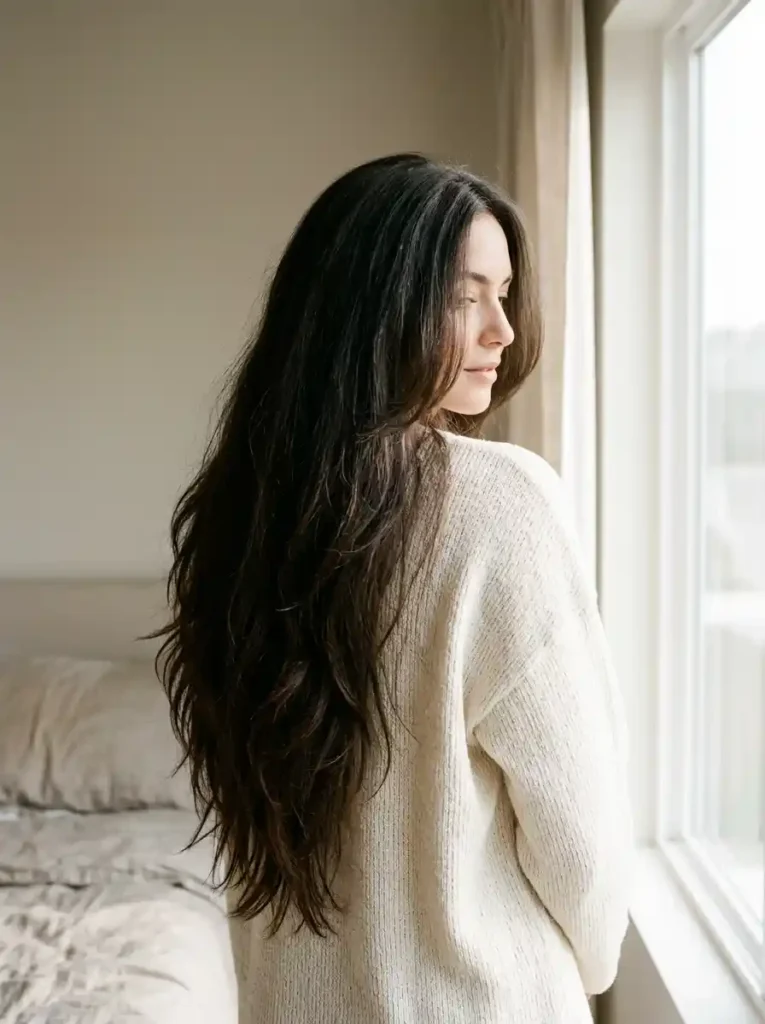
Long layers are an excellent choice if you love keeping your length but want your thick hair to feel lighter and move more naturally. Instead of removing too much hair from the ends, a stylist cuts graduated sections through the lengths, allowing the hair to fall with greater fluidity. This approach works particularly well for straight and wavy textures because it creates dimension without sacrificing the fullness that makes long hair so appealing.
For everyday styling, apply a lightweight heat protectant before using a round brush or blow-dryer to create a smooth finish. If your hair is naturally wavy, scrunch in a small amount of styling cream and let the layers air-dry for a softer result. Ask your stylist to preserve enough weight at the bottom so your ends do not look thin. A trim every eight to twelve weeks can help maintain the shape, depending on how quickly your hair grows.
2. The Chic Shoulder-Length Lob
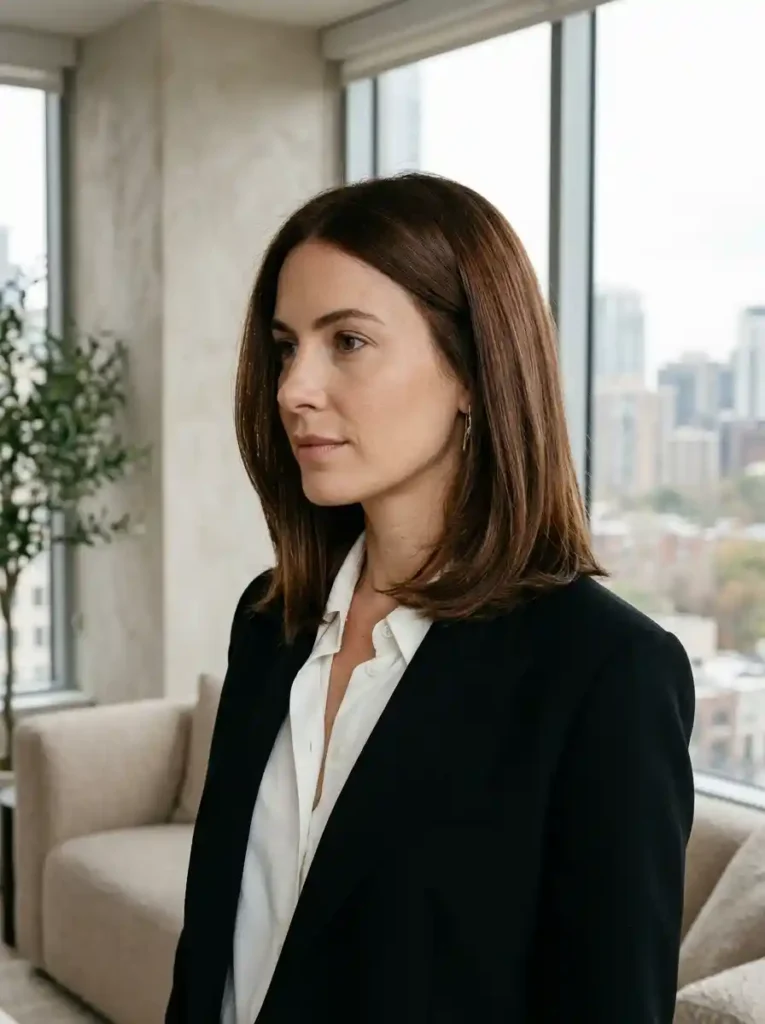
A shoulder-length lob offers a refreshing middle ground between long hair and a shorter bob. For thick hair, the length provides enough weight to control excess volume while still feeling light and modern. A slightly longer front creates a flattering frame around the face, and a softly beveled finish prevents the ends from looking overly bulky. This cut suits many face shapes because its proportions can be adjusted to fall just above, at, or below the shoulders.
The beauty of a lob is how easily it transitions between casual and polished styling. Blow-dry it smooth for a sleek office-ready finish, or use a large-barrel curling iron to create loose bends for a relaxed weekend look. If your hair expands significantly in humidity, ask for subtle internal weight removal rather than aggressive thinning. Keep in mind that shoulder-length hair may flip outward at the collar, so a quick pass with a flat iron or round brush can help maintain the intended shape.
3. The Modern Blunt Cut
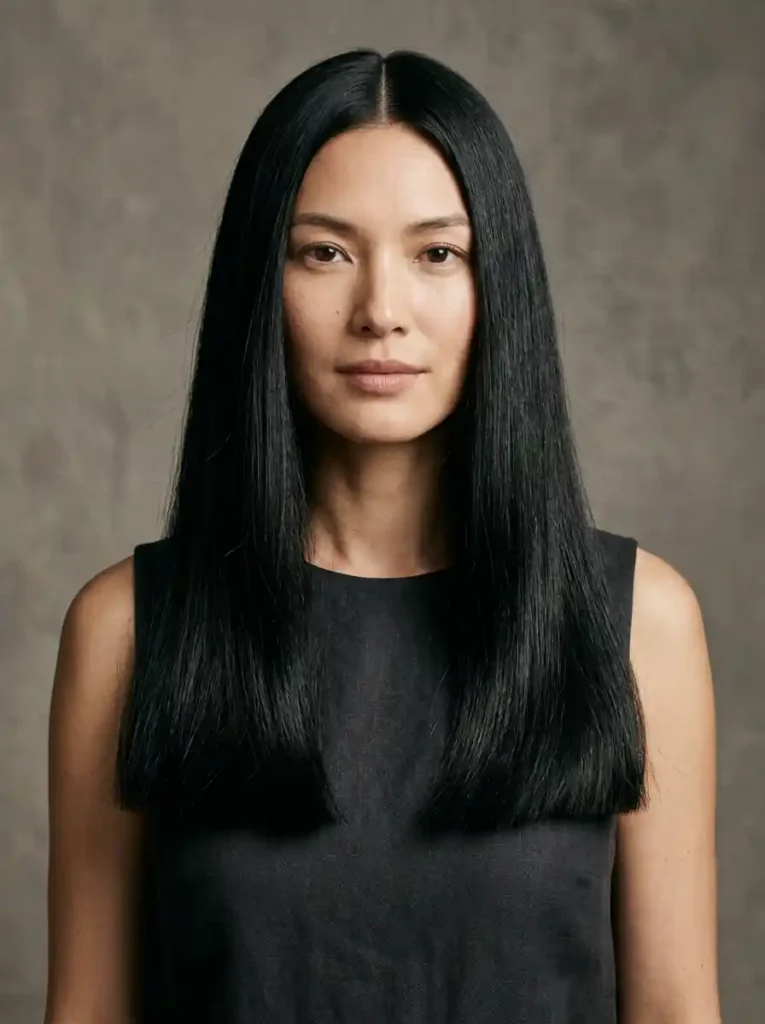
If you prefer a strong, structured hairstyle, a blunt cut creates an unmistakable statement. The ends are cut at nearly the same length, giving thick hair a dense, polished appearance. This works especially well for naturally straight strands, although slightly wavy hair can also look beautiful with the right styling. The key is finding a length that balances the density of your hair; collarbone length often feels versatile without allowing the ends to overwhelm your overall silhouette.
Because a blunt cut relies on a clean outline, regular maintenance matters more than it does with heavily layered styles. Schedule trims when the ends begin losing their crisp shape, and use a smoothing serum sparingly to control flyaways. If your hair is extremely thick, your stylist can remove a little bulk underneath while preserving the visible perimeter. Avoid requesting excessive thinning throughout the ends, as that can undermine the bold, full finish that makes this haircut so distinctive.
4. Face-Framing Layers for a Softer Look
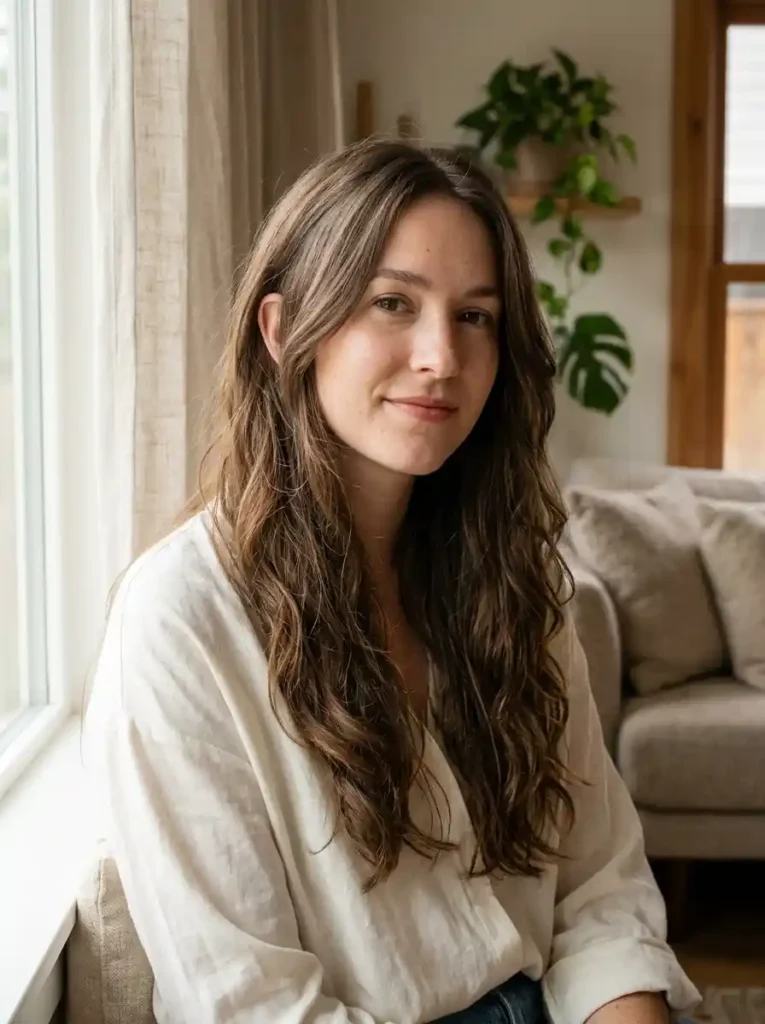
Face-framing layers are a lovely option when you want a noticeable change without giving up much length. Shorter sections around the face create movement near the cheekbones, jawline, or chin, depending on where the layers begin. For thick hair, these pieces help break up a heavy curtain of strands and draw attention toward your facial features. The most flattering placement depends on your face shape, natural parting, and whether you prefer a soft, blended finish or more noticeable definition.
Styling these layers can be as simple as directing them away from your face while blow-drying with a medium round brush. For a relaxed finish, let your hair dry naturally and use a little cream to separate the front pieces. Tell your stylist whether you usually wear a middle or side part, since that affects how the framing layers fall. If you tie your hair back frequently, ask for enough length around the temples to keep shorter strands from constantly escaping.
5. The Textured Shag Haircut

A modern shag is ideal for thick hair that needs movement and personality. Its combination of shorter crown layers, textured lengths, and optional fringe breaks up a solid mass of hair, creating a deliberately relaxed silhouette. It works particularly well with natural waves because the texture helps the layers fall into place. Straight hair can also wear a shag, although it may need styling products or a little heat to emphasize the separation between sections.
To style a shag, work a lightweight mousse or texturizing cream through damp hair, then diffuse or air-dry according to your natural texture. Avoid heavy oils near the roots, which can flatten the crown and make the layers appear less distinct. Before choosing this cut, discuss your preferred level of messiness with your stylist. A heavily layered shag requires a different approach from a softer, longer version, and your daily styling habits will determine which variation feels manageable.
6. A Classic Chin-Length Bob
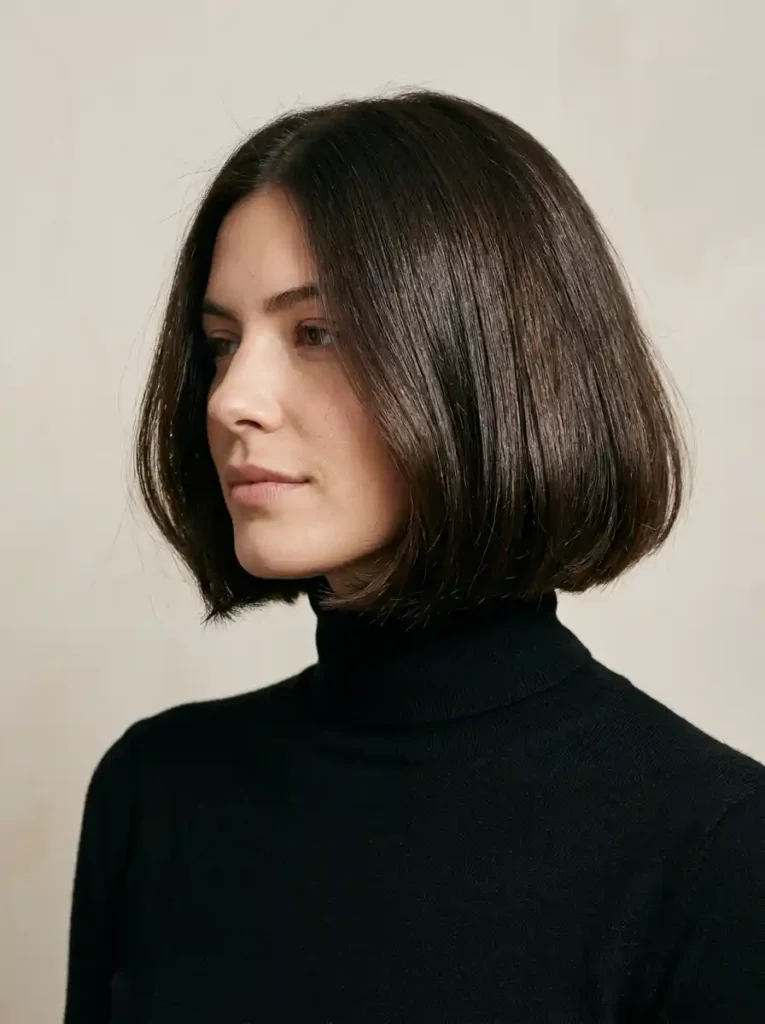
A chin-length bob brings attention to the jawline and gives thick hair a fresh, defined shape. It is especially striking when the hair is straight or lightly wavy, allowing the clean outline to remain visible. However, dense hair can become triangular if the bottom is left too heavy while the sides expand outward. An experienced stylist can tailor the internal structure so the bob curves naturally around your face instead of forming a wide, boxy silhouette.
This haircut rewards a little daily attention, especially if you want a smooth, curved finish. Blow-dry small sections with a round brush, directing the ends slightly inward, or embrace natural texture with a light styling cream. A chin-length bob may require more frequent trims than longer styles because even small changes in length affect its shape. Before committing, consider whether you enjoy styling your hair most mornings and whether you are comfortable keeping it away from your shoulders.
7. Butterfly Layers for Dramatic Volume
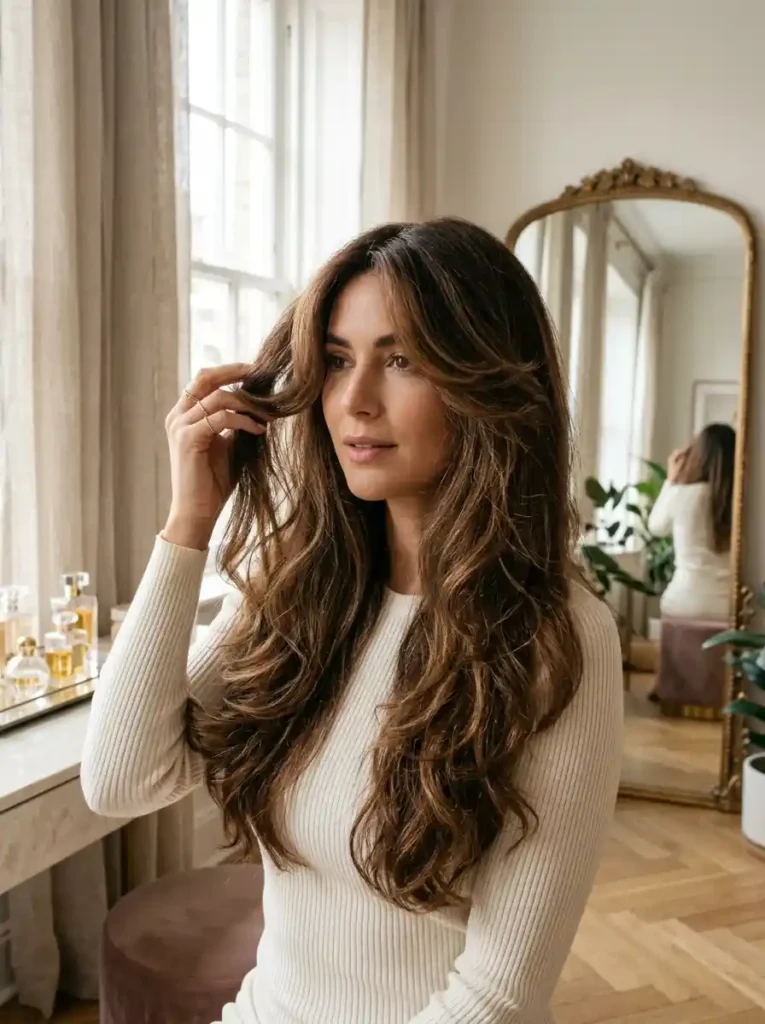
The butterfly haircut creates the impression of shorter, bouncy hair around the face while preserving longer lengths underneath. Its defining feature is the contrast between shorter, face-framing layers and the longer hair that remains visible through the back. Thick hair provides plenty of material for this shape, making it especially appealing if you want noticeable movement without a dramatic overall length change. It can also help distribute volume more evenly when the layers are carefully blended.
A round brush and blow-dryer are useful for lifting the front sections and directing them away from the face. If you prefer a lower-maintenance routine, ask for a softer butterfly cut with fewer short layers, which can still create movement without requiring elaborate styling. Remember that the shortest sections need enough length to tuck behind your ears if that matters to you. Bring reference photos to your appointment and discuss how much time you are willing to spend recreating the finished look.
8. The Soft U-Shaped Haircut
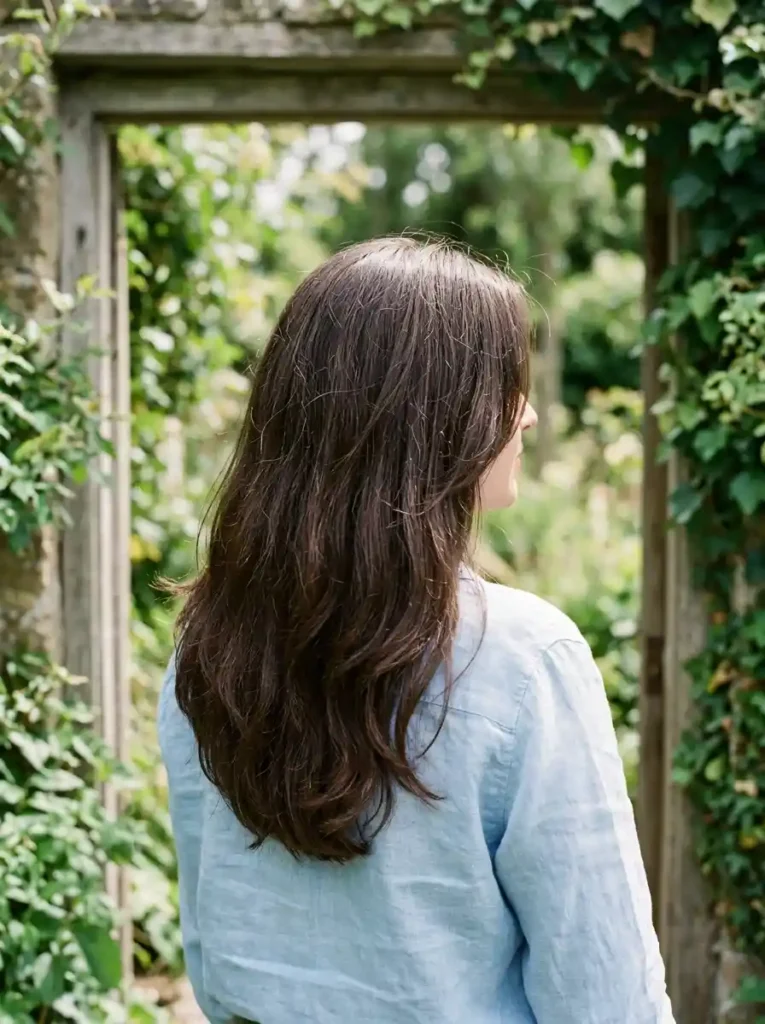
A U-shaped haircut is a subtle but effective way to improve the silhouette of long, thick hair. Instead of forming a straight horizontal line, the ends curve gently upward toward the sides, leaving the center slightly longer. This creates a softer outline while retaining fullness through the bottom. It is a particularly practical choice if you want a change that looks intentional but does not require dramatic layering or a completely different styling routine.
The U-shaped perimeter looks beautiful when worn straight because the curved outline remains easy to see, but it also complements loose waves and curls. Ask your stylist to keep the curve gradual if you dislike a strongly rounded appearance. For particularly dense hair, a few restrained layers can prevent the sides from feeling too heavy without sacrificing the full center. This haircut is also useful if you often braid your hair, since it maintains substantial length while allowing the ends to fall in a softer shape.
9. Curtain Bangs with Long Thick Hair

Curtain bangs add shape around the forehead and cheekbones without the full commitment of a straight, heavy fringe. With thick hair, the trick is ensuring the bangs are not cut too densely, particularly if your hair naturally springs forward or has a strong growth pattern. Longer curtain bangs that blend into face-framing layers tend to offer greater versatility, making them a useful option for refreshing long hair without losing its familiar silhouette.
Styling takes only a little practice. Blow-dry the fringe forward first, then direct it from side to side before sweeping each section away from the center. This helps prevent a stubborn split or unwanted flatness at the roots. A small round brush can create a soft curve, while a lightweight styling spray helps maintain movement. Because bangs grow out visibly, schedule trims as needed and ask your stylist to show you how to manage them between appointments.
10. The Modern Wolf Cut
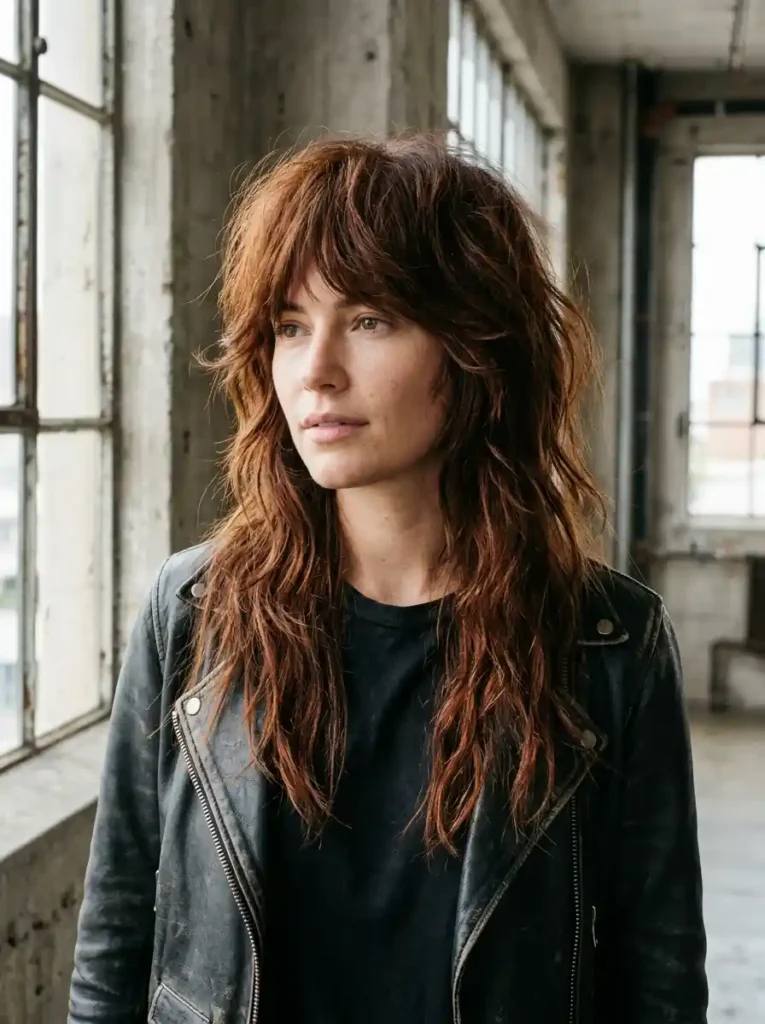
The wolf cut combines elements of a shag and a mullet, with shorter, textured layers concentrated around the crown and longer pieces through the back. Thick hair can give this haircut impressive volume and definition, especially when its natural texture supports a slightly tousled finish. It suits people who enjoy expressive, fashion-forward styles, but the amount of contrast between the top and bottom should be adjusted to match your comfort level and workplace or lifestyle preferences.
For styling, scrunch a small amount of mousse into damp hair and diffuse it to encourage lift and separation. If your strands are straight, a texturizing spray and a few loose bends can bring out the layered shape. Avoid cutting the crown too short if you dislike significant volume around the head. The wolf cut is intentionally textured, so discuss how dramatic you want the silhouette to appear and how frequently you are prepared to reshape the shorter layers.
11. A Long Haircut with Wispy Bangs

Wispy bangs offer a softer alternative to a dense, straight fringe, particularly for people with thick hair who want their forehead partially framed without creating too much visual weight. The delicate ends blend more naturally into the surrounding hairstyle, while the long lengths maintain the dramatic effect of abundant hair. This combination is especially attractive when you want a gentle change that feels youthful and relaxed rather than sharply structured or overly styled.
For the best result, ask your stylist to remove weight carefully from the fringe while keeping the longer sections substantial. A lightweight blow-dry lotion can help the bangs sit smoothly without making them look separated into stiff pieces. If your hair tends to become oily at the roots, dry shampoo can refresh the fringe between washes. Keep in mind that wispy bangs still require occasional trimming, and natural cowlicks may influence where the shortest pieces should sit.
12. The Asymmetrical Bob
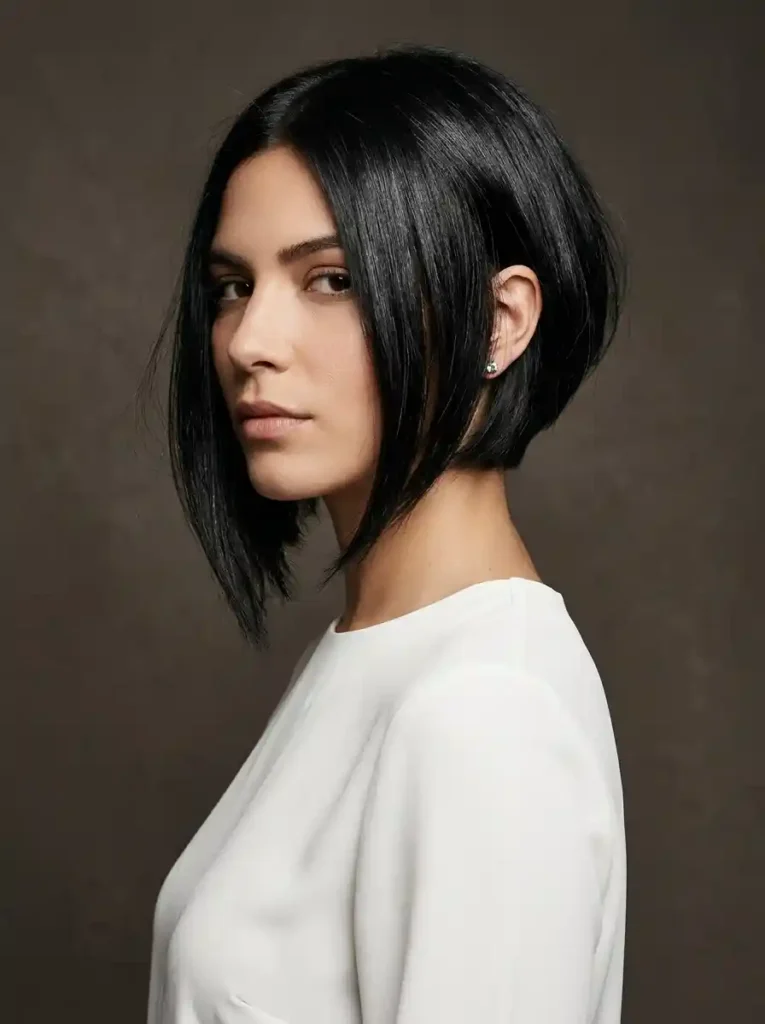
An asymmetrical bob introduces visual interest through an uneven length, usually with one side extending farther toward the chin or collarbone. For thick hair, the angled outline can prevent a short cut from looking too uniform while creating a strong, contemporary shape. It works particularly well with straight or smoothed hair because the difference in length remains visible. Your stylist can make the angle subtle for an understated finish or more pronounced if you prefer a bolder transformation.
This cut looks polished with a flat iron and a small amount of smoothing serum, but it can also work with natural texture when the angle is tailored carefully. Because the design depends on the relationship between the two sides, regular trims help preserve its intended shape. Think about how you usually part your hair before booking the appointment, as a strong side part may change the appearance of the longer section. A consultation is especially valuable if this is your first short haircut.
13. Medium-Length Layers with Feathered Ends
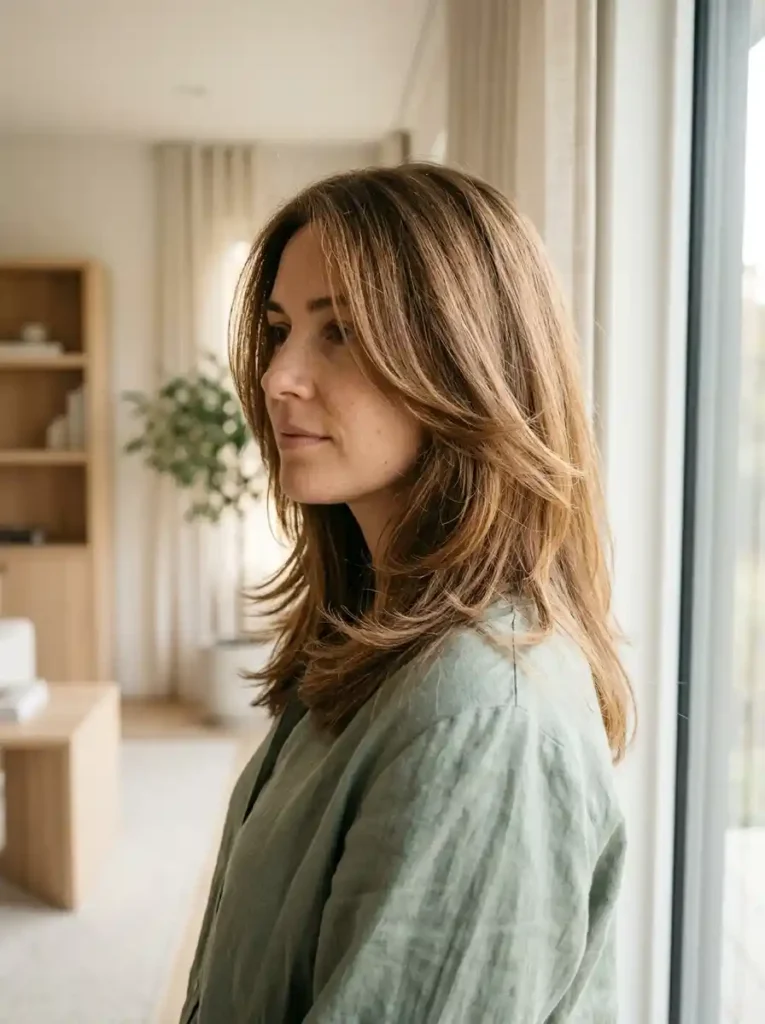
Feathered layers are ideal if you want your thick hair to look lighter and more fluid without embracing a highly textured shag. The ends are shaped to create a soft, airy finish, while the overall length remains easy to manage. Medium-length versions are particularly versatile because they offer enough room for ponytails and half-up styles while still providing movement around the shoulders. This cut suits straight and wavy hair, with the exact degree of feathering adjusted to your natural density.
A round brush helps create the signature outward sweep, although you can also use a large-barrel curling iron for a more defined finish. To avoid losing too much fullness, ask your stylist to concentrate the feathering toward the outer layers instead of removing excessive weight from the bottom. A lightweight finishing cream can smooth flyaways while preserving movement. If you rarely use heat tools, request a version that looks attractive with your natural texture rather than depending on a perfectly styled blowout.
14. The Textured French Bob

The French bob offers a shorter, more relaxed alternative to a perfectly polished chin-length cut. Its slightly textured finish and optional fringe give thick hair a lived-in quality, while the compact length draws attention to the eyes and cheekbones. It can be especially flattering on naturally wavy hair because small variations in texture add character. With very dense or coarse hair, the cut needs thoughtful shaping so the sides sit close enough to the head without becoming overly bulky.
For styling, work a small amount of texturizing cream through damp hair and allow it to dry naturally or use a diffuser on low heat. The aim is soft definition rather than a rigid, overly smooth finish. If your hair is very straight, a few gentle bends can help create the relaxed French-inspired shape. Consider your hair’s natural shrinkage before choosing the length, particularly if you have curls, because a bob that looks chin-length when wet may sit considerably higher when dry.
15. Long V-Shaped Layers
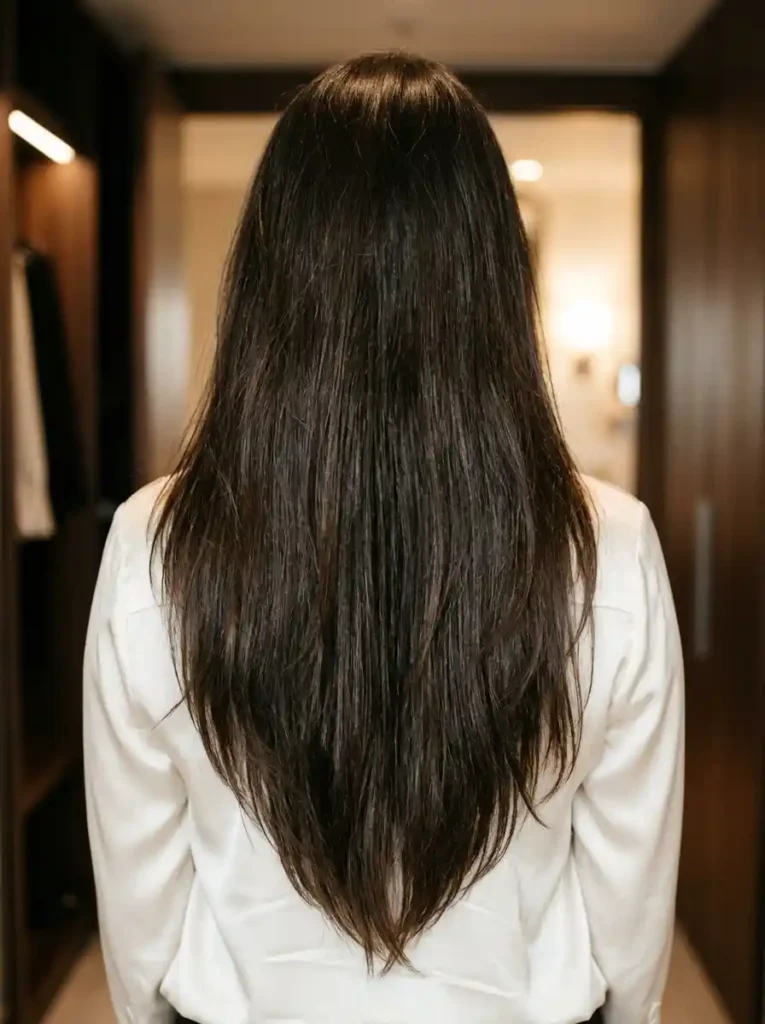
A V-shaped haircut is a striking option for anyone who wants to keep long, thick hair while creating a more dramatic outline. The center of the back remains longer than the sides, producing a tapered shape that is especially noticeable when the hair falls freely down the back. Long layers can help the sides blend smoothly into the point, preventing the cut from looking like a sharp, disconnected triangle. This style works particularly well when your hair has enough length to reveal the full outline.
Because the perimeter is tapered, the ends may appear less dense than they would in a blunt or U-shaped cut. Discuss how pronounced you want the V to be if preserving fullness is important to you. For styling, smooth the lengths with a paddle brush or enhance natural waves with a lightweight curl cream. If you frequently wear your hair in a ponytail, consider whether you like the way shorter side sections may fall around the elastic and along your shoulders.
16. The Collarbone Cut with Subtle Layers
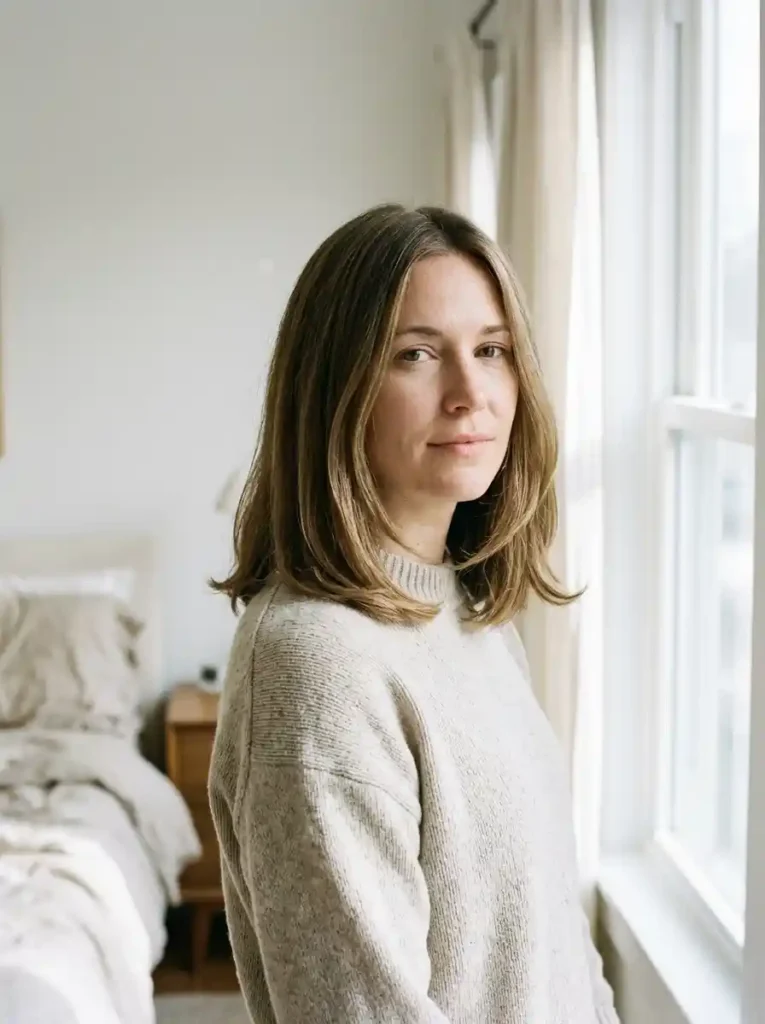
A collarbone cut is a dependable choice if you want a fresh silhouette without going dramatically short. Its length keeps thick hair manageable while remaining long enough for small ponytails, clips, and half-up hairstyles. Subtle layers create movement through the sides, but the main outline stays relatively full. This makes the cut particularly appealing for people who like a neat, balanced appearance and want something that can transition easily between casual days and more formal occasions.
The styling possibilities are straightforward. Blow-dry with a paddle brush for a smooth finish, or use a curling wand to create loose bends that begin below the cheekbones. If your hair is very dense, ask for restrained internal weight removal so the ends do not become too wide or heavy. The collarbone length can flip slightly where it touches your shoulders, so consider whether you prefer a curved-under finish or a relaxed, outward movement before your stylist finalizes the shape.
17. Curly Layers for Thick Natural Hair
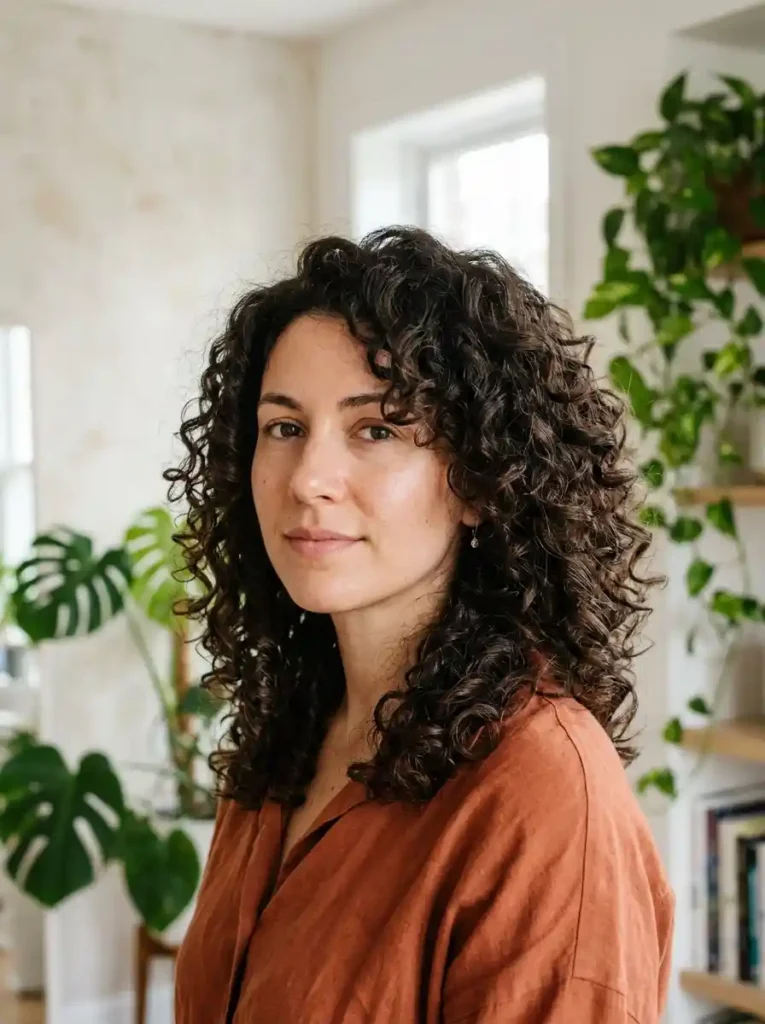
For naturally curly thick hair, a well-planned layered cut can distribute volume while helping individual curls form a more balanced shape. Without thoughtful shaping, dense curls may become too wide at the sides or heavy at the bottom. A stylist experienced with your curl pattern can remove weight strategically and create a rounded silhouette that supports natural definition. The ideal approach depends on whether your curls are tight coils, springy ringlets, or larger, looser spirals.
Ask whether a dry or curl-by-curl cutting technique would suit your hair, since the amount of shrinkage can make a major difference to the final length. At home, apply leave-in conditioner and curl cream to wet hair, then scrunch gently and diffuse or air-dry. Avoid brushing dry curls if you want to preserve their natural pattern. Regular deep conditioning can help maintain softness, while occasional reshaping keeps the layers balanced as your hair grows.
18. The Side-Swept Layered Cut
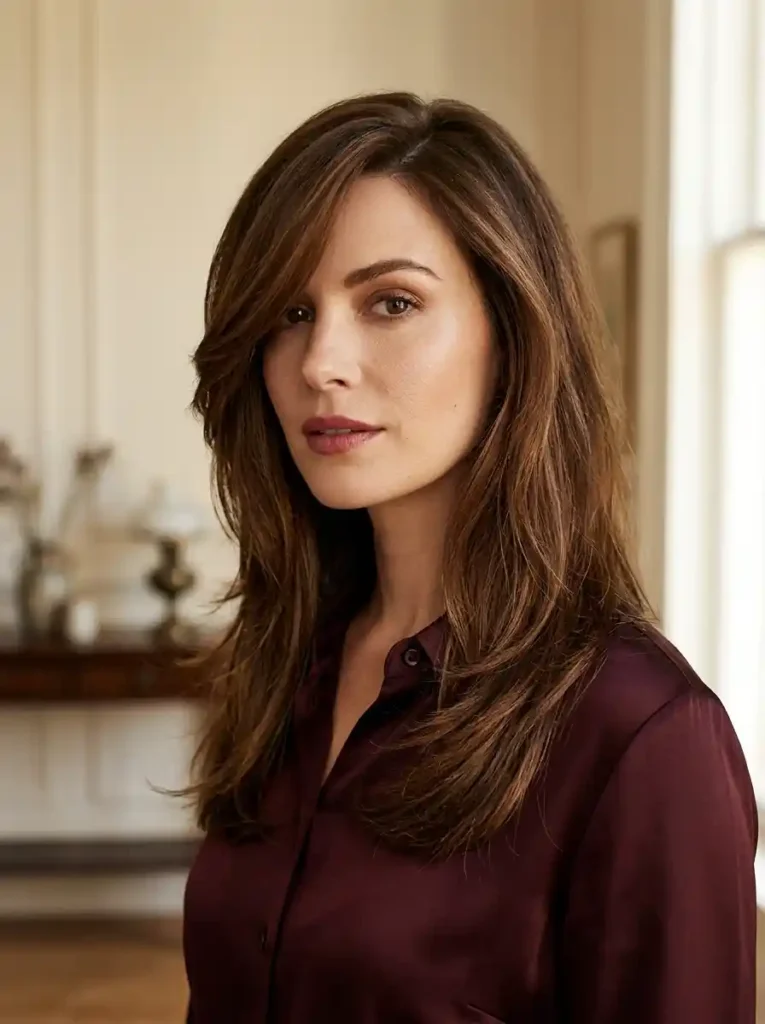
A side-swept layered cut is a useful way to change your look without altering the overall length dramatically. The deep side part creates an asymmetrical flow across the forehead, while graduated layers prevent thick hair from appearing like a solid block. It is especially appealing if you like a little lift at the roots or want a style that looks polished with minimal accessories. The front pieces can also be adjusted to complement your cheekbones and jawline.
To achieve the sweeping effect, direct the front section across the forehead while blow-drying, then use a round brush to create a gentle curve. If your hair naturally parts in the center, a small amount of root-lifting product can help establish the new direction. Keep styling products lightweight so the heavier side does not become flat. Before committing to a deep part, try it at home for a few days to see whether the placement feels comfortable and suits your everyday routine.
19. A Rounded Cut for Thick, Wavy Hair
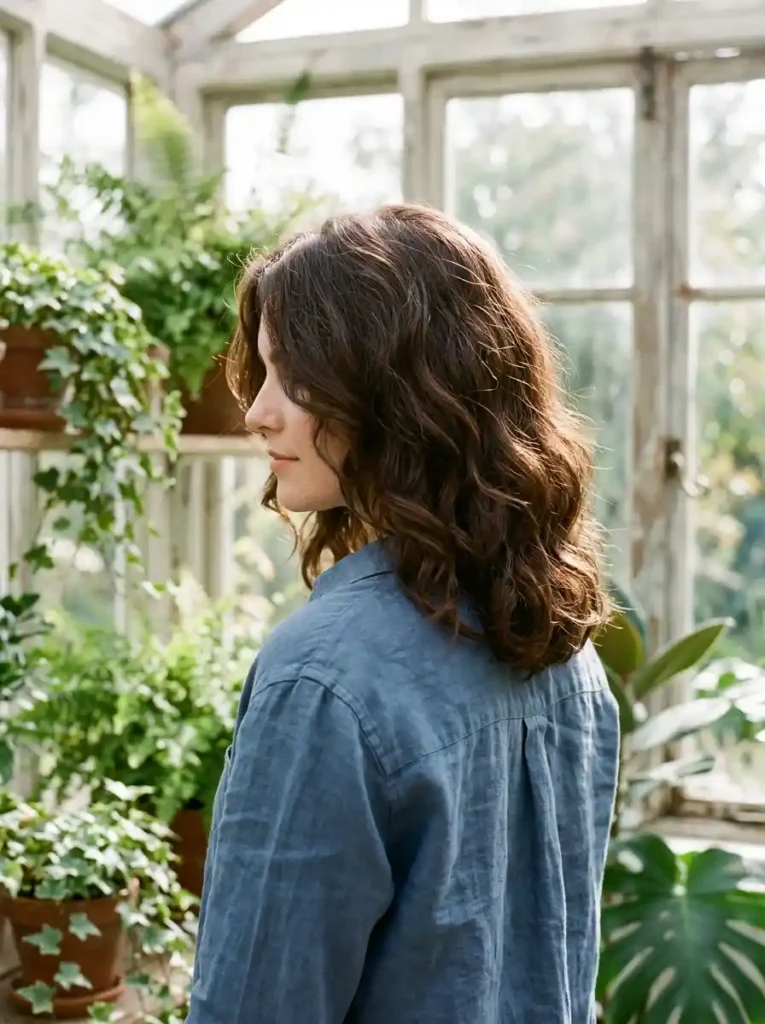
A rounded cut can be especially flattering for thick, wavy hair because it works with the hair’s natural movement instead of forcing it into a rigid outline. The layers are distributed to create a balanced shape, with enough weight retained through the ends to prevent the waves from becoming overly wispy. Depending on your texture, the finished silhouette can feel softly rounded around the shoulders or slightly fuller near the crown for a more voluminous appearance.
To style this cut, apply a curl-enhancing cream or mousse to damp hair and gently scrunch the waves. A diffuser can encourage definition while limiting the disruption that comes from rough towel-drying. Ask your stylist to assess your hair both wet and dry, since waves can spring up unpredictably when they lose moisture. If you prefer a smoother finish occasionally, the rounded layers should still allow you to blow-dry your hair without creating too many disconnected sections.
20. The Sleek Long Bob with a Middle Part
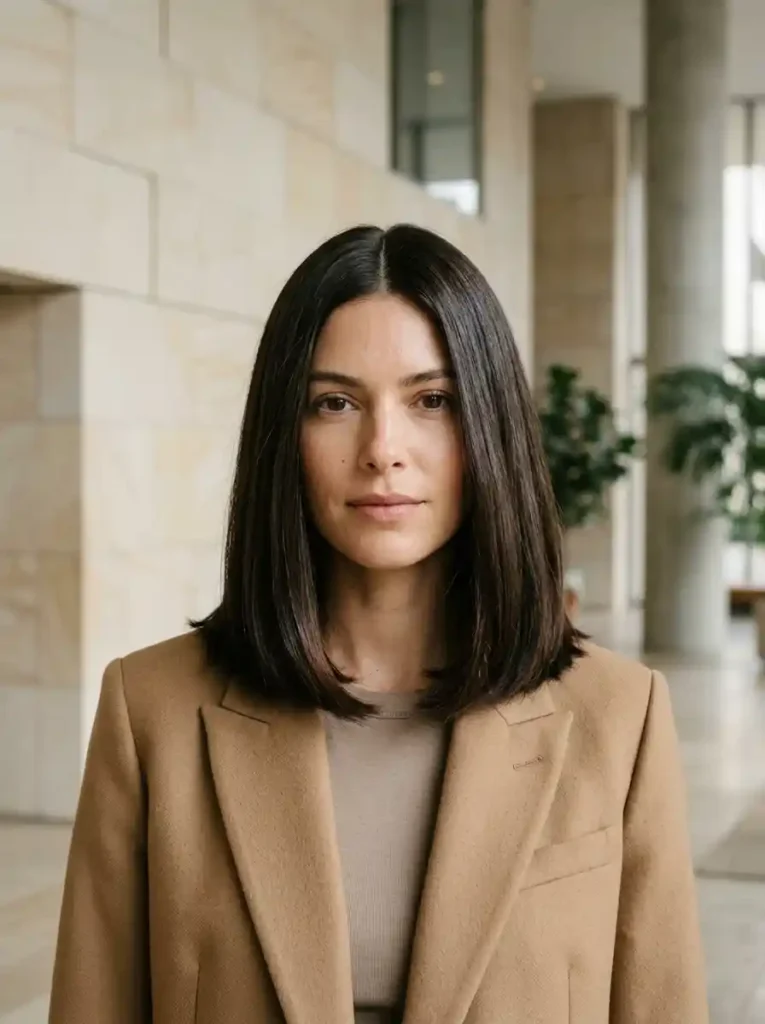
A sleek long bob with a middle part creates a clean, balanced appearance that feels contemporary without relying on dramatic layers. For thick hair, the length offers enough weight to help control puffiness while preserving a substantial, healthy-looking outline. A precise middle part also creates symmetry around the face, although the exact placement can be adjusted slightly if your natural part or hairline makes a perfectly centered division difficult to maintain.
The finish is easiest to achieve when the hair is dried in controlled sections with a paddle brush or round brush. Apply heat protectant first, then use a flat iron only where necessary to smooth the lengths. A tiny amount of serum can enhance shine, but too much product may make dense hair look greasy. If your hair has a natural wave, ask your stylist to shape the cut so it still looks attractive on days when you skip the full blowout.
21. The Long Shag with Soft Fringe
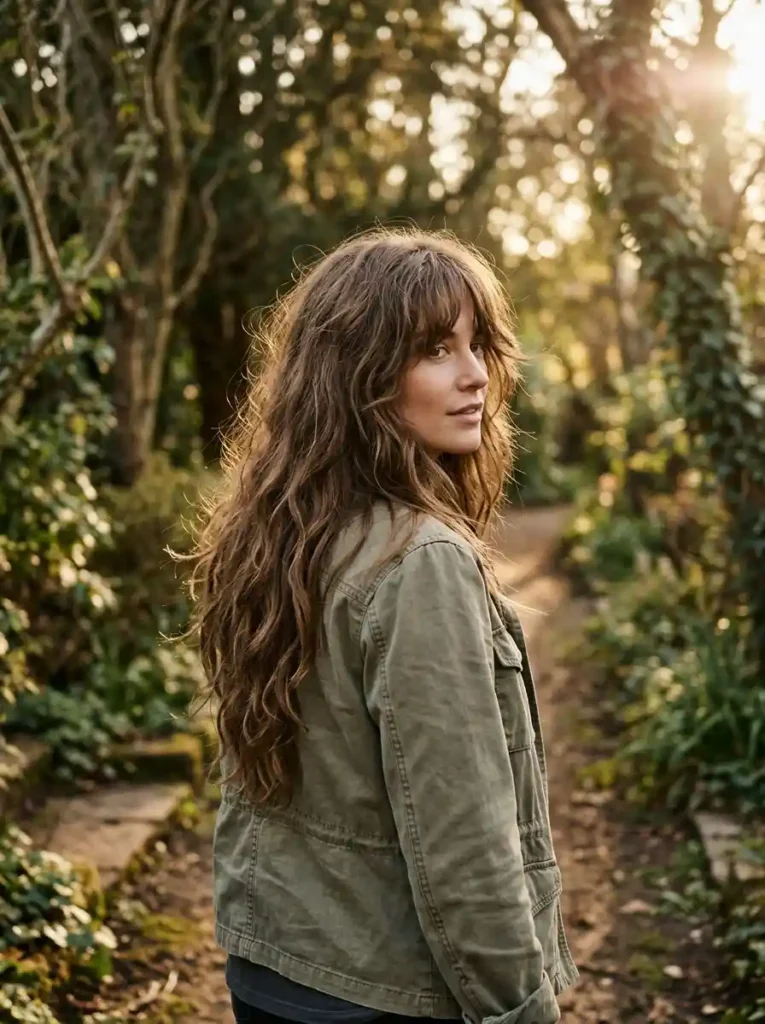
A long shag with soft fringe combines the freedom of longer hair with the movement of a more textured haircut. The crown layers help reduce the feeling of heaviness, while the longer lengths preserve versatility for braids, ponytails, and loose waves. The fringe adds a finishing detail that connects the face to the rest of the shape. This option is especially appealing for thick hair that already has some natural bend, although straighter textures can wear it beautifully with modest styling.
To maintain the relaxed silhouette, use a lightweight mousse or texture cream rather than a heavy smoothing product. Scrunch the lengths while damp and allow them to air-dry, or use a diffuser for additional definition. Discuss the shortest layer placement with your stylist, especially if you prefer tying your hair back. A long shag can be adapted to look soft and understated or more dramatically choppy, so bring inspiration photos that show the exact balance of texture and length you want.
Conclusion
Choosing the right haircut for thick hair is about more than following a trend. The best style should complement your natural texture, balance your hair’s density, and fit comfortably into your everyday routine. Long layers and U-shaped cuts preserve length while encouraging movement, whereas bobs and lobs offer a cleaner silhouette with less hair to manage. Shags, butterfly layers, and curly cuts provide more texture for those who enjoy a fuller, more expressive finish.
Before your next salon appointment, consider how much time you realistically want to spend styling your hair, whether you prefer a polished or relaxed appearance, and which features you would like your haircut to highlight. Bring two or three reference photos and explain what you like about each one. Your stylist can then adapt the shape to your hair type, face shape, and personal preferences.
A fresh haircut doesn’t need to be dramatic to make a difference. Sometimes, the right layers, a softer fringe, or a carefully shaped outline are all you need to make thick hair feel exciting again.

