
The layered shag cut is having a moment for good reason: it brings movement, texture, and personality to your hair without requiring every strand to fall perfectly into place. With its signature choppy layers, airy volume, and face-framing pieces, this versatile haircut can feel effortlessly cool, softly romantic, or boldly edgy depending on how you wear it. The best part? There isn’t just one way to make a shag work for you.
Whether you’re considering a dramatic haircut or simply looking for a fresh way to update your current style, the right variation can make all the difference. Think wispy curtain bangs, tousled shoulder-length layers, curly shags with natural bounce, and modern wolf-inspired cuts that add a little extra attitude. Each version offers a different balance of volume, shape, and styling effort.
In this guide, you’ll discover 24 trendy layered shag haircut ideas, along with practical tips for choosing a look that complements your hair texture, face-framing preferences, and everyday routine. You’ll also find inspiration for explaining your desired style to a hairstylist, so your next salon visit feels more exciting and less like a guessing game.
1. Classic Layered Shag With Soft, Choppy Ends
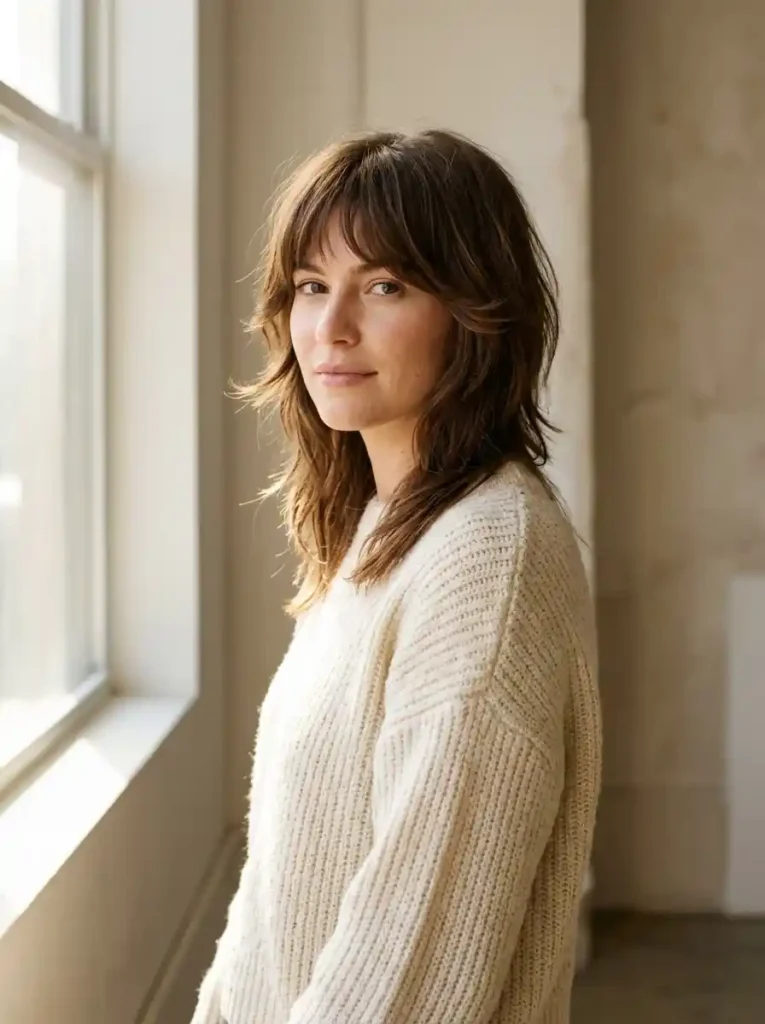
The classic layered shag is an excellent starting point if you want a haircut that feels modern without looking overly dramatic. Its defining features are shorter layers around the crown, softly graduated lengths, and textured ends that create movement throughout the hair. This version works particularly well on straight and wavy hair, where the layers can be seen clearly. Ask your stylist to keep enough length through the bottom so the finished shape looks airy rather than excessively thin.
For everyday styling, apply a lightweight volumizing mousse to damp hair, then blow-dry with your fingers while lifting the roots. A round brush can smooth the front pieces without flattening the rest of the haircut. If your hair already has natural waves, scrunching in a small amount of texture cream may be all you need. Schedule trims when the ends begin losing their shape, and avoid heavy oils that can weigh down the shorter layers.
2. Shag Haircut With Curtain Bangs

Curtain bangs give a layered shag a flattering focal point without creating the heavier appearance of a blunt fringe. They part around the center of the forehead and gradually blend into the shorter pieces beside the cheeks, making the transition into the rest of the haircut feel seamless. This combination is especially appealing if you want to highlight your eyes or soften the appearance of a prominent forehead. Your stylist can adjust the shortest point to suit your preferred amount of coverage.
The secret to keeping curtain bangs looking intentional is directing them away from the face while drying. Use a small round brush, alternating the direction of the airflow before allowing the fringe to settle into its natural part. A touch of flexible-hold spray can help control separation without making the hair stiff. Because bangs often grow out faster than the rest of the cut appears to change, arrange a quick fringe trim between full salon appointments if necessary.
3. Shoulder-Length Shag With Lived-In Waves

A shoulder-length shag with relaxed waves is a practical choice when you want visible texture without committing to a very short haircut. The length sits around the shoulders, while graduated layers prevent the shape from appearing bulky at the sides. This cut can work beautifully on naturally wavy hair because the existing texture adds dimension without requiring much heat styling. If your hair is thick, ask for thoughtful internal layering rather than aggressive thinning that could leave the ends looking sparse.
To create soft, lived-in waves, distribute a lightweight curl cream or sea-salt styling product through damp hair, concentrating on the mid-lengths. Let it air-dry when possible, or use a diffuser on a low setting to encourage natural bends. Once dry, separate a few pieces with your fingertips instead of brushing everything into a uniform shape. A small amount of flexible finishing cream helps define the ends while keeping the hairstyle touchable and relaxed throughout the day.
4. Long Layered Shag With Face-Framing Pieces
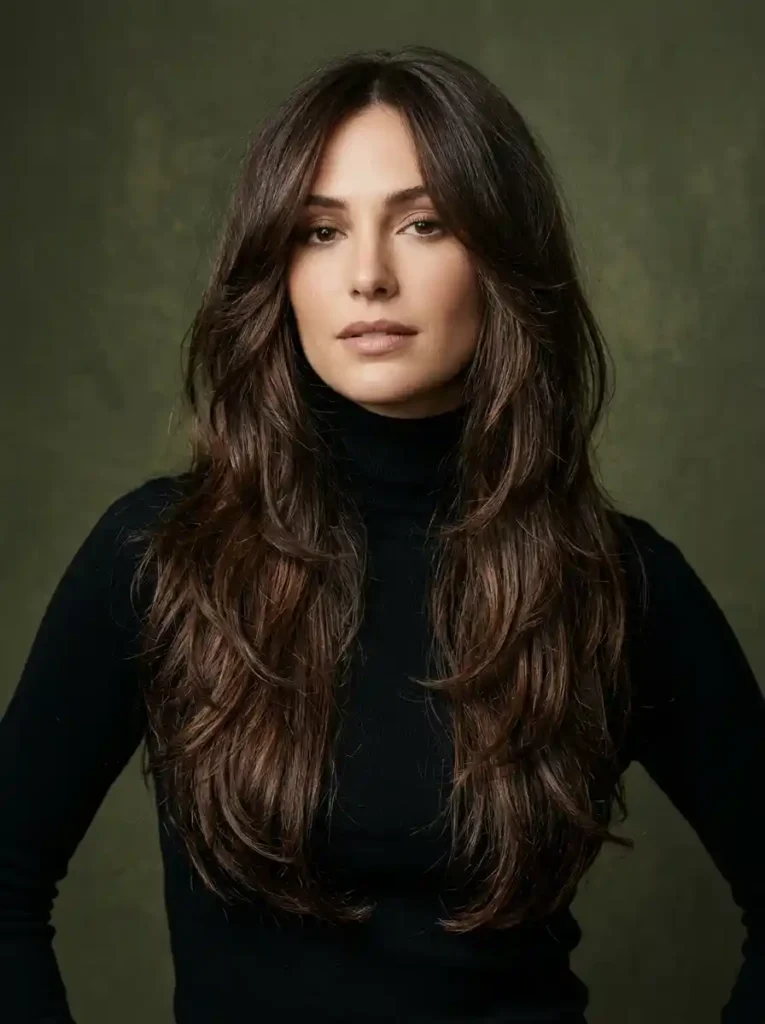
Long shag layers offer a way to refresh lengthy hair while preserving the ability to wear ponytails, braids, and loose styles. The shorter sections around the face create movement near the cheekbones, while longer layers remove some weight from the interior. This is particularly useful for thick hair that tends to form a heavy, triangular silhouette. If your hair is fine, request restrained layering and a fuller perimeter so the haircut retains enough visual density through the ends.
For a polished finish, blow-dry the face-framing pieces away from your face with a medium round brush, then leave the remaining lengths softly textured. A large-barrel curling iron can add occasional bends, but avoid curling every section identically. The contrast between smoother roots and relaxed ends helps the haircut look natural. Bring reference photos showing your preferred front layers, because the starting point and length of those pieces determine how dramatically they frame your face.
5. Short Shag With Textured Micro Bangs
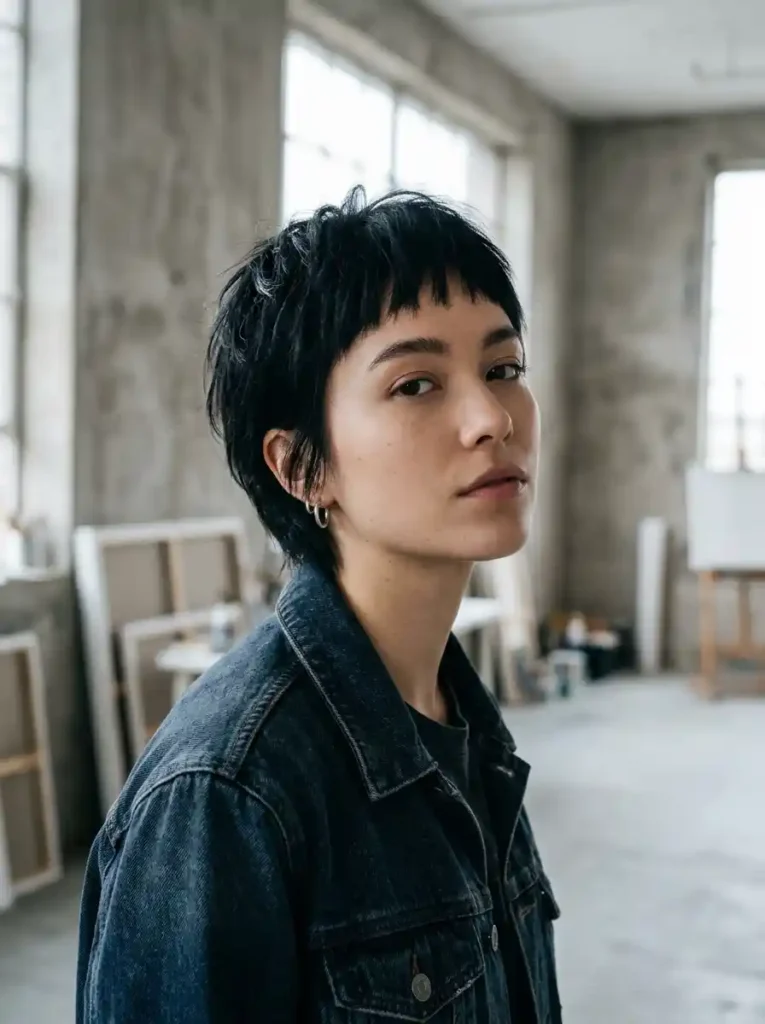
A short shag with micro bangs makes a confident statement through its compact shape and deliberately uneven texture. The cropped fringe opens up the forehead, while short layers around the crown create a piecey silhouette that looks more expressive than a conventional bob. This style can suit straight or slightly wavy hair, although the fringe needs careful consideration if your hair has a strong natural growth pattern. Discuss how the bangs will sit without constant heat styling before committing to their shortest length.
Styling is usually straightforward, but the cut benefits from a little product placement. Rub a pea-sized amount of lightweight styling paste between your palms and gently pinch selected ends to emphasize their separation. Keep the roots relatively clean and avoid applying thick wax directly to the fringe, which can make it clump together. Short shag haircuts also reveal shape changes quickly as they grow, so regular maintenance trims are helpful if you want to preserve the cropped outline and precise fringe length.
6. Curly Layered Shag With Natural Volume

A curly shag celebrates the natural spring and volume of curls rather than trying to flatten them into a uniform shape. Shorter layers around the crown encourage lift, while longer sections preserve enough weight to create a balanced outline. The cut can work across several curl patterns, but the placement of each layer matters because curls shrink differently as they dry. Ask for a stylist experienced with your curl type and discuss whether your hair should be shaped dry, wet, or with a combination of techniques.
Maintaining definition begins with hydration and gentle handling. Apply leave-in conditioner or curl cream to soaking-wet hair, then scrunch upward to encourage the curl pattern. A diffuser on low heat can reduce drying time while helping preserve the shape, but avoid repeatedly touching curls before they are fully dry. Once set, separate only the sections that need extra volume. A satin pillowcase and a loose pineapple-style arrangement at night can help protect the curls and make next-day refreshing easier.
7. The Modern Wolf-Inspired Shag
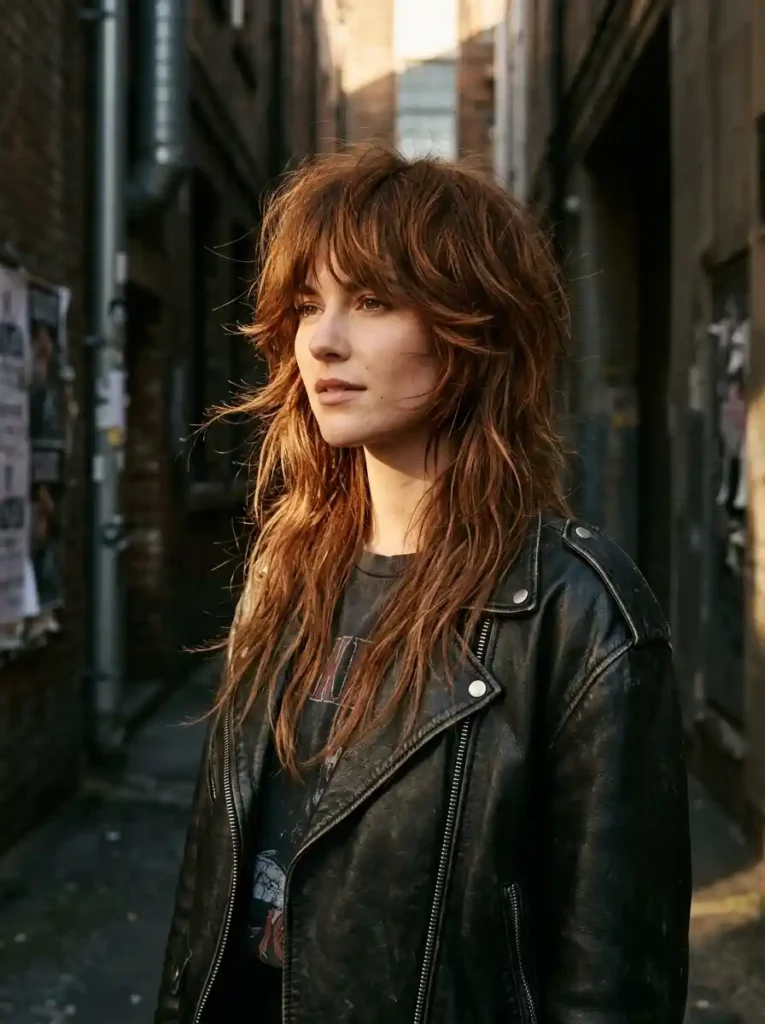
The modern wolf-inspired shag combines the softness of a shag with the stronger contrast of a mullet-inspired silhouette. Its shorter crown layers create noticeable volume, while the sides frame the face and the back retains extra length. This makes it appealing if you prefer a haircut with personality rather than a uniformly blended finish. The style is particularly effective on medium to thick hair, though finer hair can wear a softer version with less dramatic graduation.
Because the shape depends on contrast, tell your stylist which areas you want to emphasize before the cutting begins. More crown layering produces lift, while preserving the back length gives the cut its distinctive profile. For styling, use a root-lifting spray and rough-dry the top with your head tilted forward. Finish by twisting a few ends with texture paste. If you prefer a subtler result for work or school, keep the fringe longer and soften the transition between the crown and back.
8. Wispy Shag With Airy Fringe

An airy fringe gives the shag a lighter, more delicate appearance than a thick, straight-across bang. The shorter pieces create softness around the forehead while allowing some skin to remain visible between strands. This can be a good option if you like bangs but worry about the heaviness of a dense fringe. It often pairs nicely with fine to medium hair, although a stylist may need to adjust the density to accommodate cowlicks, natural parting, and the amount of hair available at the front.
To maintain the wispy finish, dry the fringe first before the rest of your hair has a chance to settle into its natural direction. Use a small brush and minimal heat, then separate a few strands with your fingertips. Skip heavy smoothing creams, which can turn delicate bangs into solid sections. If your forehead tends to become oily, a small amount of dry shampoo at the roots can help preserve movement between washes without leaving visible residue.
9. Textured Shag Bob With a Soft Nape
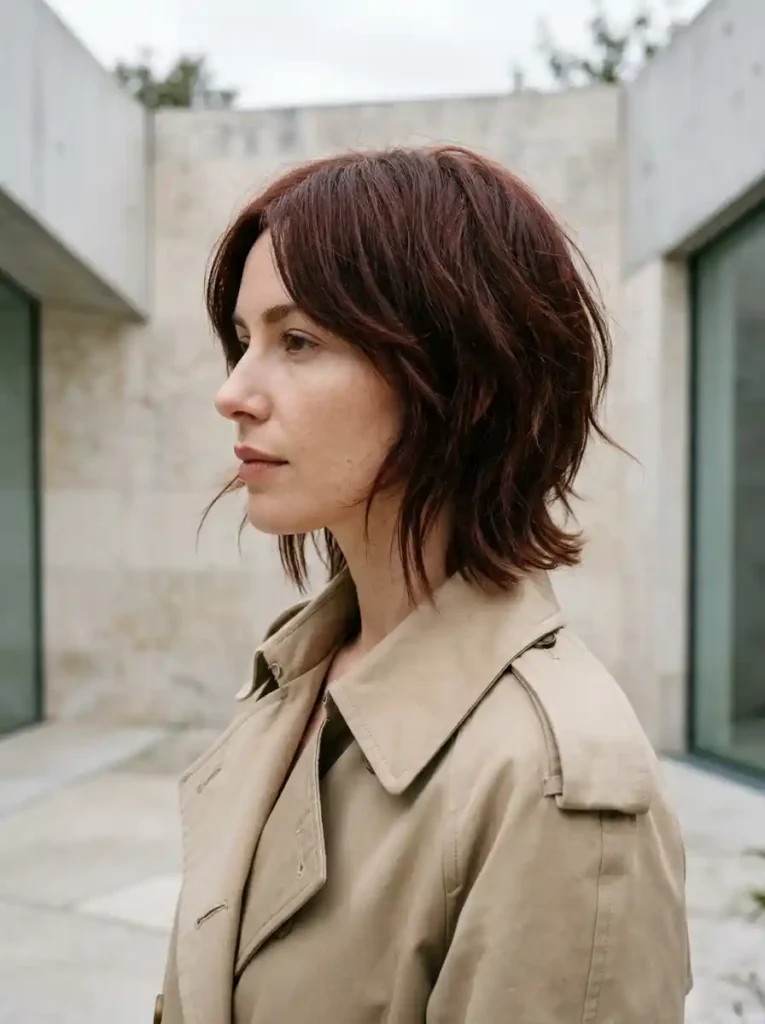
A shag bob offers the compact feel of a shorter haircut without the rigid outline of a traditional blunt bob. Its layers create movement around the cheekbones and jaw, while the softly tapered nape keeps the back from looking overly heavy. This shape can be especially useful if you want to remove damaged ends or make thick hair feel more manageable. For fine hair, keeping the bottom line relatively full while texturizing selected upper sections can preserve the impression of thickness.
The styling approach depends on whether you prefer a smooth or tousled finish. For a sleek version, use a paddle brush while blow-drying and bend the ends slightly inward. To emphasize the shag texture, work a small amount of matte cream through dry hair, focusing on the side pieces and crown. Because shorter bobs can flip outward as they grow, have your stylist explain how the shape will evolve between appointments so you can decide whether frequent trims fit your schedule.
10. Shag Haircut With Bottleneck Bangs

Bottleneck bangs offer a middle ground between curtain bangs and a traditional full fringe. They start shorter near the center and gradually lengthen toward the temples, making them easy to blend into the surrounding shag layers. This shape can frame the eyes and cheekbones without creating a strong horizontal line across the forehead. It is particularly worth considering if you want a noticeable fringe but still want the option of sweeping the longer sides away from your face.
Ask your stylist to customize the shortest section according to your forehead and natural hairline rather than copying a photograph exactly. For styling, use a small round brush to direct the center forward before sweeping the sides outward. A lightweight setting spray can help maintain the curve without creating stiffness. If you prefer a less styled appearance, allow the bangs to dry naturally and use a fingertip of cream on the longer temple pieces to encourage them to blend into the layers.
11. Blonde Shag With Sun-Kissed Highlights

Blonde color can make the individual sections of a layered shag easier to see, especially when soft highlights create dimension between the shorter pieces and longer lengths. Sandy, beige, and honey tones are versatile options if you want warmth without an overly golden finish. A darker root area can also create a more lived-in result and reduce the need for frequent root touch-ups. Your stylist should consider your natural base color and hair condition before recommending how light the highlights should be.
Layered hair can make dryness more noticeable at the ends, so color maintenance deserves attention alongside styling. Use a moisturizing conditioner regularly and limit high-temperature tools when possible. A heat protectant is especially useful if you blow-dry the fringe or shape the layers with a curling iron. Ask your colorist whether a gloss or toner would help maintain your preferred shade between larger appointments. Keeping the color softly blended can preserve the haircut’s dimension as your roots grow.
12. Dark Shag With Glossy, Piecey Layers
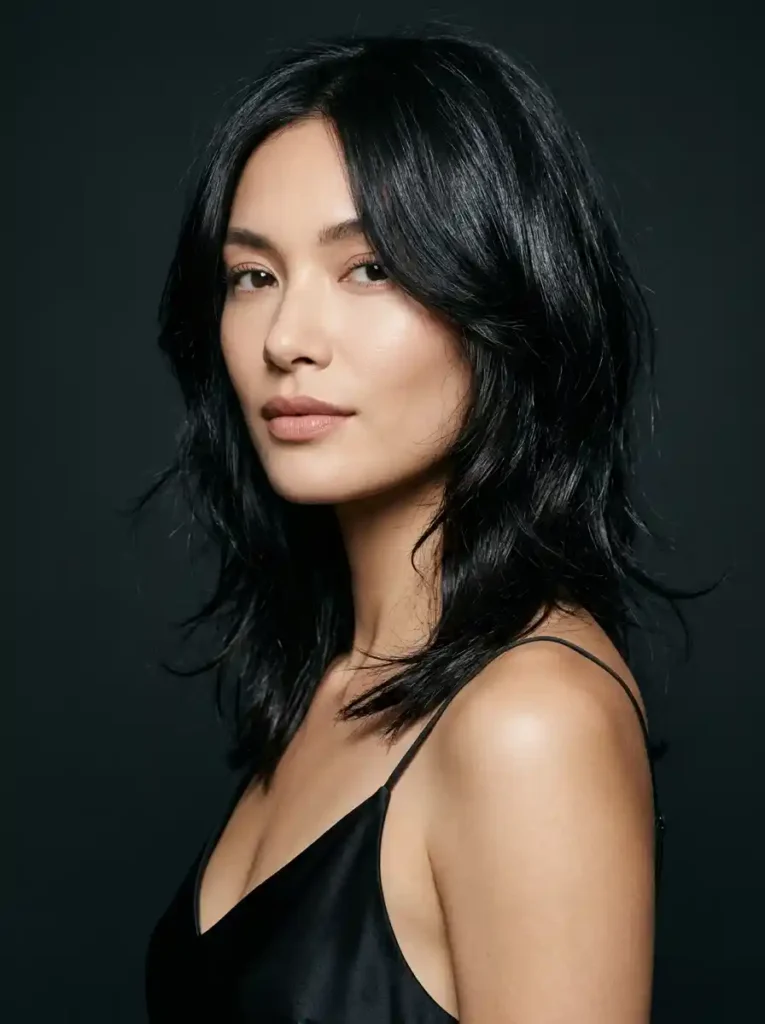
A dark shag emphasizes shape through light, shadow, and the way the layers overlap. Rich brunette or near-black hair can make the cut look polished while the shorter pieces prevent the overall silhouette from feeling flat. This is a strong choice if you prefer understated color but still want your haircut to have dimension. Ask for clearly defined face-framing sections and enough crown layering to create movement, particularly if your hair is naturally straight and tends to lie close to the scalp.
To bring out the haircut, use a lightweight shine serum sparingly on the mid-lengths and ends rather than coating the roots. Blow-dry with a nozzle attachment when you want a smoother surface, then bend a few pieces with a large-barrel iron for subtle separation. Matte products can also work well if you prefer an undone finish. Avoid excessive layering through the bottom when density is limited, since darker hair often shows thin ends more clearly against a plain background.
13. Shag Cut for Fine Hair With Feathered Layers

Fine hair can benefit from a shag when the layers are placed strategically rather than cut excessively short throughout. Gentle feathering around the face and crown adds movement, while a relatively substantial bottom edge helps the hair look fuller. This variation is especially useful if your current haircut feels limp but you do not want to sacrifice much length. Tell your stylist that preserving density is a priority, and ask for selective texturizing instead of aggressive thinning throughout the ends.
For styling, start with a lightweight root-lifting mousse and blow-dry the hair in sections, directing the roots upward before smoothing the lengths. Velcro rollers at the crown can provide temporary lift without requiring a curling iron. Avoid heavy conditioners near the scalp and rich styling butters that may collapse the shape. A little dry texture spray can separate the ends once the hair is dry, giving the haircut definition without making delicate strands feel coated or sticky.
14. Thick Hair Shag With Choppy Layers
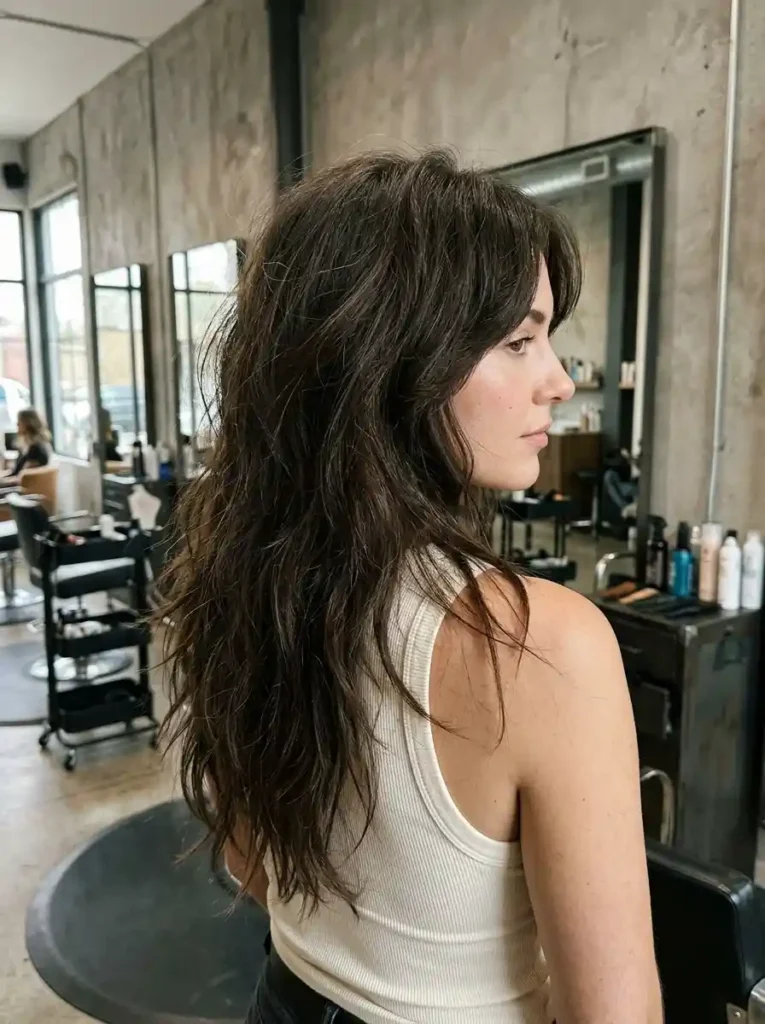
Thick hair often carries enough natural volume to make a layered shag look full and expressive. The challenge is preventing the sides and lower lengths from becoming too bulky. Strategically placed internal layers can remove excess weight while preserving the outer shape, allowing the hair to move instead of sitting in one heavy mass. If your hair is very dense, discuss where the bulk collects and whether you prefer a rounded outline, a more elongated silhouette, or pronounced separation between layers.
You may find that styling requires less product than expected once the weight is distributed properly. Apply a smoothing cream sparingly if your hair tends to frizz, then rough-dry the roots before using a diffuser or round brush on selected sections. Ask your stylist how to refresh the shape at home rather than thinning the hair yourself with scissors. Over-thinning can create unwanted wisps, uneven growth, and extra frizz, especially around the perimeter and underneath the top layers.
15. Shaggy Pixie With Longer Side Pieces
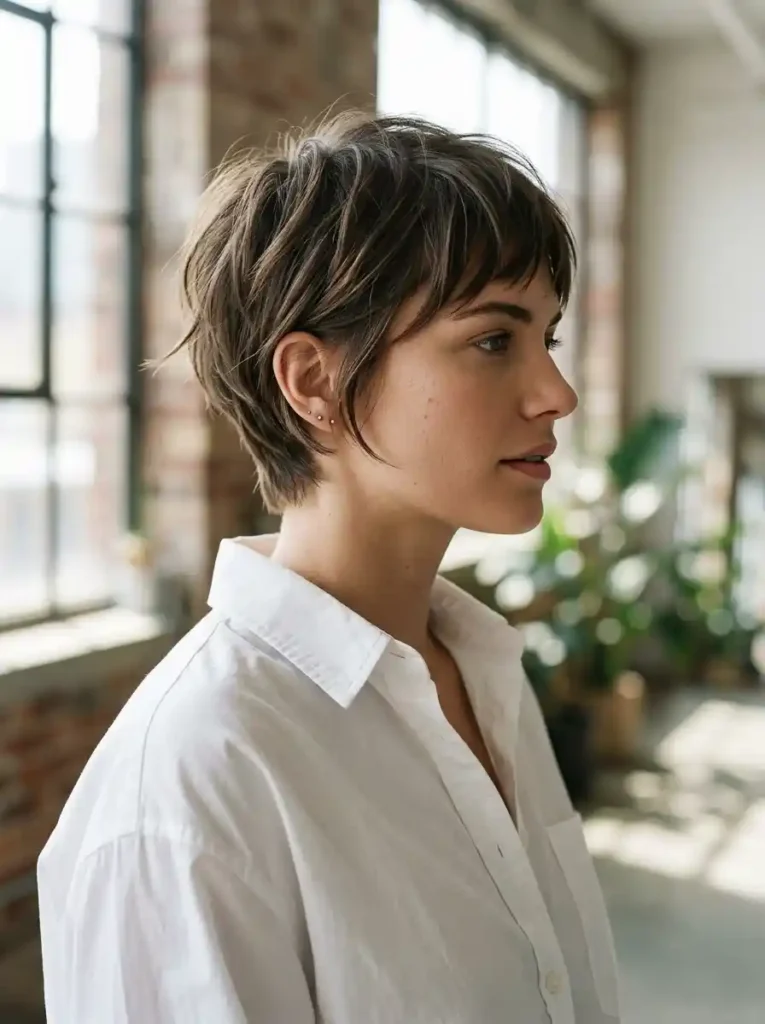
A shaggy pixie is ideal if you want a shorter haircut with more movement than a conventional cropped style. The crown stays textured, the back is kept relatively close to the head, and longer side pieces soften the transition around the ears and temples. This combination can create a flattering frame without requiring long hair to achieve dimension. It is worth discussing how the cut will look from the side and back, since those angles reveal much of the pixie’s distinctive shape.
Daily styling usually takes only a few minutes. Work a tiny amount of lightweight paste through dry hair, lifting the crown with your fingers and directing the side pieces into place. For a softer finish, use a small amount of styling cream instead of a firm wax. The haircut grows out visibly, so regular trims will help maintain the tapered back and balanced proportions. If you’re transitioning from longer hair, ask for a version that can gradually evolve into a longer shag as it grows.
16. Copper Shag With Bold, Tousled Texture

Copper shades bring warmth and visual interest to a shag, particularly when the haircut includes enough layers to reveal different surfaces of the color. From soft ginger to deeper auburn, the right tone can make the textured ends stand out without changing the haircut’s structure. This style can suit several skin tones depending on the shade chosen. Bring reference images of copper colors you genuinely like, and ask your colorist how each option may interact with your natural base.
Red and copper tones often need more attention to preserve their richness, so consider your washing routine before choosing a vivid shade. Use color-safe shampoo, wash with lukewarm rather than very hot water, and protect the hair when heat styling. To enhance the shag’s texture, apply a light mousse before drying and twist selected ends between your fingers. The goal is irregular movement, not perfectly matched curls, which can hide the natural separation that makes this haircut distinctive.
17. Medium Shag With Side-Swept Bangs

Side-swept bangs offer a softer, more flexible alternative to a centered fringe. They create a diagonal line across the forehead and flow into the surrounding shag layers, making the haircut feel relaxed rather than sharply structured. This variation can be particularly appealing if you already part your hair to one side or want bangs that can be tucked behind an ear. The length should be chosen carefully so the fringe blends naturally instead of forming a disconnected section.
When styling, direct the fringe across the forehead while drying, then briefly sweep it in the opposite direction to build lift at the roots. Let it fall back into your preferred part once the hair has cooled. This technique can prevent the bangs from sticking flat against the forehead. A flexible hairspray is useful when humidity changes the shape, but avoid saturating the fringe. If you change your part frequently, request enough length to make the transition manageable.
18. Shag Cut With Soft Balayage Dimension
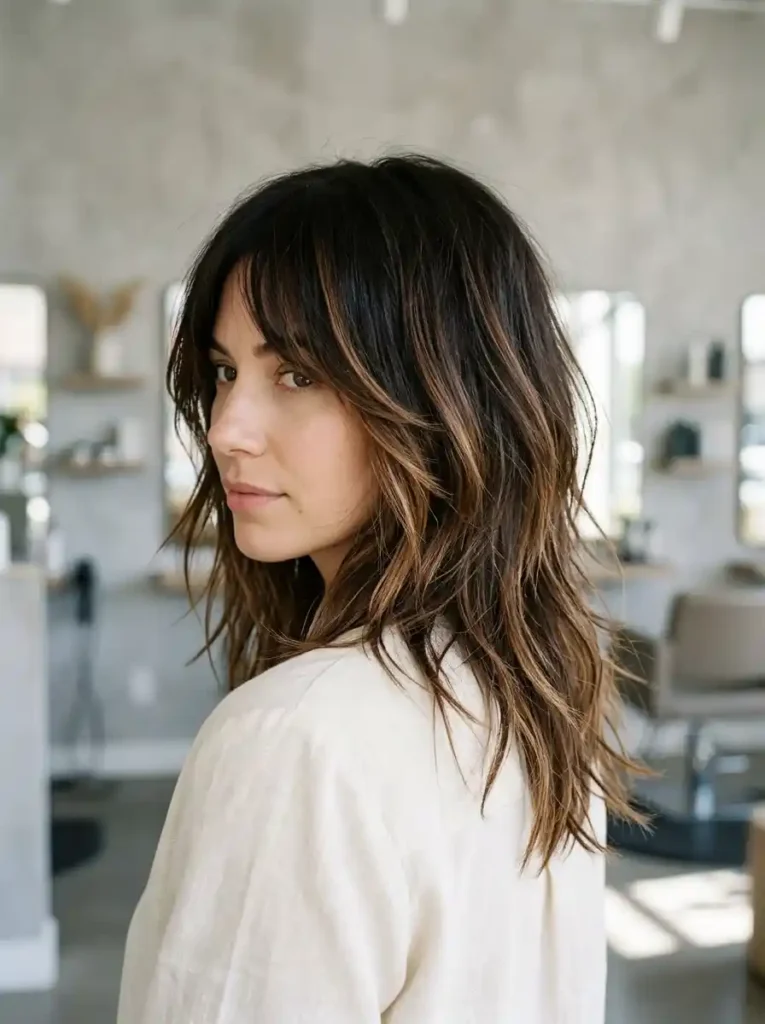
Balayage can enhance a shag by adding subtle contrast to the layers without creating an obvious striped effect. Caramel, beige, or honey ribbons placed through selected sections help the haircut appear dimensional as the hair moves. A few lighter pieces near the face can also draw attention to the fringe and cheekbone layers. This option works well if you want a noticeable refresh while keeping your natural base color visible and avoiding a completely uniform all-over shade.
For the most natural result, ask your colorist to concentrate brightness where the layers catch the light instead of distributing highlights evenly from root to tip. The color placement should complement the cut’s movement, not compete with it. Balayage may grow out more softly than traditional full highlights, but the lighter ends still need conditioning and heat protection. Use a nourishing mask when needed, and discuss a glossing appointment if the caramel tones begin looking dull or overly warm.
19. Shag Haircut for Naturally Wavy Hair

Natural waves are an excellent foundation for a shag because they already provide the bends and irregular texture that make the layers noticeable. A well-shaped cut can encourage those waves to sit separately instead of merging into a heavy, undefined mass. Medium lengths often offer a useful balance between manageable styling and visible movement. During your consultation, explain whether your waves become looser near the roots or curl more strongly underneath, since these differences affect where the layers should begin.
After washing, gently squeeze excess water out with a microfiber towel rather than rubbing the hair vigorously. Apply a lightweight leave-in product or wave cream, then scrunch the lengths to encourage definition. Air-drying is convenient, while a diffuser can provide extra root volume when needed. Once dry, avoid brushing through the entire style, which may disrupt the wave pattern. Refresh flattened areas the next morning with a little water and styling product instead of repeating the full wash-and-style routine.
20. Long Shag With Bold, Voluminous Crown Layers
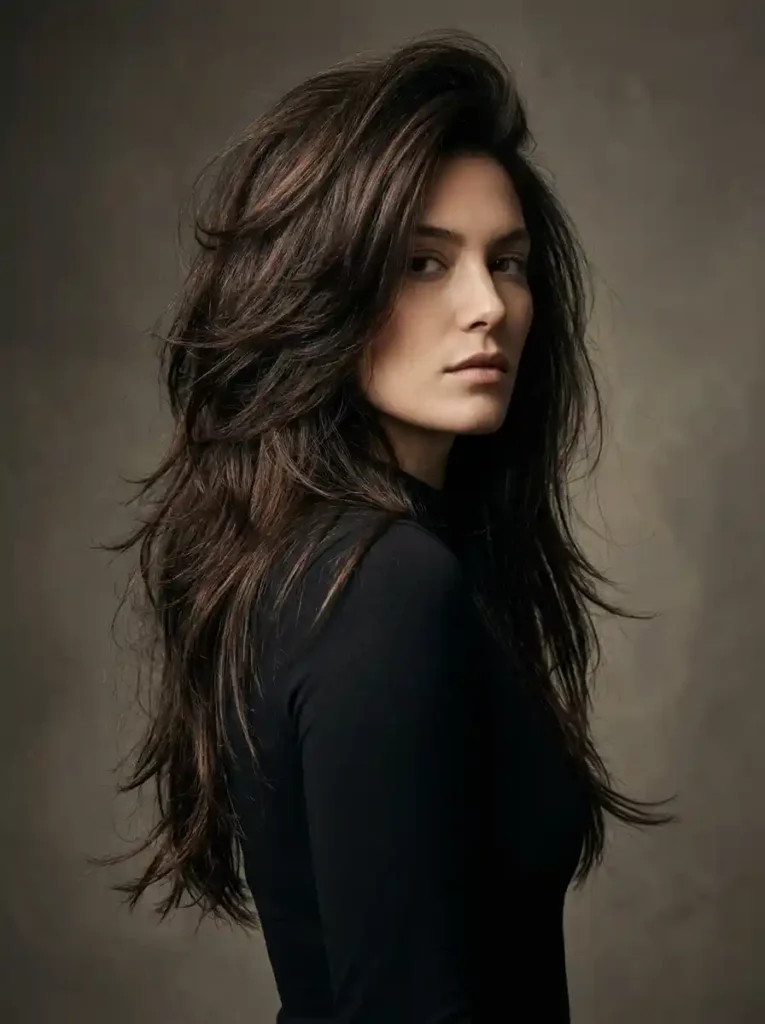
If you love height and movement, a long shag with pronounced crown layers creates a striking silhouette while keeping the lower lengths intact. The shorter sections at the top add lift, while the longer pieces cascade around the shoulders. This variation can work particularly well on medium to thick hair, although fine hair may need more restrained graduation to avoid exposing too much scalp. Discuss the balance between crown volume and lower-length fullness before choosing how dramatic the layering should be.
To recreate the shape at home, apply root-lifting product to damp hair and blow-dry the crown in the opposite direction from where it will eventually sit. Let the roots cool before arranging the part, which helps the lift last longer. Use a large round brush on a few upper sections rather than curling the entire head. Finish with a flexible texture spray, concentrating near the roots and mid-lengths. Too much hairspray can make the layers rigid and reduce their natural movement.
21. Soft Shag With Minimal, Blended Layers

Not every shag needs dramatically choppy layers or a bold fringe. A softer version uses blended graduation to create movement while maintaining a smooth, understated outline. It is a sensible choice if you work in a more conservative environment, prefer a polished appearance, or are trying layered hair for the first time. This approach can suit several hair types, provided the amount of layering is adjusted to the density and natural texture of your hair.
The advantage of blended layers is their flexibility: they can be worn smooth for formal occasions or loosely waved for a more casual finish. Apply a heat protectant and blow-dry with a paddle brush when you want a sleek appearance. For extra movement, add a few bends through the mid-lengths with a curling iron, leaving the ends relatively straight. Tell your stylist that you want visible softness rather than dramatic disconnection, and bring reference photos showing the overall outline you prefer.
22. Shag With Flipped-Out, Retro Ends

Flipped-out ends give a layered shag a playful retro character without requiring a dramatic haircut change. The layers create natural separation, while the outward bend adds emphasis to the lower silhouette. This style is particularly effective on shoulder-length and medium-length hair, where the ends have enough space to move away from the neck. Ask your stylist to shape the perimeter so the flip looks intentional rather than appearing like the hair is simply curling awkwardly at the shoulders.
To create the finish, use a medium round brush and direct the ends outward during the final part of the blow-dry. A flat iron can also produce the bend, provided you use a heat protectant and keep the curve loose. Work in medium-sized sections for a softer result instead of flipping every strand at precisely the same angle. A light finishing spray can hold the shape while allowing the ends to move naturally when you walk or turn your head.
23. Shag Cut With Bold, Face-Framing Layers
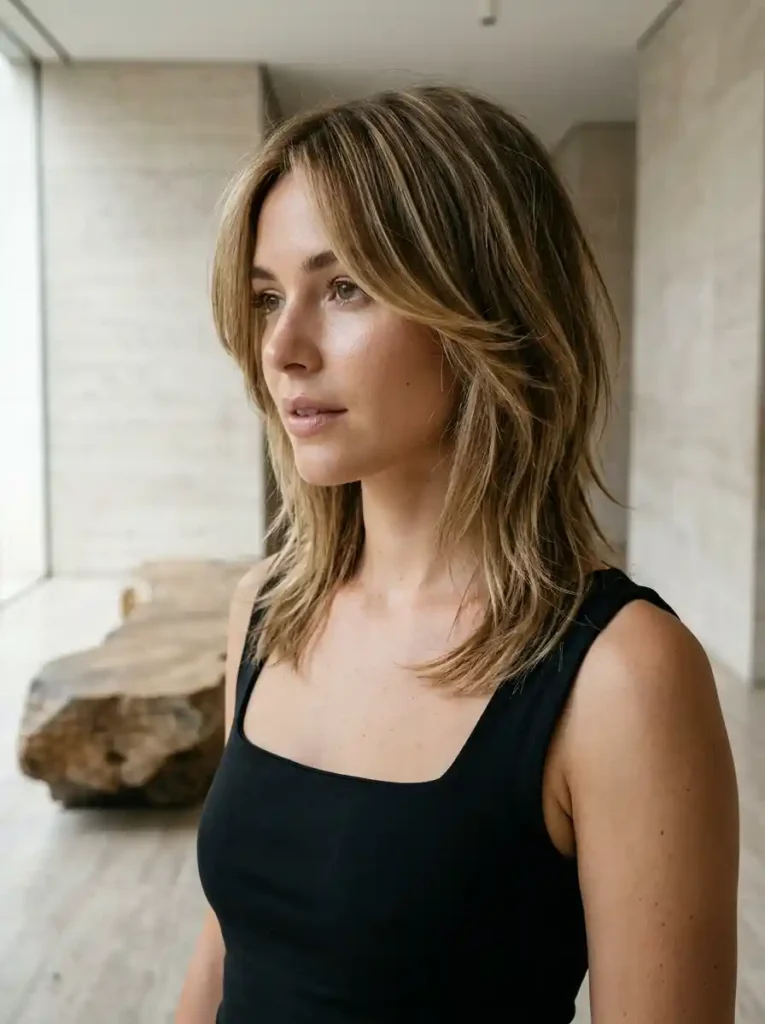
Bold face-framing layers create a noticeable change around the front of the haircut while leaving the rest of the hair relatively versatile. The shortest pieces can begin near the cheekbones, jawline, or chin, depending on the effect you prefer. Cheekbone-level layers draw attention toward the eyes, while longer pieces can create a more gradual frame. This variation is worth considering if you want your hair to feel lighter around the face without removing too much length from the back.
Because these front sections influence the haircut’s overall balance, ask your stylist to assess how they fall when your hair is parted naturally. Styling can be as simple as directing the front pieces away from your cheeks with a round brush. If you prefer a less structured look, let them air-dry and refine only the ends with a small amount of cream. Remember that short face-framing layers may not fit comfortably into every ponytail, so mention your usual hairstyles during the consultation.
24. Effortless Air-Dried Shag With Natural Texture

An air-dried shag is especially appealing if you want a haircut that works with your natural hair pattern rather than requiring a full styling routine every morning. The layers should encourage movement as the hair dries, while the overall shape remains balanced without extensive heat styling. Naturally wavy hair often adapts easily to this approach, but straight or curly hair can also benefit from a customized cut. Be honest with your stylist about how much time you want to spend styling on ordinary days.
The key is choosing products that support your texture without leaving the hair stiff or heavy. Apply a lightweight leave-in conditioner or wave-enhancing cream to damp lengths, then arrange the fringe and face-framing pieces before allowing the hair to dry. Avoid touching it repeatedly while it sets, since this can increase frizz. If the roots need extra lift, clip them loosely upward while drying. Once dry, make only small adjustments with your fingers so the finish retains its natural, unforced character.
Conclusion
The best layered shag is the one that works with your natural hair texture, preferred length, and everyday routine. Before booking your appointment, save two or three reference photos that show the fringe, side profile, and overall silhouette you like. Tell your stylist how much time you typically spend styling your hair, whether you want to preserve length, and how often you’re comfortable getting trims.
If your hair is fine, prioritize strategically placed layers that preserve fullness. For thick hair, discuss removing bulk without making the ends too wispy. Naturally wavy or curly hair benefits from a cut that respects its movement and shrinkage pattern. You can also personalize your shag with curtain bangs, warm highlights, or a softer, blended outline.
Remember, a trendy haircut should feel good beyond the salon mirror. Choose the version that makes you excited to wear your hair every day, not simply the one that looks best in a photograph.


