
A short pixie cut can completely change the way your features, texture, and personal style come together. Whether you want something soft and feminine, edgy and textured, polished and sophisticated, or effortlessly messy, the right pixie can make short hair feel surprisingly versatile. The key is choosing a shape that works with your natural texture and complements the features you want to highlight. From delicate wispy layers to bold cropped sides, there are plenty of ways to make this classic haircut feel current.
In this collection, you’ll find 22 cute short pixie cut ideas designed around different textures, face shapes, styling preferences, and personalities. Some are wonderfully low-fuss, while others offer enough length on top for experimenting with texture, fringe, or volume. You’ll also find practical details about styling and maintenance, helping you decide which version deserves a place on your inspiration board. If you’ve been considering going shorter but want a style that still feels personal, these ideas can help narrow down your perfect look.
1. Soft Wispy Pixie Cut
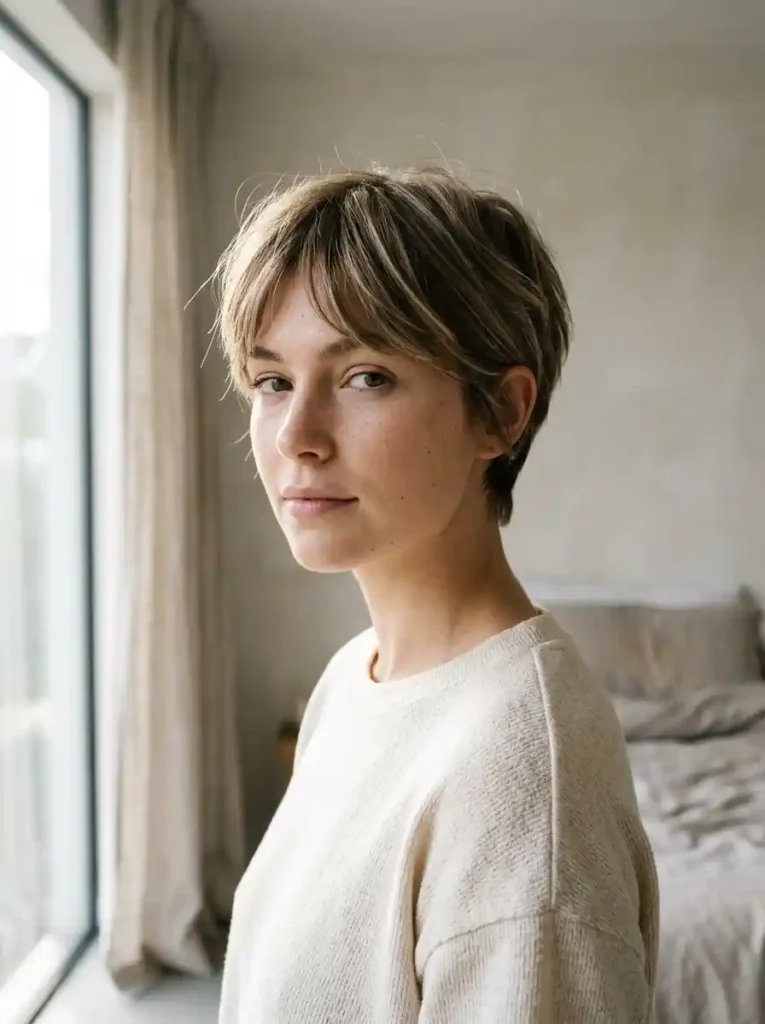
A soft wispy pixie is an excellent choice if you want short hair without an overly severe silhouette. Light feathered layers create movement around the crown, while slightly longer pieces near the temples keep the shape gentle. This version works especially well for fine or medium-density hair because the separated layers can create the impression of fullness. Ask your stylist for subtle texturizing rather than excessive thinning, which can make already-fine hair appear less substantial.
For everyday styling, use a small amount of lightweight styling cream or mousse while the hair is damp. Direct the crown upward with your fingers while allowing the fringe and side pieces to fall naturally. Avoid making every strand perfectly defined; the appeal comes from soft, imperfect movement. A small amount of dry texture spray can refresh the shape between washes without making this delicate pixie feel stiff or overly styled.
2. Textured Pixie with Choppy Layers
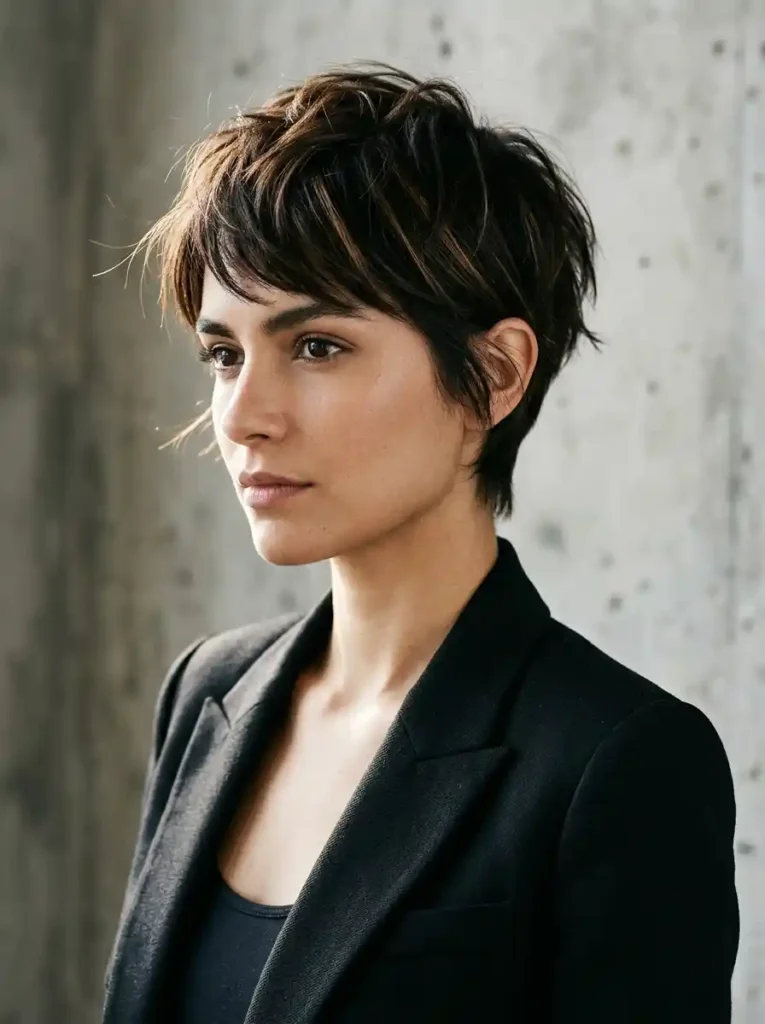
If you prefer a more energetic haircut, a choppy pixie adds personality through deliberately uneven-looking layers. The crown remains slightly longer, allowing individual pieces to stand apart instead of lying flat. This structure can suit straight, wavy, or lightly curly hair, although the final appearance will vary with natural texture. Bring reference photos showing the amount of separation you like, because “choppy” can range from softly piecey to distinctly edgy.
Styling this haircut is mostly about creating controlled texture rather than perfect volume. Work a pea-sized amount of matte paste between your fingertips before touching the ends, concentrating product around the crown. If your hair is naturally thick, ask for internal weight removal so the layers do not become bulky. Regular trims are important because once the shorter sides grow out, the carefully shaped contrast between the tapered areas and textured top can disappear.
3. Pixie Cut with Side-Swept Bangs
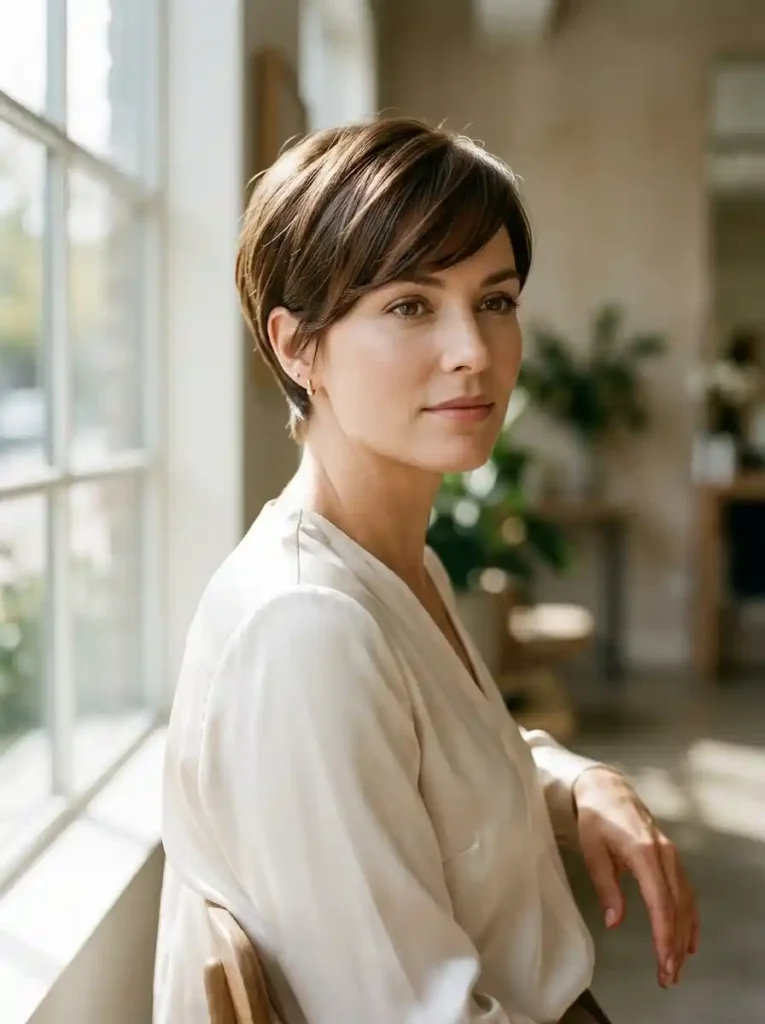
A side-swept pixie gives you the convenience of short hair while retaining a feminine framing element around the forehead. The longer fringe can visually soften angular features and gives you more styling flexibility than an ultra-short crop. It is particularly useful if you are nervous about making a dramatic change because the front retains enough length to tuck, sweep, or reshape. Discuss your natural part with your stylist so the fringe follows the direction your hair already wants to move.
To style it, apply a lightweight volumizing product near the roots and blow-dry the fringe diagonally using a small brush or your fingers. Avoid pulling it completely flat against the forehead if you want a fuller appearance. A tiny amount of flexible hairspray can hold the direction without creating a helmet-like finish. If the fringe starts entering your eyes frequently, schedule a small maintenance trim rather than repeatedly cutting it yourself.
4. Curly Pixie Cut

A curly pixie celebrates natural texture instead of trying to flatten it into a conventional short haircut. Keeping a little extra length through the crown allows curls to form recognizable shapes, while tapered sides prevent the overall silhouette from becoming too wide. Because curls shrink as they dry, your stylist should consider your hair in its natural state when determining length. This is especially important if your curls become significantly shorter after washing.
Keep styling simple by applying curl cream or a lightweight leave-in conditioner to soaking-wet hair. Gently scrunch upward and allow the curls to air-dry, or use a diffuser on low heat and low airflow. Avoid brushing the finished style, since that can disturb definition and create unwanted frizz. A satin pillowcase can also reduce overnight friction. Refresh flattened curls with water and a small amount of product instead of completely restyling every morning.
5. Blonde Cropped Pixie
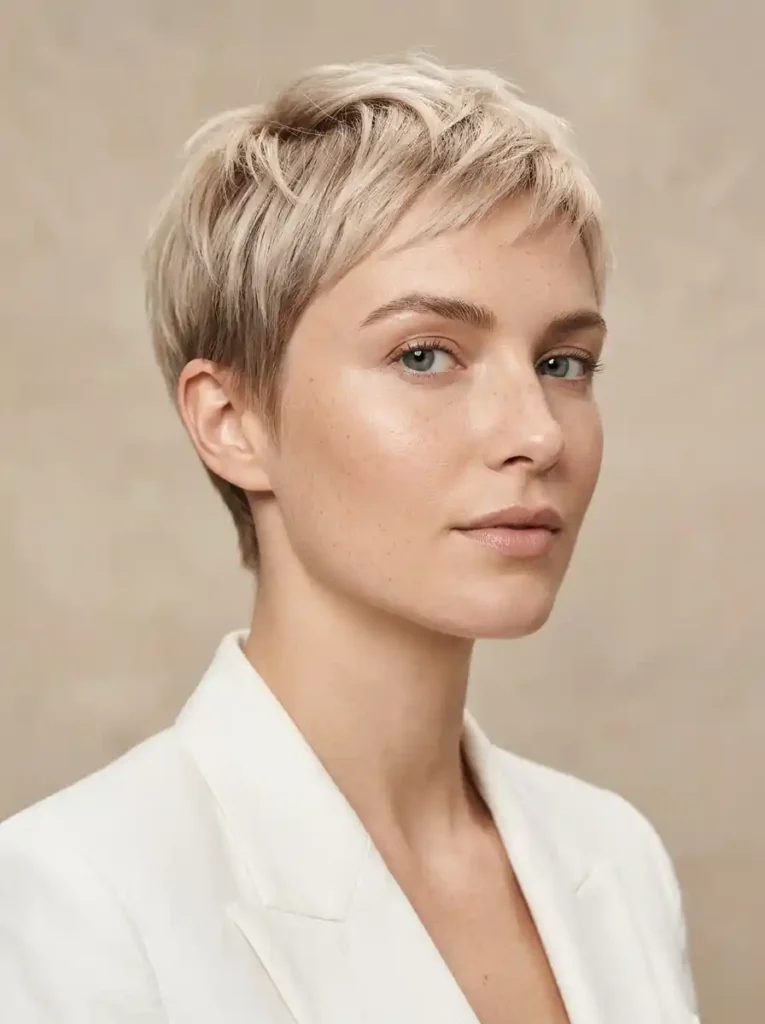
A cropped blonde pixie creates a bright, clean appearance while keeping the haircut itself uncomplicated. A softly dimensional blonde can be more forgiving than a completely flat platinum shade because subtle root depth helps the hair look natural as it grows. If your hair is naturally dark, remember that achieving a very light blonde may require multiple appointments and careful conditioning. Your stylist can recommend a shade that complements your natural undertone and maintenance preferences.
Short blonde hair can reveal dryness more easily because there is less length to visually soften rough ends. Use a gentle shampoo, regular conditioner, and occasional intensive treatment suited to color-treated hair. For styling, a lightweight cream can add polish without weighing down the crop. If you want a slightly undone finish, rub a tiny amount of styling wax between your palms and lightly skim it across the top instead of coating the entire haircut.
6. Messy Bedhead Pixie
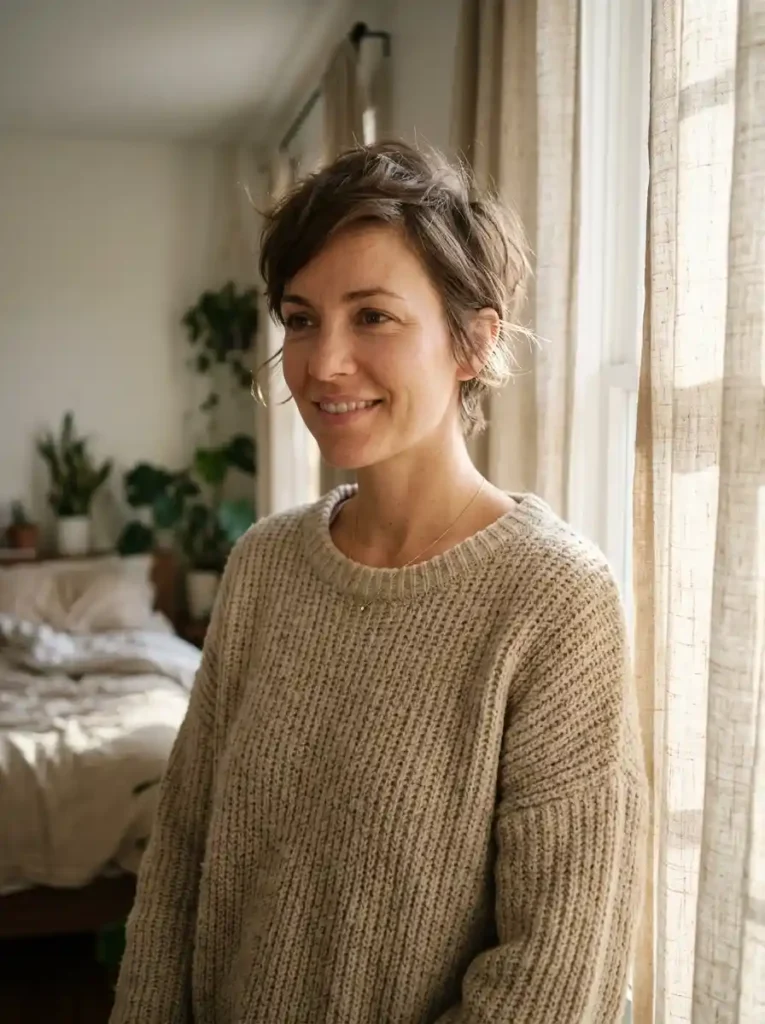
A messy bedhead pixie is perfect when you like hairstyles that look intentionally relaxed rather than meticulously finished. The cut usually combines shorter sides with a longer, layered crown that can be pushed in different directions. It works particularly well with naturally textured or slightly wavy hair because your existing movement becomes part of the style. Straight hair can achieve the same effect with a small amount of texturizing product and quick finger styling.
The trick is creating messiness without losing the haircut’s shape. Start with damp hair and apply a lightweight mousse, then rough-dry it while moving your fingers through the crown. Once dry, pinch a few pieces with matte paste to create separation. Resist adding product everywhere; concentrating it on selected sections keeps the finish airy. If your hair tends to become oily quickly, dry shampoo at the roots can restore texture while extending the style between washes.
7. Sleek Pixie with a Polished Finish
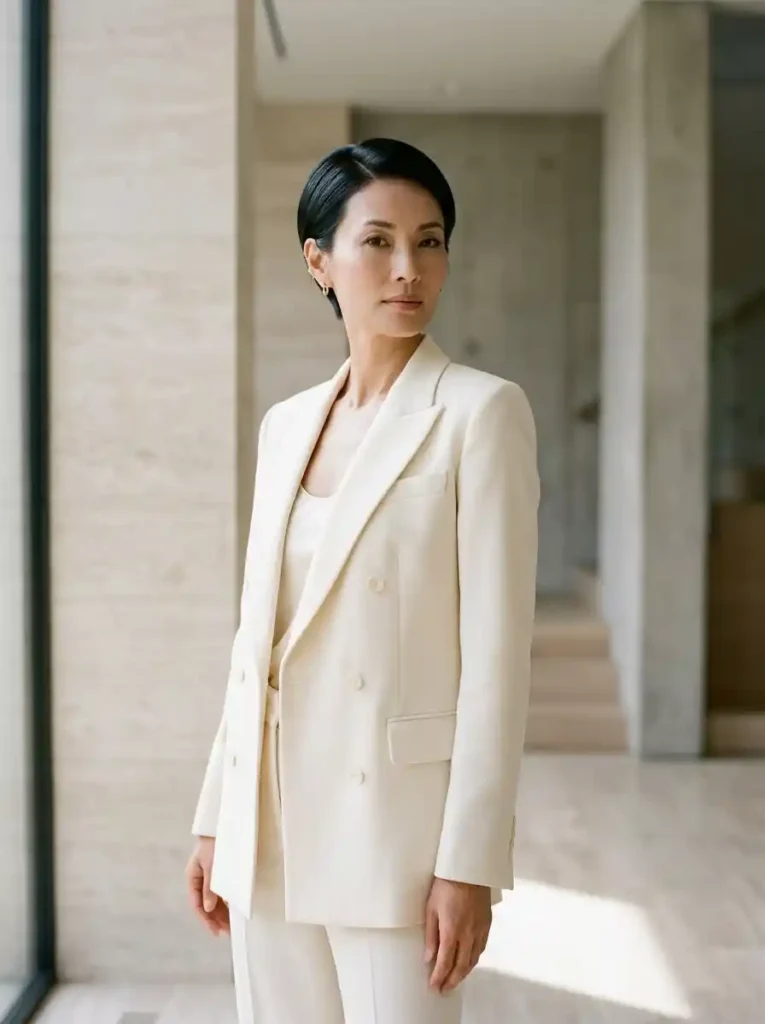
A sleek pixie offers a completely different mood from a tousled crop. Smooth styling emphasizes the haircut’s clean lines, making this version particularly attractive if you enjoy polished outfits or minimalist beauty looks. Straight and naturally smooth hair generally requires less effort to achieve the finish, while wavy hair may need controlled blow-drying. The cut should be precisely shaped because a sleek style exposes uneven edges and awkward transitions more noticeably than a heavily textured finish.
For a smooth result, apply a heat protectant before blow-drying and use a small flat brush to guide the hair close to the head. A tiny amount of lightweight serum can add shine to the ends, but avoid applying too much near the roots. Finish with flexible hairspray if necessary. Frequent trims help preserve the crisp outline, especially around the nape and ears, where even a small amount of growth can change the overall silhouette.
8. Pixie with Long Crown Layers
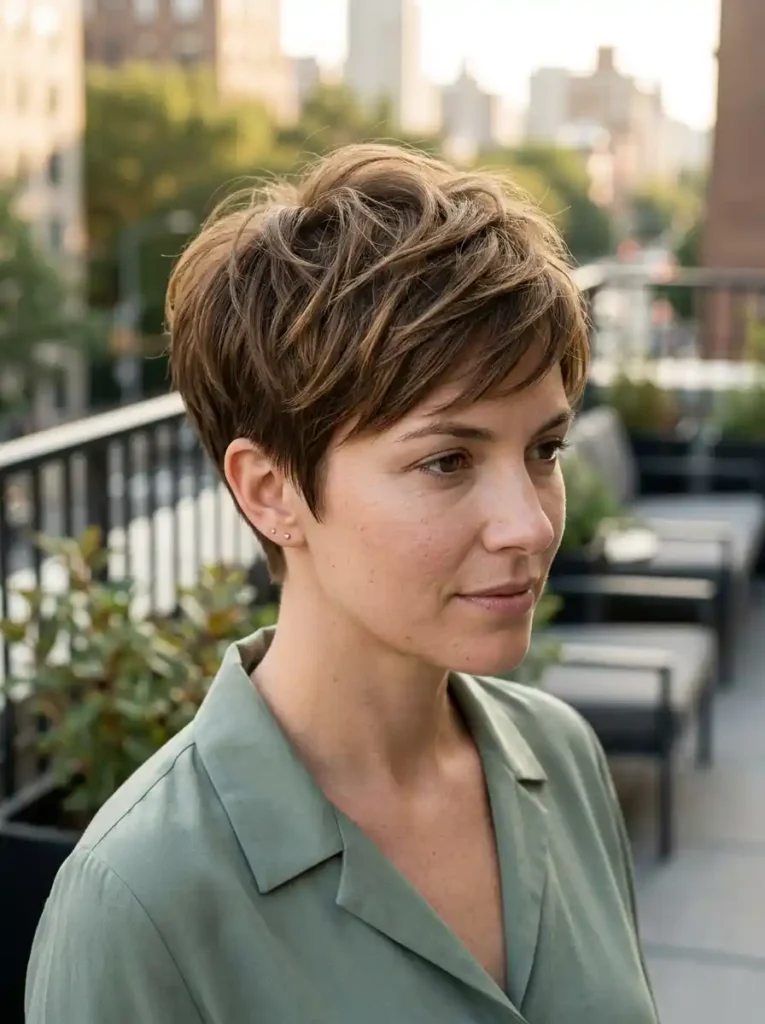
Longer crown layers make a pixie feel more versatile because they provide enough length for different directions and finishes. You can sweep the top backward, create a little height, part it to one side, or let it fall forward for a softer effect. This shape is especially useful for someone transitioning from longer hair who wants styling options. It also gives fine hair an opportunity to build visual volume without relying entirely on heavy products.
Ask your stylist to maintain enough length through the crown to suit your preferred styling routine. At home, experiment with your natural part before reaching for heat tools. A root-lifting spray can create height, while a small round brush helps shape the longer pieces. If you prefer a flatter look, smooth the crown backward with styling cream. The versatility comes from the cut itself, so avoid overloading it with products that restrict movement.
9. Tapered Pixie with Soft Nape
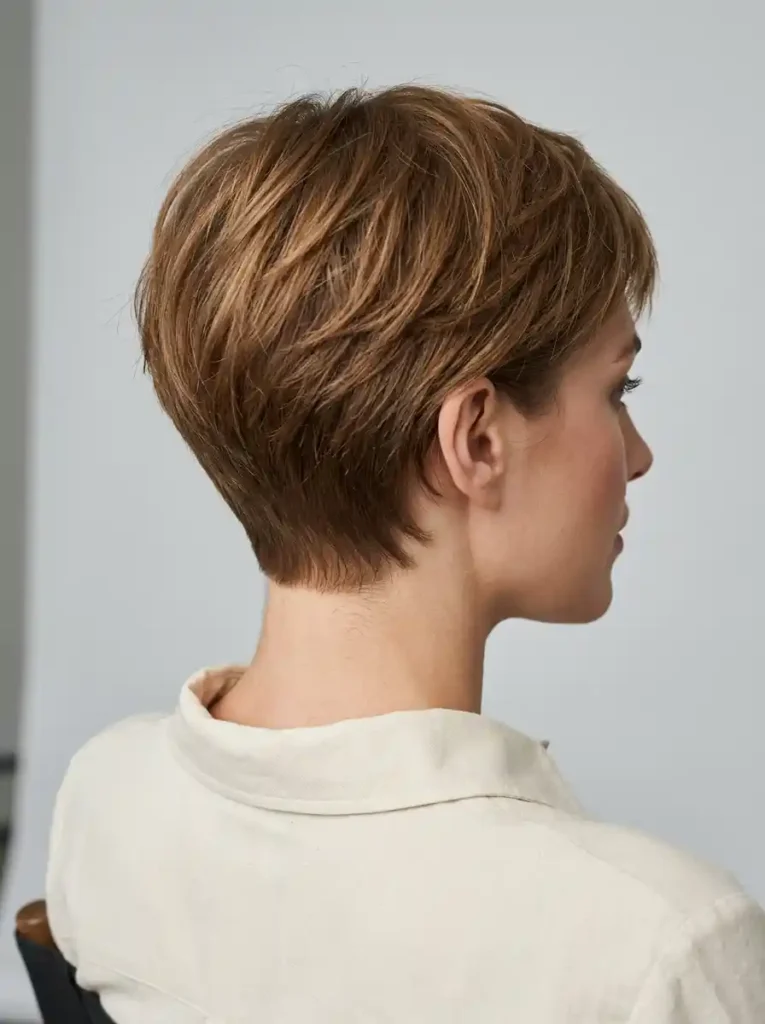
A softly tapered nape creates a neat silhouette without making the haircut feel aggressively cropped. The gradual transition from the longer upper sections into the neckline helps the head shape look balanced and keeps the back of the haircut visually tidy. This is a practical option if you dislike bulky growth around the neck. It can also pair beautifully with a textured crown, giving you contrast between a clean foundation and a softer top.
Because the nape grows quickly, this style benefits from occasional cleanup appointments. You do not necessarily need a full haircut every time; some salons offer shorter neckline maintenance visits between major trims. When styling, keep the back relatively natural and focus your effort on the crown. A lightweight smoothing cream can control stray hairs without flattening the top. If your hair is very thick, ask about gradual removal rather than an extremely tight taper.
10. Piecey Pixie with Micro Bangs
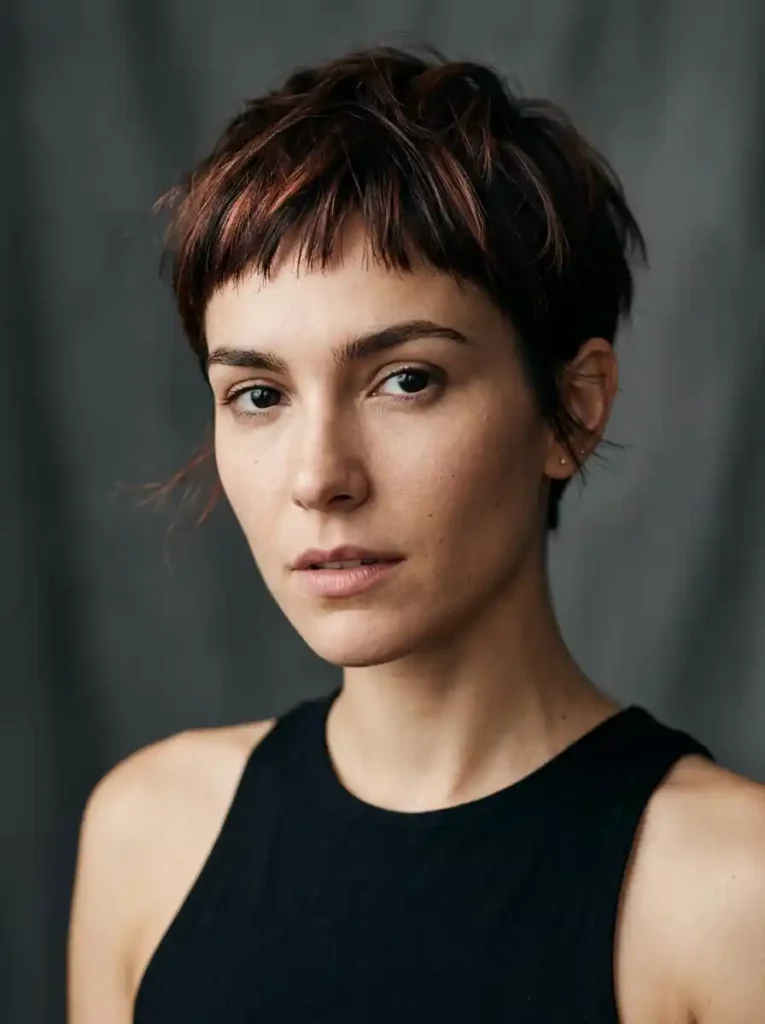
Micro bangs give a pixie a distinctive, fashion-forward personality while placing extra attention on the eyes and brows. They work best when you are comfortable with a clearly exposed forehead and want the haircut to feel intentional rather than conventional. The surrounding pixie should remain textured and balanced so the short fringe does not look disconnected. Before committing, consider how your natural hairline behaves because cowlicks can make very short bangs more difficult to control.
Styling the fringe requires surprisingly little time, but precision matters. Blow-dry the bangs immediately after washing while directing them gently into position with your fingertips. Once dry, use a tiny amount of matte product on the longer textured pieces while leaving the fringe relatively clean. Because micro bangs quickly become noticeably longer, plan for frequent trims. If you are unsure about the length, start slightly longer and gradually shorten the fringe during follow-up appointments.
11. Silver Pixie Cut
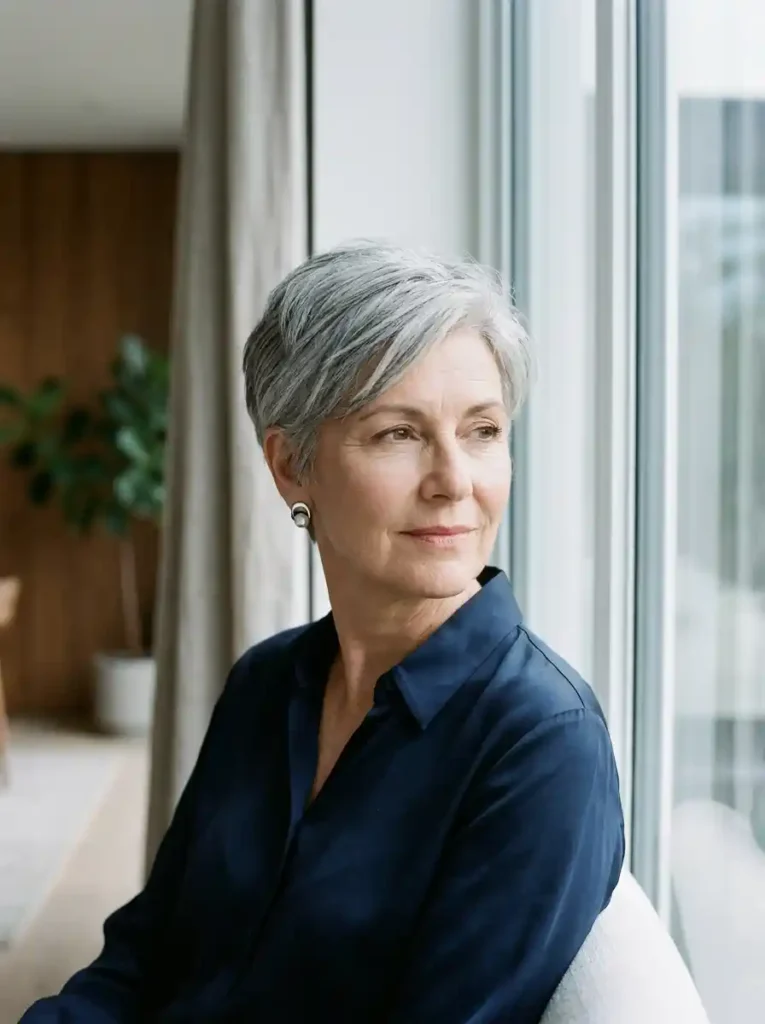
A silver pixie can make naturally gray hair look deliberate, dimensional, and beautifully shaped. Instead of treating gray as something to conceal, this haircut uses its varied tones as part of the visual interest. A layered crown helps silver strands catch the light differently, while a shorter perimeter keeps the overall shape fresh. If you are transitioning from dyed hair, discuss the process carefully with a color professional rather than attempting a dramatic correction at home.
Silver hair often benefits from gentle cleansing and products designed for maintaining cool, clear tones. Avoid excessive heat styling because dryness can make gray strands look rougher and less reflective. For daily styling, use a lightweight cream to separate the crown and smooth the sides. If your natural gray has several shades, embrace them rather than trying to make every strand identical; subtle tonal variation can give the pixie considerably more depth.
12. Shaggy Pixie Cut

A shaggy pixie combines the compact shape of a crop with relaxed, feathered layers that create a slightly undone appearance. It is a useful choice for people who want short hair but dislike overly geometric edges. The extra texture can work beautifully with naturally wavy hair, while straight hair can be encouraged into movement using styling products. Tell your stylist whether you want the shag to remain close to the head or expand around the crown.
This cut looks best when it retains movement, so heavy styling products are usually unnecessary. After washing, scrunch in a small amount of lightweight mousse and let the hair dry naturally whenever possible. If your hair is straight, use a small curling wand on a few crown sections rather than curling everything uniformly. The goal is irregular texture. Trim frequency depends on how quickly your sides and neckline grow, but preserving the layered shape is more important than maintaining an exact length.
13. Pixie with Undercut Sides
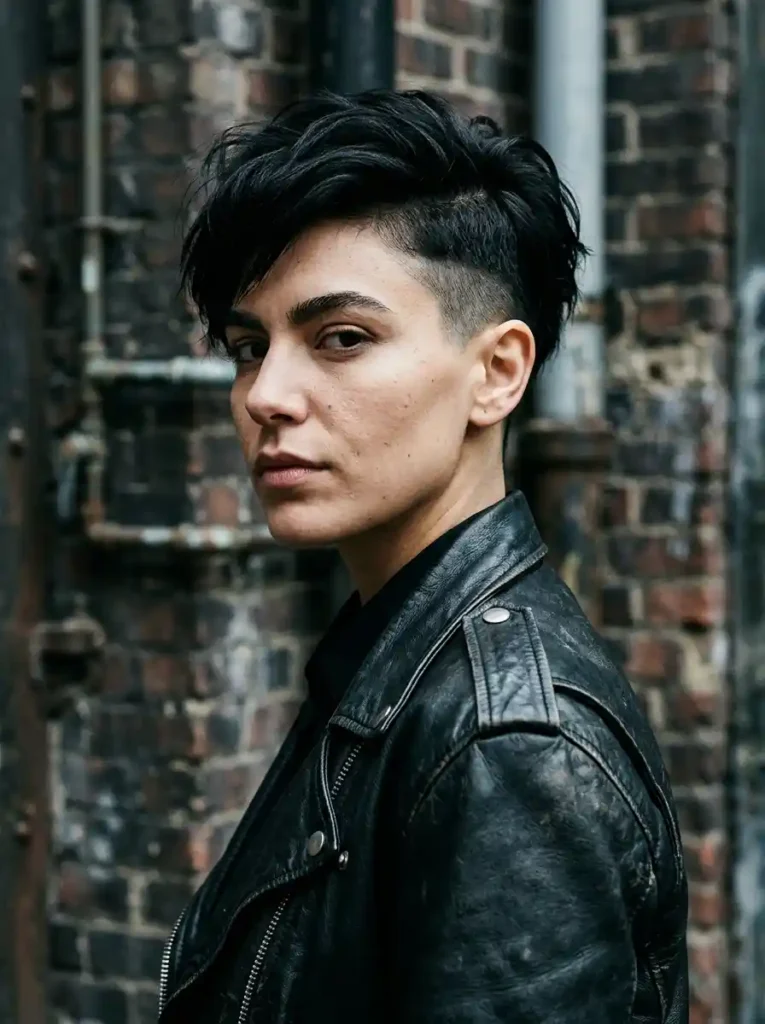
An undercut pixie creates a stronger contrast between the closely trimmed sides and the longer top. This makes the hairstyle feel edgy while keeping enough length above the crown for personalization. It can be especially practical for thick hair because removing weight underneath may make the upper layers easier to control. However, an undercut is a more noticeable commitment, so discuss how high you want it before the clippers come out.
Maintenance is the main consideration with this version. Closely shaved areas show growth quickly, meaning regular cleanup is necessary if you want the contrast to remain sharp. The longer top can be styled sleek, messy, swept sideways, or lifted for volume. For a softer first attempt, ask for an undercut that remains relatively low around the ears and nape. That gives you an edgy detail without making the entire haircut feel dramatically shaved.
14. Soft Pixie Bob Hybrid
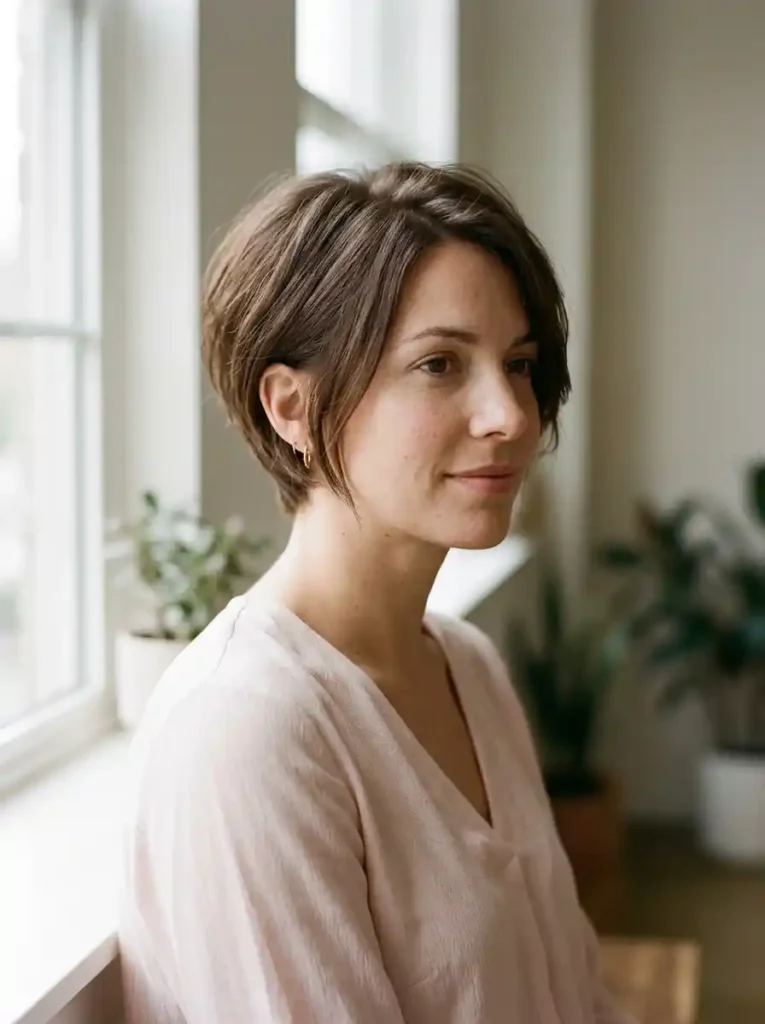
A pixie-bob hybrid is ideal if you want the freshness of short hair without committing to a very cropped perimeter. The front and sides remain longer, creating a softer transition around the face while the back stays compact. This shape can be particularly flattering for people who want some framing around the cheeks or jawline. It is also a useful stepping stone if you are gradually moving from a bob toward a shorter pixie.
Styling depends heavily on the front length you choose. You can tuck the longer pieces behind the ears for a clean appearance or sweep them forward to create more face framing. A lightweight smoothing cream keeps the ends controlled without making them flat. If you have naturally wavy hair, allow the front pieces to retain some movement rather than forcing them perfectly straight. Regular reshaping prevents the hybrid from drifting into an ordinary short bob.
15. Feathered Pixie for Fine Hair
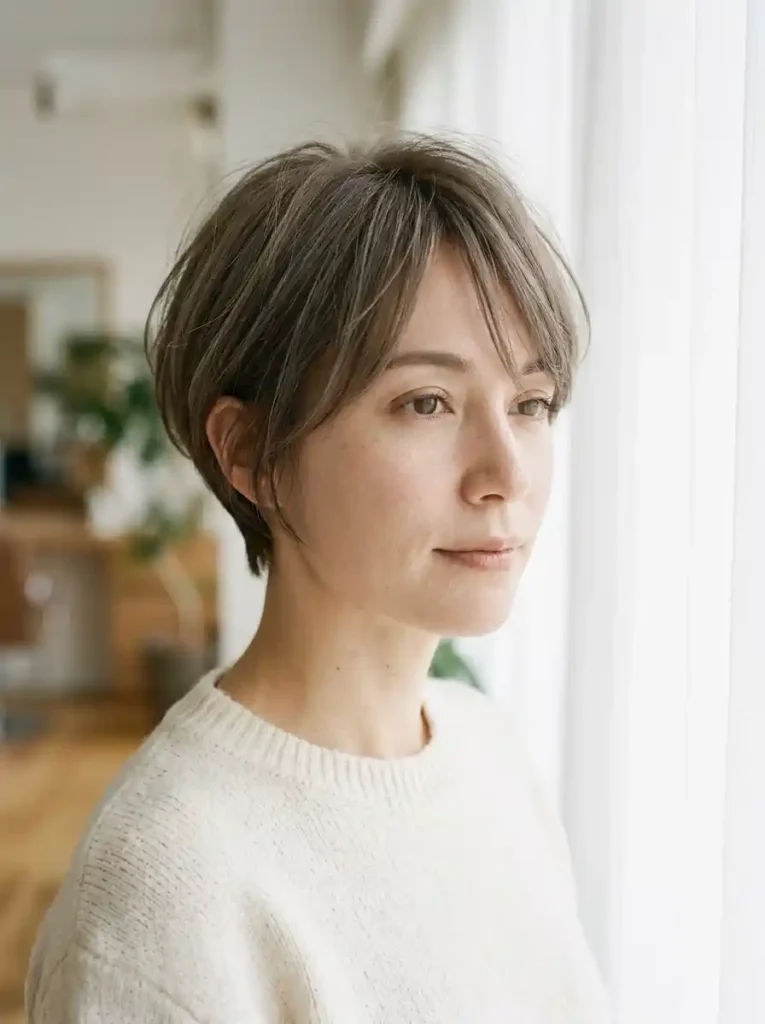
Fine hair can look beautifully airy in a pixie when the cut avoids excessive weight and overly aggressive thinning. Feathered layers allow the ends to separate lightly, creating movement without requiring a large amount of density. Keeping the crown moderately short can also help prevent the hair from collapsing under its own length. Tell your stylist how much volume you naturally have before choosing the exact shape, since fine hair varies considerably from person to person.
Use lightweight products rather than rich creams or oils that can make fine strands fall flat. A volumizing mousse applied mainly at the roots can provide support, while blow-drying with your fingers encourages natural lift. Avoid repeatedly teasing the same area, as unnecessary rough handling can cause breakage. Dry shampoo can add useful texture, but apply it sparingly. The finished look should remain soft and movable rather than artificially stiff.
16. Deep Side-Part Pixie
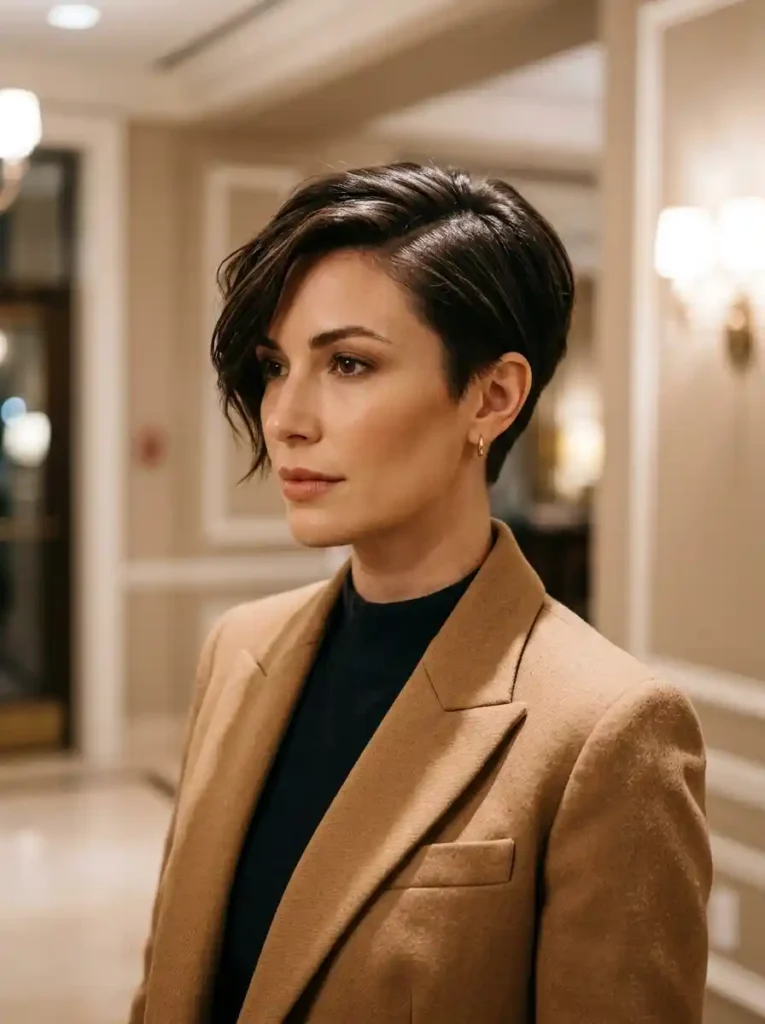
A deep side part instantly changes the proportions of a short pixie and gives it a more sophisticated finish. Keeping extra length on one side allows the hair to sweep across the forehead, creating asymmetry without requiring a dramatic asymmetrical haircut. This approach works particularly well on straight or gently wavy hair. If your natural part is strong, your stylist can help position the cut so the longer section follows its natural direction.
For a polished finish, create the part while your hair is damp and use a fine-tooth comb only where you want definition. Blow-dry the longer side away from the roots first, then guide it across the forehead. A flexible styling cream can provide control while preserving shine. If you prefer a softer result, loosen the part with your fingers after the hair has dried. The same haircut can therefore move from office-ready to casual with minimal effort.
17. Tousled Pixie with Curtain Fringe
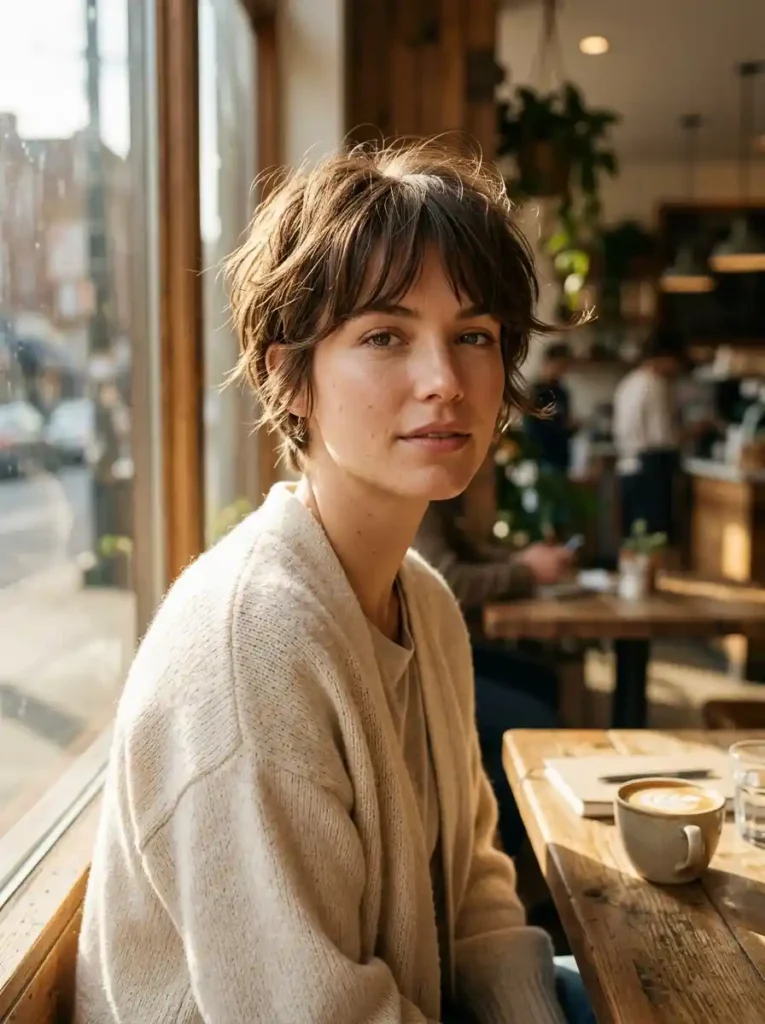
A curtain-inspired fringe can soften a pixie by leaving slightly longer pieces around the center of the forehead. Rather than creating a traditional heavy fringe, the two sections separate naturally and blend into the textured crown. This is a nice option if you want your short haircut to retain some softness around the face. It can work on straight and wavy hair, although naturally stubborn growth patterns may require a little daily direction.
Style the front while your hair is damp so the two sections can be trained to part naturally. Use a small round brush or your fingers to direct each side outward, then let the crown remain slightly tousled. Avoid using too much wax near the fringe because it can separate the strands excessively. If you are growing out a traditional fringe, this shape can also provide a graceful transition without making the haircut feel awkward.
18. Feminine Pixie with Face-Framing Pieces
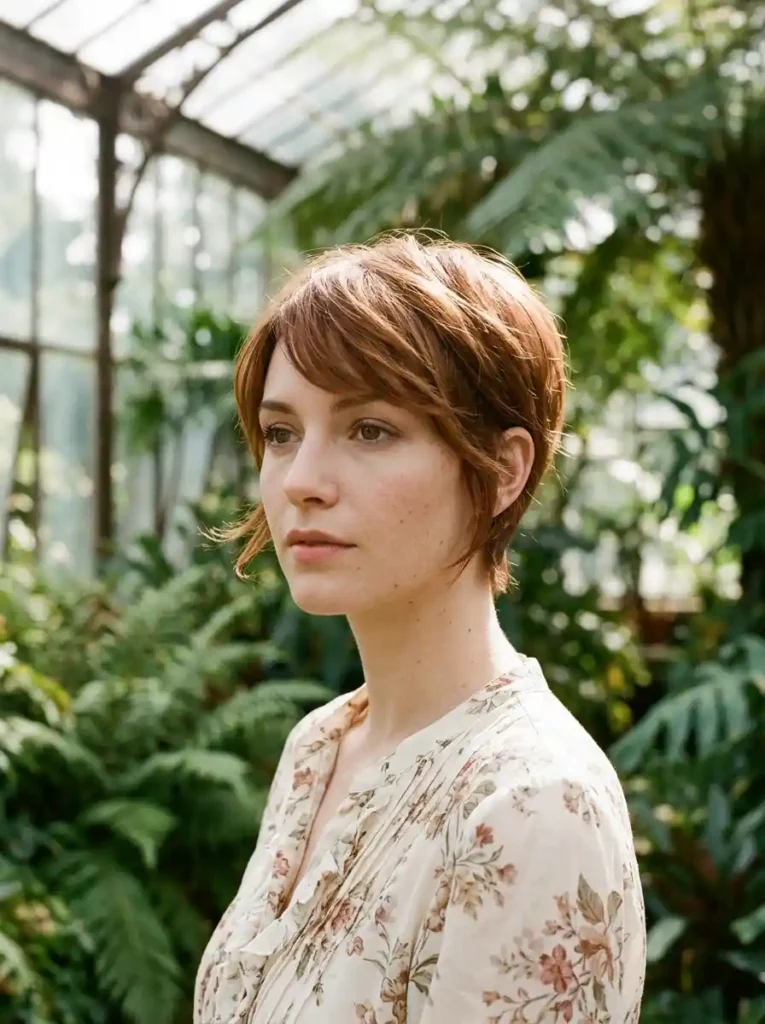
Face-framing pieces can make a short pixie feel softer and more personalized, particularly around the cheekbones and ears. Instead of cutting every section equally short, the stylist leaves selected strands slightly longer so they can follow the contours of the face. This technique works well when you want a feminine appearance without sacrificing the convenience of short hair. Bring photos showing where you want the framing to fall because small length changes can noticeably alter the silhouette.
At home, style these pieces according to your natural texture rather than forcing them into one direction. A tiny amount of smoothing cream can keep them polished, while a small curling iron can add a gentle bend if needed. Avoid making the framing strands too thick, as they may look disconnected from the rest of the haircut. Occasional trimming keeps the shape intentional while allowing you to experiment with different placements.
19. Edgy Spiky Pixie
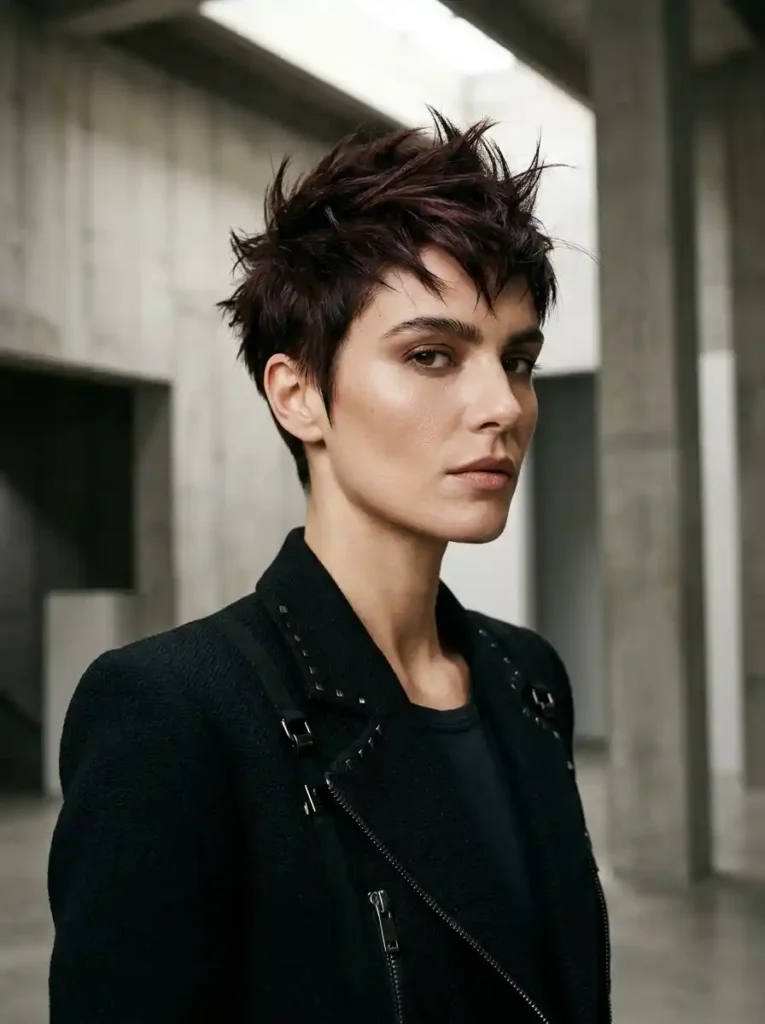
A spiky pixie is a playful choice when you want your haircut to have obvious attitude and structure. The crown needs enough length to lift upward, while the sides are generally kept shorter to emphasize the contrast. Straight or coarse hair can make this shape easier to maintain, although styling products can create spikes on other textures too. The important part is communicating whether you want subtle separated tips or a deliberately dramatic silhouette.
Start with completely dry hair and warm a small amount of firm styling paste between your palms. Push selected crown pieces upward rather than coating every strand. Pinching individual sections creates definition while keeping the rest flexible. A strong but lightweight hairspray can secure the finished shape. Because the look depends on contrast between short sides and a lifted top, regular trims are useful for preserving the intended proportions as the hair grows.
20. Wavy Pixie with Natural Texture
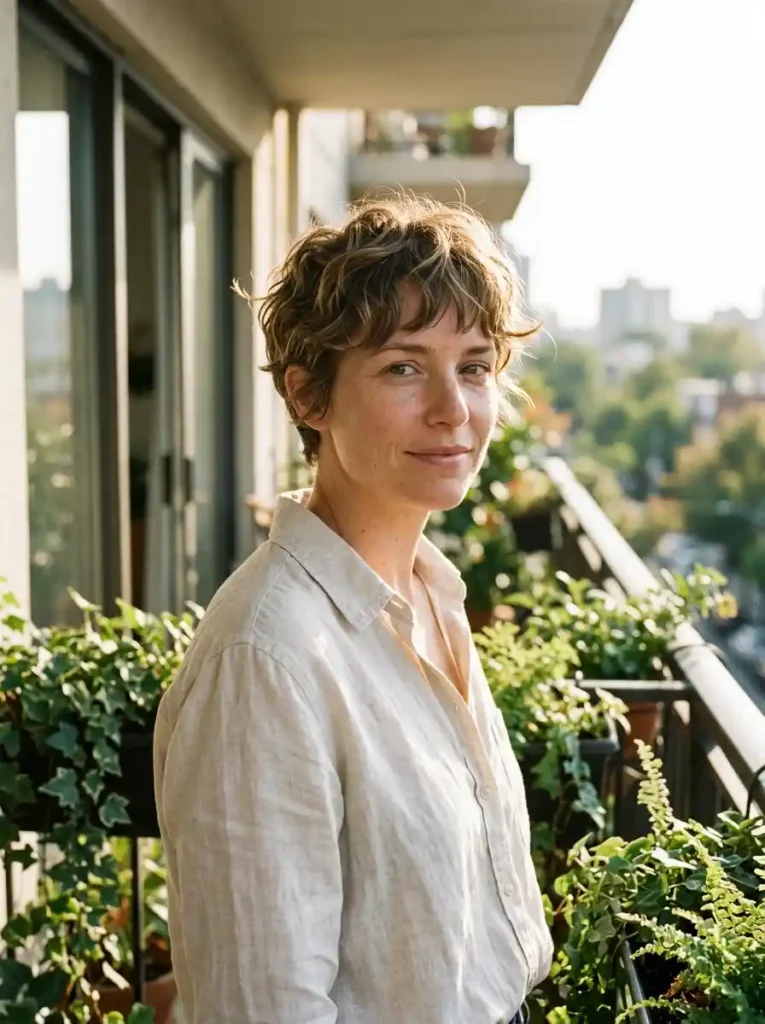
A wavy pixie allows natural bends to become part of the haircut rather than something you need to fight. The crown should retain enough length for the waves to form properly, while shorter sides provide shape and prevent the silhouette from becoming overly rounded. This version is particularly appealing if you want a wash-and-wear feel but still appreciate some intentional styling. Your stylist should examine your natural wave pattern before deciding where to remove weight.
After washing, apply a lightweight curl or wave cream and gently scrunch the crown. Let the hair air-dry or use a diffuser on low heat to preserve the wave pattern. Avoid brushing after the hair has dried because it can turn defined waves into puffiness. If the crown becomes flat overnight, lightly mist it with water and reshape the waves using your fingers. A good haircut should make your natural texture easier, not harder, to manage.
21. Classic Short Pixie Cut
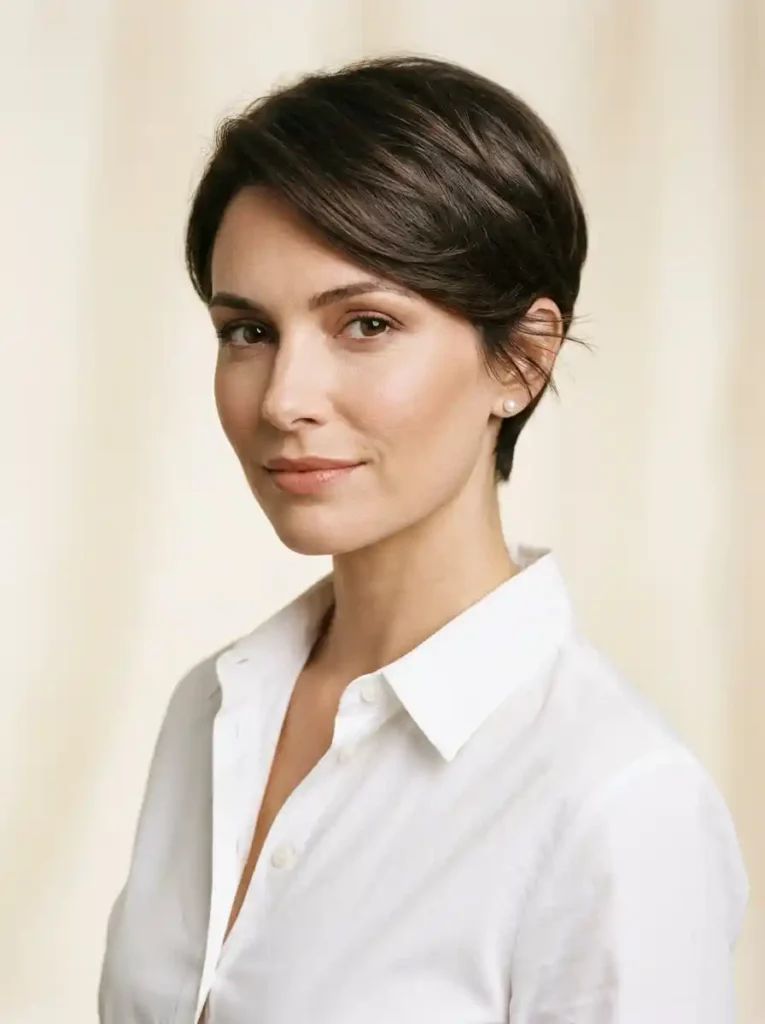
The classic short pixie remains appealing because its shape is clean, balanced, and easy to understand. The sides and back are neatly tapered while the crown retains enough softness to avoid looking overly severe. This version suits someone who prefers a timeless haircut rather than a heavily trend-driven shape. It can also be adapted subtly for different textures by changing the amount of layering and the length left through the top.
Maintenance is straightforward but consistent. Keep the neckline and around-ear areas trimmed so the clean silhouette remains visible, especially if your hair grows quickly. For styling, a light cream or smoothing lotion is usually enough for a polished appearance. If you want extra volume, blow-dry the crown upward with your fingertips. Because the haircut itself provides most of the structure, you can keep the daily routine remarkably simple.
22. Soft Pastel Pixie with Textured Top
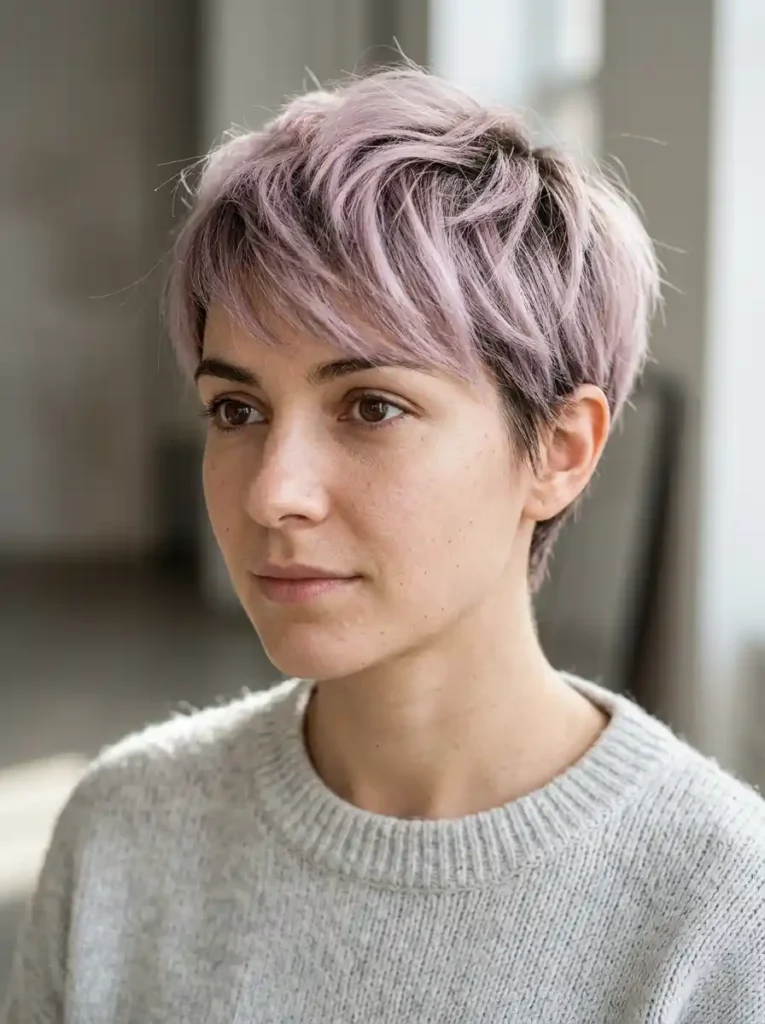
A subtle pastel pixie can turn a short haircut into a distinctive statement while keeping the overall shape wearable. Dusty lavender, muted rose, or soft peach can add personality without looking overly bright. The textured crown helps the color catch light across different sections, making the shade appear dimensional. Pastel coloring generally requires a light base, so ask a professional about the condition of your hair before pursuing a very pale result.
Pastel shades often fade faster than natural-looking colors, so maintenance should be part of the decision. Use cool or lukewarm water, a gentle color-safe cleanser, and minimize unnecessary heat styling. Your stylist may recommend a tinted conditioner to refresh the tone between appointments. Keep the haircut itself relatively simple if the color is your main statement. That balance allows the pastel shade and textured pixie shape to complement rather than compete with each other.
Conclusion
A short pixie cut can be much more versatile than its length suggests. The biggest difference between these styles comes from details such as crown length, fringe shape, texture, tapering, and the amount of styling you want to do each morning. Before choosing a haircut, consider your natural texture, how quickly your hair grows, how often you can visit the salon, and whether you prefer a polished or undone finish.
If you are still deciding, save a few of your favorite pixie cut ideas and compare the details rather than simply choosing the overall appearance. Notice which fringe, neckline, crown shape, and texture appeal to you most. Bringing those specific references to your stylist can make the consultation much more productive and help create a short haircut that feels genuinely suited to you.


