
Sharp cheekbones can make a diamond face look striking, but they can also make hairstyle choices feel tricky. The widest point usually sits around the cheekbones, while the forehead and jawline appear narrower. The right cut can soften those angles while keeping your natural structure visible. These hairstyles for diamond faces offer varied lengths, textures, bangs, and styling ideas. You will find polished options, relaxed looks, and easy choices for different hair types. Each idea also includes practical details to discuss with your stylist.
1. Soft Shoulder-Length Layers
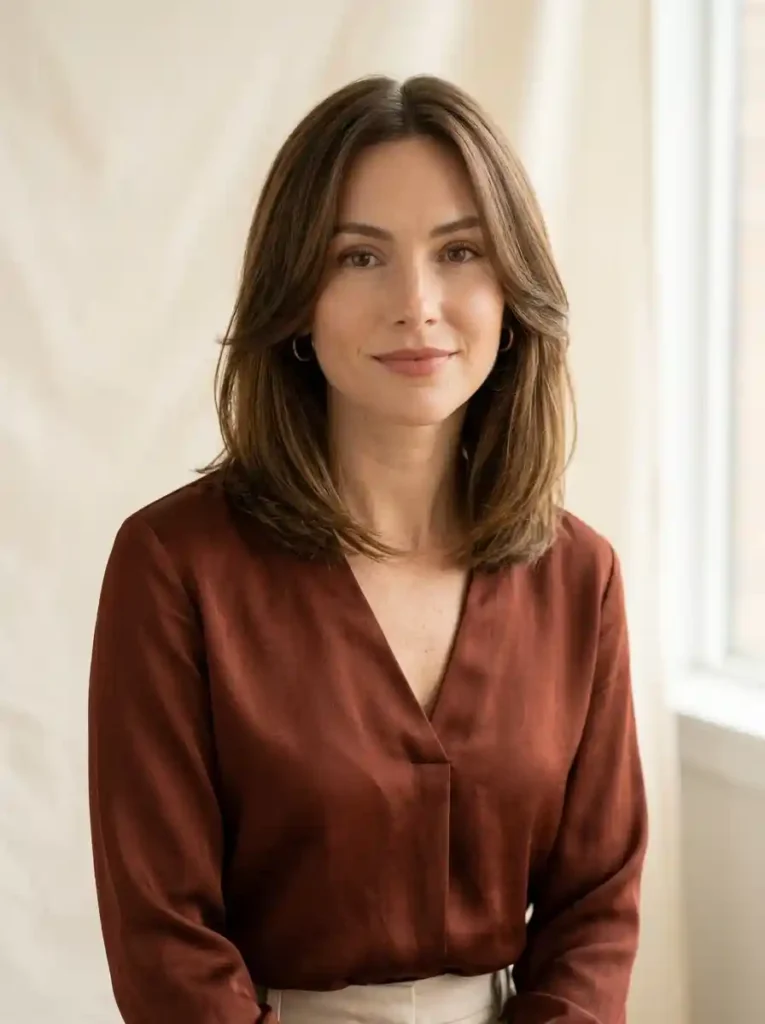
A shoulder-length layered cut creates a balanced silhouette without overwhelming the face. The length sits near the collarbone, giving the style enough weight and movement. Soft layers can begin below the widest part of the cheekbones. This placement helps avoid adding unnecessary volume directly beside the cheeks. The result feels polished but still relaxed. Medium-density hair often suits this shape particularly well. Subtle bends through the ends can make the haircut look fuller and more dimensional.
Ask your stylist for blended layers rather than short, choppy sections around the cheeks. Keep the longest pieces near the collarbone for a graceful outline. A round brush can create gentle movement without producing excessive volume. For naturally wavy hair, let the texture form its own shape before refining the ends. Stylist Tip: keeping the first face-framing layer below the cheekbone can create softer visual balance.
2. Side-Swept Curtain Bangs
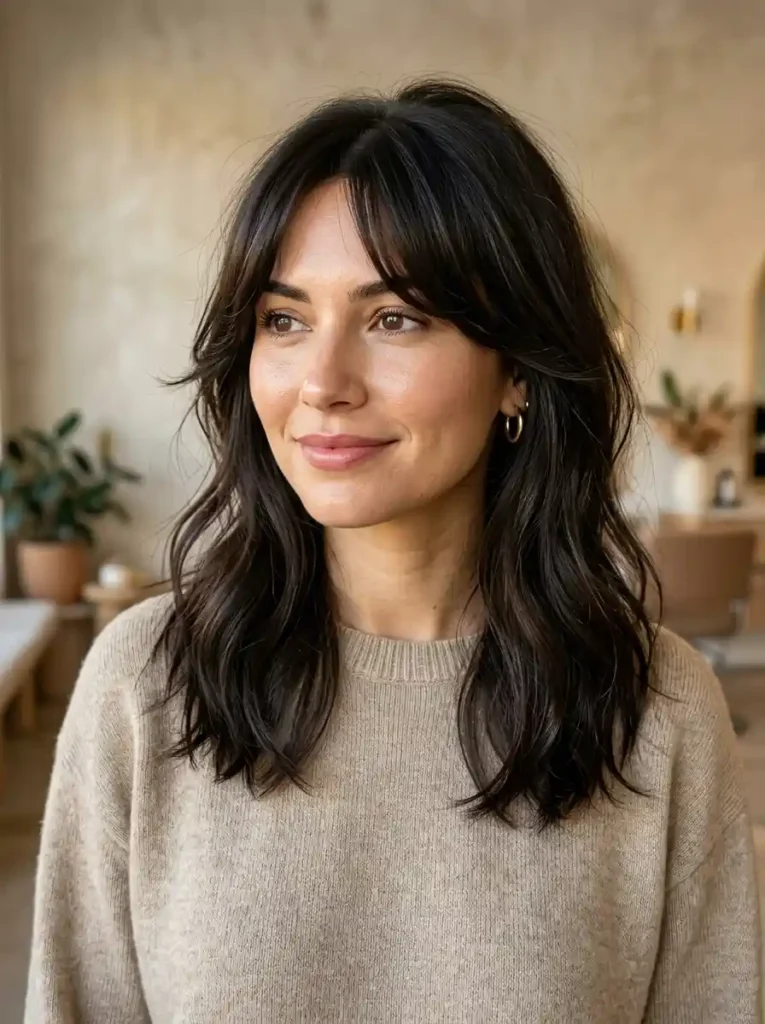
Side-swept curtain bangs offer a soft way to frame a diamond face. Their curved shape directs attention across the forehead instead of emphasizing cheek width. The longer outer pieces blend naturally into the rest of the haircut. This makes them especially appealing for people who want bangs without a severe change. They can work with straight, wavy, or lightly curly textures. A center part creates symmetry, while an off-center part makes the style feel more casual and effortless.
Ask for longer curtain bangs that connect gradually with face-framing layers. Avoid cutting the shortest section directly at the widest part of the cheeks. Blow-dry the fringe away from the face using a medium round brush. You can also air-dry the bangs and reshape them with your fingers. Pro Tip: longer curtain bangs are easier to grow out because they can quickly blend into surrounding layers.
3. Textured Chin-Length Bob
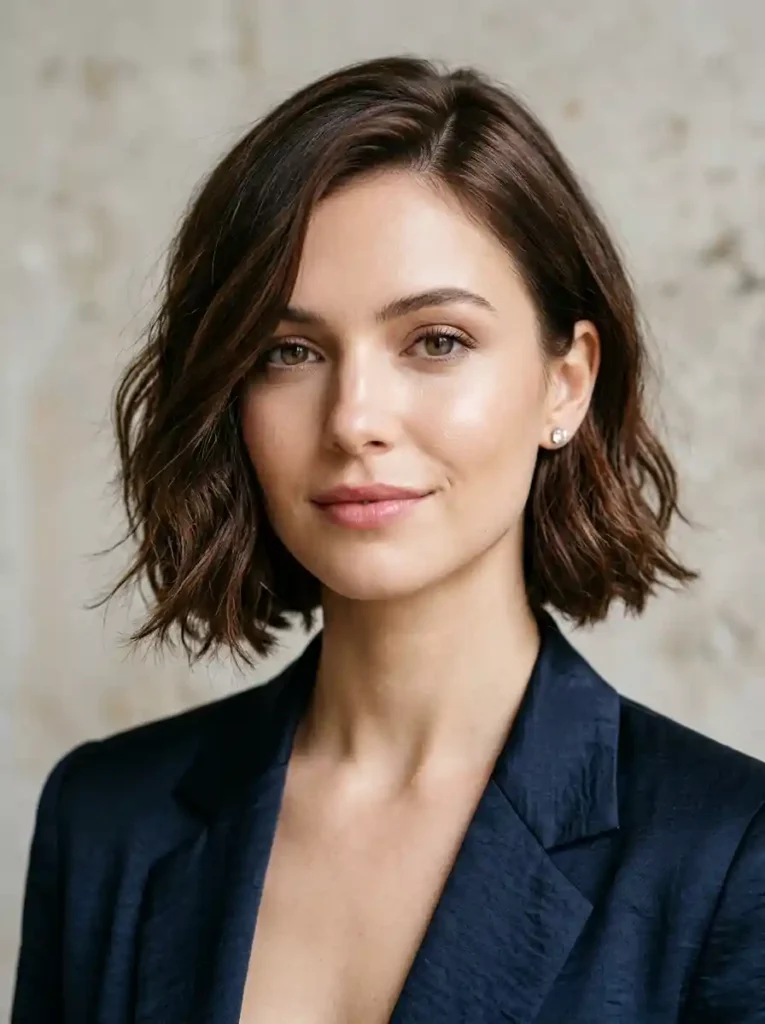
A textured chin-length bob can add gentle fullness around a narrower jawline. The ends create visual interest without making the haircut appear overly heavy. Light waves make the shape especially appealing because they soften the clean bob outline. A side part adds another layer of movement and prevents the look from feeling too symmetrical. This style suits people who enjoy modern haircuts with a slightly undone finish. It can also make fine hair appear more substantial through carefully placed texture.
Ask your stylist to preserve enough weight at the ends if your hair is fine. Excessive thinning can make the bob lose its shape. For styling, apply lightweight mousse before drying and twist a few sections away from the face. Finish with a flexible spray instead of a stiff product. Common Mistake: removing too much bulk from the ends can make a chin-length bob look sparse rather than intentionally textured.
4. Long Layers With Loose Waves
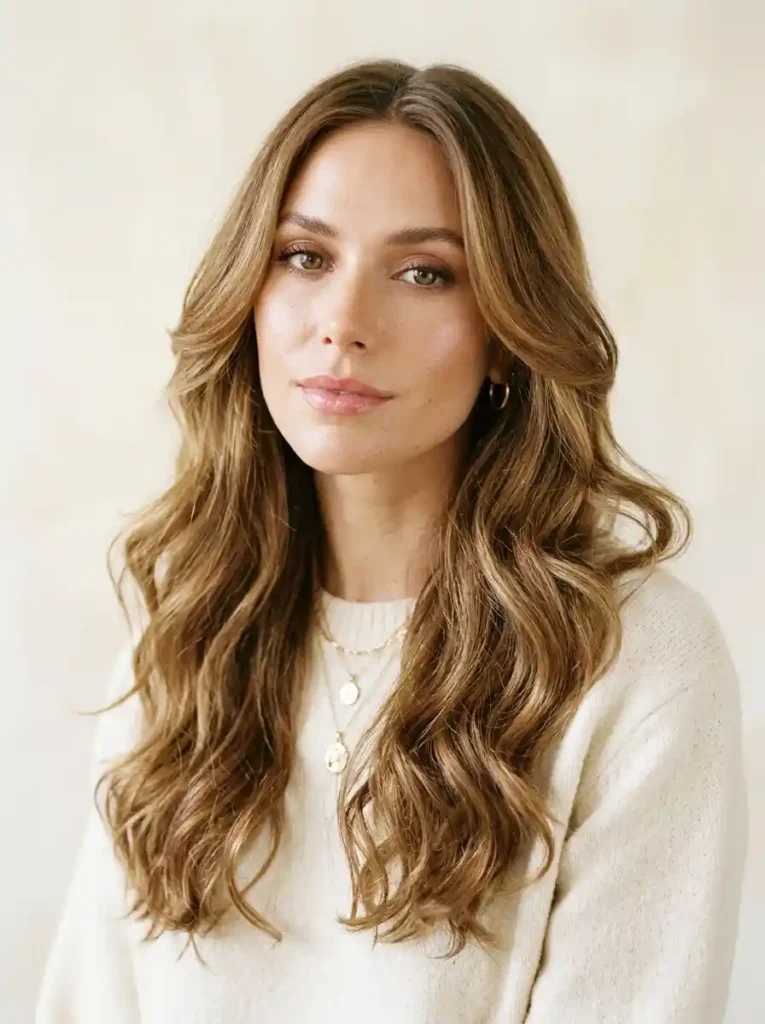
Long layered waves give diamond faces an elegant, flowing silhouette. The length draws the eye downward while loose waves add softness around the lower face. Layers should remain long enough to maintain a smooth transition between sections. This approach works beautifully for medium to thick hair because the layers remove some visual heaviness. It also suits people who prefer keeping significant length. Warm brunette, caramel, or natural black shades can emphasize the dimensional movement.
Use a large curling iron or wide rollers to create relaxed waves rather than tight curls. Alternate the direction of some sections for a natural finish. Brush through the waves gently after they cool. Ask your stylist to concentrate shorter layers below the cheekbones. Stylist Tip: long layers should follow the natural fall of the hair, especially when the hair is thick or naturally wavy.
5. Sleek Side-Parted Lob
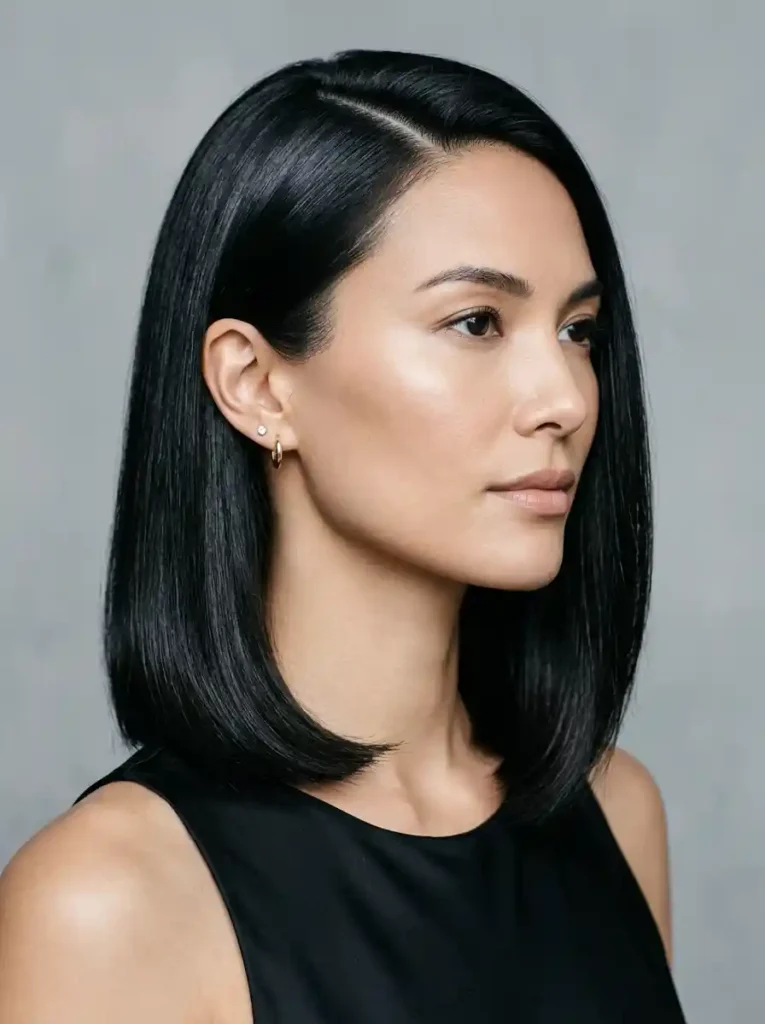
A sleek lob offers a polished alternative to heavily layered hairstyles. Its length usually falls between the chin and shoulders, giving the jaw area a defined but gentle outline. A deep or moderate side part creates asymmetry and can visually soften strong cheekbone structure. Straight hair shows the haircut’s clean geometry particularly well. This style suits professionals and anyone who prefers refined, low-fuss styling. It also provides enough length for ponytails and simple updos.
Request a lob that finishes around the upper shoulder or slightly below the chin. Avoid an overly blunt line directly across the widest cheek area. Use a heat protectant before straightening and finish with a small amount of smoothing serum. Pro Tip: a side part can change the appearance of a simple lob dramatically without requiring a different haircut.
6. Wispy Bangs With Medium Layers
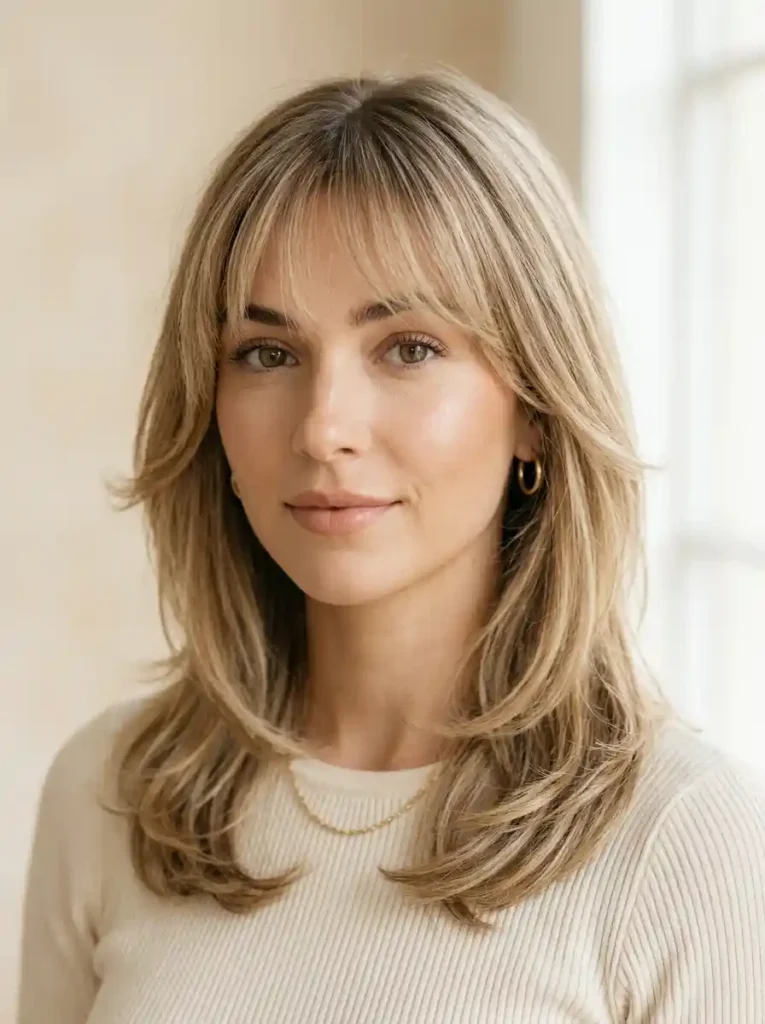
Wispy bangs create a delicate frame around the upper face without forming a heavy horizontal line. Their lighter texture keeps the forehead visible and makes the overall haircut feel airy. Medium layers below the cheeks add movement without dramatically reducing length. This combination works well for people who want a softer appearance without committing to thick bangs. Fine to medium hair can particularly benefit from the lightweight shape. Natural bends can make the fringe look relaxed rather than overly styled.
Ask for sparse, feathered bangs that can separate naturally. The shortest pieces should not become too dense across the forehead. Blow-dry them gently from side to side using low heat. Let them settle before separating individual strands with your fingertips. Common Mistake: cutting wispy bangs too thick can remove the light quality that makes this style distinctive and easy to wear.
7. Collarbone Cut With Flipped Ends
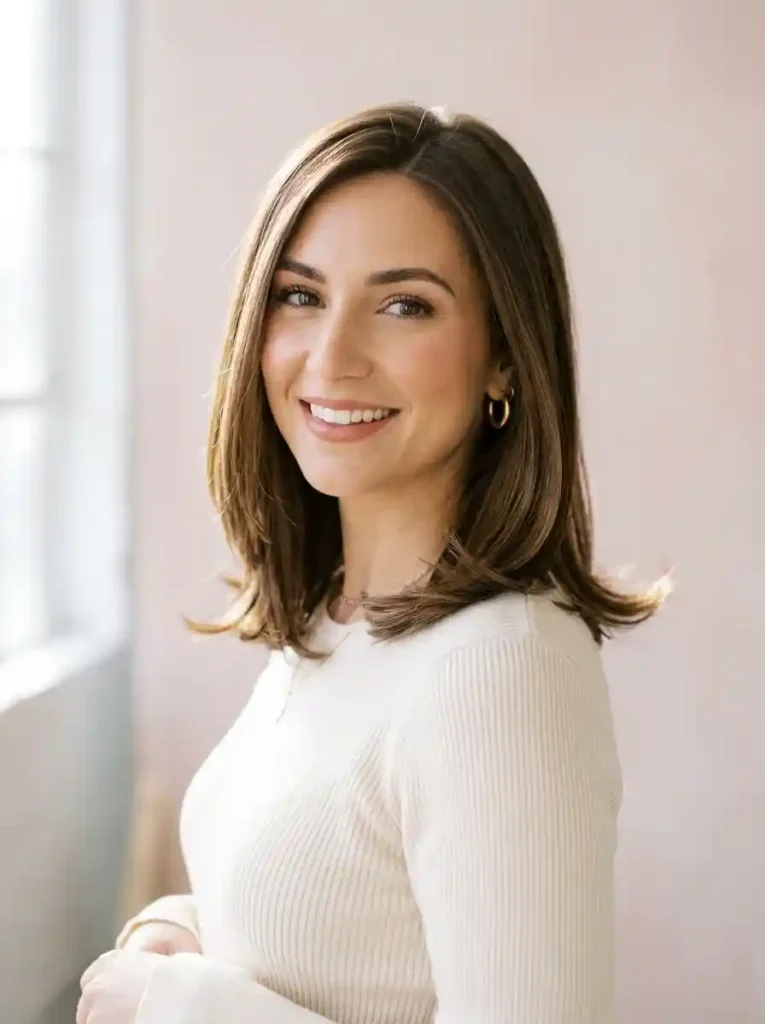
A collarbone cut with flipped ends adds playful movement to a classic medium length. The ends curve outward instead of falling heavily against the neck. This creates a lively silhouette while maintaining enough length for versatile styling. The shape works especially well when the hair has natural body. It can also suit straight hair that holds a blowout well. The overall look feels youthful without depending on a specific age or trend.
Use a round brush to direct the ends outward while drying. A large barrel curling iron can create the same effect on dry hair. Keep the layers subtle so the flipped ends remain the main feature. Stylist Tip: ask for a collarbone perimeter with gentle internal layers if your hair tends to look bulky through the lower sections.
8. Side-Parted Pixie With Soft Volume
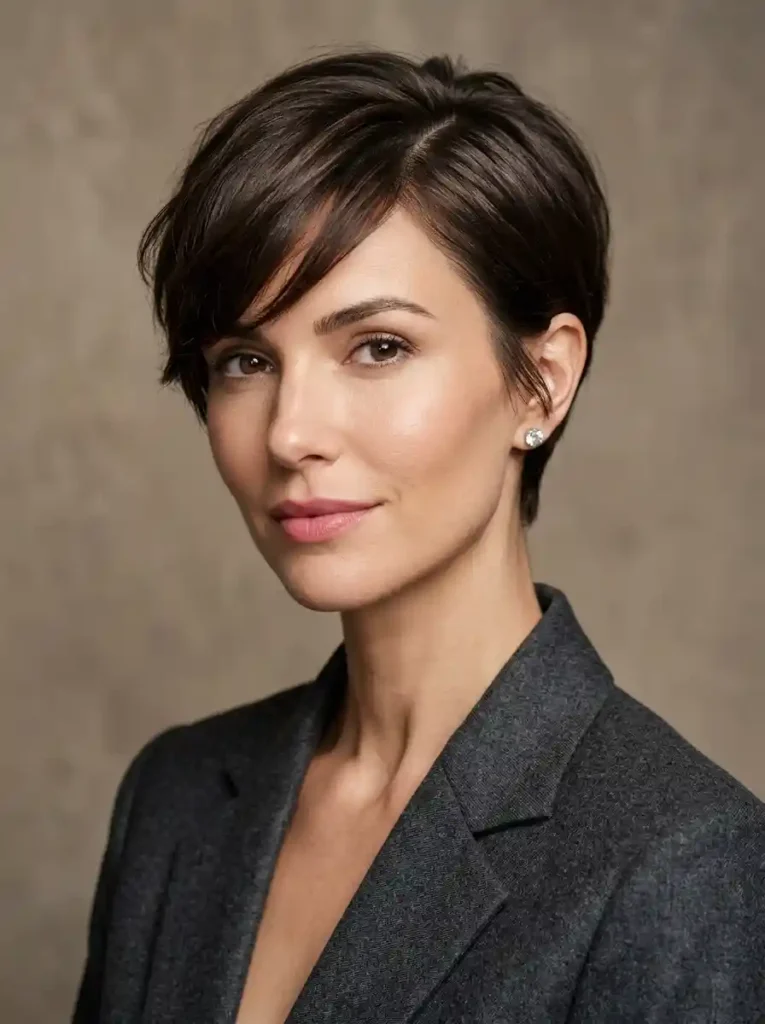
A side-parted pixie can highlight the natural structure of a diamond face while adding softness through the top. The longer upper section creates a diagonal line across the forehead. Slight texture prevents the haircut from appearing too rigid. This is an excellent option for someone who enjoys short hair and wants a confident, editorial appearance. It also exposes the neck and jawline, making the overall shape feel clean and intentional.
Ask your stylist to keep some length through the top rather than creating an extremely uniform crop. Style the longer section diagonally with a lightweight molding cream. The sides can remain neat while the top stays touchable. Pro Tip: directional texture is especially useful in short hair because it changes the silhouette without adding physical length.
9. Soft Shag With Face-Framing Pieces
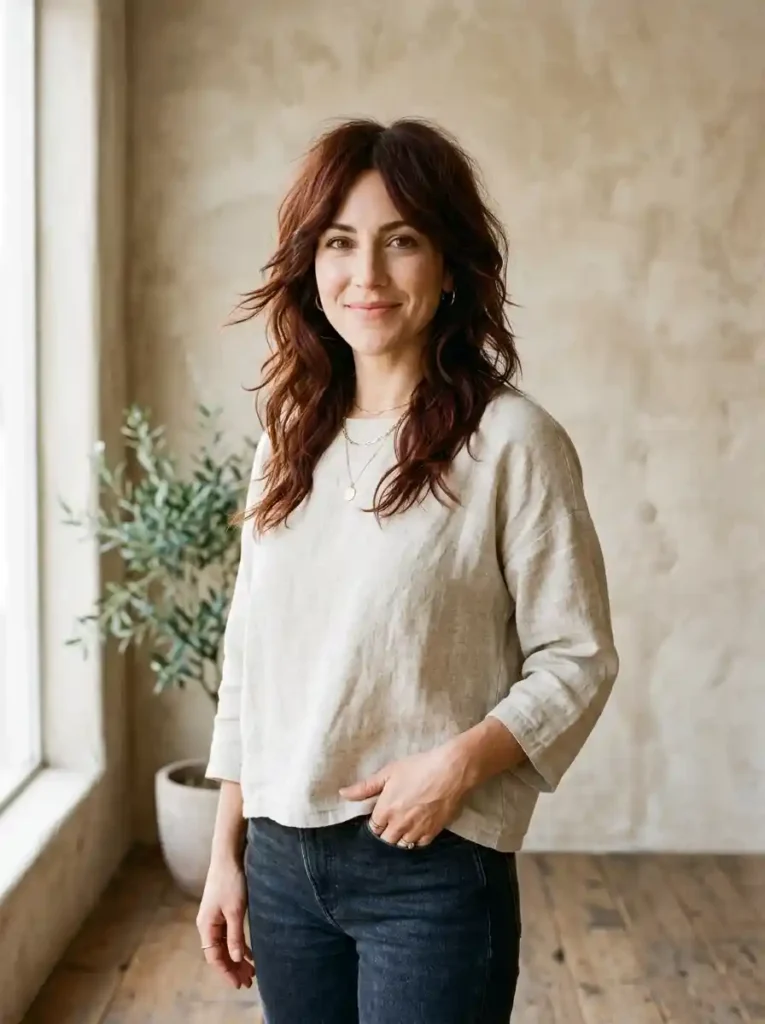
A soft shag brings movement and personality to medium-length hair. Unlike a highly dramatic shag, this version keeps the layers blended and wearable. The texture begins around the upper sections but remains softer near the cheekbones. Longer pieces help connect the haircut toward the jaw and shoulders. This style suits people who enjoy undone texture and a slightly artistic appearance. It works particularly well with naturally wavy or moderately thick hair.
Ask for a soft shag rather than extremely short crown layers. Use a lightweight curl cream on damp hair and scrunch gently. Diffuse on low heat or let the hair air-dry naturally. Stylist Tip: preserving length around the lower face keeps a shag from becoming too top-heavy for a diamond-shaped facial structure.
10. Side-Swept Long Bob With Waves
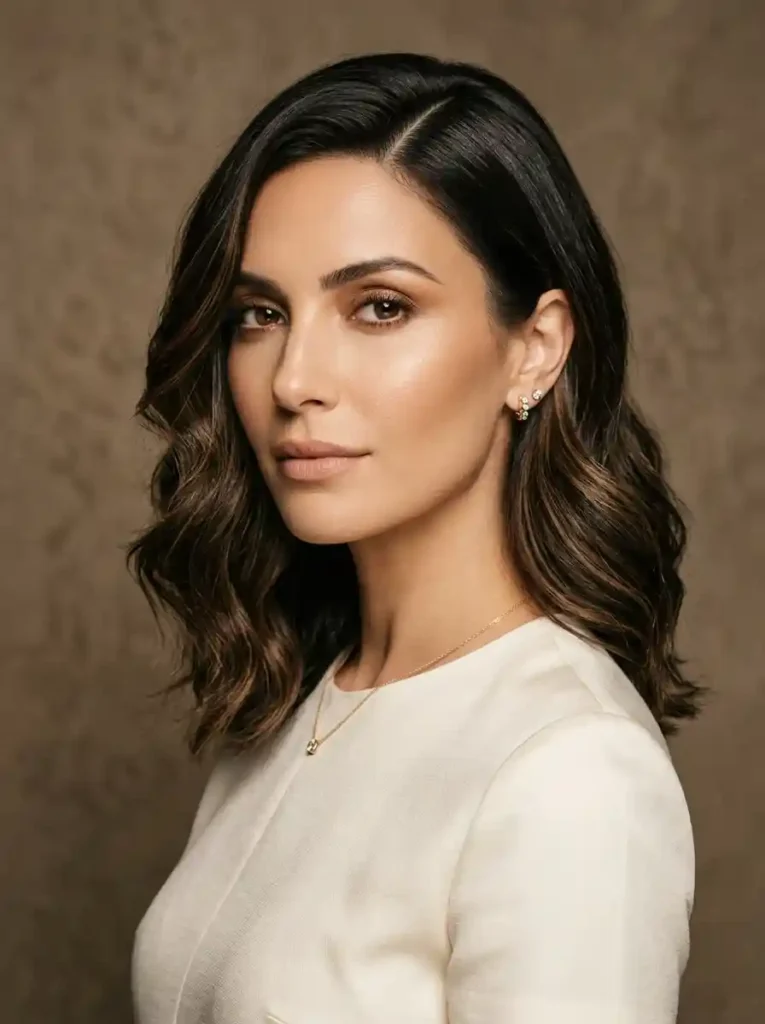
A wavy long bob creates a balanced middle ground between short and long hairstyles. Its waves provide movement while the side part shifts attention diagonally across the face. The lower length adds softness near the jaw without creating excessive volume at the cheeks. Subtle highlights can make the waves look more dimensional. This option works for medium-density hair and suits people who want an expressive but polished everyday hairstyle.
Create waves with a medium curling wand, leaving the last inch of each section slightly straighter. Shake the hair gently after cooling for a relaxed finish. A lightweight texture spray can add definition without making the hair stiff. Common Mistake: curling every section tightly can make the lob appear shorter and more voluminous than intended.
11. Face-Framing Layers With a Center Part
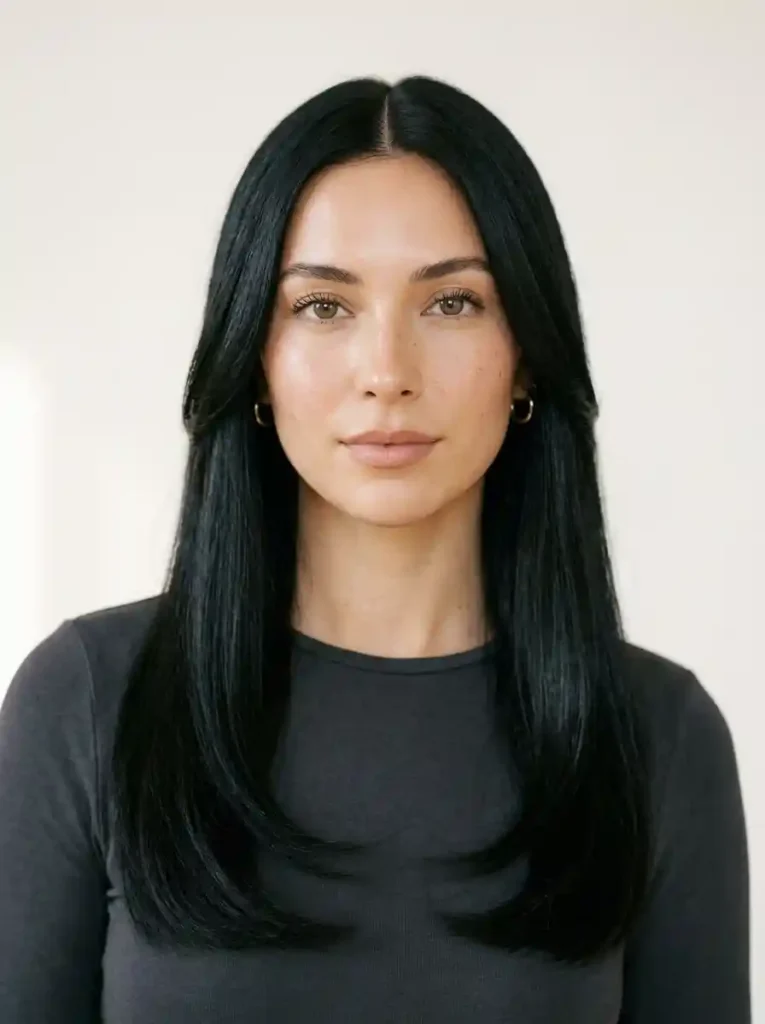
A center-parted layered style can look elegant when the framing begins below the cheekbones. The clean part creates symmetry, while the long layers soften the transition toward the jaw. Straight hair makes the lines especially visible. This haircut works well for people who enjoy a polished appearance but want movement around long hair. The lower layers can also add shape without sacrificing overall length.
Ask for face-framing pieces that gradually increase in length toward the shoulders. Keep the shortest layer below the widest cheek area. Use a paddle brush for a smooth finish, or add a slight bend with a flat iron. Stylist Tip: the starting point of face-framing layers matters more than having many layers. Strategic placement usually looks more refined.
12. Wavy Lob With Curtain Fringe
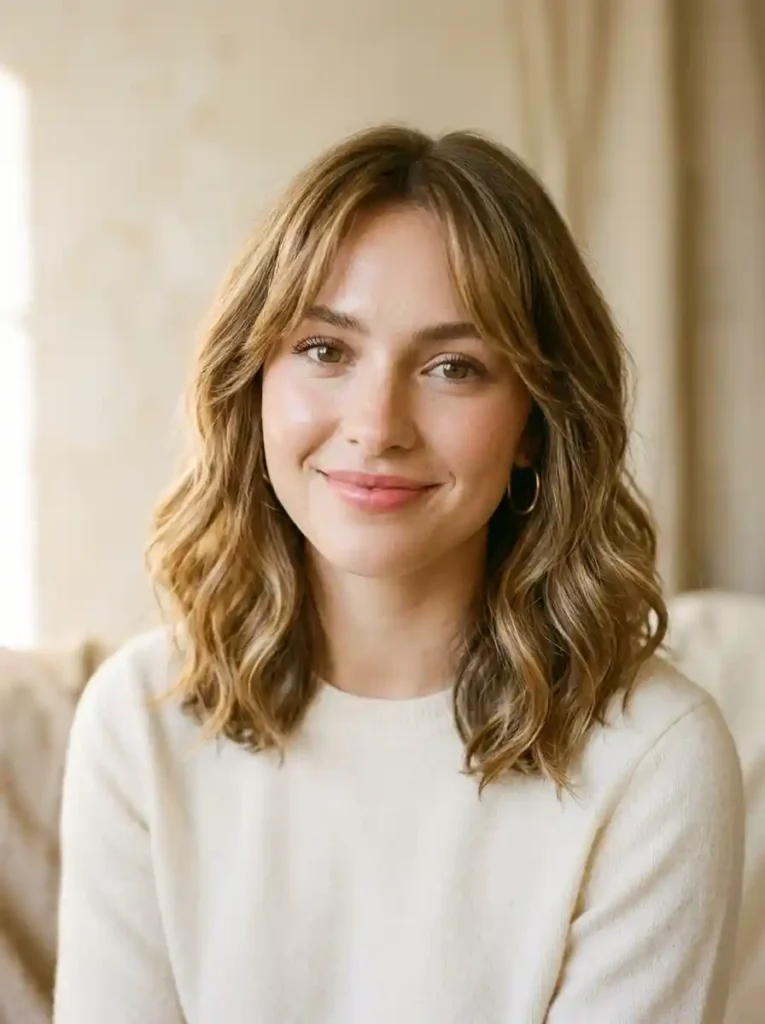
A wavy lob with curtain fringe combines softness around the forehead with movement through the lower lengths. The fringe opens naturally, avoiding a heavy block across the face. Loose waves add width farther down the hair, helping create a balanced outline. This style is especially appealing for naturally wavy hair because the texture does much of the styling work. It also offers enough length for half-up hairstyles and loose ponytails.
Ask your stylist to shape the curtain fringe according to your natural part. Keep the outer fringe pieces long enough to blend into the lob. Apply curl cream to damp hair and scrunch from the ends upward. Pro Tip: cutting bangs while considering natural wave patterns prevents them from springing shorter than expected.
13. Blunt Bob With Soft Side Part
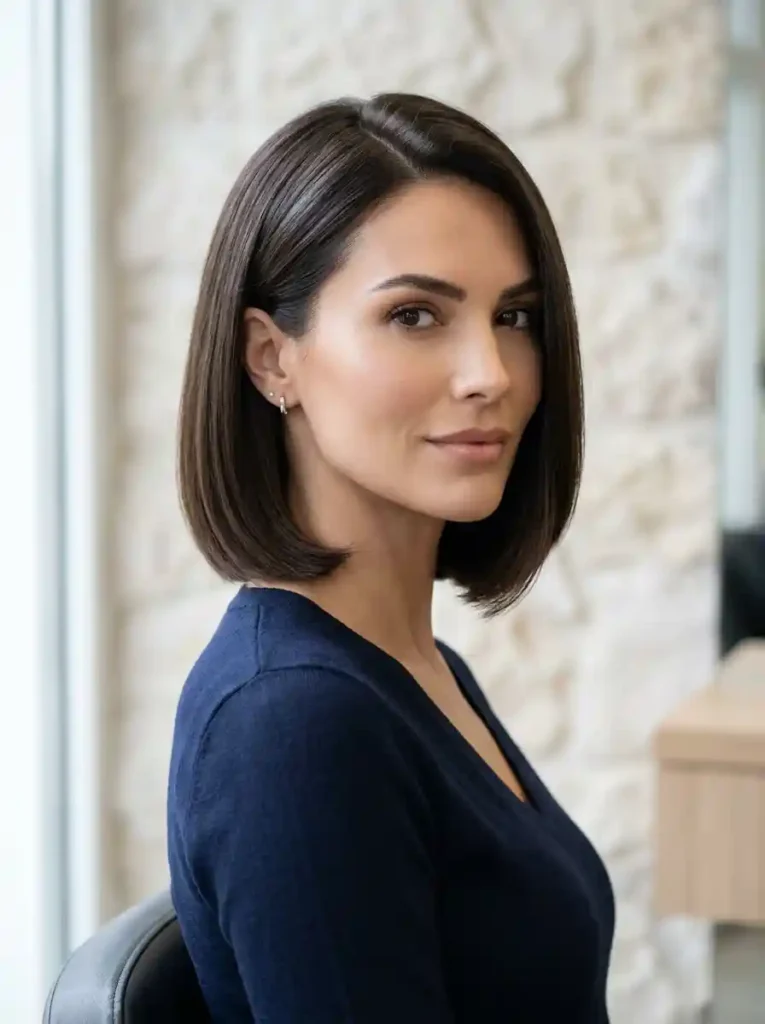
A blunt bob creates a strong, clean outline while a side part introduces softness. Keeping the length slightly below the chin allows the perimeter to sit closer to the jaw rather than directly at the cheekbones. The result feels modern and structured. This style can be particularly effective for straight or slightly wavy hair. It also works well for people who prefer a haircut with a defined shape and minimal layering.
Ask for a precise perimeter with very light internal shaping if your hair is thick. Use a smoothing cream before blow-drying with a paddle brush. Finish the ends with a tiny amount of serum. Stylist Tip: a slightly longer bob gives more styling flexibility and can prevent the haircut from visually concentrating too much width around the cheeks.
14. Long Hair With Feathered Ends
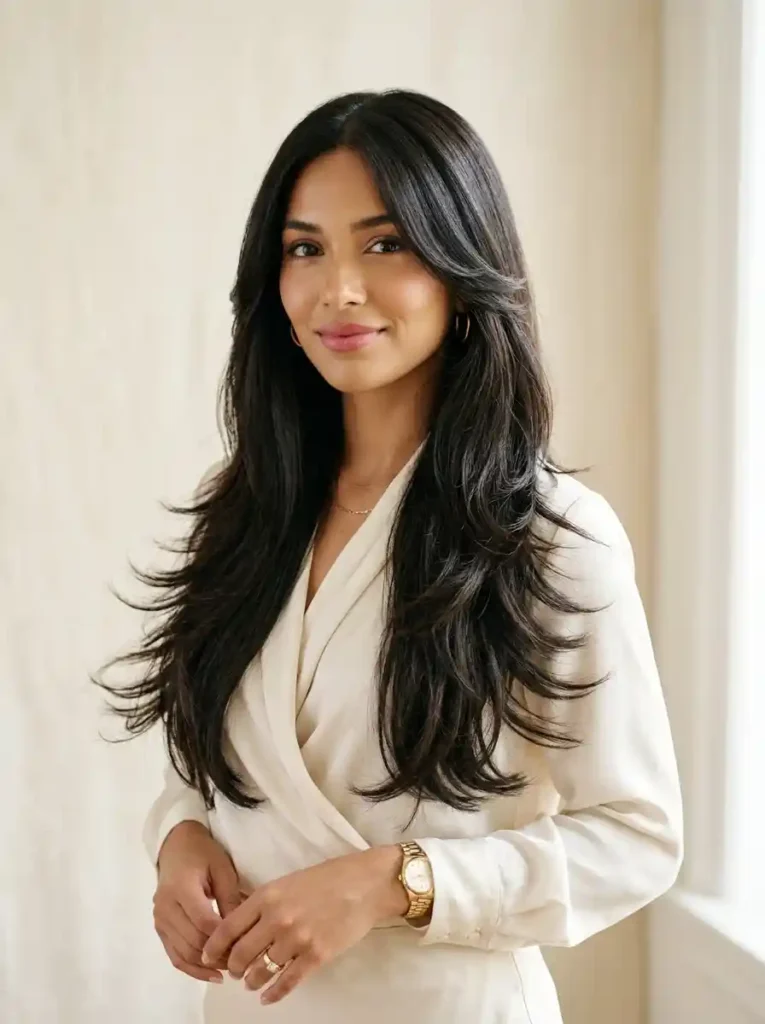
Feathered ends add movement without requiring dramatic layers throughout the haircut. The long length creates a graceful vertical line, while the lighter ends keep the silhouette from looking heavy. This style suits people who love long hair but want more shape. It can look especially beautiful on straight or softly wavy textures. The feathering also creates movement when the hair is brushed, curled, or worn naturally.
Ask your stylist to feather mainly through the lower lengths. Keep the upper section relatively full if your hair is fine. Use a large round brush to turn the ends gently outward or inward. Common Mistake: over-layering very long fine hair can make the ends look thin, so preserve enough perimeter weight for fullness.
15. Jaw-Softening Curly Bob
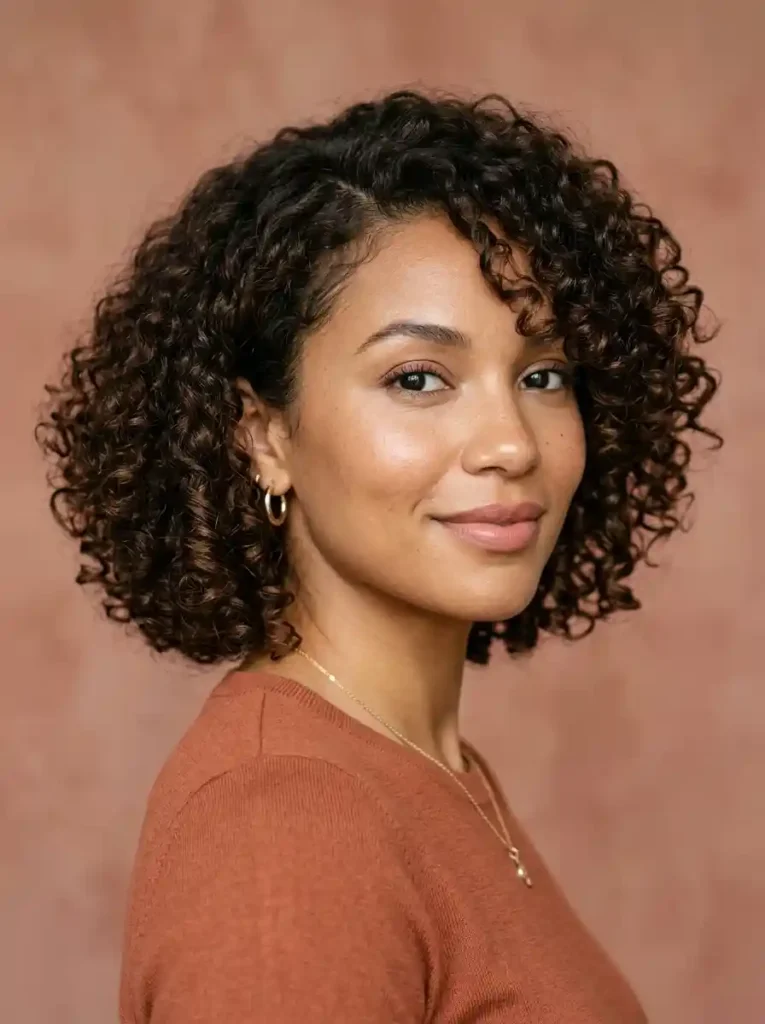
A curly bob can beautifully soften the angular quality of a diamond-shaped face. The rounded curl pattern creates a gentle outline around the jaw and neck. Slightly longer front pieces keep the shape from appearing too compact around the cheeks. This haircut celebrates natural texture instead of trying to flatten it. It works well for defined curls, although the final length should always account for shrinkage.
Ask your stylist to consider your curl pattern before deciding the final perimeter. Curly hair can appear significantly shorter when dry. Use a curl-friendly cleanser, conditioner, and lightweight defining product. Pro Tip: shaping curls while considering their natural spring prevents the finished bob from becoming unexpectedly short or uneven.
16. Low Ponytail With Loose Face Framing
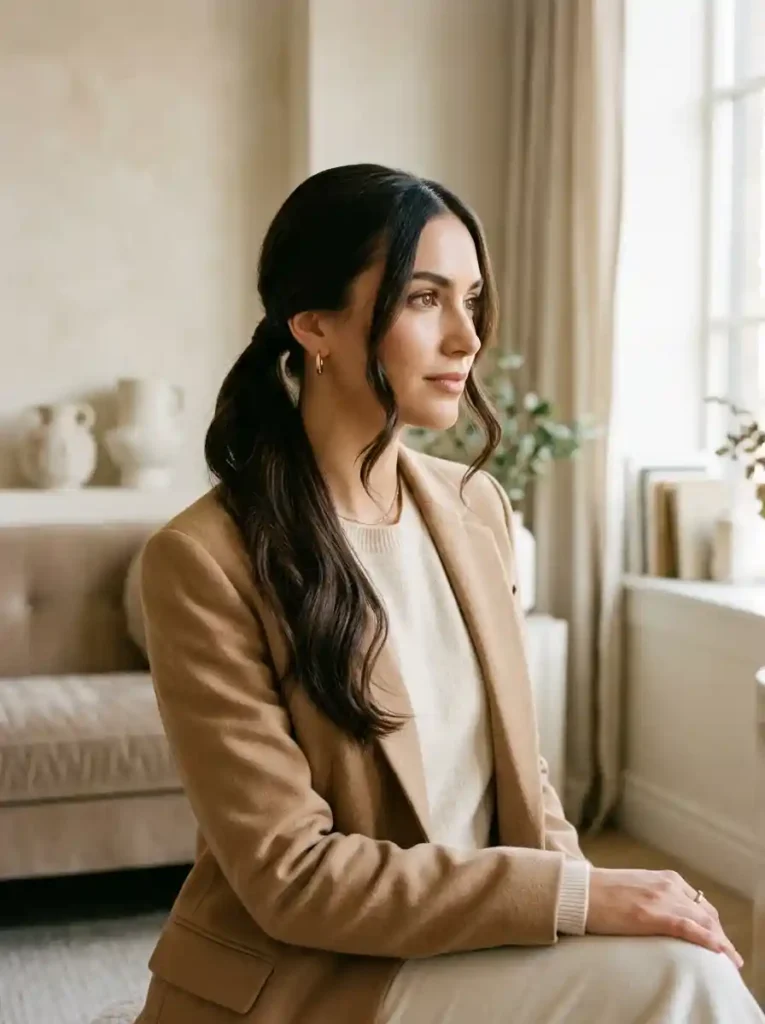
A low ponytail offers an easy styling solution when you want the face to remain visible. Pulling the hair toward the nape creates a clean silhouette. Leaving two longer framing pieces around the lower face adds softness and movement. This look works for offices, dinners, events, and casual days. It also provides a practical way to style long hair without committing to a haircut.
Brush the crown smoothly and secure the ponytail below the occipital area. Curl the front pieces loosely so they curve away from the face. Avoid pulling every strand tightly if you prefer a softer finish. Stylist Tip: the face-framing pieces should usually remain longer than traditional bangs, making them easier to tuck away when needed.
17. Shoulder-Length Hair With Deep Side Part
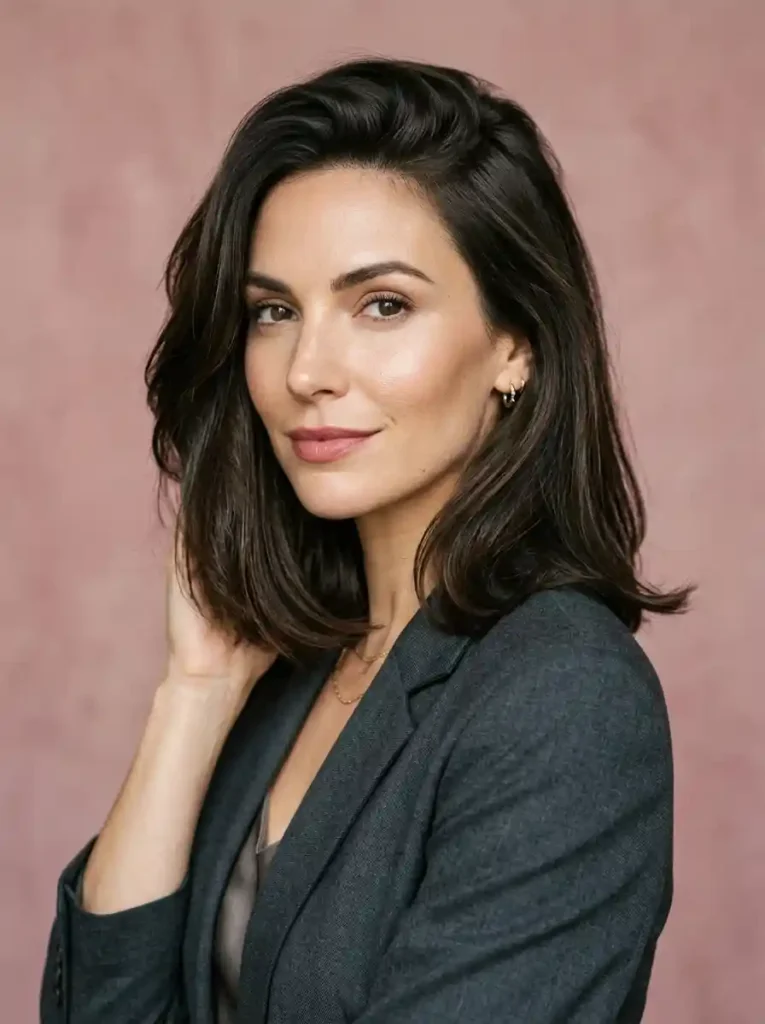
A deep side part changes the balance of a shoulder-length haircut instantly. It creates an asymmetrical flow that can soften the visual prominence of the cheekbones. The shoulder-length perimeter provides enough weight near the lower face without looking bulky. This style is easy to personalize with waves, straight styling, or a tucked side. It suits people who want a simple haircut that can look different from day to day.
Start the part slightly above the outer eyebrow and adjust it according to your natural growth pattern. Use a volumizing mousse on the heavier side before drying. Keep the ends smooth for a polished finish. Pro Tip: changing your part is one of the simplest ways to refresh a familiar haircut without changing its length.
18. Romantic Half-Up Waves
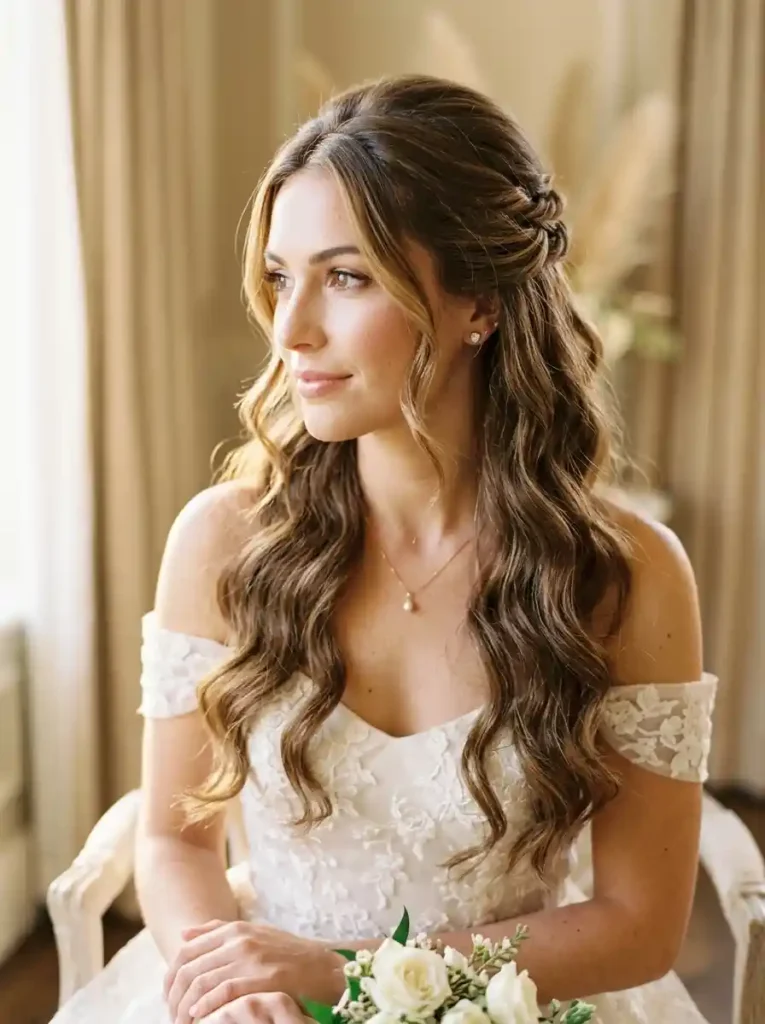
A half-up hairstyle creates height while allowing the lower hair to soften the jaw area. Loose waves keep the look romantic rather than formal. Small twists at the crown provide structure without making the style feel rigid. This is a useful option for weddings, dinners, photographs, and special events. Long hair gives the most room for shaping, although medium-length hair can also support a smaller half-up version.
Curl the lower lengths first and let them cool before pinning the upper section. Leave a few longer pieces near the face for a relaxed finish. Secure the style with discreet pins rather than heavy accessories. Stylist Tip: keep the crown lift moderate because excessive height can make the hairstyle appear top-heavy.
19. Modern Shaggy Lob
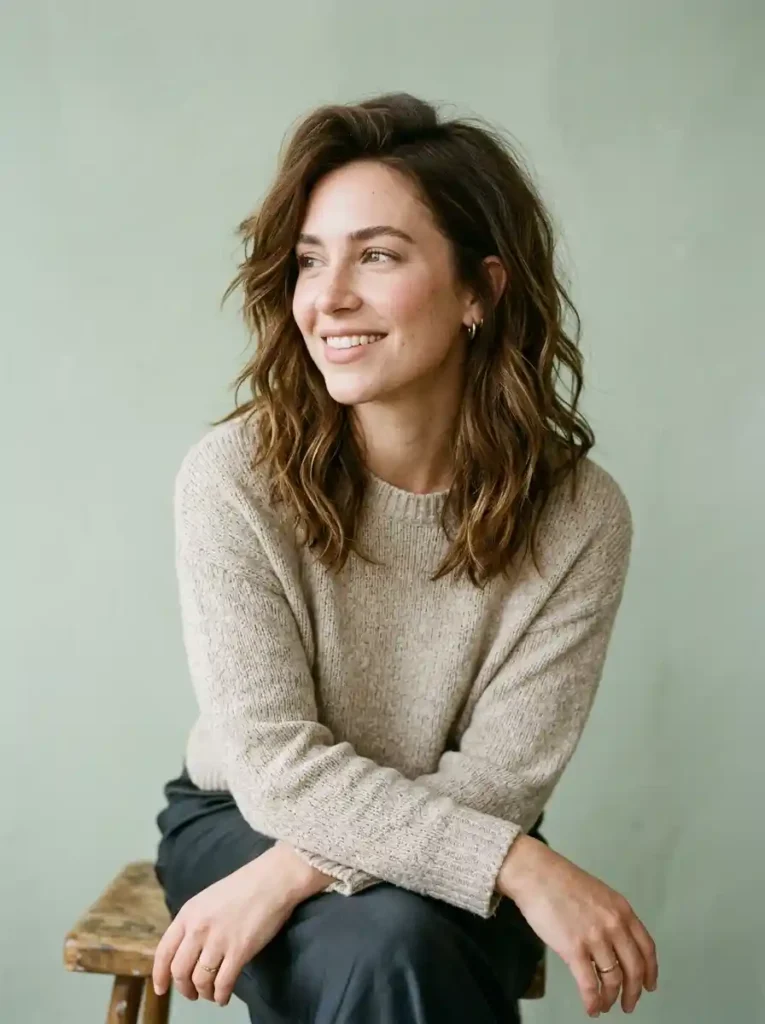
A shaggy lob combines the structure of a long bob with relaxed, textured layers. The shape feels casual without looking unfinished. Longer sections around the jaw help balance shorter layers higher on the head. Natural waves make the texture especially attractive, while straight hair can use styling products to create similar movement. This is a strong choice for someone who wants personality without going extremely short.
Ask for blended shag layers rather than sharply separated steps. Apply texture cream to damp hair and twist a few sections before drying. A small amount of dry texture spray can define the finished shape. Common Mistake: creating very short layers at the cheekbones can make the hairstyle feel wider exactly where the face is already widest.
20. Elegant Chignon With Side Pieces
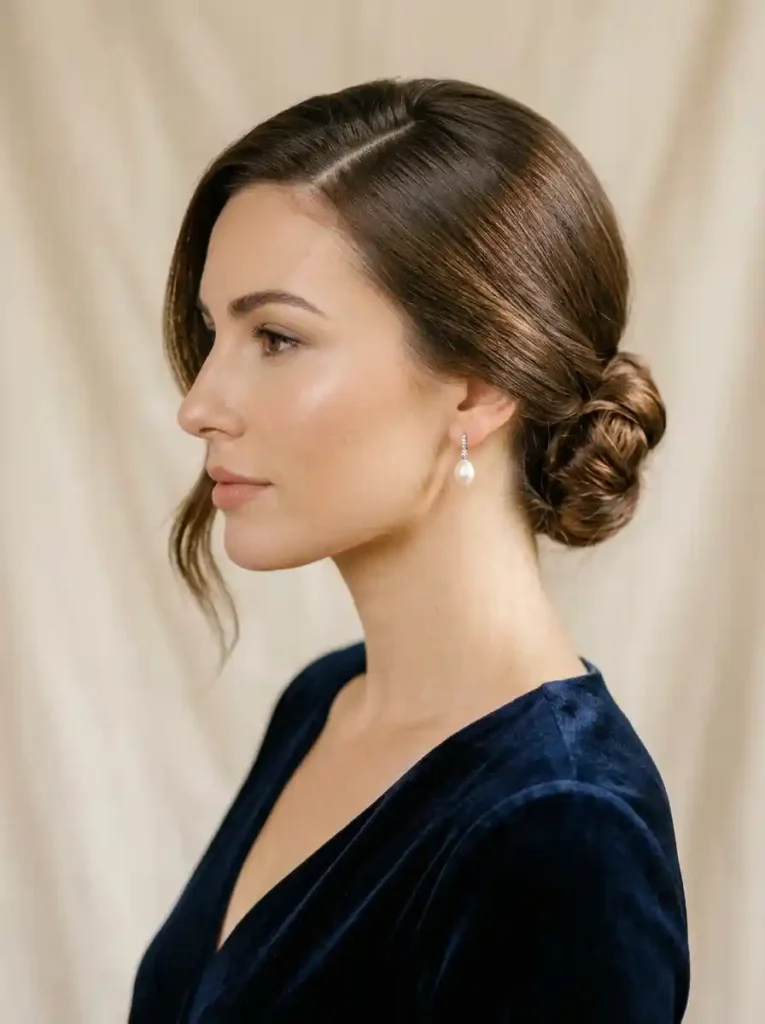
A low chignon creates a refined silhouette while keeping the hairstyle away from the cheeks. Soft side pieces prevent the updo from appearing too severe. The low placement also adds visual weight near the lower part of the head. This makes it suitable for formal occasions when you want elegance without emphasizing facial angles. It pairs beautifully with simple accessories and clean necklines.
Smooth the hair gently before gathering it at the nape. Twist the ponytail into a compact bun and secure it with pins. Pull out a few longer strands around the face for softness. Stylist Tip: avoid placing the bun too high if your goal is a balanced, understated silhouette around a diamond-shaped face.
21. Tousled Beach Waves With Long Bangs
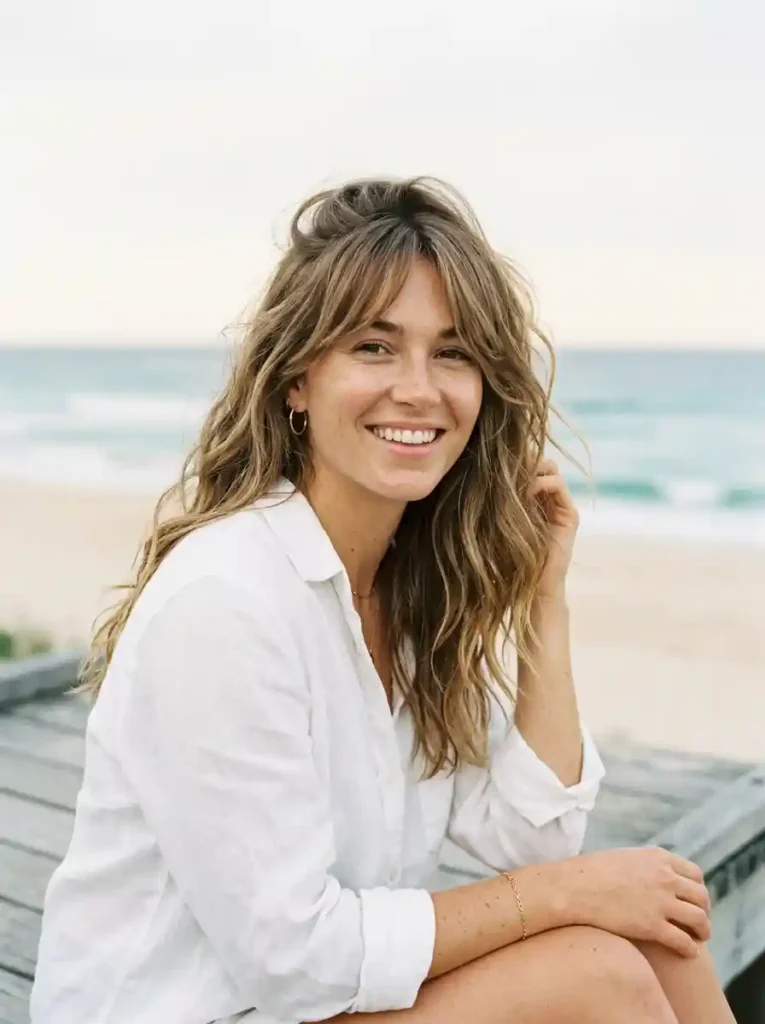
Tousled waves create an effortless finish while long bangs soften the upper face. The relaxed texture prevents the hairstyle from looking overly structured. Longer fringe pieces can blend into the waves and create continuity around the cheeks and jaw. This option suits people who prefer casual, low-pressure styling. It can work especially well with naturally wavy hair, though straight hair can recreate the texture with simple heat styling.
Apply sea-salt spray sparingly to damp hair and scrunch the lengths. Let the hair air-dry or diffuse it on low heat. Twist a few stubborn sections around a large barrel for extra definition. Pro Tip: use less product near the roots because heavy texture spray can make the crown look flat and coated.
Frequently Asked Questions
What hairstyle is best for a diamond-shaped face?
Styles that add softness around the forehead and jaw often work well. Face-framing layers, side-swept bangs, textured bobs, and shoulder-length cuts are popular choices.
Are bangs good for diamond faces?
Yes. Side-swept, curtain, and wispy bangs can work particularly well. Longer bangs often create a softer transition across the forehead.
Is short hair suitable for a diamond face?
Yes. Pixie cuts and bobs can look striking on diamond-shaped faces. Soft texture, side parts, and controlled volume can create a balanced outline.
Are layers good for diamond faces?
Layers can work very well when placed thoughtfully. Longer face-framing layers that begin below the cheekbones can soften the overall shape.
What haircut works for naturally curly hair?
Curly bobs, shoulder-length layered cuts, and soft shags can all work beautifully. The haircut should account for curl shrinkage and the hair’s natural spring.
Should diamond faces avoid volume at the cheeks?
Not necessarily, but excessive volume directly at the widest point can emphasize cheek width. Softer movement below the cheekbones often creates a more balanced appearance.
Conclusion
The best hairstyles for diamond faces do not need to hide your natural features. They should work with your cheekbones while creating softer transitions around the forehead and jaw. Layers, side parts, waves, bangs, and carefully chosen lengths provide plenty of ways to personalize your look. Your hair texture also matters, so show your stylist photos and explain how you normally wear your hair. Save your favorite idea before your next salon visit, and use it as inspiration for a cut that feels naturally yours.


