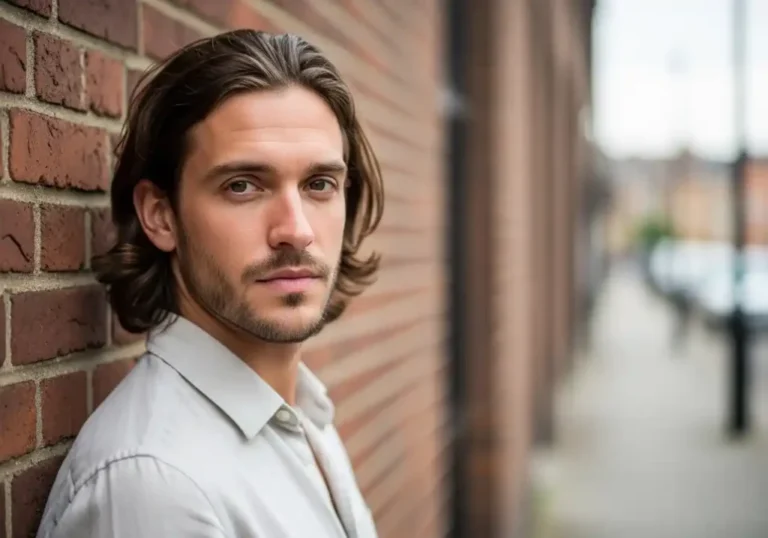
Strong cheekbones and a defined jaw can make a square face look striking, but some hairstyles may feel too harsh around the edges. The right cut can add softness, movement, or balance without hiding your natural features. These hairstyles for square faces cover short, medium, and long lengths, plus straight, wavy, curly, and textured options. Each idea includes practical styling guidance, so you can find a look that suits your hair and confidently show it to your stylist.
1. Soft Layered Lob
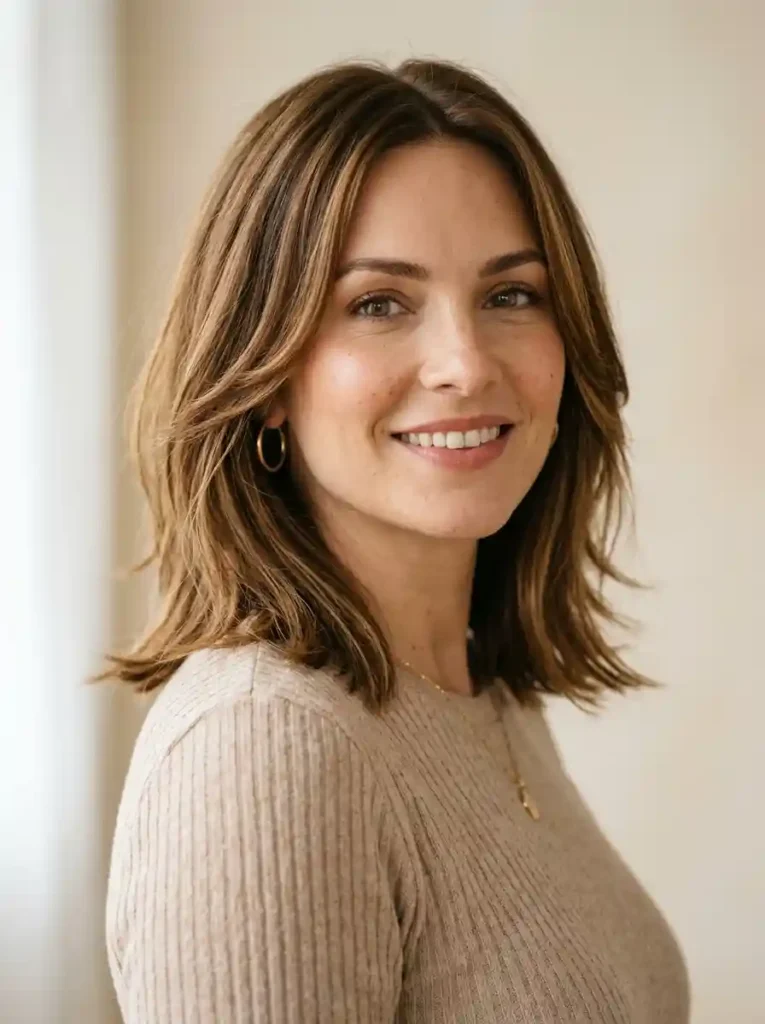
A soft layered lob gives square faces a gentle transition between the cheeks and shoulders. Its shoulder-grazing length keeps the look modern without feeling severe. Light layers add movement while preserving enough weight through the ends. This makes the style especially appealing for medium-density hair that needs shape without dramatic thinning. Slight waves can enhance the softness, while sleek styling creates a cleaner finish. Warm brunette, honey brown, or dimensional black shades can make the layered shape especially noticeable.
Ask your stylist for subtle layers that begin below the strongest part of your jaw. Avoid a heavy, blunt line that ends directly at the widest facial point. For everyday styling, use a round brush to curve the ends slightly outward. A few loose bends can also create natural movement. Stylist Tip: keeping the front layers longer than the back prevents the haircut from visually widening the jaw.
2. Long Curtain Bangs with Loose Waves
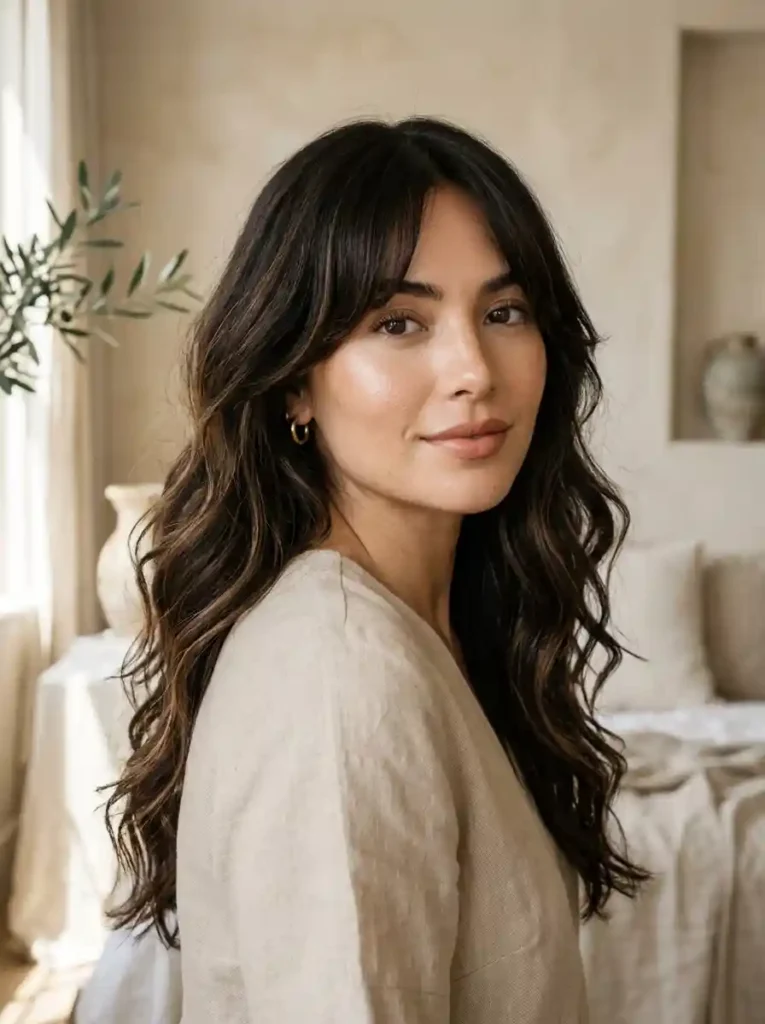
Long curtain bangs create a soft frame without making the forehead feel covered. Their center opening draws attention toward the eyes while the longer pieces flow toward the cheekbones. Loose waves add another layer of movement, making the overall silhouette feel relaxed rather than rigid. This combination suits people who want a noticeable change without sacrificing long hair. It also works beautifully with dimensional brunette, deep black, copper, or softly highlighted shades.
For an easy finish, blow-dry the bangs away from the face using a medium round brush. Let them cool before gently separating the center. Style the remaining hair with a large-barrel iron or overnight braids for loose bends. Keep the curtain pieces slightly longer if you dislike frequent trims. Pro Tip: ask for blended fringe rather than a short, heavy curtain bang to maintain softness around the upper face.
3. Textured Chin-Length Bob
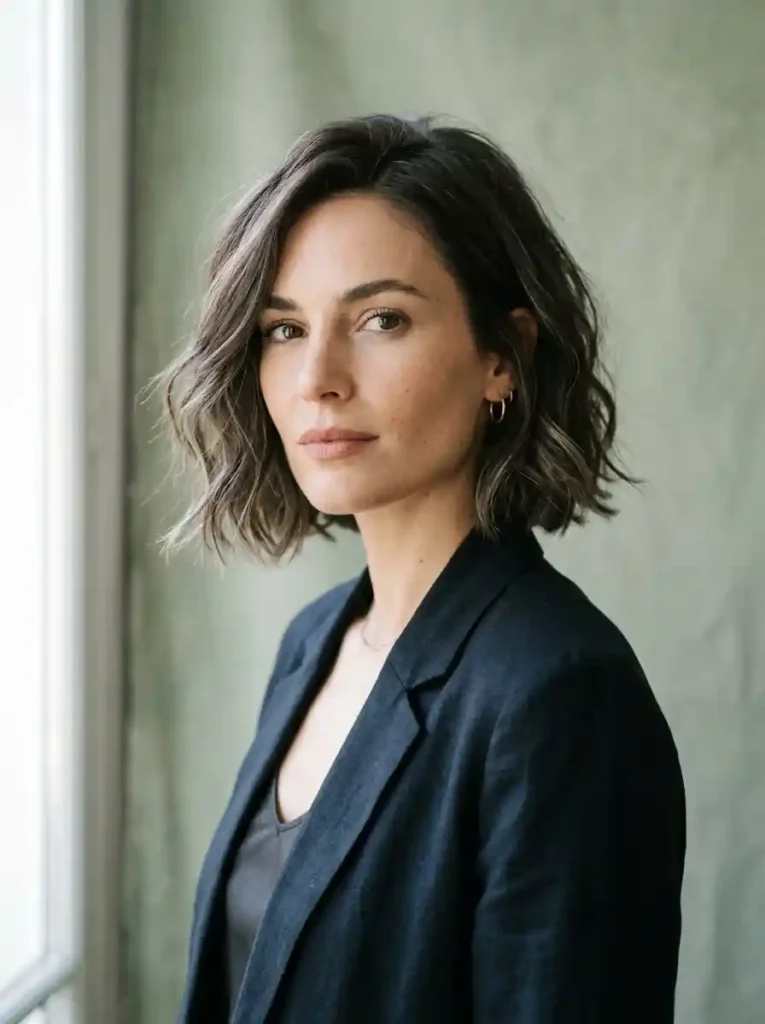
A textured chin-length bob feels fresh, lightweight, and deliberately undone. Instead of forming one solid line, its separated ends create movement around the lower face. This can be useful for people who want a shorter cut while avoiding an overly geometric appearance. Fine to medium hair can benefit from the airy texture, while naturally wavy hair can make the shape look effortless. A soft side part adds asymmetry and prevents the style from feeling overly symmetrical.
Ask for texture through the ends rather than excessive thinning throughout the haircut. That distinction helps preserve fullness while creating movement. Use a lightweight styling cream on damp hair, then allow the hair to air-dry or diffuse gently. A small amount of texture spray can separate the ends afterward. Common Mistake: cutting the bob too bluntly at the exact jawline can emphasize angularity more than intended.
4. Side-Swept Shoulder Cut
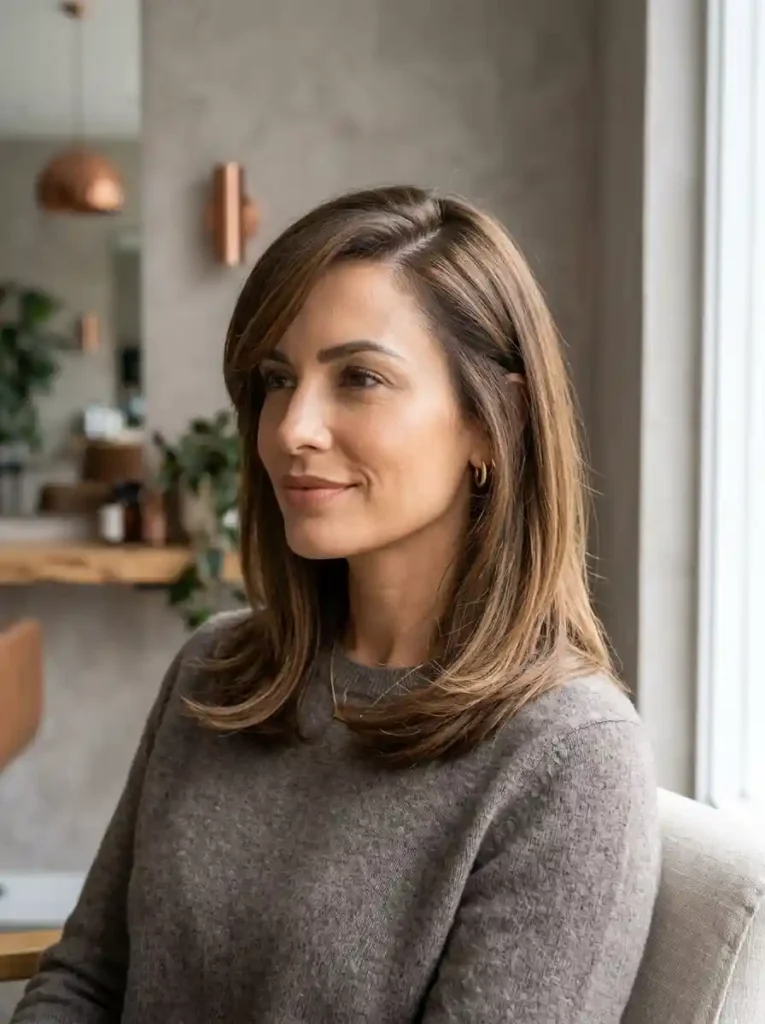
A side-swept shoulder cut uses direction and movement to create a flattering, asymmetrical effect. The side part shifts visual attention across the face rather than emphasizing equal angles on both sides. Shoulder length provides versatility for ponytails, loose waves, or sleek styling. This look can suit straight and lightly wavy hair particularly well. It is also a practical option for someone who wants softness without committing to a heavily layered or highly textured haircut.
Keep the side fringe long enough to blend naturally into the front layers. Blow-dry the roots in the opposite direction first, then sweep the hair into place. This creates more lasting lift at the part. Use a smoothing cream if the ends tend to frizz. Stylist Tip: a slightly off-center part can provide a softer result than an extremely deep side part, especially when the hair is naturally thick.
5. Feathered Long Layers
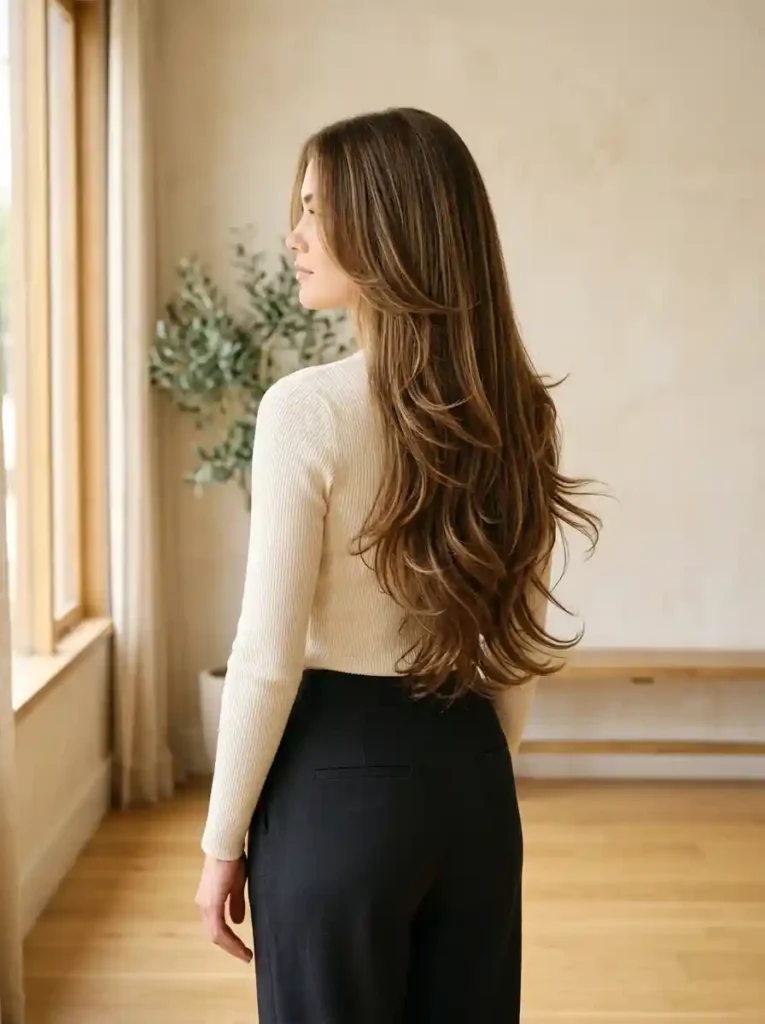
Feathered long layers add graceful movement while preserving the drama of long hair. The layers sweep away from the face instead of forming sharp horizontal lines. This creates a flowing silhouette that can complement strong facial structure without disguising it. The style works especially well for medium to thick hair because the layers remove selected weight while keeping length. Soft brown, black, caramel, and honey shades can highlight the feathered movement beautifully.
Request long layers that start below the cheekbones and gradually increase toward the ends. Very short layers can create unwanted bulk near the face, particularly on thick hair. For styling, use a large round brush and direct the front sections outward. A large curling iron can create a similar effect. Pro Tip: preserve enough density through the bottom so the long layers still look polished rather than stringy.
6. Wispy Side Bangs with a Shaggy Cut
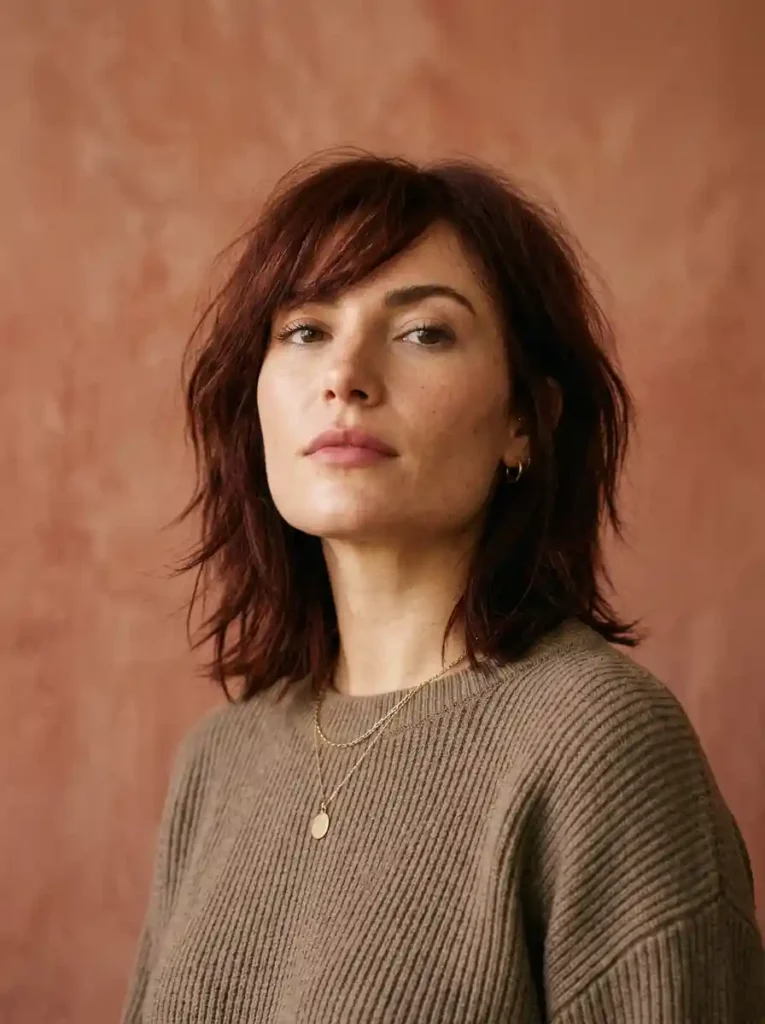
A shaggy haircut brings texture and personality to a square face. Wispy side bangs soften the forehead while broken layers create movement around the sides. Unlike a polished layered cut, this version feels intentionally relaxed and slightly rebellious. It can work particularly well with naturally wavy, thick, or textured hair. The collarbone length keeps the shape wearable while still offering enough hair for ponytails and half-up styles.
Ask your stylist to blend the bangs into the cheekbone area instead of cutting a disconnected fringe. Apply mousse to damp hair, scrunch the lengths, and diffuse on low heat. Straight hair can use a small curling iron to create uneven bends. Common Mistake: over-thinning a shag can make fine hair look sparse, so request controlled texture rather than aggressive razor work.
7. Sleek Long Hair with Face-Framing Pieces
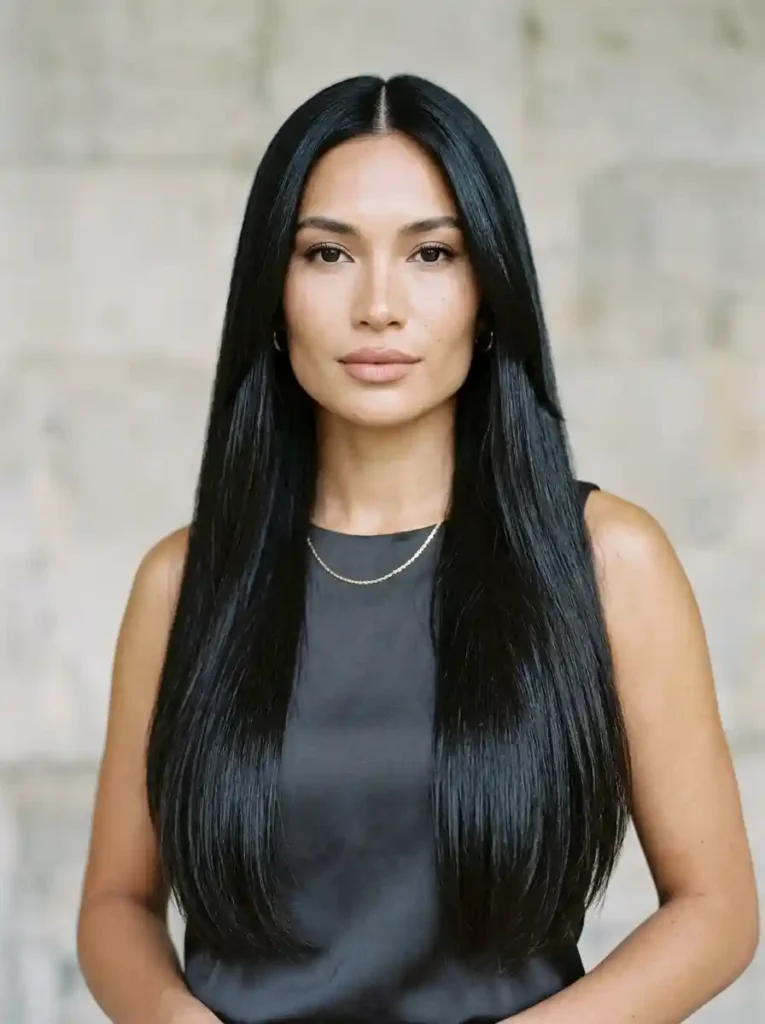
Sleek long hair can look sophisticated when the front sections provide gentle framing. The center part creates a clean foundation, while longer pieces prevent the style from becoming one uninterrupted curtain of hair. This option suits people who love polished, minimalist looks and prefer keeping substantial length. It works especially well on naturally straight or easily smoothed hair. Deep brunette and black shades emphasize the clean silhouette, while subtle highlights can reveal the framing layers.
Ask for long face-framing pieces rather than short layers around the cheeks. The difference keeps the haircut sleek while adding movement near the face. Use a heat protectant before straightening, then finish with a lightweight smoothing serum. Avoid heavy oils near the roots if your hair becomes flat quickly. Stylist Tip: keeping the framing pieces below the chin can soften the lower facial area without making the haircut look heavily layered.
8. Collarbone Cut with Curtain Fringe

A collarbone cut offers an easy middle ground between short and long hair. Adding curtain fringe gives the shape softness around the forehead and temples. The ends can remain mostly full, while subtle layers create enough movement for everyday styling. This combination suits medium-density hair and works with straight, wavy, or lightly curly textures. It also offers enough length for low buns and ponytails, making it practical for busy routines.
Style the fringe first while the hair is damp, directing each side away from the face. Then add a loose bend through the mid-lengths if desired. Regular trims help keep the collarbone shape intentional. Pro Tip: if your hair is thick, ask for internal weight removal rather than very short outer layers. This preserves the clean outline while making the haircut easier to manage.
9. Wavy A-Line Bob
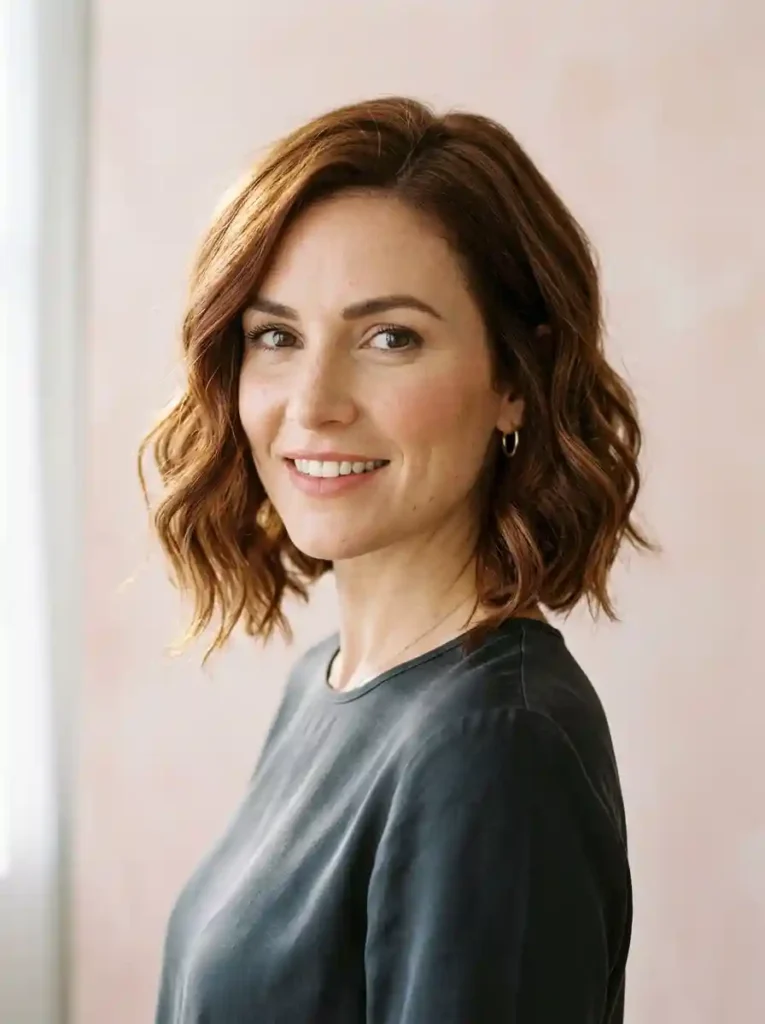
An A-line bob creates a noticeable shape without relying on heavy layering. The back sits slightly shorter, while the front extends toward the collarbone, creating a forward-moving silhouette. Loose waves soften the structure and give the haircut an energetic finish. This version can work well for medium-density hair and naturally wavy textures. Copper, auburn, brunette, and dimensional blonde shades can make the changing lengths especially visible.
Ask for a gradual angle rather than an extreme difference between the back and front. Style with a diffuser for natural waves or create broad bends with a curling iron. Leave the ends slightly relaxed instead of tightly curled. Stylist Tip: the front should remain long enough to pass the widest part of the jaw if softness is your priority. That creates a more elongated visual line.
10. Long Hair with Soft Butterfly Layers
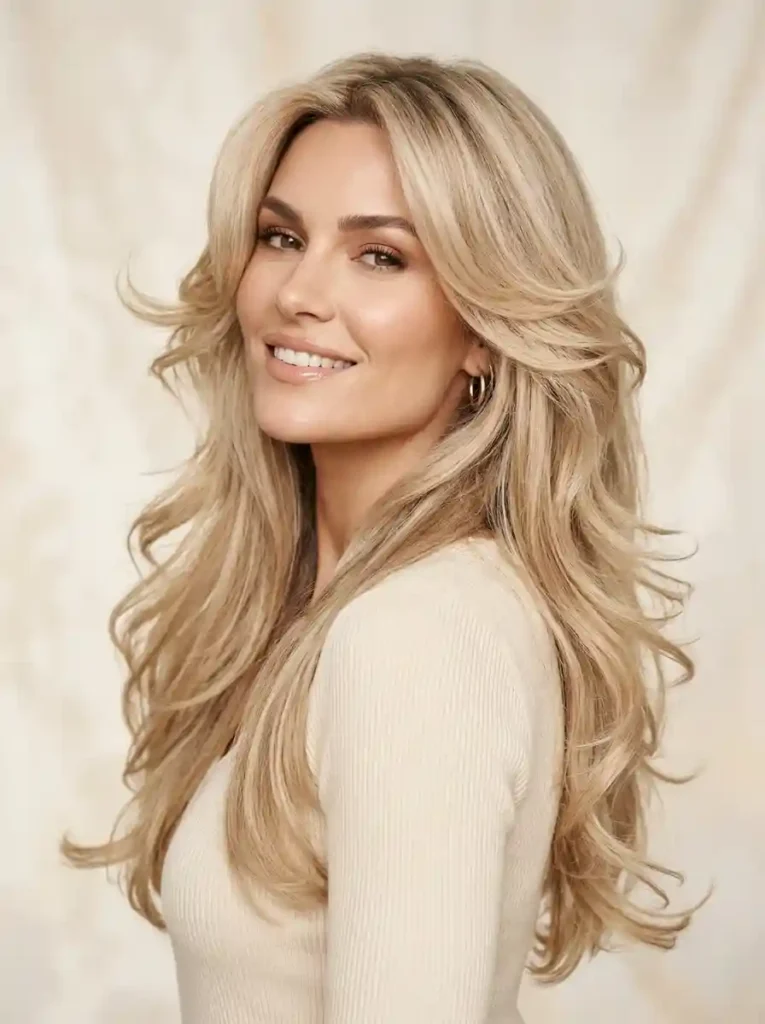
Butterfly layers create dramatic movement without sacrificing overall length. The shorter front sections sweep outward, while the longer layers maintain a flowing base. This makes the style appealing for people who want noticeable shape but still love long hair. The bouncy finish works especially well with medium to thick hair. It can also make naturally straight hair appear fuller through strategic movement and volume.
Blow-dry the shorter layers away from the face using a large round brush. Roll each section backward and allow it to cool before brushing through. Fine hair may need lighter layering to avoid losing density. Common Mistake: asking for too many short layers can make the style difficult to control. Keep the shortest pieces long enough to blend smoothly into the cheek and jaw area.
11. Curly Shoulder-Length Layers
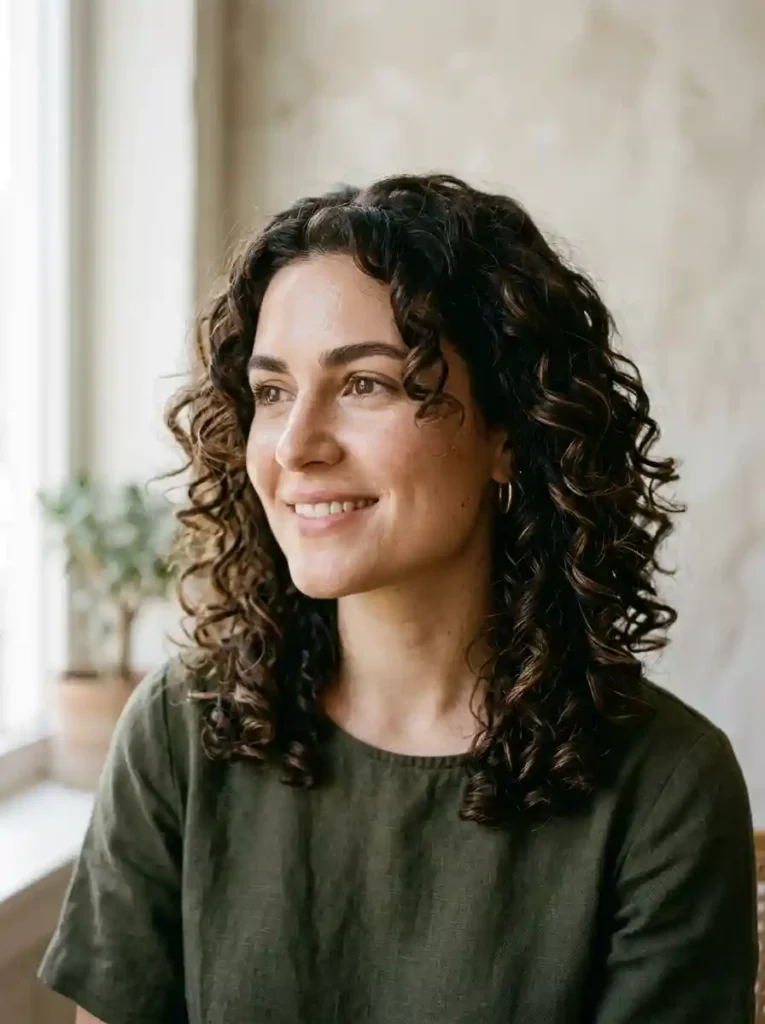
Curly layers can give a square face a soft, rounded frame while celebrating natural texture. The shoulder length keeps the curls lively without creating excessive weight. A layered shape also helps curls form individual sections instead of falling into one dense block. This approach can suit medium and thick curly hair, especially when the natural pattern is consistent. Deep brown, black, copper, or natural gray curls all look striking with this shape.
Curly hair should usually be cut with its shrinkage and curl pattern in mind. Ask for layers that support the natural curl shape instead of forcing a straight-hair blueprint. Apply leave-in conditioner and curl cream, then diffuse gently. Stylist Tip: avoid aggressive thinning on fragile curls because it can disturb the curl pattern and create uneven-looking ends.
12. Blunt Shoulder Cut with Soft Waves
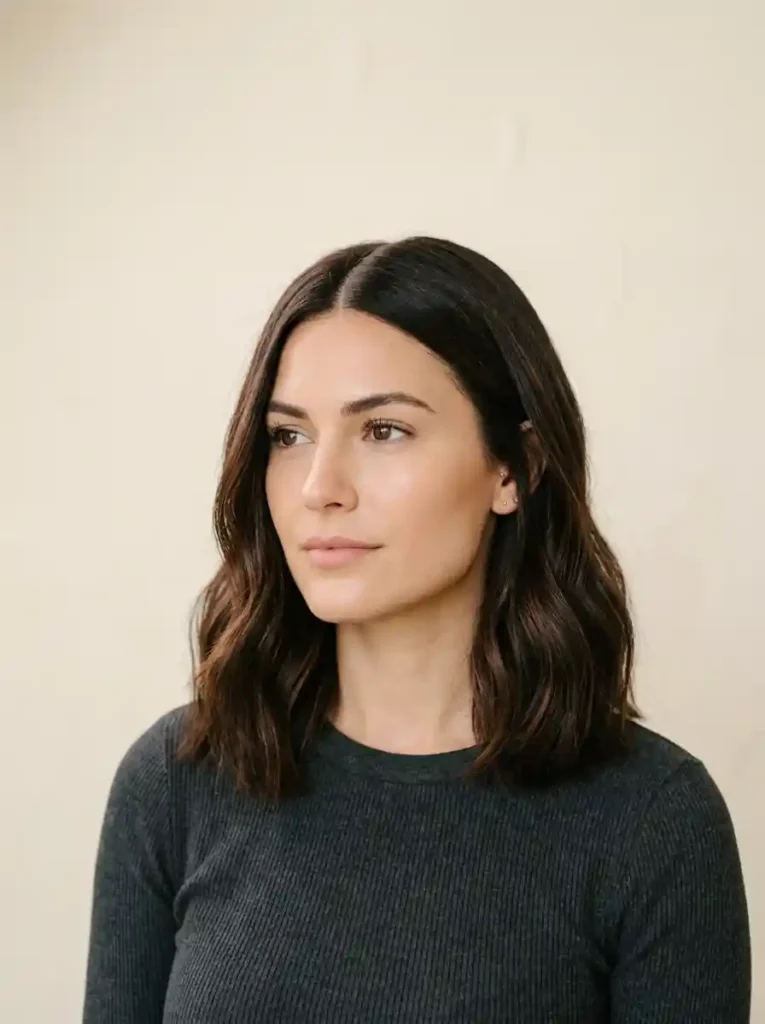
A blunt shoulder cut gives hair a strong, healthy-looking outline while soft waves prevent the shape from feeling rigid. The full ends can be especially useful for fine hair because they create a visually dense perimeter. Gentle movement through the lengths adds contrast to the clean cut. This style suits people who prefer polished hair with minimal layering. It can look equally elegant with dark brunette, blonde, red, or natural gray color.
Ask your stylist to keep the perimeter strong and add movement through styling rather than heavy cutting. Use a large curling iron to create broad waves, then brush them gently for a softer finish. A shine spray can enhance the face-framing layers beginning near the cheekbones, soft natural waves, medium ash-brown hair with fine beige highlights, airy movement, bright indirect window light, pale taupe background, front-facing camera with slight head turn, vertical 2:3 Pinterest composition, natural beauty editorial aesthetic, realistic fringe clean ends. Pro Tip: a slightly off-center part introduces subtle asymmetry, which can keep a blunt haircut from looking too severe around a defined jaw.
13. Face-Framing Layers with Wispy Fringe
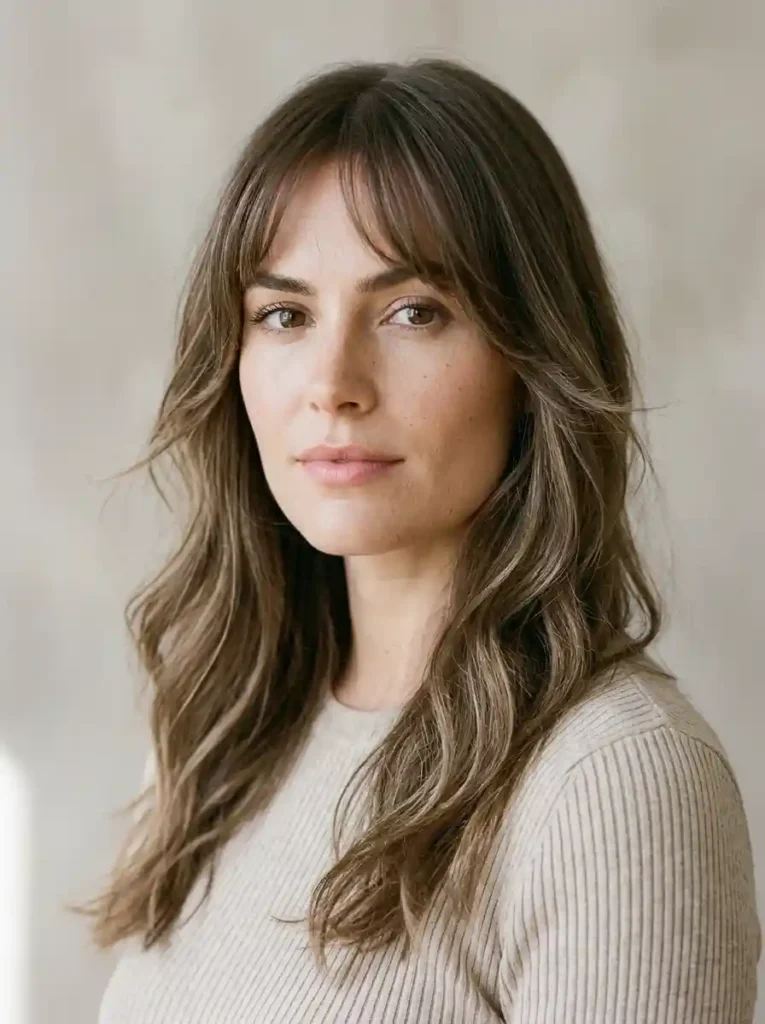
Wispy fringe offers a lighter alternative to full bangs. Combined with long face-framing layers, it creates several soft transition points around the face. The result feels feminine without looking overly styled. This haircut can work well for straight, slightly wavy, and fine-to-medium hair. It is also useful for someone who wants bangs but prefers an airy finish that can blend into the rest of the haircut.
Use a small round brush to direct the fringe slightly downward and outward. Avoid applying heavy styling products directly at the roots because they can make wispy pieces separate too much. Trimming the fringe regularly keeps the shape neat. Stylist Tip: ask for varied fringe lengths rather than one solid line. The uneven lengths create a softer appearance and make grow-out easier.
14. Voluminous Side-Parted Waves
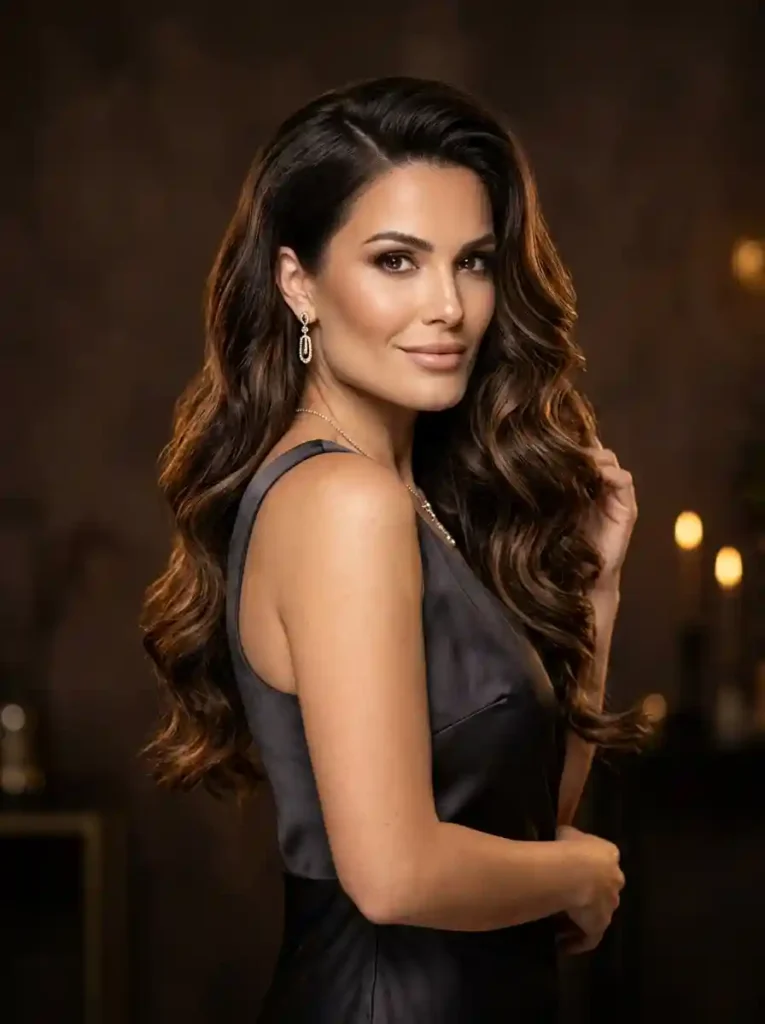
Side-parted waves add volume while creating a sweeping diagonal line across the overall look. The direction of the hair can make the style feel softer and less symmetrical. Large waves provide movement through the lengths without requiring many visible layers. This option suits people who enjoy glamorous hairstyles for dinners, celebrations, photos, or special events. It works especially well on medium to thick hair with enough length to hold broad waves.
Create the side part before adding heat so the roots dry in the desired direction. Curl large sections away from the face, then brush through once the hair cools. Finish with flexible hairspray instead of a stiff formula. Pro Tip: keep the wave pattern broad rather than tightly curled. Larger curves usually create a more relaxed silhouette around a strong jaw.
15. Medium Shag with Curtain Bangs
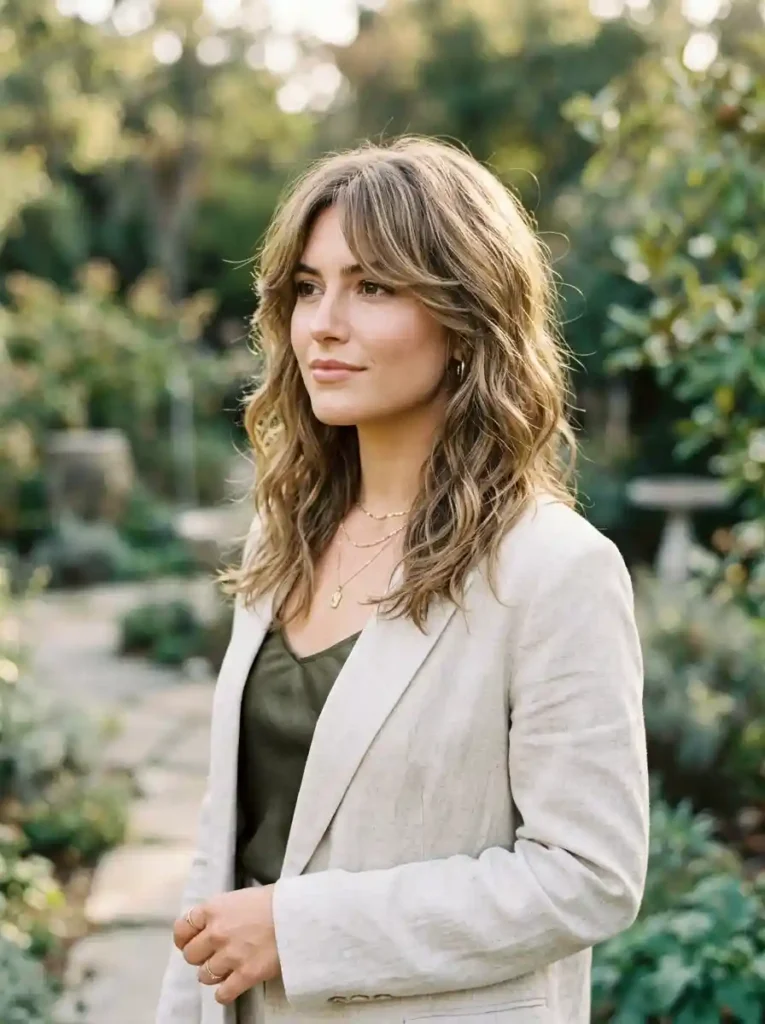
A medium shag combines texture, movement, and an intentionally relaxed finish. Curtain bangs soften the upper face, while layered lengths prevent the haircut from forming a hard outline near the jaw. This option suits naturally wavy hair particularly well, though straight hair can also recreate the texture with styling tools. It is a strong choice for readers who want personality without going extremely short.
Apply mousse to damp hair and scrunch the layers upward before diffusing. Let the bangs dry away from the face so they blend into the cheekbone area. Refresh the shape with a small amount of texture spray between washes. Common Mistake: too much product can weigh down the layers and erase their movement. Start with a small amount and build gradually.
16. Long Side Bangs with a Straight Cut
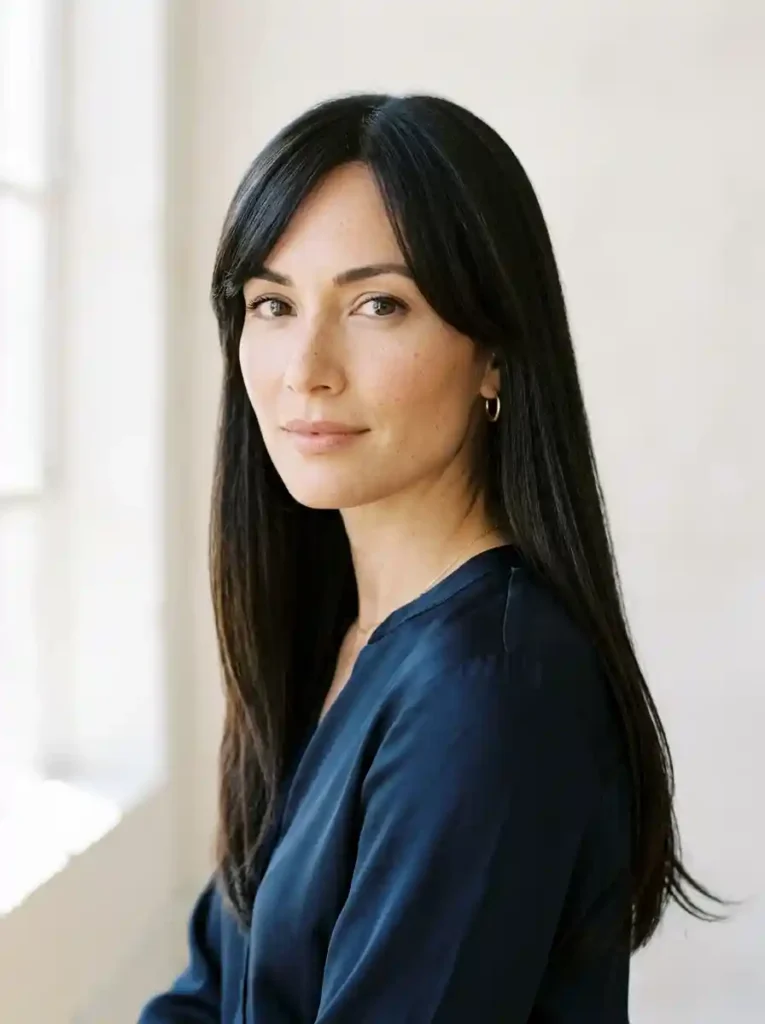
Long side bangs can change the visual direction of an otherwise simple haircut. Here, the straight lengths provide a clean foundation while the sweeping fringe adds movement near the forehead and cheek. This is a practical choice for someone who wants a subtle update rather than extensive layering. It works especially well with naturally straight, dense, or easily smoothed hair.
Blow-dry the fringe across the forehead before sweeping it into place. Use a flat iron on the lengths only when needed, and always apply heat protection first. The bangs can also be pinned back during grow-out. Stylist Tip: keep the side bang long enough to merge into the front layers. A disconnected short fringe may create more visual contrast than you want.
17. Textured Pixie with a Long Top
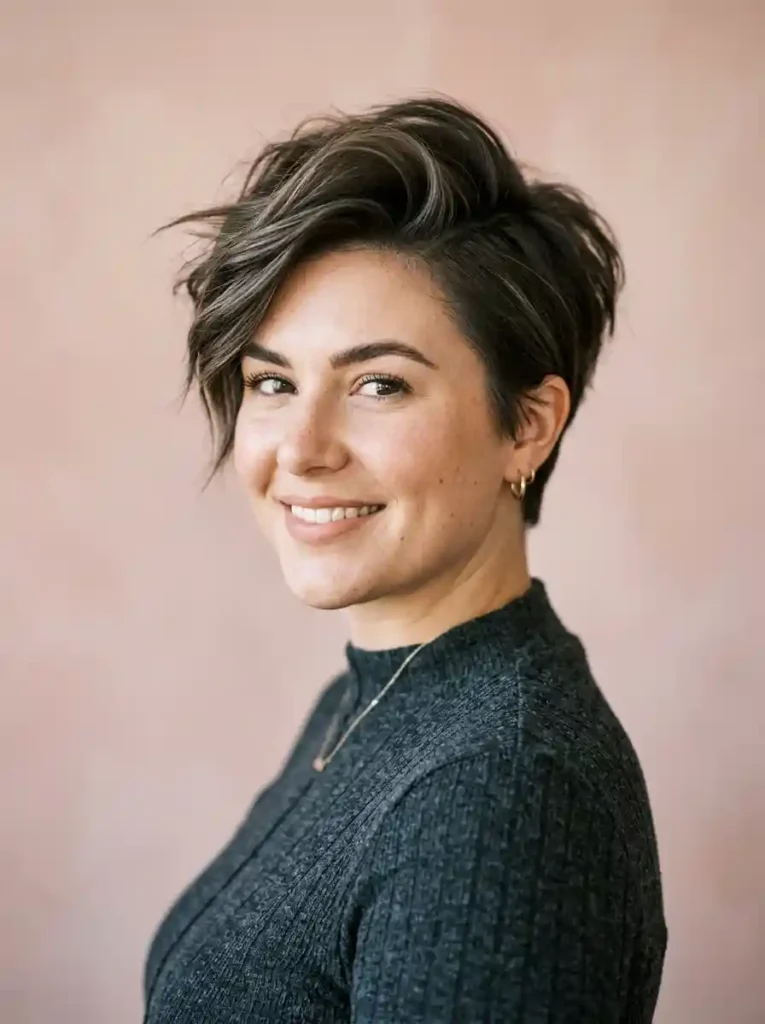
A textured pixie offers a bold alternative for anyone ready to embrace short hair. Keeping extra length on top creates movement and gives the style flexibility. The tapered sides provide a clean outline, while the longer top can be swept forward, sideways, or upward. This cut suits confident short-hair lovers and can work with fine, straight, or slightly wavy textures.
Ask your stylist to preserve enough length on top for styling changes. A small amount of matte paste can separate individual pieces without making the hair look greasy. Short sides require more frequent trims if you want a precise shape. Pro Tip: use directional styling across the top rather than pushing every strand straight upward. A diagonal flow can create a softer relationship with angular facial features.
18. Loose Braided Waves
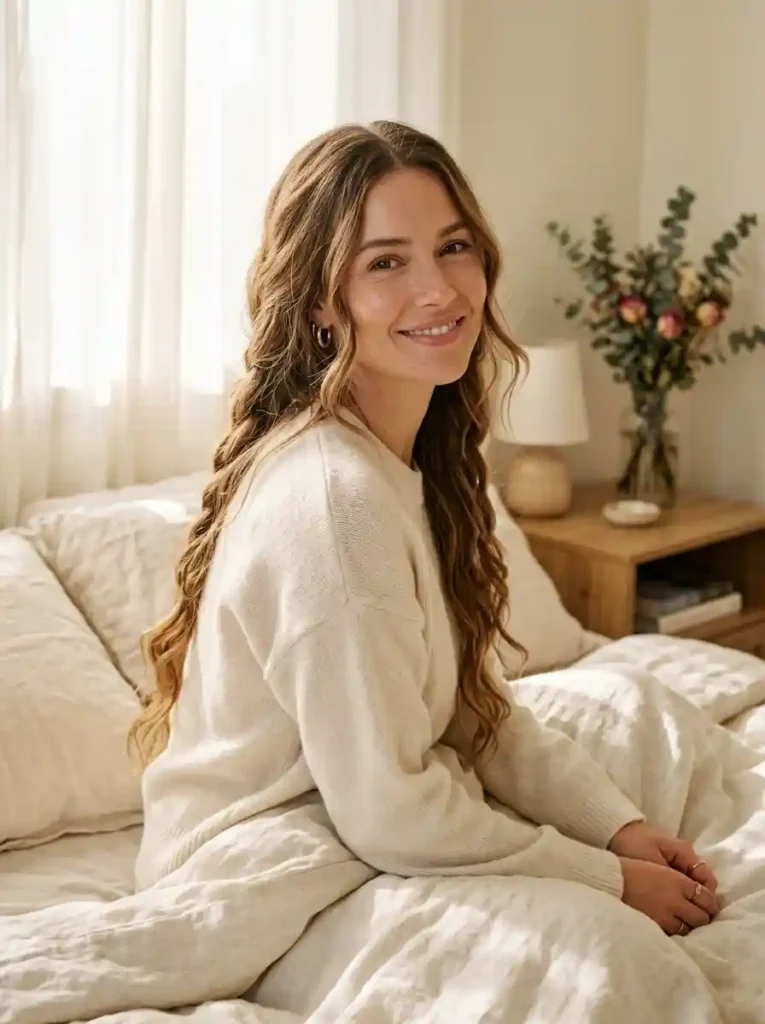
Loose braided waves offer a gentle styling option without changing the haircut itself. The irregular bends created by braiding feel softer than uniform curling. Long face-framing strands can remain loose to add movement around the cheeks. This idea suits people who prefer low-heat styling or relaxed weekend looks. It works across many colors and textures, especially when the hair has enough length to form secure braids.
Start with slightly damp hair and create two or four loose braids, depending on the desired wave size. Let the hair dry completely before unraveling it. Separate the waves with your fingers rather than a brush. Stylist Tip: use fewer, larger braids for broad waves and more braids for tighter texture. Keep the front sections loose for a softer frame.
19. Low-Maintenance Layered Waves
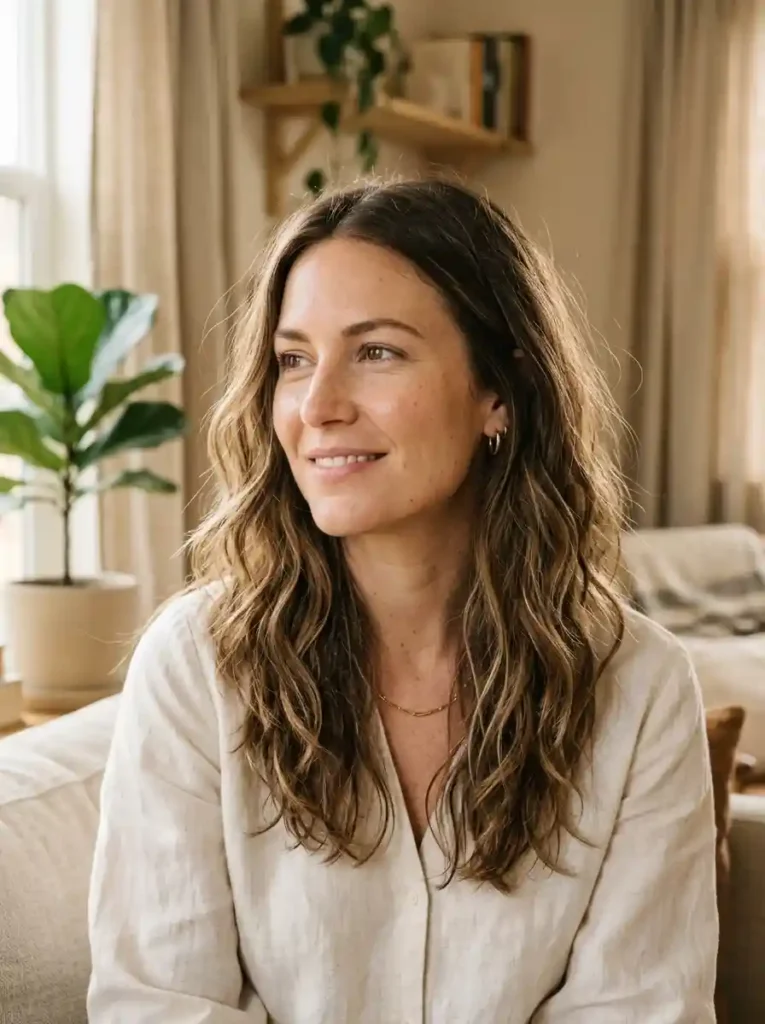
Low-maintenance layers are ideal for readers who want movement without daily styling. The haircut keeps most of its length while adding subtle variation through the mid-lengths and ends. Natural waves can create enough texture to show the layers without requiring a polished blowout. This option suits busy routines and works especially well for medium-density hair that already has some natural bend.
Ask for long, blended layers rather than a heavily sculpted shape. After washing, apply a lightweight leave-in product and let the hair air-dry. Scrunching the ends can encourage natural waves. Pro Tip: your natural part and texture should influence the layer placement. A good haircut should support how your hair naturally falls instead of requiring constant correction.
20. Soft Rounded Bob with Micro Layers
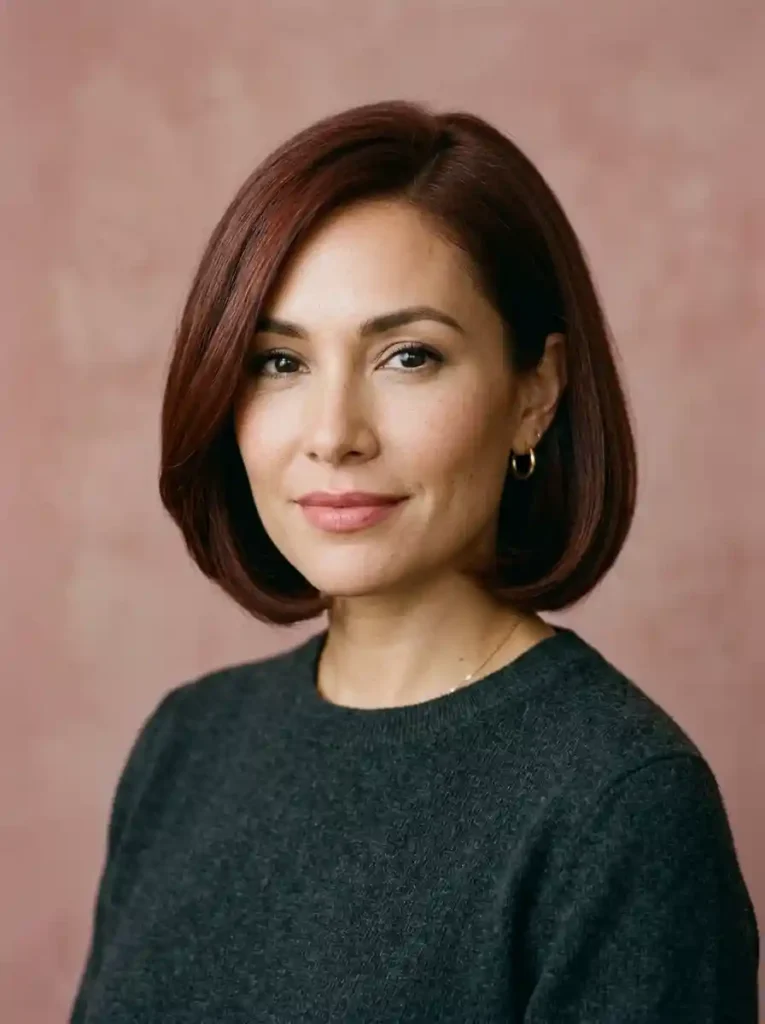
A softly rounded bob creates a compact silhouette while keeping the ends gently curved. Subtle internal layers can encourage volume without producing a visibly choppy exterior. This makes the style appealing for people who enjoy polished short hair but want to avoid a rigid geometric shape. It works especially well with straight or slightly wavy hair that holds a smooth curve.
Ask your stylist to create internal movement while keeping the outer line controlled. Blow-dry with a round brush and curve the ends slightly inward or outward. Avoid excessive root product if your hair becomes oily or flat. Stylist Tip: the exact length matters. Keeping the front slightly below the widest part of the jaw can provide a softer visual transition than a bob ending directly on the jawline.
21. Half-Up Style with Face-Framing Waves
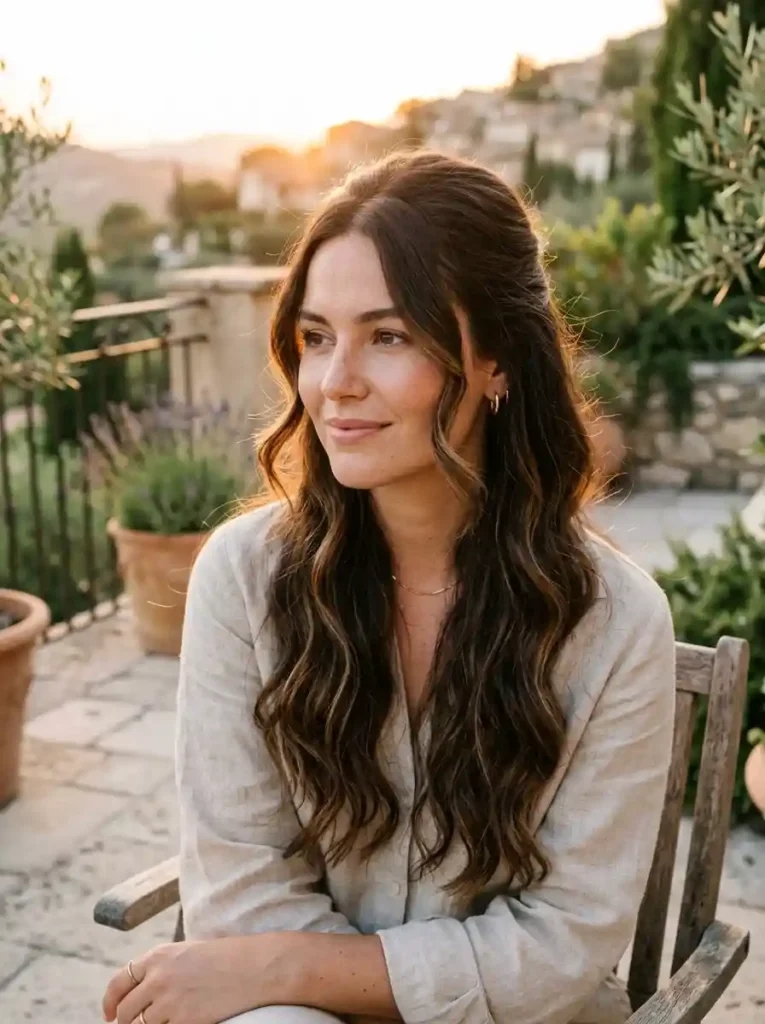
A half-up hairstyle provides an easy way to change the appearance of long hair without cutting it. The lifted crown adds height, while loose front pieces keep the style relaxed around the face. Waves give the remaining hair movement and prevent the look from appearing overly structured. This works well for casual gatherings, celebrations, dates, and photographs. It is also useful for people who want temporary styling inspiration before choosing a haircut.
Create the half-up section slightly behind the crown rather than pulling it tightly from the temples. Leave two front pieces loose and curl them away from the face. Secure the top gently to avoid flattening the volume. Pro Tip: a slightly loose finish usually looks more natural than a perfectly controlled half-up style. Allowing a few fine strands to escape can soften the overall result.
22. Shoulder-Length Curved Layers
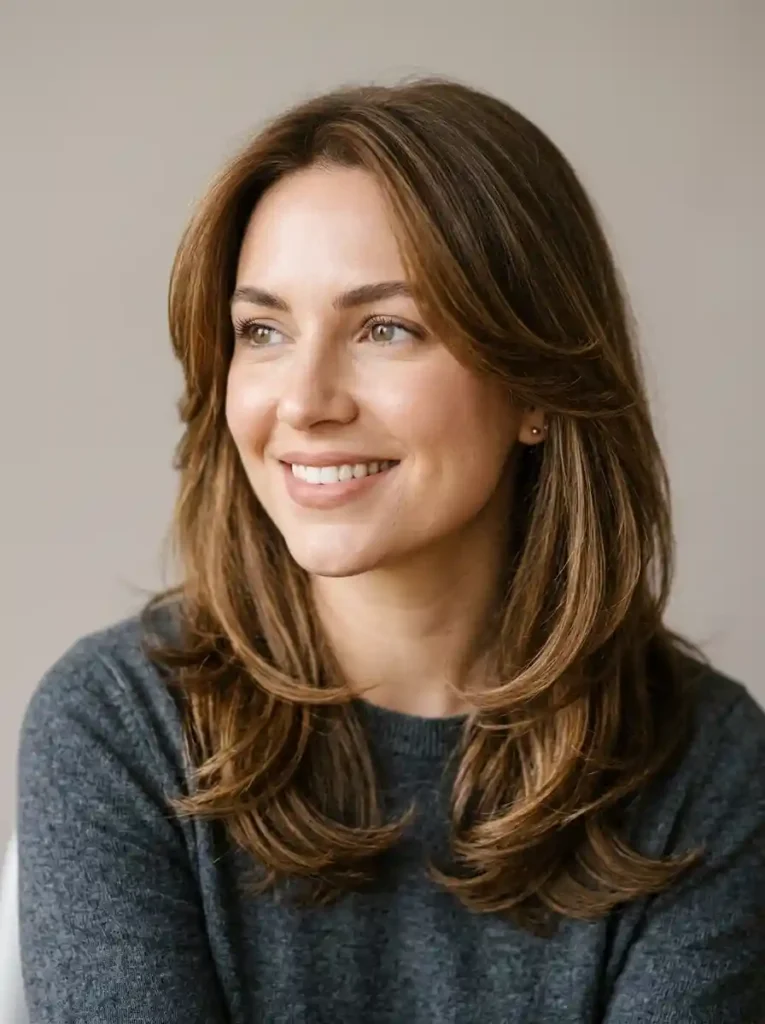
Curved layers give a shoulder-length haircut a graceful sense of direction. Instead of creating obvious steps, the layers bend around the face and continue into the shoulders. This can add softness while keeping the haircut easy to wear. It works well for medium-density straight or wavy hair and offers enough length for simple updos. The shape looks polished without requiring an elaborate styling routine.
Ask for the front layers to follow the natural curve of your face and shoulders. Use a round brush to bend the ends slightly away from the face, or let natural waves define them. Keep the lowest layer relatively full for a healthy outline. Common Mistake: placing every layer at the same height can create a shelf-like effect. Staggered, blended transitions create a much smoother result.
23. Long Curly Layers with Side Part
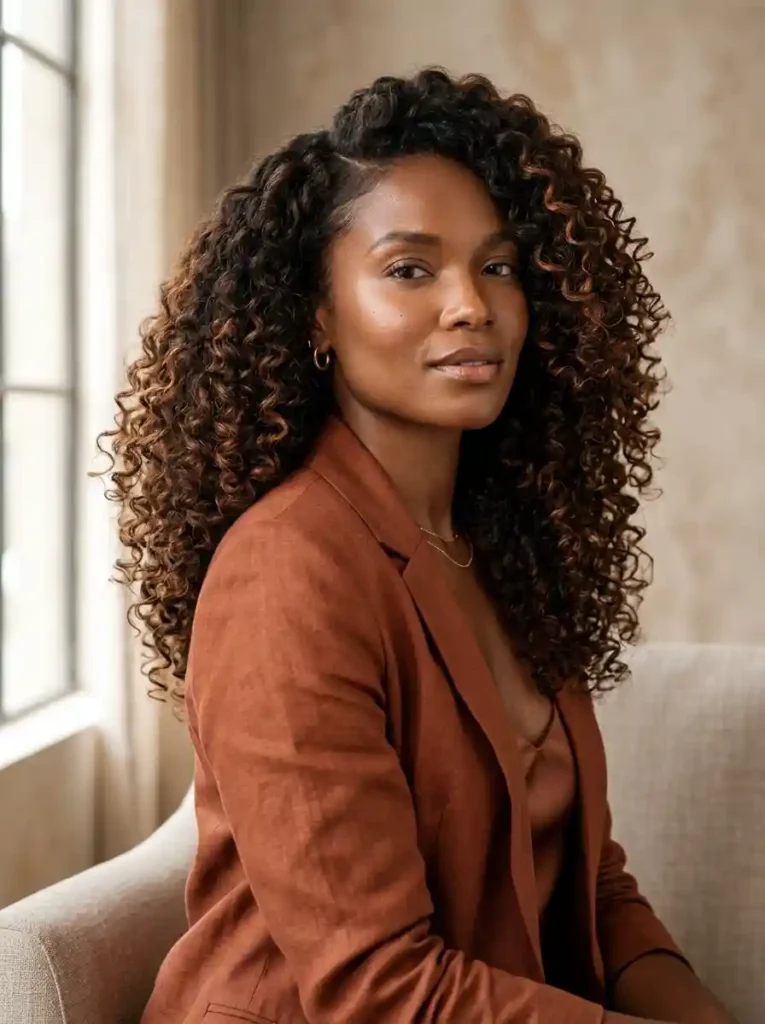
Long curly layers create movement while allowing the natural curl pattern to remain the main feature. A side part shifts the volume and gives the overall silhouette a lively diagonal direction. This can be especially attractive for people with thick curls who want shape without sacrificing length. The layered structure can also help prevent long curly hair from becoming visually heavy through the ends.
Discuss your curl pattern with your stylist before choosing layer placement. Curly hair can shrink considerably, so the finished length may differ from the wet length. Use a moisturizing leave-in product and diffuse gently when necessary. Stylist Tip: layers should support the curl’s natural spring rather than forcing every section into identical lengths. Uneven curl behavior is normal and can add character.
24. Elegant Long Layers with Soft Ends
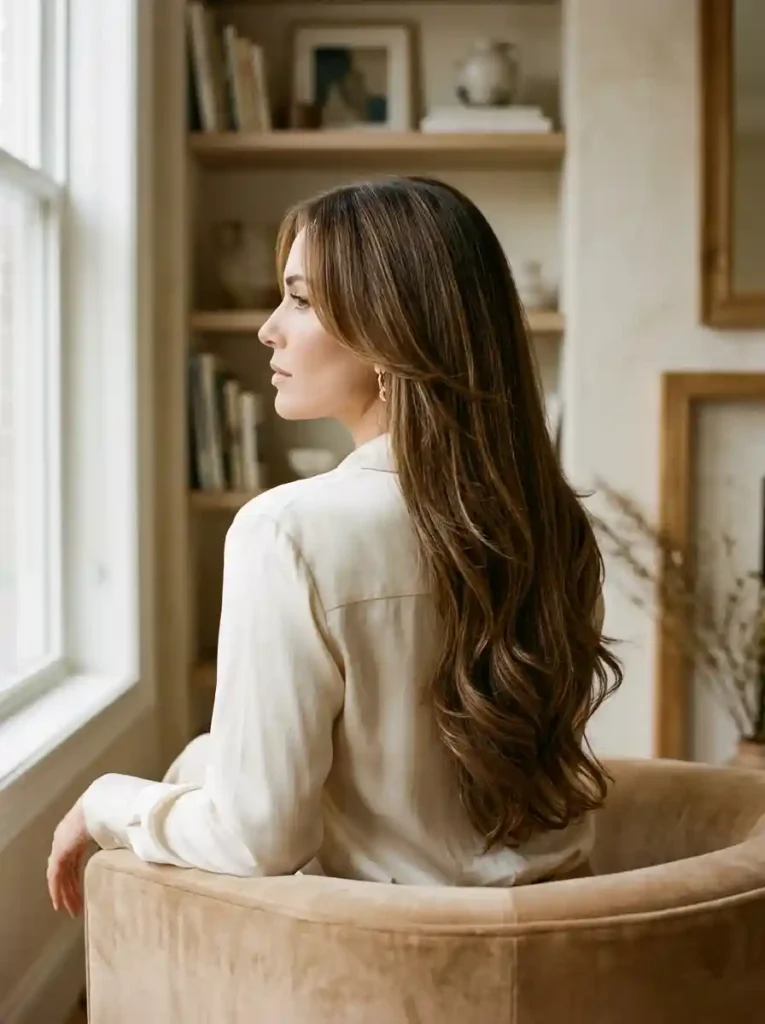
Elegant long layers offer a timeless finish for someone who wants movement without a dramatic haircut. The layers begin below the strongest facial angles and gradually blend toward the ends. This keeps the overall shape long, smooth, and refined. The style works well for straight and lightly wavy hair, particularly when the wearer wants a professional appearance. Subtle highlights can emphasize the gradual transitions without overwhelming the simple silhouette.
Ask for long, blended layers and keep the shortest front section below the chin if softness is important. Use a large round brush for a smooth finish or allow the hair to dry naturally for gentler movement. Trim the ends regularly to maintain the shape. Pro Tip: long layers do not need to be numerous. A few carefully placed sections can create movement while preserving the fullness that makes long hair look healthy.
Frequently Asked Questions
What hairstyles work best for square faces?
Soft layers, side-swept bangs, curtain bangs, textured bobs, loose waves, and longer face-framing pieces often work well. The goal is to create movement and avoid an overly. Curtain bangs, wispy bangs, and long side bangs can work particularly well. Softer, blended fringe often creates a gentler effect than rigid outline.
Are bangs good for square faces?
Yes. Curtain bangs, wispy bangs, and long side bangs can work particularly well. Softer, blended fringe often creates a gentler effect than a heavy blunt fringe.
Is short hair suitable for a square face?
Absolutely. Textured pixies, softly rounded bobs, and angled cuts can look striking. The most important factor is where the haircut creates volume and where its edges end.
Can curly hair work with a square face?
Yes. Curly layers can create a rounded, flowing silhouette while celebrating natural texture. Layer placement should account for curl shrinkage and the hair’s natural pattern.
Should square faces avoid blunt haircuts?
Not necessarily. A blunt cut can look polished and modern. If you want a softer effect, choose a length that does not end directly at the widest point of the jaw and add movement through styling.
How do I choose between layers and bangs?
Consider your maintenance routine first. Layers usually change the overall shape, while bangs create a stronger focal point around the forehead and eyes. Both can be customized to your preferred length and texture.
Conclusion
The best hairstyles for square faces do not need to hide strong features. Soft layers, flowing waves, thoughtful fringe, and strategic length can create balance while keeping your natural structure visible. Your hair texture also matters, because the same cut can behave very differently on straight, wavy, and curly hair. Choose the idea that matches your daily routine as well as your preferred look. Save your favorite style before your next salon visit, and bring the image along for reference.