
Some hairstyles look polished for five minutes, then fall flat before the day begins. The old money aesthetic offers a different approach. It favors healthy-looking hair, thoughtful shape, soft movement, and understated elegance. These old money hairstyles feel refined without looking overly styled or trendy. This guide shares 22 distinct looks for different lengths, textures, occasions, and maintenance preferences. Each idea includes visual inspiration and practical advice you can take to your stylist or recreate at home.
1. Classic Voluminous Blowout
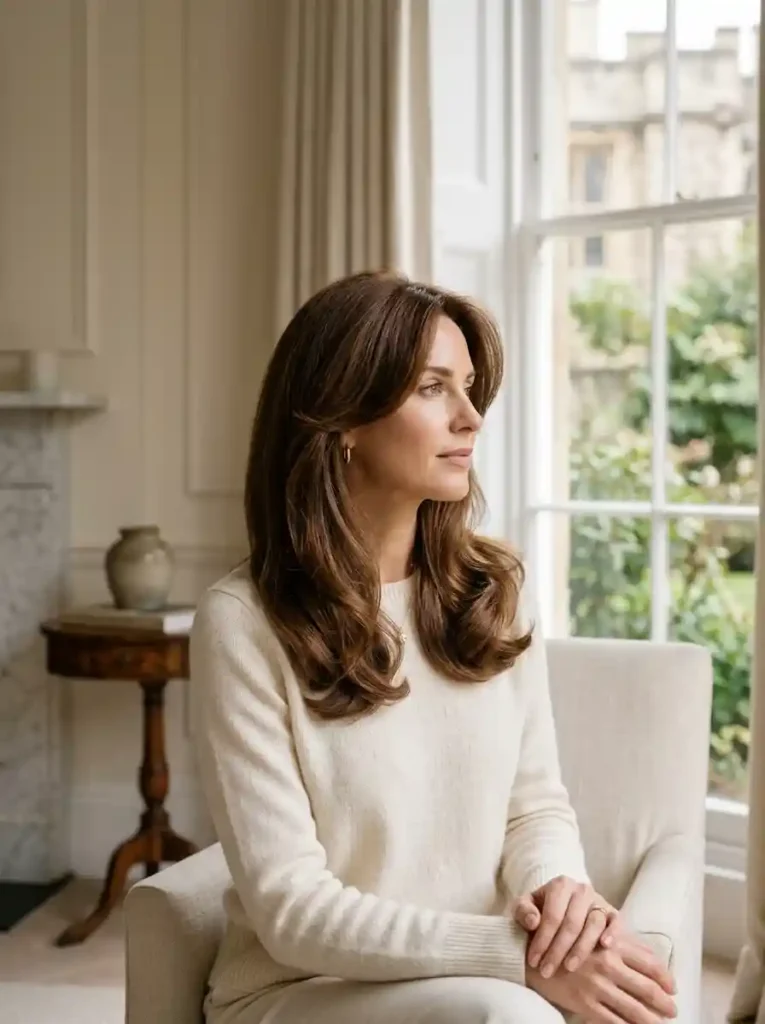
A classic blowout creates the polished foundation associated with timeless glamour. Hair falls smoothly around the shoulders with controlled volume at the crown. Rounded ends add softness without looking overly curled. This style suits medium to thick hair especially well, although fine hair can achieve a lighter version. A warm brunette, deep blonde, or natural black shade keeps the overall look understated. The result feels sophisticated enough for an event while remaining practical for everyday wear.
For the best finish, begin with a heat protectant and work in manageable sections. Use a round brush to direct the ends inward while lifting the roots slightly. Avoid creating excessive height at the crown, which can make the style look dated. Pro Tip: let each finished section cool before brushing it through. Cooling helps the shape settle and usually gives the blowout better staying power without requiring heavy products.
2. Sleek Low Chignon
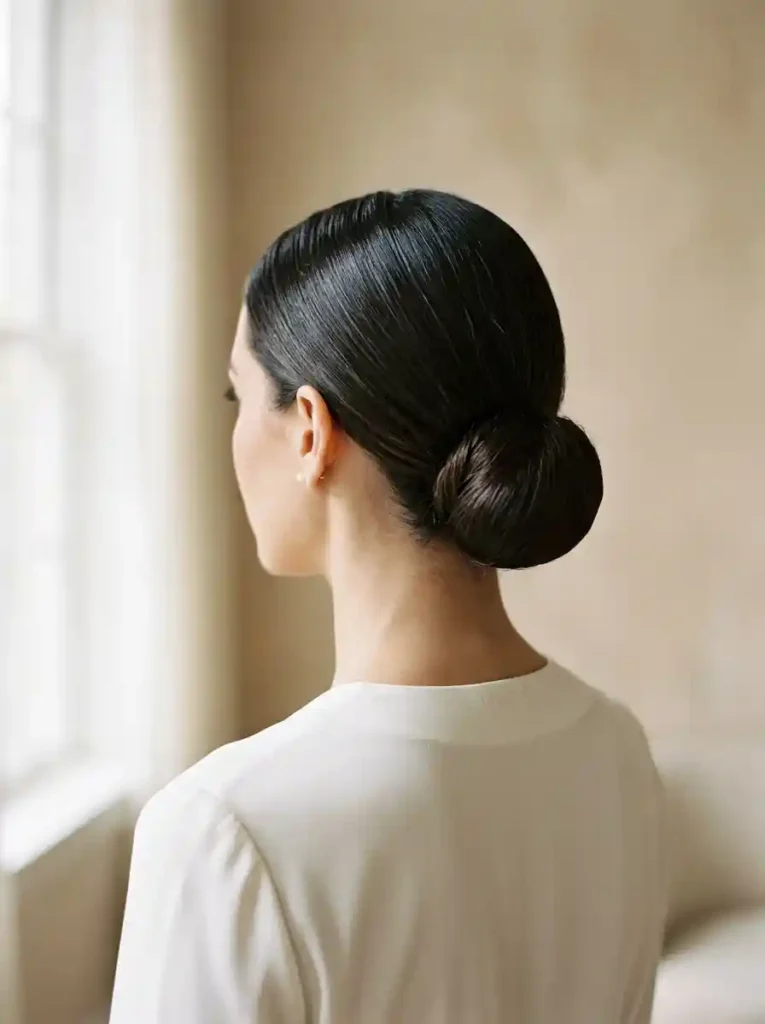
A low chignon offers understated elegance with very little visual clutter. The hair is gathered close to the nape and shaped into a compact, smooth bun. A center part creates symmetry, while a side part can produce a softer appearance. This style works particularly well with straight or gently wavy hair. Medium-length hair can form a smaller bun, while longer hair creates a fuller silhouette. Its clean shape makes it especially suitable for formal settings and professional environments.
Start by smoothing the hair with a fine brush before securing a low ponytail. Twist the length around the base and pin it securely from several directions. Use a light finishing cream instead of heavy gel for a softer surface. Stylist Tip: leave the bun slightly lower than you initially expect. A low placement keeps the silhouette elegant and prevents the hairstyle from resembling a traditional ballet bun.
3. Soft Side-Parted Waves
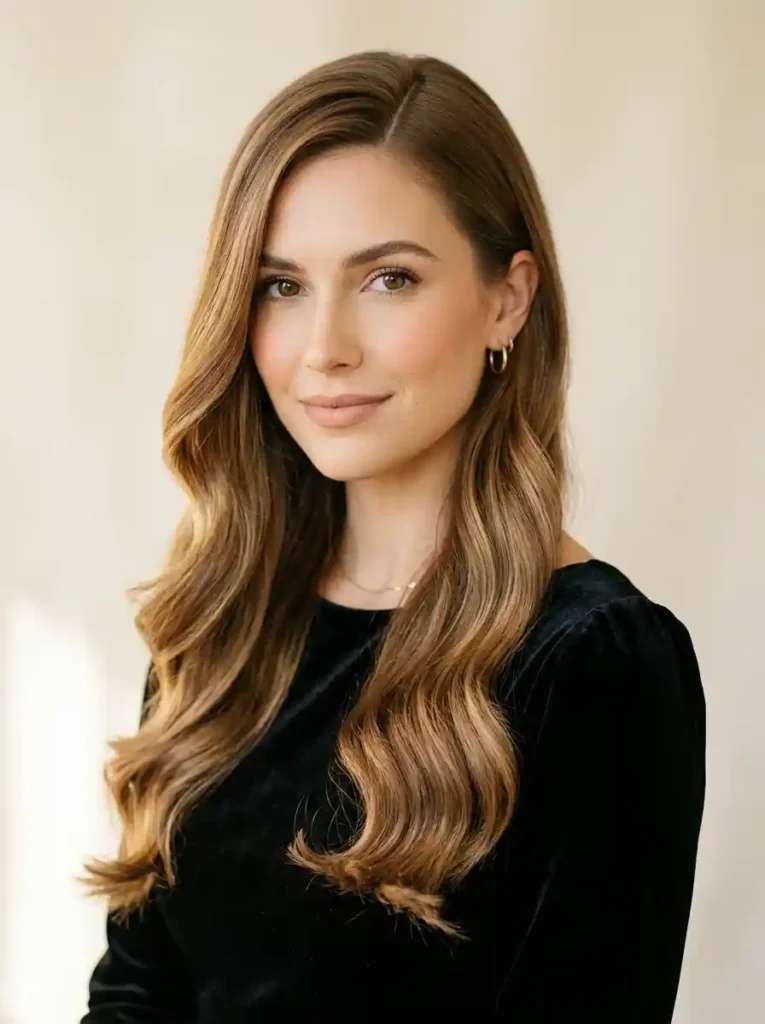
Side-parted waves bring a romantic quality to a refined hairstyle without looking overly formal. The deep part gives the roots gentle lift and creates an elegant sweep across the forehead. Broad waves look more sophisticated than tight curls because they preserve a relaxed silhouette. This option works beautifully on long and medium-long hair. It can suit naturally straight hair after styling and naturally wavy hair with careful smoothing. Warm brunette, caramel, and soft blonde tones enhance the dimensional effect.
Use a large-barrel curling iron to create wide bends rather than ringlets. Alternate the direction of a few sections, then brush everything gently after the hair cools. Keep the ends relatively relaxed for a modern finish. Common Mistake: curling every section tightly from root to tip. That approach removes the effortless quality. Concentrate the wave through the middle lengths and allow the ends to remain smooth and slightly loose.
4. Polished Collarbone Bob
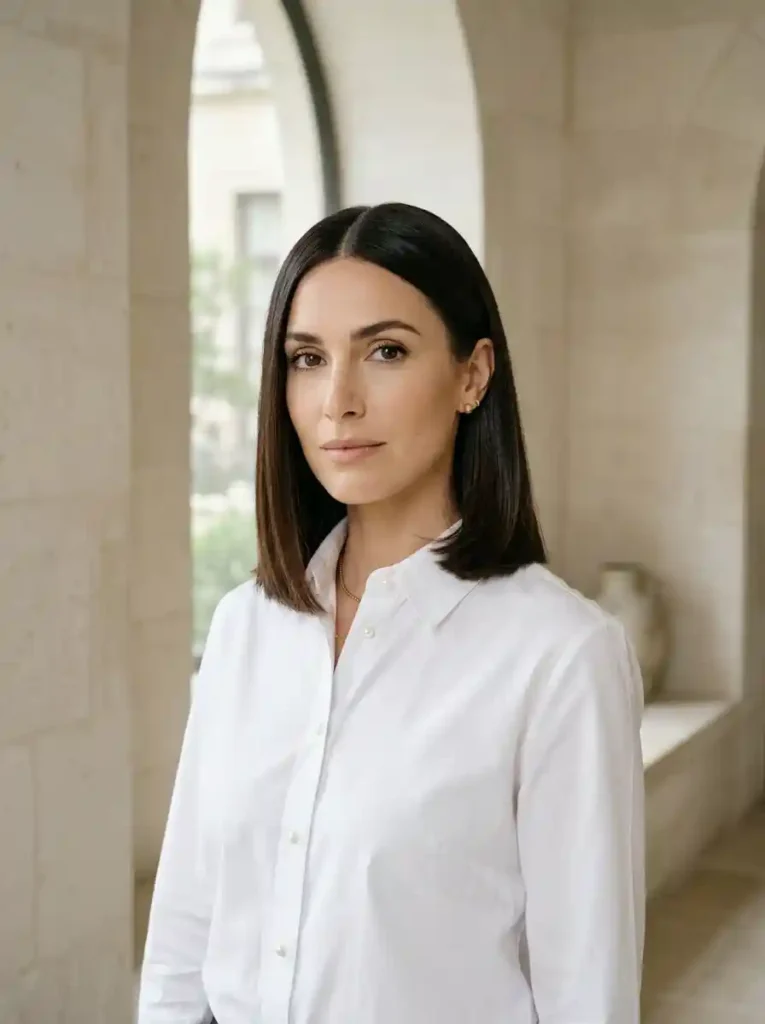
A collarbone bob offers structure while retaining enough length for flexible styling. Its clean perimeter creates a deliberate, expensive-looking finish without requiring elaborate details. The shape works especially well for straight and lightly wavy textures. Fine hair can benefit from the stronger outline because the ends appear denser. Medium-density hair may need subtle internal shaping to prevent heaviness. Keeping the color close to the natural shade often makes this haircut feel more timeless and easier to maintain.
Ask your stylist for a strong perimeter that sits around the collarbone. Avoid excessive layering if you want a sleek silhouette. For naturally wavy hair, request enough internal movement to prevent the shape from becoming bulky. Pro Tip: a center part emphasizes the geometric line, while a soft side part adds movement. A small amount of smoothing cream can control frizz while preserving natural shine.
5. Brushed-Out Hollywood Waves
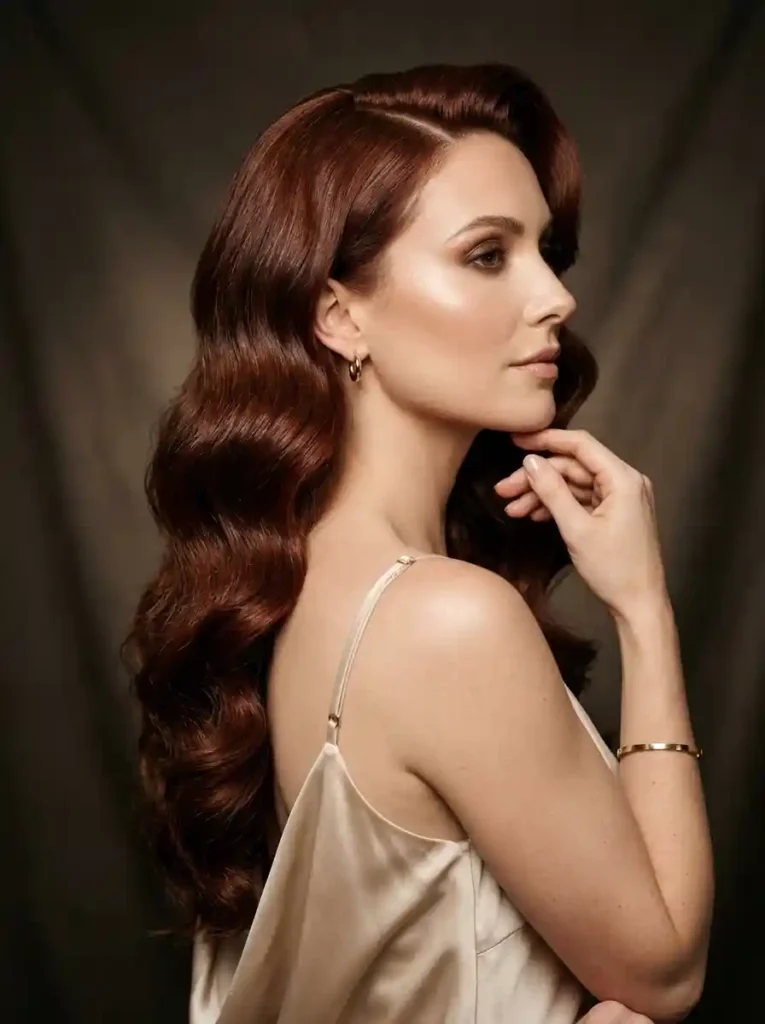
Brushed-out Hollywood waves create a more glamorous interpretation of the old money aesthetic. The defining feature is a repeated S-shaped pattern rather than separate curls. Hair remains smooth, glossy, and substantial throughout the lengths. Long hair provides the clearest wave pattern, while medium-length hair can create a shorter version. Deep brunette, auburn, and dimensional blonde shades work particularly well because the light catches each curve. This style is ideal when you want sophistication with noticeable visual impact.
Create the waves with a medium or large barrel, keeping each section consistent. Pin the curls while they cool, then brush them carefully with a soft paddle brush. Shape the front separately so it sweeps naturally away from the face. Stylist Tip: use less hairspray than you think you need. A flexible hold keeps the wave pattern touchable and prevents the glossy finish from becoming stiff or artificial.
6. Refined French Twist
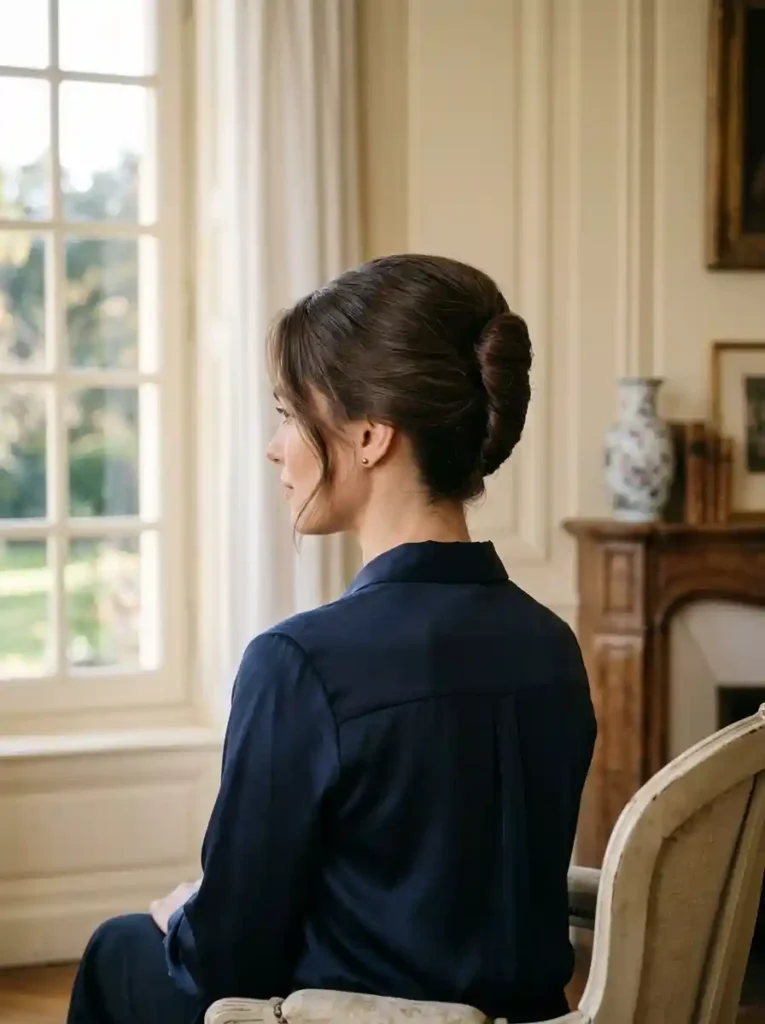
The French twist creates height and elegance without requiring an oversized updo. Hair is swept backward and rolled vertically, producing a long, narrow shape along the back of the head. The style suits medium and long hair, especially when the strands have enough density to form a stable roll. A few fine pieces around the temples can soften the result. This hairstyle feels particularly appropriate for dinners, weddings, interviews, and occasions requiring polished presentation.
Smooth the sides first, then gather the hair loosely before rolling it upward. Secure the twist with long pins placed inside the structure rather than across its surface. Avoid pulling every strand completely flat if you want a softer finish. Common Mistake: making the twist extremely tight. Slight softness around the hairline makes the style feel contemporary and prevents the overall shape from looking overly formal or severe.
7. Long Layers With Curtain Bangs
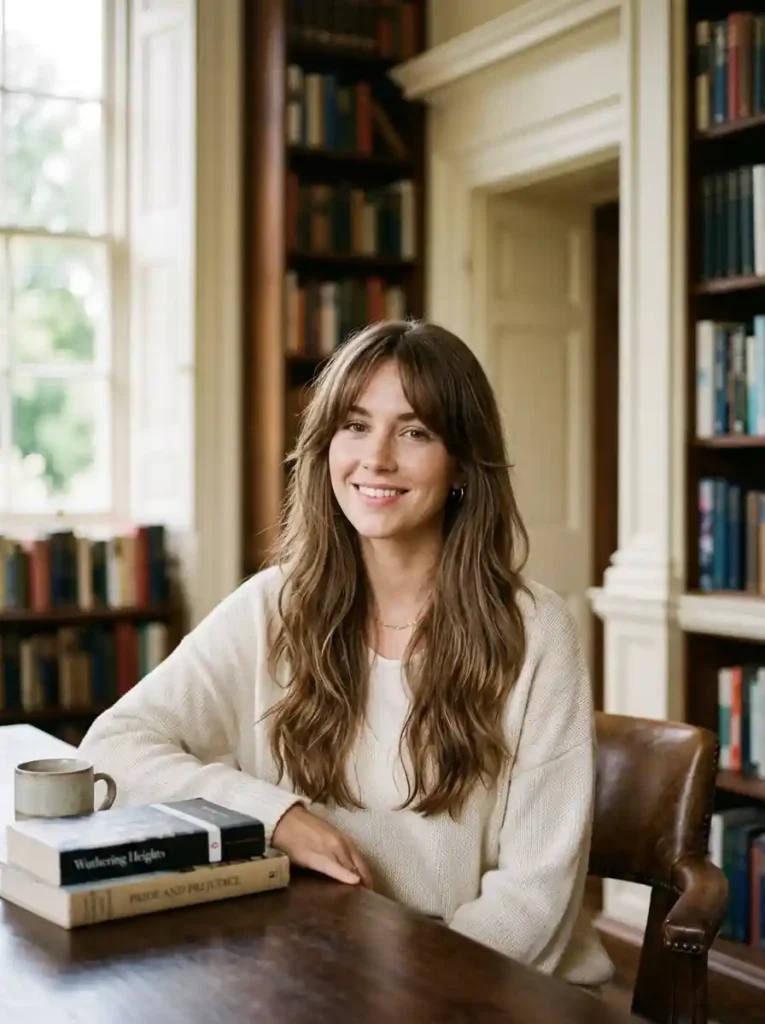
Long layers with curtain bangs provide movement while preserving a polished overall length. The bangs open gently around the eyes and cheekbones, then blend into longer face-framing sections. This creates a softer transition than a blunt fringe. The haircut can work with straight, wavy, or lightly textured hair when the layers match the natural pattern. It is especially useful for people who want visible shape without sacrificing long hair. The result feels feminine, relaxed, and carefully maintained.
Ask for long layers rather than heavily stacked sections. The shortest face-framing piece should blend smoothly into the curtain bangs. Style the fringe with a round brush, directing each side away from the face. Pro Tip: curtain bangs usually need more frequent shaping than long layers. If you dislike regular trims, request a longer fringe that blends into the surrounding layers instead of sitting at eye level.
8. Smooth Shoulder-Length Blowout
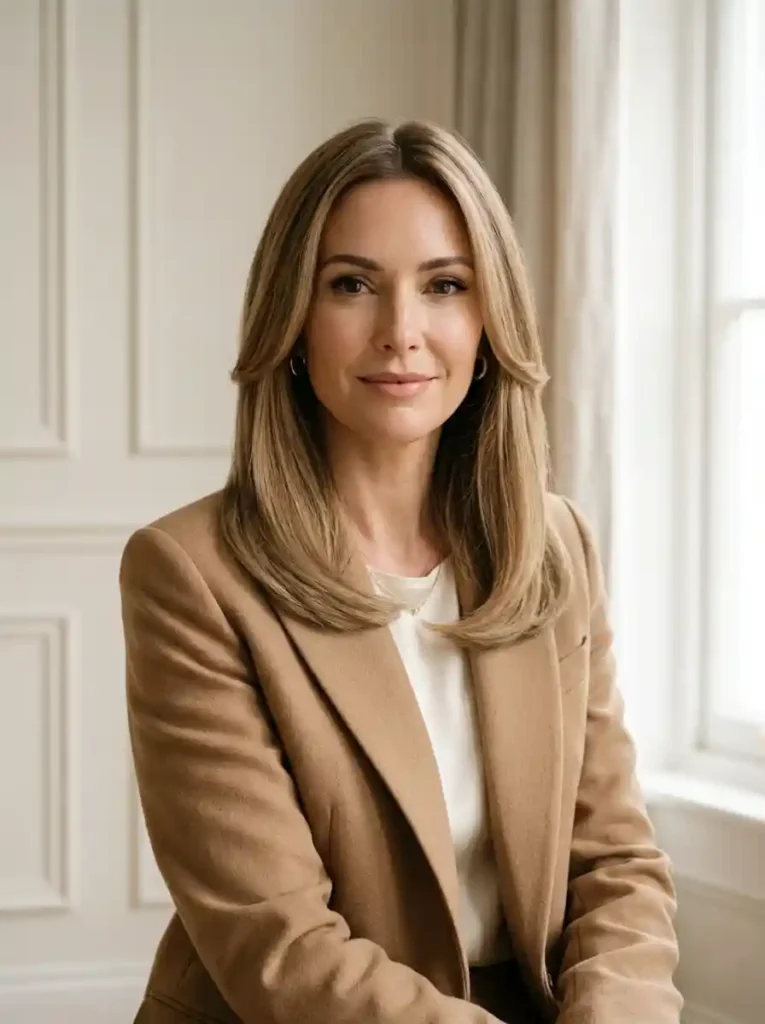
A shoulder-length blowout balances practicality and polish. The length rests around the shoulders, giving enough movement for a rounded finish without becoming difficult to manage. Softly curved ends create structure and prevent the haircut from appearing flat. This style is particularly useful for medium-density hair because it provides movement while keeping enough weight through the perimeter. Natural brunette, dark blonde, and soft black shades complement the understated shape. It can transition easily from workdays to evenings.
Dry the roots upward with a round brush, then guide the ends inward. Do not overwork every section, because excessive brushing can remove natural body. Finish with a small amount of lightweight serum through the ends. Stylist Tip: if your hair tends to become triangular around the shoulders, ask for subtle internal layers. They can distribute weight without creating obvious choppy pieces.
9. Low Ponytail With Wrapped Base
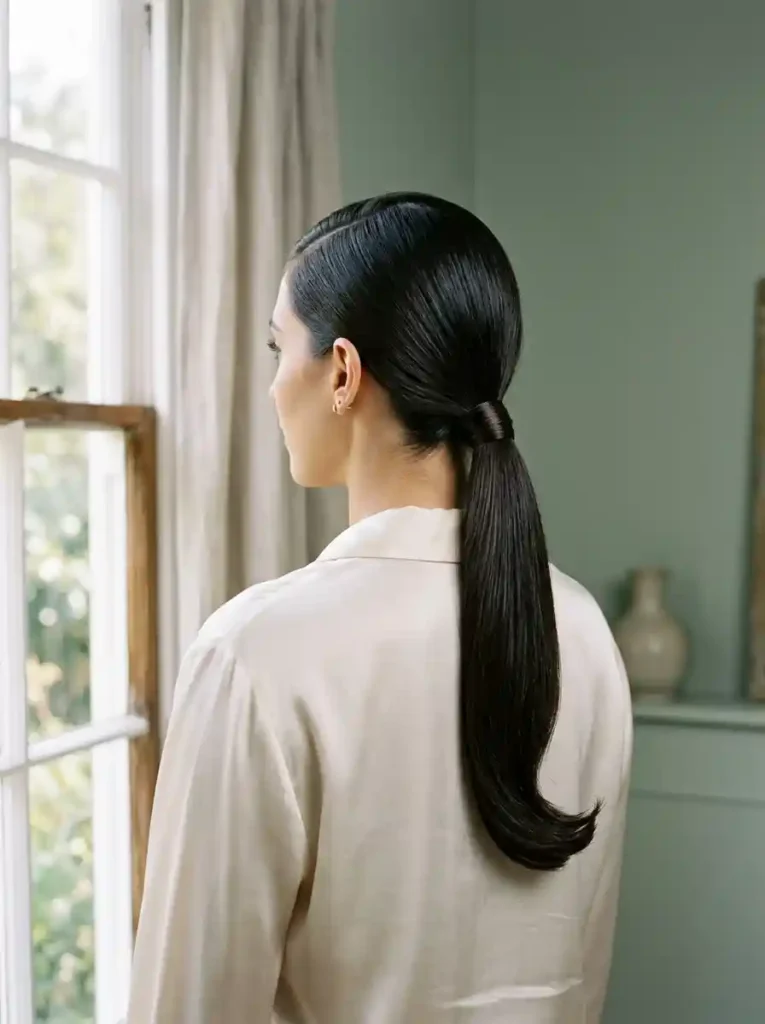
A low ponytail becomes noticeably more elegant when the base is carefully finished. The crown remains smooth while the length falls naturally down the back. Wrapping a small section around the elastic hides the practical detail and creates a cleaner appearance. This look works well with straight or gently wavy hair and can accommodate many lengths. It is particularly appealing when you want a polished hairstyle that takes less time than a full updo.
Create the ponytail at the nape or slightly above it, depending on your preferred silhouette. Secure it firmly, then wrap a thin strand around the elastic and pin it underneath. Keep the ponytail smooth without flattening all natural texture. Pro Tip: a side part gives the style a softer, more classic character, while a center part creates a sharper and more modern finish.
10. Soft Voluminous Lob
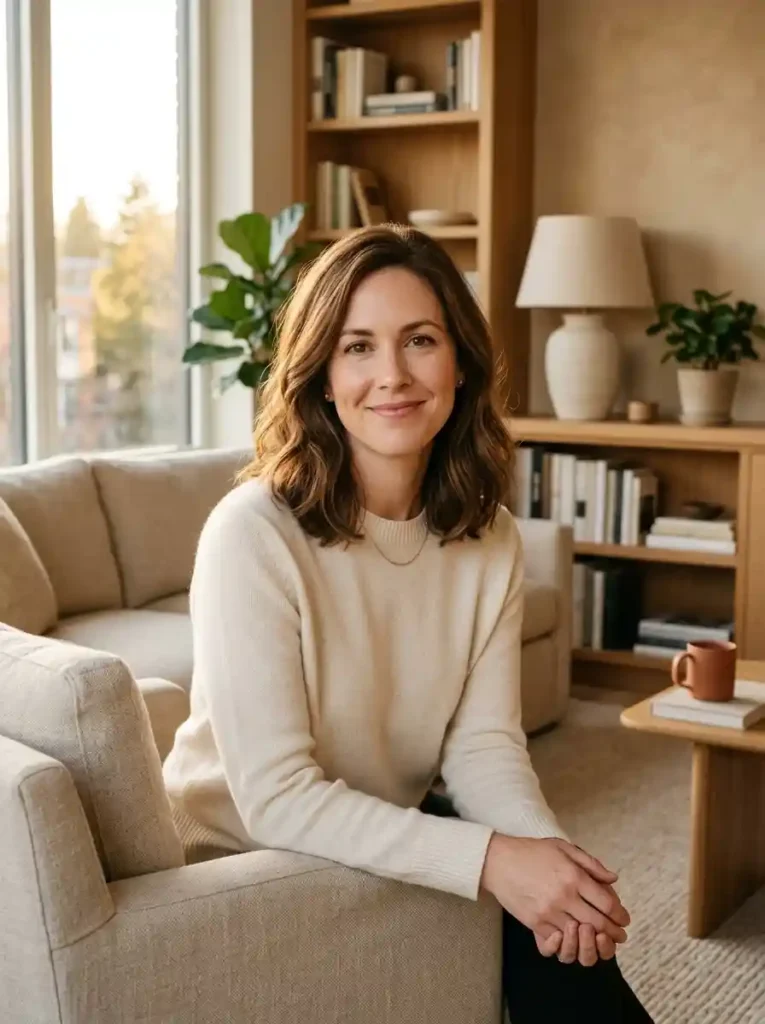
The soft lob offers volume without the commitment of very long hair. Its length sits between the jaw and collarbone, depending on preference, while subtle layering creates movement. A side part can make the shape appear fuller at the crown. This haircut suits straight, wavy, and loosely textured hair when the perimeter is tailored to the natural density. It works especially well for anyone who wants a polished appearance but prefers a shorter routine.
Ask for gentle internal layers rather than dramatic steps through the outer shape. Blow-dry the roots upward and curve the ends slightly away or toward the neck. Both directions can work, but consistency keeps the silhouette intentional. Common Mistake: removing too much weight from thick hair. Excessive thinning can make the ends appear wispy, so ask for controlled internal shaping instead.
11. Center-Parted Glass Hair
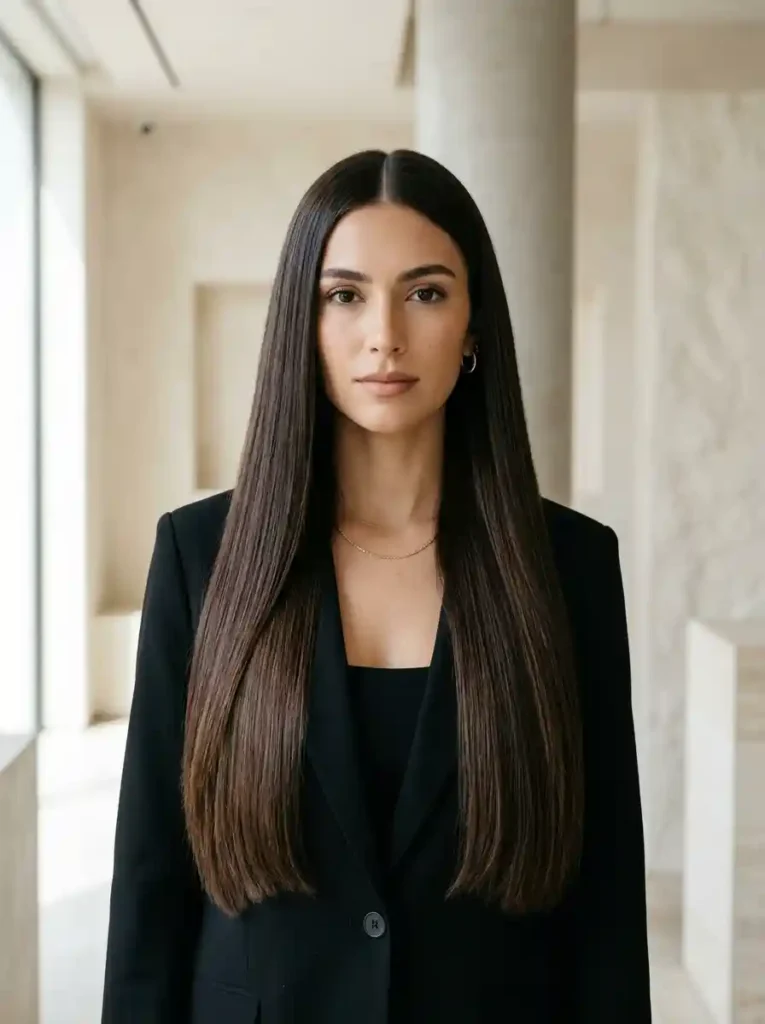
Center-parted glass hair creates a striking impression through precision rather than decoration. The hair falls in a smooth curtain with minimal layering and a clearly defined center part. Healthy-looking ends are important because the style exposes the entire perimeter. This option works best on naturally straight hair or hair that can be safely smoothed. Long lengths emphasize the reflective effect, while shoulder-length versions provide a lighter interpretation. Deep brown and black shades make the glossy surface especially noticeable.
Begin with a smoothing product and heat protectant before blow-drying the hair straight. Use a flat iron only when necessary, keeping the temperature appropriate for your hair type. Finish with a tiny amount of lightweight oil on the ends. Stylist Tip: shine depends heavily on a smooth surface. If your hair is naturally coarse or textured, preserve some natural movement instead of repeatedly using high heat to force complete straightness.
12. Side-Swept Feathered Layers
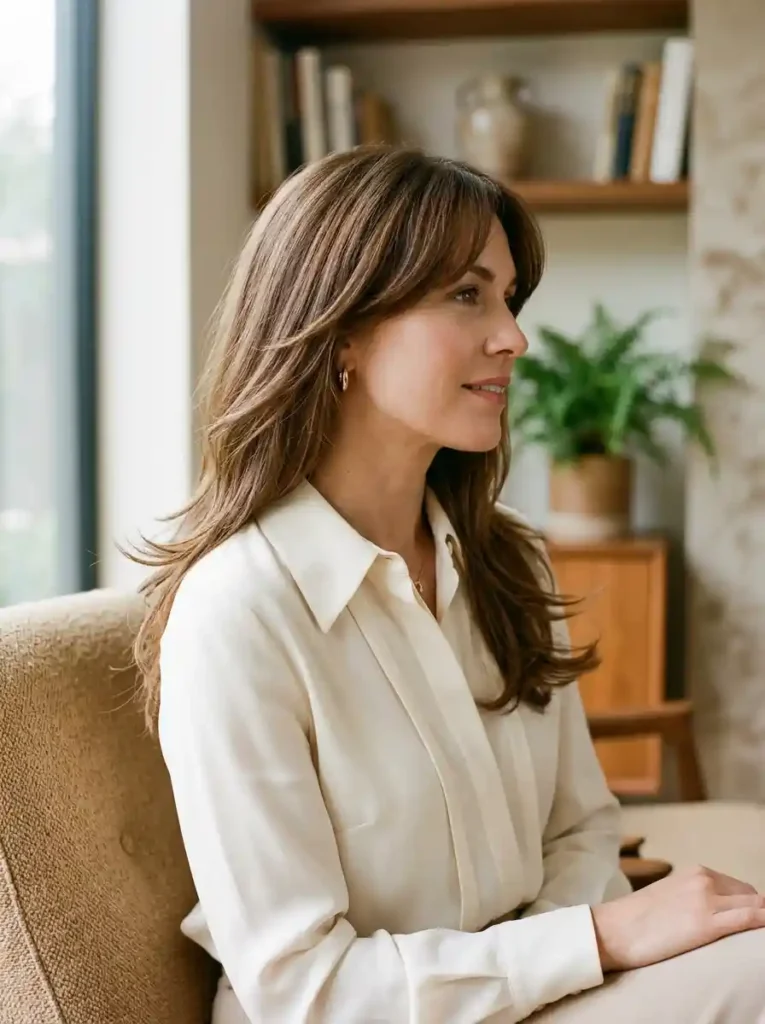
Side-swept feathered layers add movement while keeping the overall look refined. The front sweeps diagonally across the forehead and transitions into light feathering around the face. The ends move outward gently rather than forming dramatic flips. This haircut works especially well on medium to long hair with moderate density. It can suit straight or softly wavy textures. The layered silhouette adds interest for people who find one-length hair too heavy but still want a sophisticated, grown-up appearance.
Ask your stylist to keep the shortest layers blended rather than sharply separated. A round brush can direct the front backward and slightly outward. Use a lightweight mousse if the hair needs more body. Pro Tip: feathering looks best when the ends retain some weight. Excessive thinning can make the layers appear uneven, especially on fine hair.
13. Elegant Half-Up Ribbon Style
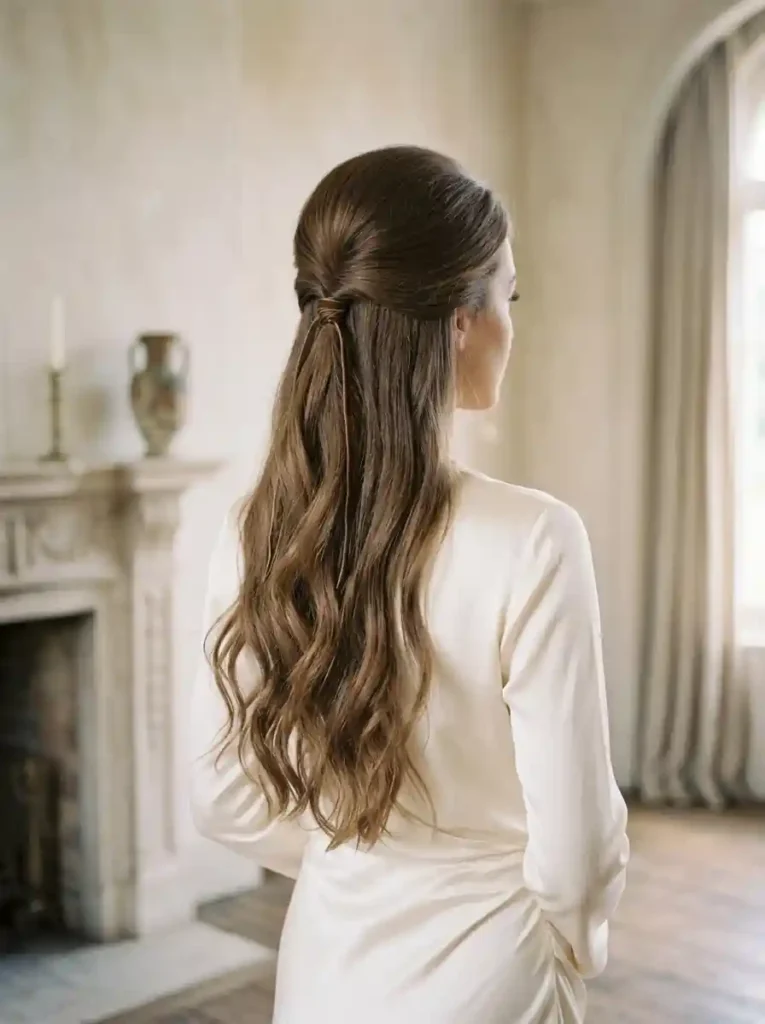
A restrained half-up style offers a softer alternative to a complete updo. The upper section is gathered neatly while the lower hair remains loose and flowing. A narrow velvet ribbon adds detail without overwhelming the hairstyle. This option works beautifully for medium-long and long hair with straight, wavy, or curled texture. It suits dinners, celebrations, photographs, and relaxed formal events. Keeping the accessory narrow helps preserve the understated character associated with the aesthetic.
Gather the upper section from slightly above the temples rather than pulling all the hair from the front. Secure it gently to preserve volume around the crown. Add the ribbon after the hairstyle is finished. Stylist Tip: velvet works especially well when the rest of the outfit has simple textures. If your hair is fine, tease the underside very lightly before securing the half-up section for extra stability.
14. Sleek Jaw-Length Bob
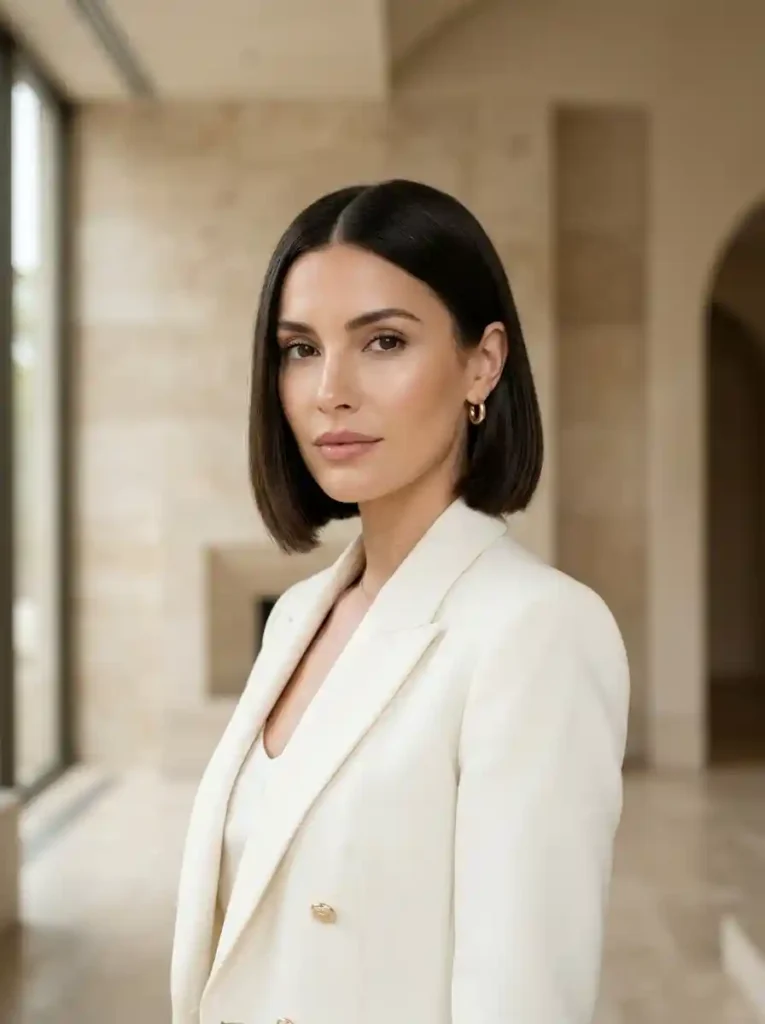
A jaw-length bob creates a crisp silhouette that feels confident and timeless. The ends follow the jawline closely, giving the haircut a clear architectural shape. Minimal layering keeps the perimeter strong and visually dense. This style can be especially effective for fine or medium-density straight hair because the blunt edge gives the impression of fuller ends. A natural brunette or deep blonde color complements the clean geometry. It is an excellent choice for someone who wants refinement with minimal styling complexity.
Request a strong perimeter and avoid excessive texturizing at the ends. A center part emphasizes symmetry, while a side part changes the balance and adds softness. Blow-dry with a paddle brush for a sleek finish. Common Mistake: choosing a length without considering natural shrinkage or wave. If your hair has significant texture, discuss the finished length carefully before cutting.
15. Loose Low Knot
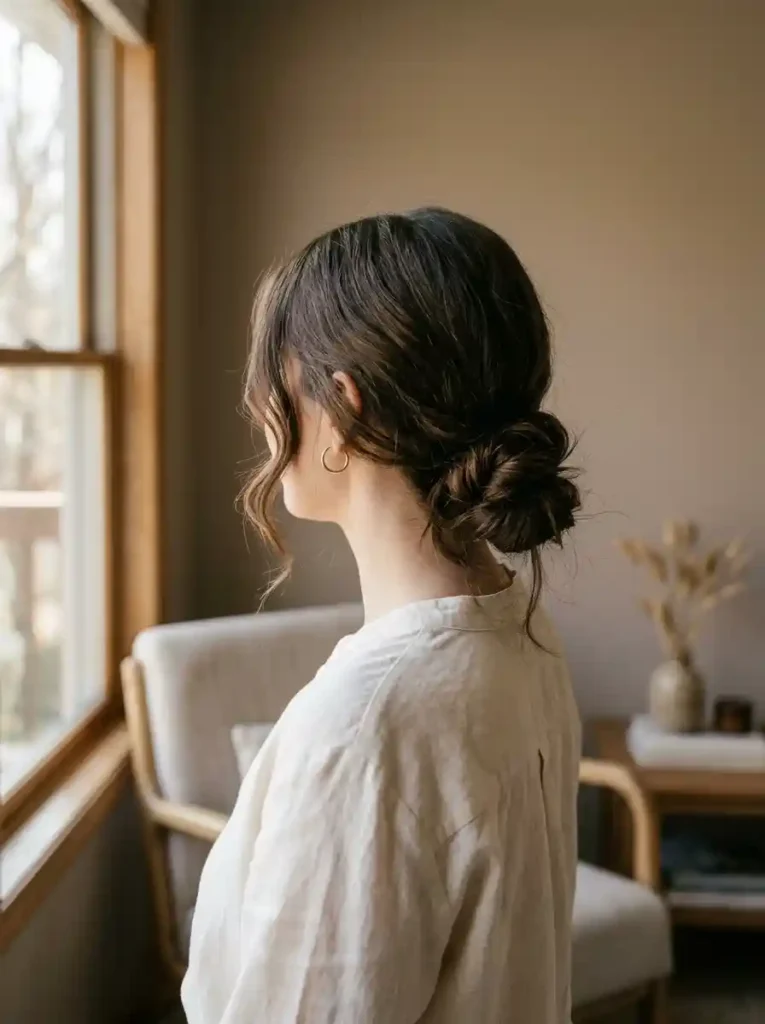
The loose low knot feels polished without demanding perfect symmetry. Hair gathers at the nape and forms a compact twist with gentle softness around the face. Unlike a sleek chignon, this version allows natural texture and a few intentional wisps. It works well for medium-long hair and can be adapted to naturally wavy or slightly curly textures. The relaxed construction makes it particularly useful for casual dinners, weekend events, and days when a full blowout is unnecessary.
Apply a small amount of styling cream to control the surface without eliminating texture. Gather the hair loosely, twist it at the nape, and secure the knot with pins. Leave two fine pieces near the temples if desired. Pro Tip: do not pull the crown completely flat. A little natural lift keeps the hairstyle softer and prevents the knot from looking overly severe.
16. Polished Curtain-Bang Ponytail
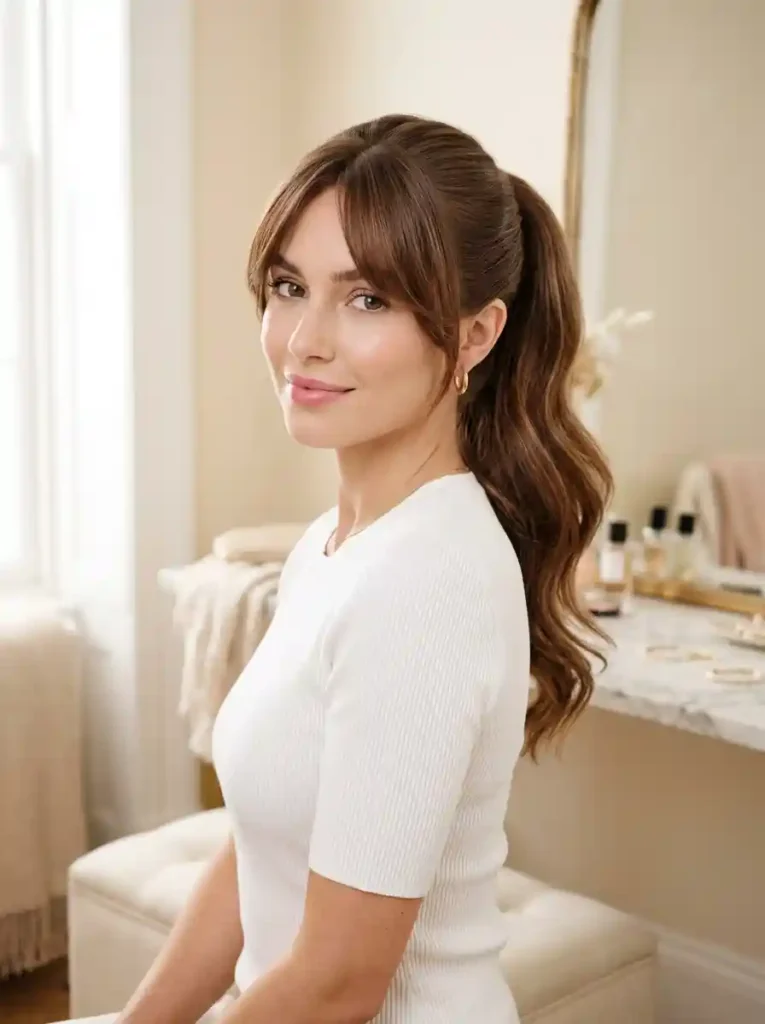
Curtain bangs can transform a simple ponytail into a more detailed hairstyle. The ponytail stays smooth through the crown while the fringe opens softly around the face. Keeping the ponytail at a moderate height avoids a sporty appearance and creates a more polished silhouette. This look suits long and medium-long hair with enough length for a clean tail. Straight and gently wavy textures both work well. It offers a useful everyday option when loose hair feels impractical.
Style the curtain bangs separately with a round brush before securing the ponytail. Keep the crown smooth but avoid flattening it completely. Wrap a small strand around the elastic for a finished base. Stylist Tip: the fringe should blend into the front layers rather than stop abruptly. This creates a softer transition and makes the hairstyle easier to wear between trims.
17. Soft Blunt Midi Cut
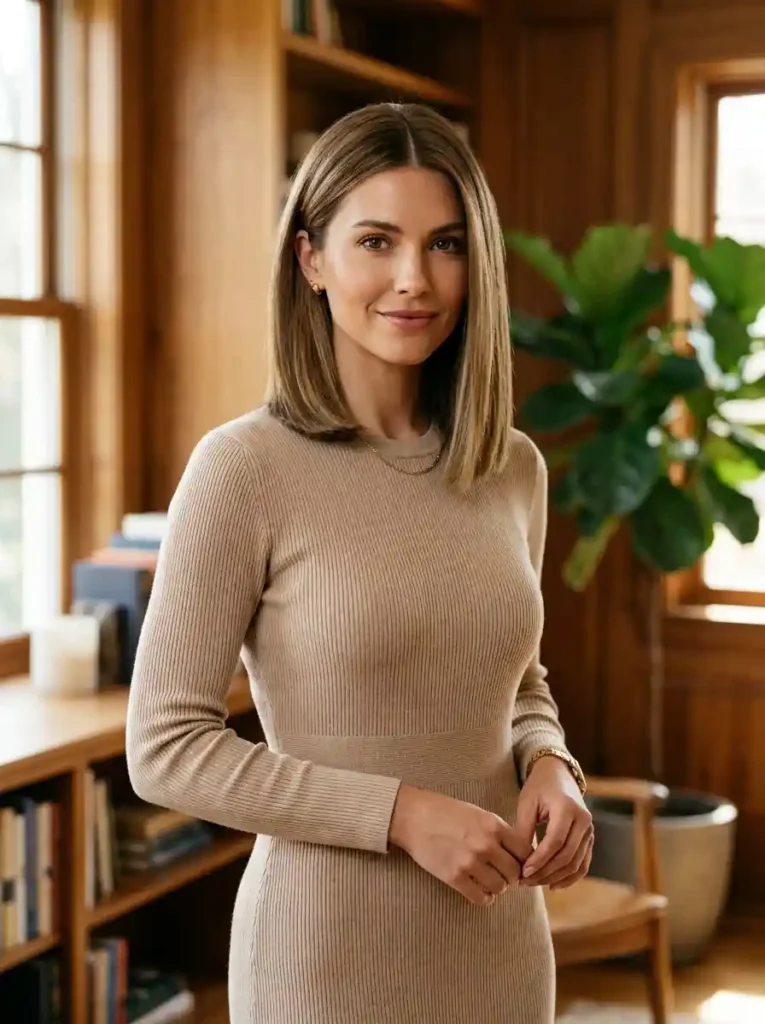
A soft blunt midi cut gives hair a strong outline without looking rigid. The length falls between the shoulders and collarbone, making it versatile enough for ponytails and loose styling. Minimal layering preserves density through the ends. This shape can be especially useful for fine hair because the solid perimeter prevents the bottom from appearing too sparse. Straight hair highlights the clean line, while slight waves create a relaxed interpretation. The overall effect is simple, elegant, and highly wearable.
Ask for a mostly blunt perimeter with only minimal internal movement. This keeps the ends substantial while preventing the haircut from becoming too heavy. Use a paddle brush for a smooth finish or a large iron for gentle bends. Common Mistake: adding many short layers to create movement. For this particular shape, movement should come from styling or subtle internal work rather than obvious external steps.
18. Romantic Braided Low Bun
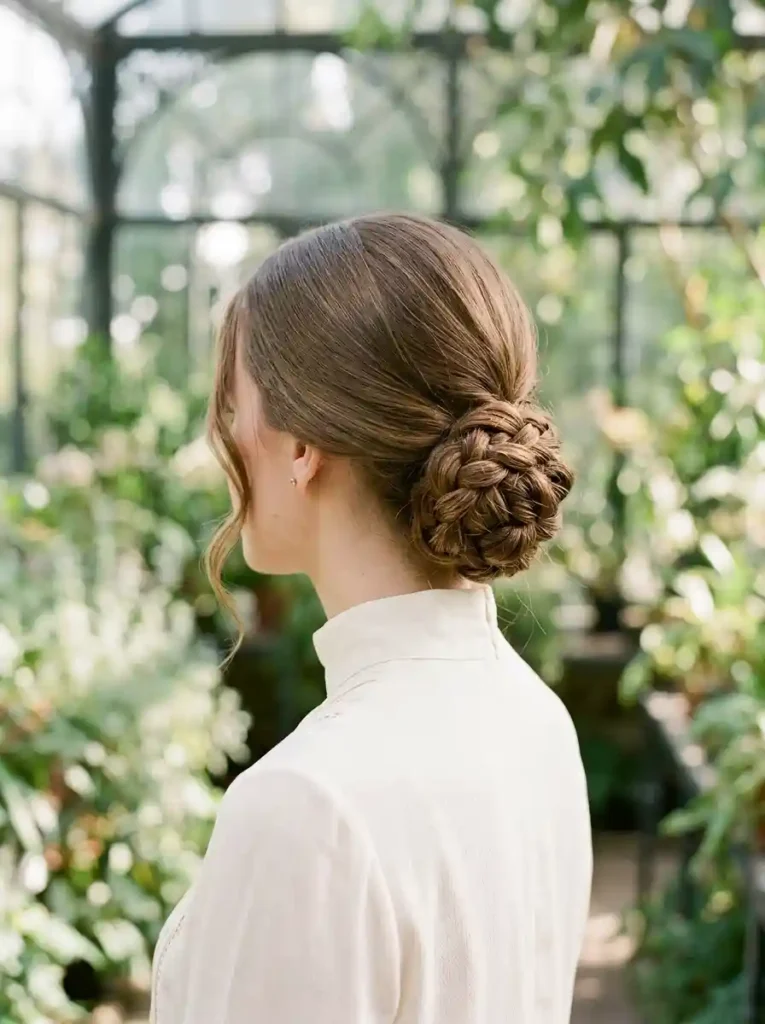
A braided low bun introduces texture while keeping the overall silhouette sophisticated. The braid can remain visible as a subtle design detail rather than becoming the main feature. Hair gathers at the nape, creating a compact shape that works well for weddings, garden events, dinners, and formal gatherings. Long hair provides the most flexibility, although extensions are not necessary when the natural length already supports a small bun. Warm natural shades help keep the style elegant rather than costume-like.
Create a low ponytail first, then braid a small portion of the length before wrapping everything into the bun. Secure the structure with hidden pins. Keep the crown smooth but not tightly pulled. Stylist Tip: a slightly imperfect braid often looks more refined than an overly tight one. Controlled softness creates dimension while preserving the clean shape of the finished bun.
19. Natural Waves With Glossy Ends
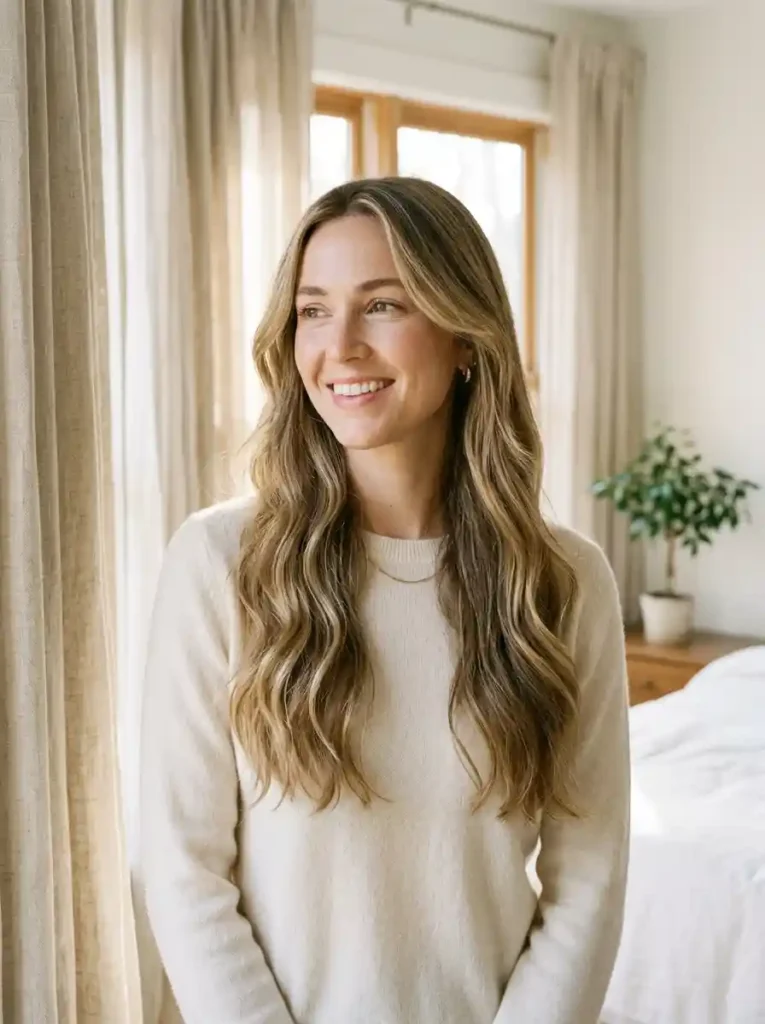
Natural waves can fit an old money-inspired aesthetic when the texture looks cared for rather than overly controlled. The goal is definition, softness, and healthy-looking ends. Long or medium-long hair gives the waves enough room to form a graceful shape. This approach is useful for people who prefer working with their natural texture. It also reduces the need for repeated heat styling. A subtle face frame can add movement around the front without disrupting the natural pattern.
Apply leave-in conditioner to damp hair, followed by a lightweight styling cream or mousse. Scrunch gently and allow the hair to dry without repeatedly touching it. Once fully dry, soften any stiffness with clean hands. Pro Tip: concentrate richer products on the ends rather than the roots. This helps control dryness while preserving lift near the scalp.
20. Deep Side-Parted Sleek Pony
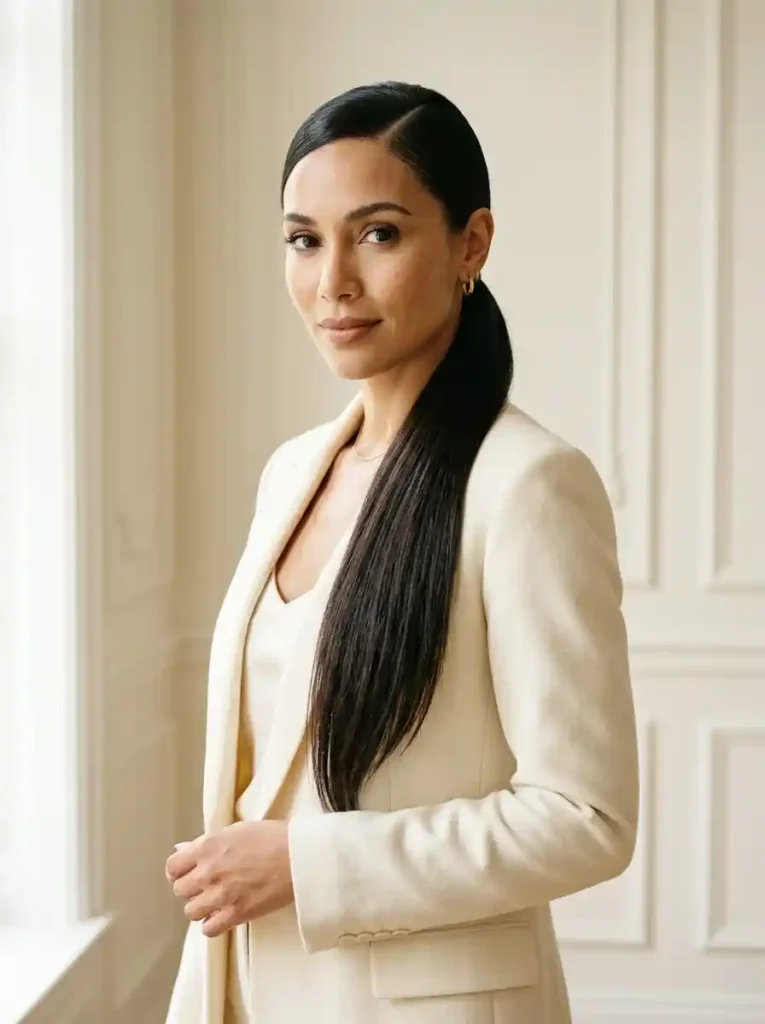
A deep side part gives a sleek ponytail a noticeably different character. The diagonal part adds visual direction while the long ponytail remains smooth and controlled. This hairstyle works best on straight or carefully smoothed hair with enough length to create a substantial tail. It can suit professional settings when kept moderate, while a more dramatic part works well for evening events. Dark brunette, black, and rich auburn shades emphasize the clean lines.
Create the part before smoothing the rest of the hair. Gather the ponytail low and slightly toward the opposite side for balanced placement. Use a soft brush to keep the crown neat. Common Mistake: using too much gel to achieve a perfectly flat surface. A lightweight cream or serum often provides enough control while keeping the hair touchable and natural-looking.
21. Shoulder-Length C-Cut
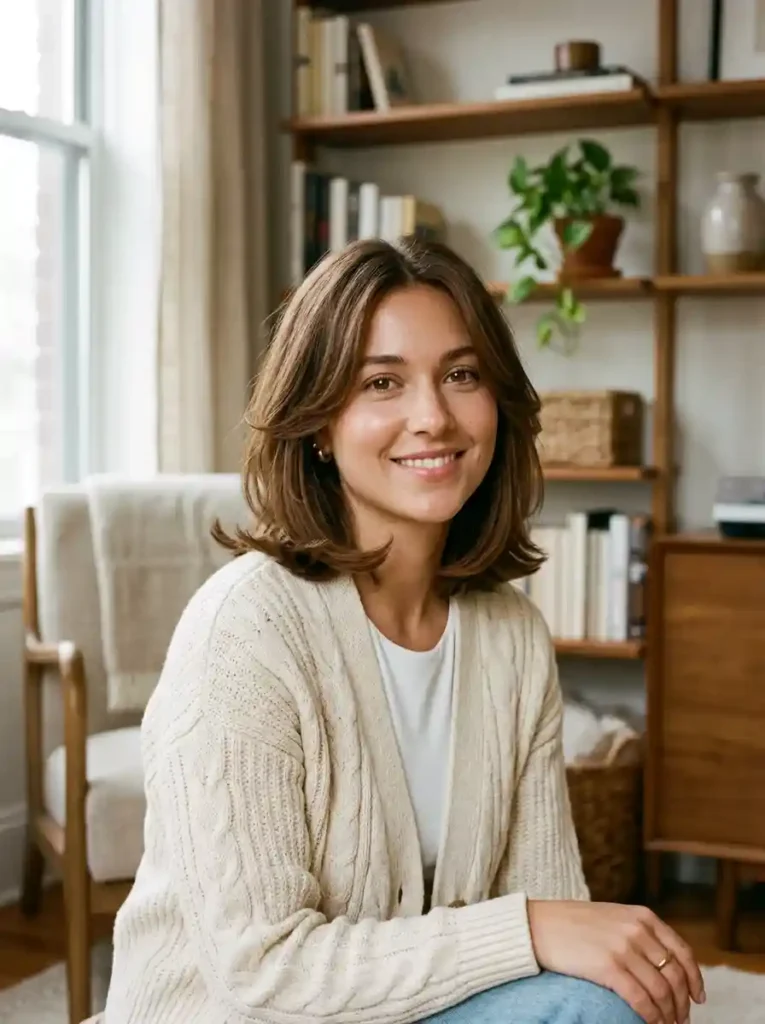
A shoulder-length C-cut creates a curved silhouette through the front and sides. The layers turn gently inward, forming a soft frame around the face while preserving useful length. This makes the haircut feel more shaped than a simple one-length cut without becoming heavily layered. It suits medium-density hair particularly well and can work with straight or softly wavy textures. The style is useful for anyone who wants movement around the face but prefers a polished overall outline.
Ask for face-framing layers that blend gradually into the shoulder-length perimeter. Avoid very short pieces unless you enjoy frequent styling. Blow-dry the front sections with a round brush, directing them inward and slightly backward. Stylist Tip: the curve should follow your natural hair movement. If your hair has strong waves, discuss how the layers will behave before choosing the final length.
22. Timeless Brushed-Back Volume
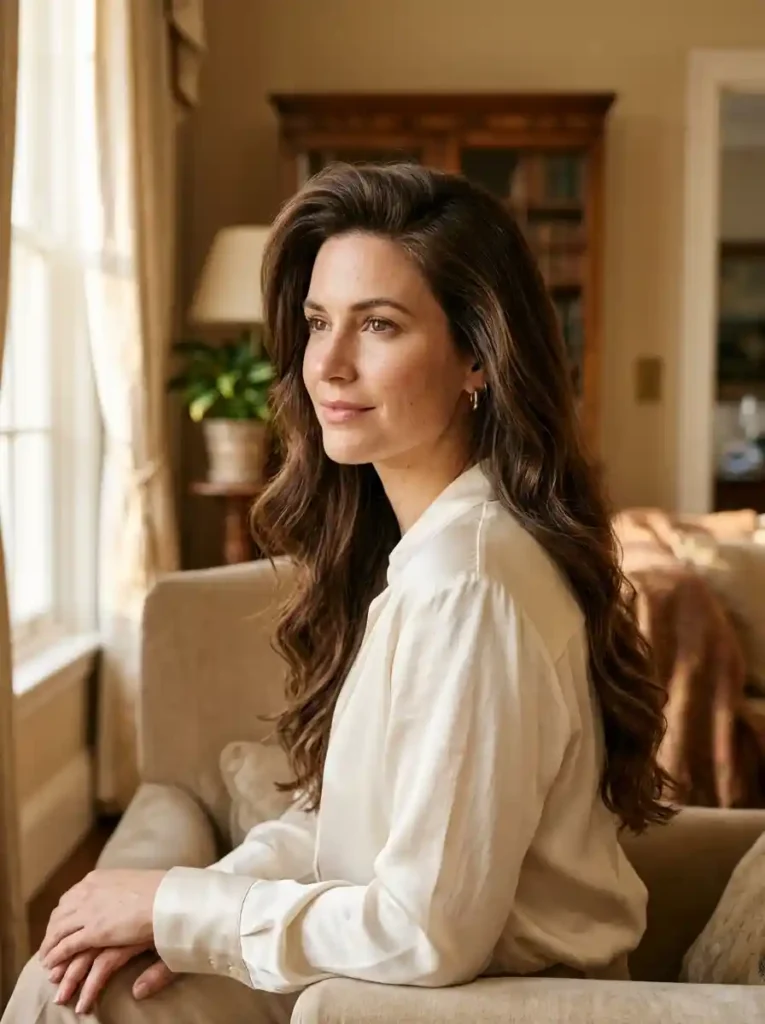
Brushed-back volume creates a confident finish without relying on a dramatic part or elaborate accessories. The roots have gentle lift, while the lengths remain smooth and softly flowing. This look works particularly well on medium-long and long hair with enough density to support natural volume. It can also suit fine hair when lightweight products and careful blow-drying create the lift. The absence of a sharp part gives the hairstyle a relaxed quality while preserving a clearly polished silhouette.
Apply volumizing mousse at the roots before blow-drying with a round brush. Direct the front sections backward and allow them to cool before brushing gently. Avoid heavy oils near the scalp, as they can quickly flatten the volume. Pro Tip: root volume usually lasts longer when the hair cools in its lifted position. Finish with flexible hairspray rather than a stiff formula for natural movement.
Frequently Asked Questions
What makes a hairstyle look old money?
Old money hairstyles usually emphasize polished shape, healthy-looking hair, controlled volume, and understated details. Clean lines and soft movement often work better than excessive accessories or highly dramatic styling.
Are old money hairstyles suitable for fine hair?
Yes. Fine hair can suit blunt bobs, collarbone cuts, smooth ponytails, and controlled blowouts particularly well. Keeping weight through the ends can help the hair appear visually fuller.
What hair length works best for this aesthetic?
There is no single ideal length. Short bobs, shoulder-length cuts, medium styles, and long hair can all look elegant when the shape is intentional and well maintained.
Can naturally wavy hair have an old money look?
Yes. Naturally wavy hair can look refined when the waves are defined, soft, and well conditioned. Avoiding excessive heat can also help preserve the natural texture and reduce unnecessary damage.
Are curtain bangs good for this style?
Curtain bangs can work beautifully when they are softly blended into face-framing layers. Longer versions usually require less frequent trimming and offer more flexibility between appointments.
How can I make a simple hairstyle look more polished?
Focus on the finish rather than adding more details. Smooth the crown, shape the ends, control visible frizz, and keep the overall silhouette balanced. Healthy-looking texture makes a significant difference.
Conclusion
The most successful old money hairstyles are not necessarily complicated. Their appeal comes from thoughtful proportions, clean finishes, and details that complement the wearer. A sleek bob can feel just as refined as a long chignon, while natural waves can look elegant with the right definition and care. Choose the length and texture that fit your routine, then personalize the shape around your natural hair. Save your favorite look before your next salon visit.


