
The modern men’s wolf cut has become a standout hairstyle for guys who want something relaxed, textured, and full of personality. Blending the volume of a shag haircut with the shape of a mullet, this versatile look offers plenty of room for individual style. Whether you prefer messy layers, a clean tapered finish, or dramatic length at the back, these 22 modern men’s wolf cut ideas will help you find a look that suits your hair and lifestyle.
1. Classic Modern Men’s Wolf Cut
The classic modern wolf cut is an excellent starting point if you want a hairstyle that looks fashionable without feeling overly dramatic. It combines shorter, textured layers around the crown with longer pieces at the back, creating the signature shaggy silhouette. A softly layered fringe frames the forehead, while the sides maintain enough fullness to balance the overall shape. This version works particularly well for men who appreciate effortless styling and a slightly rebellious finish.
For everyday wear, ask your barber to create blended layers rather than harsh transitions between different lengths. A lightweight texturizing cream or matte styling paste helps define the haircut without making it look stiff. If your hair is naturally straight, a little blow-drying at the roots can create additional movement. Men with naturally wavy hair can usually let their texture do most of the work, making this cut relatively easy to maintain.
2. Textured Wolf Cut with Messy Fringe
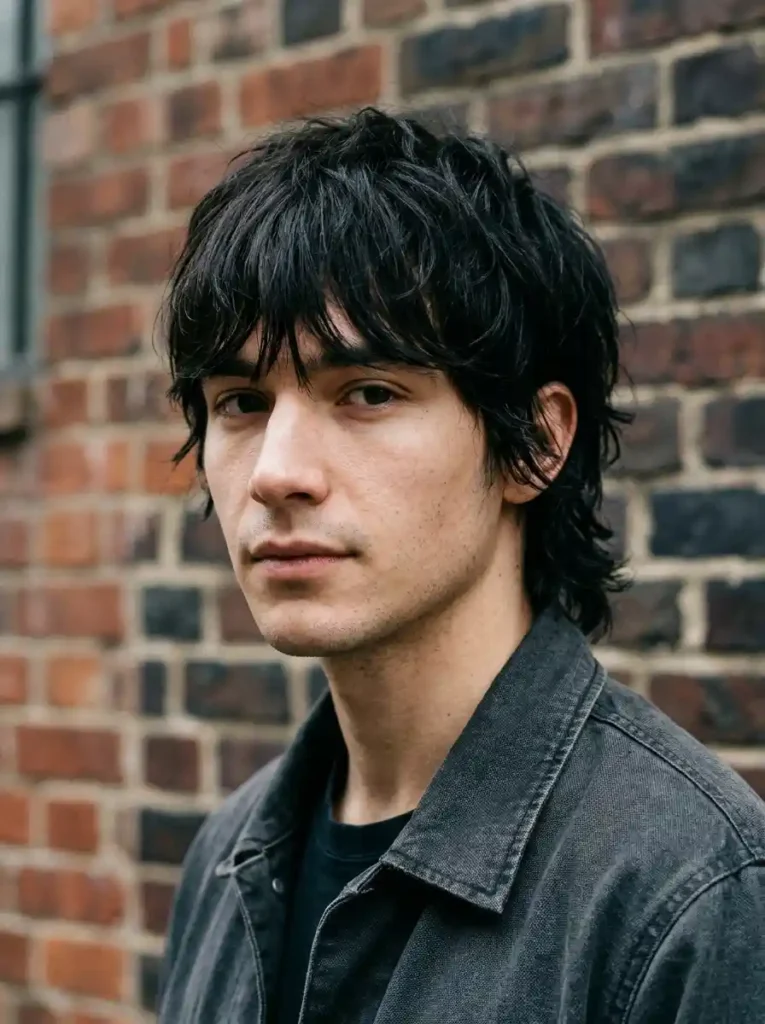
If you enjoy hairstyles that look naturally undone, a textured wolf cut with a messy fringe deserves a place on your inspiration board. The uneven bangs create movement around the forehead, while choppy layers add dimension throughout the top and sides. Rather than looking perfectly arranged, the haircut has a relaxed finish that feels youthful and contemporary. It is particularly appealing for men who want a noticeable style without relying on complicated styling techniques.
The secret to achieving this look is keeping the fringe light enough to move instead of forming one heavy section across the forehead. Ask your barber for point-cut layers and subtle thinning where your hair feels too dense. After washing, apply a small amount of sea salt spray to damp hair, then scrunch the ends while air-drying. Avoid using excessive wax because it can separate the fringe into stiff, unnatural-looking pieces.
3. Short Men’s Wolf Cut
Not every wolf cut needs long hair to make an impression. A short men’s wolf cut keeps the defining layered shape while reducing the overall length, making it a practical option for guys who prefer a lighter, more manageable hairstyle. The crown remains textured, the fringe adds character, and the back carries just enough length to suggest the traditional wolf cut silhouette. Its compact proportions make it especially suitable for men transitioning from shorter haircuts.
When visiting your barber, explain that you want a short shag-inspired shape rather than a conventional layered crop. Keeping some length around the nape is important because removing too much can make the haircut resemble an ordinary textured hairstyle. For styling, work a pea-sized amount of matte paste through the crown and fringe. This creates separation without excessive volume, while regular trims every six to eight weeks help preserve the shape.
4. Curly Wolf Cut for Men
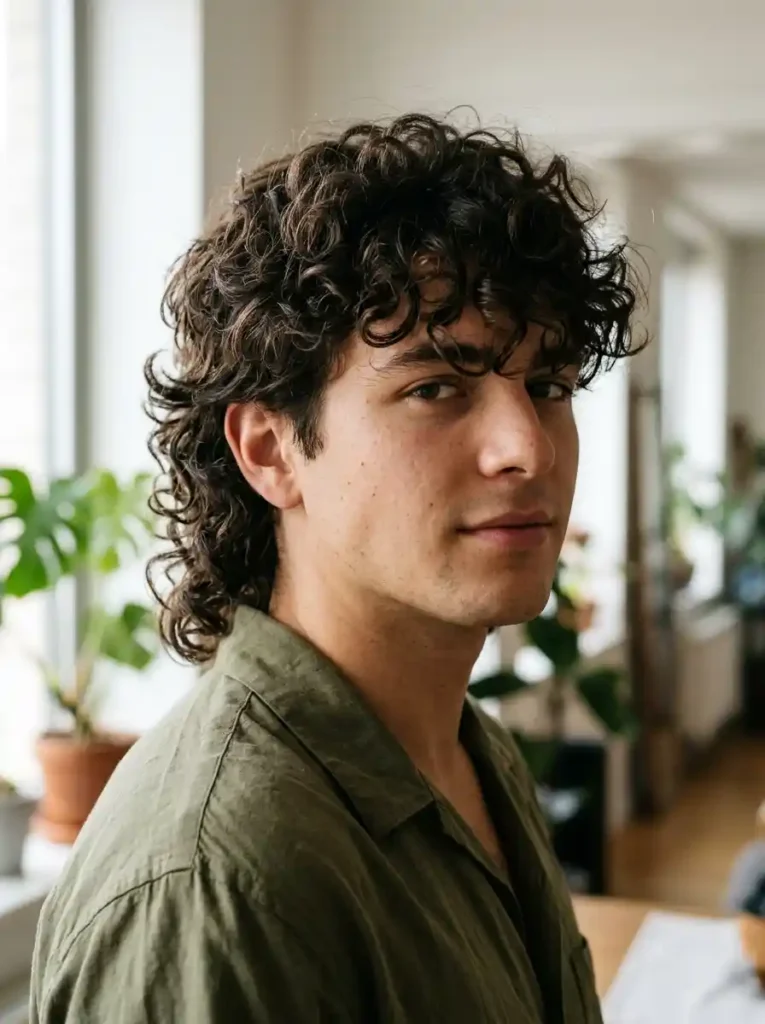
Natural curls bring a completely different personality to the wolf cut. Instead of relying on straight, choppy sections, this version uses the hair’s existing curl pattern to create volume, movement, and a beautifully rounded silhouette. Shorter layers around the crown help prevent the hair from looking flat, while longer curls at the back preserve the recognizable shaggy outline. The result feels expressive and full without requiring perfectly arranged styling.
Curly hair needs a little extra consideration when choosing the length of each layer. Ask your stylist to assess your curls in their natural, dry state because shrinkage can make freshly cut hair appear shorter than expected. Use a moisturizing leave-in conditioner followed by a lightweight curl cream to maintain definition. Avoid brushing the hair when dry, as this can create unnecessary frizz. A diffuser on low heat is useful when you want additional volume.
5. Wolf Cut with Tapered Sides
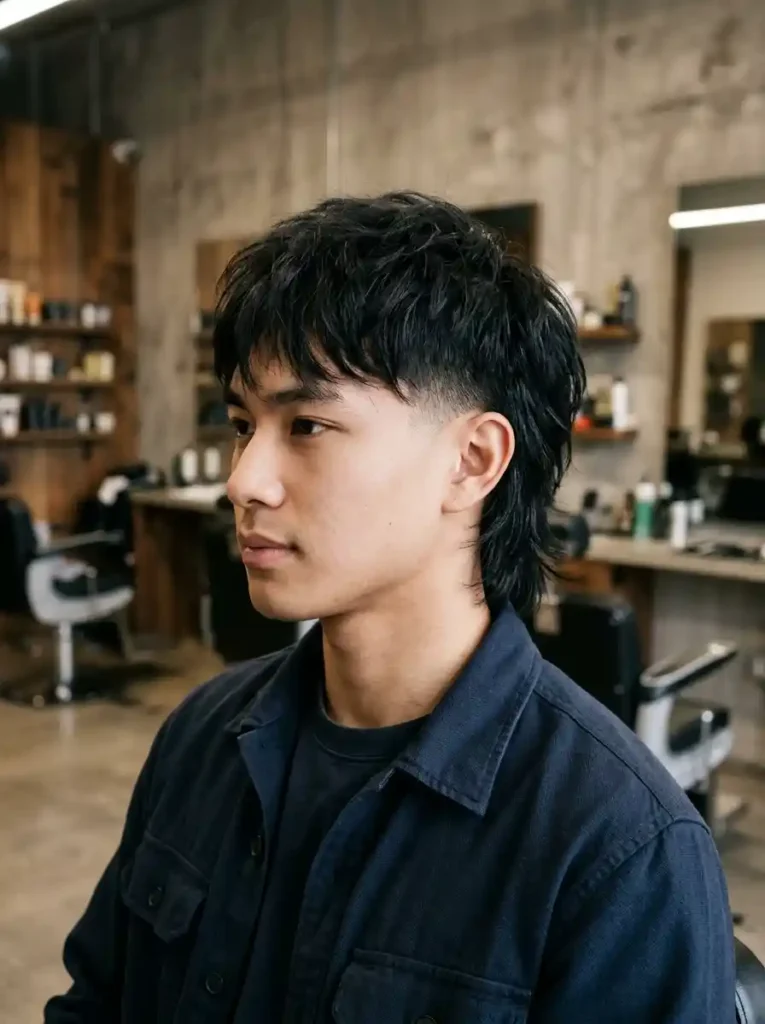
A wolf cut with tapered sides offers an interesting balance between relaxed texture and a more polished appearance. The sides gradually become shorter near the temples and neckline, while the top retains its shaggy layers and the back remains slightly elongated. This combination makes the haircut feel structured without losing its signature movement. It is a strong option for men who like contemporary barbering but do not want a completely traditional fade.
The taper should complement the longer sections rather than compete with them. Ask your barber for a low taper that blends naturally into the layered upper section, leaving enough weight around the sides to maintain the wolf cut’s character. A little styling cream can help lift the crown and separate the fringe. Keep in mind that the tapered sections may need refreshing more frequently than the longer layers to maintain a clean finish.
6. Korean-Inspired Men’s Wolf Cut
The Korean-inspired wolf cut is ideal for men who prefer softer layers and a carefully balanced silhouette. It often features airy bangs, rounded volume around the crown, and longer pieces that gently frame the cheeks. Compared with more dramatic shag variations, this style feels controlled and lightweight. Its popularity in contemporary men’s fashion makes it a useful reference for anyone looking to combine a youthful appearance with understated sophistication.
To recreate the look, request soft graduation through the crown and longer face-framing layers that blend into the back. The fringe should have movement rather than forming a thick, straight line across the forehead. Blow-dry the front sections away from the face using a round brush for a gentle curtain effect. A lightweight styling lotion is usually enough to maintain the shape while keeping the hair soft and touchable.
7. Long Layered Wolf Cut
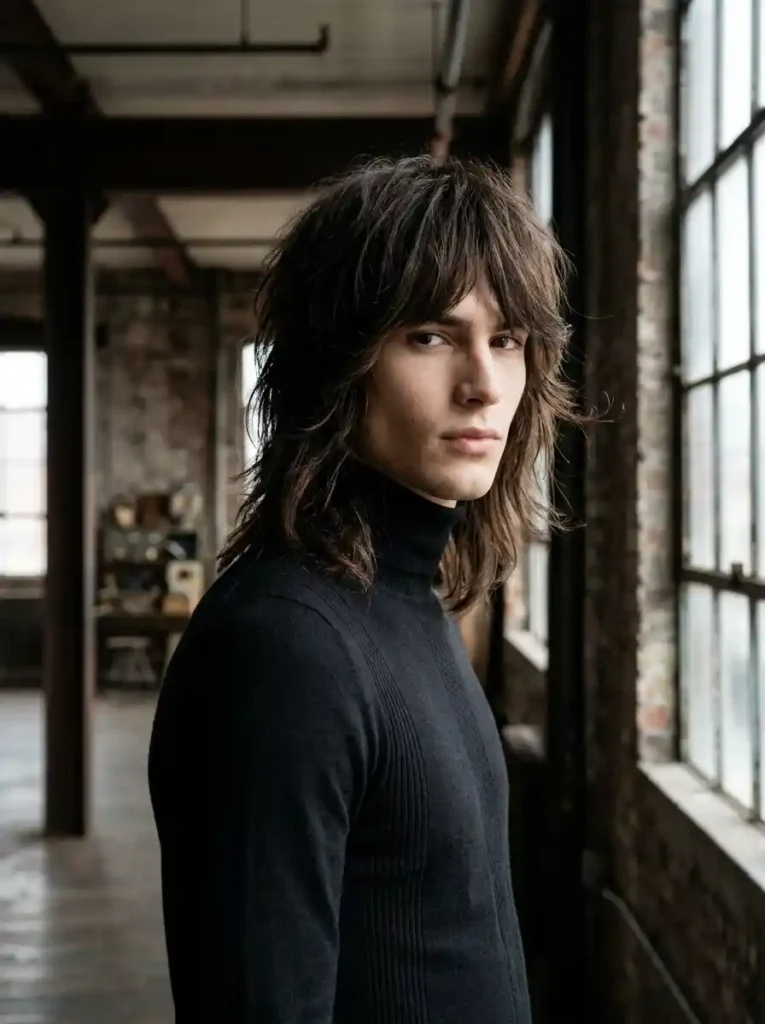
For men who enjoy longer hairstyles, the long layered wolf cut provides plenty of movement without sacrificing length. The upper sections are shorter and more textured, while the lower layers extend toward the shoulders or beyond. This contrast creates a flowing shape that looks particularly attractive when the hair moves naturally. It is an excellent choice if you want a hairstyle that feels expressive, slightly artistic, and noticeably different from conventional long men’s haircuts.
Long hair benefits from thoughtful layering because excessive thinning can make the ends look sparse. Ask your stylist to preserve enough weight through the lower sections while adding shorter pieces around the crown. Use a nourishing conditioner regularly and apply a lightweight smoothing cream to the ends. If your hair tangles easily, detangle it gently with a wide-tooth comb while damp. Occasional dusting trims will keep the silhouette healthy without removing significant length.
8. Wolf Cut with Curtain Bangs
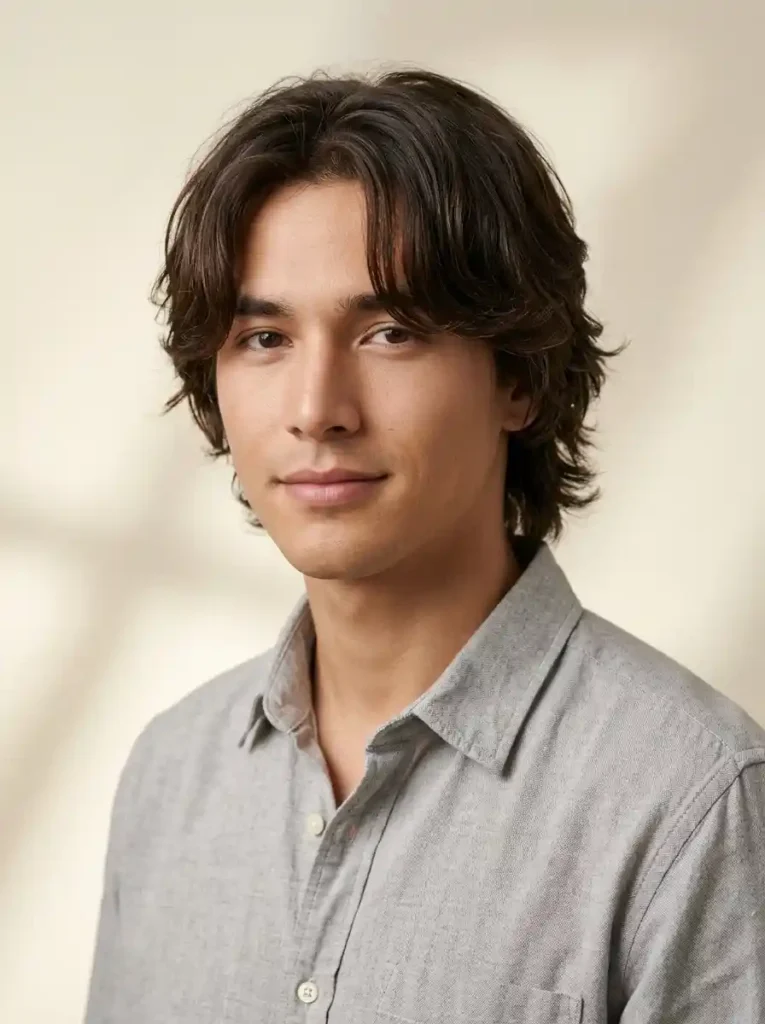
Curtain bangs give a wolf cut a softer, more balanced appearance by opening up the forehead and directing attention toward the eyes. The middle part allows the front sections to fall naturally on either side, creating a flattering frame without the weight of traditional full bangs. Combined with layered sides and a longer back, this hairstyle feels modern and versatile. It is particularly suitable for men who want their haircut to have movement around the face.
Your fringe length will determine how dramatic the curtain effect looks. Ask your barber to leave enough hair at the front to reach around the cheekbones or eyebrows, depending on your preferred styling. Blow-dry the front sections outward using a round brush, then allow them to cool before gently separating them. If your hair naturally falls forward, a small amount of lightweight styling cream can help maintain the center part throughout the day.
9. Wavy Wolf Cut for Men

A wavy wolf cut is a natural match for men whose hair already has bends and movement. The layers allow those waves to spread throughout the haircut instead of collecting into one heavy shape. Shorter sections at the crown create lift, while longer pieces around the back maintain a relaxed silhouette. This version feels particularly effortless because the natural texture supplies much of the definition that would otherwise require styling products.
The best approach is to work with your existing wave pattern rather than trying to straighten or reshape it completely. Ask for medium-length layers that encourage natural movement without removing too much density. After showering, gently squeeze excess water from the hair and apply a small amount of sea salt spray. Let it air-dry for a relaxed finish, or use a diffuser if you want additional volume. A lightweight conditioner helps keep the ends smooth.
10. Wolf Cut with Undercut
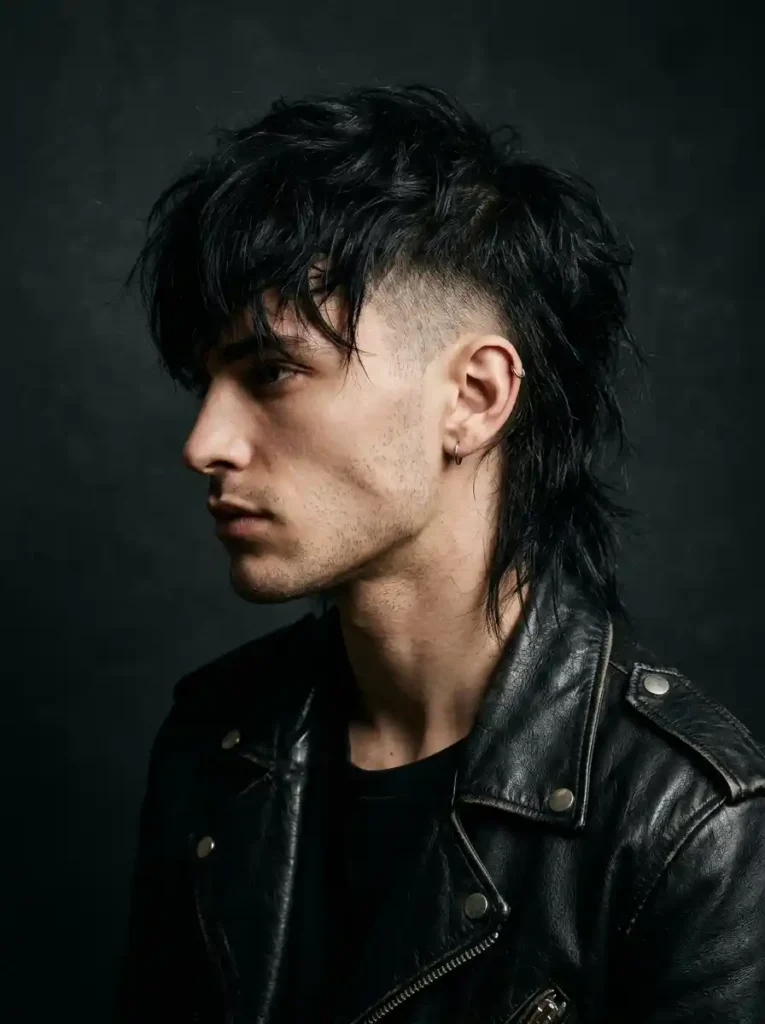
If you prefer a more daring hairstyle, pairing a wolf cut with an undercut creates a striking contrast. The sides and lower sections are clipped significantly shorter, allowing the textured top and longer back to stand out. This gives the traditional wolf cut a sharper, more alternative appearance. It works especially well for men who enjoy distinctive fashion, statement haircuts, and hairstyles that look intentionally unconventional.
Before choosing this version, consider how visible you want the disconnected section to be. A subtle undercut creates contrast while retaining some softness, whereas a stronger separation produces a more dramatic result. Ask your barber to preserve enough length on top for styling versatility. Matte clay can add definition to the upper layers, and regular maintenance around the clipped sections will prevent the contrast from becoming untidy as the hair grows.
11. Blonde Men’s Wolf Cut
A blonde wolf cut makes the hairstyle’s individual layers especially noticeable. Lighter shades reflect more light, helping textured sections and feathered ends stand out in photographs and everyday settings. You can choose an all-over blonde finish, a darker root blend, or a more natural sandy tone depending on your personal style. The layered silhouette keeps the color from looking flat, giving the haircut a relaxed, contemporary personality.
If you are considering bleaching naturally dark hair, discuss the process with an experienced colorist before making a dramatic change. Maintaining healthy hair matters because chemical processing can make already layered ends feel dry. Use a color-safe shampoo, nourishing conditioner, and heat protection whenever you style with hot tools. A darker root transition can also make regrowth less noticeable, reducing the pressure to schedule frequent color appointments while preserving a natural-looking finish.
12. Wolf Cut with a Side-Swept Fringe
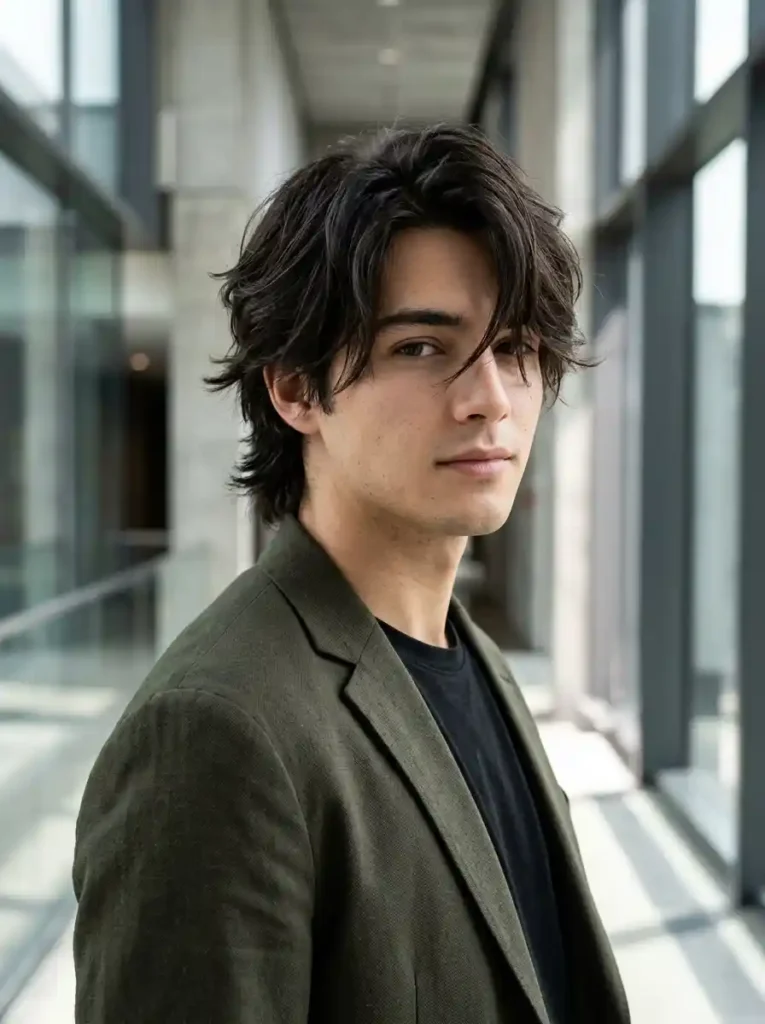
A side-swept fringe gives the wolf cut a slightly more refined appearance while maintaining its signature texture. Instead of dividing the front evenly, the hair falls toward one side, creating an asymmetrical shape that adds interest around the forehead. This version is a practical choice for men who enjoy layered hair but prefer something less associated with the traditional shaggy fringe. It also offers flexibility when styling for casual and smarter occasions.
Your natural hair direction will influence how easily the fringe stays in place. Ask your barber to create a longer front section that blends gradually into the side layers rather than cutting a sharply defined diagonal line. Blow-dry the fringe toward your preferred side using your fingers or a vent brush. Finish with a light styling cream, keeping the product concentrated near the roots and ends so the hair retains natural movement.
13. Thick Hair Wolf Cut
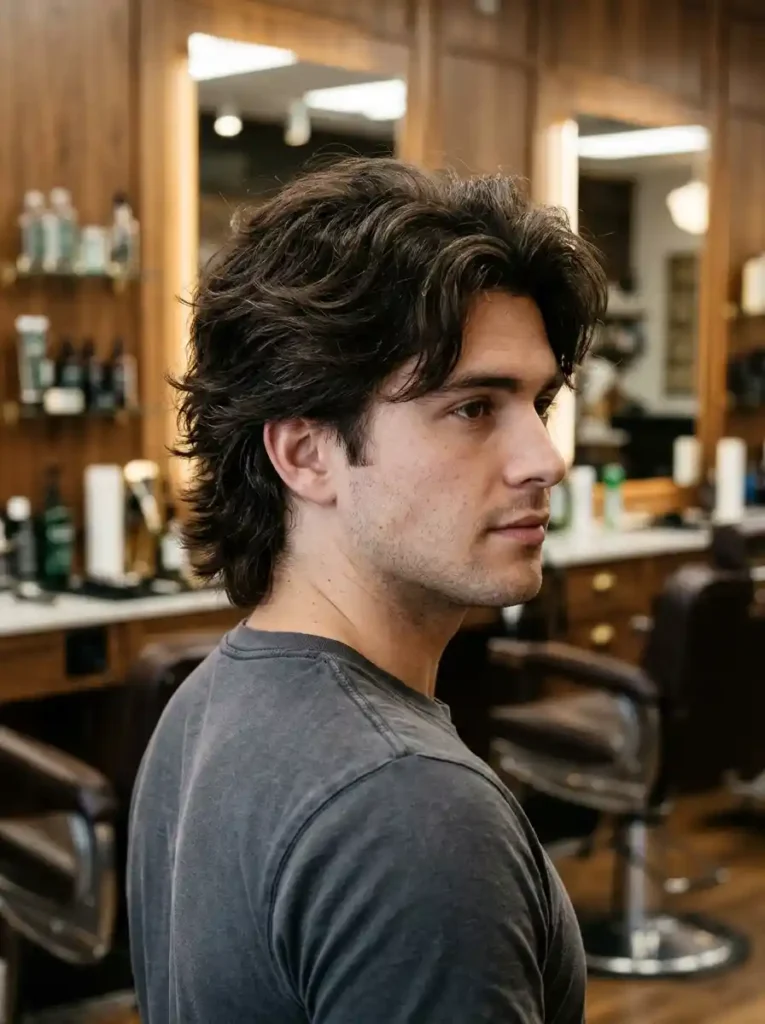
Thick hair naturally provides plenty of volume, making it an excellent foundation for a full wolf cut. However, without thoughtful layering, the hairstyle can become overly wide or difficult to manage. Internal layers help remove unnecessary bulk while keeping enough length to preserve the recognizable shape. The result is a textured, dimensional haircut that uses your natural density instead of fighting against it.
When discussing the cut with your barber, explain where your hair tends to become bulky, particularly around the temples and behind the ears. Strategic point cutting can create movement without leaving the ends looking too thin. Avoid excessive thinning throughout the entire haircut, as this may produce unwanted frizz or uneven growth. A small amount of lightweight styling cream can separate the layers and keep the overall shape looking controlled.
14. Fine Hair Men’s Wolf Cut
A wolf cut can also work beautifully on fine hair when the layers are designed carefully. Instead of removing too much weight, the goal is to create the impression of movement and lift through strategic shaping. A shorter crown, light fringe, and softly graduated back help the hairstyle look fuller without requiring excessive product. This makes it a useful alternative for men who want something more interesting than a standard short haircut.
Ask your barber to avoid aggressive thinning because fine hair can lose its visual density quickly. Keeping the lower sections slightly fuller creates a stronger outline, while subtle layering around the crown provides dimension. For daily styling, apply a lightweight volumizing mousse to damp roots and blow-dry with your head slightly tilted forward. Avoid heavy oils, thick waxes, and overly rich creams, which can weigh the hair down and reduce its natural lift.
15. Shaggy Men’s Wolf Cut
The shaggy wolf cut is perfect for men who prefer a relaxed hairstyle with visible texture and personality. Its layers are intentionally uneven, giving the hair a lived-in appearance instead of a freshly sculpted finish. The crown carries plenty of movement, while the fringe and back create a slightly untamed outline. This style feels especially natural with casual clothing, vintage-inspired outfits, and everyday streetwear.
The trick is achieving a messy finish that still has a recognizable shape. Ask your stylist for choppy layers and feathered ends, but make sure the crown and back remain connected. Use a lightweight texturizing spray on damp hair, then scrunch and air-dry rather than trying to arrange every section individually. If the hair becomes too fluffy, a tiny amount of matte cream can control the ends while preserving the intentionally undone appearance.
16. Wolf Cut with Low Fade
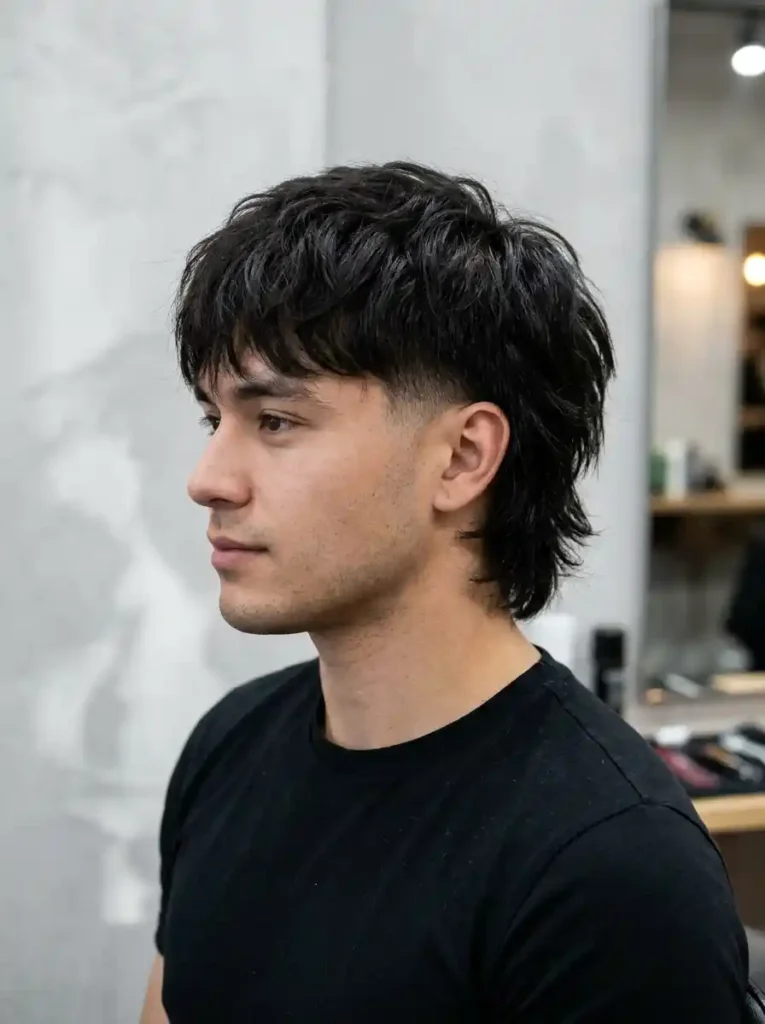
A low fade gives the wolf cut a cleaner outline without removing the hairstyle’s layered identity. The gradual fade begins near the ears and neckline, leaving the upper sides fuller and allowing the textured crown to remain the main feature. Compared with an undercut, the transition is softer and more blended. This makes it an appealing choice for men who want a contemporary barber finish with a slightly rugged back section.
For the best result, ask your barber to keep the fade low and preserve the length around the upper sides. Taking the fade too high can remove the fullness that gives a wolf cut its characteristic shape. Styling is relatively straightforward: lift the crown with a blow-dryer, then use matte paste to define the longer layers. Because faded sections become noticeable as they grow, schedule occasional cleanup appointments between full haircut sessions.
17. Two-Tone Wolf Cut
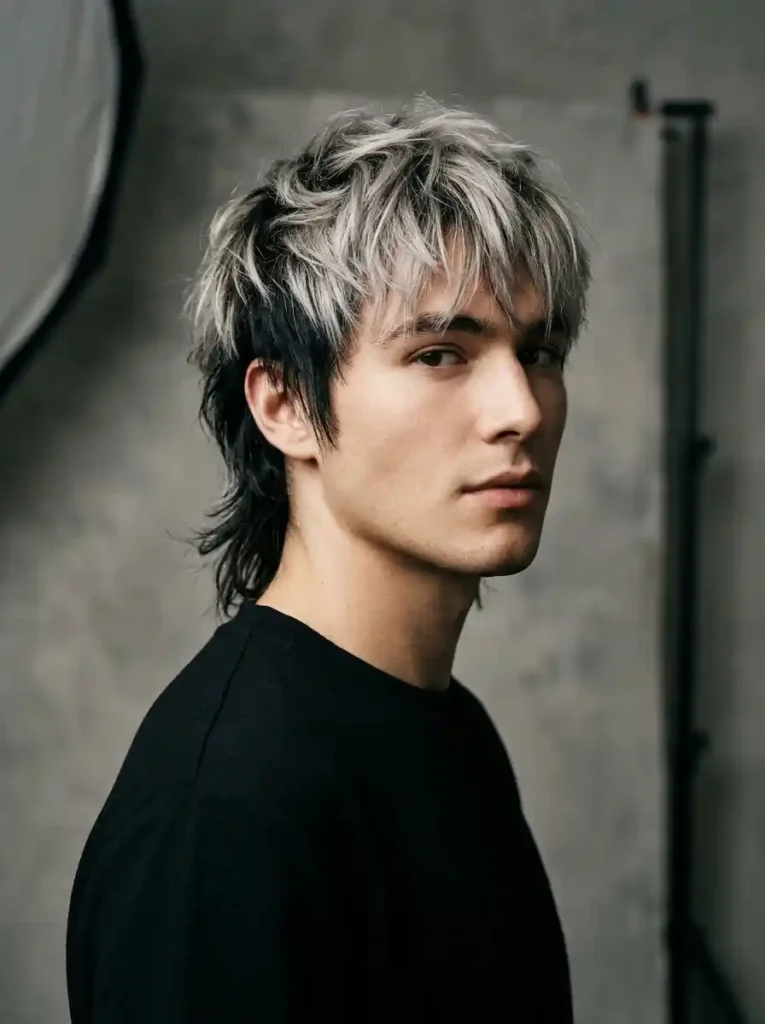
A two-tone wolf cut is a creative option for men who want their hairstyle to make a stronger visual statement. Contrasting colors emphasize the different lengths and layers, giving the haircut additional depth. You might choose a dark base with lighter upper sections, subtle copper accents, or a more noticeable combination of contrasting shades. Because the color placement follows the haircut’s structure, even a relatively simple layered shape can look distinctive.
Planning the color is just as important as selecting the haircut itself. Ask a professional colorist to recommend tones that work with your natural base color and the amount of maintenance you are comfortable handling. Placement matters too: highlighting the upper layers creates a different effect from coloring the underneath sections. Use color-safe products and avoid excessive heat styling, particularly if lightening treatments are involved, to protect the texture and condition of the hair.
18. Medium-Length Wolf Cut with Feathered Layers
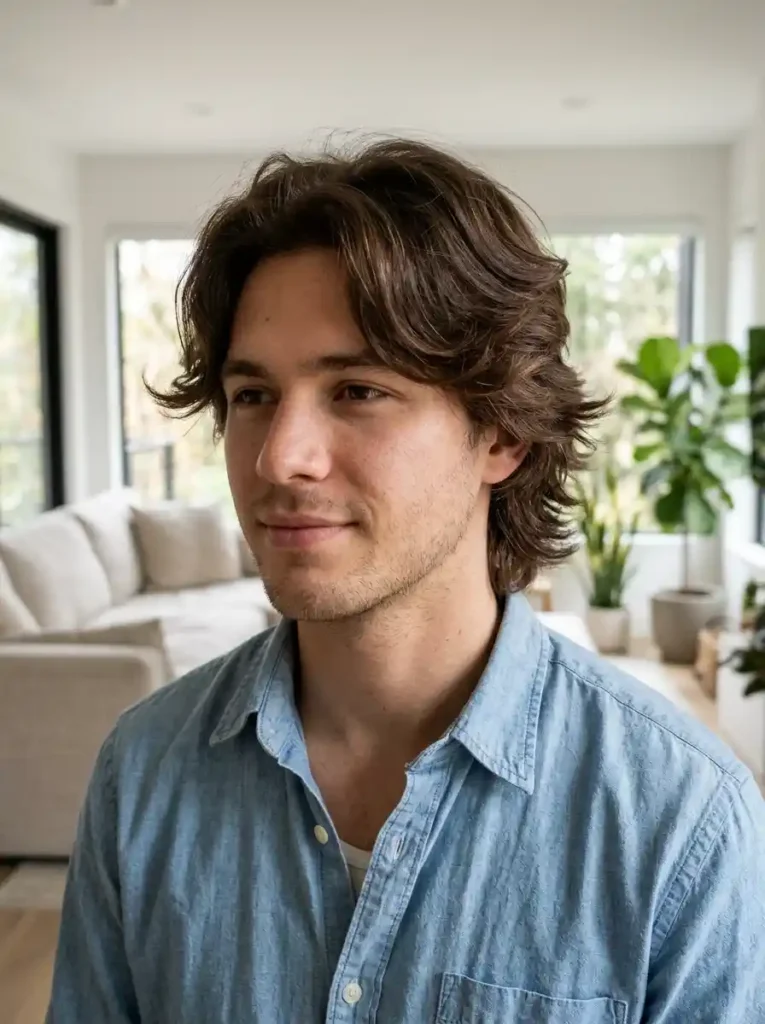
Feathered layers create a softer alternative to heavily choppy wolf cuts. Rather than emphasizing sharp, separated sections, this hairstyle uses carefully shaped ends that move naturally away from the face. Medium length keeps the overall silhouette balanced, while the crown and nape provide enough contrast to maintain the wolf cut’s recognizable shape. It is particularly attractive for men who want noticeable texture without an overly messy finish.
To get the feathered effect, ask your barber to use layering and point-cutting techniques around the temples, crown, and back. The ends should appear light but not excessively thinned. A medium round brush can help create gentle outward movement when blow-drying the sides. Finish with a flexible styling cream or light hairspray if needed. Unlike heavily textured variations, this haircut benefits from occasional brushing to keep the feathered sections sitting neatly.
19. Asian Men’s Straight Hair Wolf Cut
Straight Asian hair can create a beautifully defined wolf cut because its natural structure helps the different layers remain visible. This version often features a rounded crown, controlled volume, and softly separated fringe, giving the hairstyle a balanced appearance. The back is slightly longer, while the sides maintain enough shape to avoid looking too flat. It is a great reference for men who want a modern layered haircut with clean lines.
The main styling consideration is managing density without removing too much weight. Ask your stylist to build internal layers that create movement while maintaining the hair’s natural smoothness. A blow-dryer and vent brush can lift the crown, while a small amount of lightweight styling lotion controls flyaways. If your fringe tends to fall straight forward, gently direct it toward the sides while drying. Regular trims help prevent the lower layers from becoming bulky or shapeless.
20. Wolf Cut with Long Back Layers
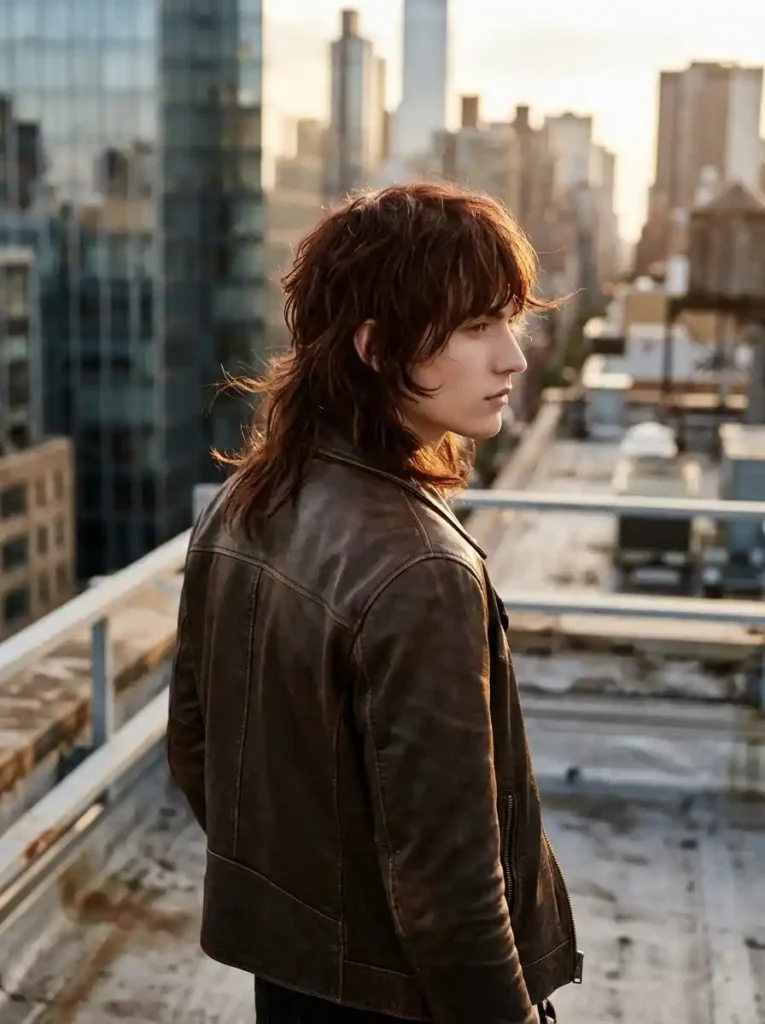
If you enjoy the longer proportions of a mullet but prefer a softer, more layered finish, a wolf cut with long back layers is worth considering. The extended nape creates a flowing silhouette, while shorter upper layers prevent the haircut from looking like one continuous length. This contrast gives the style its distinctive character. It is particularly suitable for men who want to grow their hair out without losing shape or personality.
The back length can be customized according to your comfort level, from just below the neckline to shoulder length. Ask your barber to blend the longer sections into the sides rather than creating an abrupt separation. Keeping the ends healthy is important, so use conditioner regularly and apply a small amount of leave-in treatment after washing. If you wear collars frequently, consider how the longer layers sit against your clothing to prevent unnecessary tangling.
21. Soft Natural Wolf Cut
Not everyone wants an attention-grabbing haircut, and the soft natural wolf cut offers a more understated interpretation. Its layers are blended gently, the crown has moderate volume, and the back remains slightly longer without creating a dramatic mullet effect. This makes it an excellent option for men who want the benefits of a modern shag while keeping their appearance relaxed and easy to wear.
The most important detail is restraint when cutting the layers. Ask your barber to maintain a balanced outline and avoid excessive chopping around the fringe or sides. This version works particularly well with naturally wavy or slightly textured hair, although straight hair can achieve a similar finish with light styling. Use a small amount of leave-in conditioner or flexible cream, then let the hair settle naturally instead of forcing it into a specific shape.
22. Edgy Wolf Cut with Choppy Layers
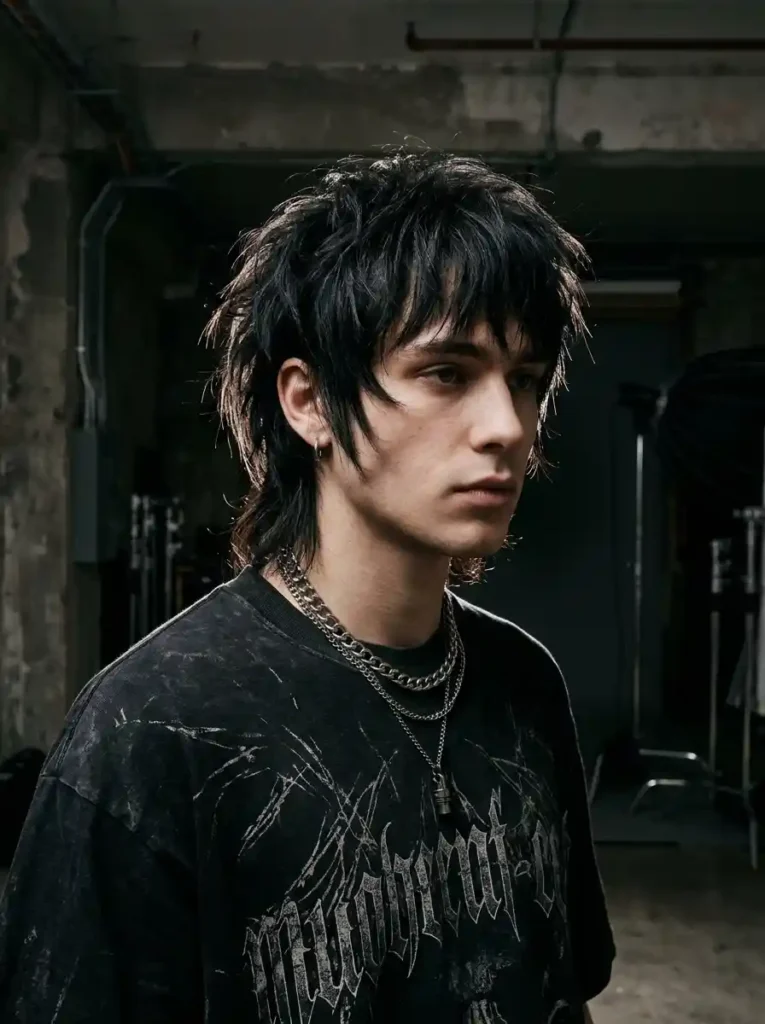
For a bolder final option, the edgy wolf cut uses pronounced layers and uneven texture to create a hairstyle with plenty of attitude. The crown is heavily separated, the fringe has an irregular shape, and the longer back adds to its alternative appearance. It is a strong choice for men who enjoy experimental fashion and want a haircut that feels expressive rather than conventionally polished.
To make this style work, ask your barber for intentional texture instead of random unevenness. The layers should look disconnected but still follow a flattering overall silhouette. Matte clay or texturizing powder can help emphasize individual sections, especially around the crown and fringe. You can also personalize the haircut with a slightly longer nape or more dramatic bangs. Keep the styling product lightweight enough to maintain movement rather than turning the hair into stiff spikes.
Conclusion
Choosing the right wolf cut comes down to finding a balance between your natural hair texture, preferred length, and everyday styling routine. Short, tapered versions offer a cleaner appearance, while shaggy layers, long back sections, and curly variations create a more expressive silhouette. If you have thick hair, thoughtful layering can remove excess bulk; if your hair is fine, preserving density and adding gentle volume will make a difference.
Before booking your appointment, save a few reference pictures that show the front, sides, and back of your preferred haircut. Discuss how much maintenance you are comfortable with and ask your barber to adapt the shape to your face and hair growth pattern. Remember, the best modern men’s wolf cut isn’t necessarily the most dramatic one. It’s the version that complements your features, works with your natural texture, and makes you feel confident every time you style it.


