
Medium-length hair offers men an appealing balance between short, easy-to-manage cuts and longer styles with plenty of personality. It gives you room to experiment with texture, movement, volume, and different finishes without committing to long hair. Whether you prefer a polished professional appearance, a relaxed everyday look, or something with a little edge, the right haircut can make a noticeable difference. Here are 21 modern medium hairstyles worth considering, along with practical styling tips.
1. Textured Medium-Length Hair

Textured medium hair is an excellent choice if you want a contemporary appearance without making your haircut look overly styled. The secret is incorporating layers that create separation and movement throughout the hair. This works particularly well for men with naturally thick or slightly wavy hair because the existing texture adds dimension. Ask your barber for scissors-only layering through the top and sides, keeping enough length to move the hair in different directions.
For everyday styling, apply a small amount of lightweight texturizing cream to slightly damp hair. Use your fingers rather than a comb to encourage natural separation, then let it air-dry or use a blow-dryer on low heat. Avoid heavy gels that make the strands stick together. A matte finish keeps the haircut relaxed and modern, making it suitable for casual outfits, smart-casual clothing, and everyday professional settings.
2. Medium-Length Curtains Hairstyle

The curtains hairstyle brings a recognizable retro influence into modern men’s grooming. Its defining feature is a middle part that allows the hair to fall naturally on both sides of the face. Medium-length layers create a soft frame around the forehead, temples, and cheekbones. This style is especially attractive for straight or slightly wavy hair, although men with thicker textures can wear it by adding carefully placed layers to reduce bulk.
To achieve the look, ask your barber to maintain length around the front while shaping the sides so they blend naturally into the back. A lightweight mousse can provide volume without making the hair stiff. Create your part while the hair is damp, then blow-dry each side away from the forehead. If your hair tends to fall flat, use a round brush to introduce a gentle curve near the roots.
3. Medium-Length Wavy Hair

If your hair naturally forms waves, medium length gives those patterns enough room to become a noticeable feature. Instead of cutting everything to one uniform length, ask for soft layers that prevent the sides from becoming too heavy. The result is a relaxed hairstyle with movement around the forehead and temples. It works particularly well for men who want something expressive without relying on complicated styling techniques or sharp, structured outlines.
The biggest mistake with wavy hair is brushing it aggressively after it dries, which can create unwanted frizz. Apply a curl-enhancing cream or leave-in conditioner while your hair is damp, then gently scrunch the strands with your hands. Let the waves dry naturally whenever possible. For extra definition, use a diffuser on low heat. A small trim every six to eight weeks can help maintain the shape.
4. Modern Medium-Length Wolf Cut

The modern wolf cut combines the loose character of a shag with the longer shape associated with a mullet. Its shorter crown layers create volume, while the longer sections around the ears and back give the haircut a distinctive silhouette. This is a particularly interesting option for men who enjoy alternative fashion or want their hairstyle to have more personality. Naturally wavy hair makes the layered structure especially noticeable.
When visiting your barber, bring reference photographs because wolf cuts can vary considerably in length and layering. Ask for a softer version if you prefer something wearable in everyday situations. Styling is relatively simple: work a little texturizing paste through the crown and use your fingers to separate the layers. Avoid flattening the back or making the top too uniform, as the contrast between sections gives this haircut its character.
5. Slicked-Back Medium Hair

Slicked-back medium hair creates a refined appearance while preserving the versatility of a longer haircut. The front sections are brushed away from the face, allowing the hair to sit neatly over the crown and sides. Unlike a very short business haircut, this version has enough length to create movement and volume. It is especially suitable for straight or moderately thick hair that can hold its shape without excessive product.
Start with towel-dried hair and distribute a lightweight styling cream from the roots toward the ends. Use a blow-dryer and vent brush to direct the hair backward, keeping some lift at the front. Finish with a small amount of medium-hold pomade. If you want a softer daytime appearance, leave a few natural separations rather than forcing every strand into place. Regular trimming around the ears keeps the overall silhouette intentional.
6. Medium Shag Haircut

A medium shag is ideal if you like hairstyles that look naturally relaxed rather than carefully sculpted. Its defining feature is the combination of multiple layers that create movement throughout the head. The crown usually has more texture, while the lower sections retain enough length to frame the face. Men with straight, wavy, or slightly curly hair can adapt this haircut by adjusting the amount of layering.
The styling process should preserve the haircut’s natural irregularity. Apply a lightweight volumizing mousse to damp roots and a small amount of texture cream through the ends. Scrunch or twist a few sections with your fingers instead of creating perfectly separated pieces. If your hair is very thick, ask your barber to remove excess weight internally rather than thinning the ends too aggressively. This helps prevent the shag from looking uneven as it grows.
7. Medium Hair with a Low Taper

A low taper offers a neat finish without sacrificing the fullness of medium-length hair. The hair around the sideburns and neckline gradually becomes shorter, while the upper sections retain their length. This subtle contrast makes the haircut look cleaner without introducing the dramatic appearance of a high fade. It is a practical option for men who want a contemporary hairstyle that can still work in conservative workplaces.
The key is asking your barber to keep the taper low and blend it smoothly into the longer sides. You can wear the top brushed backward, parted naturally, or styled with loose texture. A small amount of matte styling paste adds definition without creating excessive shine. Because the taper is concentrated around the edges, regular neckline and sideburn maintenance will help the haircut remain sharp between full appointments.
8. Medium-Length Curly Hair

Medium-length curly hair allows natural curl patterns to become the main feature of your appearance. Rather than cutting the curls too short, this style maintains enough length for them to form a balanced shape around the head. The right layering prevents the haircut from becoming excessively wide at the sides. It is particularly suitable for men who want to embrace their natural texture instead of constantly trying to straighten or flatten it.
Moisture is essential for keeping curls defined and manageable. Use a sulfate-free shampoo when appropriate, follow with conditioner, and apply a leave-in product while the hair is still damp. A curl cream can help reduce frizz and encourage consistent definition. Avoid brushing dry curls because this often disrupts their shape. Instead, detangle gently in the shower with a wide-tooth comb and schedule trims to maintain the overall silhouette.
9. Side-Parted Medium Hairstyle

A side-parted medium hairstyle is a reliable choice when you want something polished without looking overly formal. The part creates visual structure, while the longer top provides enough flexibility to adjust the amount of volume and movement. This haircut works especially well with straight or slightly wavy hair. It can also help create a more balanced appearance when the natural part follows the direction in which your hair already grows.
Ask your barber to maintain length through the front and top while creating a gentle blend around the sides. A lightweight styling lotion or cream can control flyaways without making the hair stiff. Use a comb to establish the part while your hair is damp, then direct the larger section across the head with a blow-dryer. For a more relaxed result, loosen the finished style slightly with your fingertips.
10. Medium Bro Flow Hairstyle

The bro flow is a relaxed medium hairstyle that lets the hair follow its natural direction rather than forcing it into a rigid shape. The front sections move away from the face, while the sides and back retain enough length to create a flowing outline. It suits men with medium to thick hair, especially those whose strands naturally bend or sweep backward. The overall appearance feels casual but still thoughtfully maintained.
Growing a bro flow requires patience because the hair needs enough length to move behind the ears comfortably. Ask your barber for subtle shaping rather than removing too much length during the growing process. Use a lightweight leave-in conditioner to improve softness and manageability. A quick blow-dry directed backward can encourage the desired movement. Resist applying heavy pomade, which can make the style look greasy and remove its natural, airy finish.
11. Medium-Length Messy Fringe

A messy fringe adds personality by bringing the focus toward the forehead and upper part of the face. The front is left long enough to fall forward, while textured layers prevent the hair from looking like a heavy, straight curtain. This haircut works particularly well for men with straight or slightly wavy hair. It can also be adapted for thicker textures by reducing excess weight behind the fringe.
The most important detail is controlling how much hair falls across the forehead. Ask your barber for a broken, textured fringe rather than a perfectly straight line. After washing, use a small amount of matte clay and separate the front pieces with your fingertips. You can wear the fringe loosely forward or shift a few sections sideways. Avoid using too much product near the roots, as this can make the front appear flat and heavy.
12. Medium-Length Pompadour
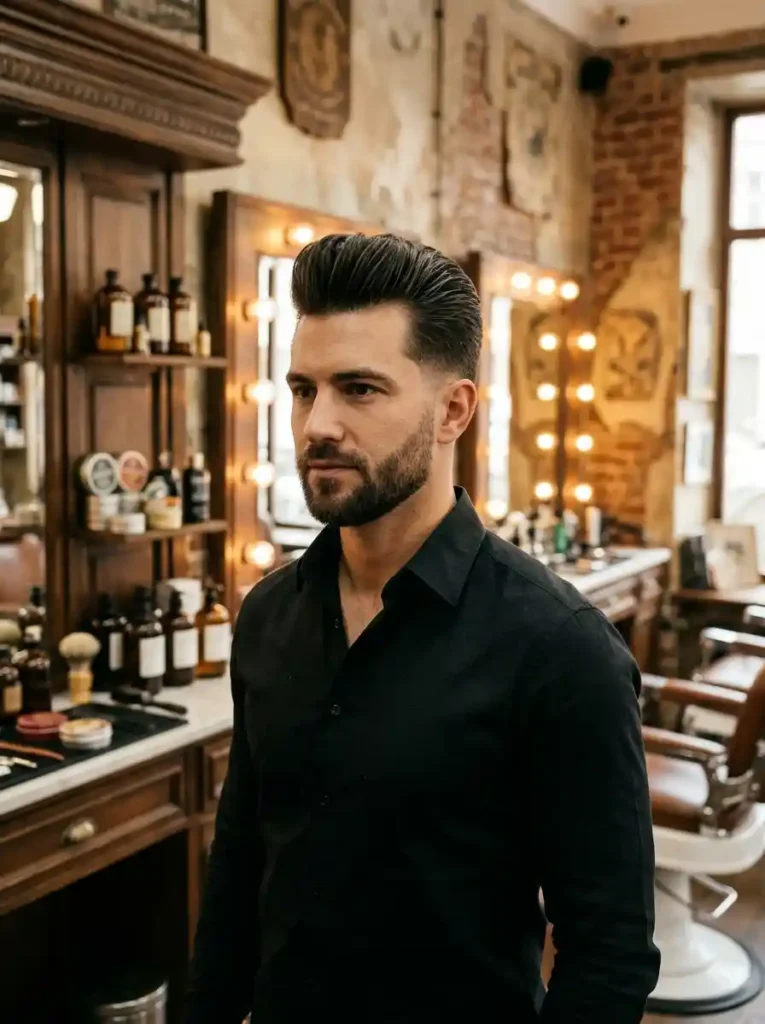
A medium pompadour is an excellent option if you enjoy hairstyles with noticeable height and structure. The front section is lifted away from the forehead and gradually directed toward the back, creating a distinctive profile. Compared with shorter versions, medium length provides more room for volume and softer transitions. Men with thick, straight hair often find this style easier to maintain because their strands naturally support the raised shape.
Blow-drying is essential for building the pompadour’s foundation. Apply volumizing mousse to damp hair, then use a round brush to lift the front upward and backward. Finish with a medium-hold styling product to preserve the shape. If your hair is particularly heavy, ask your barber to remove some internal weight without shortening the front too much. A common mistake is using excessive product before creating volume, which can cause the style to collapse.
13. Layered Medium Hair with a Middle Part

This variation of the middle-part hairstyle relies on layering rather than simply dividing the hair into two sections. The shorter face-framing pieces blend into longer strands, creating a more dimensional shape around the face. It is a good option for men who like curtains but want additional movement. The layers can also help reduce the heavy appearance that sometimes develops when thick hair grows to medium length.
Tell your barber that you want graduated layers that remain connected rather than disconnected sections. The front should be long enough to frame your cheekbones without constantly falling into your eyes. For styling, create the middle part while damp and use a blow-dryer to direct the sections outward. A lightweight smoothing cream can keep the ends controlled while preserving the soft, layered finish.
14. Medium Hair with a Skin Fade

Pairing medium-length hair with a skin fade creates a stronger contrast than a traditional taper. The sides are cut extremely short, while the top retains enough length for texture, volume, or backward styling. This combination is suitable for men who appreciate a bold, clean silhouette. It can work with different face shapes, although the fade height should be adjusted to complement the width and proportions of the head.
Ask your barber to discuss fade placement before cutting, since a high fade creates a noticeably different result from a low one. Keeping the top textured prevents the haircut from looking disconnected or overly severe. For daily styling, apply matte paste and shape the upper hair with your fingers. Remember that skin fades grow out quickly, so you may need more frequent barber visits than with a conventional medium haircut.
15. Medium-Length Straight Hair with Feathered Ends

Straight hair can sometimes appear heavy when every section is cut to the same length. Feathered ends solve this by introducing subtle layers that allow the hair to move more freely. The result is a soft, flowing hairstyle that looks especially good around the temples, ears, and neckline. This approach suits men who prefer a neat appearance but do not want a sharply structured haircut.
Ask your barber to create delicate graduation through the ends while preserving enough overall length. Avoid excessive thinning because removing too much weight can make straight hair look wispy. For styling, use a smoothing cream and direct the hair with a brush while blow-drying. If you want a slightly curved finish, use a round brush on the ends. Regular conditioning will also help maintain the smooth appearance that makes this cut stand out.
16. Medium-Length Asian Men’s Hairstyle
Men with naturally thick, straight hair often benefit from medium layers that reduce the feeling of heaviness without removing too much length. This hairstyle uses controlled volume at the crown and a softly swept front to create a balanced shape. It is a versatile option for everyday wear because the hair can be parted, brushed forward, or directed backward depending on the occasion.
The barber should focus on internal weight removal and carefully shaped layers rather than aggressively thinning the entire haircut. If the sides tend to stick outward, ask for enough length and blending to encourage a smoother fall. A lightweight styling lotion helps control stubborn sections while keeping the hair flexible. Blow-drying the roots in the opposite direction before arranging the final part can also create natural-looking lift.
17. Medium-Length Mullet with Soft Layers

A modern medium mullet offers a distinctive shape without requiring the dramatic proportions of older versions. The upper sections remain textured, while the back is left longer to create a recognizable silhouette. Soft layering helps connect the different lengths and makes the hairstyle easier to wear outside fashion-focused settings. This option suits men who enjoy individual style and are comfortable with a haircut that attracts attention.
The most important decision is how much length to preserve at the back. A subtle mullet has a shorter transition, while a more expressive version allows the neckline sections to extend farther. Ask your barber to blend the layers rather than creating an unnecessarily abrupt division. Use texture spray or matte cream to define the crown, and keep the back conditioned so the longer sections remain smooth rather than looking untidy.
18. Medium Hair with a Loose Quiff

A loose quiff provides height at the front without the formal structure of a traditional pompadour. The hair is lifted slightly away from the forehead, then allowed to settle into a natural direction. Medium length makes it easier to create this shape while retaining movement through the sides and crown. It is a useful choice for men who want their hairstyle to add definition without looking excessively polished.
To style it, apply a small amount of volumizing mousse to damp hair and lift the front with a blow-dryer. Use your fingers to create separation instead of brushing the hair into a perfectly smooth shape. Finish with a light matte product to maintain flexibility. If the front falls forward during the day, try directing the roots backward while drying rather than relying on additional layers of heavy styling product.
19. Medium-Length Brushed-Back Wavy Hair

Brushed-back wavy hair combines the relaxed character of natural waves with the cleaner direction of a swept-back haircut. The front stays away from the forehead, while the waves create movement through the crown and sides. This style works particularly well for men whose hair already has some natural bend. It also offers a softer alternative to slicked-back hairstyles, making it appropriate for casual and smart-casual wardrobes.
The trick is to guide the waves backward without stretching them into straight sections. Apply a lightweight leave-in conditioner or styling cream to damp hair, then use your fingers to direct the strands away from the face. A diffuser can help preserve the wave pattern while adding gentle volume. Avoid strong-hold gels if you prefer movement. A small amount of flexible finishing cream is usually enough to control flyaways.
20. Medium-Length French Crop with Extended Top
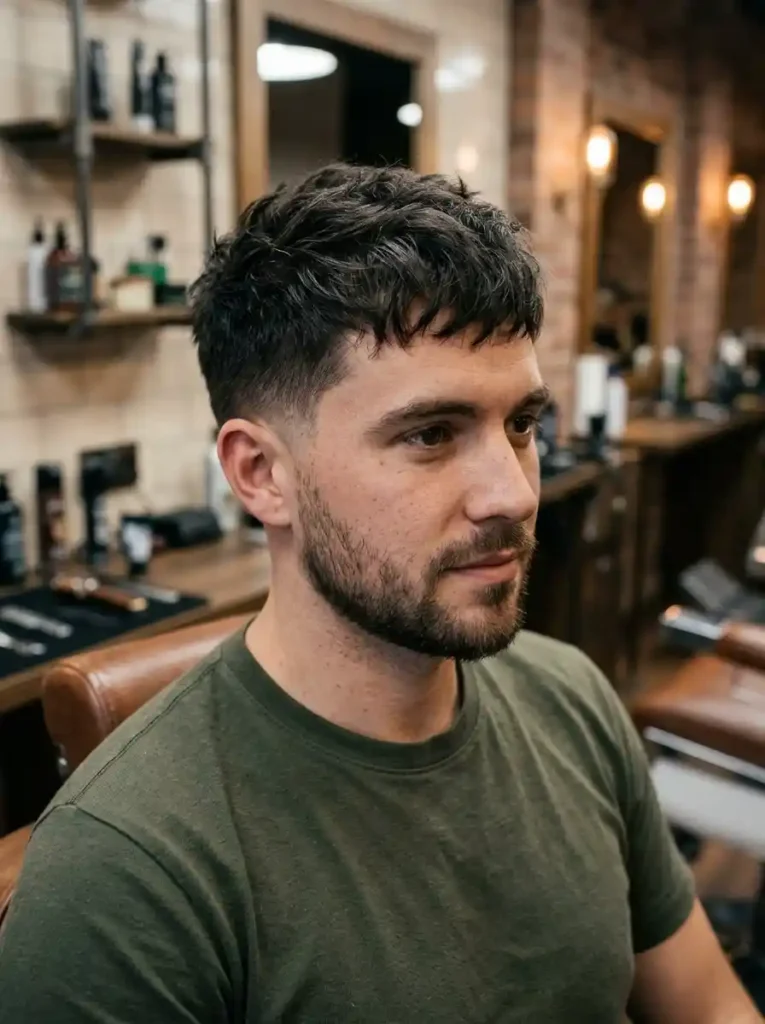
An extended French crop is a practical way to combine the recognizable cropped fringe with additional length and texture on top. Rather than keeping the entire upper section short, the barber leaves enough hair to create movement and a more flexible silhouette. The sides remain shorter, helping the haircut maintain a clean outline. This is a good option for men who want a distinctive style without managing long sections around the face.
Ask for a textured top with a broken fringe rather than a thick, perfectly straight front edge. The sides can be tapered or softly faded depending on your preference. For styling, rub a little matte clay between your palms and work it through the upper sections. Direct the fringe forward while separating a few strands with your fingertips. This haircut is particularly convenient for men who prefer a quick morning styling routine.
21. Natural Medium-Length Hair with Minimal Styling

Sometimes the most appealing hairstyle is one that works with your natural hair instead of requiring a carefully constructed finish. This medium-length look keeps the overall shape simple, allowing your natural part, texture, and growth pattern to determine how the hair falls. It is particularly suitable for men who prefer understated grooming and want enough length to experiment occasionally without committing to a specific daily styling routine.
Minimal styling does not mean ignoring maintenance. Ask your barber for a balanced shape that follows your natural growth direction, with light trimming around the neckline and ears. Use conditioner regularly and apply a small amount of leave-in product when the ends feel dry. If your hair becomes bulky, request subtle shaping instead of removing large amounts of length. The goal is healthy-looking movement, not perfectly controlled strands.
Conclusion
Choosing the right medium hairstyle is about finding a balance between your natural hair texture, personal style, and everyday routine. From textured layers and modern curtains to relaxed bro flows, curly cuts, and polished side parts, these ideas offer plenty of ways to refresh your appearance without going extremely short or growing your hair excessively long.
Before booking your next haircut, consider how much time you want to spend styling your hair each morning. Think about your hair’s thickness, natural movement, and the shape you want around your face. Bring two or three reference photographs to your barber and explain which details you like most. A well-chosen medium haircut should feel comfortable, suit your lifestyle, and remain easy to personalize as your hair grows.


