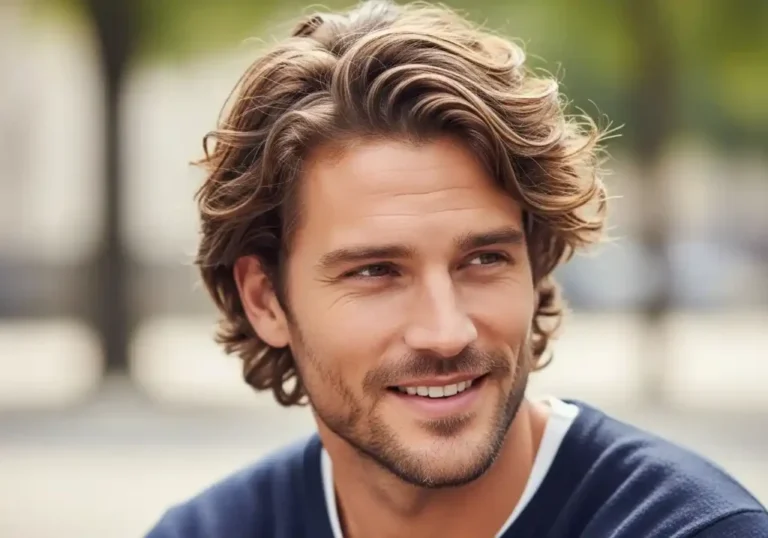
A haircut can look beautiful overall and still feel a little flat around the face. That is where the right face framing layers can make a noticeable difference. Strategic pieces around the cheeks, jaw, and chin can add movement without changing your entire haircut. This guide shares 24 distinctive ideas for different lengths, textures, colors, and styling preferences. You will also find practical tips to help you explain your favorite look clearly during your next salon visit.
1. Soft Cheekbone Layers
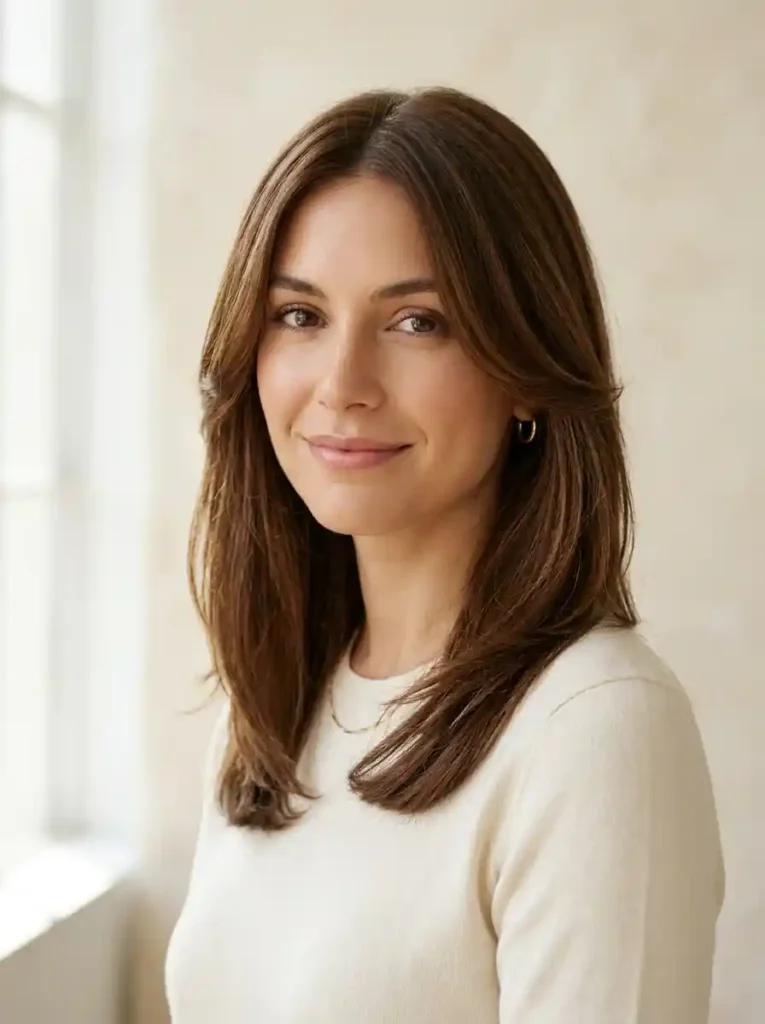
Soft cheekbone layers create a graceful transition between the forehead and the rest of the haircut. The shortest pieces sit around the cheekbones without looking overly dramatic. This placement works especially well with medium-length hair because it adds visible movement near the face. Straight and lightly wavy textures can both showcase the shape beautifully. The result feels polished but relaxed. It suits anyone who wants noticeable framing without committing to short bangs or a heavily layered haircut.
Ask your stylist to keep the ends softly blended rather than sharply disconnected. This helps the shorter pieces merge naturally into longer lengths. A round brush can create a gentle curve toward the face during styling. For an effortless finish, allow the layers to air dry before adding a few loose bends. Stylist Tip: Cheekbone placement can emphasize the middle of the face, so adjust the starting point based on your preferred visual balance.
2. Long Curtain-Framed Layers
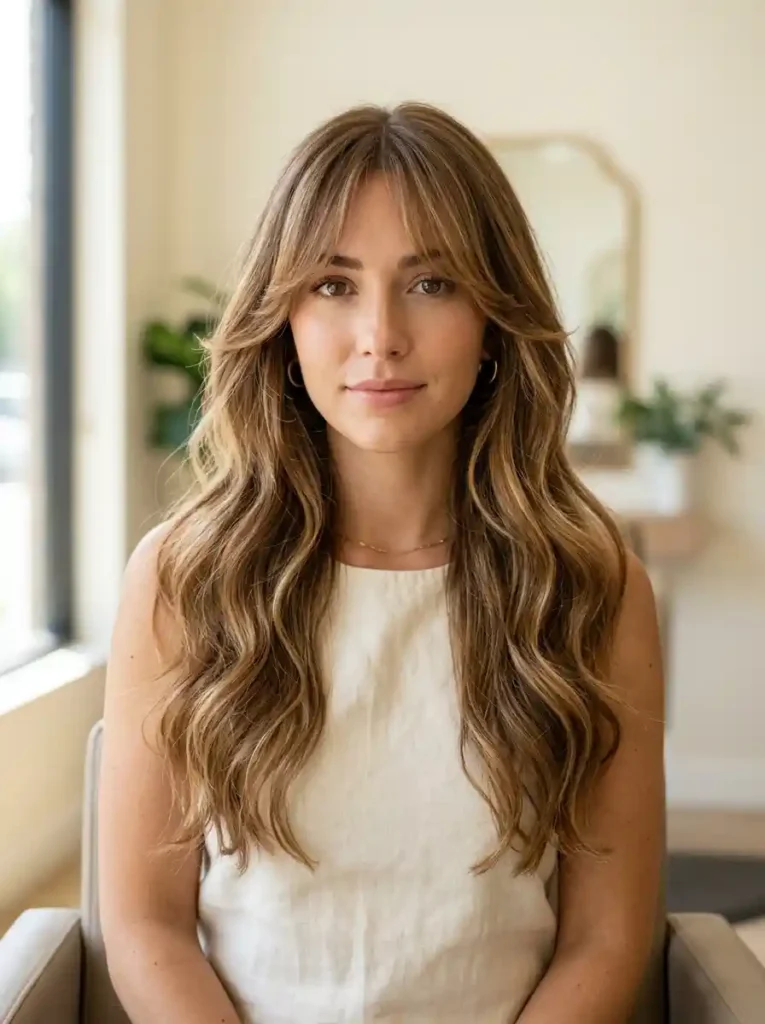
Long curtain-framed layers offer a softer alternative to traditional bangs. The front pieces gradually lengthen from the forehead toward the jaw and blend into long hair. This shape creates movement while preserving plenty of length. It works beautifully for people who want a romantic haircut with an easy grow-out phase. Loose waves make the transitions especially visible. The overall effect feels airy and feminine without looking overly styled. It is also a versatile choice for everyday and occasion hairstyles.
Style the front sections with a medium round brush, directing them slightly away from your face. Avoid creating a hard curl because the look depends on soft movement. If your hair is naturally wavy, use a lightweight styling cream instead. Pro Tip: Longer framing pieces are easier to maintain when you dislike frequent trims. They can also be tucked behind the ears without losing their shape.
3. Chin-Length Face Framing
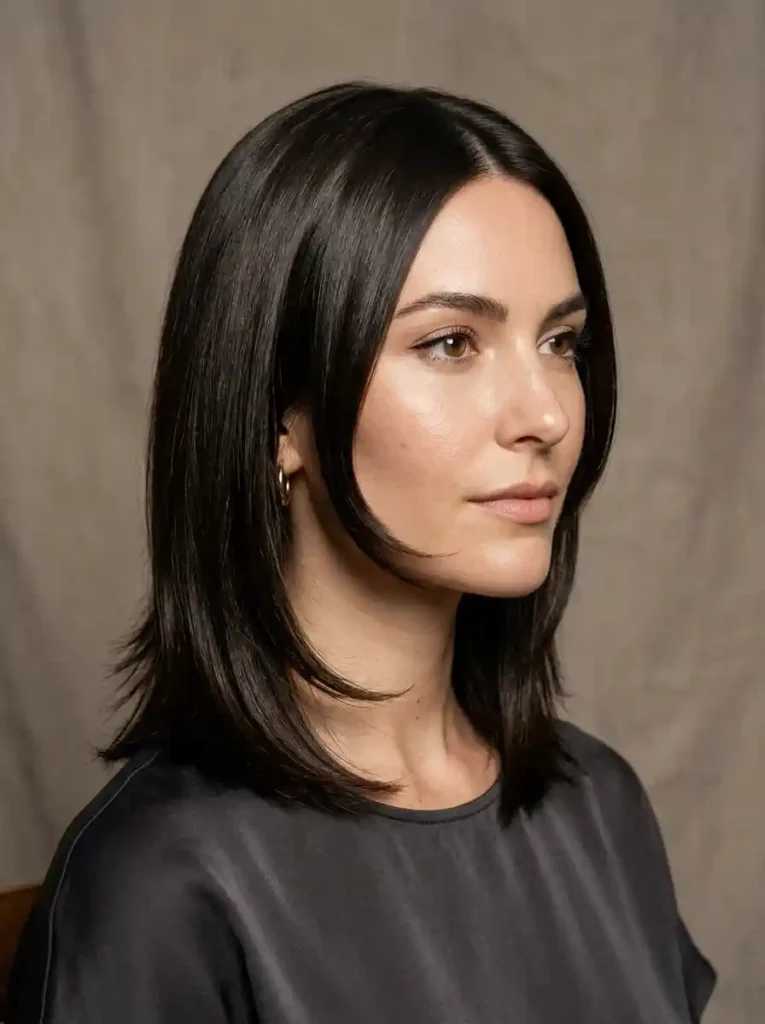
Chin-length face framing creates a defined shape around the lower face. The shorter front pieces reach approximately the chin while the remaining hair stays longer. This contrast gives the haircut a structured appearance without requiring short overall layers. It can suit straight, polished hair particularly well because the clean lines remain visible. Medium and thick hair often provide enough density to make the shape look substantial. The style feels contemporary, neat, and intentionally sculpted.
For a sharper result, ask for precise ends around the chin. Softer textures may benefit from slightly longer pieces to prevent unwanted bulk. Flat ironing can highlight the clean transition, while a small inward bend adds softness. Common Mistake: Cutting the front layers too short can create an unintended bob-like effect. Show your stylist where you want the shortest point to sit before cutting begins.
4. Wispy Jawline Layers

Wispy jawline layers create movement without adding a heavy visual edge. The front pieces are lightly tapered, so they appear delicate around the cheeks and jaw. This makes the style appealing for anyone who dislikes thick or obvious layers. Fine to medium hair can benefit from this approach because the ends remain visually light. A slightly tousled finish makes the pieces look naturally separated. The result is relaxed, youthful, and easy to adapt to everyday hairstyles.
Ask for point-cut or softly tapered ends if you want a feathered appearance. Styling works best with lightweight products that preserve movement instead of creating stiffness. Use your fingers to separate the front pieces after drying. Pro Tip: Wispy layers can disappear in very thick hair unless enough weight is removed strategically. Your stylist may need to blend the surrounding sections carefully for the framing to remain visible.
5. Face Framing on a Long Shag

A long shag combines face framing with abundant texture throughout the haircut. Shorter pieces around the cheeks connect naturally with layers through the crown and lengths. This creates a lively, undone silhouette rather than a sleek shape. It suits naturally wavy or textured hair especially well because the layers can separate naturally. Thick hair may also feel lighter after strategic layering. The overall appearance is expressive and slightly edgy, making it ideal for someone who wants visible movement.
Shaggy layers need enough texture to support their shape, so styling should remain flexible. Apply mousse or texture cream before drying with a diffuser. Avoid brushing the hair excessively once it has dried. Stylist Tip: Ask for the shortest front layer to match your comfort level. A softer starting point near the cheekbone creates a wearable shag, while higher layers produce a bolder effect.
6. Subtle Layers for Fine Hair
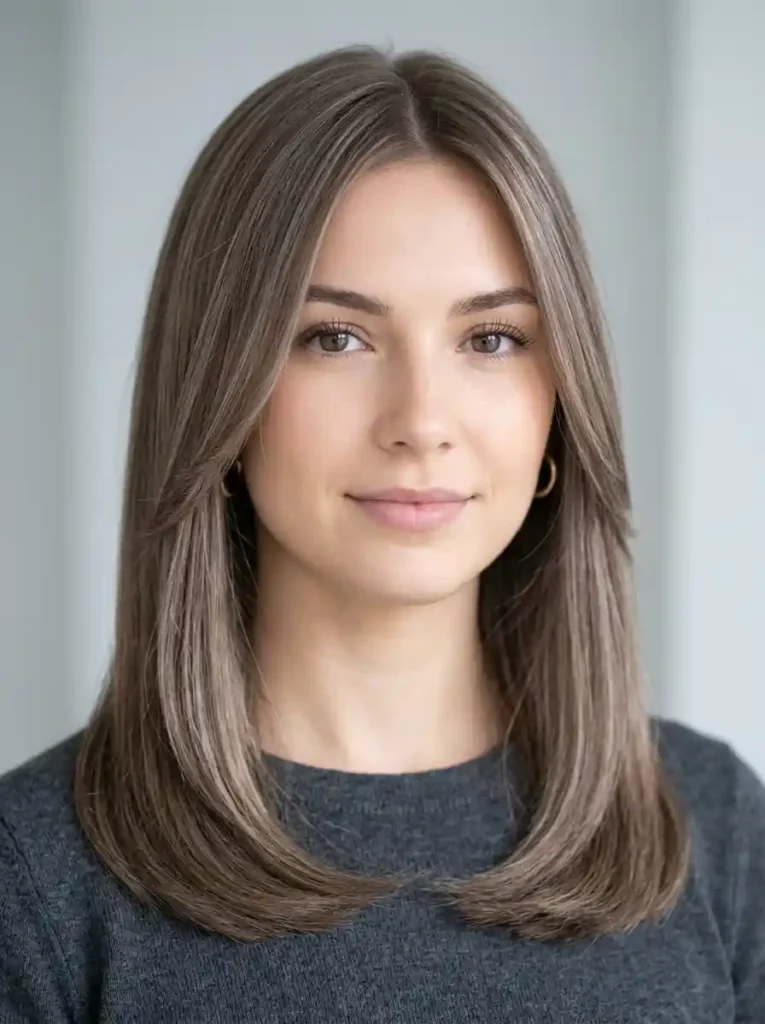
Fine hair can lose visual fullness when too many layers are removed. Subtle face framing offers a better balance by adding movement only where it matters. The front pieces begin around the lips and gradually blend into the shoulder-length cut. This creates shape without making the ends look sparse. Straight fine hair can display the clean transition clearly. The result is understated and polished. It works well for anyone who wants more dimension while keeping the haircut visually full.
Tell your stylist that preserving density is a priority. Ask for restrained layering through the front rather than extensive thinning throughout the haircut. A volumizing mousse at the roots can provide lift without weighing down the ends. Common Mistake: Excessive texturizing can make fine hair appear thinner. Keep most of the density through the lower lengths and use framing strategically.
7. Face Framing for Thick Hair
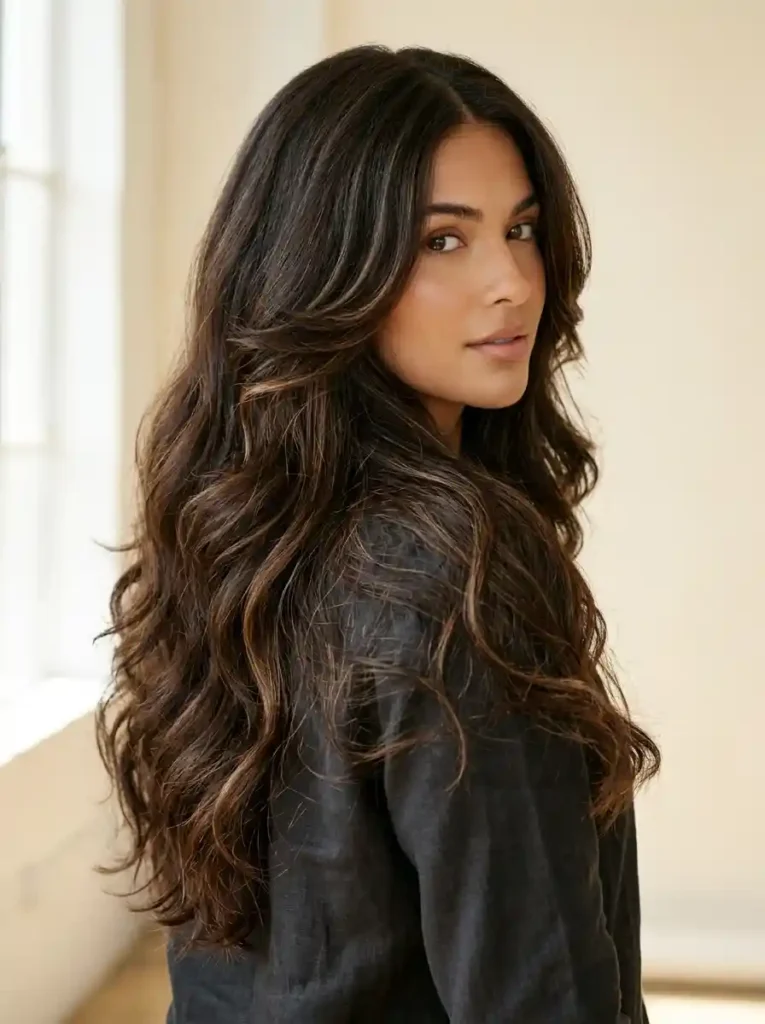
Thick hair provides plenty of volume for noticeable face framing. Longer graduated pieces can remove visual heaviness near the face while preserving impressive length. The layers move from the cheekbones toward the chest, creating a smooth cascade. This approach works well when dense hair feels bulky around the front. Soft waves reveal the different lengths particularly well. The result remains full but feels more controlled. It is a strong option for people who love long hair but want greater shape.
Maintenance depends on how much internal weight your stylist removes. Ask for the front layers to blend into the existing density rather than creating abrupt steps. Use a smoothing cream before blow-drying to keep the transition sleek. Pro Tip: Thick hair often needs careful weight distribution, not simply more layers. Strategic removal can create movement while preventing the ends from becoming overly thin.
8. Curly Face Framing

Curly hair needs face framing that respects shrinkage and natural curl patterns. Rounded layers can create a balanced shape around the cheeks while allowing curls to retain their bounce. The shortest pieces should be planned with the hair’s natural movement in mind. This style can work with shoulder-length or longer curls. It creates a lively silhouette without forcing the curls into a straightened shape. People who prefer natural texture may find this approach especially expressive and easy to personalize.
Consider consulting a stylist experienced with curly cutting techniques. Ask whether your hair should be shaped dry, damp, or through a curl-specific method. Style with a curl cream and diffuser, then avoid excessive touching. Stylist Tip: Curly hair can spring upward after cutting, so the visible length may differ significantly when dry. Discuss your desired dry result before deciding on the shortest layer.
9. Side-Parted Face Framing
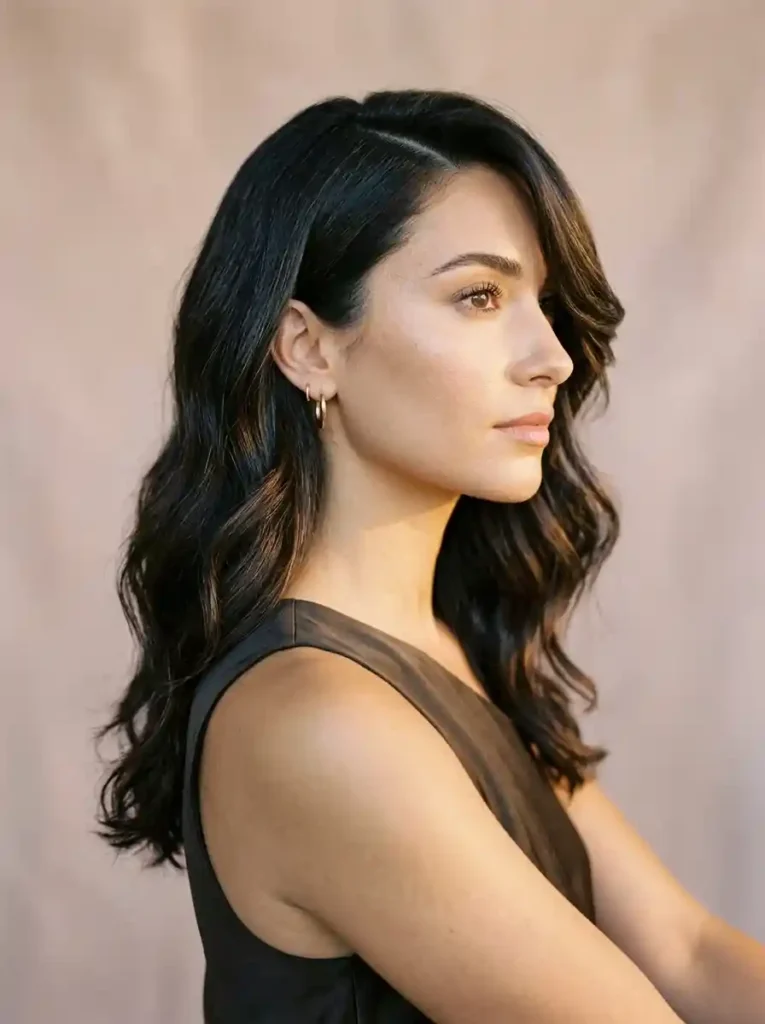
A side part changes how face framing sits across the forehead and cheeks. Instead of symmetrical front pieces, the layers sweep naturally toward one side. This creates an elegant asymmetrical effect while keeping the haircut wearable. Medium-length hair provides enough room for the longer side to flow into the rest of the cut. Soft waves emphasize the movement. This style suits people who enjoy side parts and want their haircut to feel more dynamic than a traditional center-parted shape.
Ask your stylist to account for your preferred part rather than cutting symmetrical sections automatically. The heavier side may need slightly different blending to prevent awkward gaps. Use a round brush to direct the front away from the face while maintaining volume at the roots. Pro Tip: If you switch your part often, keep the shortest framing pieces moderately long. This gives you more styling flexibility between different part placements.
10. Blunt Bob with Face Framing
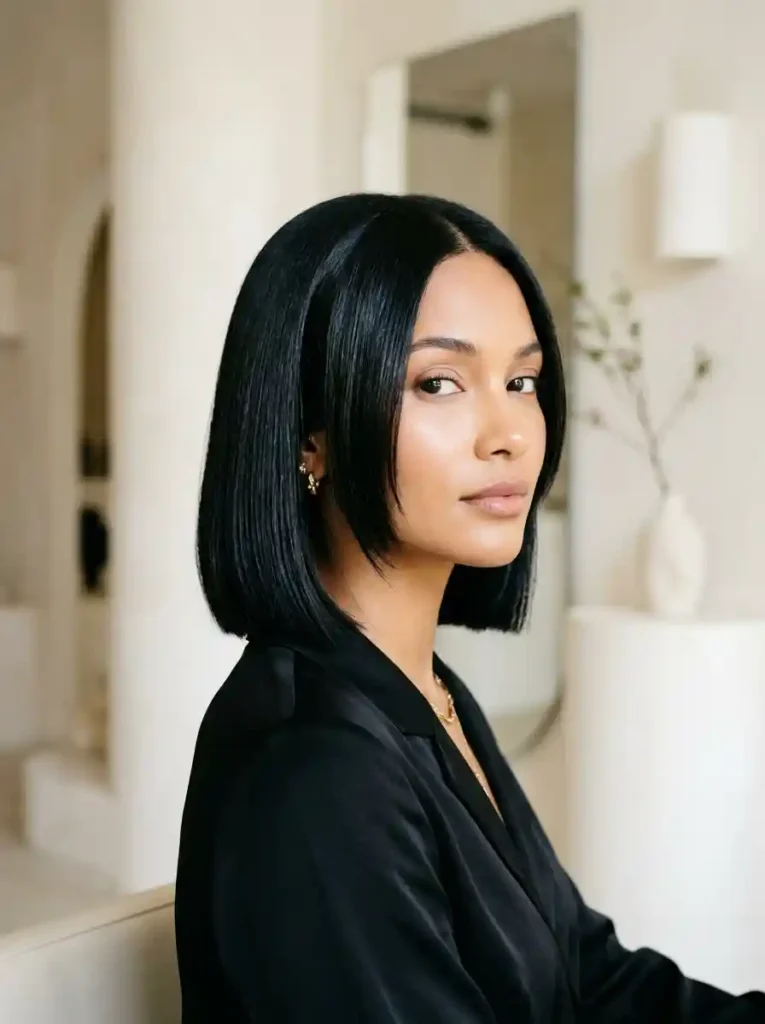
A blunt bob can feel surprisingly soft when paired with carefully placed face framing. The strong perimeter provides structure, while slightly shorter front sections create movement around the cheeks. Straight hair shows this contrast particularly clearly. The style feels modern and refined without becoming overly severe. It can suit people who prefer shorter hair but still want softness around the face. The controlled shape also makes the haircut easy to recognize from different angles.
Precision matters with this haircut because small changes can alter the overall silhouette. Ask for subtle framing rather than heavily layered front sections. A flat iron can keep the perimeter sleek, while a slight bend through the front adds softness. Common Mistake: Too much layering can weaken the defining blunt line. Keep the majority of the bob solid and concentrate movement around the face.
11. Collarbone Layers with Curtain Bangs

Collarbone-length hair offers an ideal middle ground between short and long styles. Adding curtain bangs creates a layered frame that begins around the forehead and continues toward the jaw. Loose waves make the transitions look soft and intentional. This combination suits people who want more movement without sacrificing enough length for ponytails or simple updos. The overall shape feels current but remains practical. It can also transition easily between casual styling and more polished occasions.
Curtain bangs need regular shaping to maintain their opening and length. Use a round brush to direct each side outward as you dry. For lower maintenance, request longer curtain pieces that blend quickly into the haircut. Stylist Tip: The strongest visual flow occurs when the curtain bangs connect smoothly with the cheek and jaw layers. Avoid creating isolated sections that look disconnected from the haircut.
12. Feathered Face Framing
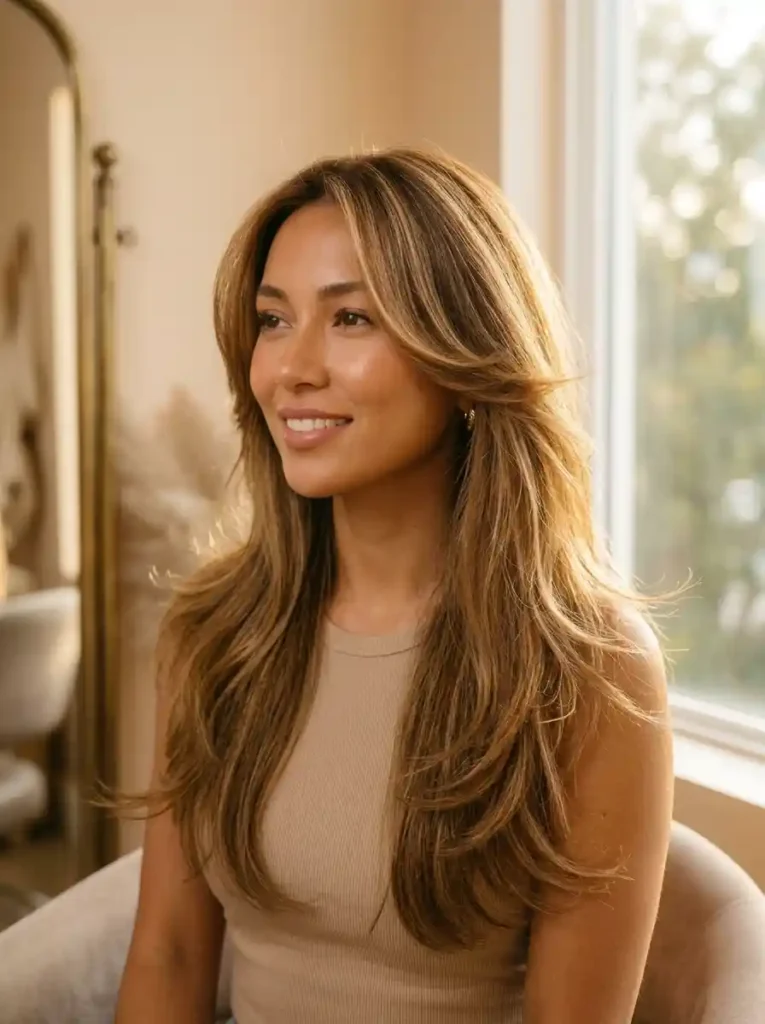
Feathered face framing brings a soft retro influence into a modern haircut. The front layers taper gradually and curve outward, creating a light, airy outline around the face. Long hair gives the feathering enough space to blend smoothly. A bouncy blowout makes the shape especially noticeable. This option works well for people who enjoy volume and polished movement. It feels more glamorous than a basic layered cut while remaining adaptable for everyday styling.
A round brush is the easiest way to recreate the feathered finish. Work in small sections and direct the ends slightly outward rather than creating tight curls. Velcro rollers can help set the volume after blow-drying. Pro Tip: Feathering looks best when the front ends remain light. Heavy ends can prevent the signature airy movement from developing.
13. Wavy Layers with Jaw-Length Pieces

Wavy hair can make face framing look especially natural because the texture breaks up hard lines. Jaw-length pieces create a visible focal point while blending into the shoulder-length waves. The result feels relaxed rather than overly constructed. This style suits people who want movement without a highly polished finish. Medium-density wavy hair often provides enough body to support the layers. Subtle highlights can further emphasize the changing lengths throughout the front.
Avoid applying too much heavy product near the framing pieces. A lightweight mousse or curl-enhancing cream can preserve the natural wave pattern. Scrunch the hair while damp and let it dry naturally or use a diffuser. Stylist Tip: Wavy hair can behave differently from section to section. Ask for balanced shaping that follows your natural wave direction rather than forcing perfect symmetry.
14. Long Layers with Lip-Length Framing
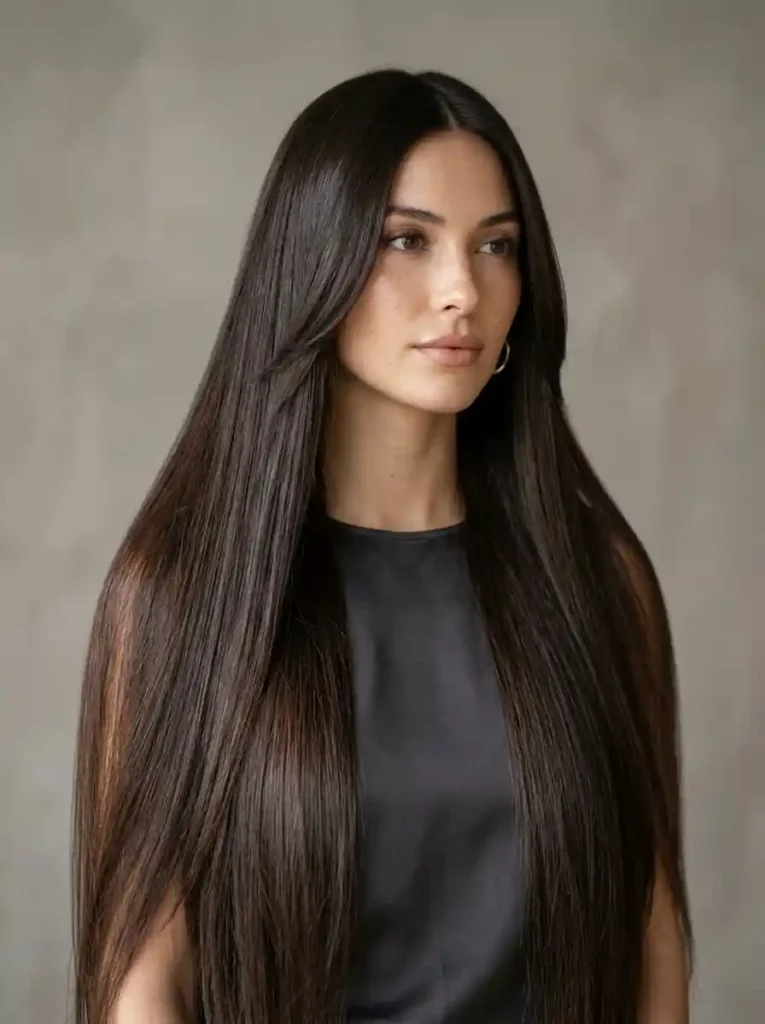
Lip-length framing creates a gentle focal point around the lower cheeks and mouth. The pieces are shorter than traditional long layers but remain long enough to blend smoothly into very long hair. This placement adds definition without dramatically changing the haircut. Straight or softly waved textures can both showcase the shape. It suits people who want a subtle update rather than a major transformation. The style also works well when preserving maximum overall length is important.
Tell your stylist exactly where you want the shortest pieces to end. Lip-length layers can look quite different depending on their angle and density. Use a small round brush for a soft inward curve or leave them straight for a cleaner finish. Common Mistake: Making the transition too abrupt can create a shelf effect. Ask for gradual blending into the longer layers.
15. Face Framing with Wispy Bangs
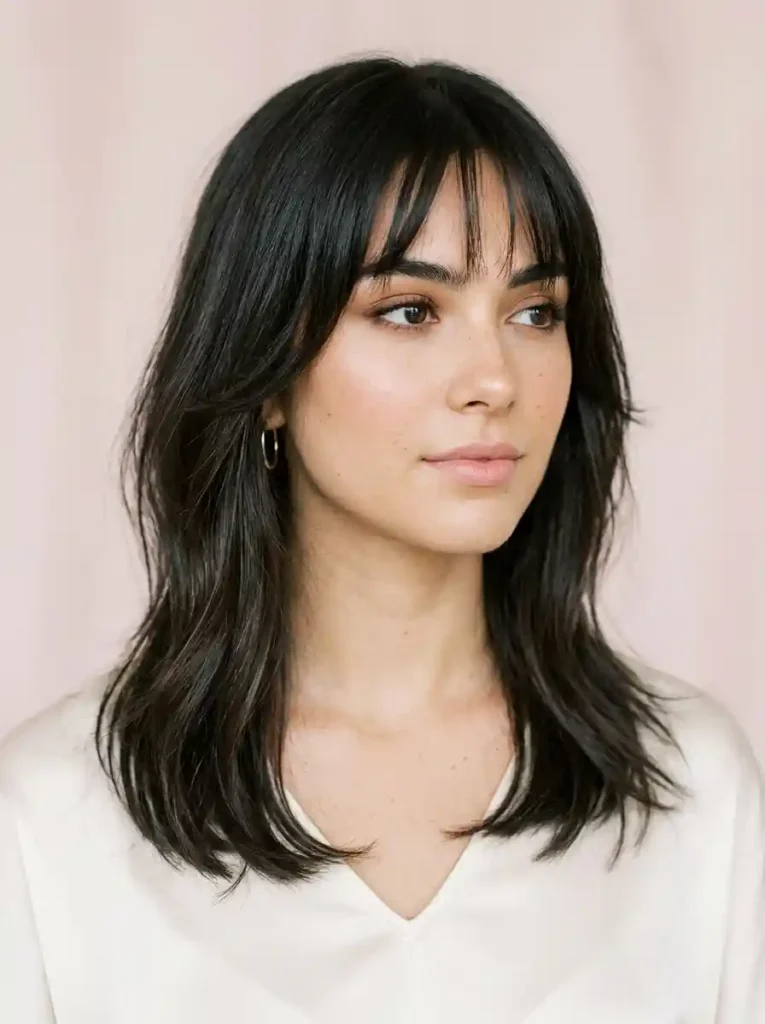
Wispy bangs can create an especially delicate transition into face framing layers. The fringe stays light and separated rather than forming a solid line across the forehead. Longer pieces then continue toward the cheeks and jaw. This creates a soft frame with plenty of movement. It works well for people who want bangs but dislike dense, heavy fringe. Fine and medium hair can suit this approach when the stylist preserves enough length for blending.
Wispy bangs usually need more frequent shaping than longer framing pieces. A small round brush or flat brush can help position them without adding too much volume. Use a tiny amount of lightweight styling cream on the ends. Pro Tip: Ask for a gradual connection between the bangs and side framing. This makes growing them out easier and reduces the awkward stage between trims.
16. Butterfly-Inspired Face Framing
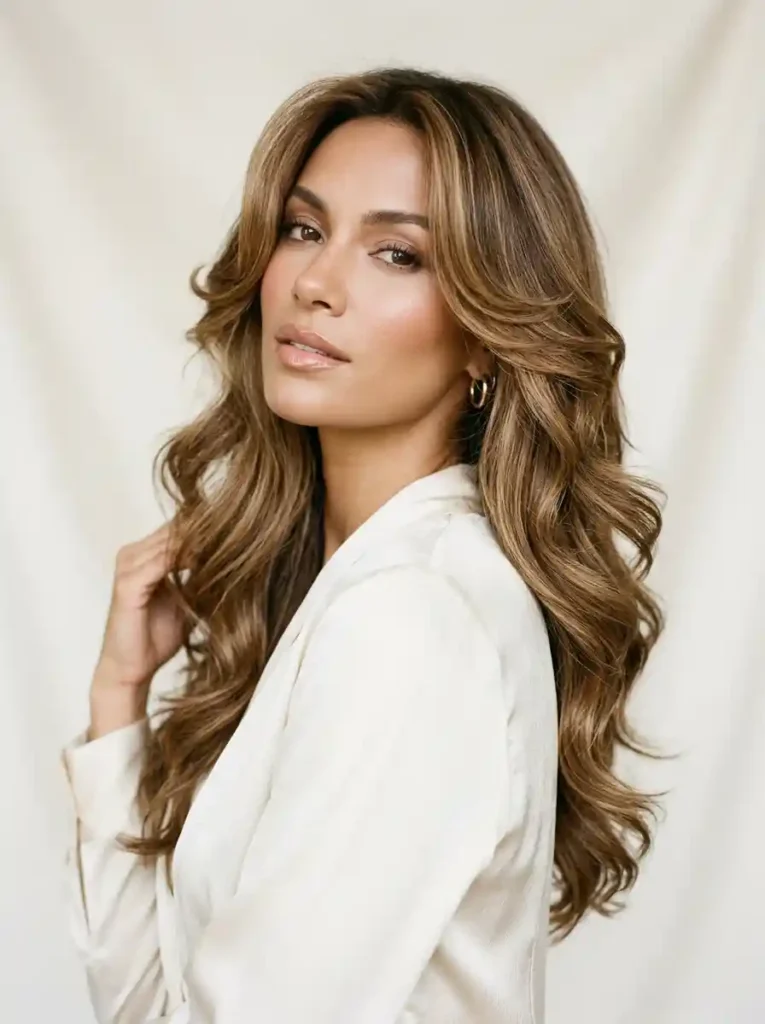
Butterfly-inspired framing uses dramatic front layers to create a lifted, flowing silhouette. The shorter sections sweep away from the face and merge into longer layers through the chest and back. A voluminous blowout makes the separation especially visible. This style suits people who enjoy glamour and movement without giving up long hair. Thick or medium-density hair can carry the shape particularly well. The overall appearance feels polished, energetic, and intentionally voluminous.
This haircut benefits from styling because the layers are designed to move. Use a large round brush or rollers to create lift around the face. For easier upkeep, ask for slightly longer front pieces. Stylist Tip: The angle of the first face-framing layer determines much of the haircut’s drama. Lower starting points create a softer version, while higher points create stronger volume.
17. Textured Layers for a Pixie-Bob
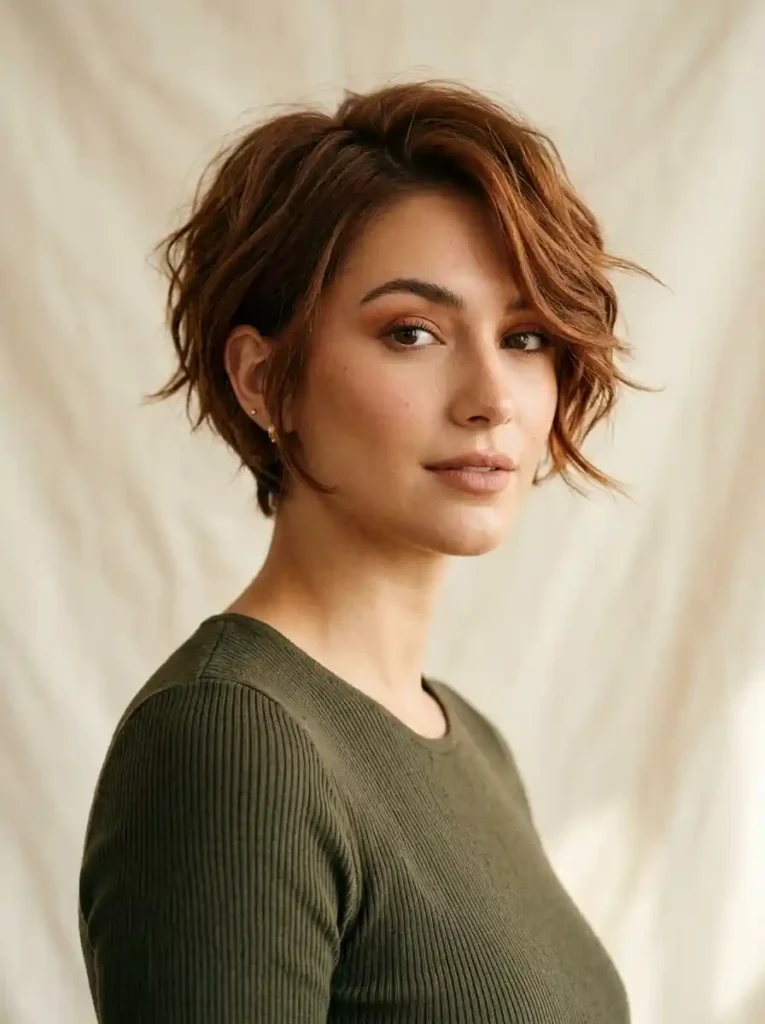
Short hair can still benefit from carefully designed face framing. A pixie-bob keeps the back and sides compact while allowing slightly longer front pieces to soften the cheeks. Textured ends prevent the haircut from appearing overly rigid. This option suits people who want a shorter style with personality and movement. Straight and lightly wavy hair can both work well. The copper color adds another layer of visual interest, but the shape remains effective in natural shades.
Ask your stylist to keep enough length around the front for your preferred styling direction. Texture should be concentrated where it creates movement rather than scattered randomly. A small amount of styling paste can separate individual pieces. Common Mistake: Over-texturizing short hair can make it difficult to control. Keep some solid structure underneath the texture for easier daily styling.
18. Face Framing for Natural Silver Hair

Face framing can add shape to naturally silver hair without requiring dramatic changes. Soft layers around the cheeks and chin create movement through a medium-length cut. The natural variation between silver and darker strands can make the layered shape especially dimensional. This option suits anyone who wants an elegant, age-neutral haircut with visible structure. Gentle waves add softness, while straight styling makes the layering more defined. The result feels sophisticated without appearing overly formal or youthful.
Silver hair can sometimes feel drier, so gentle styling is useful for maintaining softness. Use a moisturizing leave-in product and avoid excessive heat when possible. Ask for blended layers rather than aggressive thinning if your ends feel delicate. Stylist Tip: Natural gray patterns vary widely, so the placement of layers can be adjusted to highlight brighter sections around the face.
19. Face Framing for a High Ponytail
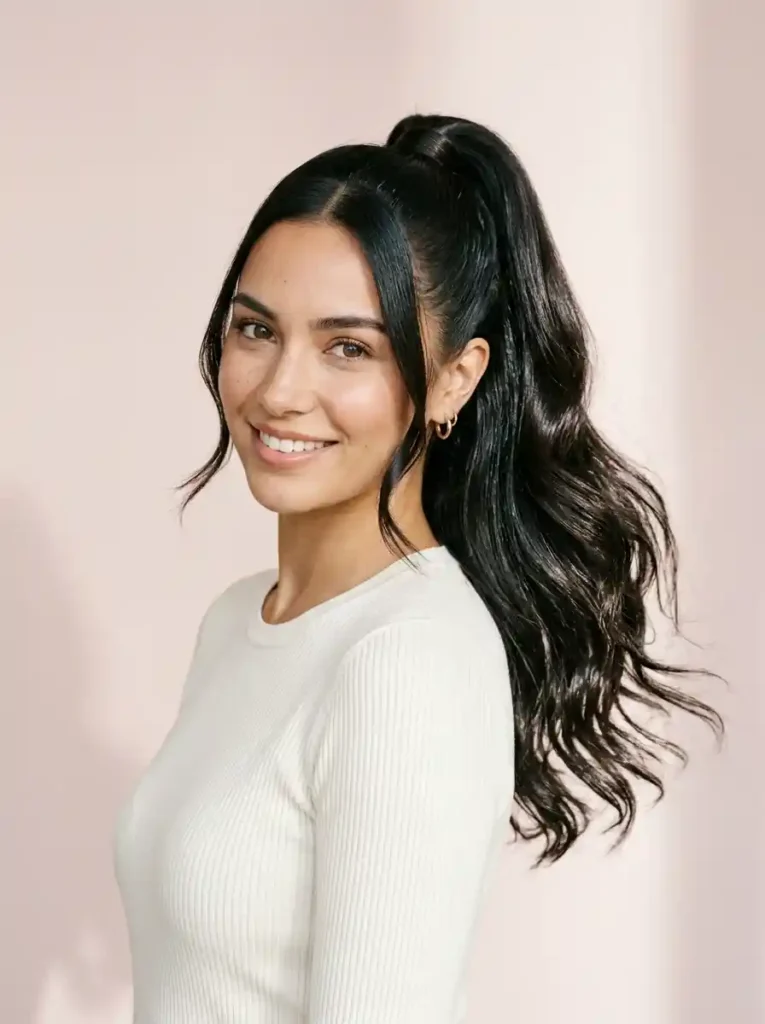
A high ponytail looks softer when a few face framing layers remain loose around the face. Longer cheek and jaw pieces create movement against the sleek pulled-back shape. This combination is useful for people who frequently wear ponytails but want more personality around the front. Medium and long hair can support the look easily. The contrast between the controlled ponytail and relaxed front pieces creates a balanced, effortless appearance.
When requesting this haircut, consider how the layers behave while your hair is tied back. Front pieces that are too short may become difficult to secure during workouts or windy weather. Use a lightweight smoothing product around the crown and leave the framing sections flexible. Pro Tip: Ask your stylist to test the layers while your hair is in a ponytail. This reveals whether the shortest pieces sit where you actually want them.
20. Face Framing for a Low Bun
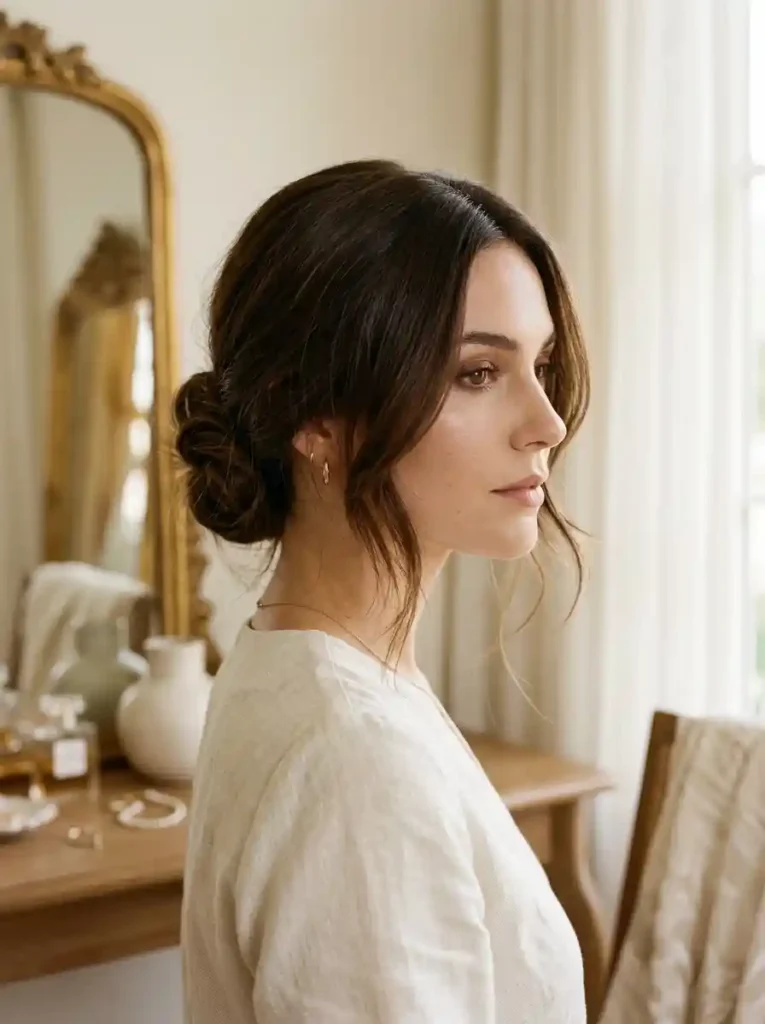
A low bun becomes more relaxed when face framing layers soften the front. Chin-to-collarbone pieces can remain loose while the rest of the hair gathers neatly at the nape. This creates an elegant shape without making the hairstyle look severe. Longer layers are especially useful because they can be pinned back when desired. The style suits weddings, dinners, work events, or anyone who prefers simple updos with a softer outline around the face.
Ask for front layers that can comfortably tuck behind the ears or pin into an updo. This gives you more options for formal styling. Use a smoothing cream on the bun and a flexible spray around the loose pieces. Stylist Tip: Bring a photo of your favorite updo to the haircut appointment. Your stylist can shape the framing based on how you actually plan to wear your hair.
21. Rounded Layers for Natural Volume
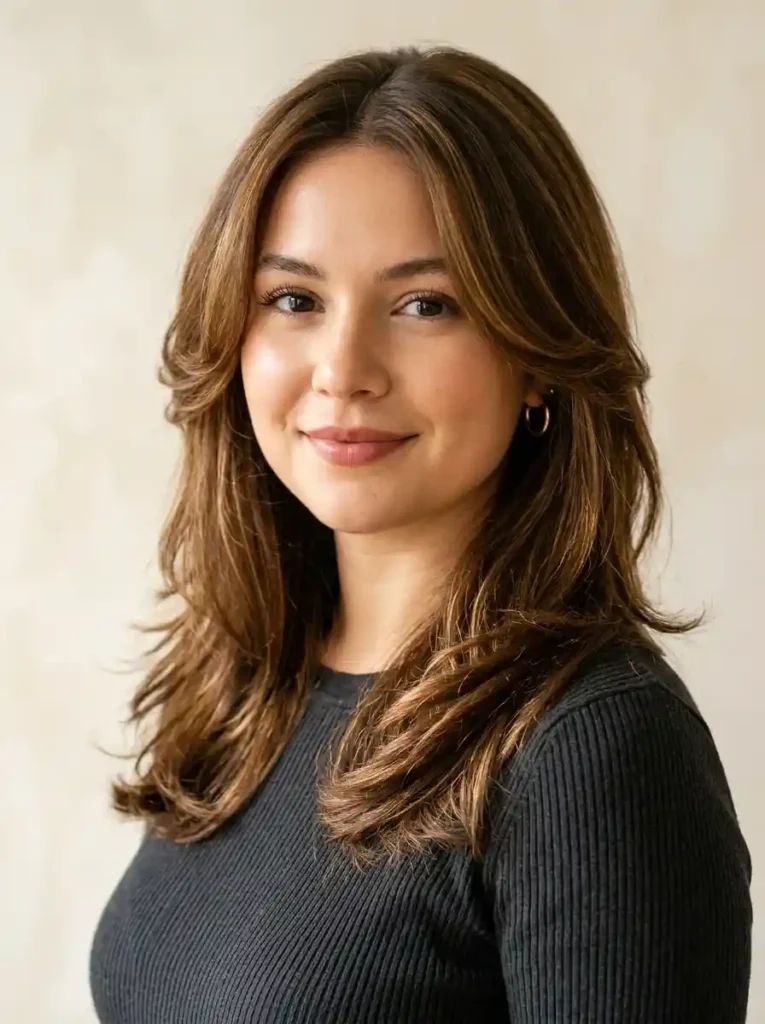
Rounded face framing creates a balanced silhouette by connecting the front pieces with gentle curved layers. Instead of sharp angles, the haircut follows a softer arc from the cheekbones toward the ends. This can work particularly well for medium-density hair that needs movement without strong separation. Blow-dried bends make the rounded shape easy to see. The finished look feels full and polished while remaining natural. It is a useful option for people who prefer soft lines.
Ask your stylist to maintain a gradual curve rather than cutting the front into obvious steps. A medium round brush can reinforce the shape during styling. Lightweight volumizing mousse can help create lift without making the layers stiff. Pro Tip: Rounded layers can appear different depending on your part. If you regularly change your part, keep the shortest sections long enough to move naturally.
22. Long Face Framing for Straight Hair
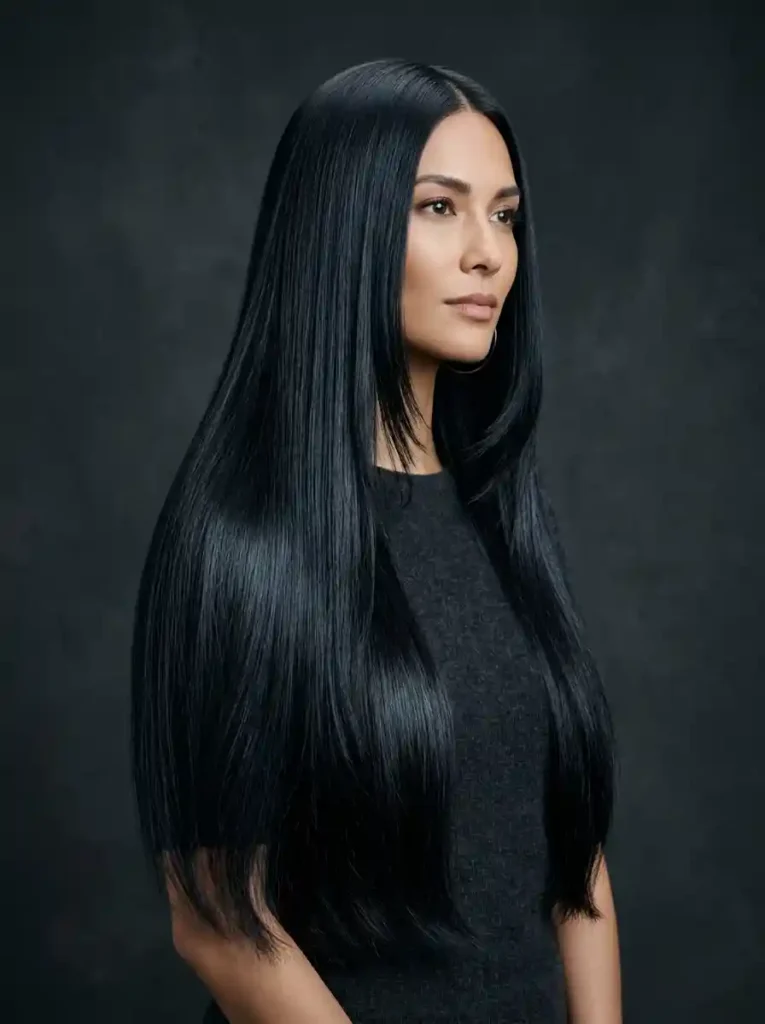
Very long face framing offers subtle structure without sacrificing the sleek appearance of straight hair. The shortest front pieces begin below the cheekbones and gradually extend toward the chest. This creates a long diagonal line that blends smoothly into the rest of the haircut. It suits people who prefer understated changes and want their hair to remain mostly one length. Straight texture makes the clean progression particularly visible.
Ask for a long, gradual angle if you want minimal maintenance. The front can be styled straight for a sleek result or curled outward for more movement. Avoid excessive thinning because it can weaken the clean line. Common Mistake: Starting the first layer too high can make extremely long hair look disconnected. A lower starting point usually creates a smoother transition.
23. Copper Layers with Bold Framing
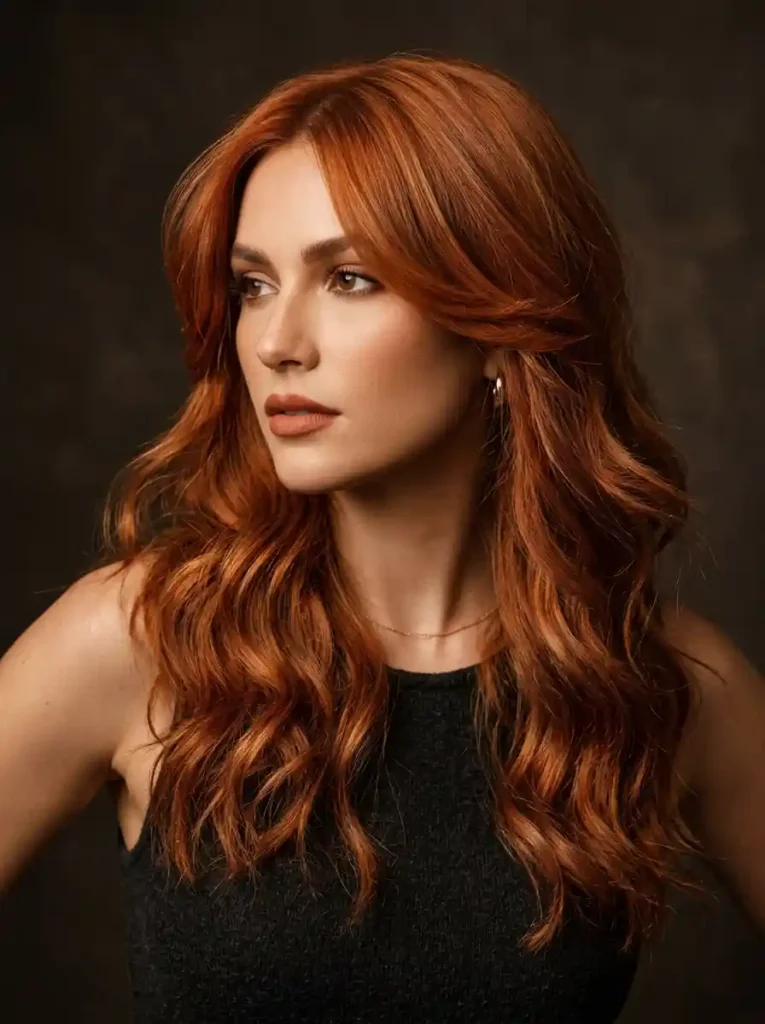
Bold face framing becomes especially striking when paired with dimensional copper color. Stronger cheekbone layers create a noticeable outline, while waves reveal the different lengths. The warm color adds depth and helps individual sections stand out visually. This idea suits people who enjoy expressive hair and do not mind a more noticeable haircut. Medium-long lengths provide enough room for the framing to blend without losing its dramatic effect.
Bold layers require more intentional styling than subtle framing. Use a volumizing mousse and a round brush to lift the shorter sections. If your hair is naturally textured, enhance that movement rather than smoothing everything flat. Stylist Tip: Color placement can affect how visible the layers appear. Dimensional highlights around the front can emphasize bold framing without requiring even shorter pieces.
24. Soft Face Framing for an Everyday Look

For an everyday haircut, subtle face framing can provide shape without demanding much styling. Jaw-length pieces blend gradually into shoulder-length hair, creating movement that still looks natural when air-dried. This option suits people who want a practical update rather than a dramatic transformation. It works across several textures because the framing remains relatively long. The result feels relaxed, polished, and easy to wear with ponytails, loose hair, or simple half-up styles.
Tell your stylist that low daily maintenance matters before choosing the layer placement. Longer front sections usually offer more flexibility and require less frequent reshaping. Use a lightweight leave-in conditioner and let the hair dry naturally for a soft finish. Pro Tip: The best everyday layers should still look intentional without heat styling. Ask your stylist to shape the haircut around your natural texture and usual routine.
Frequently Asked Questions
What are face framing layers?
Face framing layers are shorter sections around the front of a haircut. They can begin near the forehead, cheekbones, lips, chin, or jaw.
Which face framing layers work best for long hair?
Long, gradual layers work well for long hair when you want movement without losing substantial length. Lower starting points create a softer transition.
Can face framing layers work with curly hair?
Yes. Curly hair can benefit from rounded or graduated framing that follows its natural curl pattern. Shrinkage should be considered before choosing the shortest length.
Are face framing layers good for fine hair?
Yes, when they are kept subtle. Preserving density through the ends can help fine hair look fuller while still adding movement around the face.
How often should face framing layers be trimmed?
The schedule depends on the length and style. Short bangs usually need more frequent trims, while longer framing pieces can grow out more gradually.
Can I have face framing layers without bangs?
Absolutely. Face framing can begin at the cheekbones, lips, chin, or jaw. You do not need a forehead fringe to create a framed effect.
Conclusion
The right face framing layers can change the character of a haircut without requiring a complete transformation. Soft cheekbone pieces offer subtle definition, while shaggy, feathered, or butterfly-inspired layers create stronger movement. Your hair texture, density, length, styling habits, and preferred maintenance level should guide the final choice.
Before your appointment, save the ideas that match your everyday routine. Bring a few reference images and explain where you want the shortest pieces to fall. A skilled stylist can then adjust the shape to suit your natural hair and preferred finish.
Save your favorite look before your next salon visit, and share this guide with someone planning a new haircut.