
Some haircuts look polished in photos but feel awkward once you style them yourself. Curtain haircuts solve that problem by blending soft face-framing pieces with a shape that can feel relaxed or refined. The beauty of these cuts is their flexibility. You can keep the length, change the layers, or adapt the fringe to your texture. This guide shares 20 curtain haircut ideas with practical details, styling tips, and visual inspiration for your next salon visit.
1. Soft Long Curtain Layers
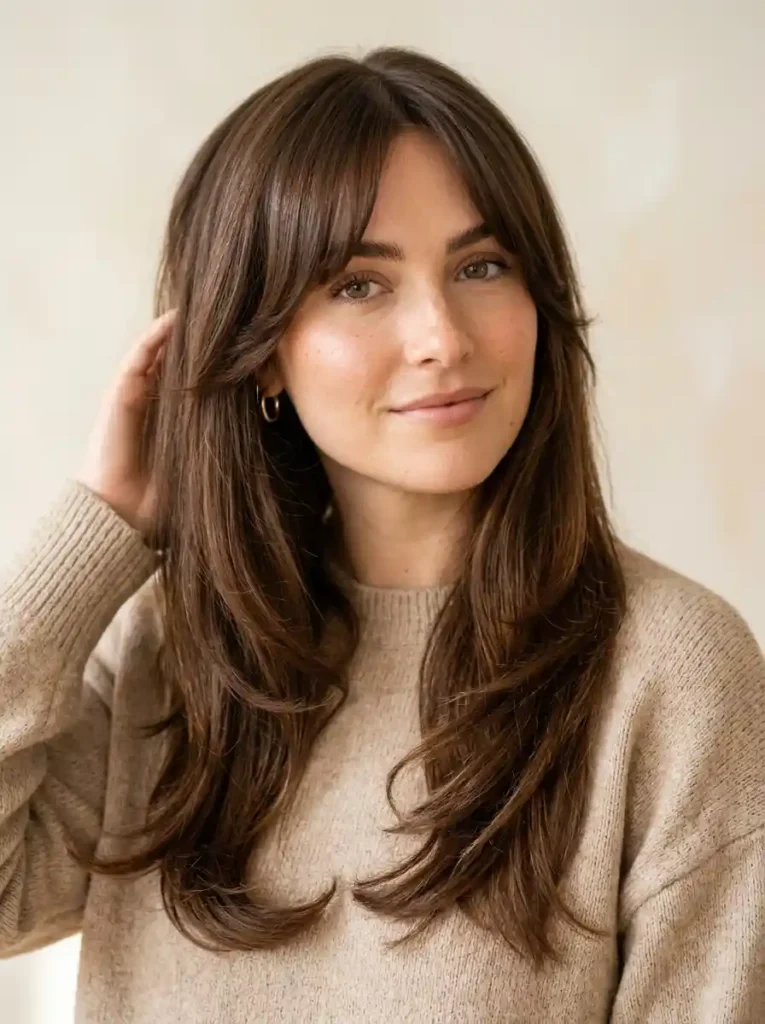
Long hair can sometimes feel heavy around the face, especially when the ends have little movement. Soft curtain layers create a lighter shape without sacrificing length. The fringe opens gently from the center and melts into longer pieces near the cheeks. This version suits people who want noticeable framing without a dramatic haircut. It looks especially elegant on straight or softly wavy hair, where the gradual layers remain visible and create an airy, flowing silhouette.
Styling this cut does not require complicated techniques. Use a round brush to direct the fringe away from the face while drying. Then bend the longer layers slightly toward the back for continuity. A lightweight smoothing cream can control flyaways without flattening movement. Pro Tip: ask your stylist to keep the shortest pieces around the cheekbones if you want definition while preserving a longer overall shape.
2. Feathered Shoulder-Length Curtain Cut
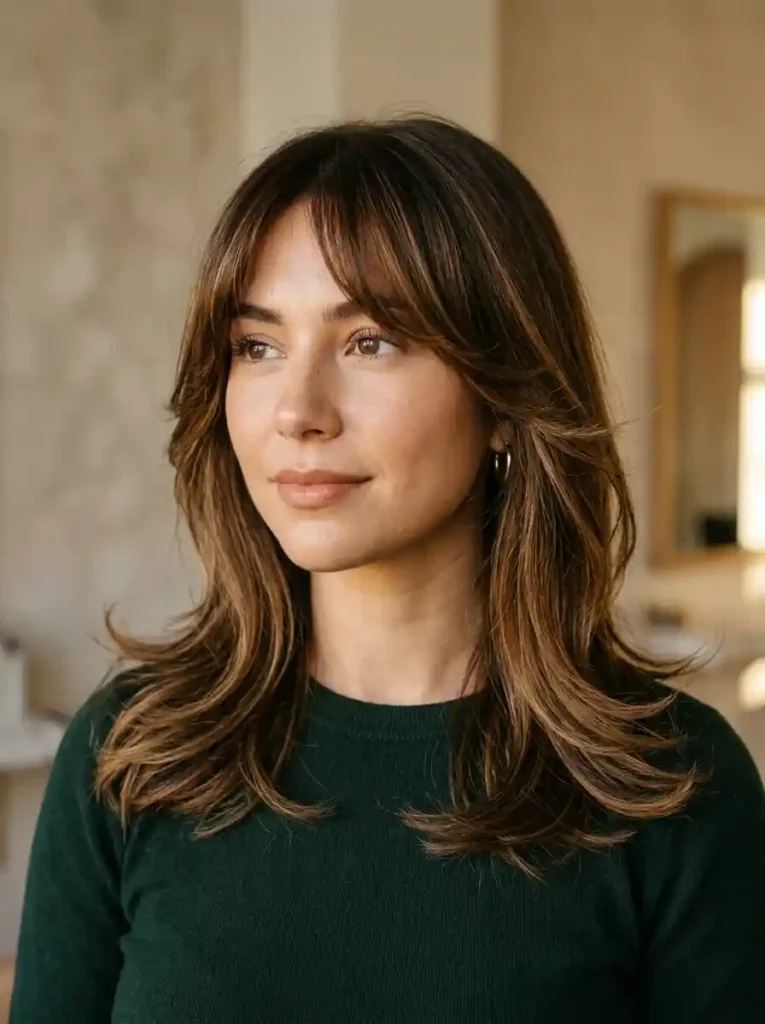
Shoulder-length hair offers a useful middle ground between long and short styles. Adding feathered curtain bangs gives the cut movement while keeping the overall shape easy to manage. The ends sit around the shoulders and curve softly outward, creating a light, retro-inspired finish. This haircut can work well for medium-density hair because feathered layers remove some visual weight without making the cut appear overly thin or choppy.
For everyday styling, dry the bangs forward first, then sweep them outward with a medium round brush. Finish the ends with a small amount of styling cream or flexible mousse. Avoid heavy oils near the fringe because they can make the shorter sections separate. Stylist Tip: feathering works best when the layers remain connected, so ask for blended transitions rather than disconnected sections.
3. Textured Curtain Shag
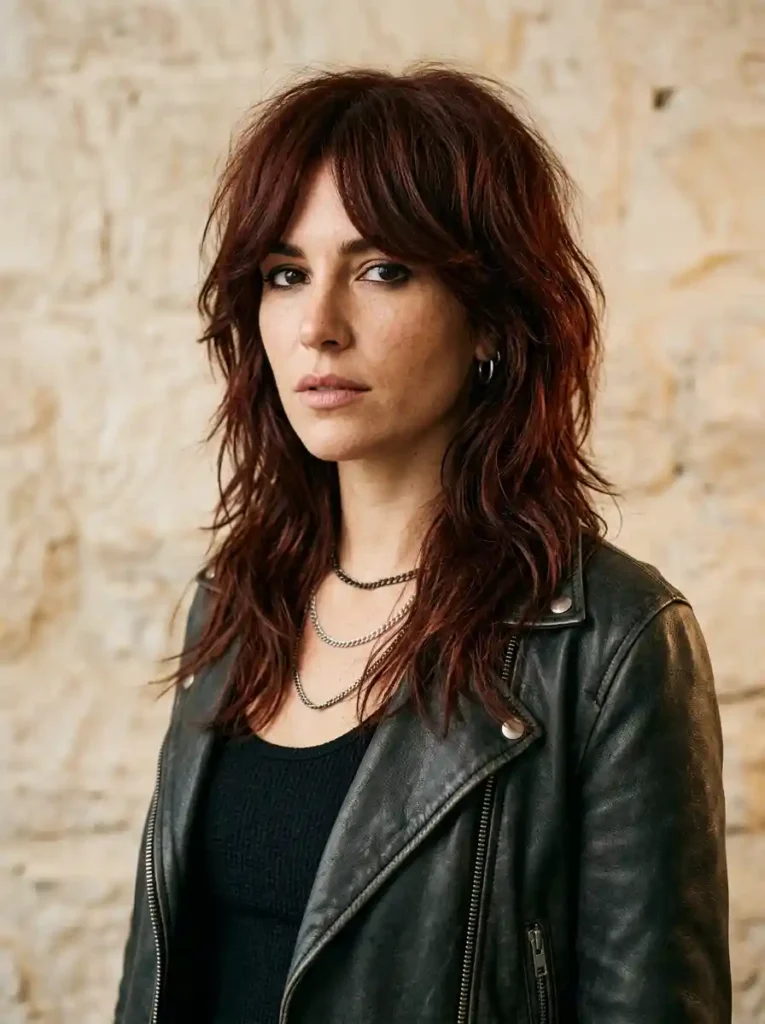
A curtain shag brings more attitude than a softly layered cut. It combines an open fringe with visible layers throughout the crown and sides. The result feels undone, textured, and deliberately cool. This option is especially appealing for people with naturally wavy or thick hair because the layers allow the natural pattern to become part of the shape. The finished haircut has more volume and movement than a traditional long-layered style.
Styling should enhance texture rather than make every strand perfectly smooth. Apply a lightweight mousse or texturizing cream to damp hair and scrunch gently. Let the hair air-dry or use a diffuser on low heat. Common Mistake: removing too much weight can make thick hair look uneven. Ask for strategic internal layering while keeping enough perimeter weight to maintain a balanced silhouette.
4. Sleek Center-Part Curtain Bob
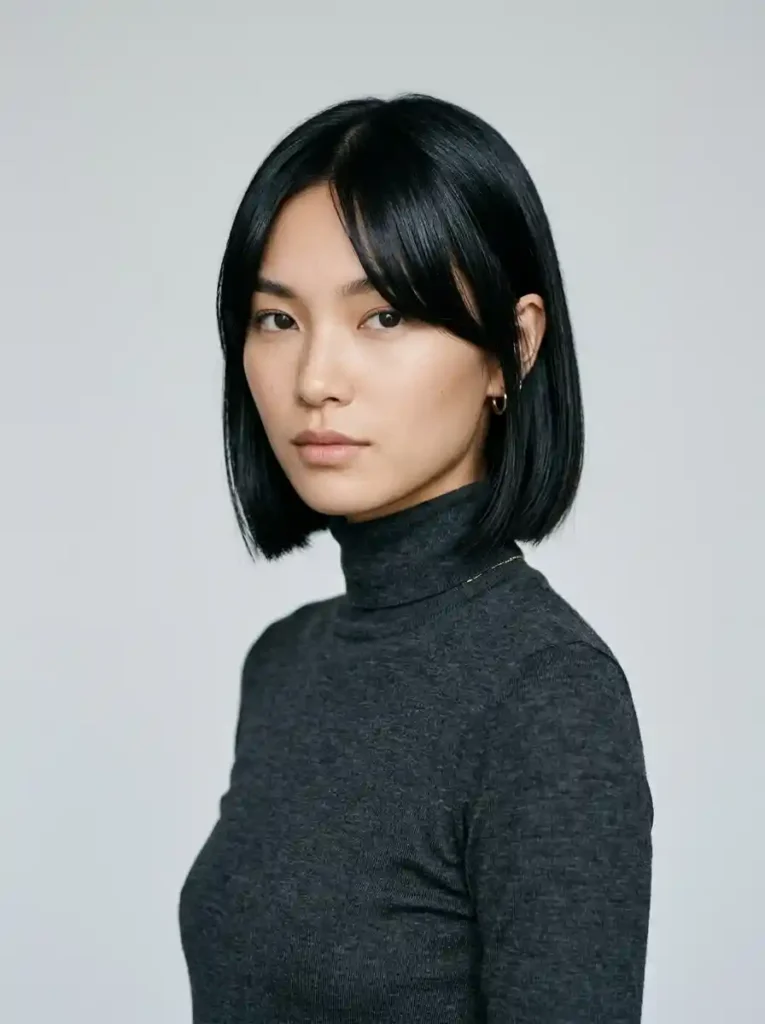
A bob becomes more relaxed when paired with curtain-style framing. This sleek version keeps the perimeter neat while allowing shorter front pieces to open around the forehead. The shape feels modern and polished without looking severe. It suits straight hair particularly well because the clean edges remain visible. Fine to medium hair can also benefit from the compact silhouette, which may create the appearance of greater density through the ends.
The key to this haircut is precise shaping around the front. A stylist can tailor the shortest section to sit near the brow, cheekbone, or jaw. Use a smoothing brush and low heat to keep the bob sleek. Pro Tip: if your hair naturally bends, do not fight every curve. A slightly softened finish can make the sharp perimeter feel more wearable and less formal.
5. Curtain Cut for Naturally Wavy Hair
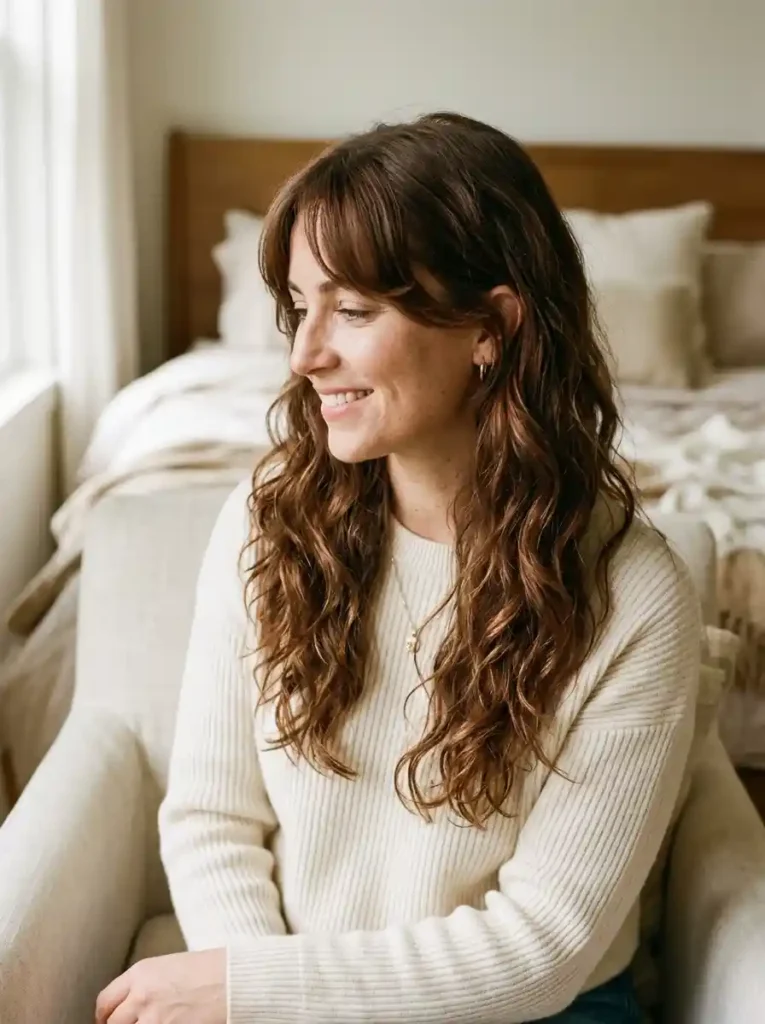
Naturally wavy hair can make curtain framing look effortlessly lived-in. Instead of forcing the fringe into a perfectly symmetrical shape, this version follows the hair’s natural movement. The waves begin near the roots and continue through the face-framing layers. Medium-length hair provides enough weight to prevent excessive puffiness while still allowing the waves to bounce. This style works particularly well for anyone who prefers an air-dried appearance over a highly polished finish.
Styling begins with moisture control. Apply curl-friendly leave-in conditioner, followed by a lightweight mousse that supports the wave pattern. Scrunch upward and avoid brushing once the hair begins drying. Stylist Tip: the fringe should be cut with the natural wave in mind. Cutting it too short on stretched hair can make the finished bangs shrink more than expected.
6. Wispy Curtain Fringe with Long Layers
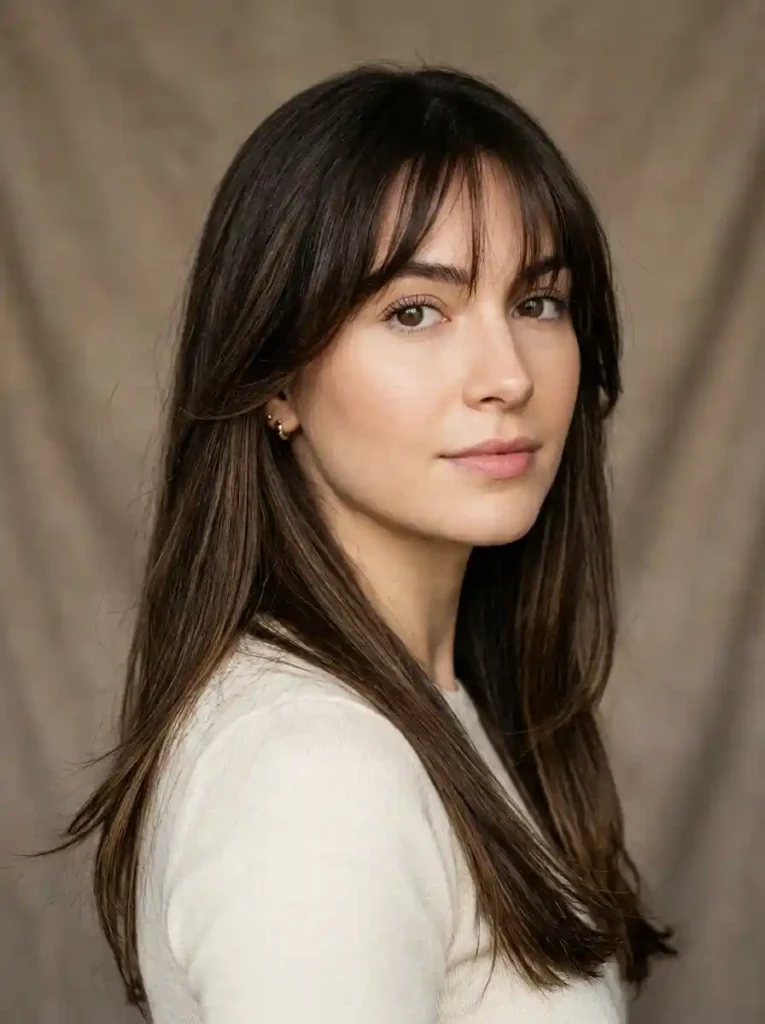
A wispy curtain fringe is a softer choice for anyone nervous about committing to a thick bang. The shorter strands remain light and separated, allowing more forehead to show through. Long layers continue the framing toward the chest, so the fringe does not feel disconnected. This approach can look especially delicate on fine or medium-density hair because the airy pieces add movement without creating a heavy block across the forehead.
Wispy bangs need less product than fuller fringe. Blow-dry them with a small round brush, lifting the roots slightly before sweeping each side outward. A tiny amount of dry texture spray can help separation. Common Mistake: applying too much styling product at the roots can collapse the fringe. Keep the base clean and use product mainly on the mid-lengths and ends.
7. Curly Curtain Layers
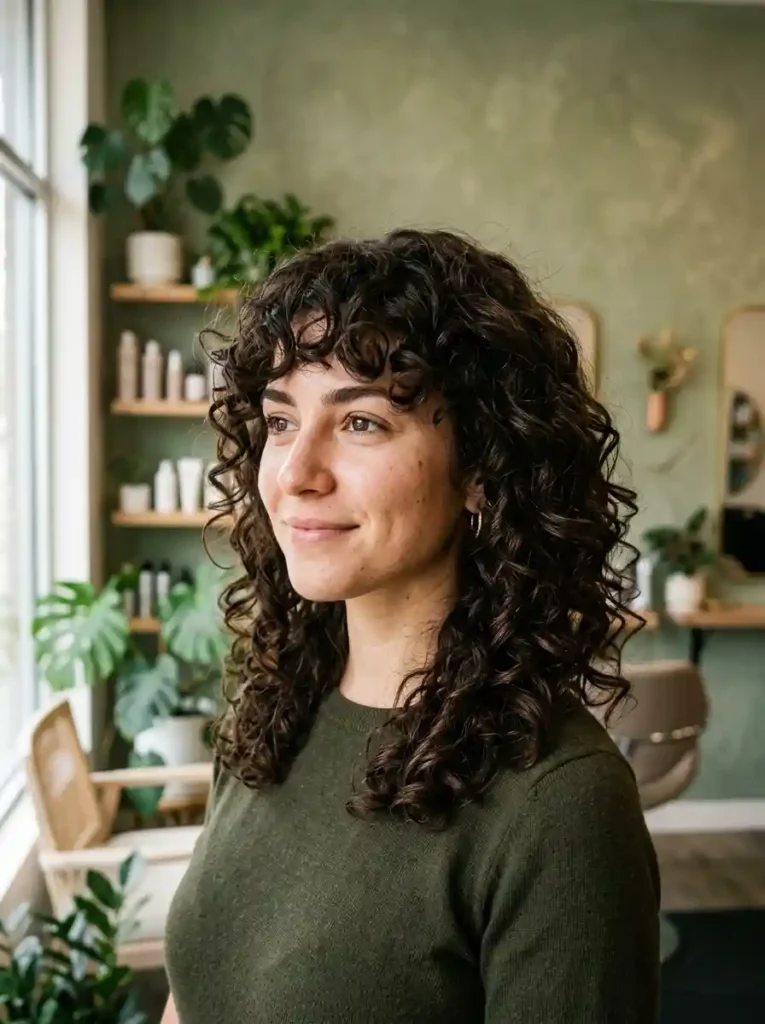
Curtain framing can work beautifully with curls when the cut respects shrinkage and curl direction. This version creates a rounded shape with defined curls opening away from the center. The layers provide room for curls to spring upward instead of forming one heavy mass. It suits medium to thick curly hair particularly well, especially when the wearer wants visible face framing without straightening the natural pattern.
Curly fringe requires a stylist who understands how the hair behaves when dry. Ask for the shape to be assessed at its natural texture whenever possible. Use a moisturizing curl cream and scrunch gently after washing. Pro Tip: allow extra length when cutting curly curtain bangs because curls can contract significantly as they dry. A slightly longer starting point offers more control.
8. Collarbone Curtain Cut with Subtle Layers
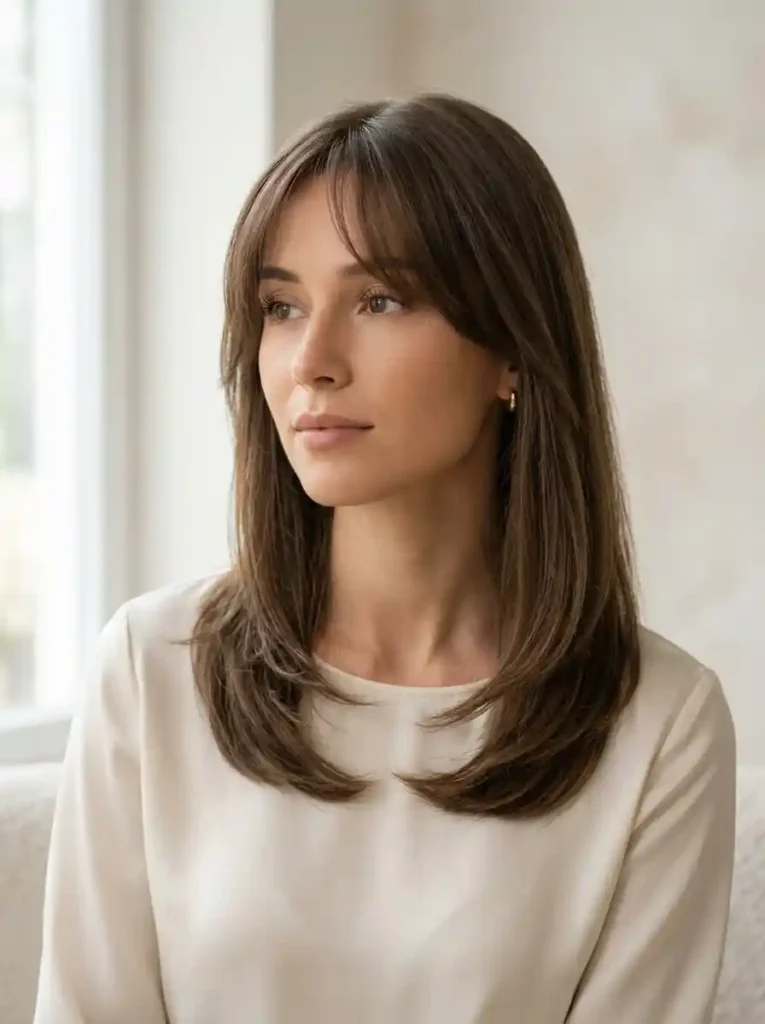
The collarbone length is practical for people who want movement without maintaining very short layers. Subtle curtain framing adds interest around the face while keeping the rest of the haircut relatively simple. The shape works with straight, slightly wavy, and relaxed textured hair. Because the layers remain long, the haircut can still be tied back easily for work, exercise, or busy days.
Styling is straightforward with a medium round brush and a few minutes of heat. Direct the fringe backward, then lightly curve the ends inward or outward depending on your preference. Stylist Tip: keep the lower layers sparse rather than heavily feathered if you want the haircut to retain a fuller appearance. This creates movement while protecting the density of the perimeter.
9. Copper Curtain Cut with Face-Framing Pieces
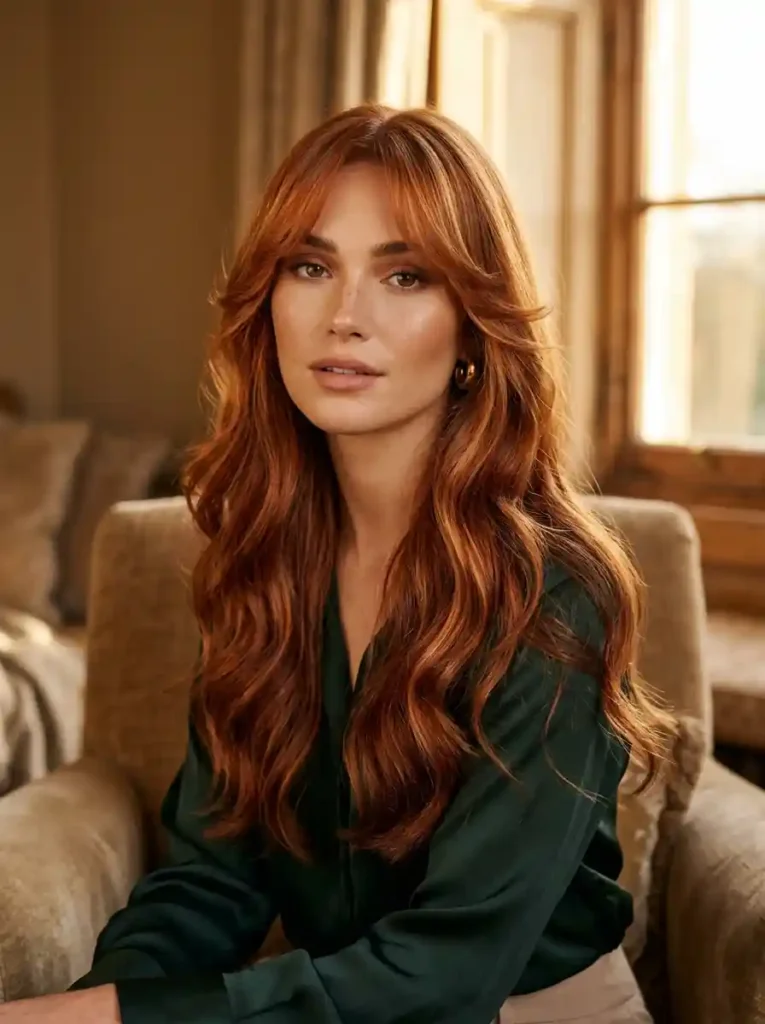
Color can make a familiar haircut feel completely new. This copper version pairs warm dimensional color with long face-framing sections that catch the light. The curtain fringe remains soft, while the longer layers create a gradual transition into the rest of the hair. It is an expressive option for anyone who enjoys noticeable color but still wants a wearable haircut shape.
Maintaining vibrant copper tones requires gentle washing and thoughtful heat styling. Use color-safe products and lower heat settings when possible. A heat protectant helps preserve shine and reduce unnecessary damage. Pro Tip: ask your colorist for slightly brighter pieces around the face if you want the haircut to stand out. Strategic placement can emphasize the framing without requiring a full head of highlights.
10. Short Curtain Pixie
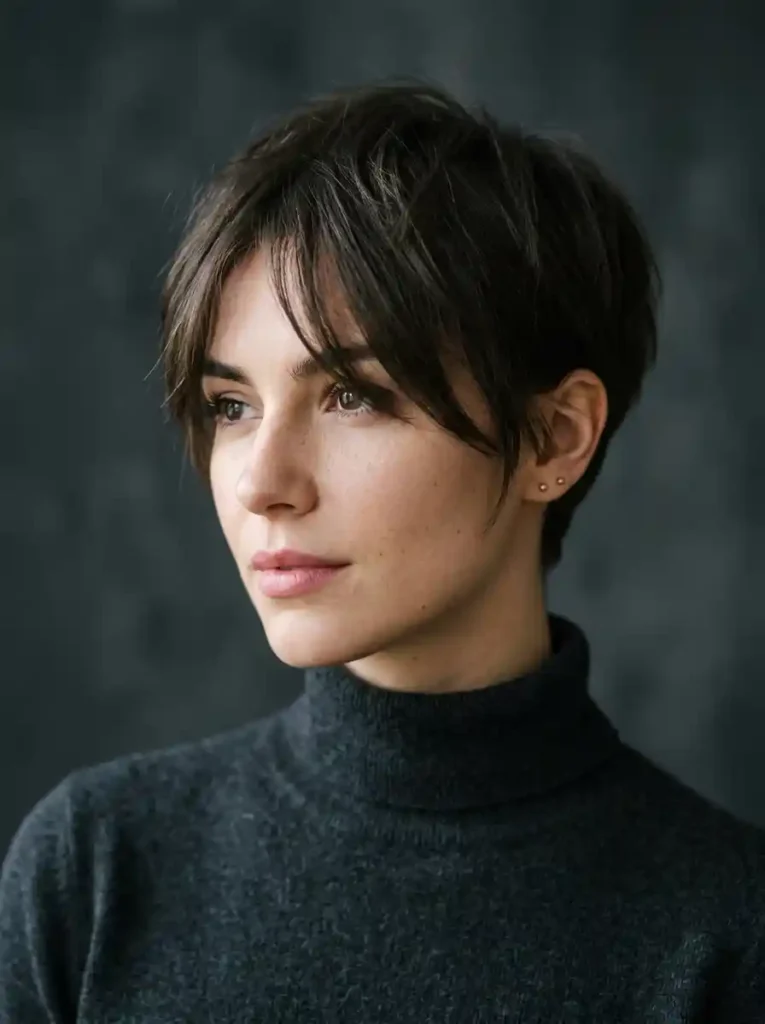
Curtain hair does not need long layers to create a recognizable framing effect. A short pixie can use a longer central fringe that parts softly and falls toward the temples. The tapered sides keep the shape compact, while the top provides enough length for movement. This is a bold choice for people who want a low-volume haircut with a softer front rather than a traditional blunt pixie fringe.
Styling takes only a small amount of lightweight paste or cream. Work the product through damp or dry hair, then separate the front with your fingers. Common Mistake: treating this cut like a long curtain style can create too much product and stiffness. The shape should remain light and flexible. Ask your stylist to preserve enough length in front for the center part to form naturally.
11. Thick Hair Curtain Cut with Internal Layers
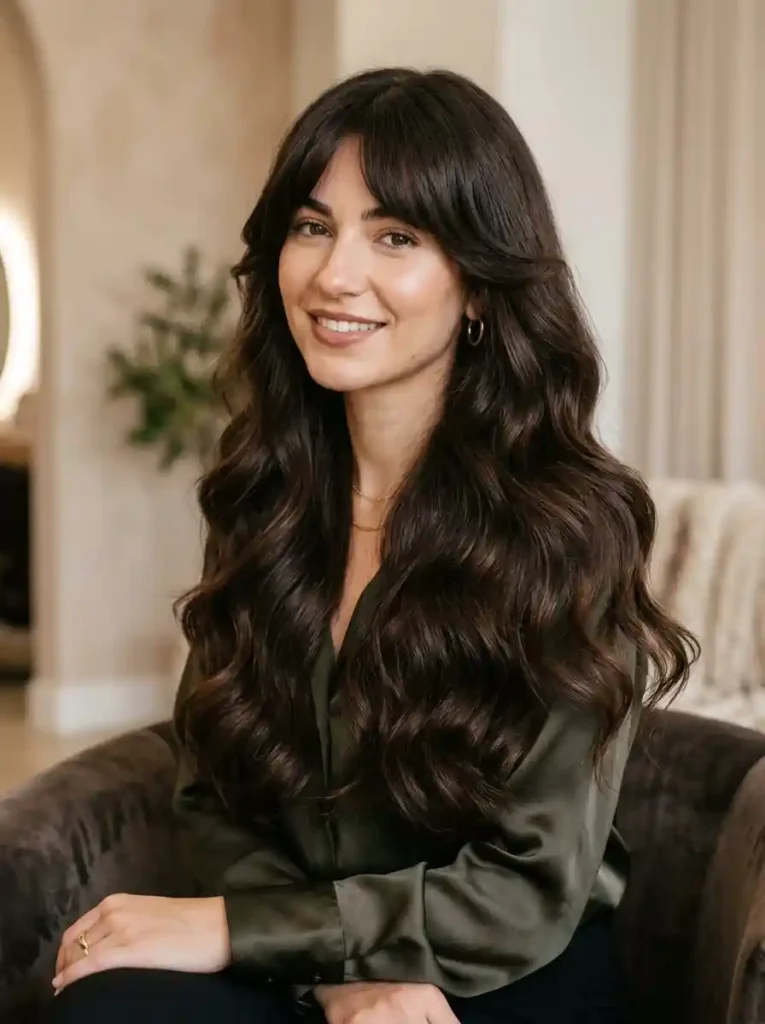
Thick hair can make a curtain haircut look luxurious, but excess weight may prevent the front from moving properly. Internal layers provide a solution without dramatically shortening the visible length. This version keeps a full perimeter while removing strategic bulk underneath. The curtain fringe then has room to lift and separate. It is ideal for people who want movement while keeping their hair visibly abundant.
The goal is controlled weight removal, not aggressive thinning. Too much thinning can create unwanted frizz or uneven ends. Ask for internal layers that support the natural shape of your hair. Stylist Tip: use a smoothing blowout brush to direct the fringe backward, then let the thicker lengths retain their natural volume. This keeps the haircut polished without making it appear flat.
12. Fine Hair Curtain Cut with Blunt Ends
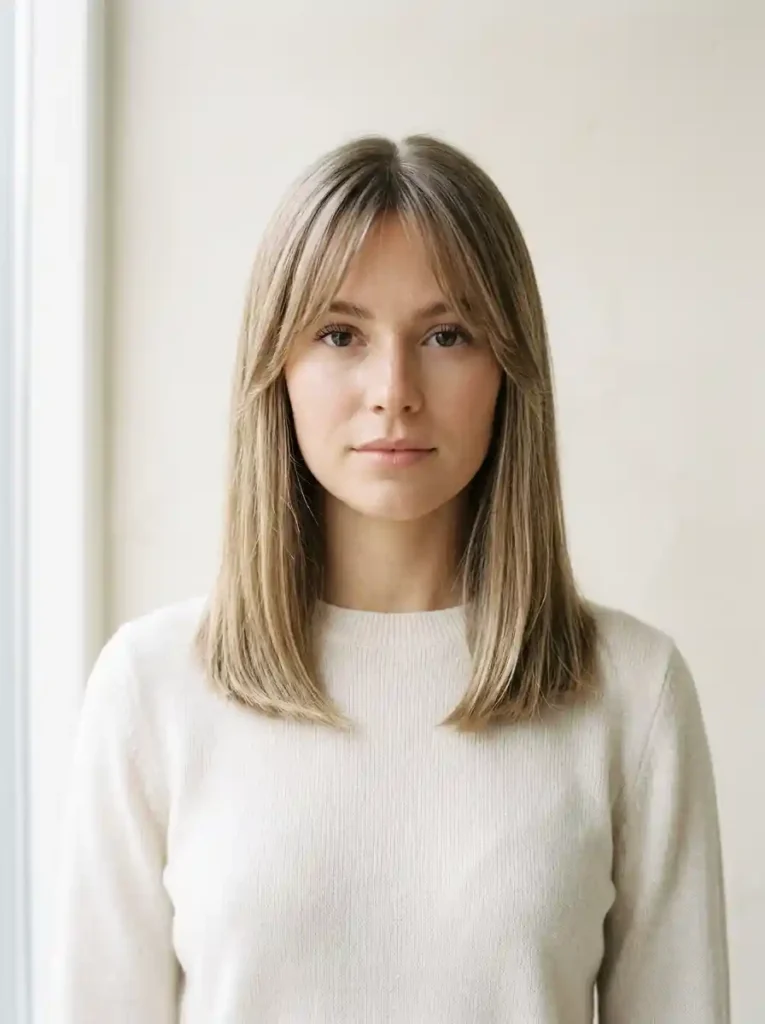
Fine hair often benefits from avoiding excessive layering. This curtain cut combines light face framing with a stronger perimeter, helping the ends look visually substantial. The fringe remains soft rather than dense, while the sides blend gradually into the main length. This balance works well for someone who wants movement around the face without sacrificing the appearance of fullness through the bottom.
Use a volumizing mousse at the roots and keep conditioners away from the fringe. Blow-dry the front sections upward and outward to create gentle lift. Pro Tip: blunt ends can make fine hair appear more substantial than heavily feathered ends. Tell your stylist that preserving the visual density of the perimeter matters more than creating many visible layers.
13. Retro 1970s Curtain Layers
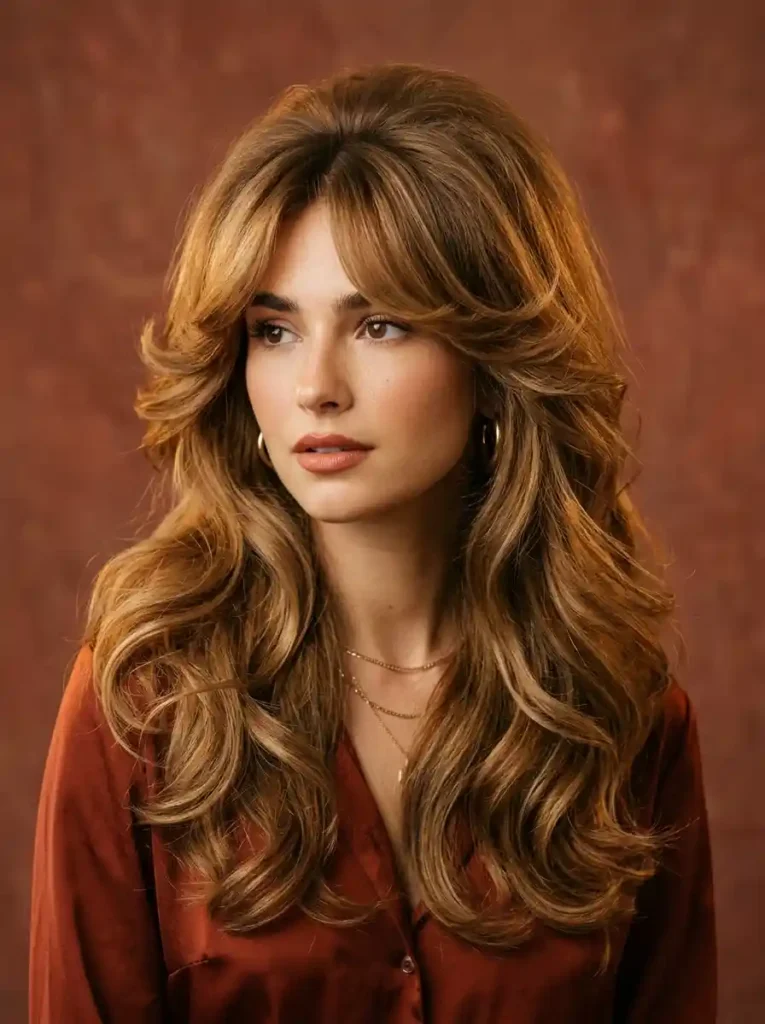
A retro curtain haircut creates more volume and personality than a minimalist version. The fringe opens widely from the center and blends into rounded layers around the cheeks and shoulders. Soft feathering gives the style its unmistakable vintage character. This option suits medium to thick hair particularly well, especially when the wearer enjoys bouncy blowouts and noticeable movement.
A large round brush helps recreate the signature shape. Lift the roots while directing the fringe backward, then roll the side sections away from the face. Let the hair cool before brushing through it. Did You Know? allowing styled sections to cool before reshaping helps the blowout hold its form longer. Use flexible hairspray rather than a stiff finishing spray for natural movement.
14. Low-Maintenance Curtain Lob

A curtain lob is a practical choice for anyone who wants shape without a high-maintenance routine. The length sits near the shoulders, while longer front sections provide gentle framing. The haircut does not depend on a dramatic blowout, so it can work for busy schedules. Its relaxed structure also makes it easy to wear straight, wavy, tucked behind the ears, or loosely tied.
For quick styling, apply a small amount of leave-in conditioner and blow-dry only the front sections. Let the remaining hair air-dry if its natural texture looks good. Stylist Tip: ask for longer curtain pieces if you frequently wear ponytails. They can still frame the face while staying manageable during everyday activities.
15. Curtain Cut with Micro Fringe
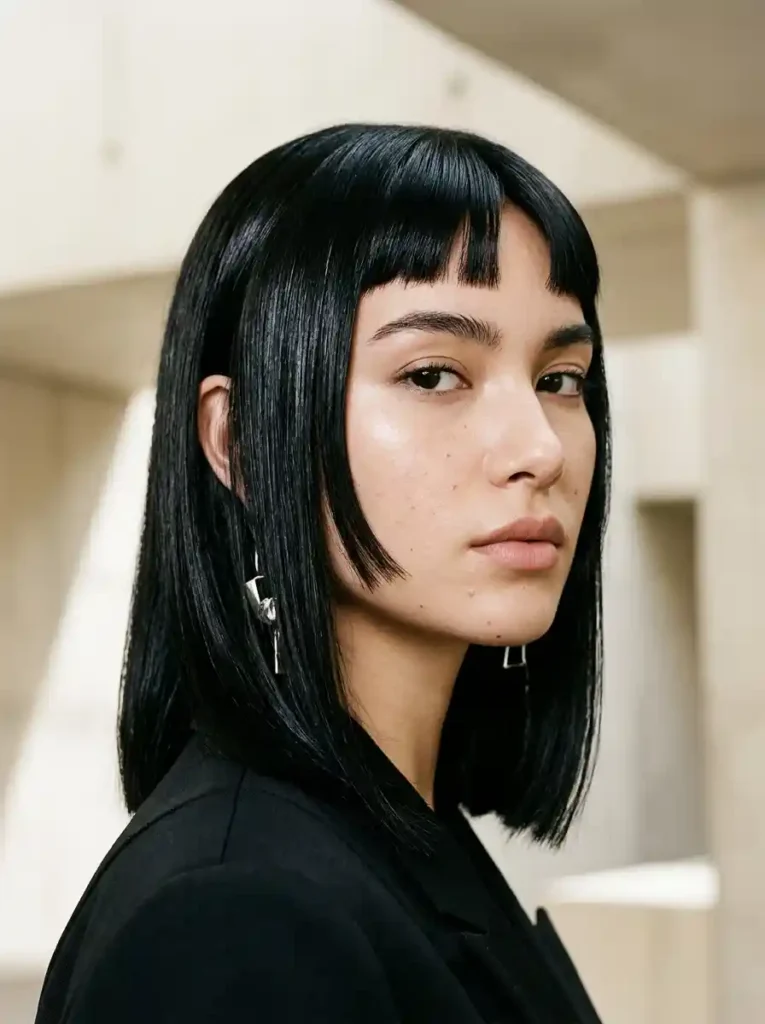
A micro curtain fringe gives the classic shape a sharper, fashion-forward edge. The central fringe is much shorter than traditional curtain bangs, while longer pieces continue toward the cheekbones. This contrast creates a distinctive silhouette without requiring the entire haircut to be short. It suits confident wearers who enjoy modern styling and are comfortable with a fringe that makes the forehead more visible.
Because the fringe is short, precision matters. Ask your stylist to begin conservatively, especially if you have never worn short bangs. Common Mistake: cutting micro fringe too heavily can make it look blunt rather than airy. Keep the center section light and slightly separated. A small flat brush can help direct the pieces outward without adding excessive volume.
16. Soft Curtain Cut for Rounder Face Shapes
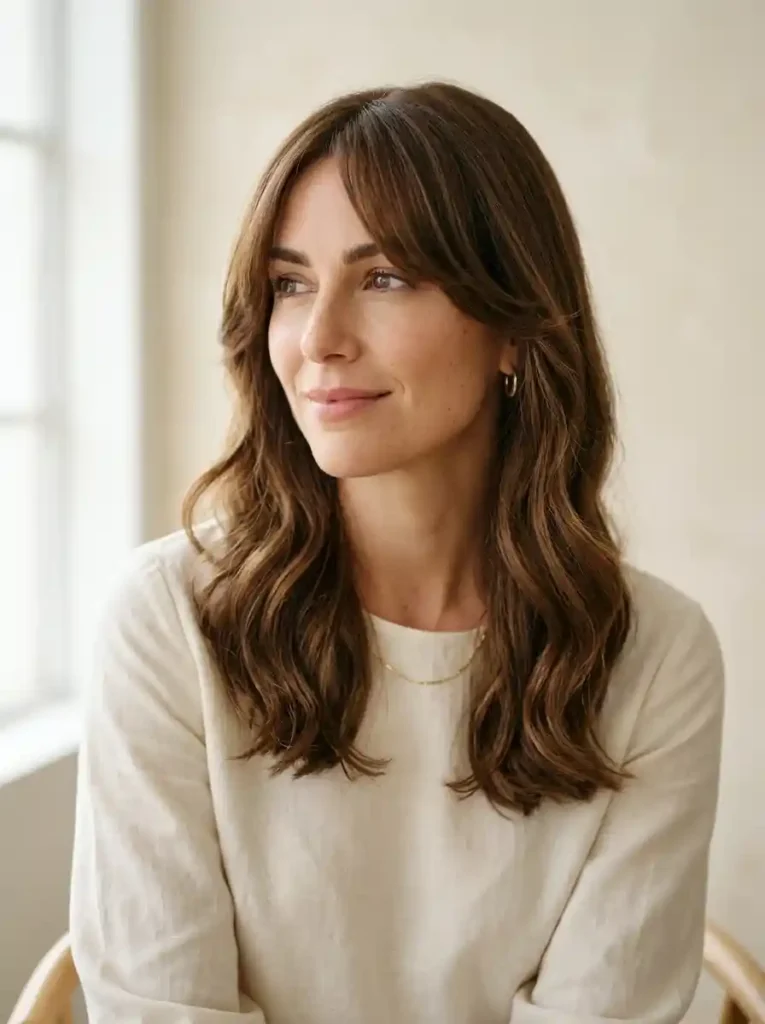
Longer curtain pieces can create a gentle vertical flow around the face. This version begins near the brow and extends toward the jaw, avoiding a short, wide fringe shape. The longer framing blends into loose layers, creating movement without adding excessive width near the cheeks. It can be a useful option for people who prefer softer proportions and want their haircut to feel elongated and relaxed.
Styling should focus on directing the front away from the face rather than creating heavy volume at the sides. Use a medium round brush and moderate heat. Stylist Tip: keep the shortest pieces slightly below the widest part of the cheeks if you want the framing to feel more streamlined. Your natural features and hair density should guide the exact placement.
17. Tousled Beachy Curtain Cut
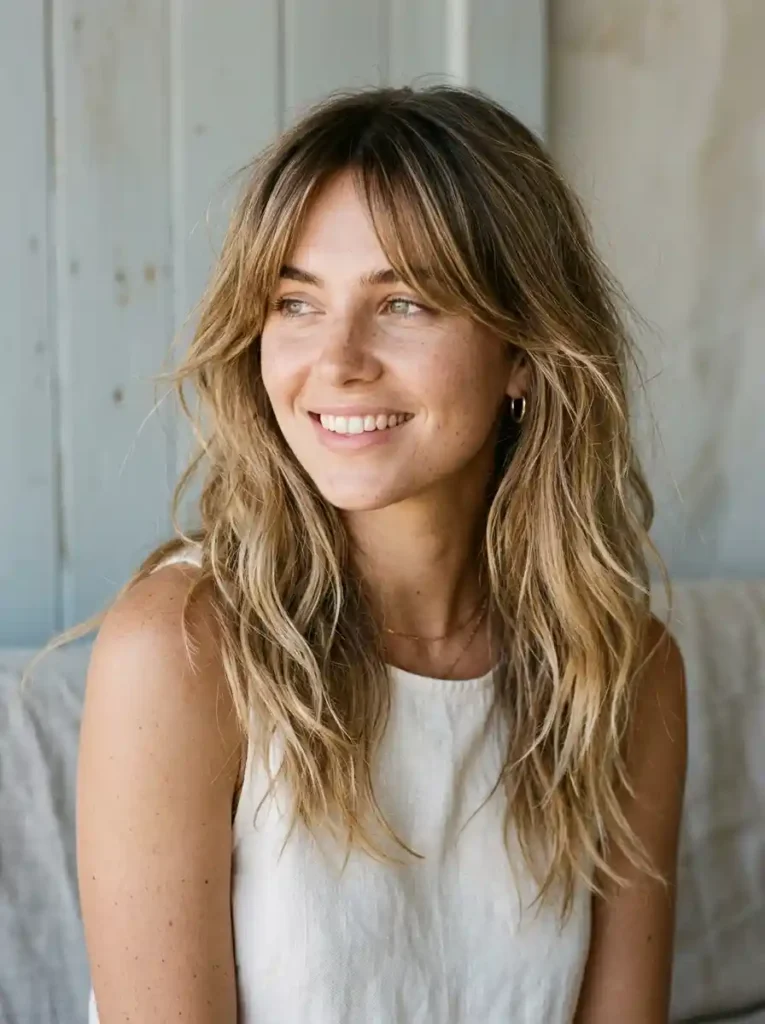
A tousled curtain cut brings a casual feel to structured face framing. The layers are blended, but the finish remains intentionally imperfect. Loose waves create texture through the mid-lengths while the fringe opens around the forehead. Sandy brunette or softly highlighted colors can enhance the relaxed effect. This haircut works well for people who prefer hairstyles that look attractive without appearing overly polished.
For the easiest finish, apply salt spray or lightweight texture cream to damp hair. Twist a few sections away from the face and let them dry naturally. Pro Tip: avoid applying too much salt spray to fine hair because it can make the ends feel dry. A moisturizing leave-in product underneath can preserve softness while maintaining texture.
18. Long Curtain Cut with Money-Piece Highlights
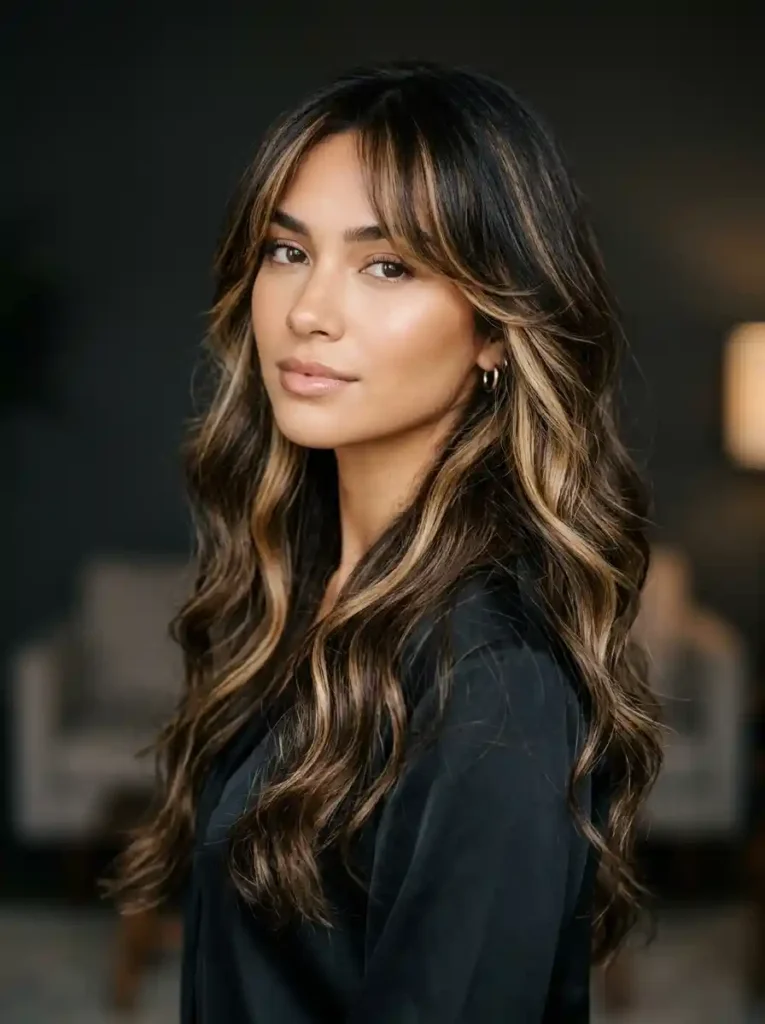
Face-framing highlights can make curtain layers more noticeable without changing the haircut itself. This version uses brighter strands around the temples and cheekbones, while the remaining hair stays deep brunette. Long layers create movement through the lengths, allowing the lighter pieces to catch attention as they move. It is a good option for someone who wants visual contrast without committing to an all-over color change.
Color placement should complement the haircut rather than overpower it. Ask for the lightest pieces to follow the front layers naturally. Stylist Tip: blended highlights usually grow out more softly than sharply defined blocks. If you want lower maintenance, ask your colorist for a seamless transition between the bright face-framing pieces and your natural base.
19. Air-Dried Curtain Cut for Natural Texture
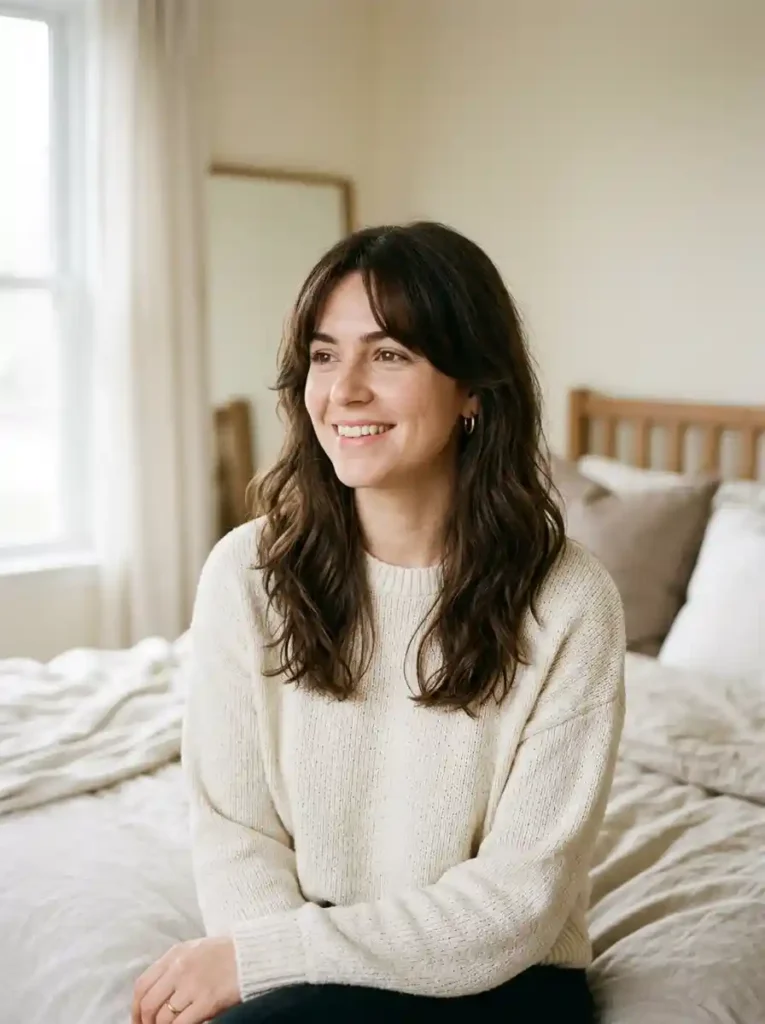
Not every curtain haircut needs a polished blowout. This air-dried version is designed around natural movement, making it practical for people who prefer low-effort styling. The fringe remains soft and slightly separated, while subtle layers encourage the natural texture to form around the face. It can work especially well for hair that already has a mild wave or bend.
The haircut should be designed with your natural texture in mind. After washing, apply a lightweight leave-in conditioner and gently arrange the front pieces with your fingers. Avoid repeatedly touching the hair as it dries. Pro Tip: show your stylist how your hair looks on an ordinary air-dried day. That information can help them create a shape that works without daily heat styling.
20. Polished Curtain Cut for the Office
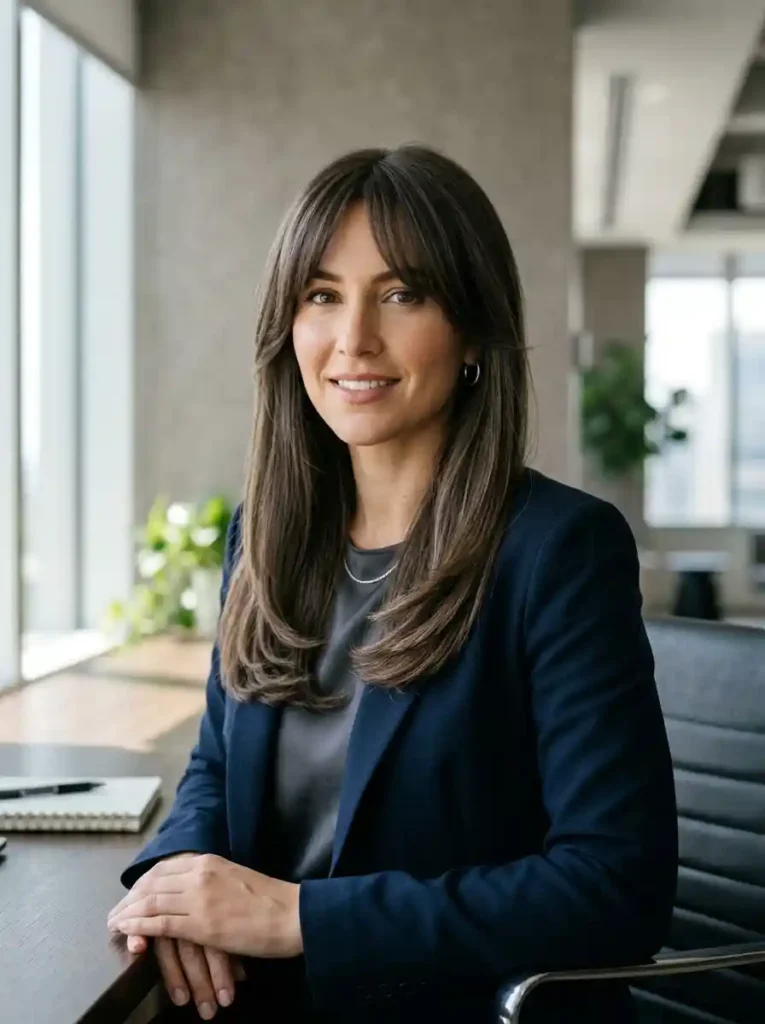
A polished curtain haircut can feel professional without becoming overly formal. This version keeps the layers smooth and controlled, with the fringe opening neatly around the forehead. The ends curve subtly rather than forming dramatic flips. Medium-long hair provides enough length for a low ponytail or bun, making this option practical for office routines, meetings, and formal occasions.
Use a smoothing serum sparingly through the mid-lengths and ends before blow-drying. Keep the roots light so the curtain fringe retains movement. Common Mistake: using a heavy finishing oil near the forehead can make the bangs separate unevenly. For a cleaner finish, use a light hairspray on a brush and gently smooth individual flyaways after styling.
Frequently Asked Questions
What hair length works best for a curtain haircut?
Curtain haircuts can work with short, medium, shoulder-length, or long hair. The most suitable length depends on the desired face framing, texture, and styling routine.
Are curtain bangs good for fine hair?
Yes. Fine hair can suit lighter curtain bangs, especially when the perimeter remains fuller. Excessive layering may make fine ends look thinner.
Can curtain haircuts work with curly hair?
Yes. Curly hair can look beautiful with curtain framing when the cut accounts for natural curl pattern and shrinkage. Cutting at the natural texture can improve predictability.
How do you style curtain bangs?
Blow-dry the fringe away from the face with a round brush. Let each side cool briefly before separating the pieces with your fingers.
How often should curtain bangs be trimmed?
Many people refresh their fringe every several weeks, depending on growth and preferred length. Longer curtain pieces usually allow more flexibility between appointments.
Are curtain haircuts high maintenance?
They can be low maintenance when the layers match your natural texture. A simpler cut with longer framing usually requires less daily styling than a heavily layered version.
Conclusion
The best curtain haircut is not always the most dramatic one. Your hair texture, density, length, and daily routine should shape the final choice. Soft layers can create movement, while blunt ends can preserve fullness. Longer framing offers flexibility, and shorter fringe creates a bolder statement. Bring a few favorite references to your stylist and explain how you normally wear your hair. Save your favorite look before your next salon visit, then customize the details to suit you.


