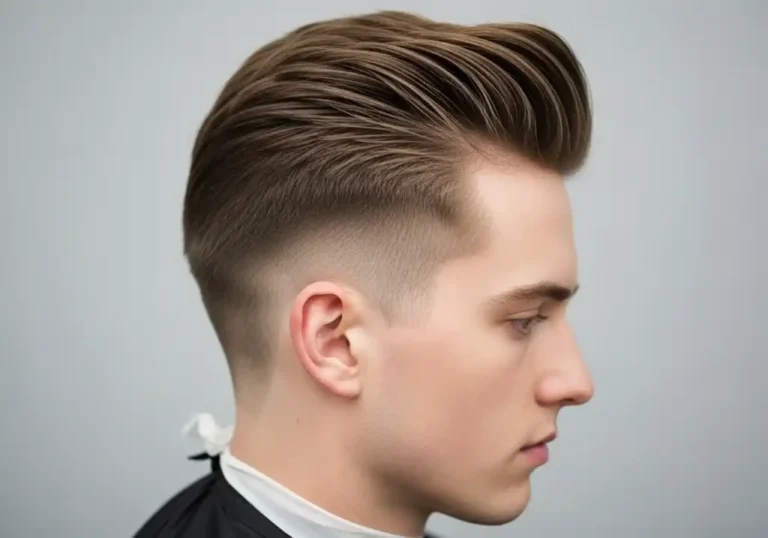
Sometimes your curls look beautiful but still feel like they need a fresh direction. The right cut can bring out their shape, reduce styling frustration, and make your natural texture feel intentional. These curly hairstyles offer different approaches for short, medium, and long hair, including layered cuts, bangs, polished shapes, and relaxed everyday looks. Each idea includes practical styling advice, so you can save your favorites and discuss the details with your stylist.
1. Soft Curly Bob With Rounded Layers
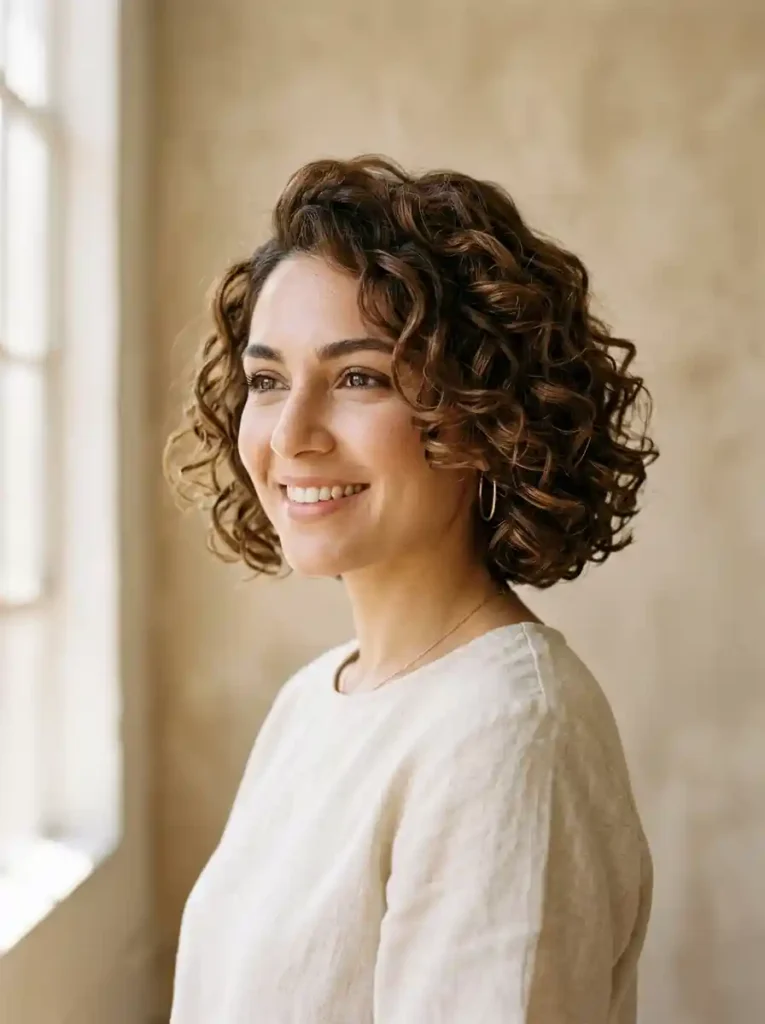
This rounded curly bob creates a neat silhouette without making the hair look stiff. The chin-length shape keeps the style fresh and lightweight around the neck. Soft internal layers help curls stack naturally instead of forming one heavy shape. It suits people who want noticeable volume with a polished finish. Warm brunette, copper, or deep black shades can all emphasize the rounded outline. The result feels feminine, modern, and easy to personalize.
For styling, apply lightweight curl cream to soaking-wet hair. Scrunch upward, then diffuse gently while keeping the head mostly upright. Avoid brushing the curls once they begin drying, because that can disturb definition. Stylist Tip: Ask for curl-by-curl shaping if your curls vary significantly in tightness. A stylist can adjust individual sections so the finished bob stays balanced instead of becoming uneven after drying.
2. Shoulder-Length Curly Shag
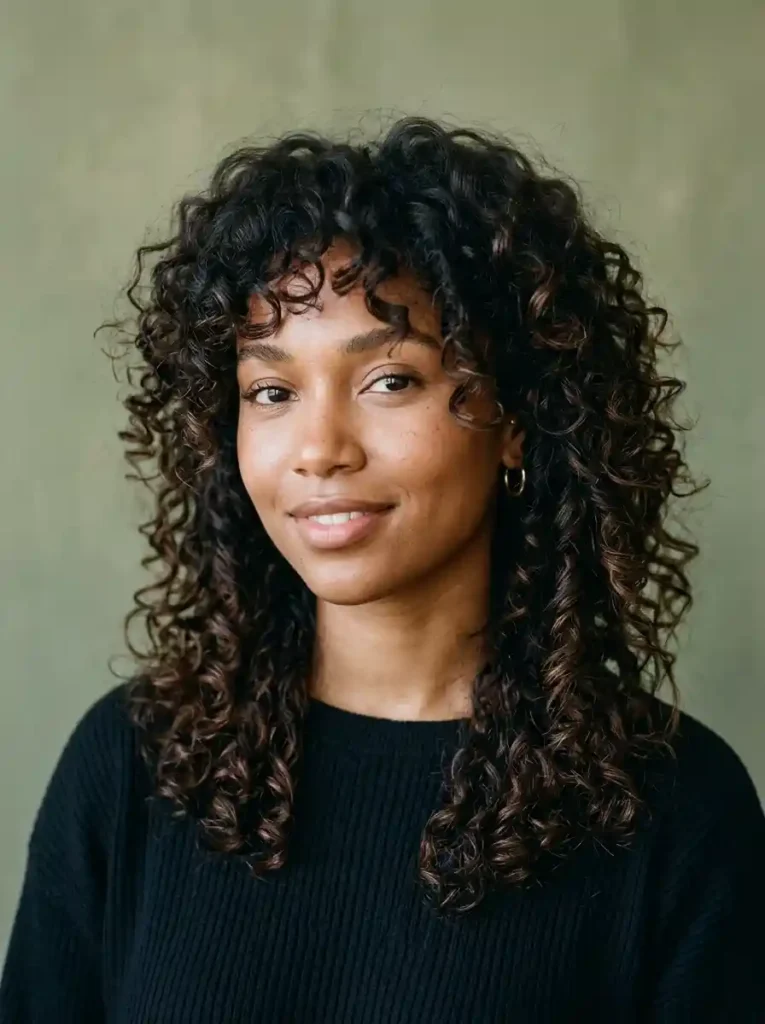
A shoulder-length curly shag adds movement without requiring extremely short layers. Its fuller crown and lighter ends create an intentionally relaxed outline. The cut works especially well for medium-density curls that need more movement. It can also help prevent longer hair from appearing visually heavy. The uneven texture gives this style a youthful, artistic quality. Natural brunette, auburn, or highlighted curls can all make the layered shape especially noticeable.
Style the shag with a curl-enhancing cream followed by a light mousse. Scrunch smaller sections separately to encourage varied curl definition. Let the roots dry with minimal manipulation for natural lift. Common Mistake: Removing too much weight from every section can create excessive volume. Ask your stylist to preserve strategic weight where your curls need control. The goal is movement with structure, not random layers that lose their shape.
3. Long Curls With Face-Framing Layers
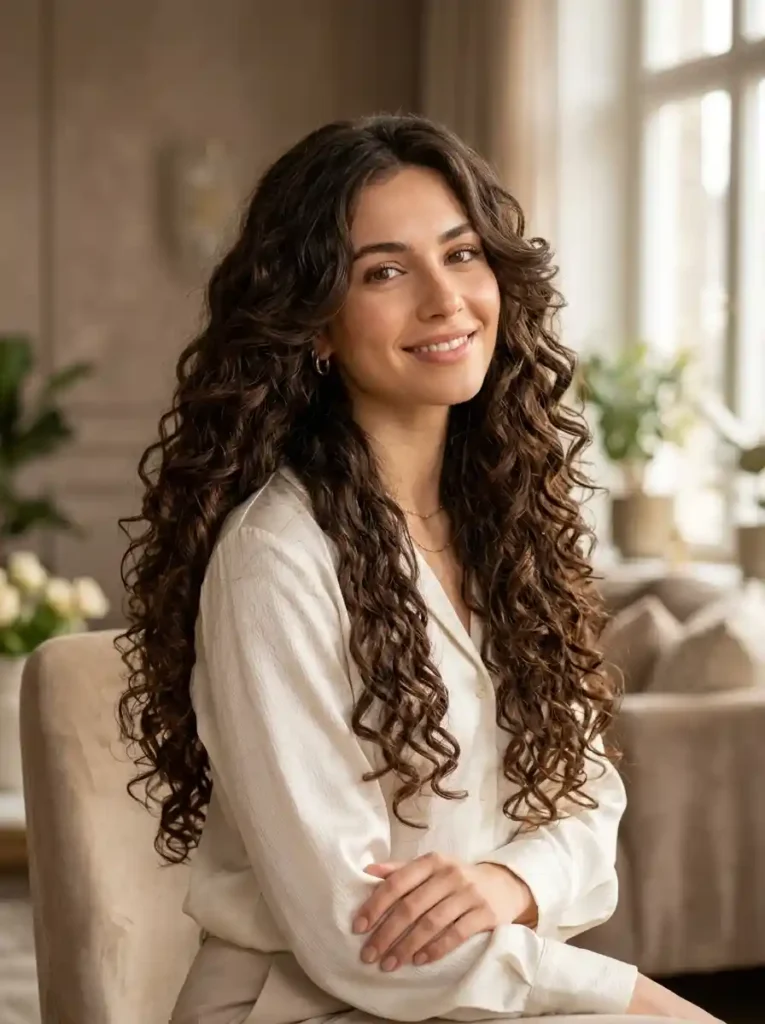
Long curls can become visually dense when the ends carry too much weight. Face-framing layers solve that problem without sacrificing overall length. The first shorter pieces gently open the area around the face while the remaining curls stay long and dramatic. This option suits people who love substantial length but want more movement near the front. It also creates a useful balance between romantic softness and defined natural texture.
Ask your stylist to place the shortest face-framing section according to your natural curl shrinkage. Curly hair can appear considerably shorter once dry, so cutting wet alone may produce unexpected results. Use a lightweight leave-in conditioner before applying curl cream. Pro Tip: Keep the back layers longer if preserving length matters. This prevents the haircut from becoming too triangular while still giving the front enough movement.
4. Curly Pixie With Tapered Sides
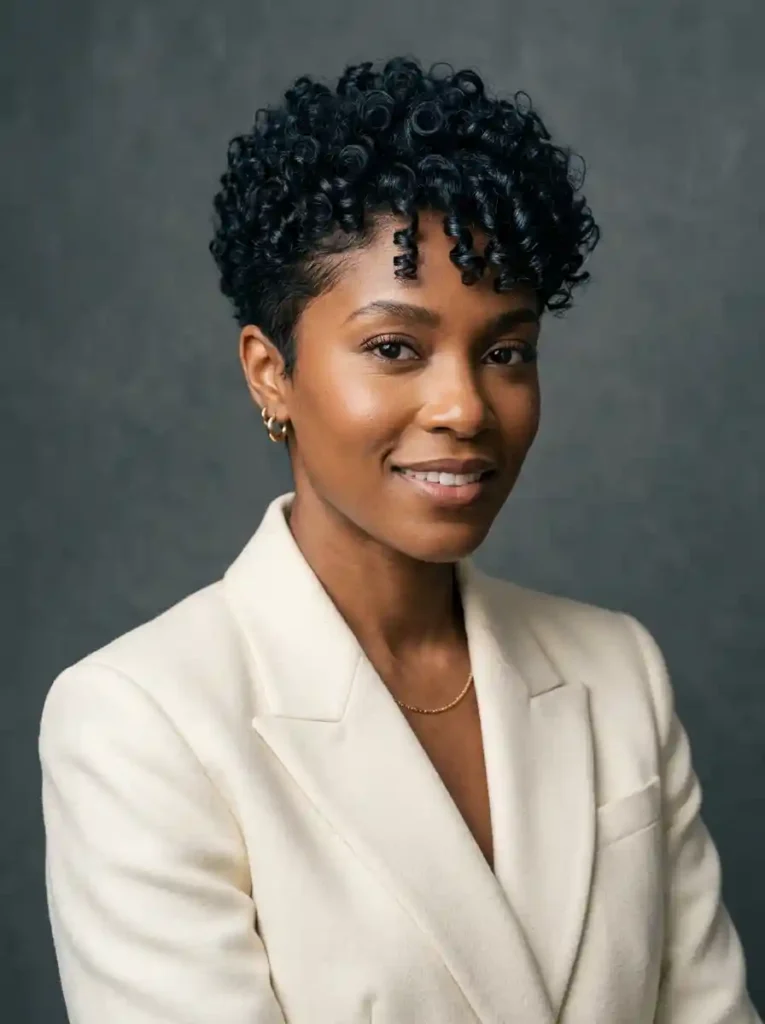
A curly pixie creates a strong change while keeping the natural texture front and center. Tapered sides make the silhouette clean, while longer curls across the crown provide softness and personality. This shape suits people who enjoy shorter styling routines and visible facial features. It can look polished without losing the lively character that curls naturally provide. Dark, bright, or dimensional color can further emphasize the contrast between the sides and crown.
Short hair still needs thoughtful styling. Apply a small amount of curl cream, then shape individual top curls with your fingers. Allow the sides to remain close and controlled. Stylist Tip: Bring photos showing your hair both wet and dry when discussing a pixie. Shrinkage can significantly affect the final length. Regular trims are also important because a few extra millimeters can quickly change the carefully tapered outline.
5. Curly Curtain Bangs With Long Layers
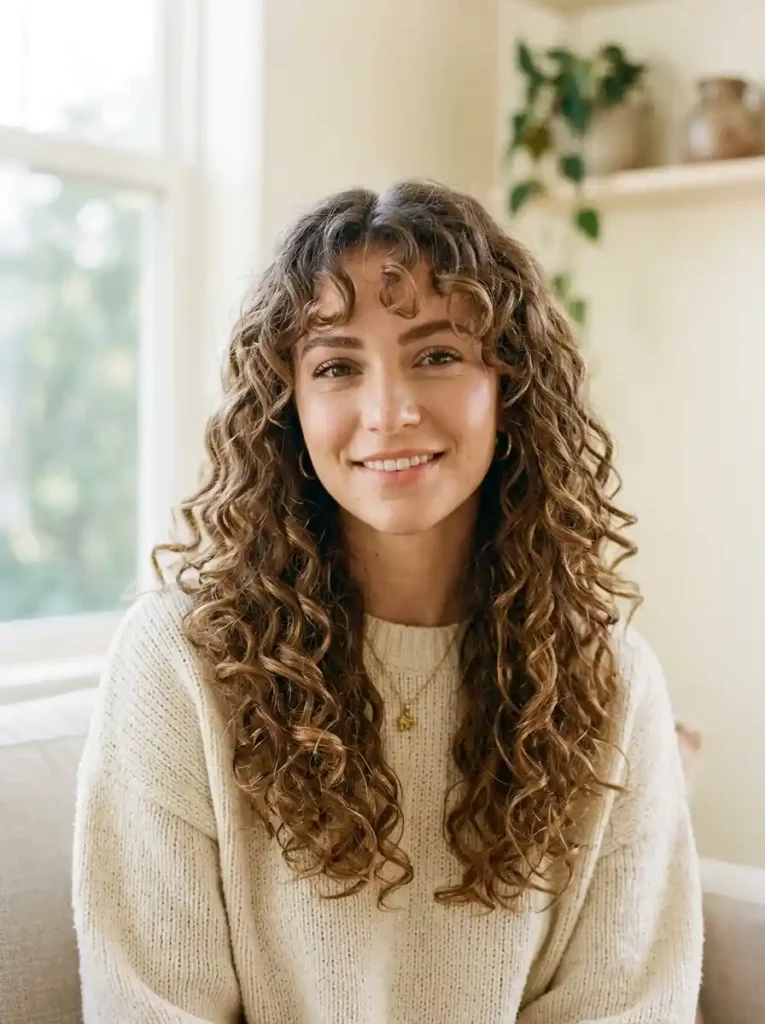
Curly curtain bangs offer a softer way to change a familiar long hairstyle. The center opening allows the fringe to blend naturally into longer face-framing pieces. This creates movement around the forehead without producing a heavy block of hair. The look works particularly well for loose curls and waves with enough length to support the transition. Honey highlights can add dimension by catching light around the shorter front sections.
Style the bangs separately while they are very wet. Use a small amount of curl cream, then guide each side outward with your fingers. Diffuse gently from below to encourage lift. Common Mistake: Cutting curly bangs too long because they appear shorter after drying can make them lose their intended shape. Ask for a dry curl-aware assessment. Your stylist should account for shrinkage before deciding the final fringe length.
6. Voluminous Curly Lob
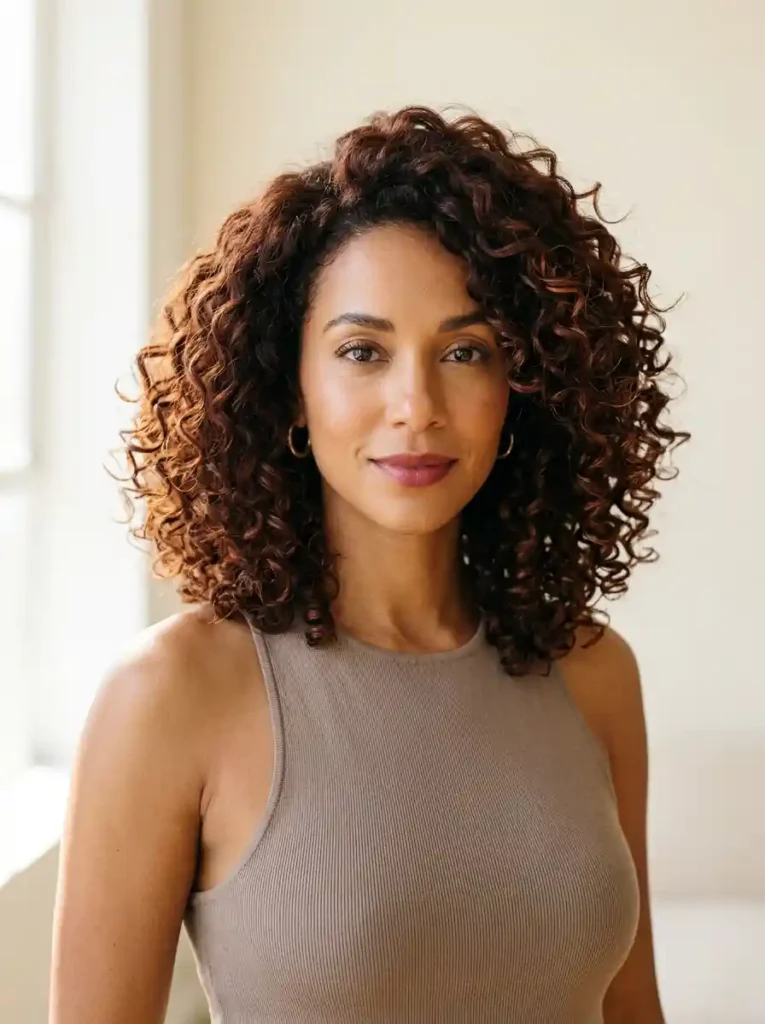
A curly lob sits between a traditional bob and longer shoulder-length hair. Its collarbone length gives curls enough room to move while maintaining a defined outline. The added volume makes this option especially appealing for people who want a fuller appearance without going extremely short. It can work across several curl patterns when the layers are carefully placed. Rich auburn or copper shades can make the rounded shape look even more dimensional.
For maximum volume, apply mousse near the roots before adding curl cream through the lengths. Diffuse with your head tilted gently from side to side. This encourages lift without aggressively disturbing curl groups. Pro Tip: Ask your stylist to check the shape after your hair dries naturally. Curly hair can contract unevenly, so dry assessment often reveals where additional shaping is needed.
7. Curly Wolf Cut With Soft Layers
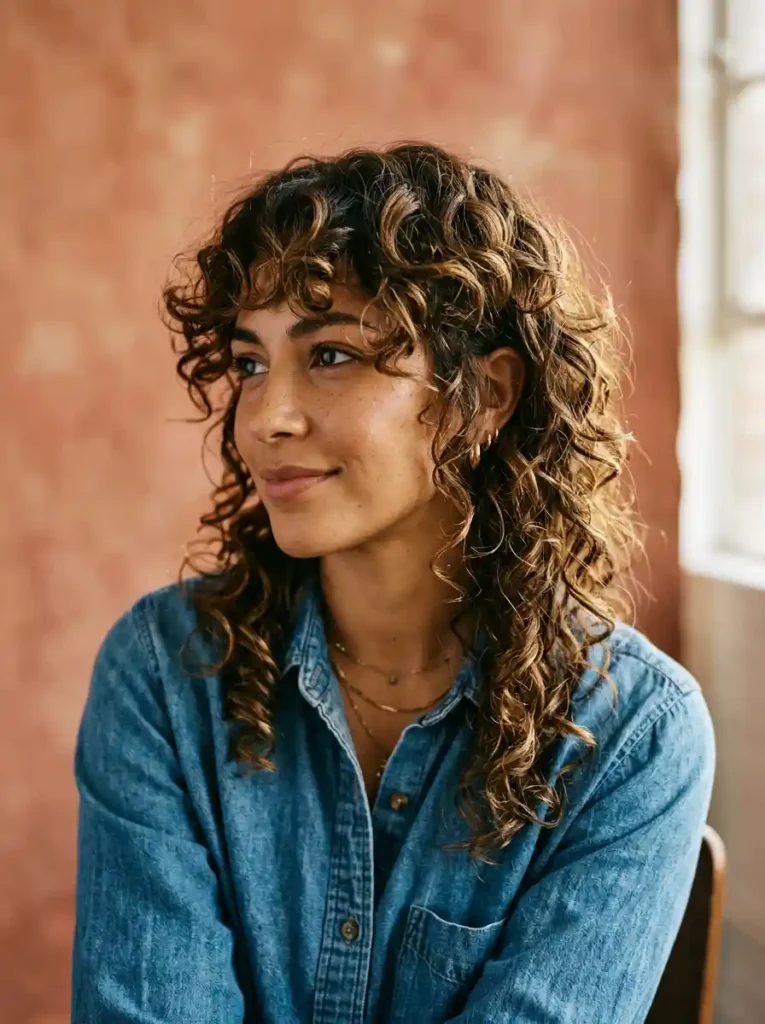
A soft curly wolf cut combines a lifted crown with longer textured lengths. Unlike a heavily choppy version, this approach keeps the transitions gentle. That makes it easier to wear when you want personality without an extreme silhouette. It can suit medium to thick curls because strategic layering reduces visual heaviness. The contrast between shorter upper curls and longer lower sections gives the style an energetic, undone character.
Use mousse for lift and a flexible curl cream for definition. Scrunch upward rather than pulling the curls downward. Dry the roots first, then move toward the ends. Stylist Tip: Tell your stylist how much crown volume you actually want. Excessive upper layering can make dense curls expand quickly. Softer transitions usually provide better everyday control while preserving the distinctive wolf-cut shape.
8. Rounded Afro With Defined Curls
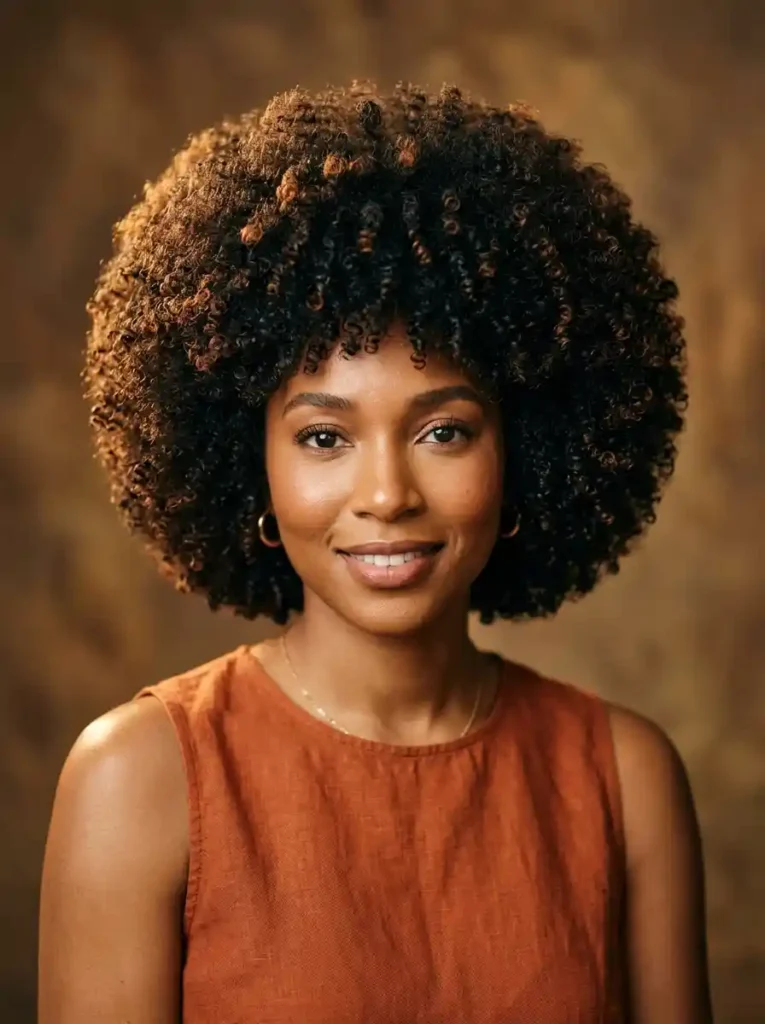
A rounded afro celebrates natural volume through a deliberate, balanced shape. The silhouette feels bold while remaining refined because the perimeter is carefully controlled. This option highlights tightly coiled texture instead of stretching it into a longer form. It can suit people who want a distinctive hairstyle that does not depend on length. A subtle taper around the edges can create definition while keeping the overall shape beautifully full.
Moisture and gentle handling are essential for maintaining this shape. Use a hydrating leave-in conditioner before applying a light styling product. Separate curls with fingers rather than repeatedly combing through dry hair. Common Mistake: Chasing perfect uniformity can remove the natural character of the texture. Ask your stylist to maintain the rounded outline while allowing small variations in coil pattern. Those variations often make the finished style look more authentic.
9. Side-Parted Curly Bob
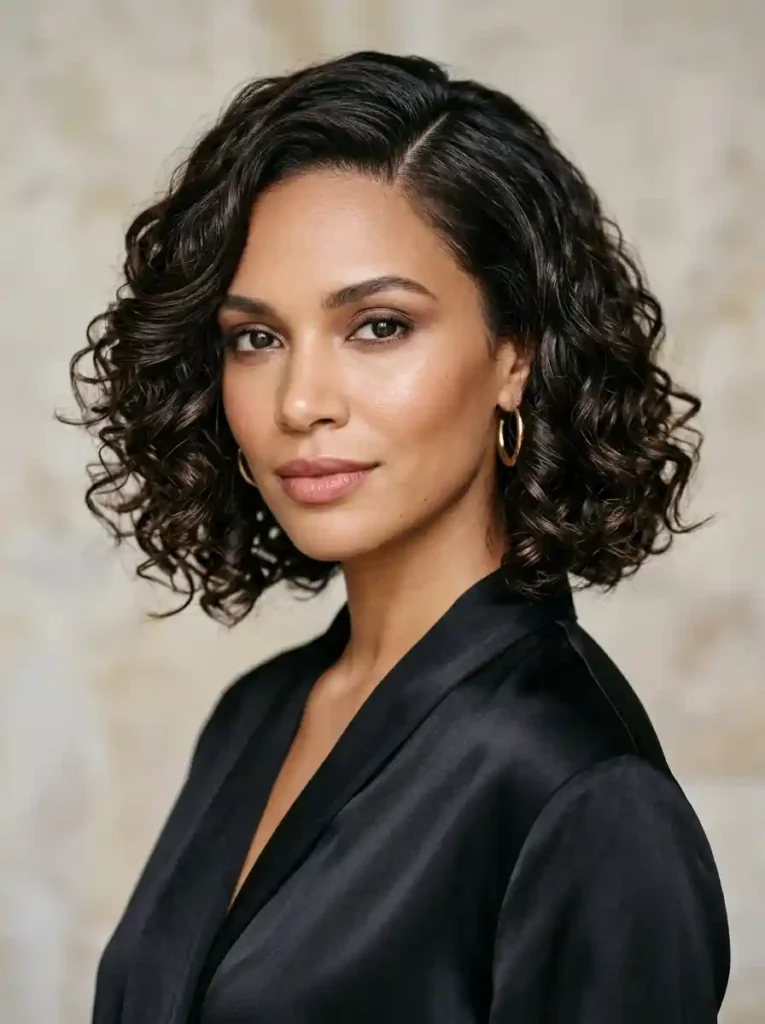
A deep side part can completely change the personality of a curly bob. It shifts the visual weight toward one side and creates a subtle asymmetrical effect. Defined ringlets keep the shape polished, while the jaw-length cut maintains a modern outline. This style works well when you want curls to frame one side of the face more strongly. A rich dark color can further emphasize the sculpted silhouette.
To create the side part, make the separation while the hair is wet. Use a narrow comb only at the roots, then return to finger styling through the curls. Diffuse the heavier side from underneath for extra lift. Stylist Tip: Ask for slightly different layer placement on each side if your hair naturally falls asymmetrically. That small adjustment can help the finished style sit correctly without constant repositioning.
10. Copper Curly Shag
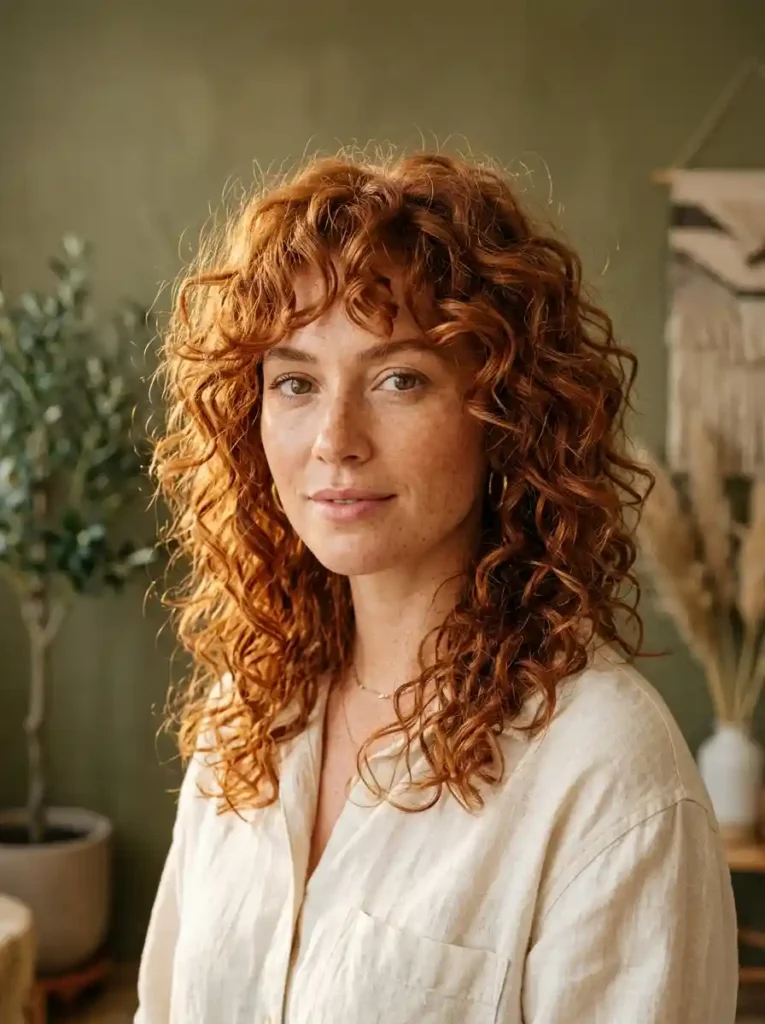
Copper color can make a layered curly shag especially eye-catching. The warm tone highlights individual curls and gives the textured shape additional dimension. This version uses airy layers rather than a heavy rounded silhouette. It suits people who enjoy expressive hair but still want a wearable medium length. The combination of warm color and uneven curl movement creates a relaxed, artistic appearance that feels distinctive without relying on excessive styling.
Color-treated curls often need extra moisture to maintain softness. Use a gentle cleanser and follow with a rich conditioner suited to textured hair. Refresh the curls between washes with water and a small amount of leave-in product. Pro Tip: Ask your colorist for dimensional copper rather than one flat shade. Slight tonal variation can make curls appear more textured and natural under different lighting.
11. Jaw-Length Curly French Bob
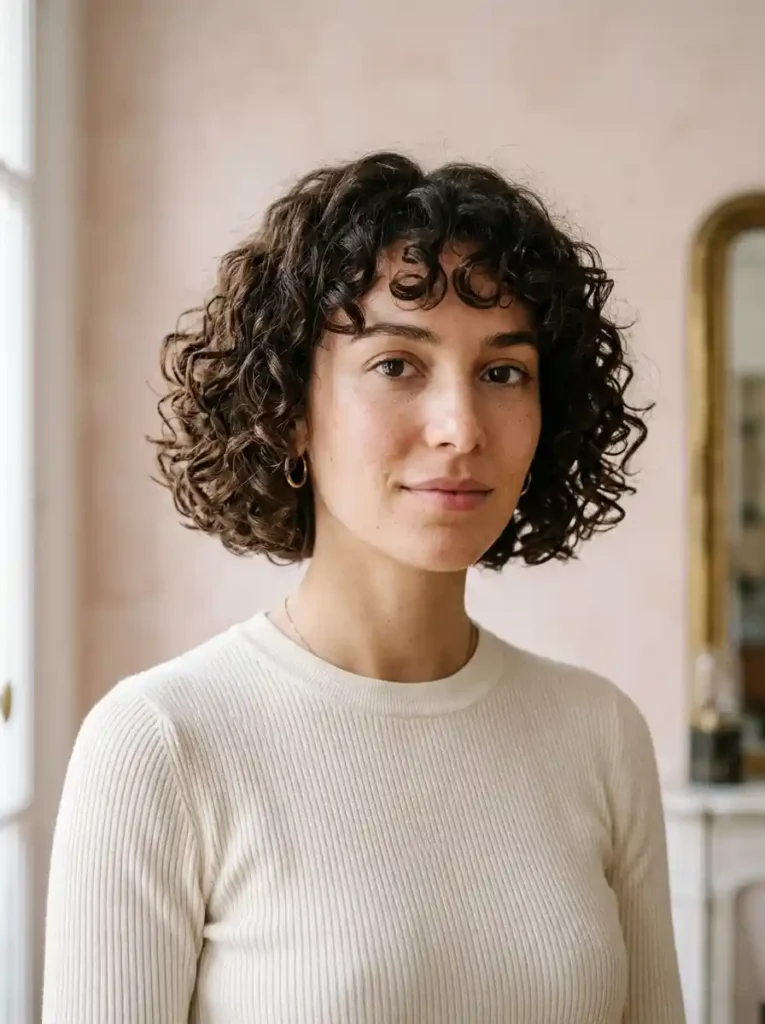
A jaw-length curly French bob gives natural texture a compact, sophisticated shape. Its shorter perimeter keeps the style visually crisp, while soft ringlets prevent it from feeling severe. A small curly fringe can make the look more distinctive without covering the entire forehead. This option works especially well for people who prefer structured haircuts with a playful finish. Deep brunette shades complement the classic shape without distracting from its texture.
Keep the styling simple by applying curl cream to wet hair and gently shaping the fringe with your fingertips. A diffuser can add controlled volume while preserving the compact outline. Common Mistake: Over-layering a short bob can weaken its recognizable shape. Ask for a strong perimeter and selective internal shaping instead. This keeps enough density around the jaw while allowing the curls to move naturally.
12. Half-Up Curly Style With Face-Framing Tendrils
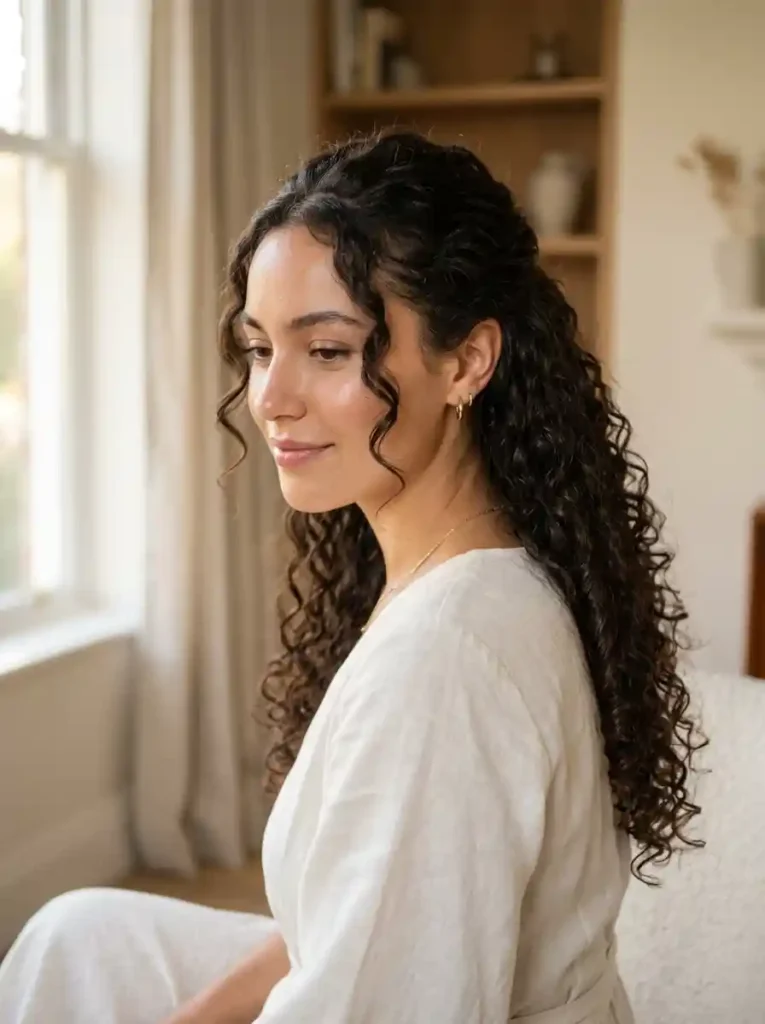
A half-up curly style changes the silhouette without requiring a haircut. The gathered crown exposes the face while the remaining curls keep plenty of movement and length. Two loose tendrils soften the front and prevent the style from looking overly formal. This makes it useful for dinners, celebrations, photographs, or relaxed events. It works particularly well when the curls already have natural definition and enough length to cascade.
Start with completely dry curls to preserve their shape. Gather only the upper section, then secure it loosely to avoid flattening the crown. Pull out two small front sections before setting the style. Stylist Tip: Use a soft fabric-covered elastic rather than a tight band. Less tension helps preserve curl shape and reduces unnecessary pulling. Finish with a light flexible spray only where additional hold is needed.
13. Curly Bob With Wispy Bangs
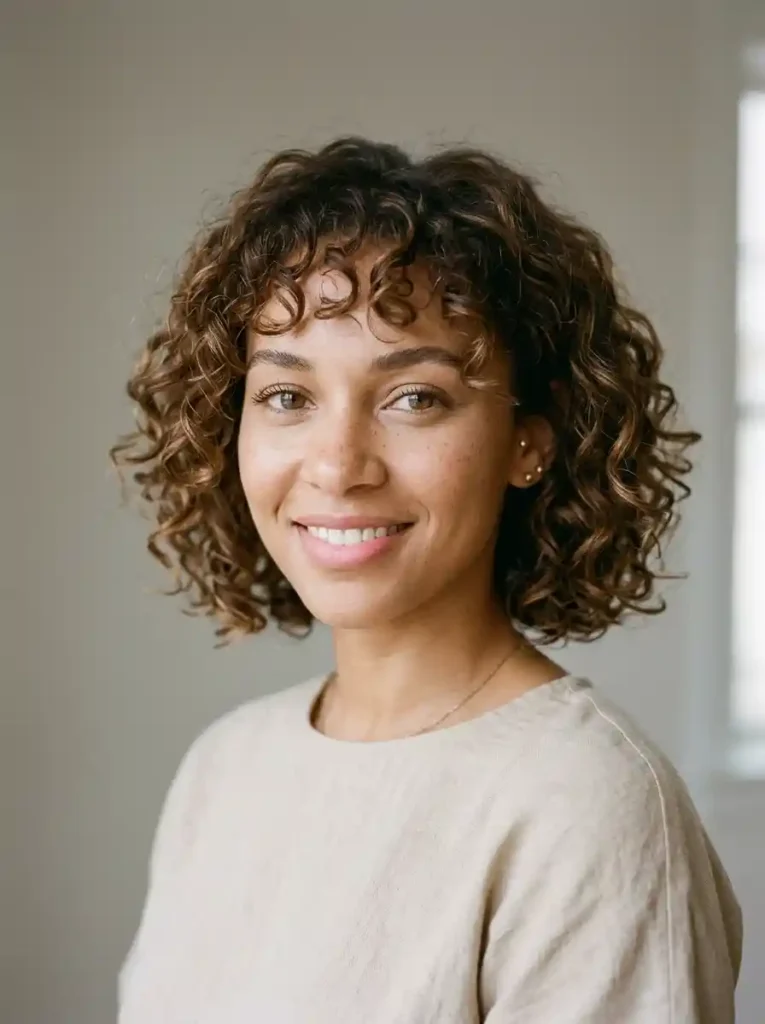
Wispy bangs create a lighter alternative to a dense curly fringe. Small curl groups allow the forehead to remain partially visible, giving the style an airy appearance. Paired with a rounded bob, the result feels soft rather than heavily structured. This option can suit loose to medium curl patterns, especially when the wearer wants a noticeable change without committing to thick bangs. Caramel highlights can add extra dimension around the face.
Bangs usually need separate attention during styling. Apply a tiny amount of product, then shape each curl group with your fingertips. Let them dry without repeatedly touching them. Pro Tip: Request slightly longer wispy bangs if your curls shrink strongly. You can always shorten them later, while growing out an unexpectedly short fringe takes much longer. Your stylist should also consider how your curls behave when completely dry.
14. Long Layered Curls With Middle Part
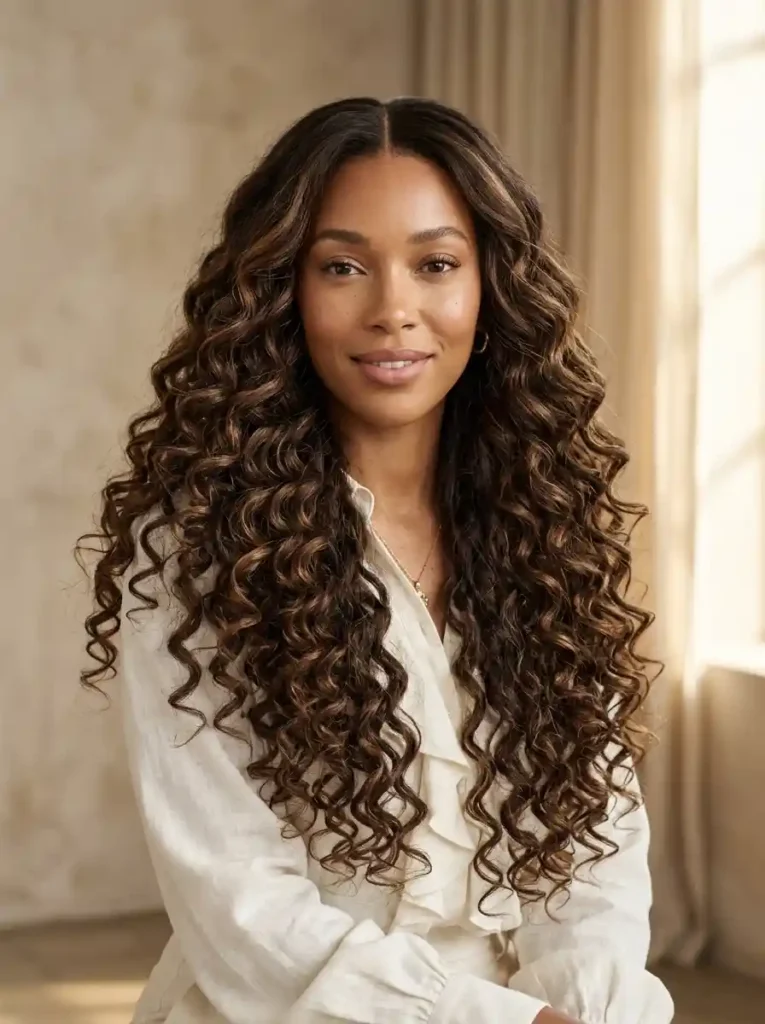
A middle part creates symmetry while long layers prevent extensive curls from looking too heavy. The layers begin gradually, allowing the overall length to remain dominant. This makes the style ideal for someone who loves dramatic length but wants more movement through the lower sections. Large spiral curls give the haircut a polished appearance, while natural root volume keeps it from looking overly flat.
Apply leave-in conditioner before curl cream to help the longer lengths stay soft. Divide the hair evenly down the center while wet, then style each side separately. Stylist Tip: Long curls often need weight removed gradually rather than through aggressive thinning. Ask for blended layers that preserve density at the ends. This helps maintain a full appearance while preventing the haircut from becoming excessively bulky.
15. Short Curly Shag With Baby Bangs

A short curly shag with baby bangs is a confident choice for people who enjoy unconventional shapes. The compact length keeps the cut energetic, while the short fringe creates a strong focal point around the eyes. Textured crown layers prevent the shape from becoming too rounded. This style works especially well for tight curls that naturally create substantial volume. The dark color keeps attention on the haircut’s sculptural outline.
Because baby bangs are highly visible, precision matters during styling. Use a small amount of curl cream and shape the fringe into individual curl groups. Avoid repeatedly wetting the area throughout the day. Common Mistake: Cutting baby bangs without considering shrinkage can make them much shorter than expected. Discuss your preferred finished length while your hair is dry. A cautious first trim gives you more room to adjust the final shape.
16. Curly Lob With Subtle Balayage
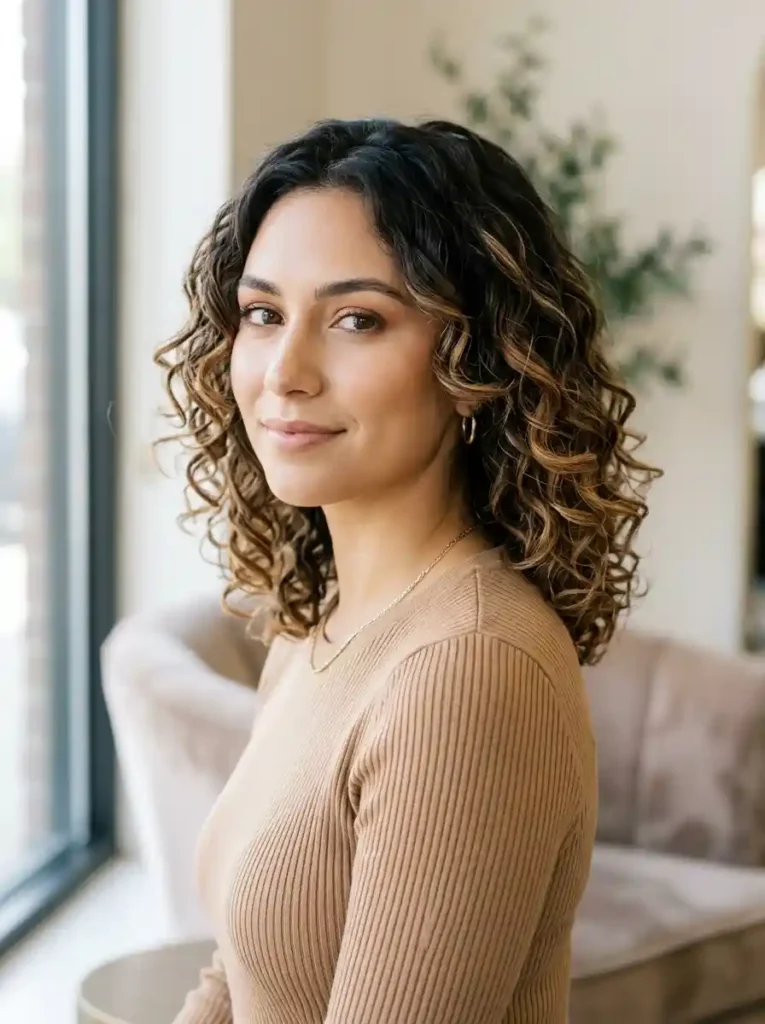
A subtle balayage can add dimension without changing the haircut dramatically. On a curly lob, carefully placed lighter sections catch the light across individual curls. The collarbone length keeps the style versatile, while soft layers prevent the color from looking like a solid block. This approach suits people who want visual change without an extreme cut. Warm honey tones pair especially well with brunette bases and naturally defined curls.
Curly hair can reflect light differently across each bend, so color placement should follow the texture. Ask your colorist to consider where your curls naturally catch sunlight. Pro Tip: Keep the lightest pieces away from every section of the hair. Selective placement often creates a more natural dimensional effect. Maintain the color with moisturizing products and regular conditioning to keep highlighted curls flexible.
17. Defined Curly Mohawk
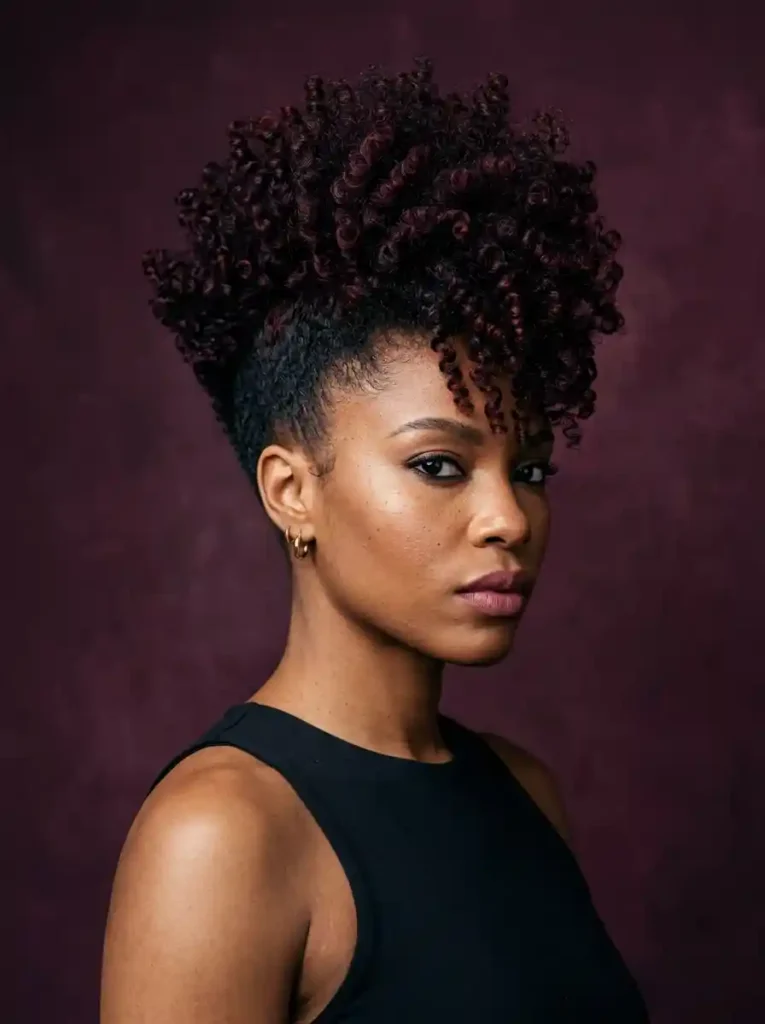
A curly mohawk creates height by concentrating length through the center of the head. The tapered sides make the central curls appear more pronounced and sculptural. This is a bold option for people who want their natural texture to become the main feature. The shape can be adapted to different curl tightness by changing the central length. Deep burgundy or another dimensional shade can emphasize the dramatic vertical silhouette.
Keep the sides neat with regular trimming while allowing the center to retain enough length for height. Define the central curls with a firm but flexible styling product. Stylist Tip: Ask for a gradual taper if you want an easier transition into the style. A softer side-to-top change can make the haircut feel wearable for everyday settings while preserving its distinctive shape.
18. Romantic Curly Updo With Loose Pieces
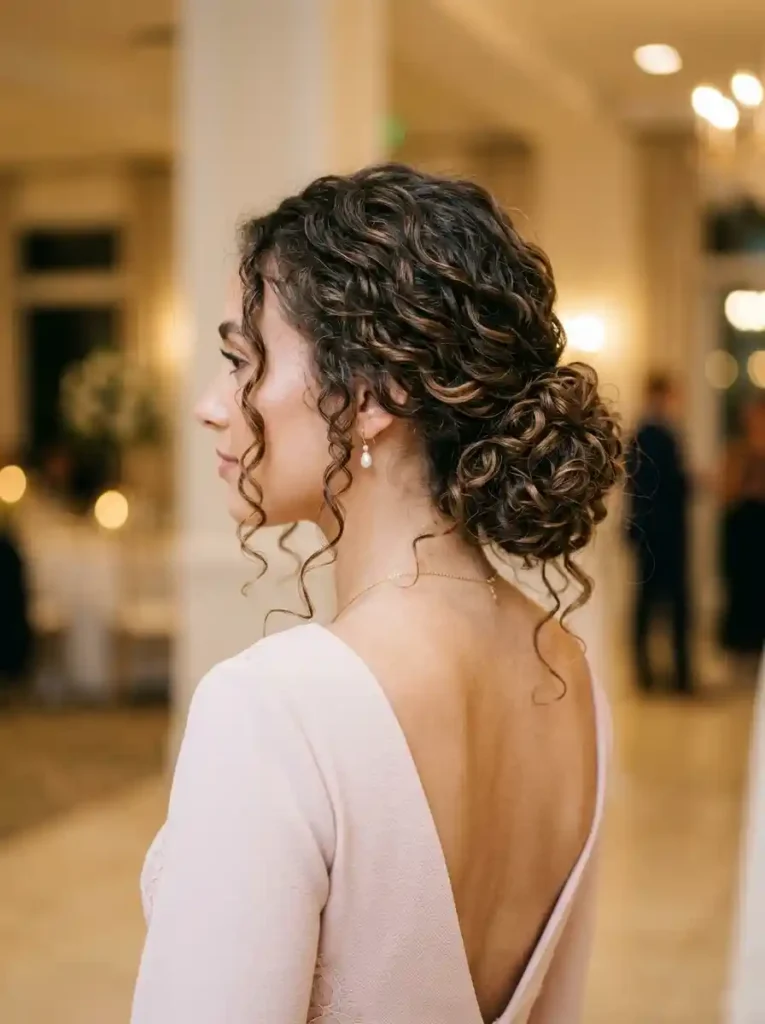
A loose curly updo offers an elegant option without requiring perfectly smooth hair. The gathered curls form a soft low shape, while selected tendrils keep the style relaxed. This makes it suitable for weddings, dinners, parties, and special photographs. The texture adds dimension that a sleek updo may not provide. Warm brunette shades work beautifully because the curls catch subtle highlights as they twist around the gathered shape.
Begin with dry, defined curls rather than freshly brushed hair. Gather the back loosely and pin sections individually so the natural curl pattern remains visible. Leave a few intentional pieces around the face. Stylist Tip: Pin from different directions instead of forcing every curl into one bun. This distributes weight more evenly and creates a fuller, more organic result. A flexible finishing spray can help without making curls feel rigid.
19. Curly Shoulder Cut With Deep Side Fringe
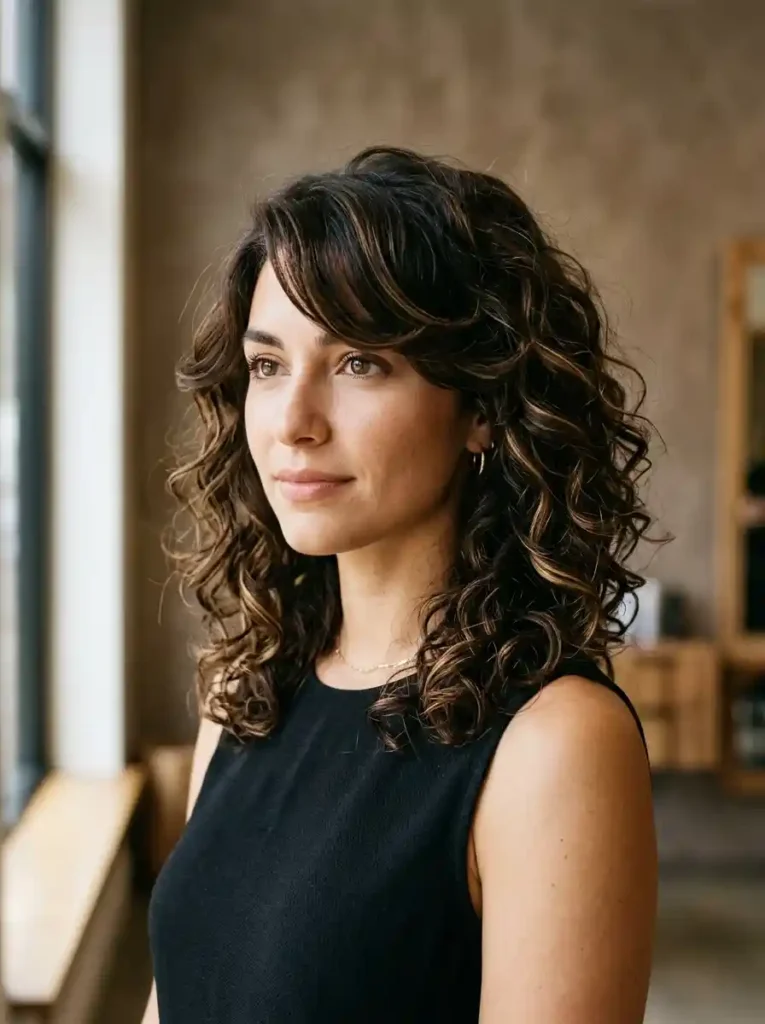
A deep side fringe creates movement across the forehead while leaving the rest of the shoulder-length curls balanced. The stronger part adds visual direction and makes the haircut feel more dramatic than a traditional center part. This style suits people who want face-framing detail without committing to a full fringe. Medium curls can provide enough body to support the sweeping front section.
Style the fringe while wet, directing it diagonally away from the heavier side of the part. Use a diffuser at low airflow to keep the curl pattern intact. Common Mistake: Overloading the fringe with heavy products can make it collapse. Use lighter styling formulas near the roots and reserve richer products for the ends. This helps the front retain movement throughout the day.
20. Curly Bixie With Soft Volume
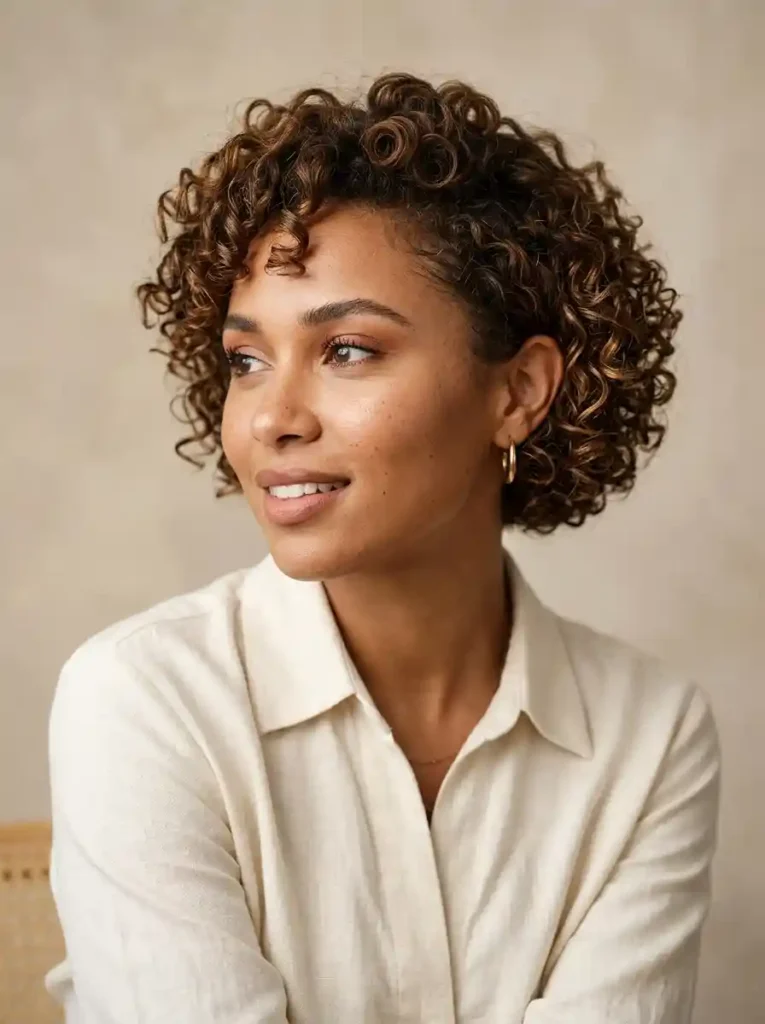
The curly bixie combines the compact feeling of a pixie with the softer perimeter of a bob. That combination creates a flexible shape for people who want short hair without an extremely cropped silhouette. The crown can hold natural volume, while the sides retain enough length to frame the ears and cheek area. This makes the haircut feel modern, playful, and less rigid than many traditional short cuts.
Use a small amount of curl cream and avoid brushing the hair into a single uniform direction. Let the crown dry naturally or diffuse gently for additional lift. Stylist Tip: Ask your stylist to keep enough length around the ears if you want a softer finish. Removing too much there can make the haircut feel sharply cropped instead of balanced and versatile.
21. Long Curly Layers With Curtain Fringe
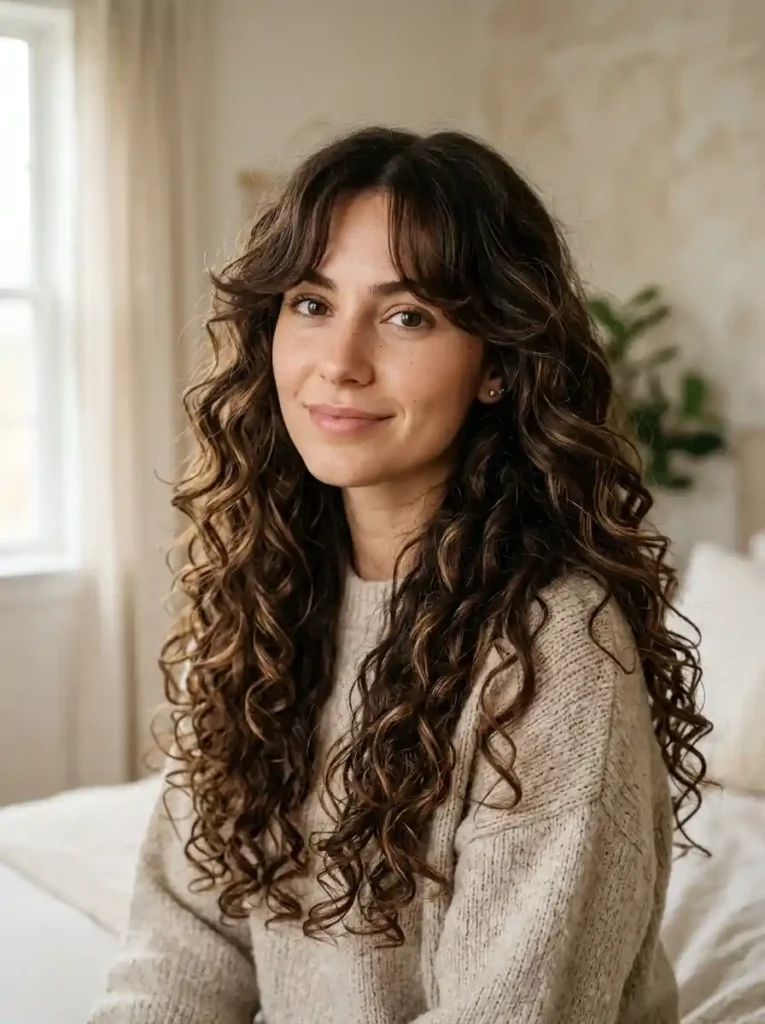
Long curls become more dynamic when gentle layers are combined with a curtain fringe. The fringe creates a soft opening around the forehead and cheeks, while longer layers maintain the dramatic length. This option suits people who want movement without a heavily chopped haircut. Large spirals make the layered transitions easy to see, especially when subtle highlights trace selected curls through the lengths.
Style the fringe separately from the rest of the hair. Use a small round brush only at the roots if needed, then encourage the ends to return to their natural curl. Pro Tip: Keep the curtain fringe slightly longer on the first cut if you are unsure about shrinkage. Curly hair can spring upward after drying. Gradual shortening gives you more control over the finished shape.
22. Natural Curly Crop With Tapered Nape
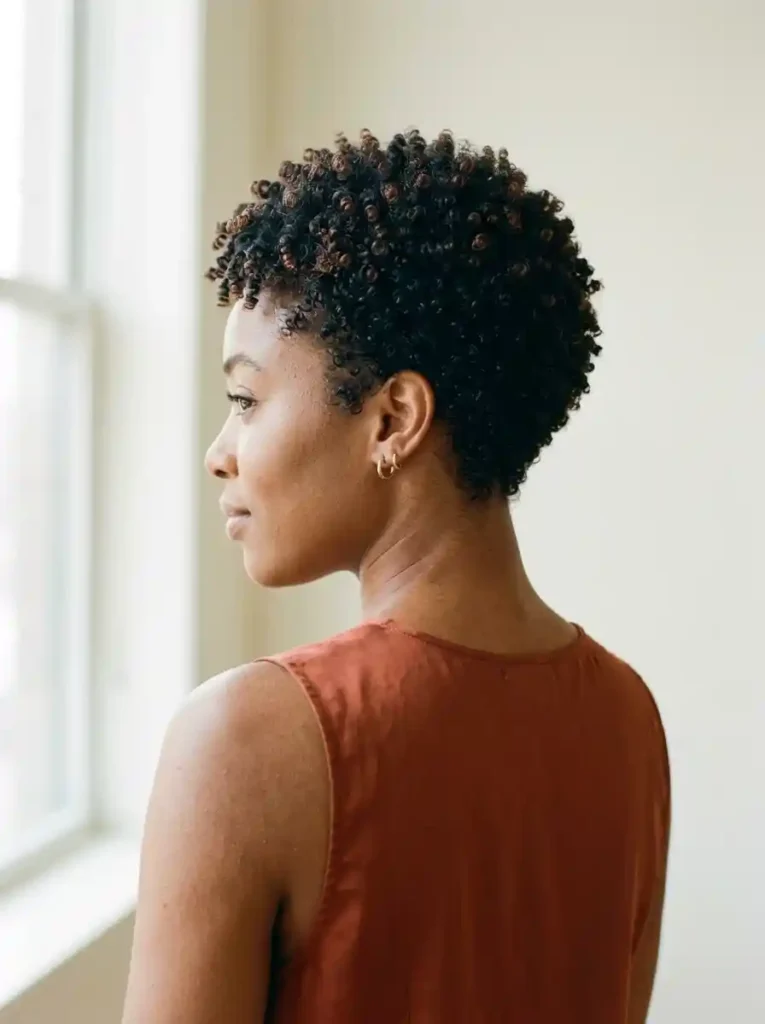
A natural curly crop keeps the shape short while allowing the texture to remain clearly visible. The tapered nape provides definition at the back, while the crown stays rounded and full enough to show the curl pattern. This style is practical for people who prefer shorter hair and minimal daily manipulation. It also creates a clean silhouette that can work beautifully with natural, dimensional, or dark hair colors.
Moisture should remain a priority when maintaining a short textured crop. Refresh the hair with water and a small amount of leave-in conditioner rather than adding heavy product every morning. Stylist Tip: Ask for the taper to remain soft if you want a less severe appearance. A gradual nape transition can preserve the clean shape while allowing the natural curl texture to remain the focus.
23. Soft Curly Mermaid Layers
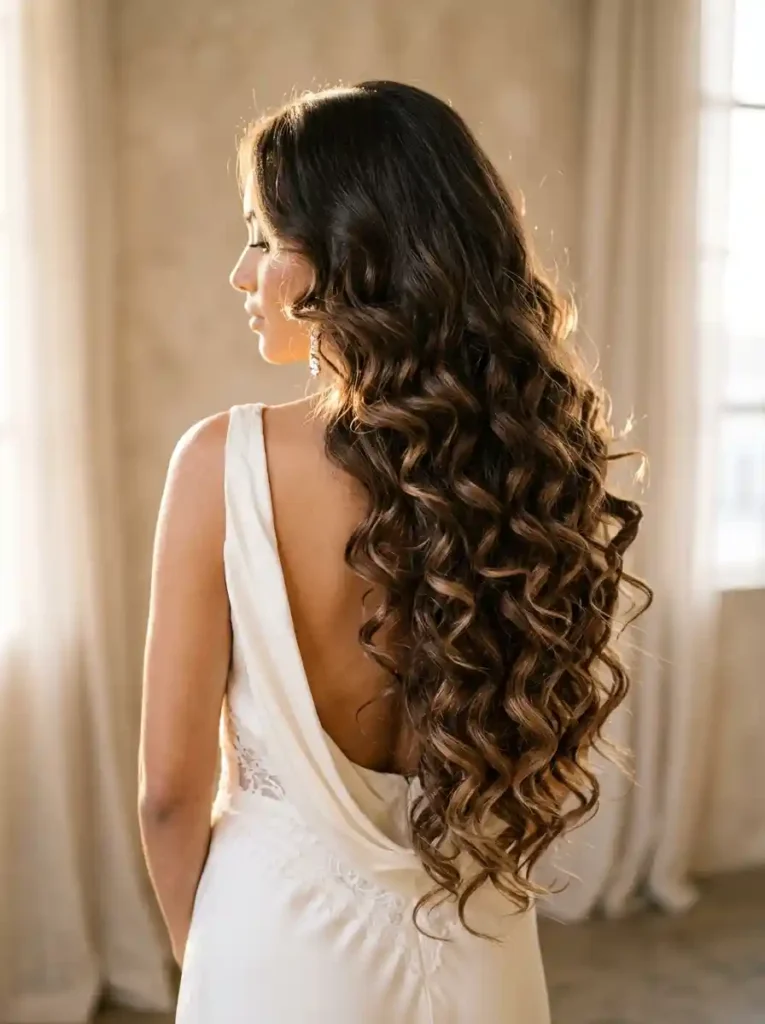
Mermaid-inspired layers are ideal for anyone who loves dramatic length and flowing movement. The broad layers begin higher around the shoulders and gradually expand through the lower sections. This creates a cascading shape instead of a single heavy curtain of curls. Large spirals and softer waves can coexist within the style, giving the hair a relaxed but glamorous finish. Deep brunette tones make the long texture feel especially rich.
Long layered curls benefit from careful detangling and consistent conditioning. Work from the ends upward with your fingers or a curl-friendly tool while the hair is damp. Common Mistake: Removing too much length during layering can weaken the cascading effect. Tell your stylist which areas must remain long. Preserving substantial lower length helps maintain the dramatic mermaid silhouette while still creating visible movement.
Frequently Asked Questions
What is the best haircut for naturally curly hair?
There is no single best haircut for every curl pattern. Layered bobs, curly lobs, shags, pixies, and long face-framing cuts can all work well. The most important factor is shaping the haircut around your natural curl pattern, density, and shrinkage.
Are layers good for curly hair?
Layers can be very effective for curly hair because they distribute weight and create movement. The right amount depends on density and curl tightness. Too many short layers can create unwanted expansion, especially in dense curls.
How often should curly hair be trimmed?
Many people refresh their shape every several months, but timing depends on length, haircut, and personal preference. Shorter cuts usually need more frequent shaping. Curly hair should be assessed in its natural state when possible.
Can curly bangs work with every curl pattern?
Curly bangs can work with many textures, but the cut needs to account for shrinkage and curl direction. Tight curls may require more length than expected. Loose curls can often support softer curtain or wispy fringe shapes.
How can I make my curls look more defined?
Apply styling products to wet or very damp hair, then scrunch gently to encourage curl formation. Allow curls to dry with minimal touching. A diffuser can help reduce drying time while preserving definition and volume.
How do I choose between short and long curly hair?
Consider your preferred maintenance routine, styling time, and how much length you want to keep. Short cuts often require more frequent shape maintenance. Longer cuts provide more styling flexibility but can require additional conditioning and detangling.
Conclusion
The best haircut is not always the most dramatic one. A thoughtful shape can make your natural texture easier to manage while giving your curls a fresh identity. These curly hairstyles range from compact pixies and polished bobs to dramatic layered lengths and expressive shags. Before your appointment, save the styles that match your preferred length, volume, and maintenance routine. Bring those references to your stylist and discuss how your own curl pattern may change the finished result. Save your favorite look before your next salon visit.