
Flat, lifeless hair can make even a favorite hairstyle feel tired. A shag haircut brings back movement with purposeful layers, texture, and face-framing pieces. The best part is how flexible the cut can be. You can keep it soft and polished or make it choppy and rebellious. These 20 shag haircut ideas cover different lengths, textures, bang styles, and color choices. Each look includes practical styling advice so you can save your favorite inspiration and explain it clearly at your next salon appointment.
1. Soft Collarbone Shag

A collarbone shag offers movement without feeling dramatically short. Its layers begin around the cheekbones and continue toward the ends. The result feels airy, modern, and easy to wear. This version suits people who want texture without losing useful length. Soft waves make the shape especially visible, while straight hair gives it a cleaner finish. The warm brown color also highlights the layered structure without overpowering the haircut itself.
For styling, apply a lightweight mousse before rough-drying the roots. Twist a few sections around your fingers to encourage natural bends. Avoid brushing the finished layers too aggressively, since that can flatten the texture. Stylist Tip: Ask for blended internal layers if you want movement without extremely choppy ends. This small adjustment can make the cut feel softer and more adaptable for everyday styling.
2. Shag With Curtain Bangs

Curtain bangs give a shag haircut a softer entrance around the face. They part naturally near the center and blend into longer cheekbone layers. This creates a flowing shape instead of a blunt fringe. The style works particularly well for medium to thick hair because the layers help distribute visual weight. It also suits people who want a noticeable haircut change without committing to very short bangs.
Style the fringe with a round brush or large velcro roller. Direct each side slightly away from the face while drying. Let the ends cool before separating them with your fingers. Common Mistake: Cutting curtain bangs too short can make them harder to blend into the shag. Ask your stylist to keep the center slightly longer if you prefer an effortless, grown-out appearance.
3. Curly Shag With Rounded Layers
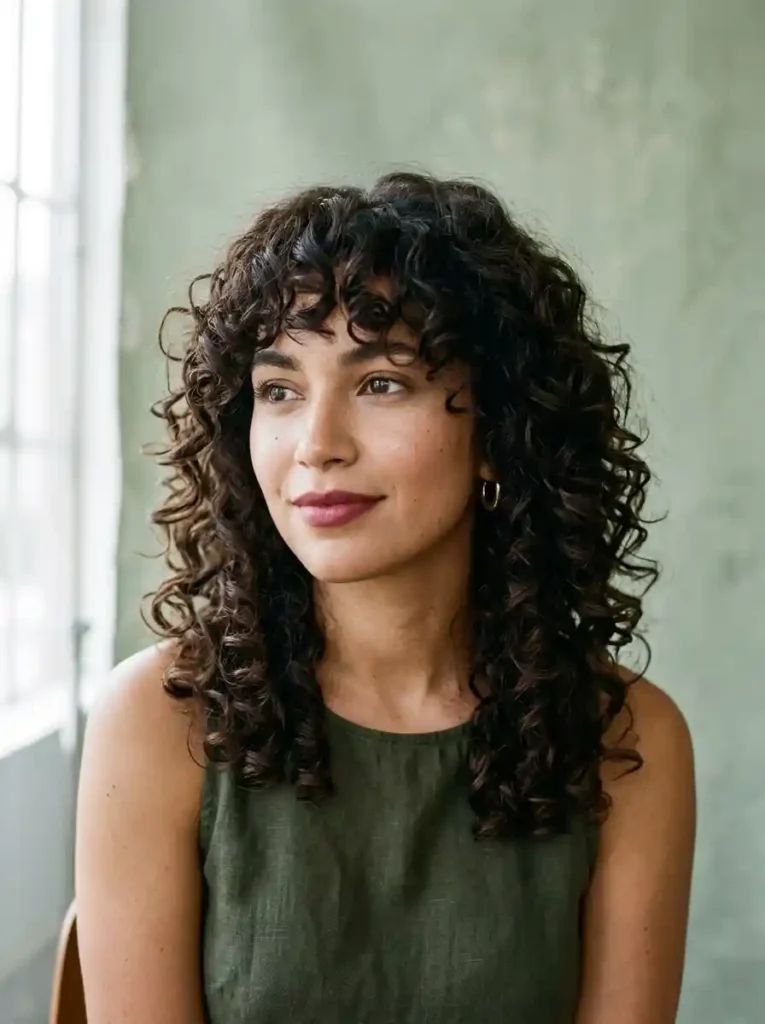
A curly shag celebrates natural texture instead of forcing curls into a uniform shape. Rounded layers create lift around the crown while preserving enough length for the curls to form properly. The result feels playful, full, and expressive. This version can work beautifully on loose curls, defined curls, and mixed curl patterns. Layer placement matters because curly hair often appears shorter once it dries.
Style the haircut while the hair is very damp. Scrunch in a lightweight curl cream, then add a small amount of flexible gel if needed. Allow the curls to air-dry or use a diffuser on low heat. Pro Tip: Have curly hair assessed in its natural state whenever possible. Your stylist can better judge how much each curl will spring upward after cutting.
4. Wispy Bang Shag
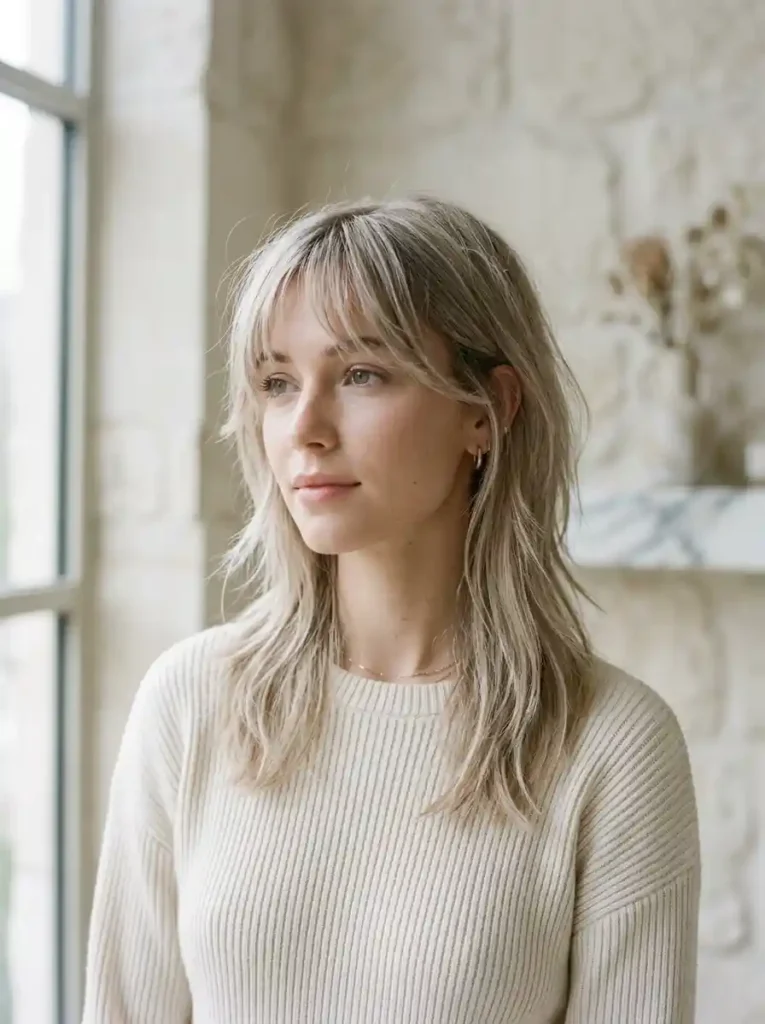
Wispy bangs make a shag feel lighter and less dramatic. The fringe has separated strands rather than a dense, solid line. This detail works especially well for fine or low-density hair that can become overwhelmed by heavy bangs. Feathered layers around the temples continue the airy effect. A beige blonde color adds softness, while darker roots give the style a little visual depth.
Keep styling products lightweight so the fringe does not collapse. A small amount of volumizing spray at the roots can provide gentle lift. Blow-dry the bangs forward first, then sweep them apart with your fingers. Stylist Tip: Fine hair benefits from strategic layering rather than excessive thinning. Ask for texture that preserves density at the ends while still creating visible movement through the upper sections.
5. Shaggy Bob
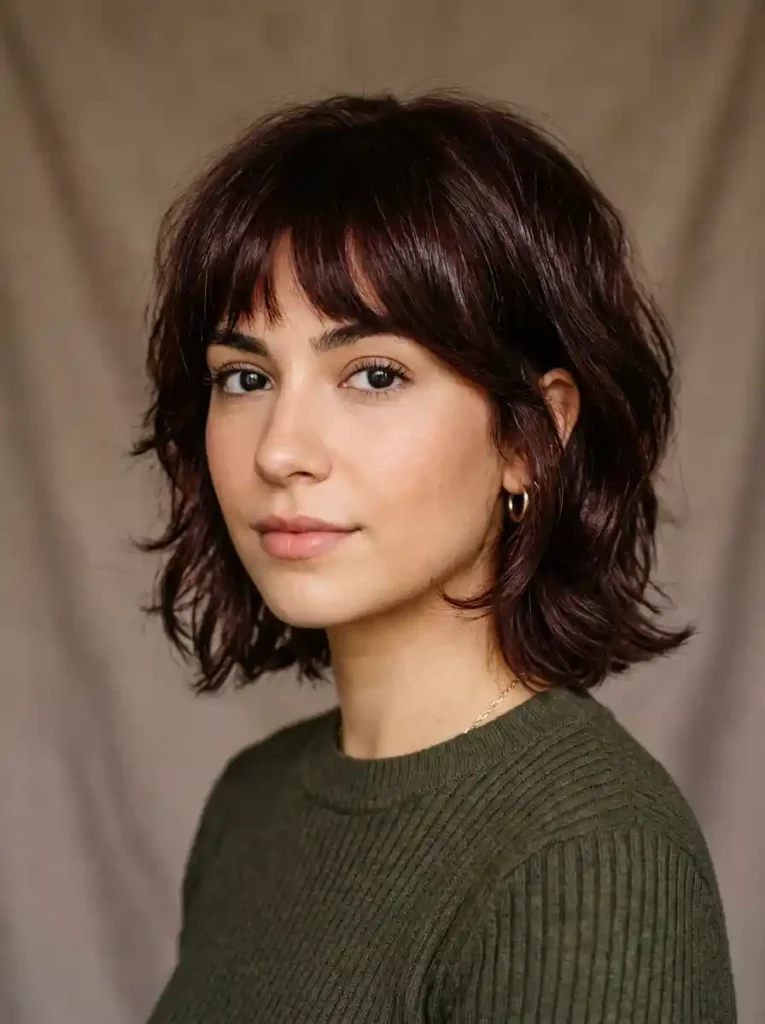
A shaggy bob combines the compact shape of a bob with deliberately uneven texture. Its shorter length creates a stronger silhouette, while layered ends prevent the cut from looking too traditional. This option suits anyone ready for a more noticeable change. Straight or slightly wavy hair makes the choppy structure especially easy to see. Rich auburn tones can also emphasize the individual layers.
Use a texturizing cream or light styling paste to separate the ends. Scrunching the hair while drying can create relaxed bends without requiring a curling iron. Common Mistake: Over-thinning a short shag can remove too much structure. Ask your stylist to create movement through cutting and layering rather than aggressively removing weight from every section.
6. Long Shag With Face-Framing Layers

A long shag keeps plenty of length while adding movement around the face. The layers can begin near the cheekbones and gradually become longer toward the chest. This makes the cut useful for people who enjoy long hair but dislike heavy, one-length ends. Loose waves reveal the shape clearly. Dark brown hair with subtle lighter pieces can make the layered transitions even easier to notice.
Long shags need less daily reshaping than shorter versions, but the layers still benefit from regular trimming. Use a leave-in conditioner before styling to keep the ends flexible. Pro Tip: If preserving length matters, tell your stylist exactly where you want the shortest layer to finish. Layer placement controls the overall silhouette more than the number of layers alone.
7. Copper Textured Shag
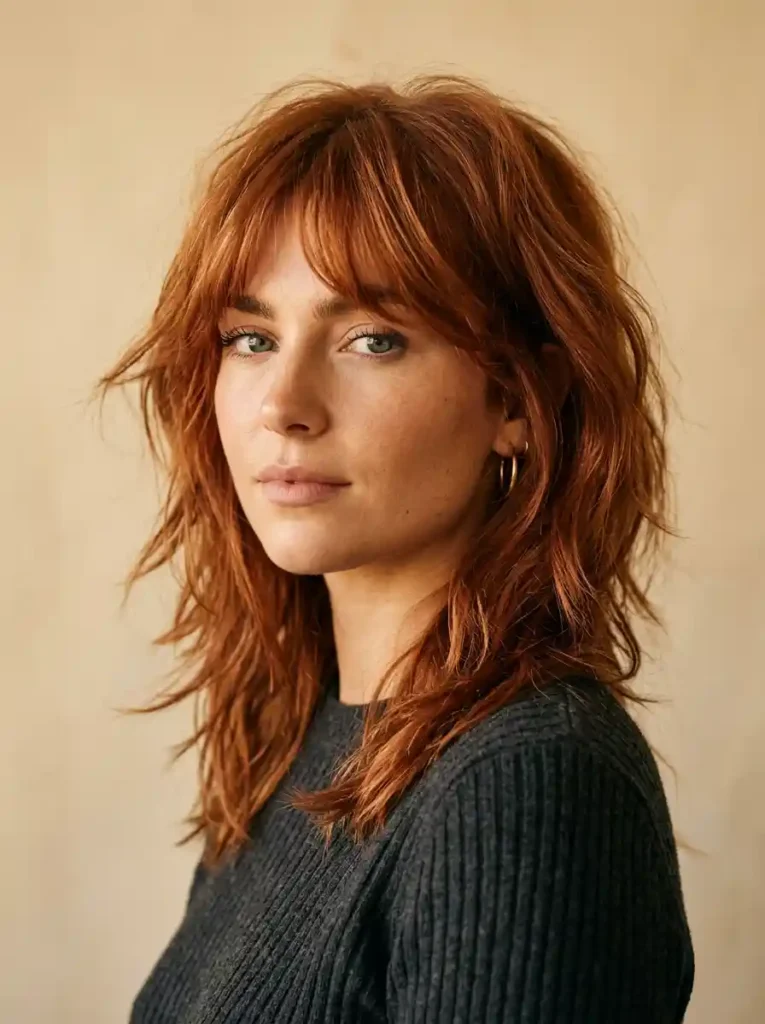
Copper color gives a textured shag a warm, expressive personality. The haircut features piecey layers that catch the light at different angles. A softly narrowed fringe adds definition without creating a heavy block across the forehead. This version suits people who enjoy noticeable color and movement but still want an approachable medium length. Natural waves make the copper tones appear especially dimensional.
Color-treated hair needs thoughtful styling to keep the ends looking healthy. Use a heat protectant before hot tools and choose a gentle cleansing routine suited to colored hair. Stylist Tip: Ask for subtle tonal variation rather than a single flat copper shade. Slight differences in warmth can help the layers appear more dimensional without adding another dramatic color.
8. Wolf-Inspired Shag
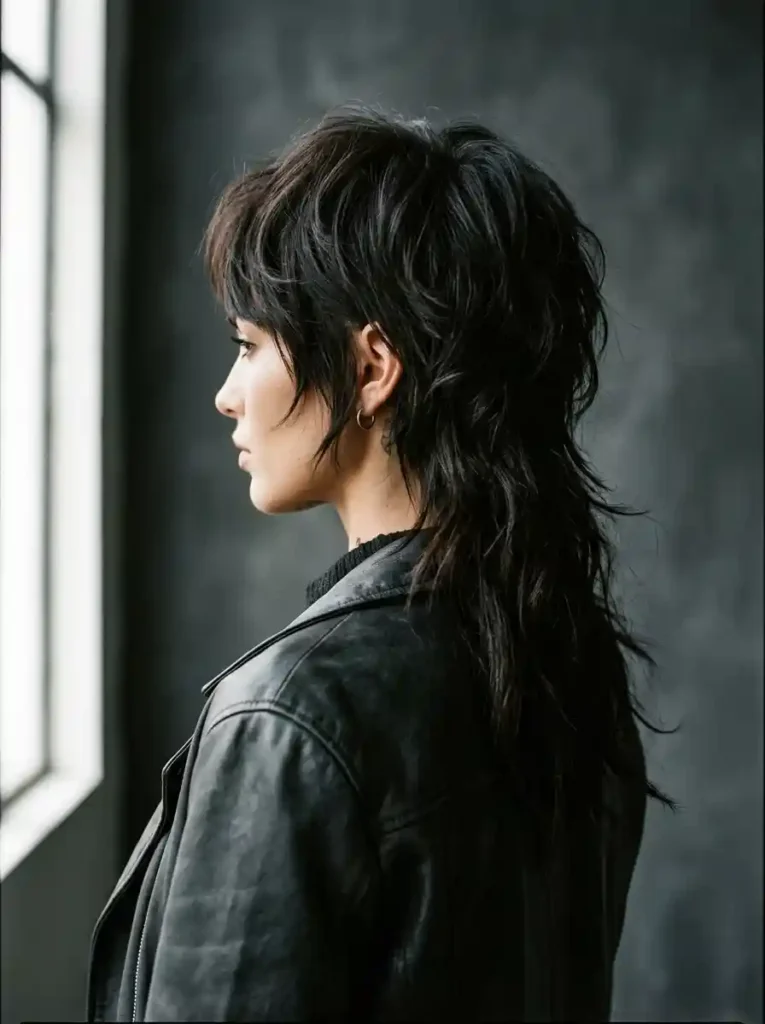
A wolf-inspired shag places more emphasis on crown volume and shorter upper layers. The back remains longer, creating a tapered shape with noticeable contrast. This version feels bolder than a soft shag and suits people who enjoy visible texture. Thick hair can carry the stronger layering well, while naturally wavy hair makes the silhouette feel less rigid.
Styling usually requires some root lift and deliberate separation. Apply mousse near the crown, then dry the roots upward with your fingers. Finish with a flexible texture spray on the ends. Common Mistake: Asking for extreme crown layers without considering density can create unwanted bulk. A stylist should remove weight strategically so the shape stays balanced from front to back.
9. Shag With Bottleneck Bangs

Bottleneck bangs create a curved transition from short center pieces to longer outer sections. On a shag, they blend naturally into face-framing layers and feathered sides. The effect feels softer than blunt bangs but more structured than very wispy fringe. This variation works well for people who want facial framing without a strong horizontal line across the forehead.
Use a small round brush to guide the center section slightly downward and the sides outward. Let the fringe cool before arranging it. Pro Tip: Bring a photo showing your preferred bang length, not just the haircut overall. Small changes in fringe length can significantly alter how the entire shag frames the face.
10. Textured Shag for Thick Hair
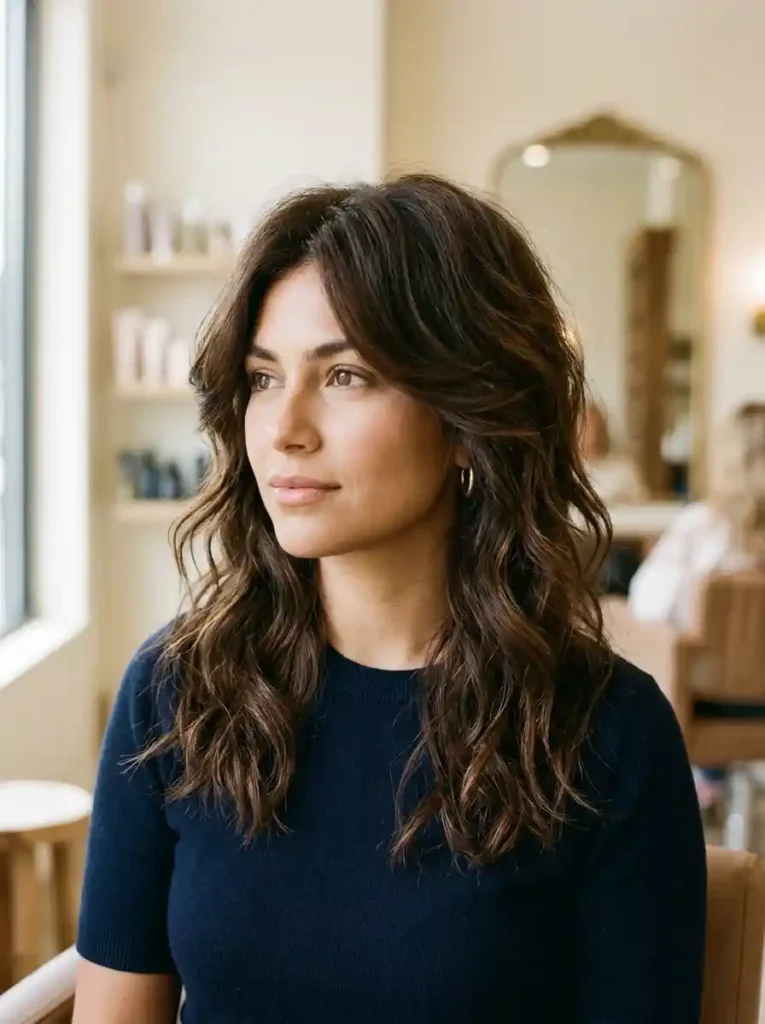
Thick hair can make a shag look impressively full, but excess weight may hide the layers. This version uses strategic internal layering to create movement without making the ends look sparse. Shoulder length keeps the shape substantial and easy to style. The warm brunette color complements the dimensional texture and keeps the overall appearance sophisticated.
Ask your stylist where the weight feels heaviest before deciding how much to remove. Styling can then focus on enhancing the intended shape rather than fighting bulk. Stylist Tip: Thick hair often benefits from internal weight removal instead of aggressive thinning at the perimeter. Keeping the outer edge fuller can help the finished haircut maintain strength and shape.
11. Fine Hair Air-Dried Shag

Fine hair can benefit from a shag when the layers are placed carefully. This version keeps the perimeter relatively full while adding subtle movement higher on the head. A soft side-swept fringe provides interest without taking too much density from the front. Air-dried texture gives the cut a relaxed finish that feels practical rather than overly styled.
Start with a lightweight volumizing mousse on damp roots and lengths. Scrunch gently, then allow the hair to dry without repeated brushing. Common Mistake: Excessive texturizing can make fine hair appear thinner. Ask for controlled layers and preserve enough weight at the perimeter to keep the haircut looking substantial.
12. Platinum Shag With Piecey Ends

Platinum color makes the individual layers of a shag highly visible. This version uses piecey ends and a feathered fringe to create a deliberately undone finish. The darker root area adds contrast and can make the overall color feel less flat. It suits people who enjoy a bold appearance and are comfortable giving extra attention to hair condition.
Lightened hair can become fragile, so styling should remain gentle. Use heat protection and avoid excessive high-temperature tools when possible. Pro Tip: Ask your colorist and stylist to consider the haircut together. Bleaching can change how hair behaves, so the final layering plan should account for its condition and elasticity.
13. Shoulder-Length Shag With Side Bangs

Side bangs give a shag a softer asymmetrical feel. Instead of dividing the fringe in the center, the hair sweeps across the forehead and merges into the side layers. Shoulder length keeps the haircut versatile for ponytails, loose waves, and casual updos. This option is useful for people who want face framing without committing to a centered fringe.
Dry the side bang in the direction you want it to fall. Use a round brush near the root, then finish with a small amount of flexible hairspray. Stylist Tip: A side bang should connect smoothly to the shortest face-framing layer. This connection prevents the fringe from looking like a separate feature and makes grow-out easier.
14. Shag With Micro Bangs
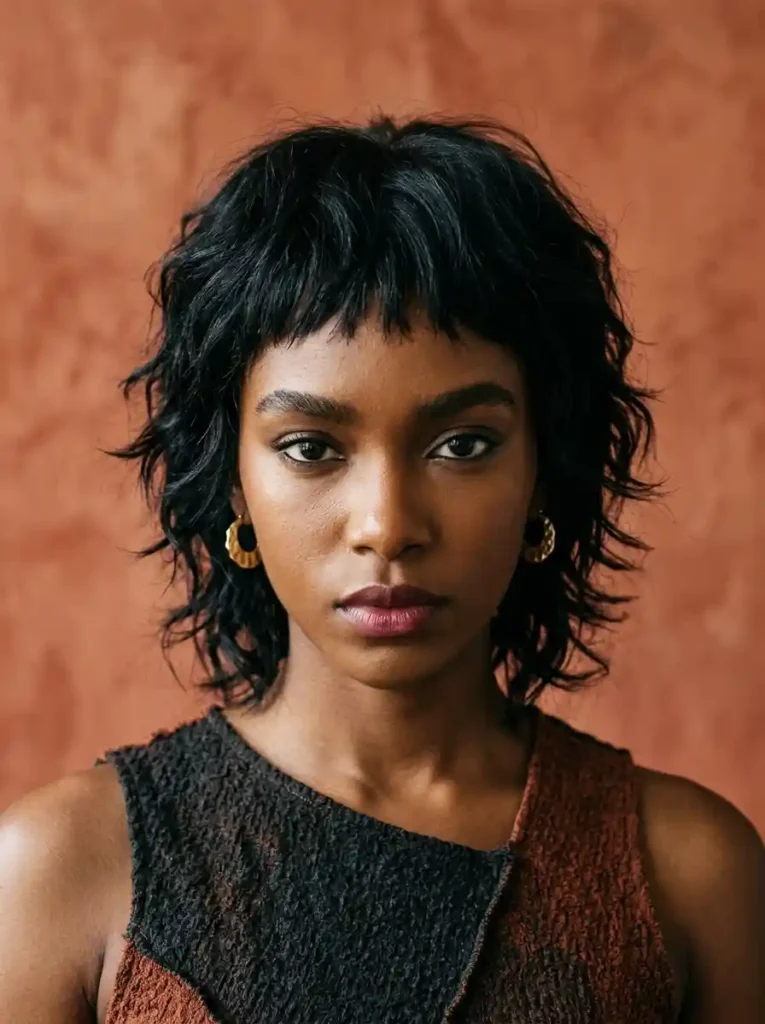
Micro bangs transform a shag into a more distinctive statement. The short fringe exposes more of the forehead while the surrounding layers keep the haircut soft and textured. This contrast works particularly well for people who enjoy fashion-forward hairstyles. Medium-length sides and a tousled crown prevent the short fringe from making the entire haircut feel severe.
Micro bangs need regular shaping because small growth changes become noticeable quickly. Style them with a tiny amount of lightweight cream and a small brush. Common Mistake: Cutting micro bangs without considering natural growth patterns can create difficult styling. Ask your stylist to check how the front hairline naturally falls before choosing the final fringe length.
15. Wavy Beachy Shag

A beachy shag emphasizes loose waves and relaxed separation. Its layers encourage natural bends without requiring every section to be curled. Sandy blonde highlights enhance the casual texture by creating subtle differences across the lengths. This look suits people who prefer an undone finish and want their haircut to work with naturally wavy hair.
For styling, apply sea salt spray sparingly to damp hair, then scrunch and air-dry. If your hair is dry or coarse, choose a conditioning texture product instead. Pro Tip: Texture spray should enhance movement, not replace a good haircut. If waves disappear quickly, ask for layers that support your natural pattern rather than relying on heavy styling products.
16. Black Shag With Glossy Texture
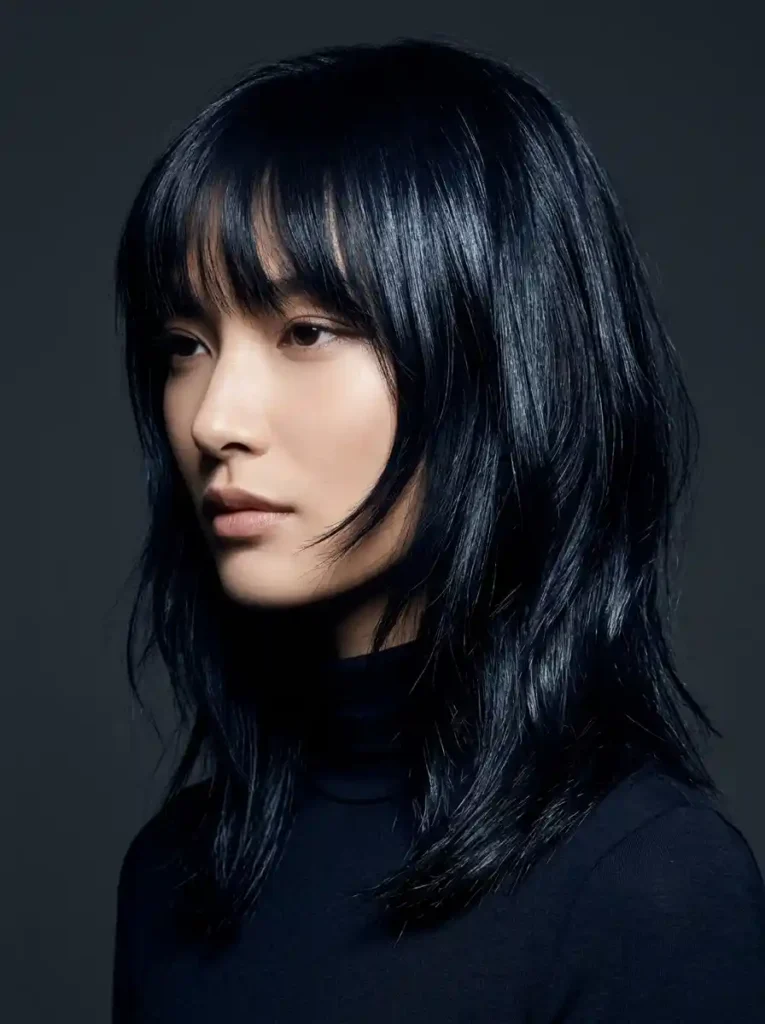
Deep black hair gives a shag a sleek, dramatic quality. The layered shape remains visible through changes in light and texture rather than through bright color variation. Soft face-framing pieces keep the style approachable, while glossy lengths make it feel polished. This version works well for people who like a darker, refined aesthetic with a little movement.
Keep the finish smooth by using a lightweight shine serum on the mid-lengths and ends. Avoid applying too much near the roots. Stylist Tip: Glossy hair can make uneven ends more noticeable, so regular trims help preserve the clean shape. Ask for deliberate layering rather than excessive point-cutting if you prefer a polished finish.
17. Tousled Mid-Length Shag

A tousled mid-length shag offers a balanced option between polished and messy. The layers create enough movement to make simple styling look intentional. Caramel dimension adds subtle depth without becoming the main feature. This length is practical because it can still be tied back while maintaining enough hair to show the layered silhouette when worn loose.
Use a lightweight styling cream on damp hair, then twist random sections before drying. Once dry, loosen the twists with your fingers instead of brushing. Common Mistake: Creating identical waves throughout the hair can make the look too uniform. Varying the direction and size of bends creates a more believable, naturally tousled finish.
18. Soft Shag for Straight Hair

Straight hair can showcase the architecture of a shag very clearly. This softer version uses long, blended layers instead of highly choppy sections. The result has movement while keeping a smooth surface. Long wispy fringe adds gentle framing without creating too much contrast. This is a good choice for people who want a modern haircut that still feels neat and controlled.
A blow-dry with a large round brush can create subtle bends at the ends. For more texture, use a dry texturizing spray only after the hair cools. Stylist Tip: Straight hair reveals every layer, so discuss the intended silhouette before cutting. Ask for visible movement with smooth transitions if you want a softer interpretation.
19. Shag With Bold Color Blocking
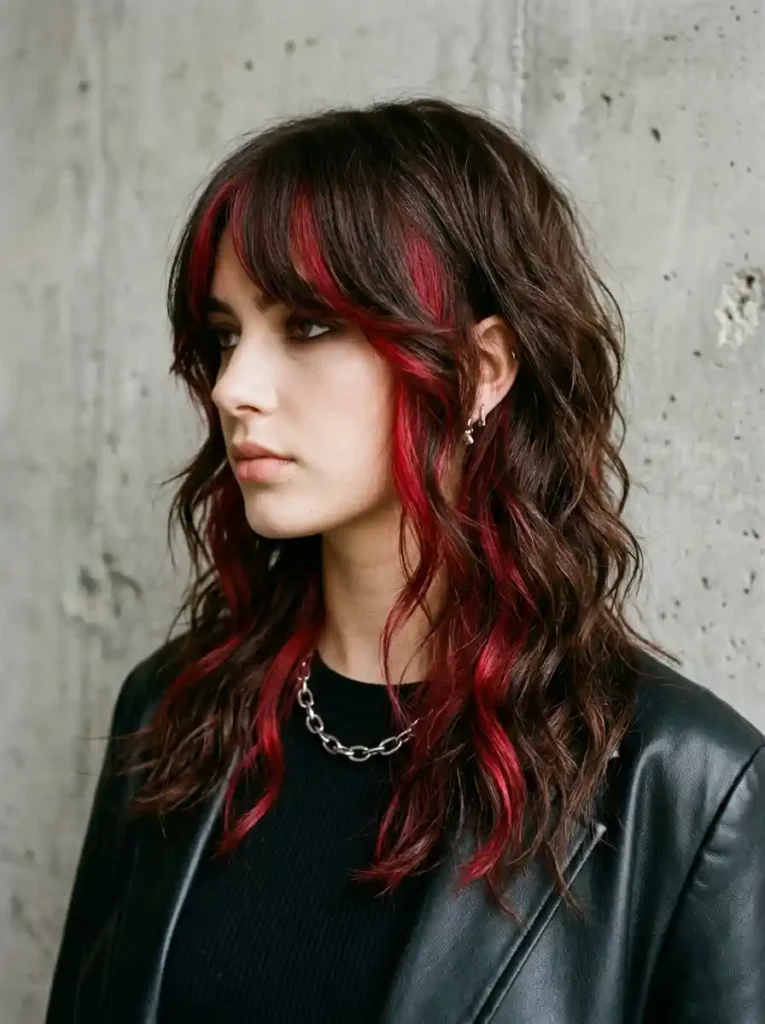
Color blocking adds a creative dimension to the layered structure of a shag. A dark base with vivid red panels can reveal hidden movement as the hair shifts. Placing brighter pieces underneath creates a more changeable effect than coloring the entire head. This option suits people who want an expressive style while keeping the overall silhouette wearable.
Color placement should follow the haircut rather than fight against it. Ask your colorist to position brighter sections where your layers naturally separate. Pro Tip: Bring both haircut and color references to your appointment. The placement of bold color can change the visual balance of the layers, especially around the face and fringe.
20. Natural Gray Shag

A natural gray shag turns varied silver tones into part of the hairstyle’s visual character. Soft layers allow different shades to catch the light across the head. Long curtain fringe keeps the framing gentle, while loose waves make the shape feel relaxed. This option works for anyone who wants to embrace natural gray hair while adding structure and movement.
Gray hair can sometimes feel drier or more delicate, so conditioning becomes especially useful. Apply a moisturizing leave-in product to the lengths and avoid excessive heat. Stylist Tip: Ask for layers that respect your natural density. Gray hair may have different textures across the scalp, so the haircut should balance those variations instead of treating every section identically.
Frequently Asked Questions
What hair type works best for a shag haircut?
A shag can work with straight, wavy, curly, fine, or thick hair. The key is adjusting layer placement and weight removal to suit the hair’s natural density and texture.
Is a shag haircut good for fine hair?
Yes, when the layers are carefully placed. Fine hair often looks fuller when the perimeter retains enough weight and the upper layers remain controlled.
Can a shag work with naturally curly hair?
Yes. Curly shags can enhance natural curl patterns and create crown volume. Cutting should account for shrinkage because curls usually appear shorter when dry.
How often should a shag haircut be trimmed?
A soft shag can often be maintained with trims every several weeks, depending on the desired shape. Short bangs may need more frequent attention.
Are shag haircuts high maintenance?
Maintenance depends on the version. Soft, longer shags can be relatively easy to style, while short layers, bold bangs, or vivid color usually require more upkeep.
How do you style a shag haircut?
Start with damp hair and apply a lightweight styling product suited to your texture. Air-dry for natural movement or use a diffuser, then separate the layers with your fingers.
Conclusion
The right shag does not need to look extreme. A soft collarbone cut can add movement, while a curly version can celebrate natural texture. Shorter options create stronger silhouettes, and long layers preserve length. Bang choices can also change the personality of the entire haircut. Consider your natural texture, styling habits, preferred length, and maintenance tolerance before choosing a shape. Save the ideas that match your lifestyle and bring your favorites to your next salon appointment.


