
Your wedding hairstyle needs to survive happy tears, hugs, photographs, dancing, and hours of celebration. It also needs to feel like you, not like a costume borrowed from someone else’s wedding album. With so many beautiful options, choosing one can quickly become overwhelming. These elegant wedding hairstyles make the decision easier by covering different lengths, textures, face-framing details, and levels of formality. Each idea includes practical styling guidance and a detailed visual concept you can save for your bridal inspiration board.
1. Classic Low Chignon
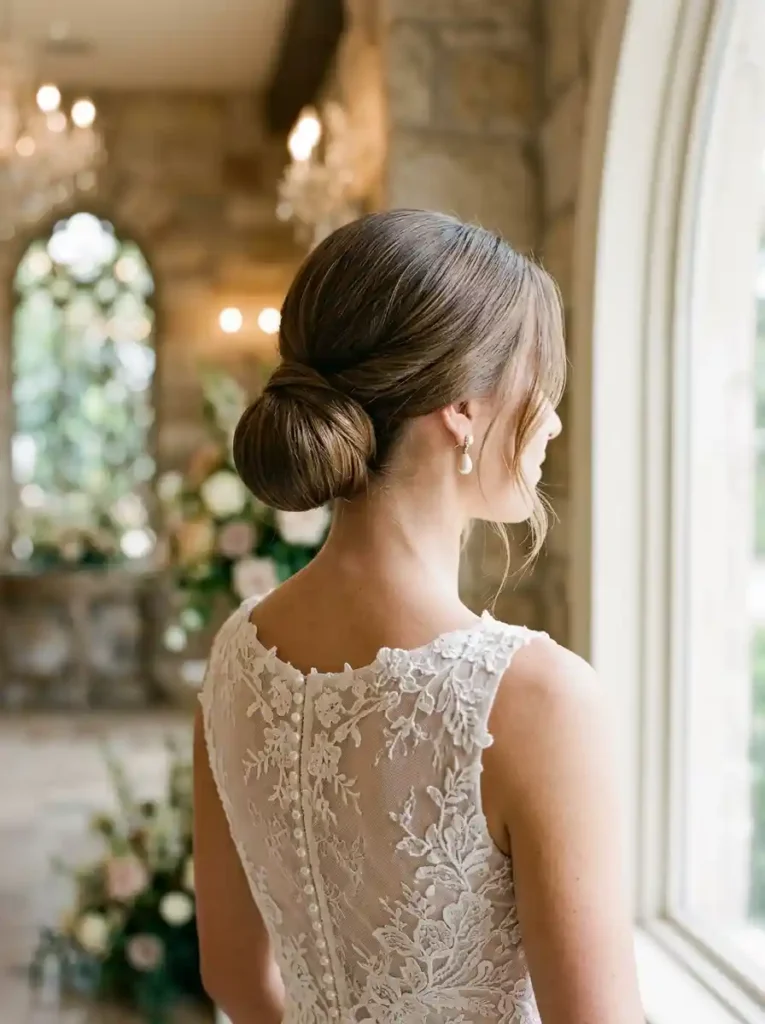
A classic low chignon remains one of the most graceful choices for a formal wedding. The compact bun creates a clean silhouette without competing with the dress or jewelry. It suits medium to long hair and works beautifully with straight or gently smoothed texture. Brides who prefer timeless details may appreciate its understated elegance. A center part gives the style symmetry, while a soft side part creates a slightly more romantic appearance. Pearl earrings or a delicate veil can complete the polished bridal effect.
For better security, ask your stylist to build the bun close to the head. Hidden pins should cross through the base rather than simply pressing downward. A small amount of smoothing cream can control flyaways without making the hair appear stiff. Stylist Tip: Fine hair often benefits from light teasing before the bun is formed. This adds structure and prevents the chignon from appearing too flat in photographs.
2. Soft Hollywood Waves
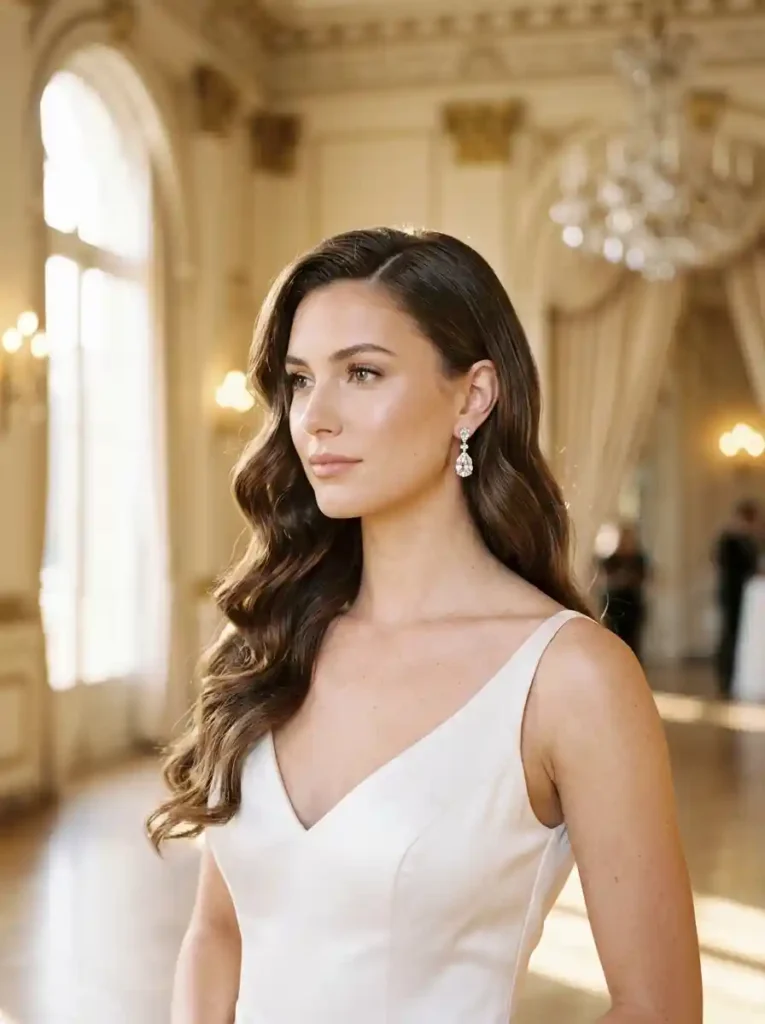
Soft Hollywood waves bring glamour without requiring an elaborate updo. Large, controlled curves create movement through long hair while maintaining a polished finish. This look suits brides with medium or thick density because fuller lengths help preserve the wave pattern. A deep side part adds classic drama and directs the hair toward one shoulder. The style pairs especially well with sleek gowns, vintage-inspired dresses, and sparkling earrings. Choose a natural brunette, warm blonde, or rich copper tone for a luxurious appearance.
Preparation makes a noticeable difference with this hairstyle. Hair should be completely dry before curling, and each section needs similar tension for consistent waves. Let the curls cool before brushing them together. Pro Tip: Ask your stylist to pin the curls while cooling if your hair struggles to hold shape. A flexible finishing spray can provide support while keeping the waves touchable and natural.
3. Romantic Braided Crown
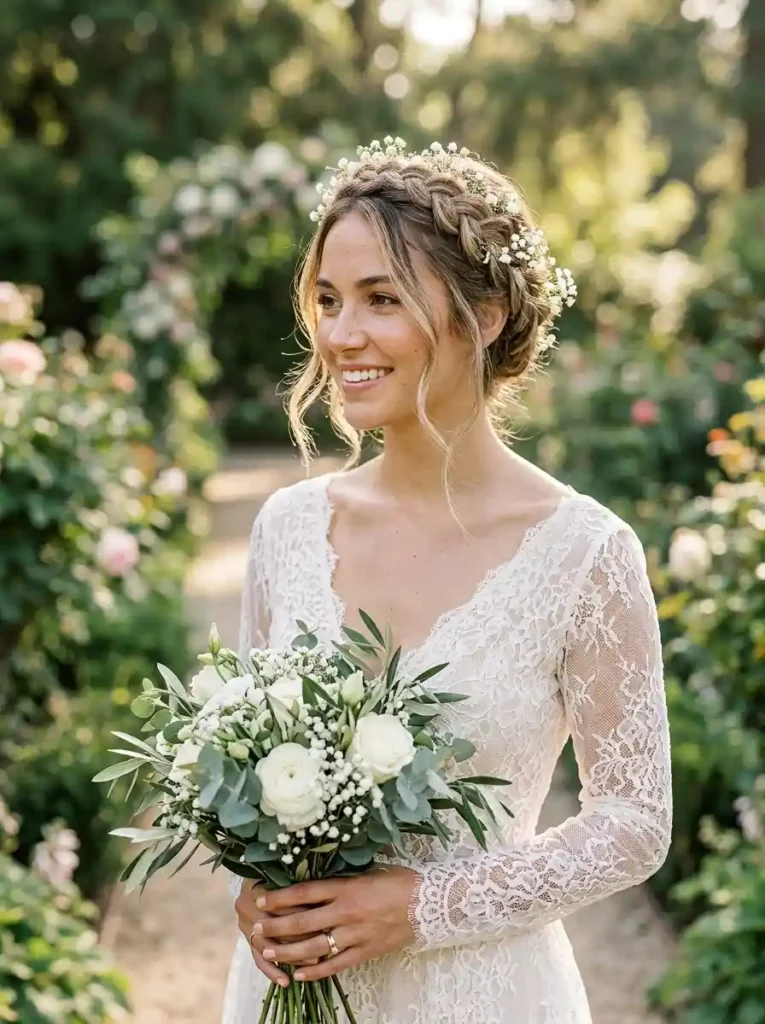
A braided crown creates a romantic frame around the head while keeping the overall hairstyle elevated. Its woven structure gives straight or lightly wavy hair more visual texture. Medium and long lengths provide enough material for a secure braid, while fine hair can appear fuller when the braid is gently loosened. Small flowers or tiny pins can be woven through selected sections. This style particularly suits garden ceremonies, lace dresses, and brides who want something feminine without a large traditional bun.
Braids should feel secure before they are loosened for softness. Your stylist can gently pull individual loops outward to create width without destroying the pattern. Avoid heavy accessories that could drag against the braid during the day. Common Mistake: Pulling every section equally can make the crown look bulky. Selective loosening creates a more natural finish and preserves the braid’s structure through photographs, movement, and dancing.
4. Sleek High Bun
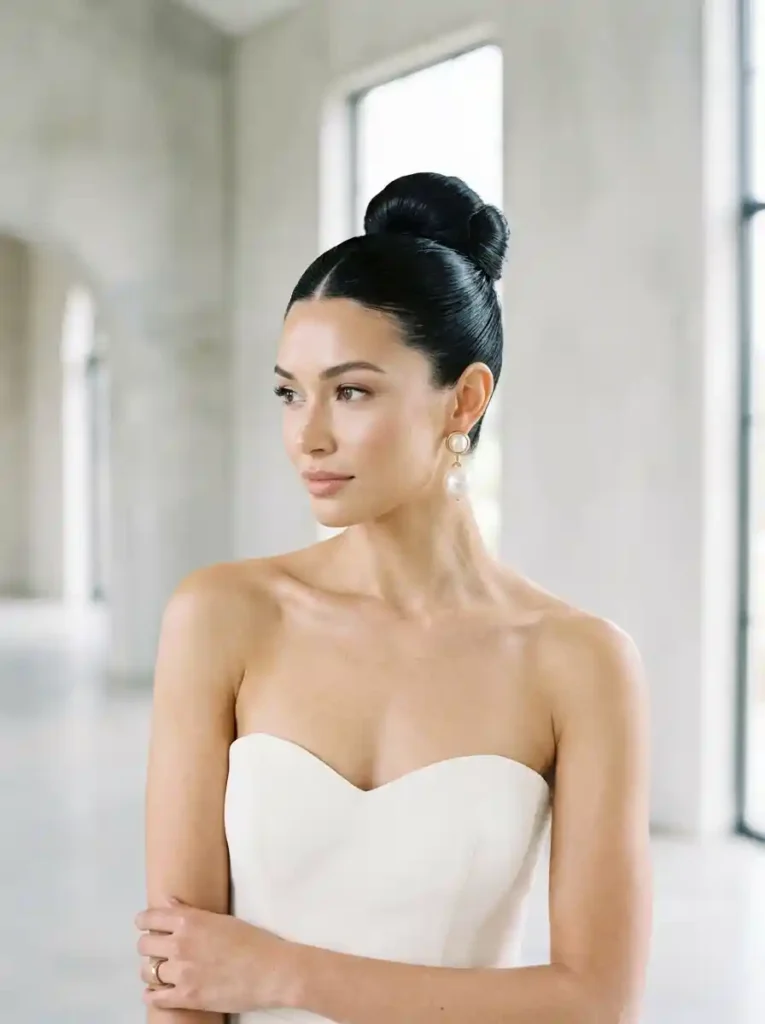
A sleek high bun gives a wedding look a modern, confident shape. The elevated position draws attention toward the face, neckline, earrings, and veil. It works particularly well with long, straight hair or hair that can be smoothed into a controlled finish. Brides wearing minimalist gowns may prefer this style because it adds structure without introducing excessive detail. A clean center part feels contemporary, while a slightly softened front creates a gentler interpretation of the same silhouette.
Use a smoothing brush and light styling gel to create the clean surface. Avoid applying too much product near the roots, especially if you want natural movement around the face. Secure the bun with crossed pins and a strong but flexible elastic. Stylist Tip: Place the bun according to the dress neckline and veil position. A slightly lower placement may feel more balanced when the gown already has dramatic shoulder or neck details.
5. Half-Up Pearl Twist
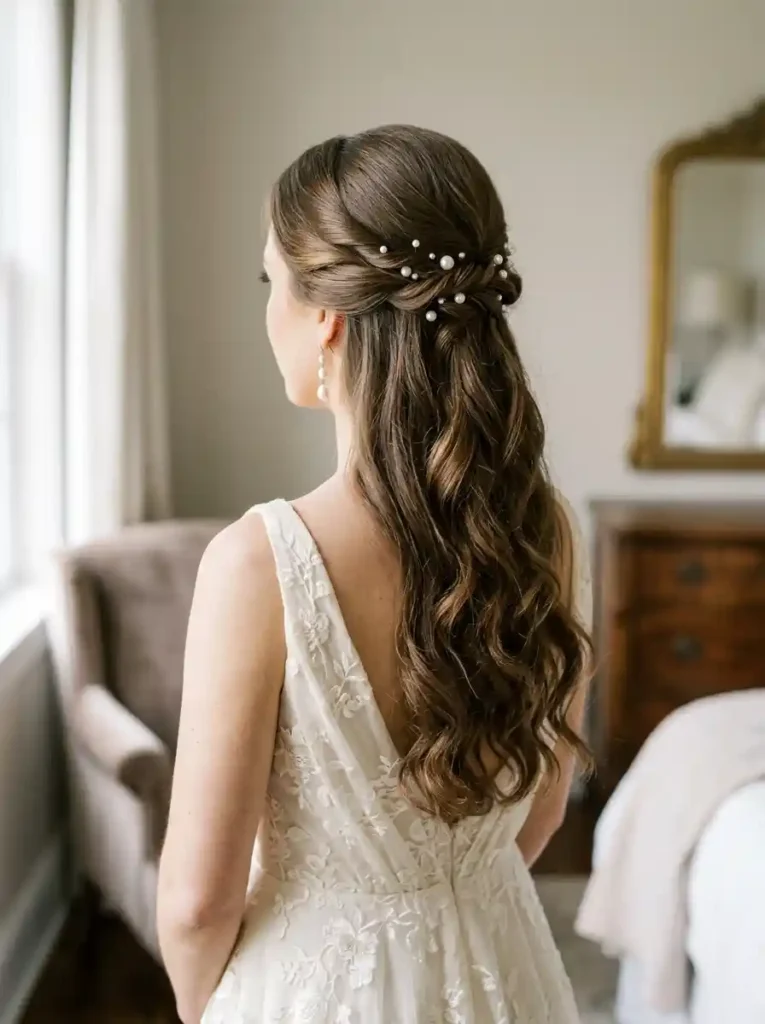
A half-up pearl twist combines the softness of flowing hair with the refinement of an updo. The upper sections are gently twisted away from the face, leaving the lower lengths loose and touchable. This approach suits brides who want their hair visible from the front while still adding a deliberate bridal detail. Medium to long hair works best, especially with soft waves underneath. Small pearls provide subtle sparkle and coordinate naturally with classic jewelry or a pearl-trimmed veil.
The twist should be anchored securely before decorative pins are added. Curling the loose lengths first can create a consistent base and help the finished style maintain shape. Pro Tip: Place pearls at slightly different heights instead of forming a straight row. This creates a more organic pattern. If your hair is very fine, gentle backcombing underneath the crown can add enough support without making the visible surface look teased.
6. Low Side-Swept Ponytail
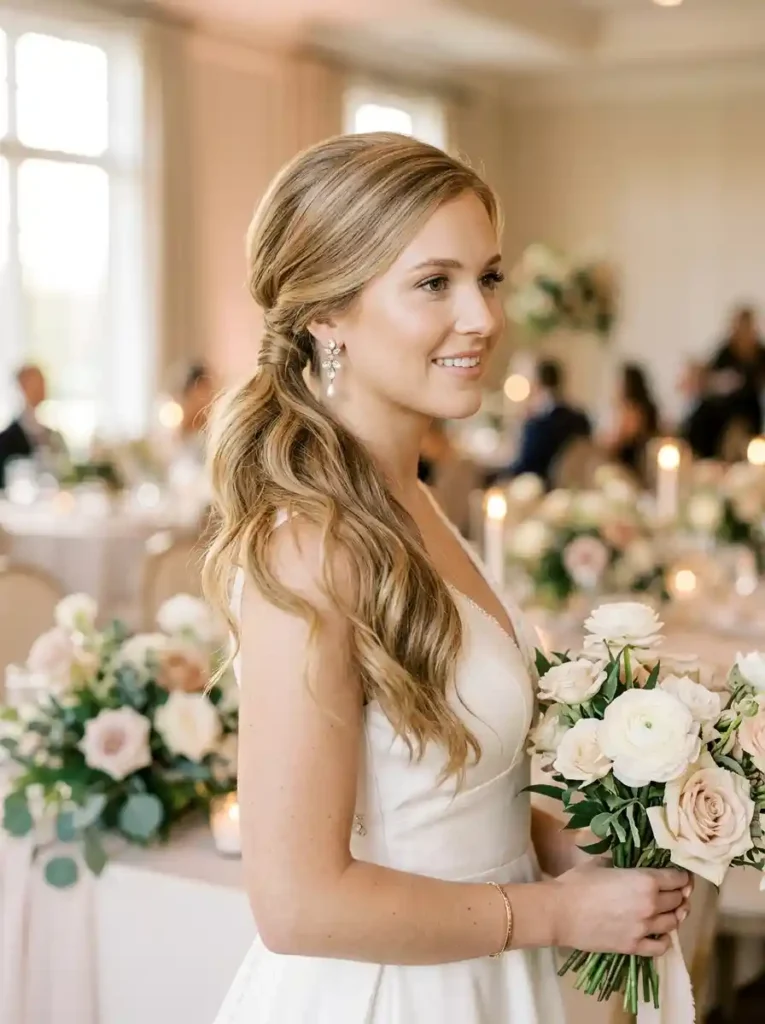
A low side-swept ponytail offers an elegant alternative to a traditional bun. The length remains visible, while the controlled crown keeps the hairstyle polished. Loose waves add movement without creating a heavily structured appearance. This style works especially well for long hair and suits brides who enjoy a relaxed silhouette with formal finishing. It can complement one-shoulder gowns, open backs, and dresses with delicate straps because the ponytail naturally falls to one side.
Begin with a smooth crown and create the ponytail low behind one ear. Curl the length before securing it if you want soft movement rather than a straight tail. Wrap a small section around the elastic for a refined finish. Stylist Tip: Keep the ponytail slightly loose at the base if comfort matters. Excessive tension can cause discomfort during a long ceremony and reception, especially when the hair is worn for several hours.
7. Textured French Twist
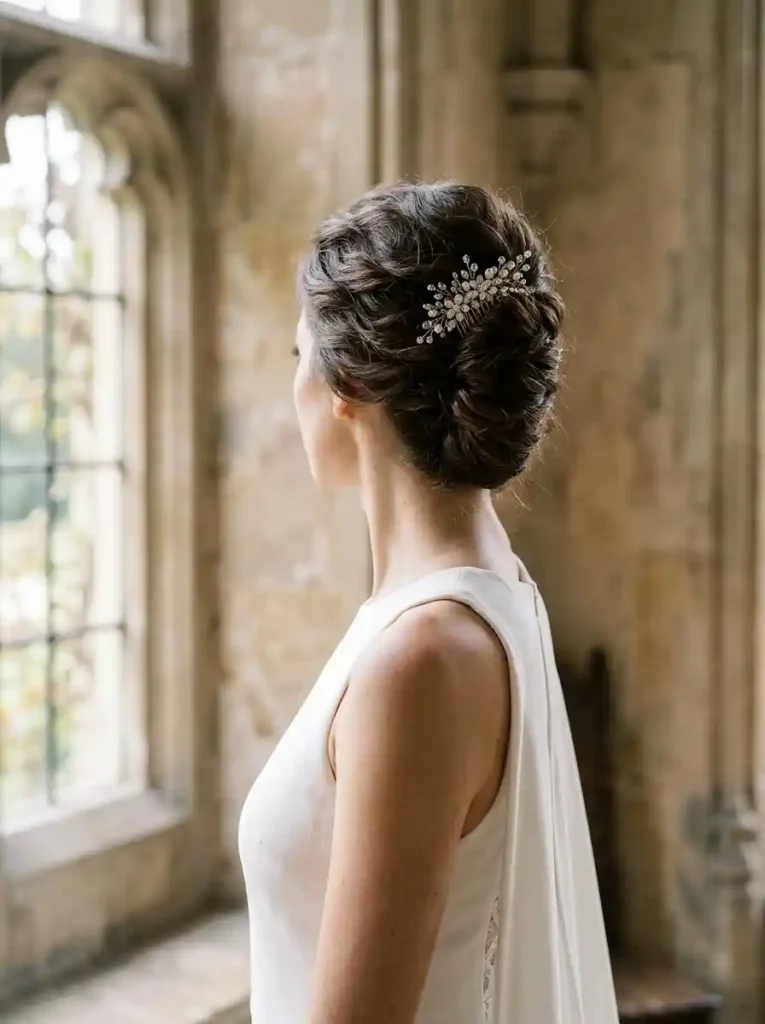
A textured French twist gives traditional bridal styling a softer, more contemporary personality. Instead of forming a perfectly smooth shell, the hair retains subtle separation and movement. This detail works beautifully with medium to long hair and can accommodate straight, wavy, or lightly curled textures. Brides seeking an elegant style with some visual character may prefer it. A crystal comb placed near the twist adds detail without covering the carefully shaped structure.
Ask your stylist to preserve texture through the outer layer rather than brushing everything completely smooth. Strong internal pinning keeps the shape secure while selected pieces remain relaxed. Common Mistake: Adding texture everywhere can make the twist appear unfinished. Concentrate looseness around the surface and keep the core firmly constructed. This balance creates a hairstyle that feels effortless while still remaining appropriate for formal wedding photography.
8. Loose Garden Waves
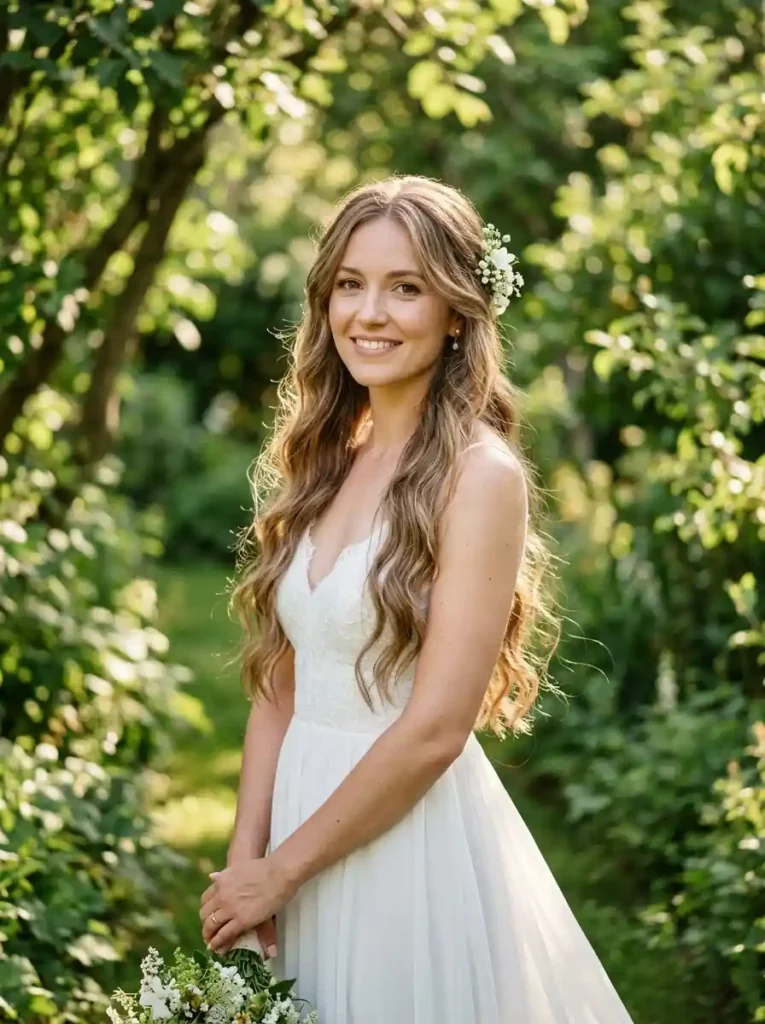
Loose garden waves create an airy bridal look that feels natural rather than heavily sculpted. The waves vary slightly in width, giving the hair an organic finish with plenty of movement. Long and medium-long hair can support this style particularly well. It suits outdoor ceremonies, botanical settings, lightweight dresses, and brides who want their hair to feel soft. A few shorter pieces around the face can add dimension without turning the look into a formal layered hairstyle.
Use a medium-barrel curling iron and alternate the direction of selected sections. Leave the ends slightly straighter for a relaxed finish. Once the curls cool, separate them gently with your fingers instead of brushing them aggressively. Pro Tip: Humidity can soften loose waves quickly. A lightweight anti-humidity spray applied before styling can help preserve the shape without creating the rigid finish associated with heavy hairspray.
9. Vintage Finger-Wave Bob
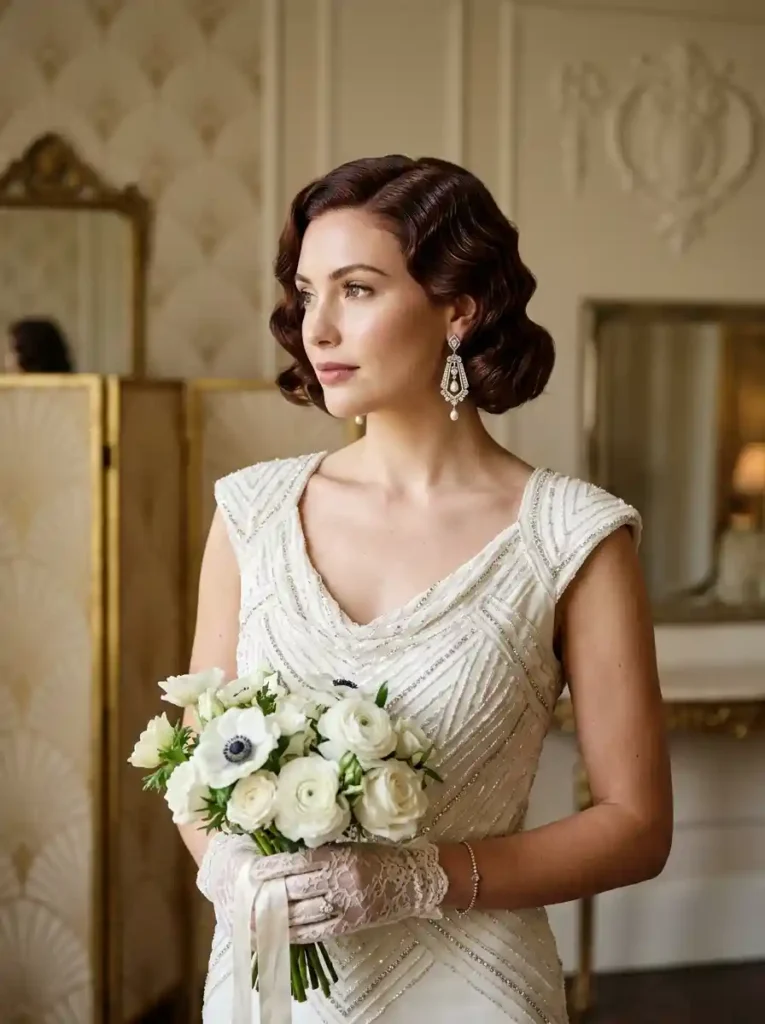
A vintage finger-wave bob proves that short wedding hair can look exceptionally formal. The sculpted ridges create a distinctive pattern across a chin-length cut, giving the style an unmistakable period-inspired character. It works best on straight or naturally smooth hair because defined waves require controlled sections. Brides with bobs or shorter cuts may appreciate this option when they want strong personality without extensions. Crystal earrings and streamlined dresses help reinforce the elegant vintage direction.
This style requires careful sectioning and patience during preparation. Your stylist can use setting products to establish each ridge before allowing the hair to dry fully. Stylist Tip: Bring a photograph showing the exact wave pattern you prefer. Finger waves can range from subtle curves to highly sculpted ridges. Discussing the desired width and depth helps your stylist create a finish that matches your dress, accessories, and overall wedding theme.
10. Soft Side Bun With Tendrils
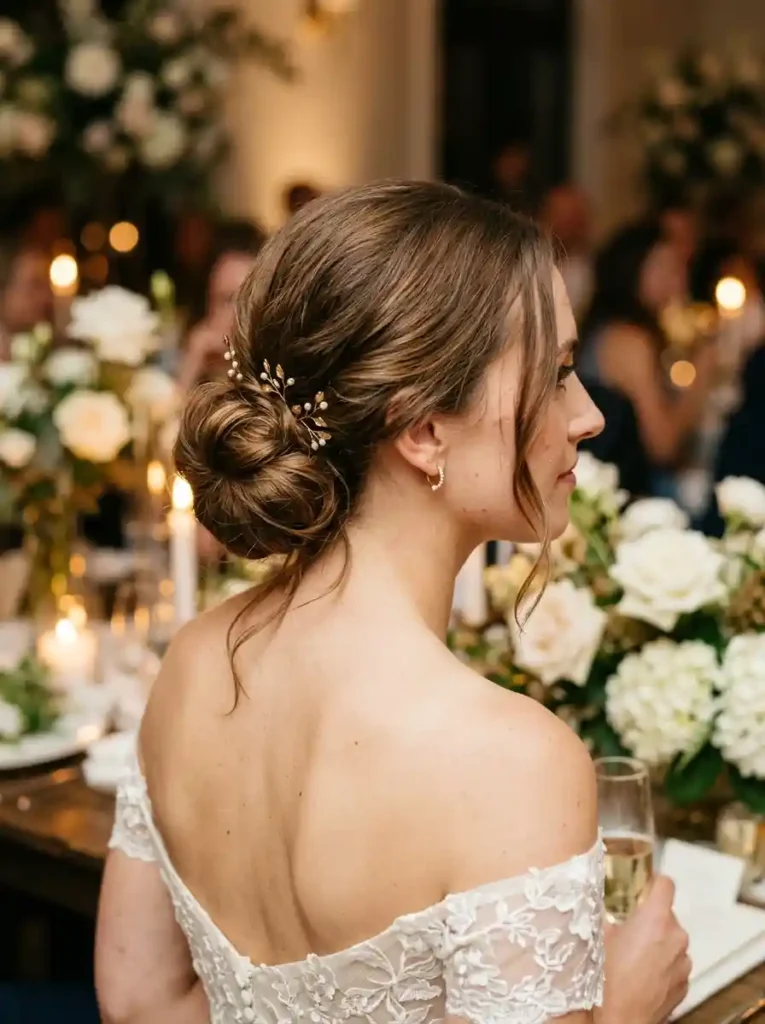
A soft side bun offers romantic asymmetry while keeping the hair comfortably contained. The bun sits behind one ear, creating a graceful line from the cheek toward the shoulder. Loose tendrils soften the style and prevent it from looking overly formal. Medium to long hair can support this shape, while naturally wavy hair may require less preparation. Brides wearing off-the-shoulder gowns can particularly enjoy the way this placement leaves one side of the neckline visible.
Choose face-framing pieces before securing the main bun. This prevents accidentally pulling too much hair into the knot. The bun should be anchored firmly, while the tendrils remain lightly styled. Expert Insight: Face-framing strands look more natural when their width varies. One slightly longer piece and a few finer strands can create dimension without appearing deliberately symmetrical or overly curled.
11. Braided Low Bun
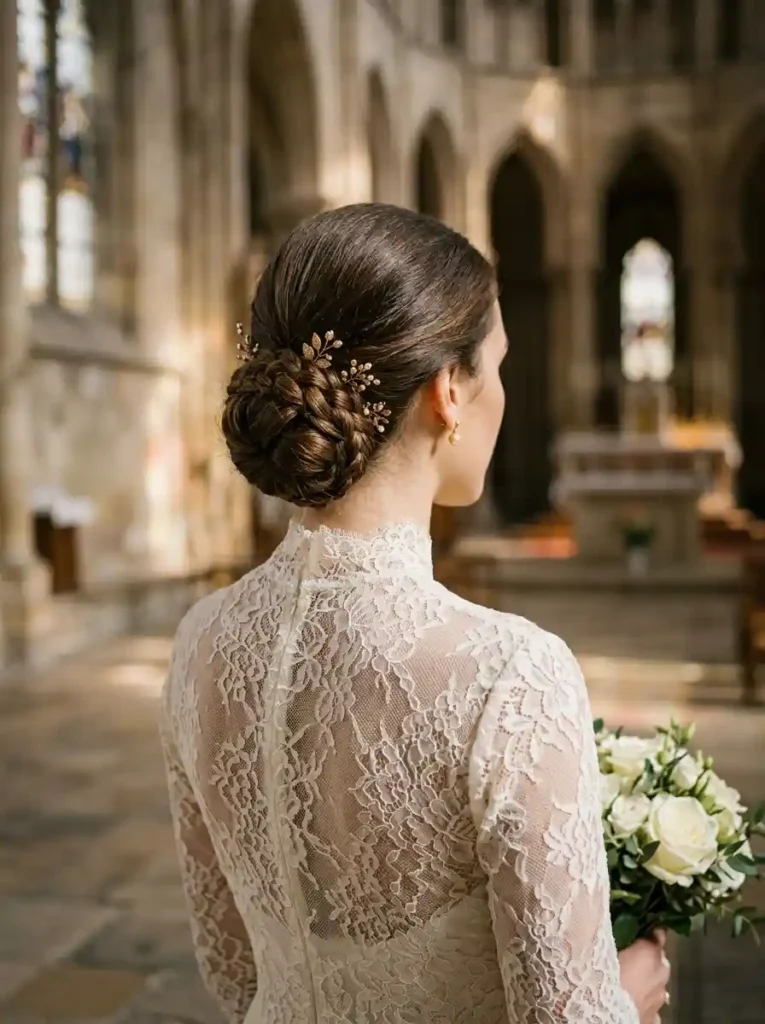
A braided low bun adds craftsmanship to a familiar bridal silhouette. The visible braid creates a decorative border around the bun, giving the back of the hairstyle an interesting focal point. Long hair provides enough length for a substantial braid, while medium hair can create a smaller woven accent. This style suits brides who want a traditional updo with more texture. Botanical pins, tiny pearls, or a veil can be added without overwhelming the braid.
For the cleanest result, create the braid before forming the final bun. Keep the braid moderately firm so its pattern remains visible throughout the day. Pro Tip: Do not loosen the braid too aggressively. A small amount of expansion adds dimension, but excessive pulling can blur the pattern. Secure the bun from several directions, especially underneath, where movement from the veil or dancing can loosen the structure.
12. Polished Low Ponytail
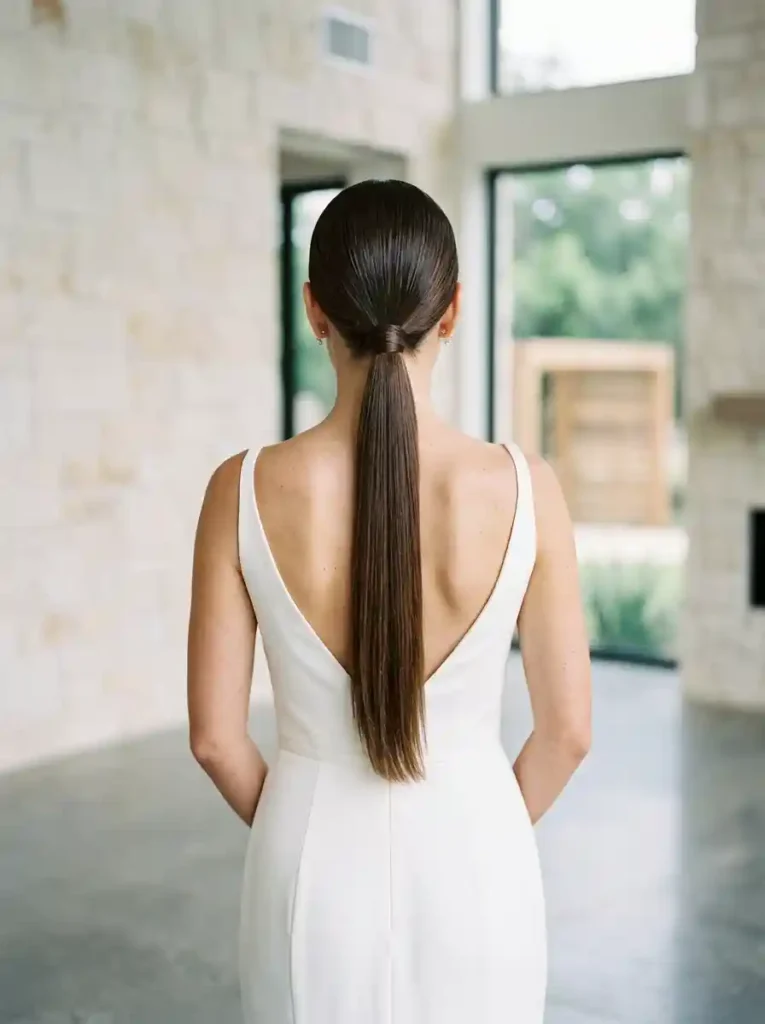
A polished low ponytail is ideal for brides who prefer modern simplicity. Its clean lines highlight the face, neckline, and gown without adding unnecessary volume. Long straight hair creates the strongest version of this silhouette, although lightly waved lengths can also work. The center part keeps the look contemporary and symmetrical. This hairstyle pairs naturally with minimalist gowns, architectural necklines, simple veils, and understated jewelry.
Preparation should focus on smoothness rather than excessive product. Blow-dry the roots carefully, then use a flat iron only where needed. Wrap the elastic with a small strand of hair to hide it completely. Common Mistake: Making the ponytail extremely tight can create discomfort and flatten the crown. Keep the base secure but not painful. A small amount of natural root lift can make the finished style appear more balanced in photographs.
13. Half-Up With Cascading Curls
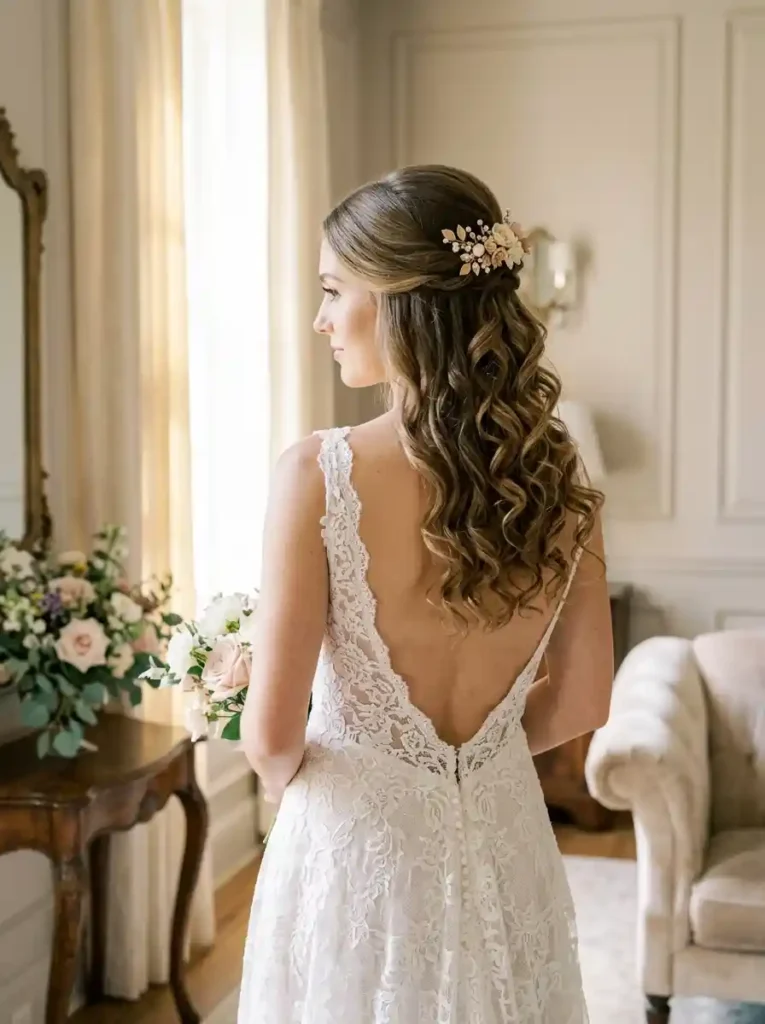
Cascading curls create a fuller romantic silhouette while the half-up construction keeps the front controlled. The style is particularly useful for brides who want volume without wearing a complete updo. Long hair gives the curls room to fall and remain visible from the back. A delicate comb can anchor the gathered section and provide a clear focal point. This hairstyle works beautifully with open-back dresses because the curls naturally frame the exposed fabric.
Curl the lower lengths in sections and allow them to cool before separating them. Keep the upper section slightly smoother so the hairstyle has a clear contrast between structure and movement. Stylist Tip: Curl direction matters around the face. Directing the front sections away from the cheeks can create a more open appearance. Test the curl size during your trial because smaller curls can expand significantly after brushing.
14. Sleek Bridal Bob With Deep Part
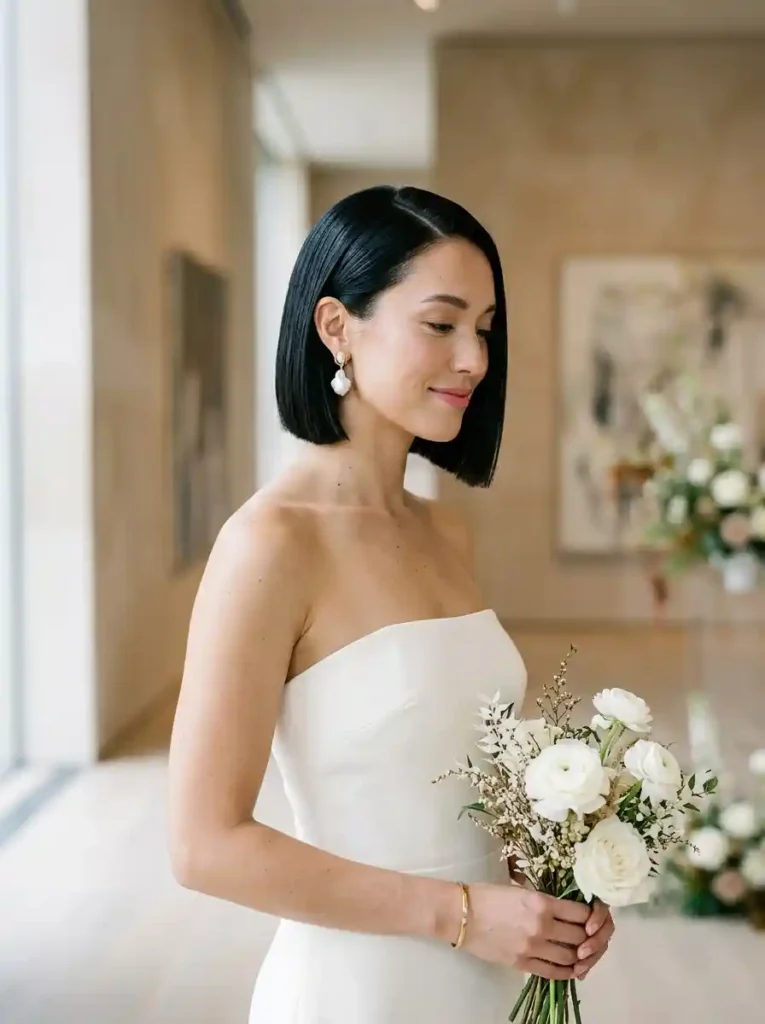
A sleek bridal bob creates a crisp, fashion-forward silhouette without requiring long hair. The blunt ends give the haircut definition, while a deep side part adds movement and asymmetry. Tucking one side behind the ear exposes earrings and creates a polished profile. This option suits brides with short to medium hair who want their haircut itself to become part of the wedding styling. It pairs particularly well with minimalist dresses and structured accessories.
The haircut should be shaped several weeks before the ceremony rather than dramatically changed immediately beforehand. This gives the ends time to settle naturally. Use a smoothing cream and targeted heat styling to maintain the clean outline. Pro Tip: A trial should include the actual earrings and neckline whenever possible. Short hair exposes these details more clearly, so accessories can change the visual balance of the entire bridal look.
15. Wispy Bangs With Low Waves
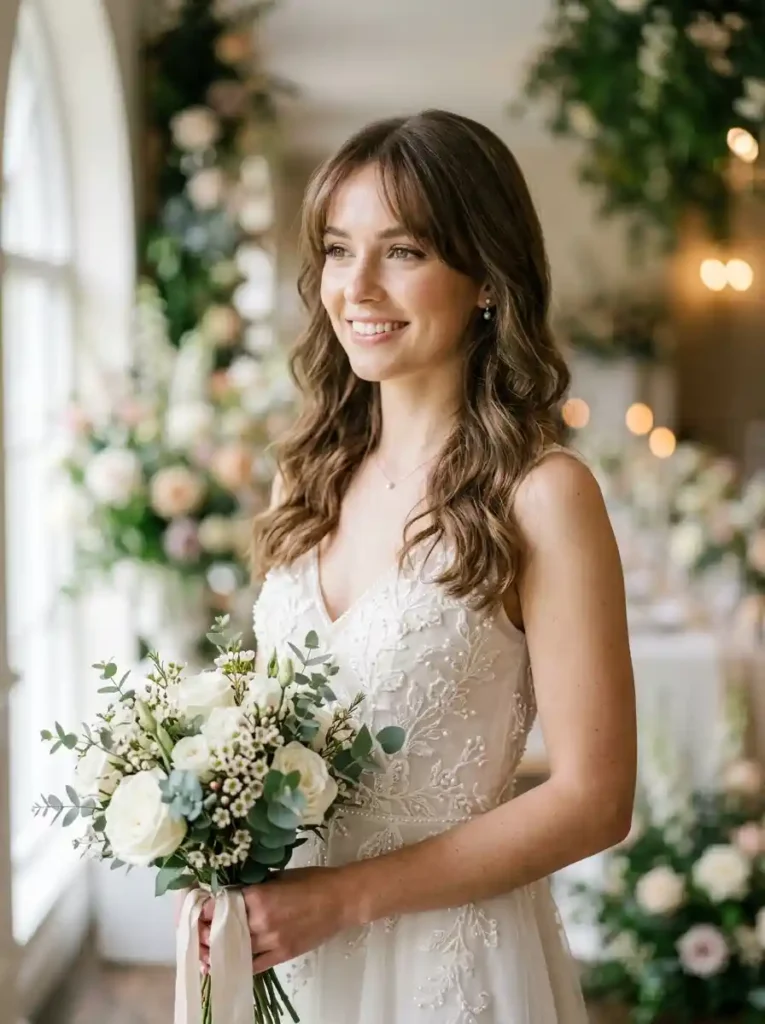
Wispy bangs add softness around the forehead while loose waves create movement through shoulder-length hair. The fringe is intentionally light, allowing some forehead to remain visible instead of creating a dense block. This can suit brides who already wear bangs and want to keep their familiar appearance on the wedding day. The style works well with medium or fine hair, especially when the waves are kept loose rather than overly voluminous.
Ask your stylist to trim the bangs well before the wedding so their length can settle naturally. Avoid introducing a completely new fringe during the final days before the ceremony. Common Mistake: Over-curling wispy bangs can make them look shorter and heavier. A small round brush and low heat usually provide better control. Keep the ends flexible so the fringe moves naturally during photographs and conversation.
16. Textured High Ponytail
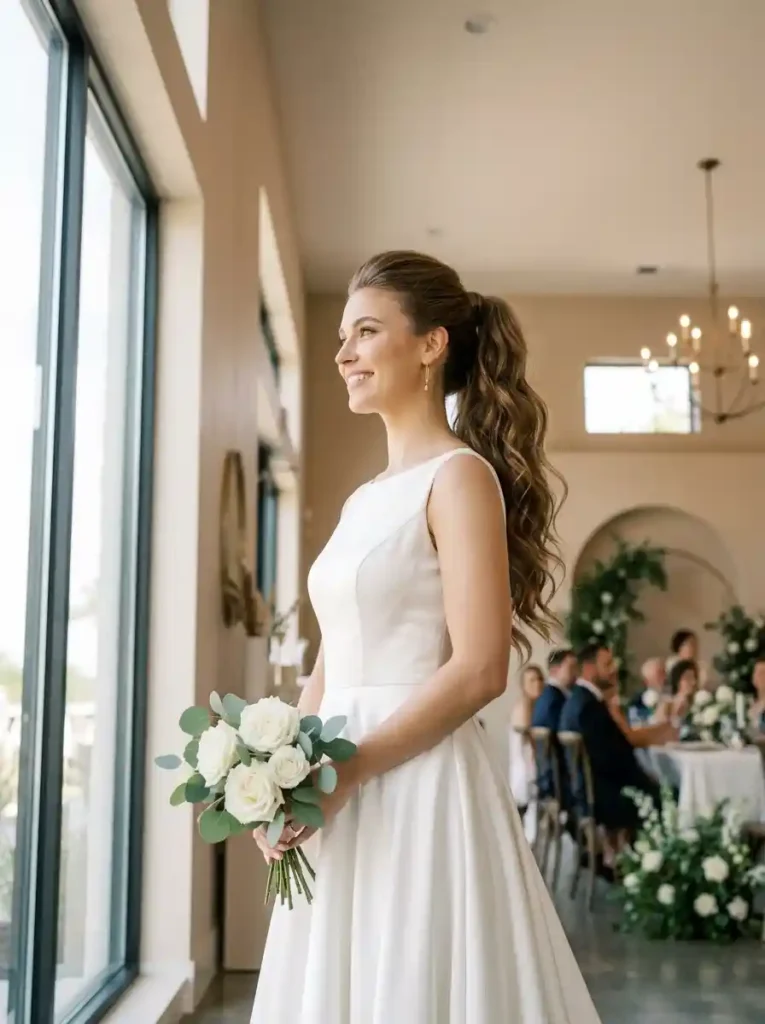
A textured high ponytail gives bridal styling an energetic modern edge. The elevated base creates height, while loose waves keep the long tail from looking severe. It suits medium-thick to thick hair especially well because density helps maintain volume through the day. Brides who want to show their hair length may prefer this option over an updo. The style pairs naturally with sleek gowns, statement earrings, and dresses with open backs or clean necklines.
Build the ponytail in two sections if extra height is needed. This technique can distribute weight more comfortably and prevent the base from collapsing. Stylist Tip: Add texture before securing the ponytail rather than spraying excessive product afterward. Lightly waved hair has better grip around the elastic and pins. If your hair is heavy, discuss support methods with your stylist so the style remains comfortable during extended wear.
17. Romantic Waterfall Braid
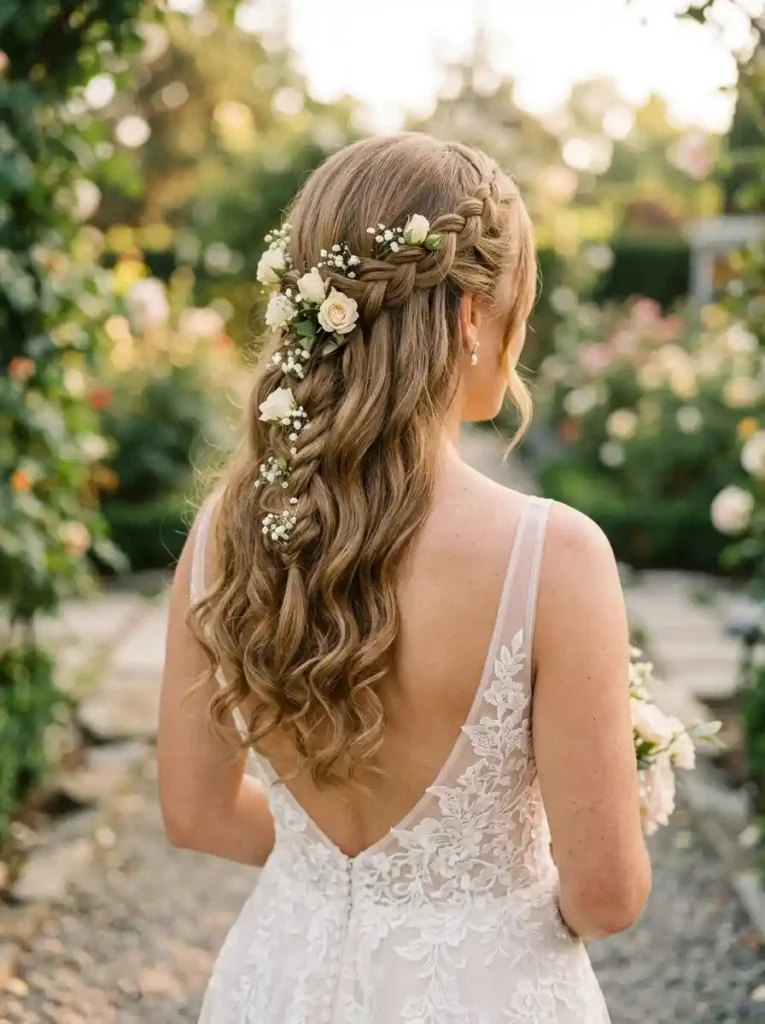
A waterfall braid creates a delicate horizontal detail while allowing most of the hair to remain loose. Sections are woven across the back, with selected pieces falling naturally into the curls below. Long hair provides the clearest cascading effect, while medium lengths can support a smaller version. Brides who love intricate details but dislike full updos may find this balance appealing. Small flowers or fine pins can emphasize the braid without hiding its pattern.
The braid should be secured at both ends with discreet pins hidden beneath the surrounding waves. Style the lower hair first so the braid does not disturb the curl pattern later. Pro Tip: Keep the waterfall sections similar in thickness for a balanced design. If some pieces are much heavier, the braid may appear uneven. A practice session also helps determine whether the braid remains visible from the ceremony’s main photography angles.
18. Side-Parted Curly Updo
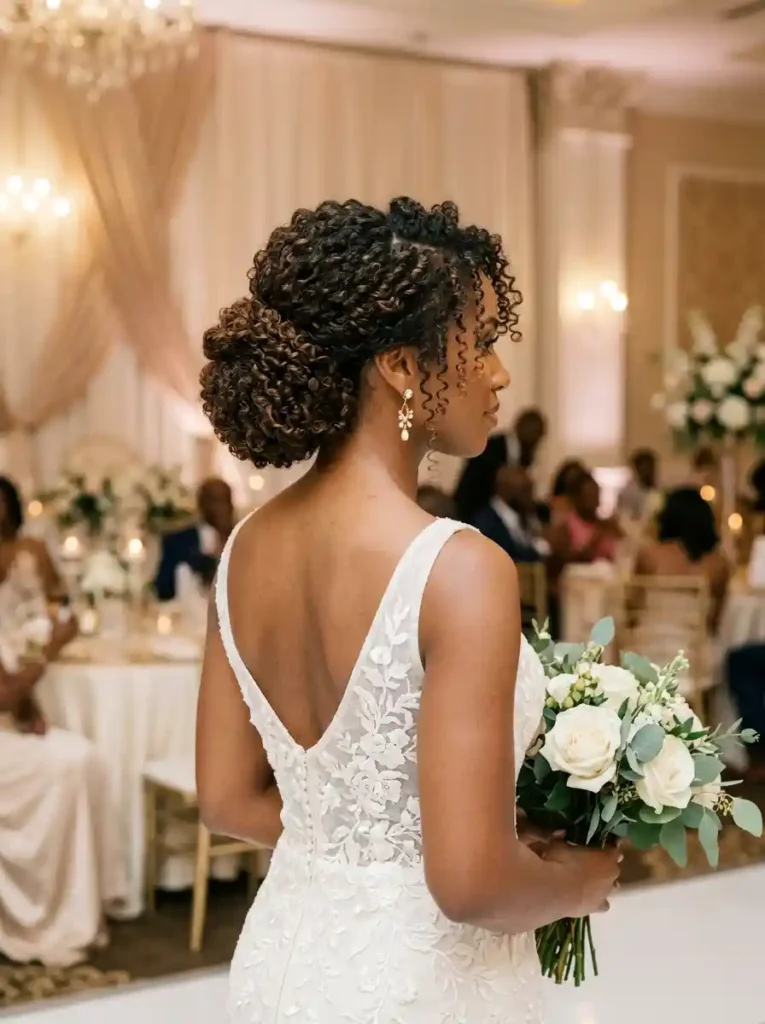
A side-parted curly updo celebrates natural texture while giving the hairstyle formal structure. Defined curls are gathered into a rounded shape rather than brushed into a smooth bun. This allows the natural pattern to remain visible and gives the back of the head a rich, dimensional appearance. Brides with naturally curly hair may appreciate avoiding excessive straightening before the ceremony. The style can complement both romantic gowns and more structured dresses.
Curly hair should be prepared according to its normal moisture needs before the styling appointment. Avoid heavy manipulation immediately before the wedding because it can disturb the curl pattern. Expert Insight: Secure the style at its foundation, not just around the outer curls. Hidden pins placed into the gathered base provide support while leaving the visible curls soft. A lightweight curl-defining product can help individual sections remain separated and lively.
19. Veil-Ready Classic Updo
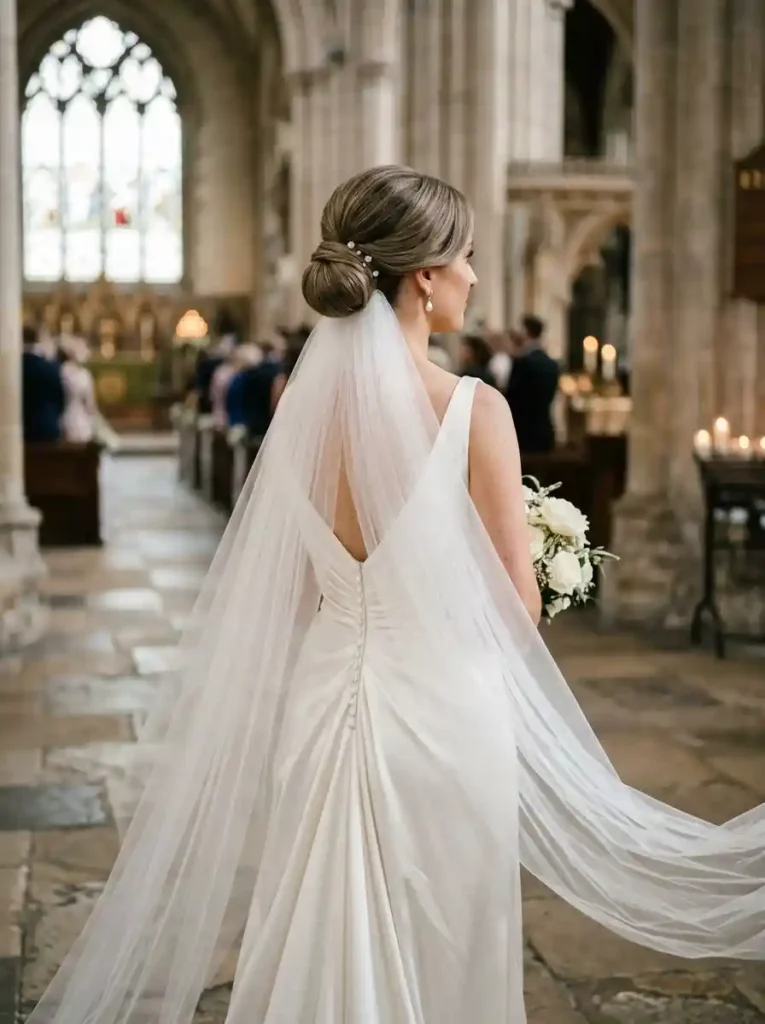
A veil-ready updo is designed around one practical priority, secure accessory placement. The bun sits high enough to support a veil while remaining soft around the crown. Medium to long hair can create the rounded shape, and subtle highlights may add dimension to the finished structure. Brides wearing long veils may prefer this arrangement because the hairstyle provides a stable anchor without hiding the entire back of the head.
Tell your stylist about the veil before finalizing the hairstyle. The attachment method can influence bun height, pin placement, and overall shape. Stylist Tip: Bring the actual veil to the hair trial. Different combs, weights, and lengths create different support needs. If the veil will be removed after the ceremony, ask for a hairstyle that still looks complete without it. This prevents the reception look from feeling unfinished.
20. Low Twist With Face-Framing Pieces
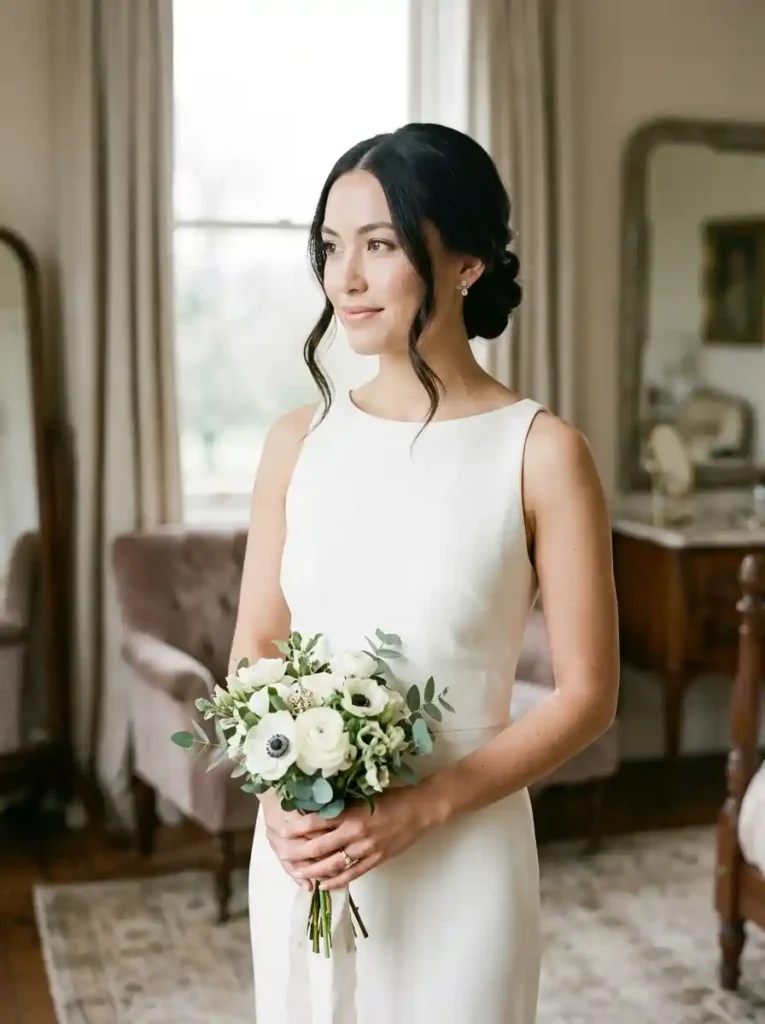
A low twist with face-framing pieces offers an understated alternative to elaborate bridal styling. The back remains clean and controlled, while two carefully selected strands soften the front. Long or medium-long hair works well because sufficient length allows the twist to form a stable base. Brides who prefer simple silhouettes may like this style with crepe, satin, or minimalist gowns. The look feels refined without relying on heavy curls, accessories, or excessive volume.
Create the face-framing pieces before securing the twist so their thickness remains intentional. Use a curling iron only on those strands if a gentle bend is desired. Common Mistake: Making the loose pieces too thick can make the hairstyle look disconnected from the rest. Fine, controlled sections usually provide a softer result. Ask your stylist to photograph the style from the front and side during the trial to check the framing.
21. Bohemian Braided Pony
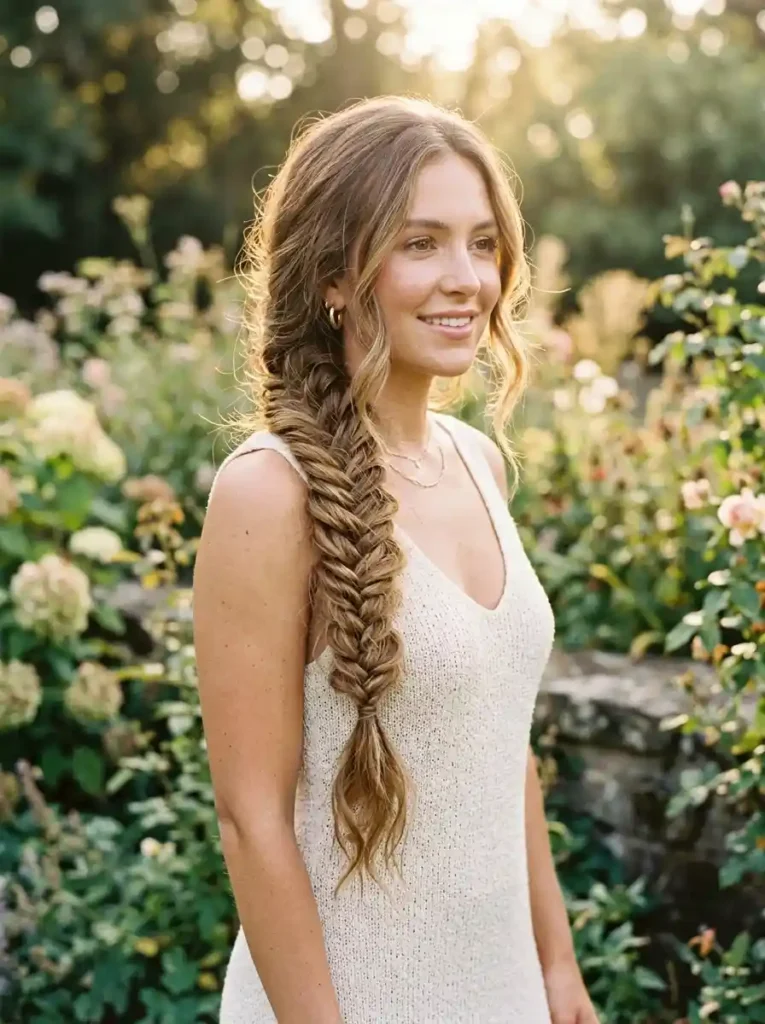
A bohemian braided pony combines practical control with relaxed texture. The crown has gentle volume, while the braid keeps long lengths contained without creating a formal bun. It suits outdoor celebrations, rustic venues, lace gowns, and brides who prefer natural-looking details. Medium-thick and thick hair can create a substantial braid, while fine hair can use subtle extensions if extra length or fullness is desired. Botanical accents can reinforce the outdoor mood without becoming overly decorative.
Start with lightly textured hair because completely silky strands can make the braid slide apart. Secure the base firmly, then loosen selected braid loops for width. Pro Tip: Avoid placing fragile flowers directly where the braid rubs against the shoulders. Instead, position decorative elements near the upper section where they are less likely to catch. This keeps the hairstyle comfortable and reduces the chance of petals or leaves becoming displaced during movement.
22. Pearl-Studded French Braid
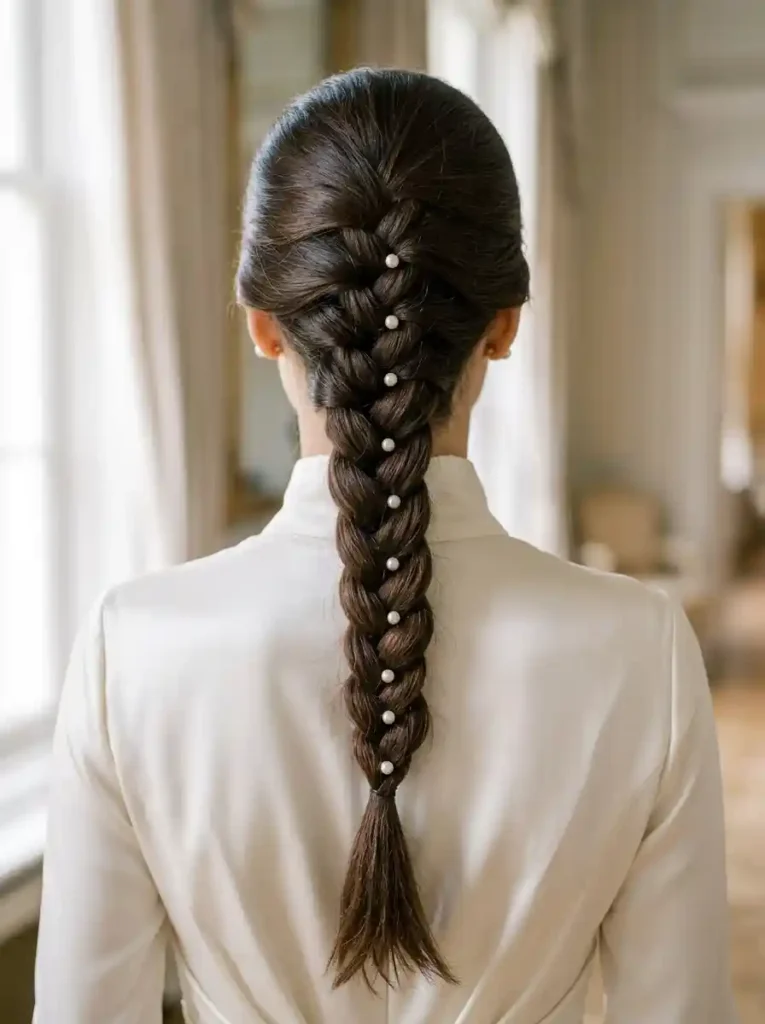
A pearl-studded French braid turns a familiar everyday technique into a polished bridal statement. The braid begins near the crown and gathers the hair progressively, creating a neat vertical pattern down the back. Long hair works best for a substantial finish, while medium hair can produce a shorter braid. Small pearls add bridal detail without requiring a separate headpiece. This option suits brides who value texture, structure, and a hairstyle that photographs clearly from behind.
The braid should be moderately firm rather than extremely tight. A secure foundation prevents movement, while slightly softened outer loops keep the result from looking rigid. Stylist Tip: Place pearls only after the braid has been completely secured. This makes it easier to adjust their positions and prevents accessories from interfering with the weaving process. Use lightweight pins so the decorative details do not pull against individual strands.
23. Soft Curled Updo With Floral Pin
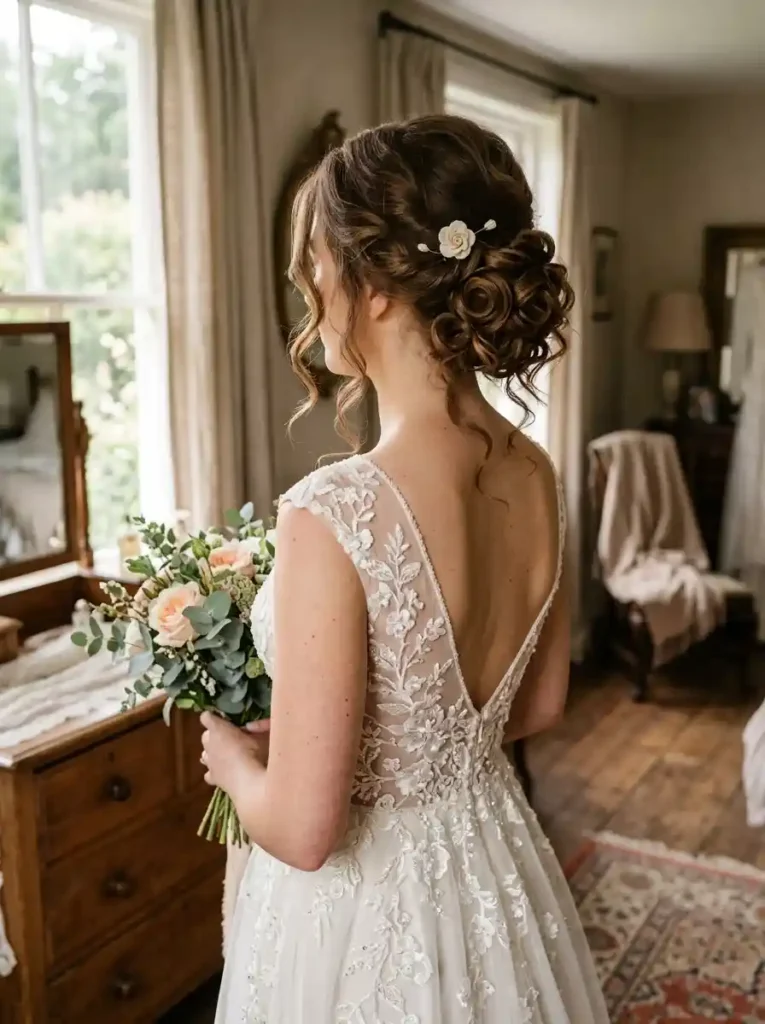
A softly curled updo offers romance without the rigid finish of a tightly sculpted bun. Medium-length hair can create enough curled sections for a dimensional shape, while subtle crown volume prevents the hairstyle from looking flat. A single floral pin gives the back a clear focal point. This style works especially well for brides who enjoy feminine details but want to avoid an overly decorated appearance. It pairs naturally with floral gowns and soft romantic fabrics.
Curl the hair before constructing the updo so the final shape has natural movement. Pin the curls individually instead of twisting everything into one compact knot. Expert Insight: Individual curl placement gives the stylist more control over the silhouette. Ask for slightly larger curls near the outer edges and smaller sections underneath. This creates depth and helps the hairstyle appear dimensional from both close portraits and wider wedding photographs.
24. Modern Sculpted Bridal Bun
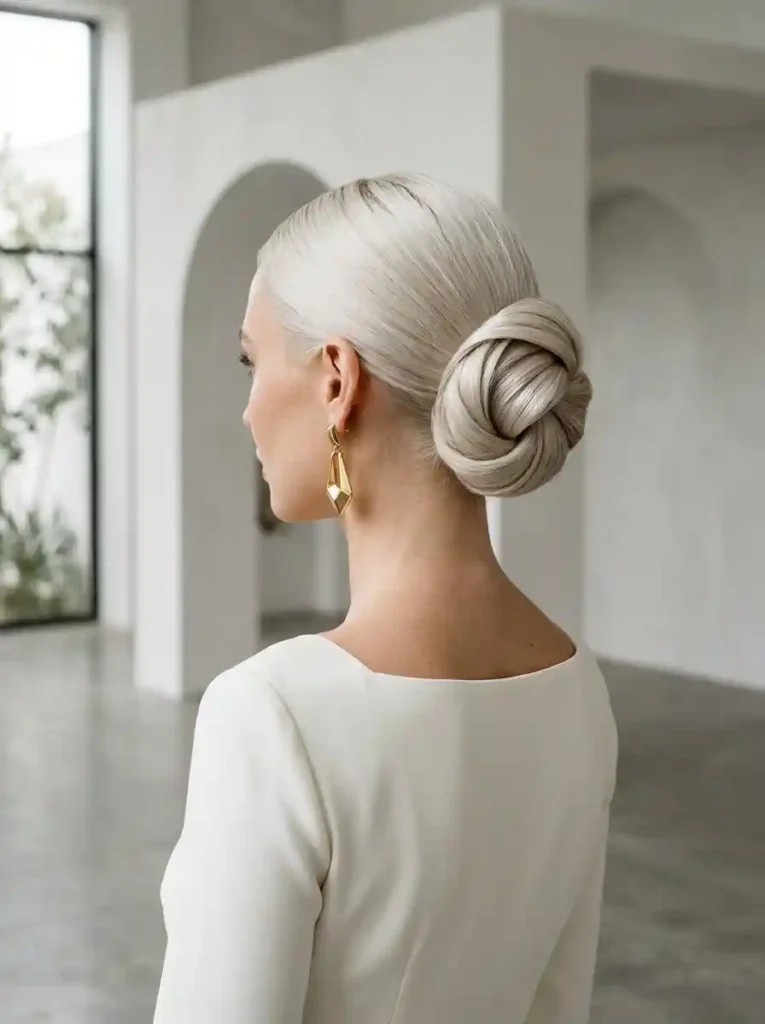
A modern sculpted bridal bun is ideal for someone who wants a clean fashion-forward statement. Instead of relying on curls or braids, the design uses smooth folds and deliberate asymmetry to create visual interest. Long hair provides enough material for the sculptural construction, while strong styling products help maintain its crisp surface. This hairstyle pairs especially well with geometric jewelry, simple gowns, and contemporary venues where architectural details are part of the aesthetic.
The shape should be planned around the head from several angles. A style that looks impressive from the back may appear unbalanced from the side if the proportions are not considered. Pro Tip: Ask for a full trial with photographs taken from front, side, and rear views. The images reveal whether the bun complements the neckline and accessories. Use flexible finishing spray over the completed structure to preserve definition without creating an overly lacquered appearance.
Frequently Asked Questions
What is the most timeless wedding hairstyle?
A low chignon, classic bun, or softly styled updo offers a timeless appearance. These shapes work with many dress styles and accessories.
What wedding hairstyle works well for long hair?
Long hair offers many options, including Hollywood waves, braided styles, ponytails, half-up curls, and elaborate buns. Your preferred level of structure can guide the choice.
Can short hair look elegant for a wedding?
Yes. A polished bob, finger waves, smooth side part, or carefully shaped textured style can look highly sophisticated without added length.
How can I make my wedding hairstyle last longer?
Start with clean, fully dry hair and use products suited to your texture. Secure the foundation carefully and test the complete style during a trial.
Should I wear my hair up or down for my wedding?
Choose based on your dress, hair texture, accessories, comfort, and personal style. An updo offers strong structure, while loose styles showcase length and movement.
When should I have my wedding hairstyle trial?
A trial several weeks before the wedding gives you time to adjust the shape, accessories, parting, or length. Bring your veil and jewelry if possible.
Conclusion
The best wedding hairstyle is not always the most complicated one. It is the style that supports your dress, accessories, hair texture, comfort, and personal taste. A polished chignon can feel timeless, while waves can bring softness and movement. Braids add texture, and modern ponytails offer a fresh alternative to traditional updos.
Before your appointment, save a few favorite looks and note what you like about each one. Bring those references to your stylist and discuss your hair length, density, texture, and wedding-day plans. A small customization can make a familiar style feel completely personal.
Save your favorite wedding hairstyle inspiration before your next salon appointment.


