
Sometimes your haircut feels fine, but your overall look needs a small change. A full haircut can feel like too much, while doing nothing feels uninspiring. Side swept bangs offer a simple middle ground. They can refresh your appearance without removing much length from the rest of your hair.
From polished layers to tousled waves, the right fringe can suit many personal styles. These 20 ideas explore different lengths, textures, colors, and styling approaches. You will also find practical tips to help you choose a look that feels natural and easy to maintain.
1. Soft Feathered Side Fringe

Soft feathered bangs create movement without making the fringe feel heavy. The ends taper gently around the cheekbone for an airy finish. This version suits medium-density hair particularly well because the layers preserve natural fullness. It also works beautifully with long, flowing hair. The feathering gives the haircut a polished shape while keeping the overall appearance relaxed. Choose this look if you want visible bangs without a sharp or overly structured edge around your forehead.
For styling, direct the damp fringe sideways with a round brush. Use moderate heat rather than aggressively flattening the hair. A lightweight styling cream can keep the ends flexible and smooth. Pro Tip: Ask your stylist to cut the shortest section slightly longer than your desired final length. Hair can spring upward after drying, especially when it has natural movement or wave.
2. Long Side Swept Bangs With Layers
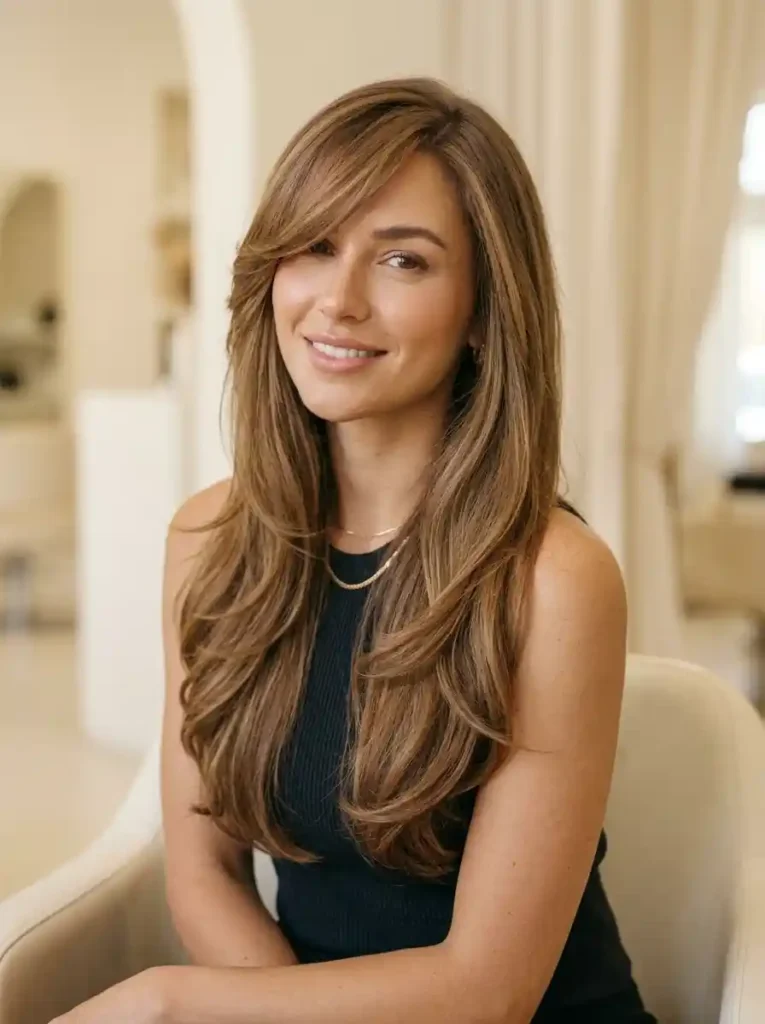
Long bangs that blend into face-framing layers offer an understated transformation. The fringe begins softly near the part and extends toward the lower cheek area. This creates a continuous line rather than a noticeable break between bangs and lengths. It is especially appealing for people who want flexibility. You can wear the fringe forward, sweep it away, or tuck it behind one ear. The result feels grown-up, graceful, and easy to adapt.
Maintenance is fairly forgiving because the longer length grows into the haircut naturally. Style the bangs with a large round brush for gentle lift. Avoid excessive hairspray if you want movement. Stylist Tip: Request invisible blending at the outer edge. This keeps the fringe connected to longer layers and prevents an obvious triangular shape as it grows.
3. Wispy Side Swept Bangs
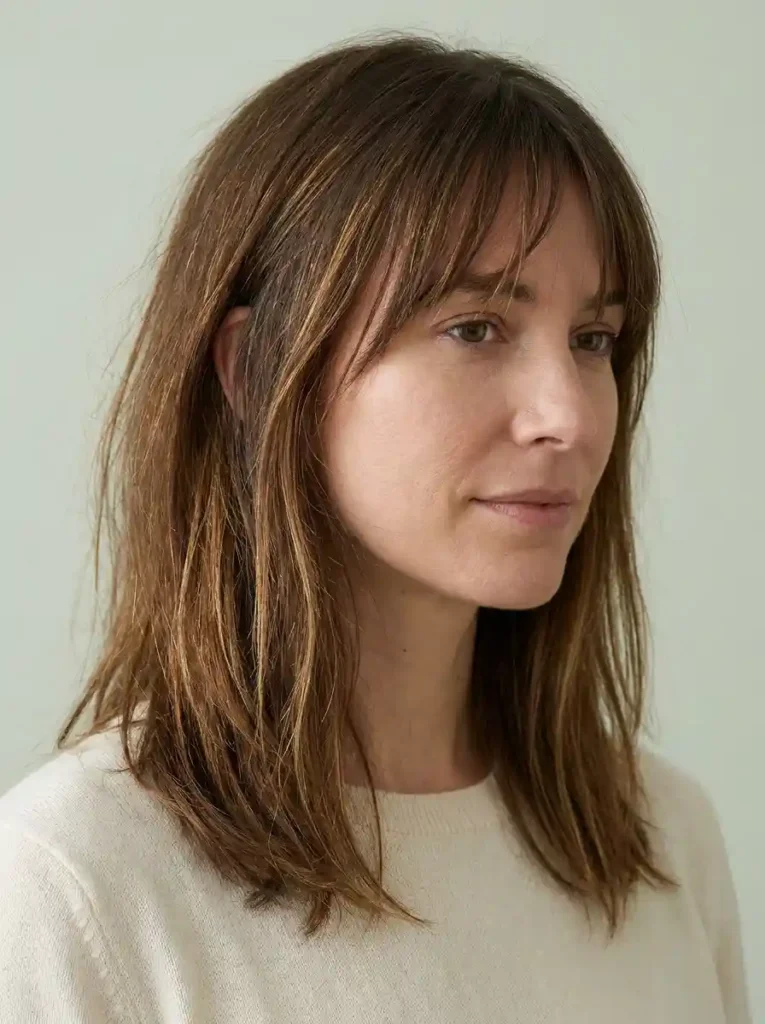
Wispy bangs offer a lighter alternative to fuller fringe styles. Fine pieces sweep across the forehead while leaving small spaces between strands. That creates a soft, effortless appearance instead of a solid band of hair. This option can appeal to anyone nervous about committing to thick bangs. It works especially well with medium or fine hair when the cut preserves enough length for blending. Subtle balayage can also emphasize the delicate separation between strands.
The key is avoiding excessive product near the roots. Too much styling cream can make wispy pieces separate awkwardly. Blow-dry the fringe downward first, then sweep it sideways near the end. Common Mistake: Asking for excessive thinning can make fine bangs look sparse. Request controlled feathering instead of aggressive texturizing for better shape.
4. Side Swept Bangs With a Deep Side Part
A deep side part gives side swept bangs a more dramatic personality. More hair gathers on one side, creating a fuller fringe with noticeable movement across the forehead. This look works beautifully with medium or thick hair because the extra density supports the sweeping shape. It also pairs well with polished curls or smooth ends. Choose it when you want your hairstyle to feel more glamorous without relying on an extreme haircut.
To maintain the part, create it while the hair is damp. Blow-dry the roots in the intended direction before shaping the fringe. A small amount of flexible mousse can add structure without stiffness. Pro Tip: If your natural part fights the style, use clips while the roots cool. Setting the direction during cooling helps the fringe hold its shape longer.
5. Side Swept Bangs on a Blunt Bob
A blunt bob becomes softer when paired with a sweeping fringe. The clean perimeter gives the haircut structure, while the diagonal bangs introduce movement around the face. This contrast makes the style feel modern without becoming severe. It can suit straight hair particularly well because the crisp bob line remains visible. A deep brunette or black shade can emphasize the graphic shape, while softer colors create a gentler interpretation.
Blow-dry the bangs separately from the bob so they retain their curved direction. Use a paddle brush if you prefer a flatter finish. Stylist Tip: Keep the bob perimeter strong and avoid over-layering it. The visual interest should come from the contrast between the solid length and softly moving fringe.
6. Side Swept Bangs With Loose Waves
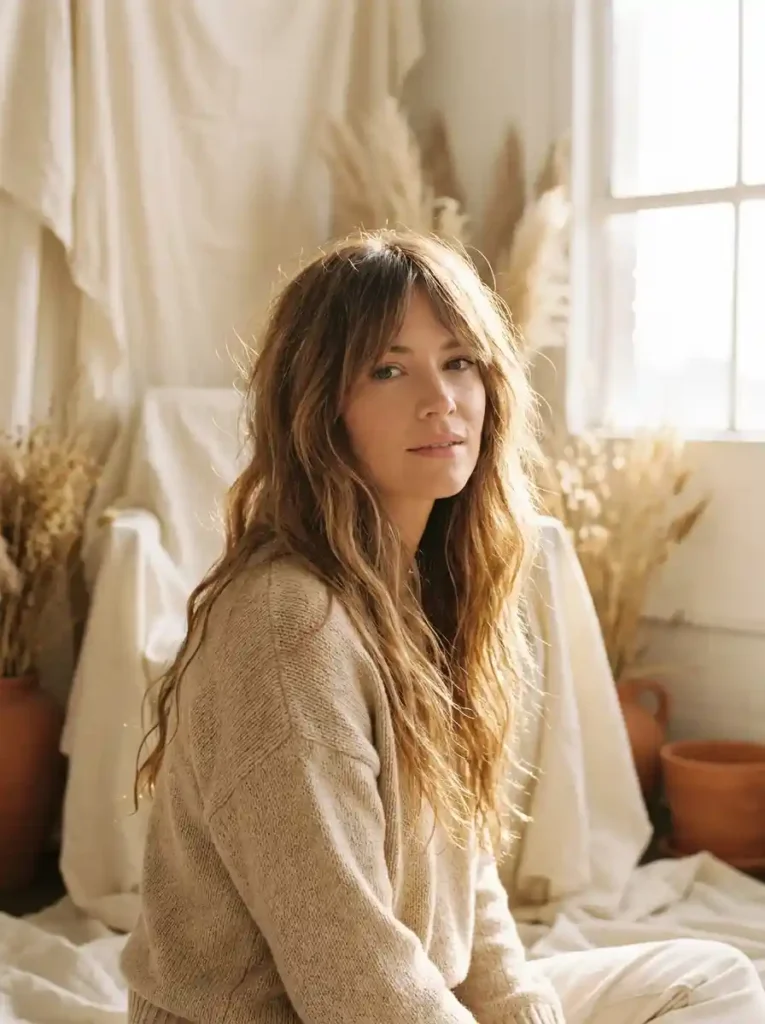
Loose waves give side swept bangs a relaxed, romantic character. The fringe follows the hair’s natural movement instead of appearing perfectly polished. Warm highlights can make the waves and shorter pieces look more dimensional. This combination works well for long or medium hair and suits casual styling. It can also soften a structured haircut by adding irregular movement through the lengths and around the face.
For a cohesive finish, style the bangs with the same general wave direction as the rest of the hair. Do not curl them tightly. Pro Tip: Leave the final inch of each bang slightly straighter. That prevents the fringe from looking overly curled and helps it blend naturally into loose waves.
7. Side Swept Bangs With a Pixie Cut
A pixie cut with longer sweeping bangs creates strong contrast between cropped sides and flowing fringe. The longer front section adds softness while the short sides keep the haircut energetic. This is an excellent choice for someone who wants a noticeable change without a complicated styling routine. Fine hair can benefit from the visual lift created by the longer crown and directional fringe.
Style this haircut with a small amount of texturizing paste. Work the product between your fingertips before touching the hair. Common Mistake: Applying heavy wax across the entire fringe can make short hair look greasy. Concentrate product on the ends and keep the roots light for better separation and movement.
8. Curtain-Inspired Side Swept Fringe
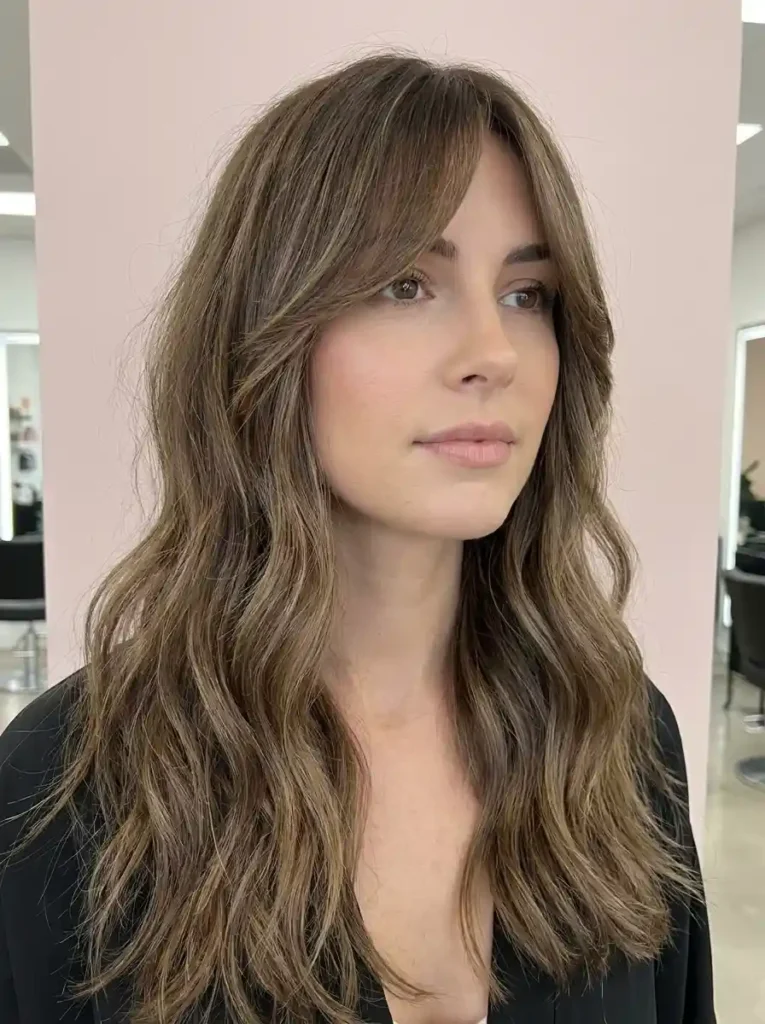
A curtain-inspired fringe can be adapted into a stronger side sweep. Instead of dividing evenly in the center, the part shifts slightly so one side becomes more prominent. The result combines the openness of curtain bangs with the direction of a traditional side fringe. This works especially well on long hair with face-framing layers. It is a useful option for anyone who likes curtain bangs but prefers an asymmetrical finish.
Style the fuller section with a medium round brush. Curve it away from the face, then gently guide it sideways. Stylist Tip: Ask for longer outer pieces if you want an easier grow-out. They can transition smoothly into face-framing layers rather than creating a noticeable line.
9. Side Swept Bangs for Fine Hair
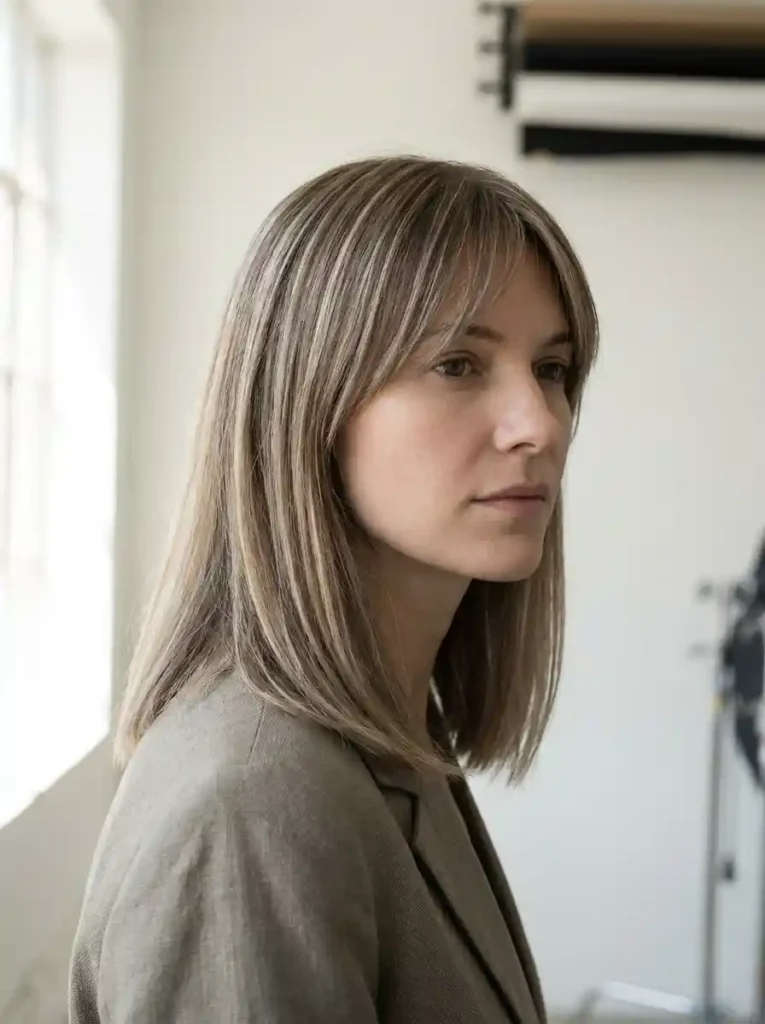
Fine hair can support a beautiful side fringe when the cut preserves density. A narrow bang section often looks fuller than a wide section because more hair remains available for the lengths. Straight texture can also help the fringe lie smoothly across the forehead. This look is understated and polished, making it suitable for people who prefer subtle changes. A soft blonde or light brunette color can further emphasize the airy finish.
Avoid heavy layering directly inside the bang section. Blow-dry the roots forward before sweeping them sideways. Pro Tip: Your stylist should consider your natural part before deciding where the fringe begins. Working with your growth pattern usually creates a more reliable shape than forcing the hair against it.
10. Side Swept Bangs for Thick Hair
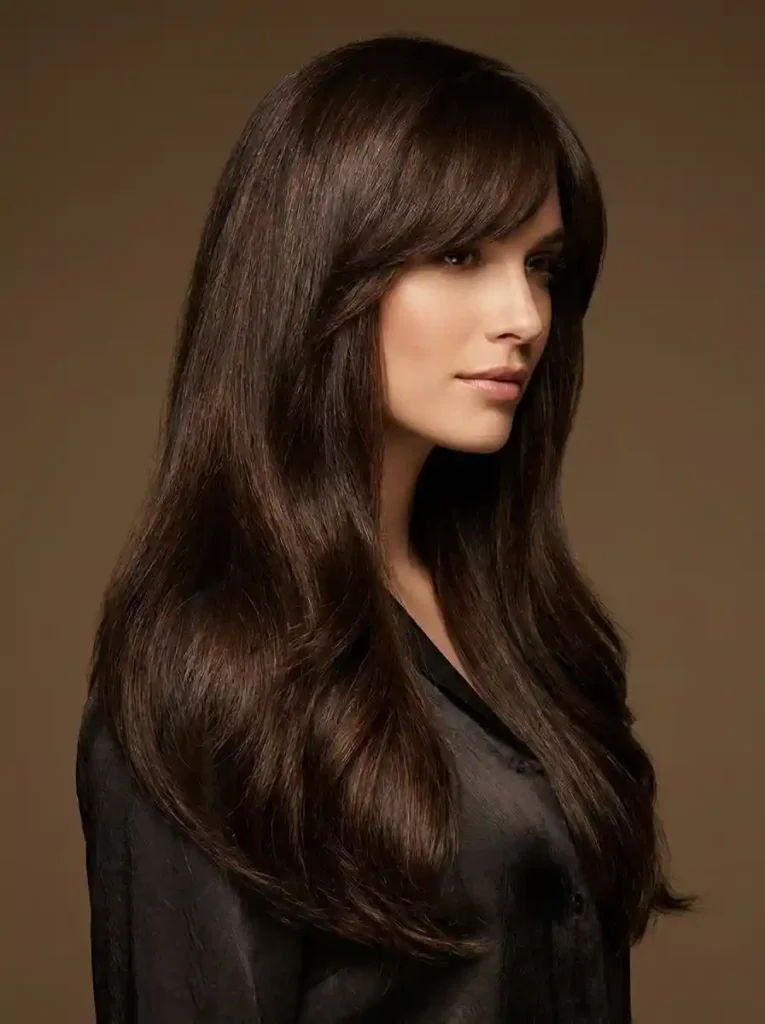
Thick hair gives side swept bangs plenty of natural volume. The challenge is controlling that density without making the fringe bulky. Strategic internal layering can remove weight while preserving a substantial shape. This version works particularly well with long hair because the larger overall silhouette balances the fuller fringe. Rich brunette shades can make the style look especially luxurious when the hair has a healthy natural sheen.
Styling usually requires directing the roots before smoothing the ends. Use a large brush to create controlled movement. Common Mistake: Removing too much weight can make thick bangs puff unevenly. Ask for internal weight reduction rather than excessive thinning along the visible edge.
11. Curved Side Swept Bangs
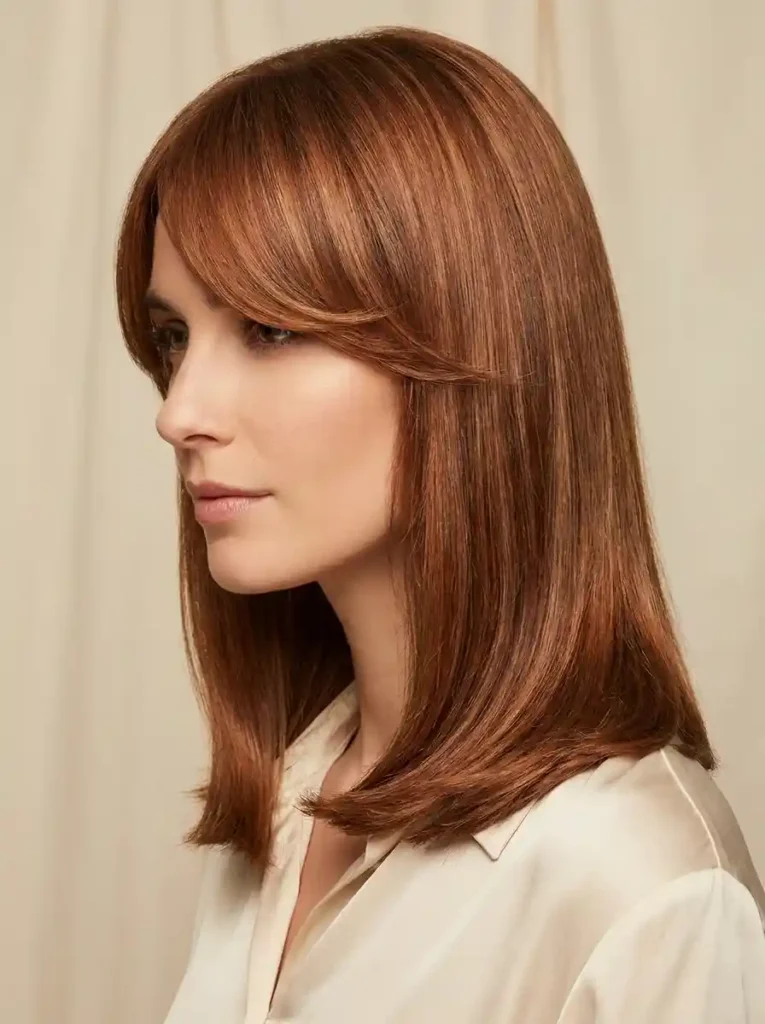
A curved side fringe has a smooth, intentional shape. Rather than simply falling diagonally, the hair forms a gentle arc across the forehead and toward the face. This creates a polished appearance that pairs beautifully with sleek, straight hair. Copper and other dimensional colors can highlight the curved silhouette through subtle light reflection. Choose this version when you prefer refined styling over deliberately messy texture.
Use a round brush to create the curve while the hair remains slightly damp. Finish with a light smoothing spray if needed. Stylist Tip: The curve should follow the natural movement of the head. Over-rounding the fringe can create excessive volume and make the shape look dated.
12. Tousled Side Swept Bangs
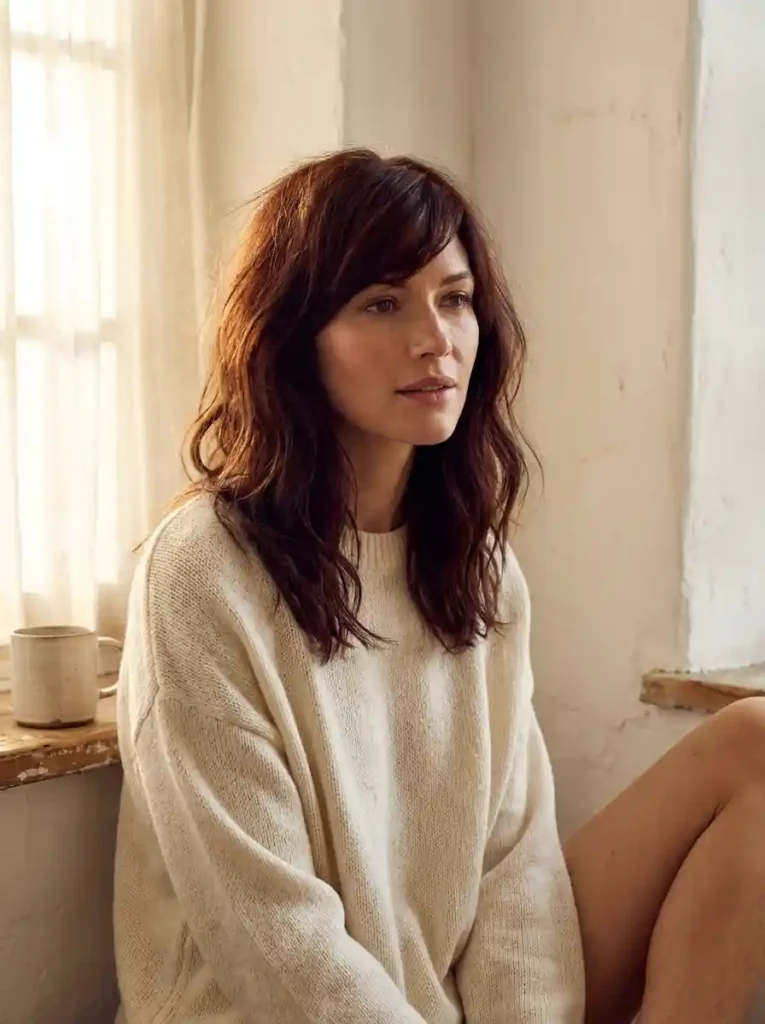
Tousled side swept bangs create an intentionally relaxed appearance. The fringe has irregular movement rather than a perfectly smooth finish. This makes the style particularly appealing for casual wardrobes and naturally textured hair. Shoulder-length cuts provide enough movement to connect the fringe with the rest of the hairstyle. Warm auburn or brunette shades can enhance the undone effect by adding visual depth without requiring dramatic styling.
Let the bangs partially air-dry before using a diffuser or low heat. Scrunching too aggressively can create unwanted volume at the roots. Pro Tip: Use your fingers instead of a brush for the final styling step. Finger shaping keeps the fringe flexible and preserves the natural irregularity that makes this look attractive.
13. Side Swept Bangs With Face-Framing Layers
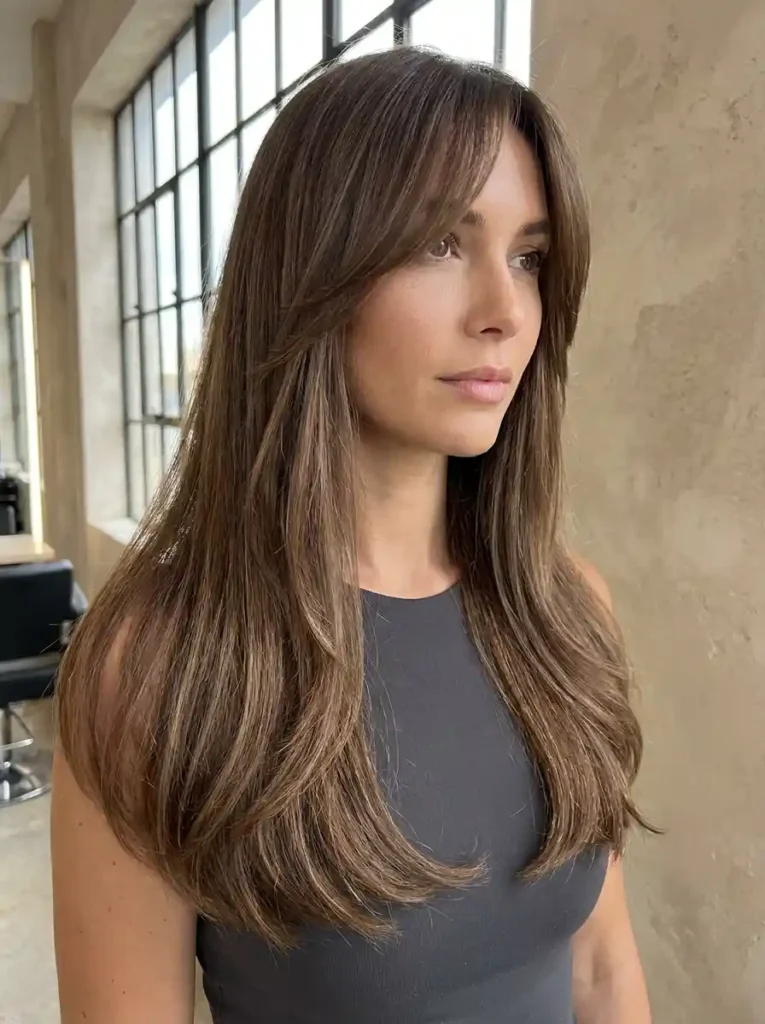
es a connected shape around the entire front of the haircut. The fringe begins near the forehead and gradually becomes longer toward the jaw and shoulders. This approach suits people who want movement without committing to many short layers throughout the head. It can also make long hair feel more intentional while keeping most of the length intact.
Style the fringe and first face-framing layer together so they flow in the same direction. Stylist Tip: Bring a reference showing the exact length you prefer around your cheekbone. Small changes in this area can significantly alter how the entire front section moves.
14. Side Swept Bangs With Soft Curls
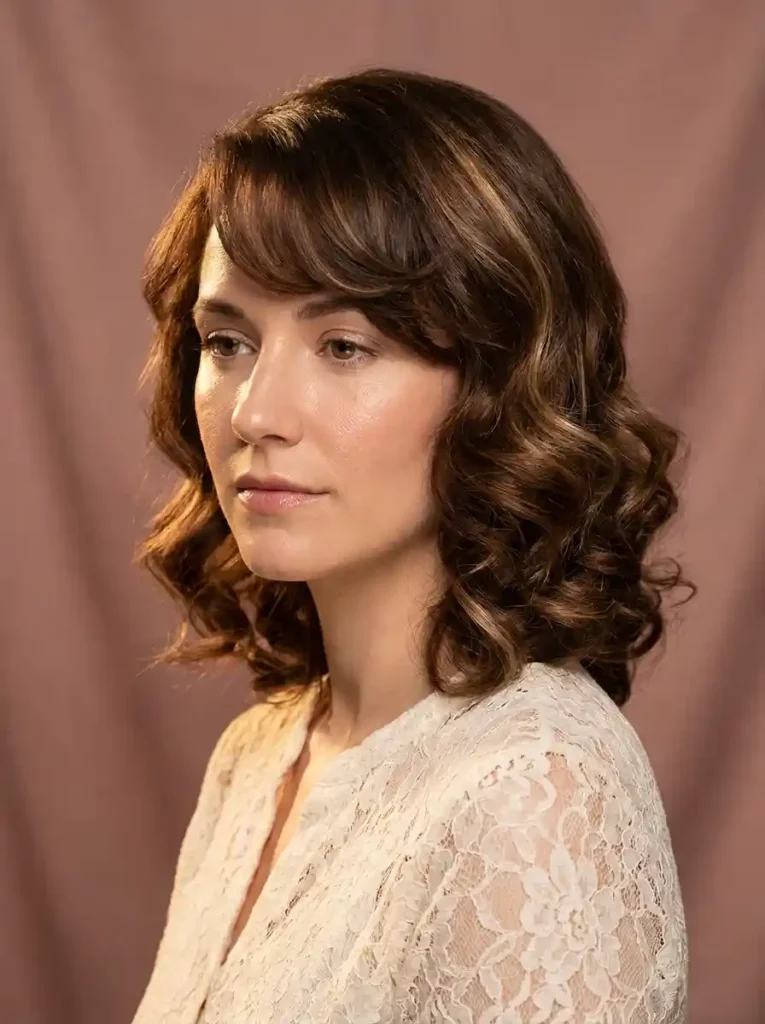
Soft curls give a side fringe a romantic, polished personality. The bangs remain gently curved rather than tightly rolled, allowing them to connect naturally with the surrounding curls. Medium-length hair provides enough space for the hairstyle to feel balanced. This version works beautifully for celebrations, dinners, photographs, or anyone who enjoys a slightly vintage-inspired appearance without committing to a retro costume look.
Use a medium-sized curling iron on the longer sections, but shape the bangs separately. Keep their bend loose and directional. Common Mistake: Curling the fringe too tightly can shorten it visually. Always account for shrinkage when creating curls around the forehead and cheekbone.
15. Side Swept Bangs With a Shaggy Haircut
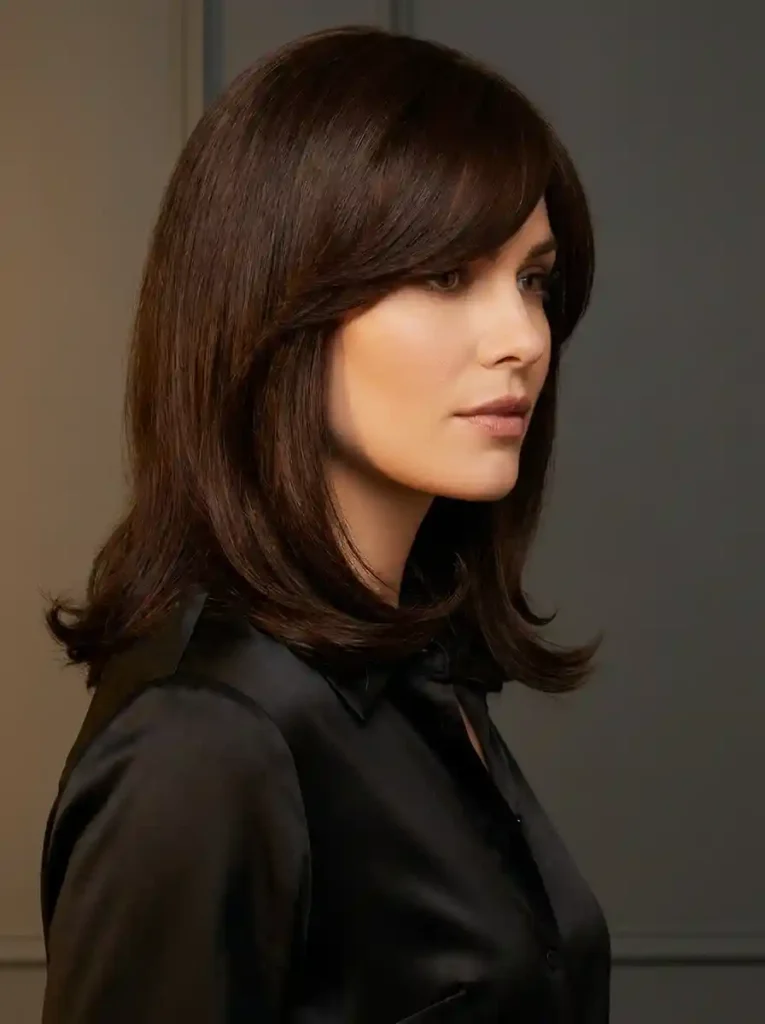
A shaggy haircut gives side swept bangs a more textured and rebellious finish. The fringe connects with choppy crown layers and feathered lengths, creating movement throughout the hairstyle. This is ideal for people who dislike overly polished hair. Medium-length or longer shag cuts can carry the texture particularly well. The style also works nicely with naturally wavy hair because irregular movement becomes part of the design.
Use a lightweight texture spray instead of a heavy smoothing product. Scrunch the hair gently and allow the layers to separate naturally. Pro Tip: The fringe should remain softer than the shortest crown layers. That small contrast keeps the haircut textured without making the forehead area appear overly chopped.
16. Side Swept Bangs With Caramel Highlights
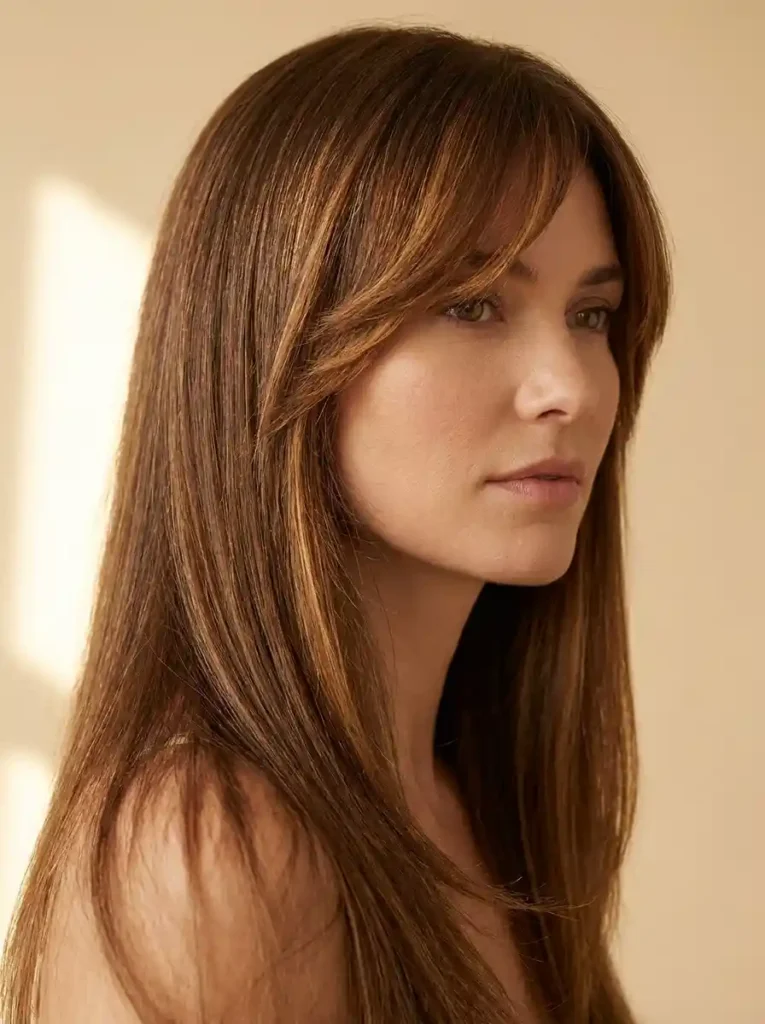
Caramel highlights can bring extra dimension to a side fringe without changing its shape. Placing slightly lighter pieces around the front helps reveal movement as the bangs sweep across the forehead. This works well on medium or dark brown bases and suits both straight and gently wavy textures. The result feels bright and dimensional while remaining wearable for everyday styling.
Discuss highlight placement before coloring the hair. The front pieces should complement the fringe rather than overpower it. Stylist Tip: Subtle highlights placed near the cheekbone can make layered movement easier to see. Keep the color transition blended for a softer, more natural result.
17. Short Side Swept Bangs
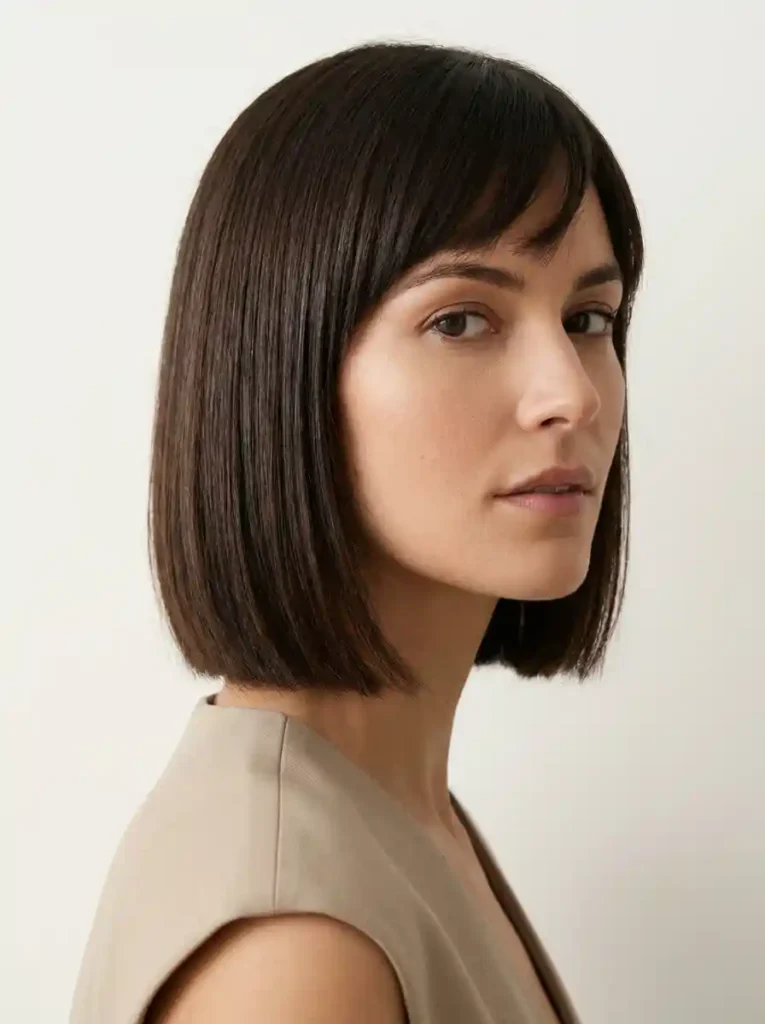
Short side swept bangs create a more noticeable forehead shape and a crisp, contemporary appearance. Because the fringe ends above the eyebrow or around its upper edge, the style feels lighter than longer versions. A sleek jaw-length haircut can emphasize the clean geometry. This option suits people who enjoy defined hairstyles and do not mind regular trims to preserve the shorter length.
Style the fringe with a small flat brush and low heat. Avoid pulling it too tightly against the forehead. Common Mistake: Cutting short bangs before considering the natural growth direction can create unwanted gaps. Your stylist should examine how the hair falls naturally before choosing the exact starting point.
18. Side Swept Bangs With Natural Waves
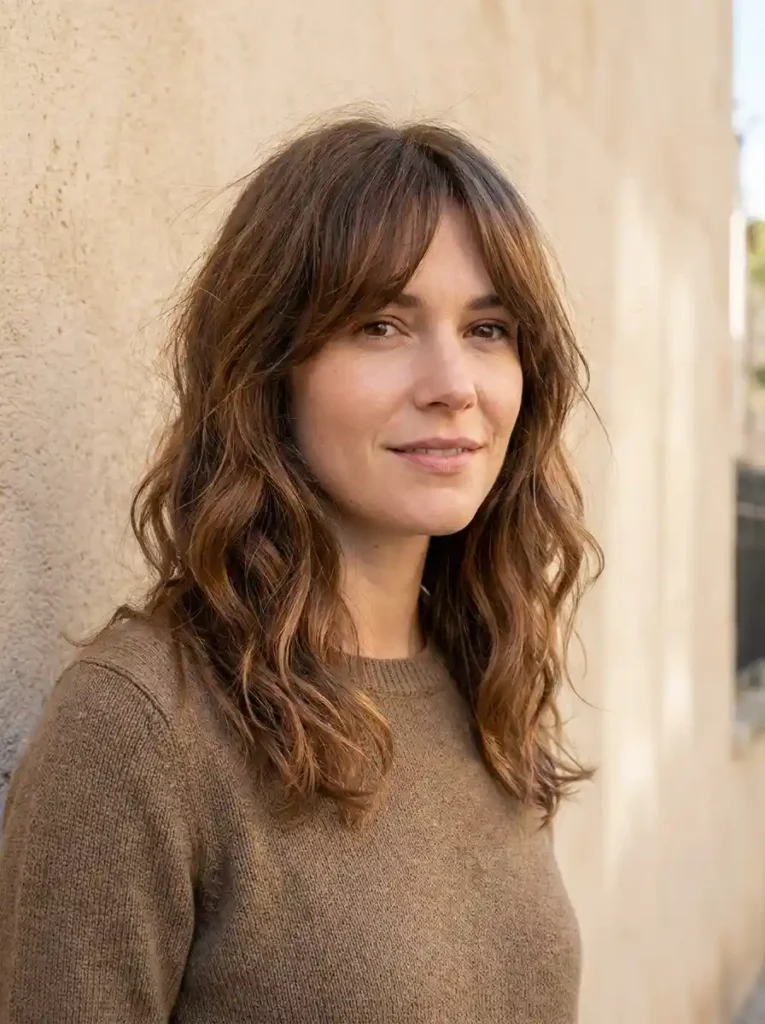
Natural waves can make side swept bangs look soft and effortless. Instead of forcing the fringe completely straight, the cut follows the hair’s natural bend. This creates a more integrated appearance and reduces the contrast between the bangs and longer waves. Medium-density wavy hair often provides enough structure for the fringe to hold its direction without excessive styling.
Apply a lightweight curl cream to damp hair, then shape the fringe with your fingers. Allow it to dry without repeated brushing. Pro Tip: Ask for the bangs to be cut according to their dry behavior when possible. Wavy hair can contract after drying, so wet measurements may produce a shorter result than expected.
19. Side Swept Bangs With a Sleek Ponytail
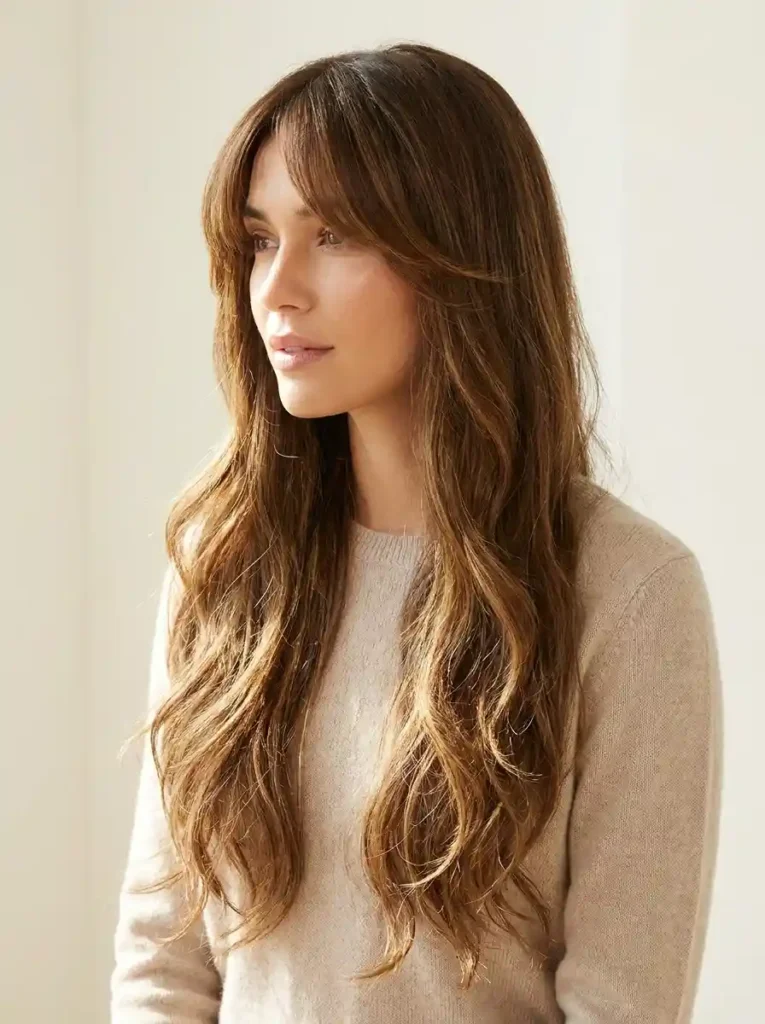
A sleek ponytail makes the fringe the main focal point. Pulling the longer hair away from the face exposes the diagonal shape while keeping the overall look polished. This combination works well for work events, dinners, formal occasions, or anyone who wants a neat hairstyle with a softer front. Straight or smooth hair makes the clean silhouette especially easy to achieve.
Secure the ponytail first, then style the fringe separately. Use a fine brush around the roots and a small amount of smoothing cream. Stylist Tip: Leave the fringe slightly softer than the ponytail. A perfectly rigid fringe can make the hairstyle appear harsh, while flexible movement keeps the overall look elegant.
20. Side Swept Bangs With a Long Layered Cut
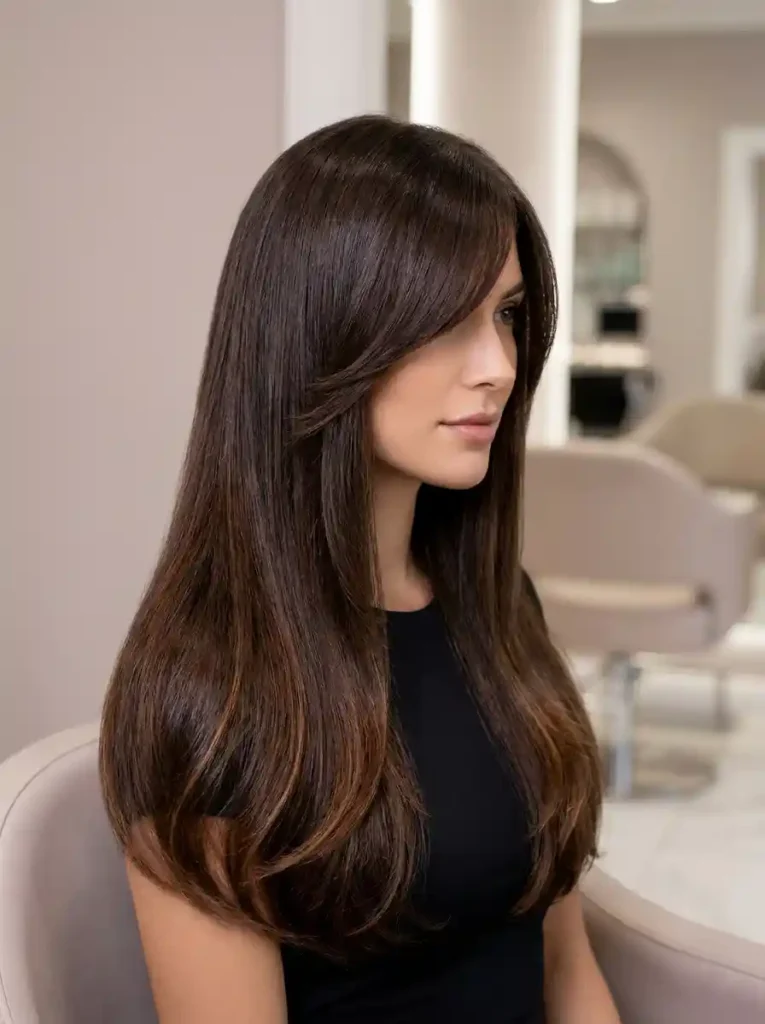
A long layered haircut provides a graceful foundation for sweeping bangs. The fringe can begin near the eyebrow or temple and gradually connect with layers reaching the jaw, shoulders, and below. This creates movement without sacrificing the dramatic length of the hairstyle. It suits people who want a visible update while keeping their long hair. Subtle highlights can further emphasize the layered transitions.
Use a large round brush to create gentle lift around the front. Finish the lengths with loose bends if desired. Pro Tip: Keep the longest face-framing section below the chin if you want an easier transition. This creates a smoother connection as the bangs grow and reduces frequent reshaping.
Frequently Asked Questions
Are side swept bangs good for fine hair?
Yes. A narrower fringe section can help fine hair appear fuller. Avoid excessive thinning, which may make the bangs look too sparse.
Can side swept bangs work with wavy hair?
Yes. Wavy hair can create soft, natural movement in the fringe. The cut should account for how much the hair contracts as it dries.
How often should side swept bangs be trimmed?
Shorter bangs usually need more frequent trims. Longer versions can often grow out more gracefully and require less precise maintenance.
Are side swept bangs easier to maintain than blunt bangs?
They can be more forgiving because the diagonal shape blends into surrounding layers. Longer versions also tend to have a softer grow-out phase.
Can I wear side swept bangs with a middle part?
Yes. A slightly shifted middle part can create a curtain-inspired effect. You can also sweep more hair toward one side for stronger definition.
How should I style side swept bangs?
Blow-dry the roots in the desired direction, then shape the ends with a round or paddle brush. Use light product to preserve movement.
Conclusion
The best side swept bangs are not necessarily the most dramatic ones. A small change in length, texture, parting, or layering can completely change the overall effect. Fine hair may benefit from a narrow, wispy fringe, while thick hair can support a fuller sweep. Wavy textures can embrace natural movement, while sleek cuts can create a polished finish.
Think about your natural part, hair density, texture, and preferred maintenance level before choosing your favorite. Save your favorite look before your next salon visit, and bring the reference along with your preferred length and styling details.


