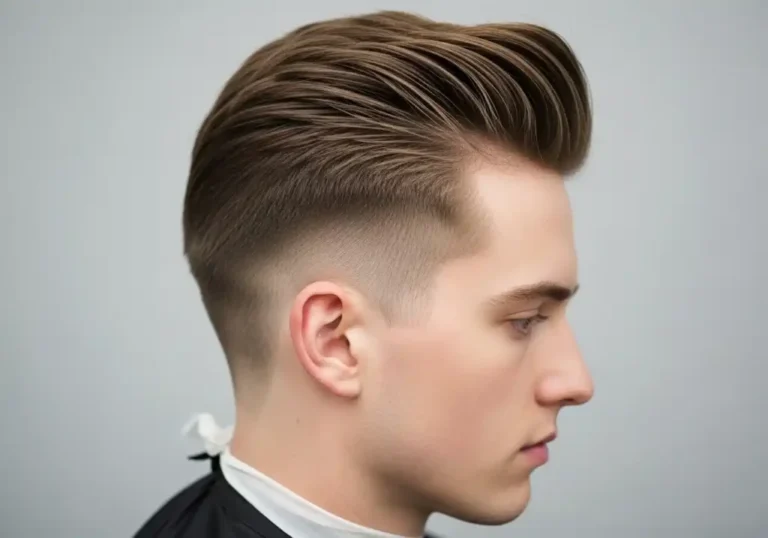
A textured pixie cut can completely refresh your look without sacrificing personality or styling flexibility. From soft, feathered layers to bold, piecey finishes, this short hairstyle offers plenty of ways to express your style while keeping your routine manageable. Whether you prefer a polished, feminine silhouette or an edgy, tousled look, these 23 textured pixie cut ideas will help you find a version that suits your hair type, face shape, and everyday lifestyle.
1. Soft Textured Pixie with Feathered Layers
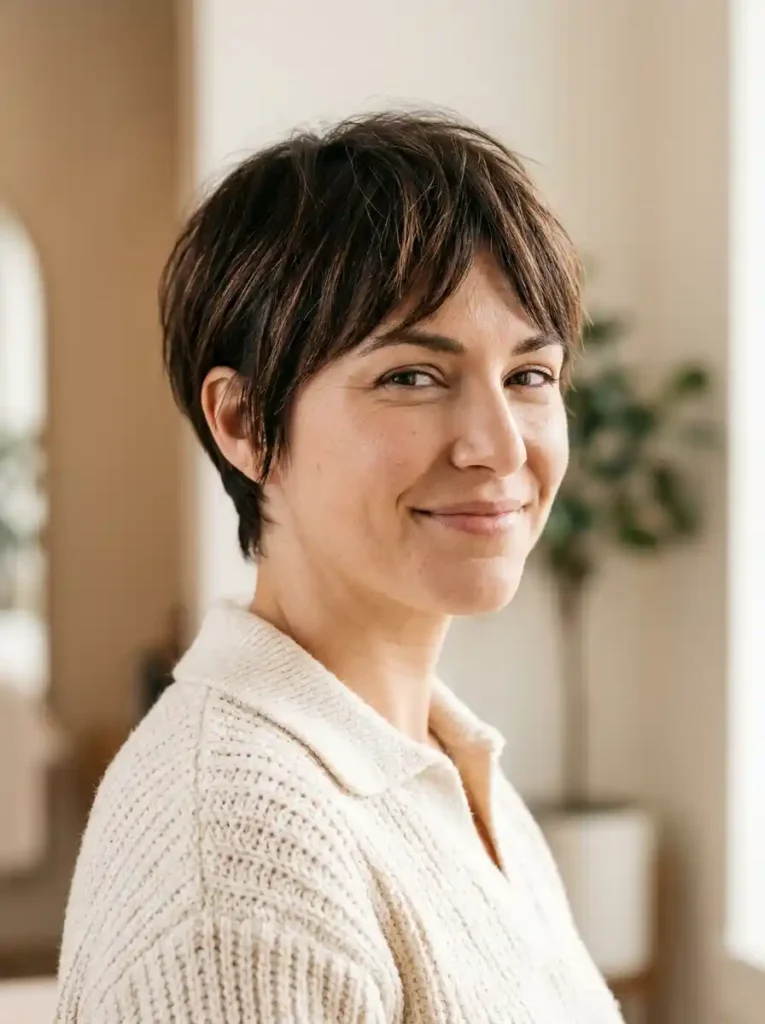
A soft, feathered pixie is an excellent starting point if you want short hair that feels light, feminine, and effortlessly styled. The delicate layers create movement around the crown, while wispy bangs soften the forehead and frame the eyes. This version works particularly well for fine to medium hair because carefully placed layers can create the appearance of fullness without making the overall shape look heavy or overly structured.
To style this haircut, apply a small amount of lightweight volumizing mousse to damp hair before blow-drying with your fingers. Direct the front sections slightly to one side, then separate the ends with a pea-sized amount of styling cream. Ask your stylist to preserve enough length around the temples if you prefer a softer outline. A trim every four to six weeks generally helps maintain the airy shape and prevents the layers from losing definition.
2. Choppy Textured Pixie with Piecey Ends
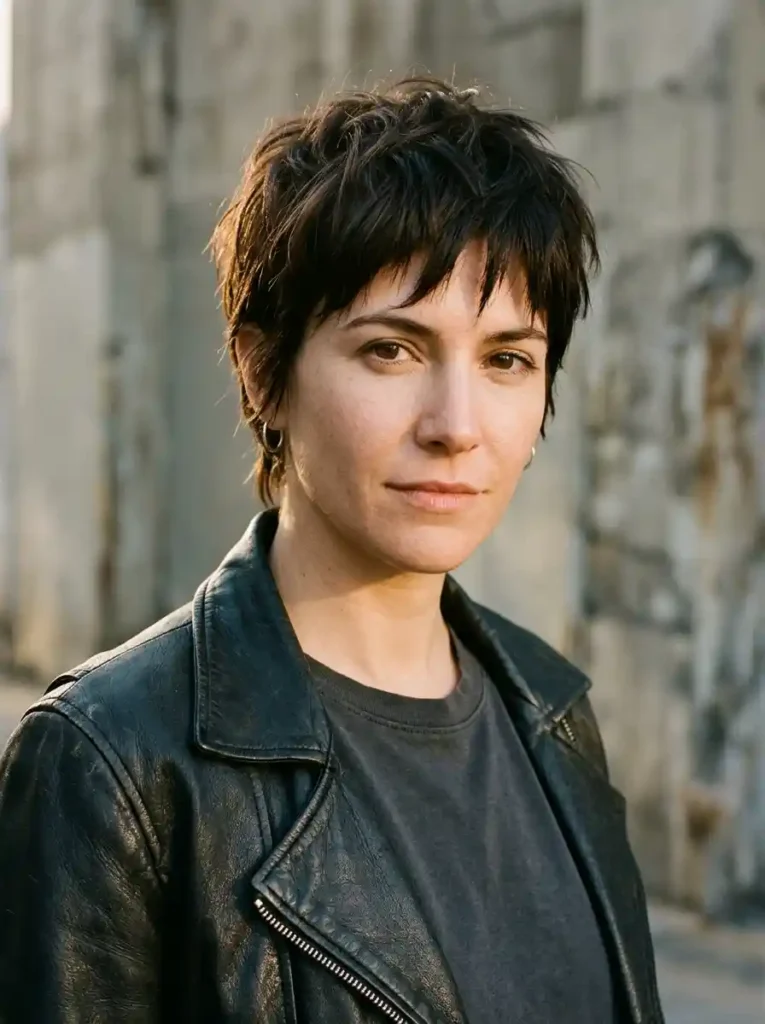
If you love hairstyles with personality, a choppy pixie delivers definition without looking overly polished. Its intentionally uneven ends create a lively silhouette, making the haircut particularly appealing to people who prefer a relaxed, slightly rebellious aesthetic. It can work with straight or naturally wavy hair, although the placement of the layers matters. Fine hair benefits from restrained chopping, while thicker hair may need additional internal texturing to prevent excessive bulk.
The secret to keeping this style attractive is separating the ends rather than flattening them into place. Work a small amount of matte paste between your fingertips and pinch individual sections around the crown and fringe. Avoid applying too much product near the roots, especially if your hair becomes oily quickly. When visiting your stylist, bring reference photographs showing your preferred level of choppiness, since an excessively thinned-out cut can become difficult to shape as it grows.
3. Textured Pixie with Long Side-Swept Bangs
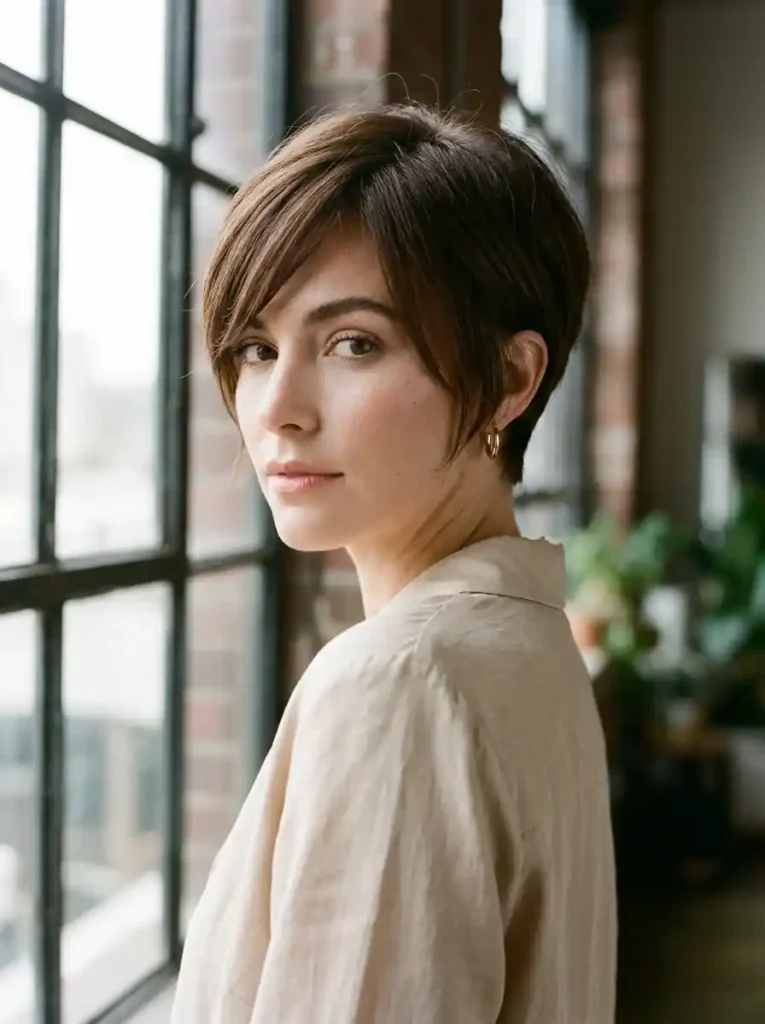
Long side-swept bangs introduce versatility to a pixie cut, especially if you are transitioning from longer hair and want a familiar framing effect. The diagonal fringe draws attention toward the eyes and creates an asymmetrical outline without requiring an extremely dramatic haircut. This option is particularly useful for balancing a wider forehead or softening angular facial features, although the most flattering fringe length depends on your individual proportions and styling preferences.
For everyday styling, blow-dry the fringe in the opposite direction from where you eventually want it to sit, then sweep it back across your forehead. This technique can encourage natural lift and reduce a flat appearance. A lightweight smoothing lotion helps control flyaways without sacrificing movement. Ask your stylist to keep the fringe long enough to tuck behind one ear if you want the flexibility to change your look between a fuller, face-framing finish and a more open silhouette.
4. Curly Textured Pixie with Defined Ringlets
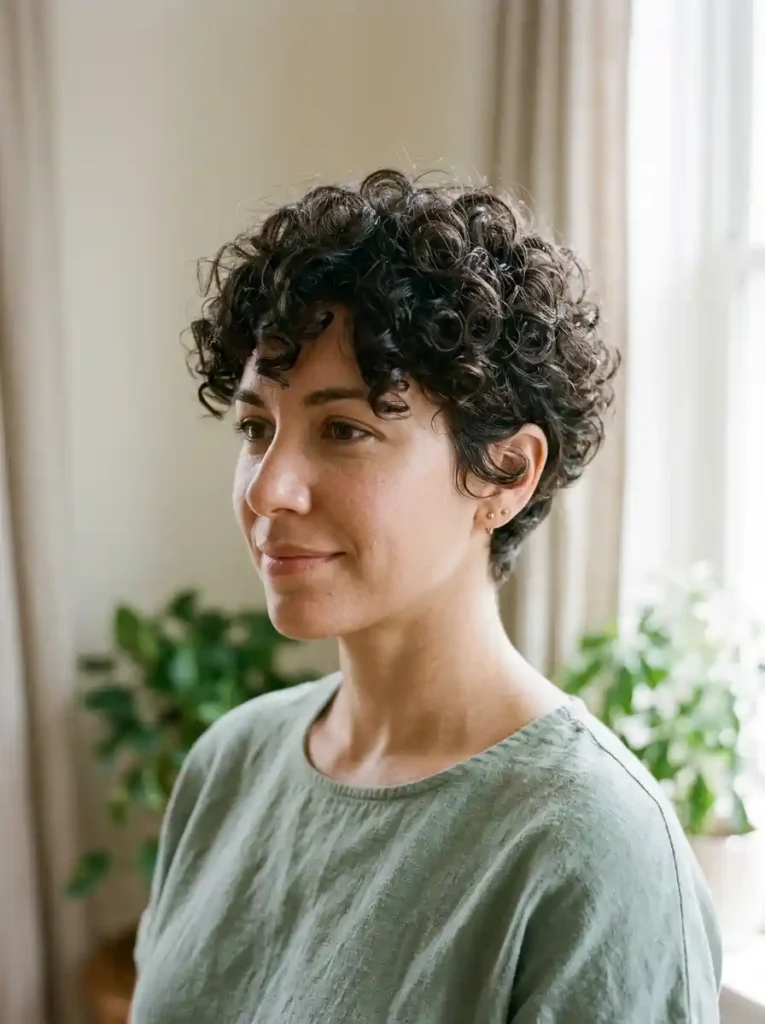
A curly pixie celebrates natural texture instead of forcing curls into a straighter shape. The rounded crown allows ringlets to form their own pattern, while shorter sides keep the haircut balanced and prevent excessive width around the lower half of the head. This style can suit loose curls as well as tighter curl patterns, provided the stylist understands how your hair behaves when dry. Curly hair often shrinks as it dries, so the intended length should be discussed before cutting.
Keep curls defined with a moisturizing leave-in conditioner and a lightweight curl gel applied to soaking-wet or damp hair. Scrunch gently rather than combing repeatedly, then air-dry or use a diffuser on low heat. Avoid aggressive brushing after the curls have dried, because it can disrupt their shape and create unnecessary frizz. Regular conditioning and occasional reshaping help preserve the rounded silhouette while allowing your natural curl pattern to remain the main feature.
5. Blonde Textured Pixie with a Voluminous Crown
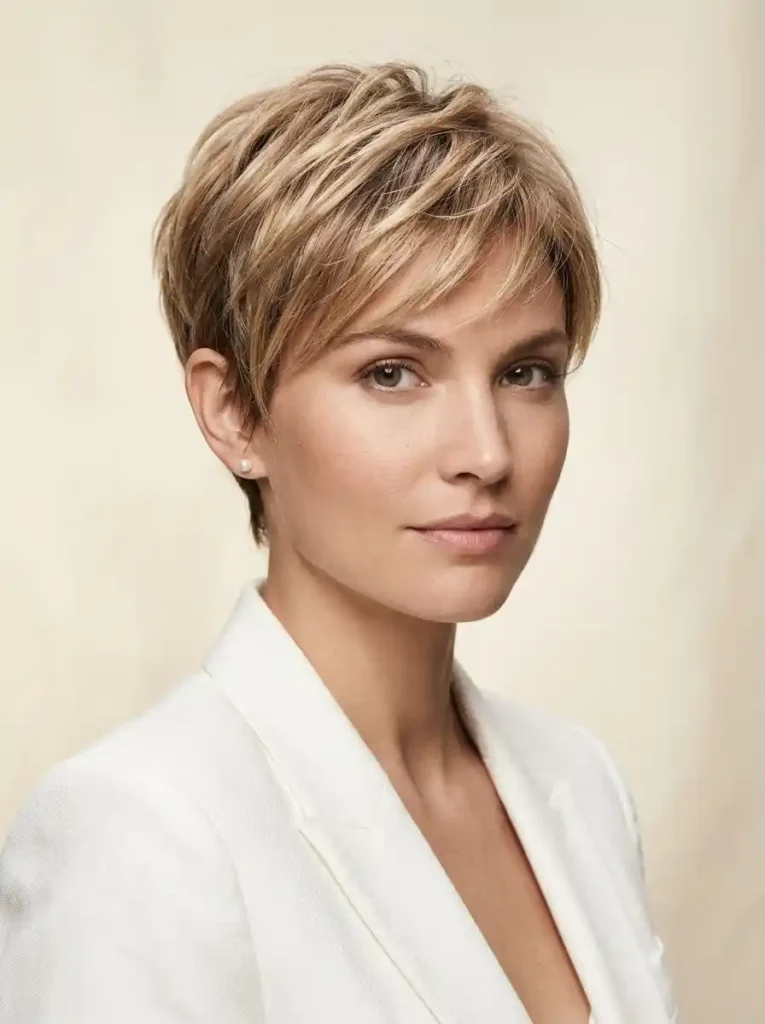
A voluminous blonde pixie combines a bright color palette with a shape that emphasizes height and movement. Layers through the crown create a fuller appearance, while the tapered sides prevent the hairstyle from becoming overly rounded. Golden beige, sandy blonde, and darker root blends can all complement this cut, depending on your complexion and maintenance preferences. For fine hair, the key is creating lift without removing too much density, particularly around the front hairline.
To recreate the volume at home, apply root-lifting mousse to damp hair and blow-dry the crown upward using a small brush. Finish by directing the longer layers backward or slightly sideways for a natural, lifted effect. Blonde hair that has been lightened may need extra conditioning to maintain softness and reduce breakage. Discuss a realistic color-refresh schedule with your colorist, and consider a blended root technique if frequent salon appointments do not fit your routine.
6. Edgy Undercut Textured Pixie
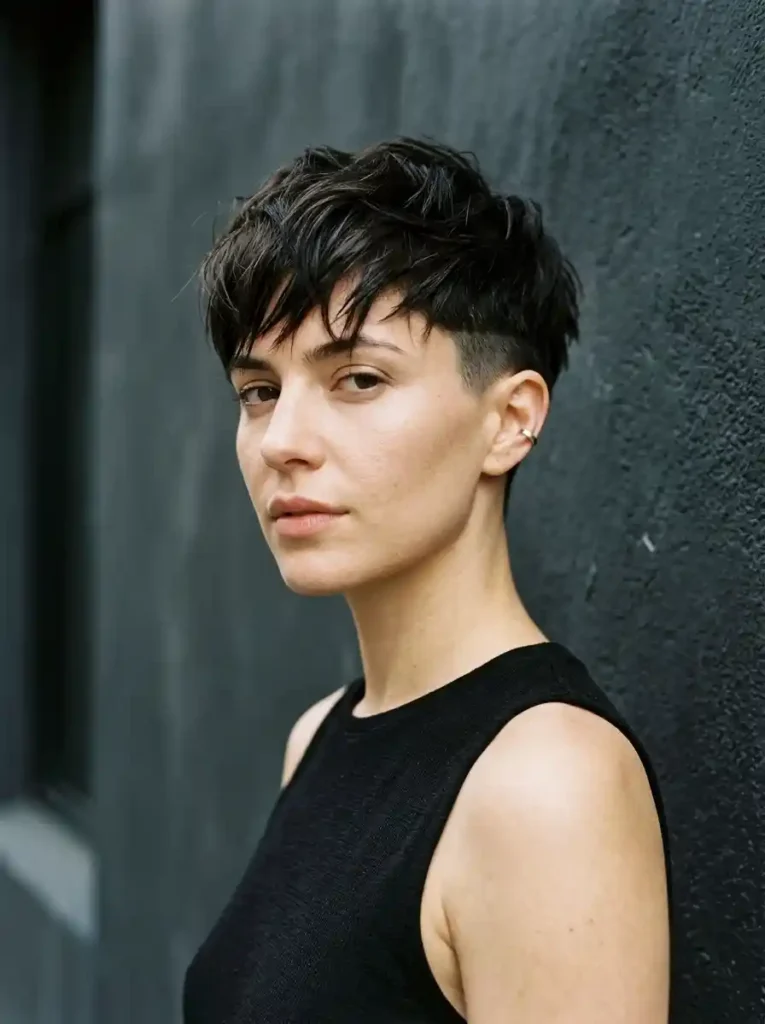
An undercut pixie creates contrast between closely cropped sides and a longer, more expressive top. The difference in lengths gives the hairstyle an unmistakably modern edge while reducing bulk around the temples and ears. It is particularly useful for thick hair that tends to expand outward, although anyone considering this cut should be comfortable with the visibility of the shorter sections. The top can remain soft and piecey, preventing the overall appearance from feeling too severe.
Styling is relatively straightforward once the cut has been shaped correctly. Use a matte texturizing paste to lift the longer sections and direct them forward, upward, or slightly backward depending on your mood. The undercut itself usually needs more frequent maintenance than the top, so plan trims around how quickly your sides grow. If you want a less dramatic version, ask your stylist for a subtle undercut that remains partially concealed when the upper layers fall naturally.
7. Wispy Textured Pixie for Fine Hair
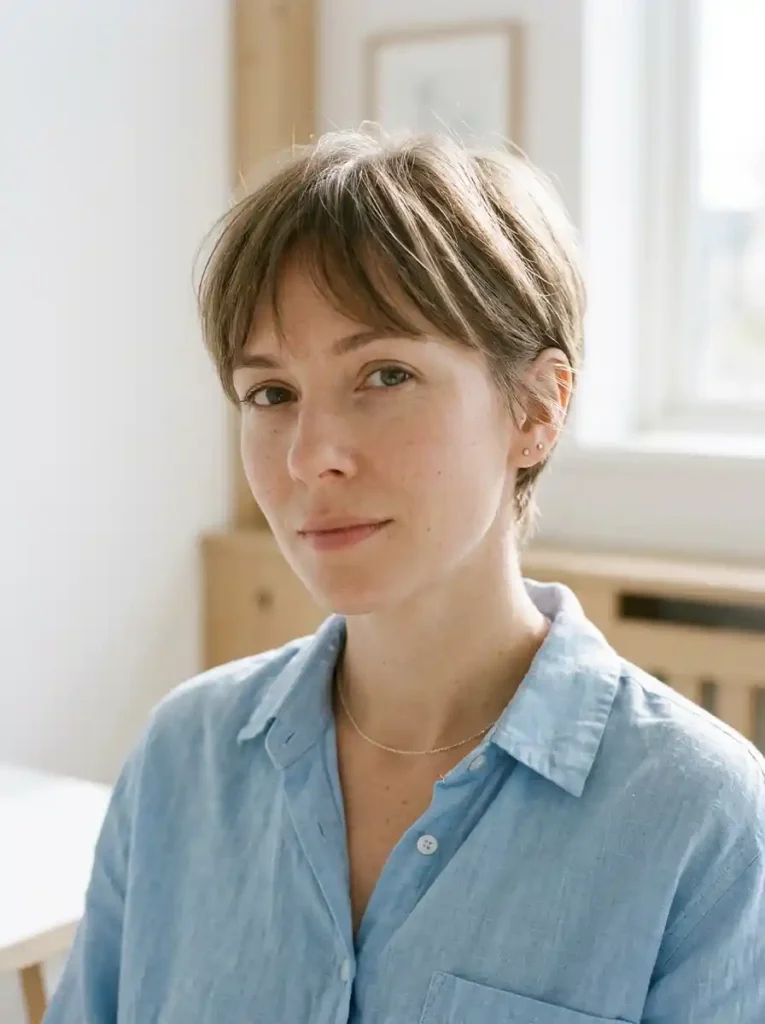
Fine hair often benefits from a pixie cut that preserves density while introducing subtle movement. Wispy layers create texture without removing so much hair that the ends appear sparse. Keeping the crown slightly longer can help the hairstyle retain its shape, while a light fringe adds softness around the forehead. This is a practical choice if you prefer an understated haircut that looks polished without requiring a complicated styling routine or a large collection of products.
Start with a lightweight volumizing spray rather than a heavy cream or oil, which may weigh fine strands down. Blow-dry the roots in different directions with your fingers to create natural lift, then smooth only the areas that need extra control. A small amount of dry texture spray can add separation at the ends. When discussing the cut, emphasize fullness at the perimeter and ask your stylist to avoid excessive thinning, which may make fine hair harder to style.
8. Textured Pixie with Micro Bangs
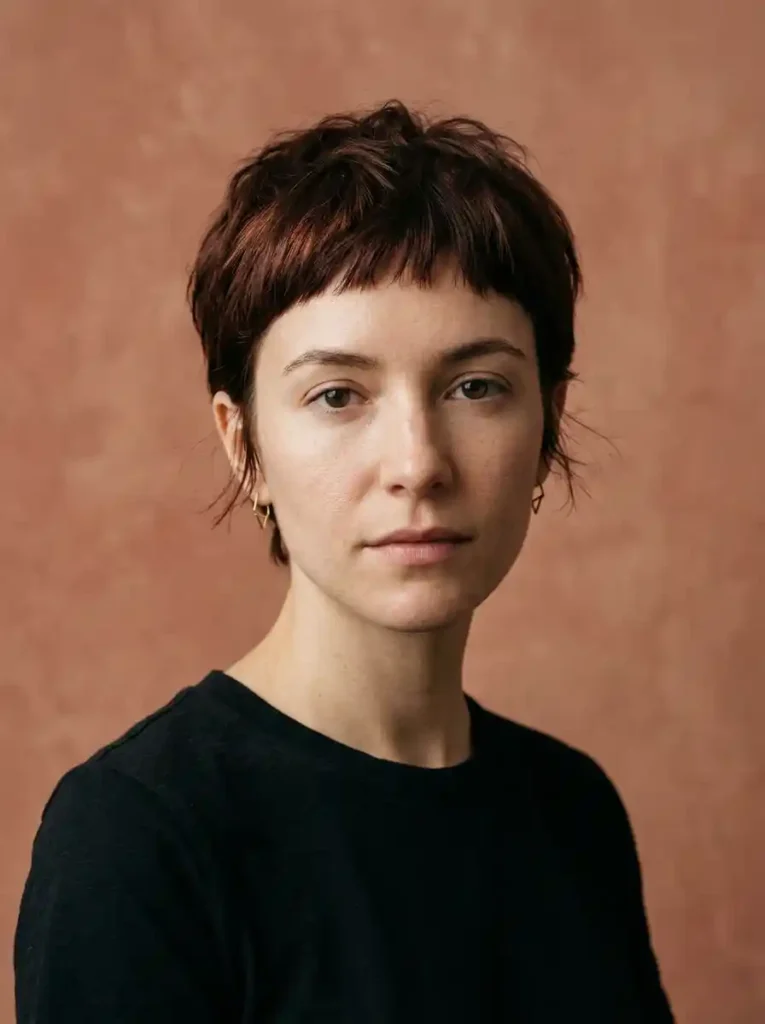
Micro bangs give a pixie cut a distinctive shape by placing attention on the eyes and eyebrows. Unlike a long fringe that blends into the sides, this short version creates a clear line across the upper forehead, making the haircut feel graphic and intentional. It can be especially appealing if you enjoy artistic, fashion-forward styling. However, the short fringe exposes more of the forehead, so it is worth trying different reference images before deciding on the exact length.
To maintain a flattering finish, ask for slightly irregular edges rather than a perfectly rigid horizontal line. This keeps the bangs compatible with the textured layers elsewhere in the haircut. A tiny amount of styling cream can separate the fringe without making it look greasy. Micro bangs tend to show growth quickly, so schedule fringe trims as needed. If you are unsure about committing, start with a slightly longer version that can be shortened after you have lived with the shape.
9. Shaggy Textured Pixie with a Rock-Chic Finish
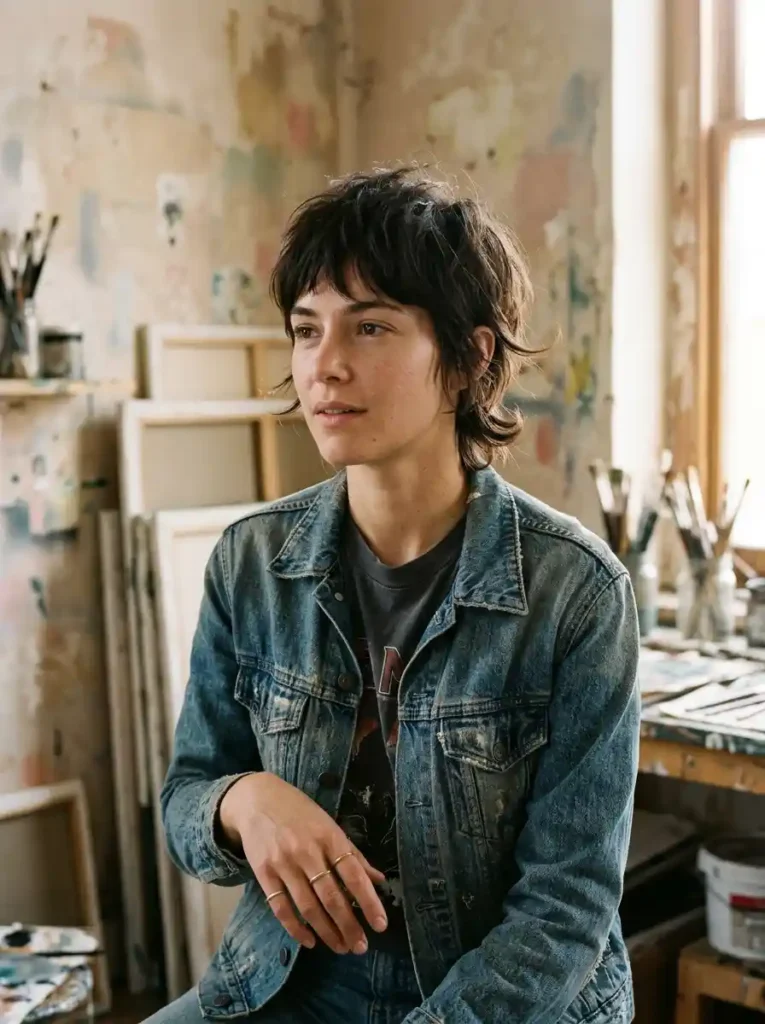
A shaggy pixie blends the short length of a classic pixie with the relaxed movement associated with shag haircuts. Multiple layers create an intentionally undone shape, making it a good option if you prefer hairstyles that do not look overly arranged. The longer pieces around the temples and nape can soften the outline, while crown layers provide lift. This haircut often works well with naturally wavy hair because the existing bend contributes to the casual, piecey finish.
To style it, scrunch a small amount of texturizing cream into damp hair and let the natural movement develop while air-drying. If your hair is straight, use a diffuser or a small round brush to encourage subtle bends in selected sections. Avoid making every layer perfectly symmetrical, as the relaxed character is part of the appeal. Your stylist can adjust the amount of shaggy layering to your hair density, helping thick hair feel lighter without leaving fine hair looking overly thin.
10. Silver Gray Textured Pixie
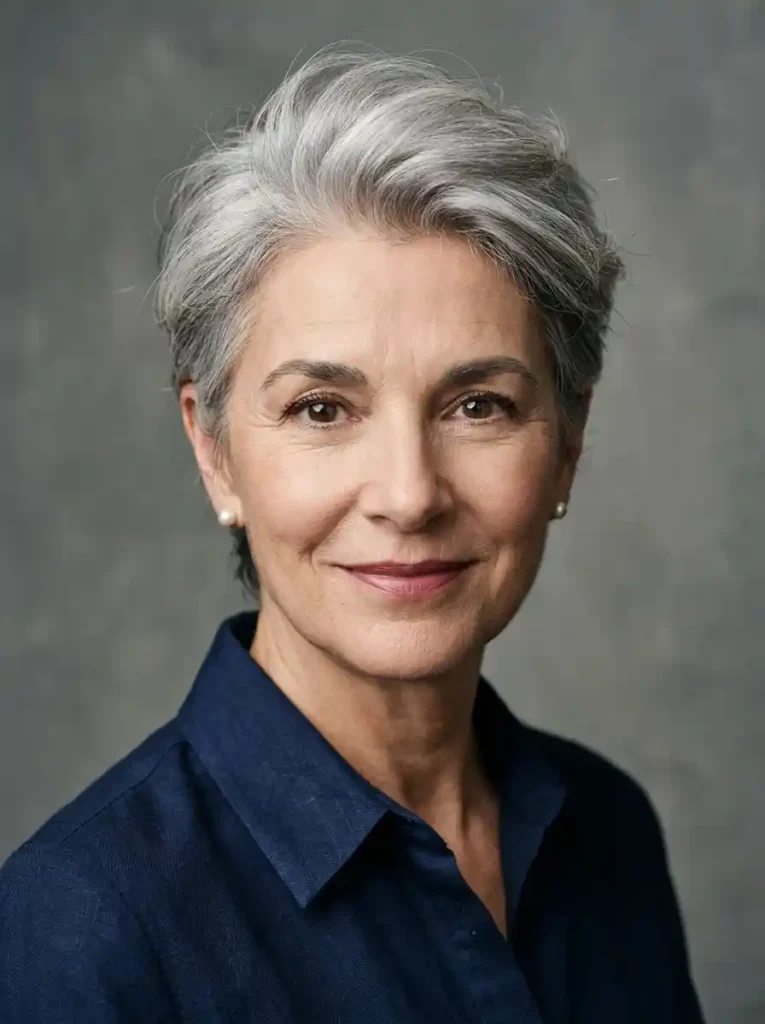
Silver-gray hair can look particularly striking in a textured pixie because the short layers reveal variations in tone and natural movement. Rather than hiding gray strands, this haircut allows their mix of silver, white, and darker shades to become part of the overall design. The shape works across age groups, and its appeal comes from the balance between a neat outline and a crown that retains enough length to feel lively rather than flat.
Gray hair may feel drier or more wiry than it did previously, so choose products that support softness without leaving residue. A lightweight conditioning treatment can improve manageability, while a flexible styling cream helps define the layers. If your silver hair develops unwanted yellow tones, ask a colorist whether occasional purple shampoo is appropriate for your hair’s condition. Keep the sides and neckline shaped regularly, but allow enough crown length to showcase the natural color variation.
11. Asymmetrical Textured Pixie
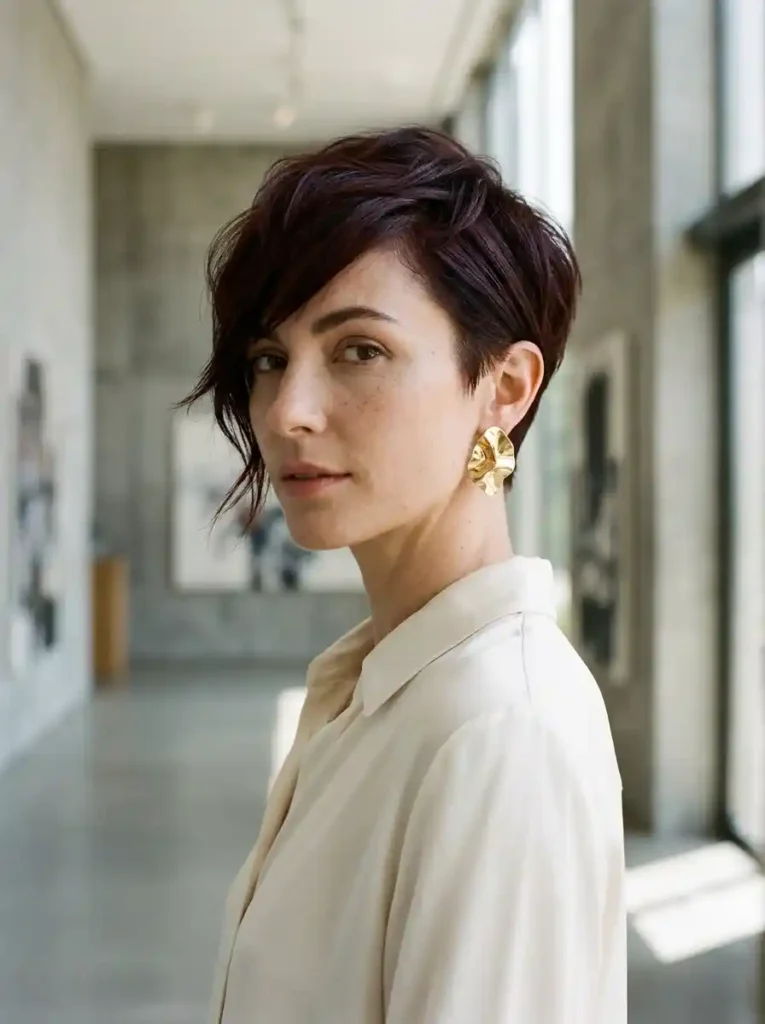
An asymmetrical pixie creates interest through an intentional difference in length from one side to the other. A longer front section can frame the cheekbone, while the shorter side keeps the silhouette crisp and contemporary. This design is a useful alternative if you want a dramatic change without choosing an extremely short buzzed style. It can also give straight or slightly wavy hair a stronger sense of direction, especially when the front layers are cut to move naturally across the face.
The most important styling decision is establishing which direction the longer section should fall. Use a blow-dryer and a small brush to guide the fringe, then add a touch of flexible wax to separate the ends. Avoid applying too much product at the roots, where it may collapse the shape. Ask your stylist to demonstrate how the cut looks when parted differently, and discuss how the asymmetry will evolve as the shorter side grows between appointments.
12. Textured Pixie with a Tapered Nape
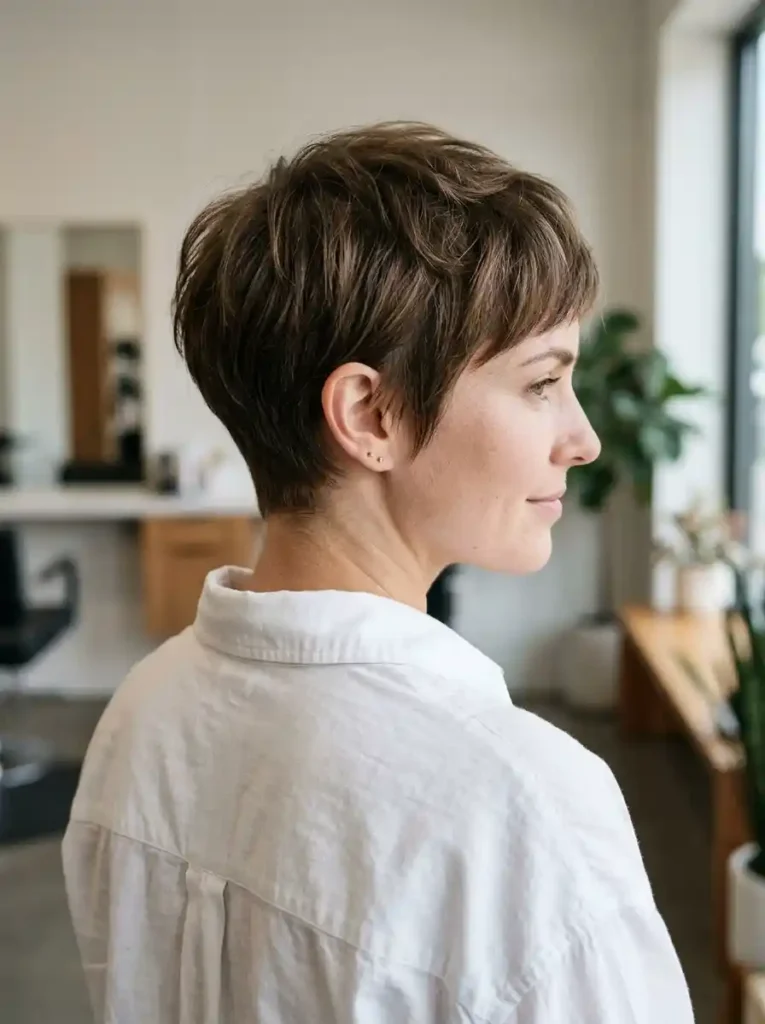
A tapered nape gives a pixie cut a clean, intentional finish without requiring the entire hairstyle to look severe. The hair gradually shortens toward the neckline, allowing the crown to retain enough texture for movement. This is a particularly practical choice if you dislike bulky hair at the back of your head or want a short style that sits neatly beneath collars and scarves. The upper layers can remain soft, creating an appealing contrast with the precise lower outline.
For maintenance, pay attention to the neckline as well as the visible layers around your face. Even when the top still looks attractive, growth at the nape can blur the original shape. Ask your stylist how frequently your particular hair growth pattern will require reshaping. At home, a lightweight styling lotion can keep the crown controlled while preserving separation. Avoid over-smoothing the upper layers, because a little lift and movement help balance the cleaner finish at the back.
13. Tousled Textured Pixie for Wavy Hair
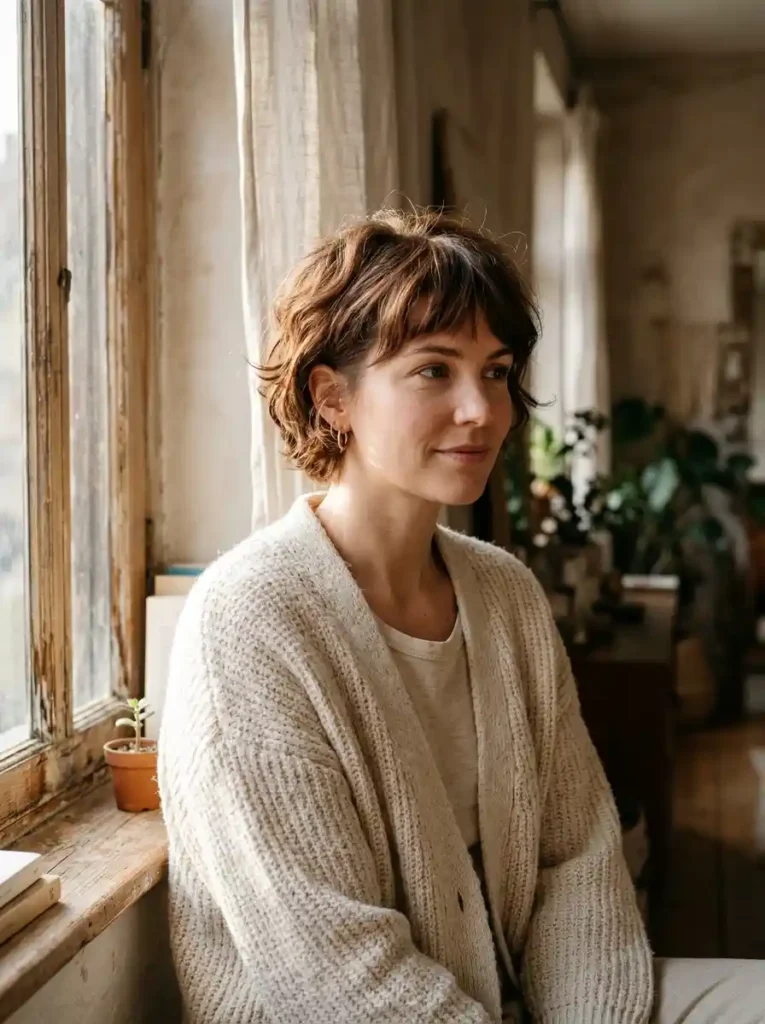
A tousled pixie is ideal for hair that already has a natural wave. Instead of fighting the bend, the cut uses it to create volume, movement, and an easygoing silhouette. Soft layers help prevent the waves from forming a bulky shape, while a lightly textured fringe adds definition near the eyes. This style is especially appealing if you want something casual enough for everyday wear but distinctive enough to feel intentionally styled.
After washing, apply a lightweight wave-enhancing product and scrunch your hair gently with a microfiber towel. Let it air-dry when possible, or use a diffuser to maintain the natural bends. If a few sections dry awkwardly, reshape them with damp fingertips rather than repeatedly brushing the entire head. Ask your stylist to cut with your natural wave pattern in mind, since overly short layers can spring upward and change the proportions once your hair is completely dry.
14. Textured Pixie with a Deep Side Part
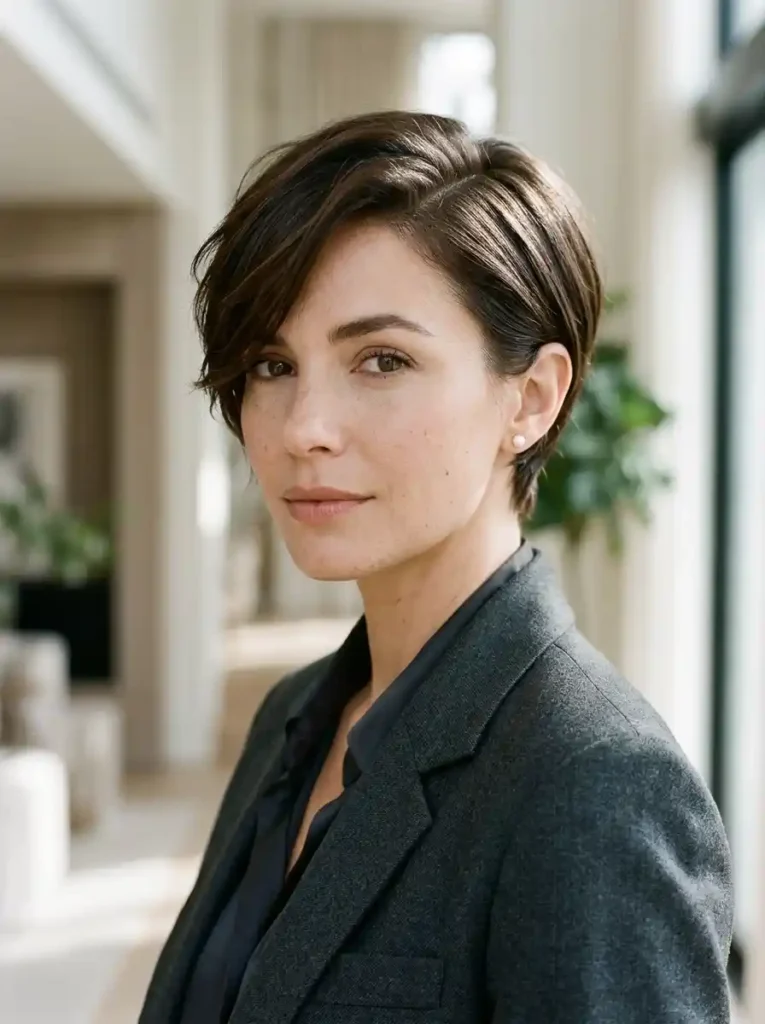
A deep side part changes the appearance of a pixie without requiring a major change in length. The sweeping fringe introduces asymmetry, while the exposed side creates a cleaner outline around the cheekbone and ear. This arrangement can be particularly useful for straight hair that needs visual movement, although wavy textures can also work beautifully. The overall effect ranges from understated and professional to glamorous, depending on how much volume you create at the roots.
To establish the part, use a comb while your hair is damp and direct the front section diagonally across the forehead. A round brush can add lift, but fingers often produce a softer, more relaxed result. Finish with flexible hairspray if your fringe tends to fall forward. If your natural part resists the new direction, avoid forcing it into an uncomfortable position; ask your stylist to adjust the layering so the haircut cooperates with your growth pattern.
15. Copper Textured Pixie with Warm Dimension
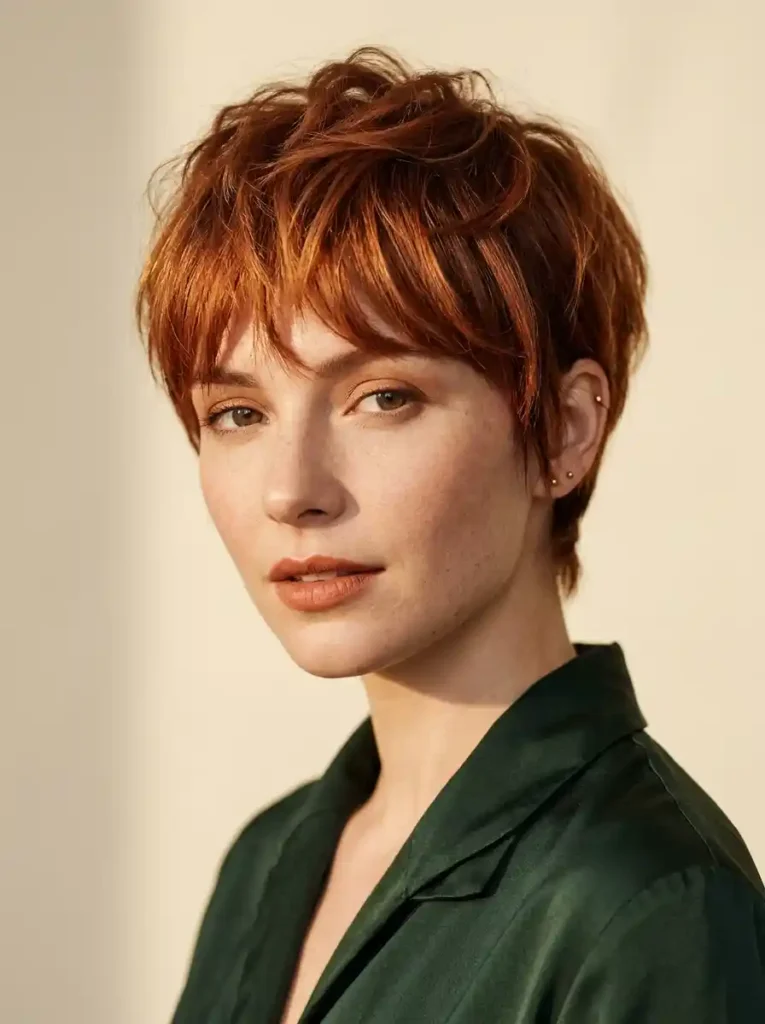
Copper color adds warmth and visual dimension to a textured pixie, particularly when the layers are arranged to catch the light from different angles. Rather than choosing a single flat red shade, consider a combination of copper, ginger, and subtle auburn tones that suits your natural coloring. The haircut itself can remain relatively simple, allowing the color to become the focal point without competing with excessive styling or dramatic accessories.
Red and copper shades may fade faster than some darker colors, especially with frequent washing or heat styling. Use a color-safe shampoo, wash with lukewarm water, and ask your colorist about glossing treatments that can refresh the tone between appointments. At home, a small amount of lightweight paste emphasizes the layered ends without dulling their shine. Before coloring, discuss the upkeep involved, particularly if you are moving several shades lighter or warmer than your natural hair.
16. Textured Pixie with a Faux Hawk Shape
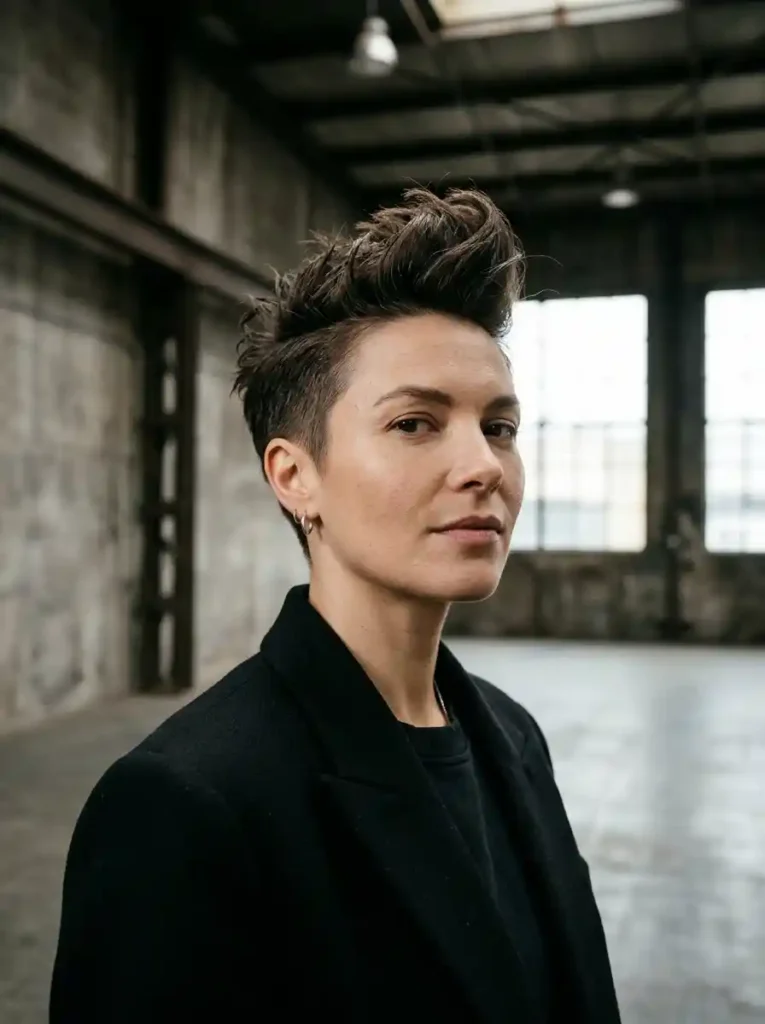
A faux-hawk pixie offers a bold silhouette without the full commitment of a traditional mohawk. The sides remain short, while the longer center section creates height and direction through the crown. It works particularly well for people who enjoy experimenting with styling products and want a haircut that can look understated on some days and dramatic on others. Thick hair may naturally support the raised shape, while finer hair usually needs careful layering and lightweight root lift.
For a softer daytime finish, direct the top loosely backward and allow the ends to fall naturally. For a more defined evening look, work a small amount of strong-hold paste through the central section and lift it with your fingers. Avoid coating the entire hairstyle in heavy gel unless a deliberately rigid finish is your goal. Tell your stylist whether you want a wearable, flexible faux hawk or a more dramatic profile, because that choice affects the length left at the crown.
17. Textured Pixie with a Soft Bowl-Inspired Shape
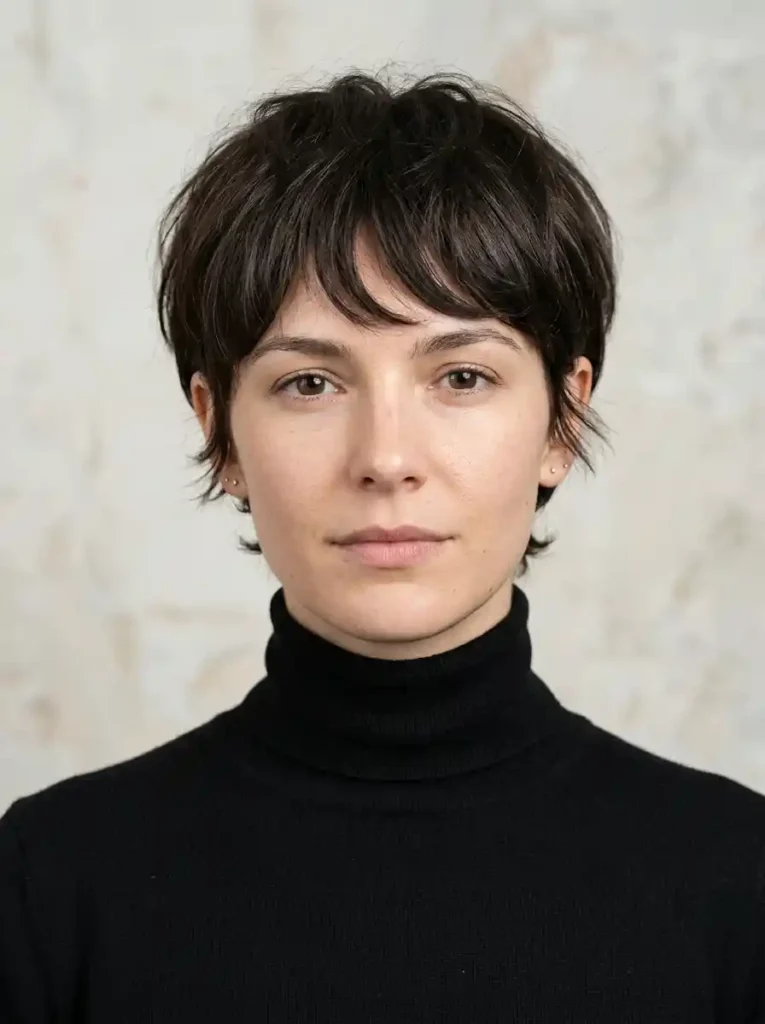
A textured bowl-inspired pixie takes the rounded shape of a traditional bowl cut and softens it with layers and broken-up ends. The fringe follows the curve of the forehead, while the sides create a cohesive outline around the head. This modern interpretation suits people who appreciate structured haircuts but prefer something less severe than a perfectly blunt edge. It can be especially effective on straight or slightly wavy hair, where the curved silhouette remains relatively easy to control.
Ask your stylist to customize the fringe length and side shape to your features instead of copying a single reference image exactly. At home, use a small round brush to encourage the curved outline, then separate the ends with a flexible cream. Heavy products can make the shape look too solid, so start with very little. Regular trims are helpful because this style depends on the relationship between the fringe, sides, and rounded crown.
18. Textured Pixie with Long Temple Pieces
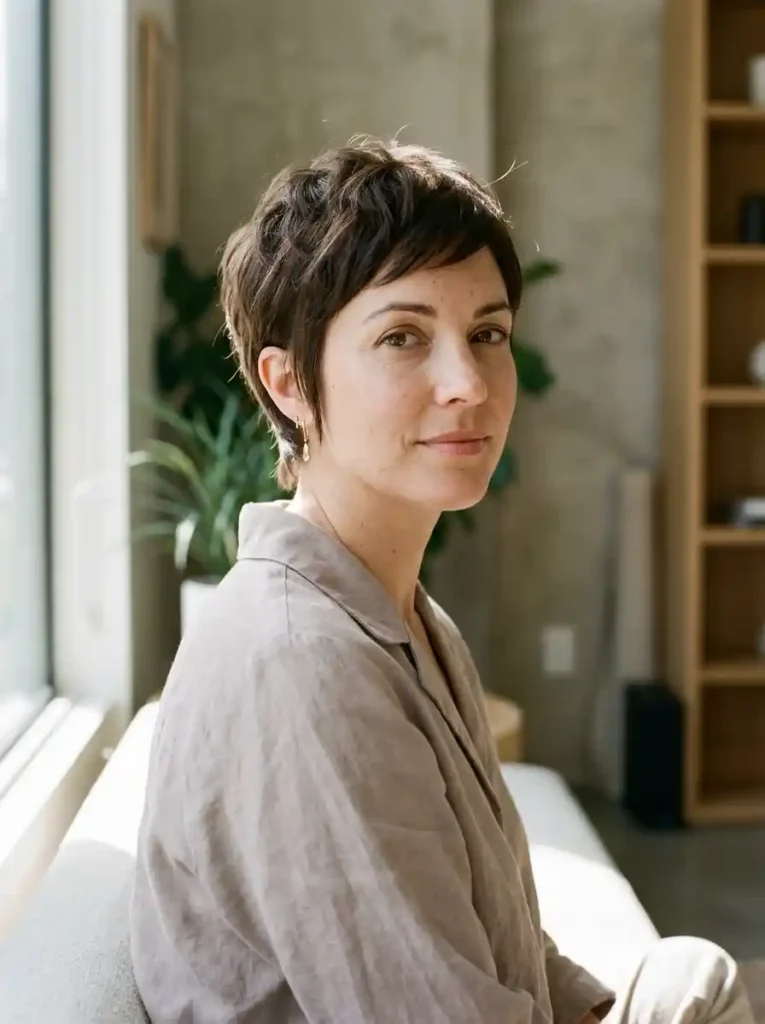
Long temple pieces offer a softer alternative to a tightly cropped pixie. These narrow sections frame the sides of the face, creating movement near the cheekbones and jaw while keeping the back and crown relatively short. They can be useful if you are hesitant about exposing the entire outline of your face or prefer a more feminine transition from longer hairstyles. The effect works with straight, wavy, and loosely curly textures, provided the front sections blend naturally into the cut.
During styling, direct the temple pieces slightly forward or tuck them behind your ears depending on the look you prefer. A lightweight smoothing cream can help the strands lie neatly without making them appear stringy. Ask your stylist to check how the pieces sit both naturally and when tucked away, especially if you wear glasses. If your hair is very thick, subtle tapering may help these sections blend more smoothly into the shorter layers around the sides.
19. Dark Textured Pixie with Glossy Definition
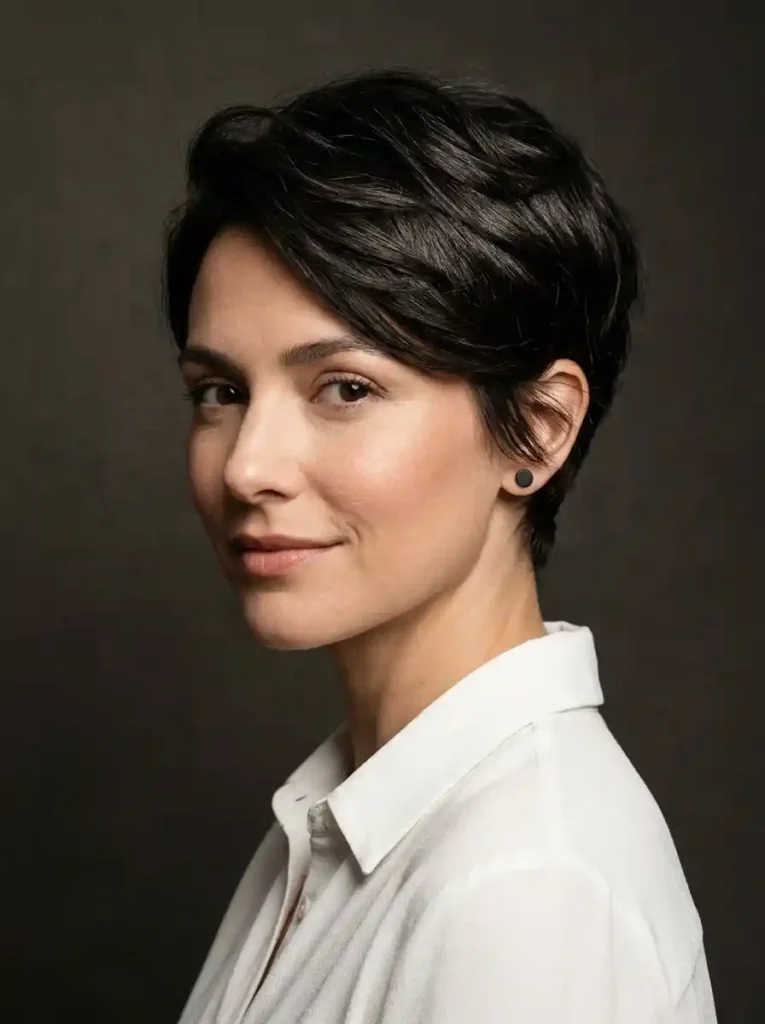
Dark hair can make the structure of a textured pixie particularly visible because subtle changes in light reveal the direction of individual layers. A glossy finish adds refinement, while separated ends prevent the hairstyle from looking like a solid block of color. This version is ideal if you prefer an elegant appearance that can transition from office settings to evening plans. The cut does not need extreme contrast; carefully placed layers are often enough to create dimension.
Maintain shine with a lightweight leave-in conditioner or a small amount of smoothing serum applied mainly to the ends. Use a blow-dryer with moderate heat, directing the hair into its natural shape rather than repeatedly flattening it. Heavy oils can leave dark hair looking greasy, especially around the fringe, so start with a minimal amount. If your stylist recommends texturizing the interior, make sure the outer outline remains substantial enough to preserve the clean, glossy silhouette.
20. Textured Pixie with Subtle Balayage Highlights
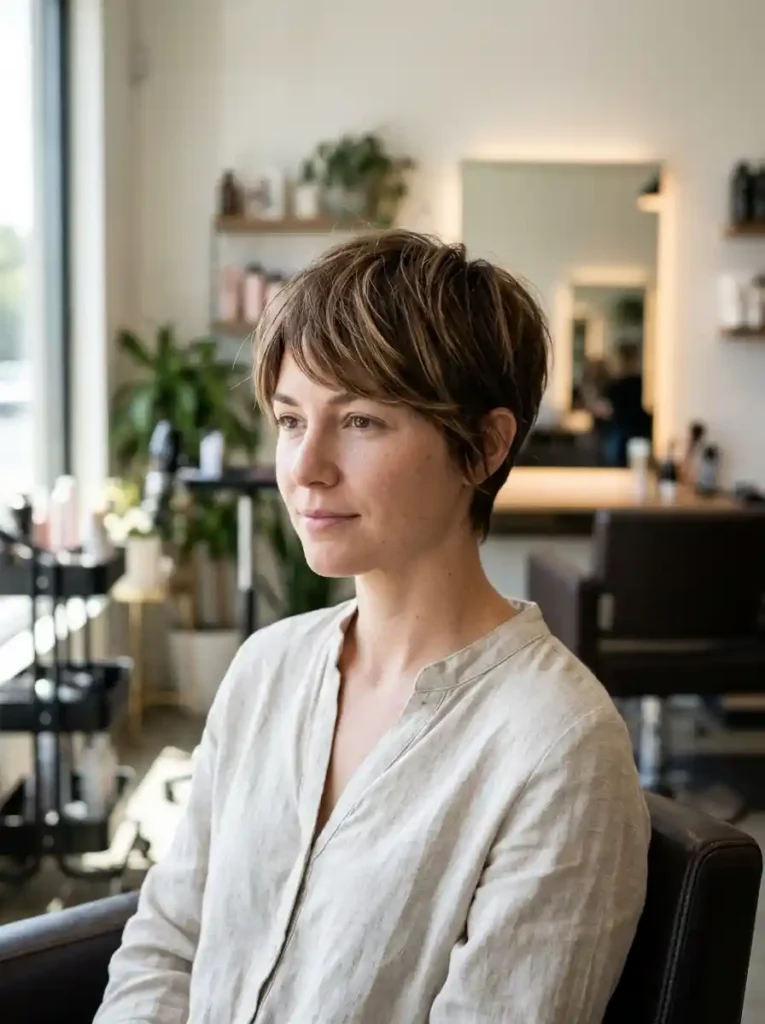
Subtle balayage can add dimension to a textured pixie without requiring a dramatic overall color change. Fine caramel ribbons catch the light as the layers move, making the haircut appear more detailed from different angles. This option is especially appealing if you want to brighten brunette hair while keeping your natural base color visible. The placement should remain delicate, since overly thick highlights can overwhelm the small sections of a short haircut.
Before coloring, ask your stylist to place the lightest pieces where your hair naturally separates and where you want to emphasize movement. A gloss can help blend the shades and improve the overall finish. Because short hair grows out quickly, avoid placing every highlight directly at the roots if you prefer a softer grow-out. At home, use color-protecting products and minimize unnecessary heat exposure to help preserve the balance between the darker base and lighter strands.
21. Textured Pixie with a Swept-Back Finish
A swept-back pixie creates an open, confident silhouette by directing the front layers away from the forehead. Unlike a tightly slicked style, the textured version retains separation and softness, making it suitable for both everyday outfits and more formal occasions. It can be especially flattering if you enjoy emphasizing your eyes, cheekbones, or earrings. Hair with some natural body often holds this shape easily, although finer strands can achieve it with carefully applied root-lifting products.
Apply a small amount of volumizing mousse to damp roots and blow-dry the front sections backward using your fingers or a vent brush. Once the hair is dry, separate a few crown pieces with flexible styling cream. Avoid applying too much product at the hairline, which can make the finish look greasy rather than airy. If you prefer a style that stays in place through a long event, use a light mist of hairspray while keeping the crown flexible.
22. Textured Pixie with a Natural Salt-and-Pepper Blend
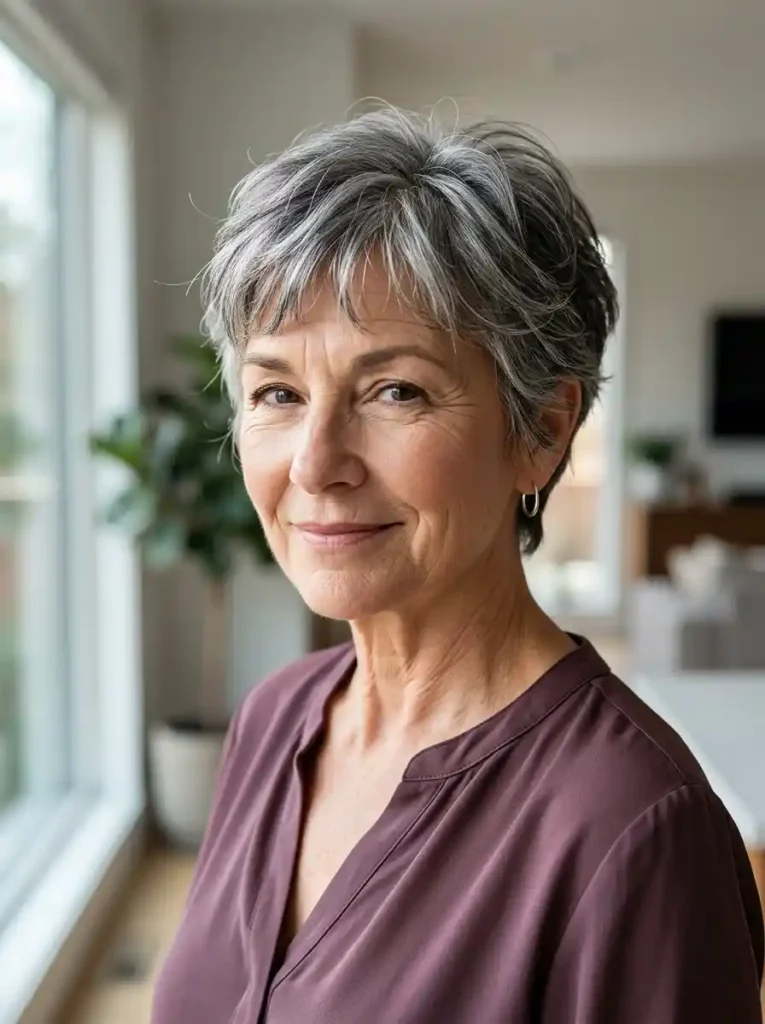
A salt-and-pepper pixie highlights the contrast between naturally dark and silver strands while keeping the haircut fresh and well-defined. The texture helps separate the different tones, creating depth without requiring highlights or an all-over color treatment. This style is a practical option if you are embracing your natural gray transition or simply prefer a low-color-maintenance look. Its overall effect depends more on the shape and finish than on achieving a perfectly uniform shade.
To keep the haircut looking intentional, concentrate on maintaining the crown’s movement and the neckline’s shape. A gentle shampoo and conditioner can help preserve softness, particularly if the gray strands feel coarse. If you use purple shampoo, apply it occasionally and follow the product directions to avoid an unwanted cool cast. Ask your stylist to work with the natural distribution of your silver hair, preserving darker areas where they create contrast instead of trying to make every section identical.
23. Playful Textured Pixie with Flipped-Out Ends
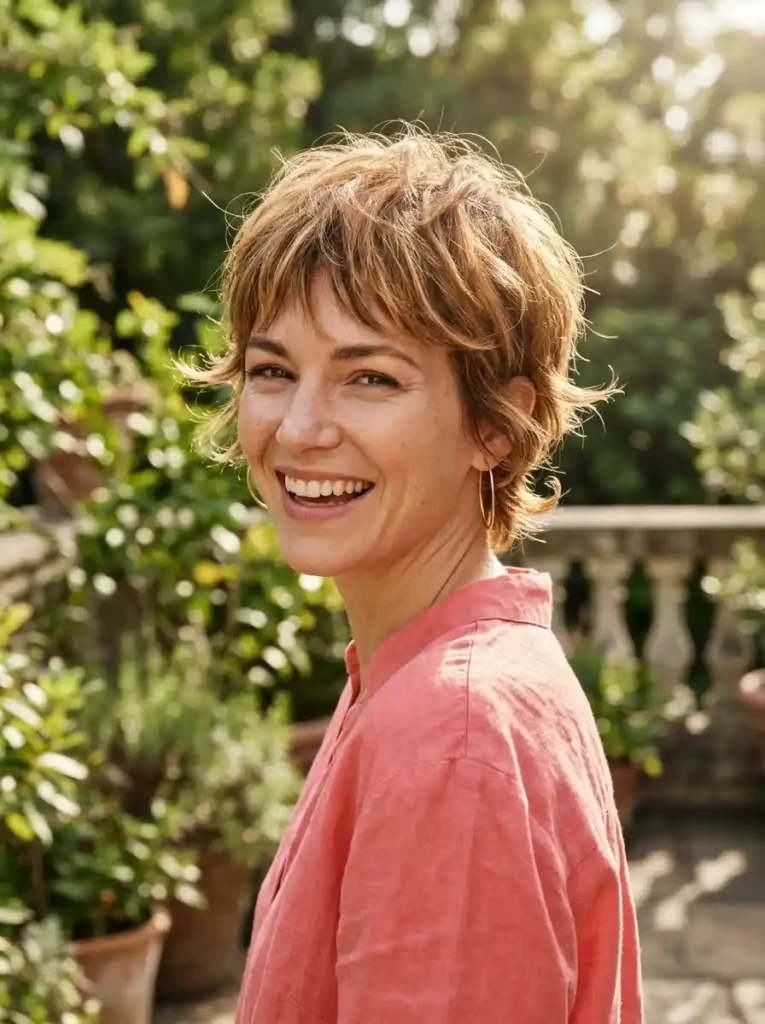
Flipped-out ends give a textured pixie a playful finish that feels different from the usual tousled or swept-back styles. The outward movement adds visual interest around the temples and neckline, making even a simple haircut appear more expressive. It works particularly well with medium-length pixie layers that have enough length to bend without sticking out awkwardly. Straight hair can show the flipped shape clearly, while naturally wavy hair may produce a softer, more irregular result.
To create the look, use a small round brush or a narrow flat iron to turn selected ends outward. Work with small sections and moderate heat, especially if your hair is color-treated or fragile. A lightweight finishing spray can help preserve the movement without making the style stiff. Focus on only a few strategic pieces rather than flipping every strand, which can make the haircut appear overly busy. Ask your stylist to leave enough length around the edges for the effect to be achievable at home.
Conclusion
The right textured pixie cut should feel like an extension of your personal style, not a hairstyle you have to fight with every morning. From feathered layers and soft curls to dramatic undercuts, asymmetrical fringes, and naturally blended silver hair, these ideas show how much variety a short haircut can offer. The best choice depends on your natural texture, preferred maintenance schedule, face-framing preferences, and the amount of time you want to spend styling.
Before booking your appointment, save two or three reference photos that capture the specific details you like, whether that is a rounded crown, longer temple pieces, or a piecey fringe. Discuss your hair’s density, growth pattern, and daily routine with your stylist so the finished cut works beyond the salon. Remember that texture comes from both the haircut and the styling technique. With a thoughtful shape and a few suitable products, your pixie can feel fresh, versatile, and genuinely your own throughout the year.