
Gray hair has become one of the most beautiful ways to express personal style, whether you’re embracing your natural silver strands, experimenting with a cool-toned transformation, or looking for a softer alternative to traditional blonde. From shimmering platinum silver to rich charcoal gray, today’s gray hair color ideas offer something for nearly every complexion, hair length, and aesthetic. The secret is finding a shade that feels elegant, complements your features, and fits the amount of maintenance you’re comfortable with.
Perhaps you love the effortless look of natural gray blending, or maybe you’re drawn to a dramatic silver balayage that catches the light with every movement. You might prefer a subtle mushroom gray for everyday sophistication or a striking steel-gray finish that makes a statement without feeling overly bold.
In this guide, you’ll discover 20 elegant gray hair color ideas, each with distinctive visual inspiration and practical advice to help you choose your favorite. You’ll also learn how to personalize different shades, maintain their beautiful tones, and work with your stylist to create a result that looks polished, dimensional, and uniquely yours.
1. Classic Silver Gray
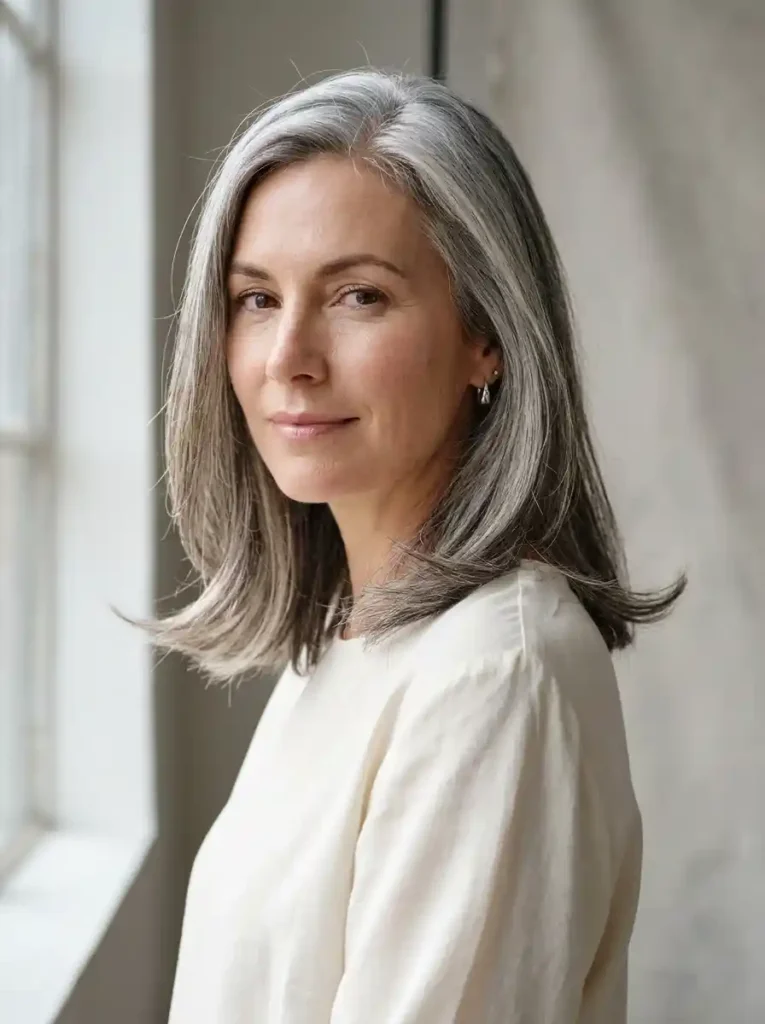
Classic silver gray is an excellent choice if you want a sophisticated hair color that looks intentional rather than simply grown out. Its balanced combination of cool silver and muted gray creates a reflective finish that feels polished without appearing excessively bright. This shade works beautifully on straight bobs, shoulder-length cuts, and longer layered hairstyles. Ask your colorist to preserve subtle tonal variation instead of creating a completely flat silver, which can make the hair appear less natural.
To keep the color looking fresh, use a color-safe shampoo and a moisturizing conditioner formulated for chemically treated hair. A purple shampoo can help neutralize unwanted yellow tones, but using it too frequently may leave some silver shades looking overly violet. Schedule maintenance according to your root growth and the coloring technique used. If your natural hair is already turning gray, ask about blending your existing strands into the silver rather than lightening your entire head.
2. Smoky Gray Balayage
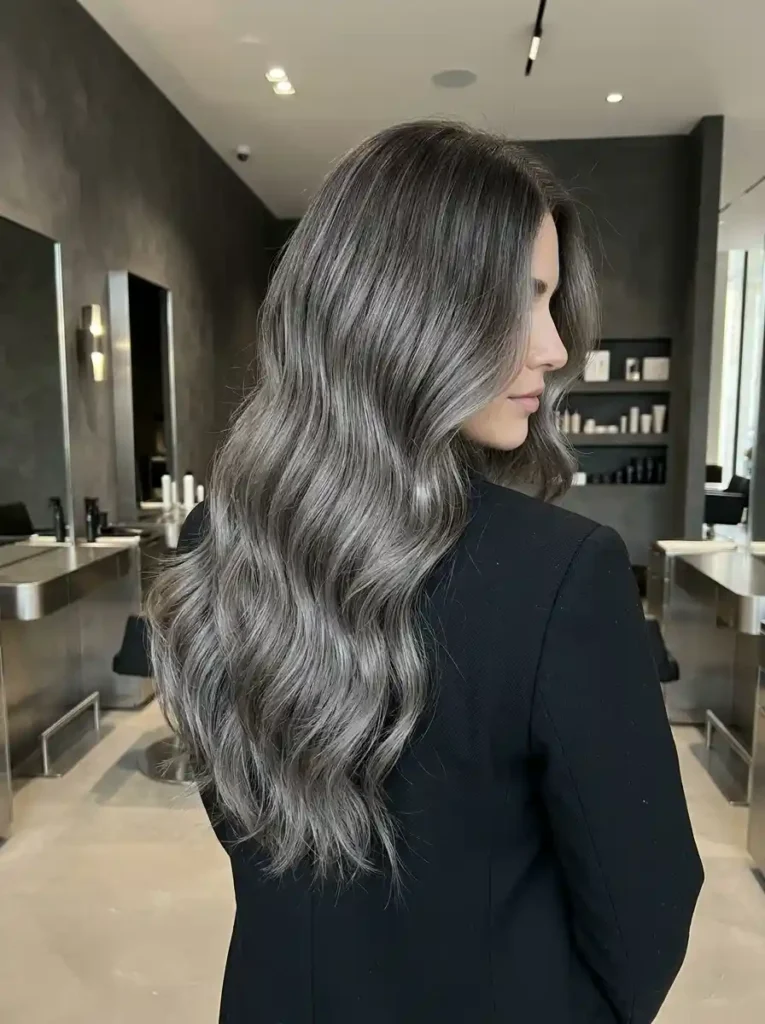
Smoky gray balayage is ideal if you love cool-toned hair but want more depth than an all-over silver color provides. The technique combines darker roots with strategically painted gray and ash highlights, creating movement without an obvious line of demarcation. It looks particularly attractive on medium-length and long hair because the contrasting tones become more visible through waves and layers. Ask your stylist to customize the placement around your face so the finished color complements your haircut.
One advantage of this approach is that the darker root area can make regrowth less noticeable than a solid, light gray color. However, achieving cool gray ends may require lightening, especially if your hair is naturally dark. Discuss your hair’s condition before committing to the transformation, and consider achieving the shade gradually. At home, protect the color with heat protection, gentle cleansing, and regular conditioning treatments to help preserve softness and prevent the lighter sections from becoming dull.
3. Platinum Silver Hair
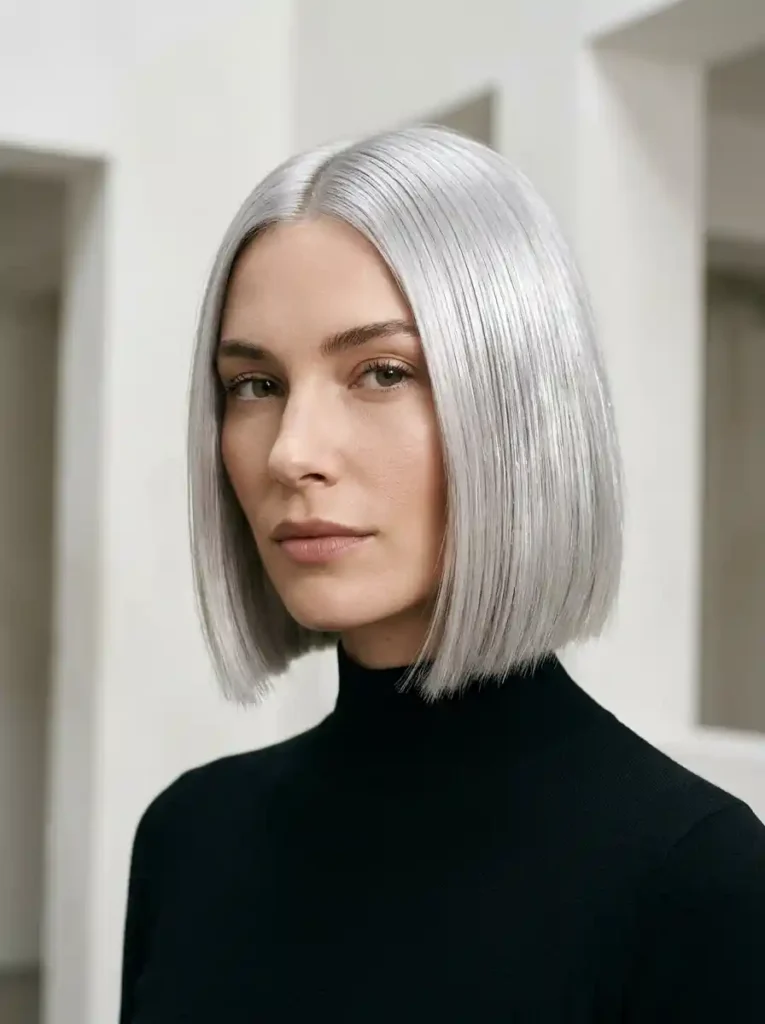
Platinum silver is a striking option for anyone who enjoys a bright, contemporary hair color with a clean, almost icy appearance. Unlike softer silver gray, this shade contains very little visible darkness, giving it a luminous finish that pairs especially well with blunt bobs, pixie cuts, and sharply defined layers. Its brightness can beautifully frame the face, but the result depends on your starting color, hair history, and ability to lift the hair evenly without compromising its condition.
Reaching platinum silver often requires significant lightening, so professional guidance is especially important if your hair has previously been colored dark. Ask for a strand test and an honest assessment of how many appointments you may need. Once the shade is achieved, alternate gentle cleansing with nourishing conditioning, limit excessive heat styling, and follow your colorist’s toning schedule. Because this color can reveal warmth quickly, occasional salon glosses may help restore its cool, reflective finish without repeatedly lightening the hair.
4. Mushroom Gray Brown
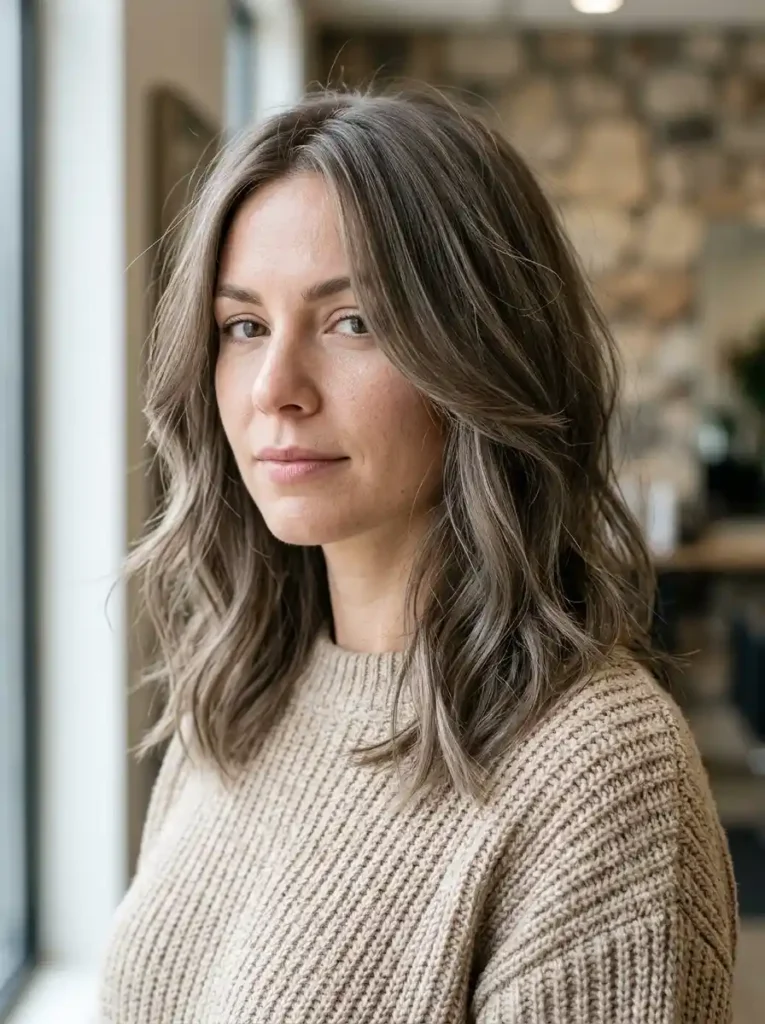
Mushroom gray brown offers a softer introduction to gray hair color because it blends cool gray undertones with wearable taupe and brown. Instead of looking icy or metallic, it creates an earthy, understated finish that suits people who prefer natural-looking color. The shade is particularly versatile on brunettes who want a noticeable change without committing to a bright silver transformation. Ask your stylist to incorporate several closely related tones so the hair retains dimension in both natural daylight and indoor lighting.
This color can be especially practical if you prefer a lower-maintenance routine than platinum shades typically require. Depending on your natural base, your colorist may be able to create the look with selective highlights, a toner, or a dimensional color service rather than extensive lightening. Bring reference photos taken in realistic lighting because mushroom tones can appear much warmer or cooler depending on the photograph. To maintain the intended balance, choose color-safe products and avoid excessive use of warm-toned glosses that can shift the finish toward golden brown.
5. Charcoal Gray Hair
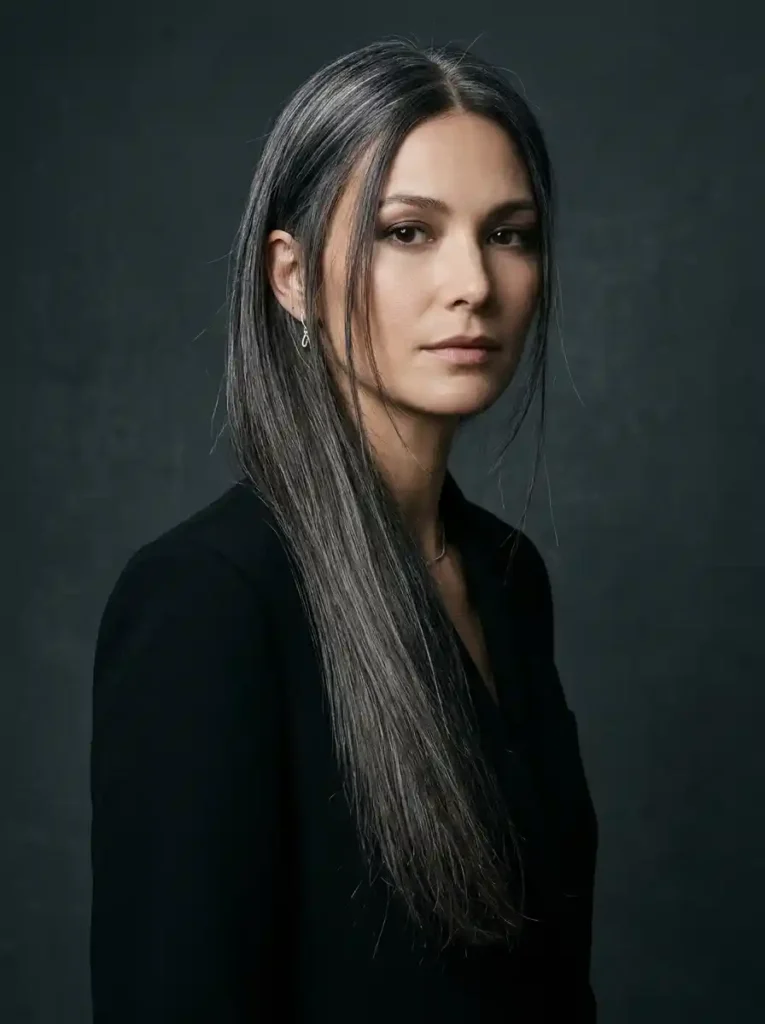
Charcoal gray is perfect for those who want a deeper, more dramatic interpretation of gray hair. Its graphite undertones create a sophisticated finish that feels closer to dark brunette or black hair than pale silver does. The shade works beautifully on sleek long hair, layered cuts, and textured bobs, where subtle reflective highlights prevent the overall color from appearing flat. Ask your colorist whether a soft charcoal gloss or a multidimensional gray formula would best complement your natural base.
Although charcoal can look relatively low-maintenance on naturally dark hair, the upkeep depends on how the shade is created. A demi-permanent gloss may gradually fade, while a more permanent formula can produce a visible difference as the roots grow. Avoid choosing a color that is dramatically darker than your natural hair without discussing future maintenance. To keep the finish glossy, use a gentle shampoo, apply conditioner through the lengths, and incorporate occasional hair masks if your strands feel dry or rough.
6. Silver Balayage on Brunette Hair
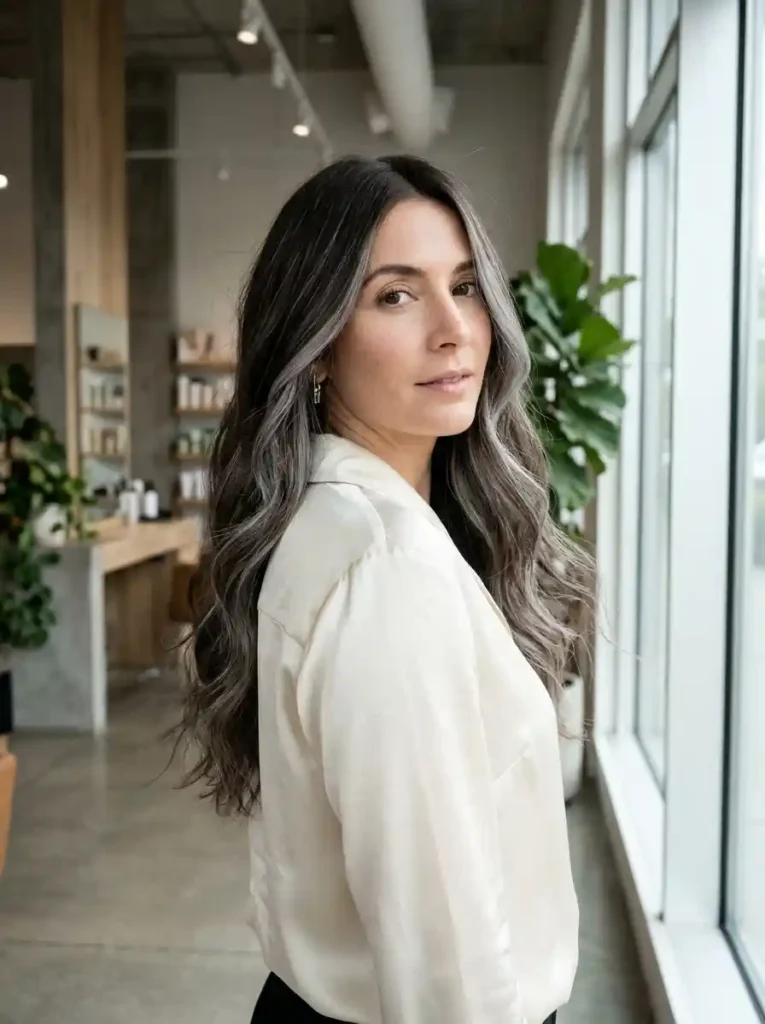
Silver balayage on brunette hair creates a beautiful contrast between deep brown and cool gray without requiring the entire head to become silver. The result can be subtle or dramatic depending on how light the highlighted sections become and how densely they are placed. Fine ribbons of silver offer a delicate shimmer, while broader sections create a more noticeable transformation. This approach is especially appealing if you want to retain your brunette identity while experimenting with a cooler, contemporary color palette.
For a balanced result, ask your stylist to map the highlights around your haircut and natural parting. Face-framing silver can brighten the overall look, while softer gray pieces through the back provide movement without overwhelming the darker base. Keep in mind that silver highlights usually require lightening and may need periodic toning to control unwanted warmth. Use a heat protectant before styling, and ask your colorist how frequently you should refresh the highlights rather than automatically scheduling full-head lightening at every appointment.
7. Icy Gray Blonde
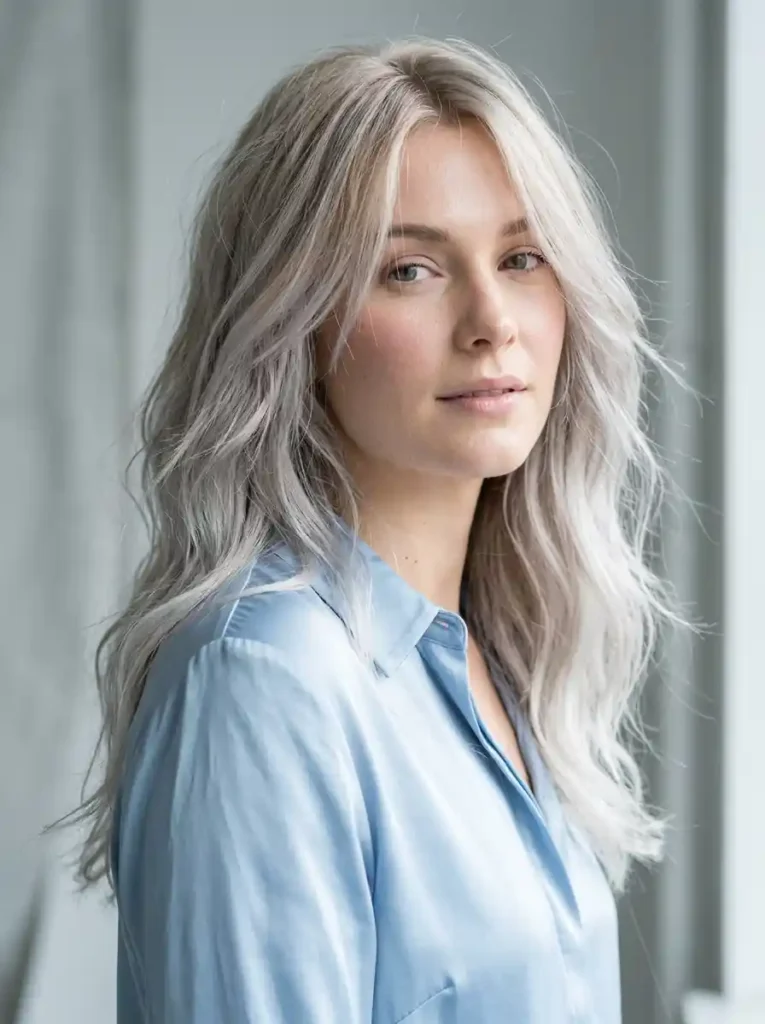
Icy gray blonde combines the brightness of blonde with the cool sophistication of silver. Its pale, blended tones make it a lovely choice for people who want a lighter overall appearance without committing to a distinctly metallic gray. The shade looks especially elegant on long layers, textured lobs, and soft waves that allow different tones to reflect the light. Depending on your complexion, your stylist can introduce a little beige or pearl warmth to keep the color from appearing excessively stark.
The key to achieving icy gray blonde is controlling unwanted yellow and orange tones without over-toning the hair. Your starting shade matters because darker hair may require several lightening sessions before a pale, even result is possible. Ask for a realistic maintenance plan before beginning, particularly if your hair is already dry or fragile. Between appointments, use moisturizing products designed for color-treated hair, reduce high-temperature styling, and follow professional advice on toning frequency so the blonde remains luminous rather than dull or purple-tinged.
8. Natural Salt-and-Pepper Hair

Natural salt-and-pepper hair celebrates the contrast between darker strands and emerging silver rather than trying to eliminate it. The combination can create beautiful dimension, especially when the haircut allows the different colors to move naturally. A softly layered bob, tapered pixie, or shoulder-length cut can help the mixture look intentional and well-shaped. If you are transitioning away from regular dyeing, your stylist can recommend a cut that gradually reduces the appearance of older color while preserving enough length for your preferred style.
You do not necessarily need a complicated color routine to make salt-and-pepper hair look polished. Regular trims help maintain the shape, while a lightweight conditioner can improve softness without weighing down fine strands. If your darker sections look dull, a clear gloss may add shine without substantially changing the natural pattern. Avoid covering every silver strand simply because the contrast is unfamiliar at first. Giving the transition time, experimenting with different partings, and choosing a flattering haircut can make your natural color feel like a deliberate style choice.
9. Silver Pixie Cut

A silver pixie cut combines a fresh, sculptural haircut with a color that emphasizes its shape. Because the hair is shorter, the silver tones remain visible without requiring long lengths or elaborate styling to showcase their dimension. The look can be soft and feminine with a feathered fringe or more architectural with closely tapered sides. It is also worth considering if you are transitioning to gray, since regular trims can gradually remove previously colored ends while keeping the haircut deliberate.
Short hair does not automatically mean no maintenance, particularly when the cut has precise edges or the silver is artificially lightened. You may need trims every few weeks to preserve the silhouette, while root toning depends on the contrast between your natural color and the silver. Ask your stylist for a finish that works with your hair’s natural growth pattern, cowlicks, and texture. At home, a small amount of lightweight styling paste or volumizing cream can define the layers without making the hair stiff or greasy.
10. Gray Ombre Hair
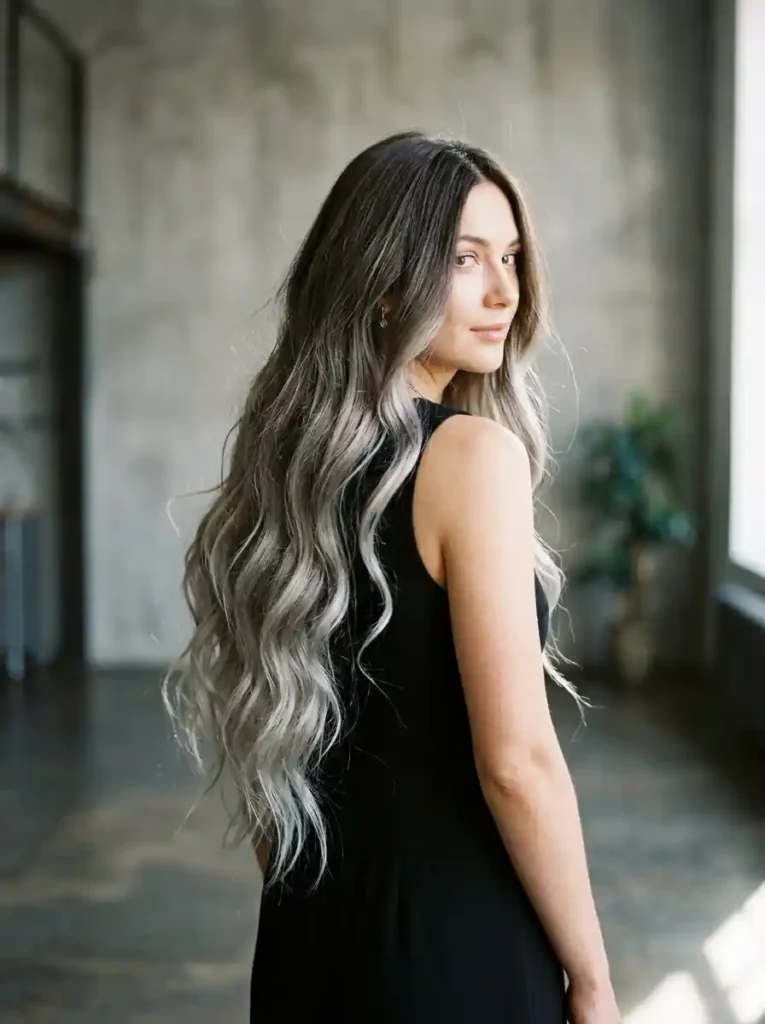
Gray ombre is an appealing choice if you love a visible color transformation but prefer to keep your natural or darker shade near the roots. The gradual transition from brunette to smoky gray and then silver creates a distinctive gradient that looks especially striking on long hair. Because the color change develops along the length rather than beginning at the scalp, the effect can feel less abrupt as the roots grow. Your stylist can adjust where the gray begins to suit your preferred level of contrast.
The most important detail is creating a seamless transition between the darker base and lighter ends. If the sections look disconnected, the result may resemble separate color blocks rather than a blended ombre. Bring photographs showing the gradient you like, and discuss how light you want the ends to become. Since the lower lengths may need substantial lightening, ask about strengthening treatments and trimming dry ends before the service. Regular conditioning and careful detangling will help long, lightened hair retain a smoother, more polished appearance.
11. Pearl Gray Hair
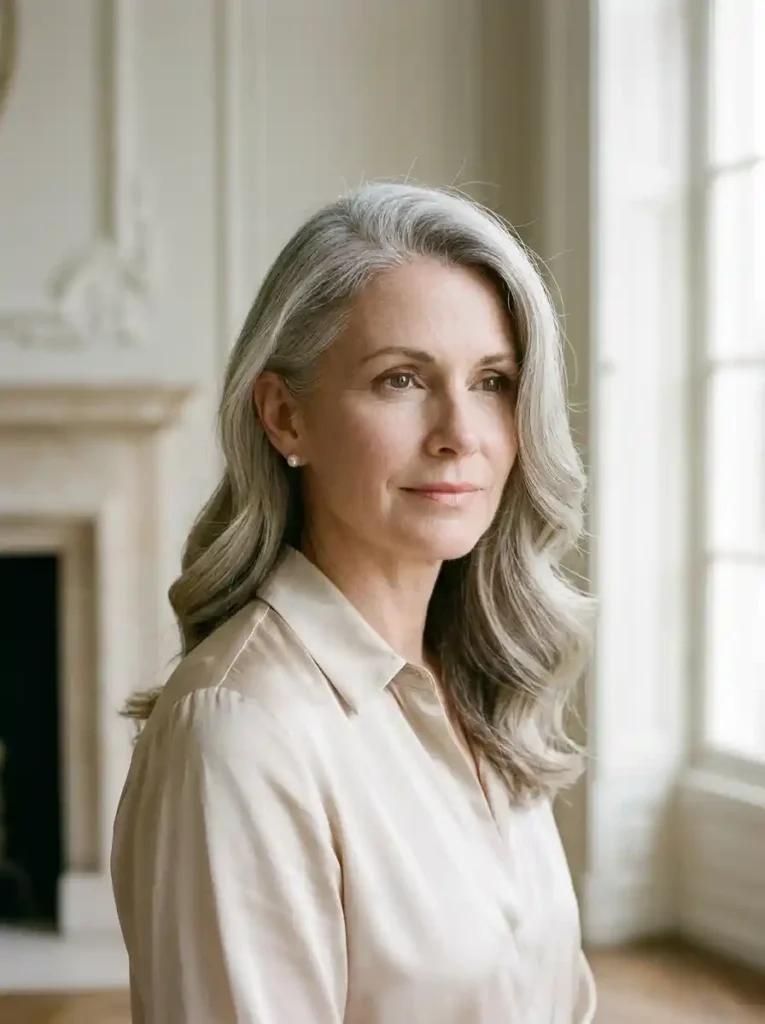
Pearl gray offers a softer, more luminous alternative to stark platinum silver. Its delicate combination of silver, white, and subtle cool-beige tones creates a refined finish that looks particularly beautiful in smooth waves and softly rounded bobs. Rather than relying on an intense metallic effect, the color uses gentle tonal variation to create a polished appearance. If you prefer gray hair that feels elegant and understated, ask your colorist for a pearlescent finish tailored to your natural undertones and desired brightness.
Pearl tones can be difficult to maintain if your hair naturally develops yellow warmth or if previous coloring has left uneven sections. A professional toner can help balance the color, but the formula should be selected for your existing base rather than copied from another person’s photograph. Use a nourishing conditioner and minimize unnecessary heat exposure to protect the hair’s surface and shine. Before your appointment, discuss whether your desired pearl shade can be achieved in one visit or whether a gradual approach would better protect your hair.
12. Steel Gray Hair
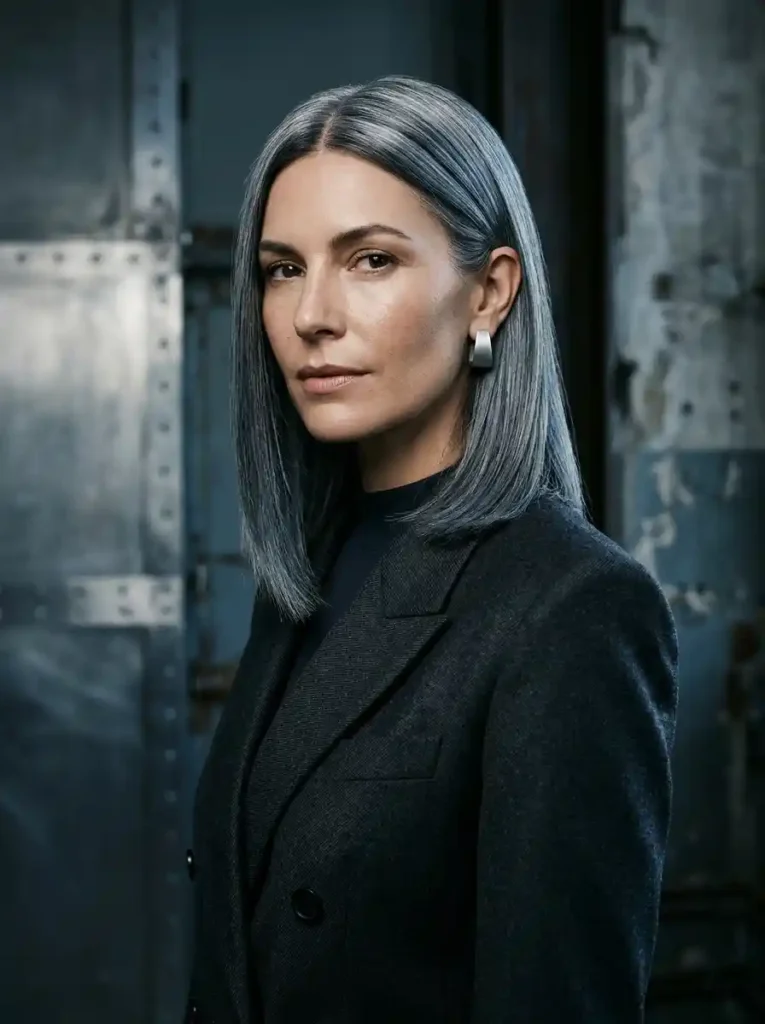
Steel gray is a bold, modern shade characterized by its cool metallic appearance and deeper graphite undertones. Compared with pearl or classic silver, it has a stronger visual presence and can look especially striking on sleek lobs, geometric bobs, and long straight hairstyles. The slight blue-gray cast gives the color an industrial-inspired edge without requiring a vivid fashion color. If you want a distinctive result, ask your colorist to balance the metallic tones with enough depth to keep the finish dimensional.
Because cool gray formulas can fade or shift with washing, it helps to understand how your chosen shade will behave over time. Your stylist may recommend a gloss refresh rather than repeated lightening, depending on your natural hair and the color process used. Avoid using strong toning products without guidance, as they can create uneven or overly blue sections on porous ends. A heat protectant, gentle shampoo, and regular conditioning can support the smooth surface that makes steel-gray hair look reflective rather than rough.
13. Ash Gray Lob
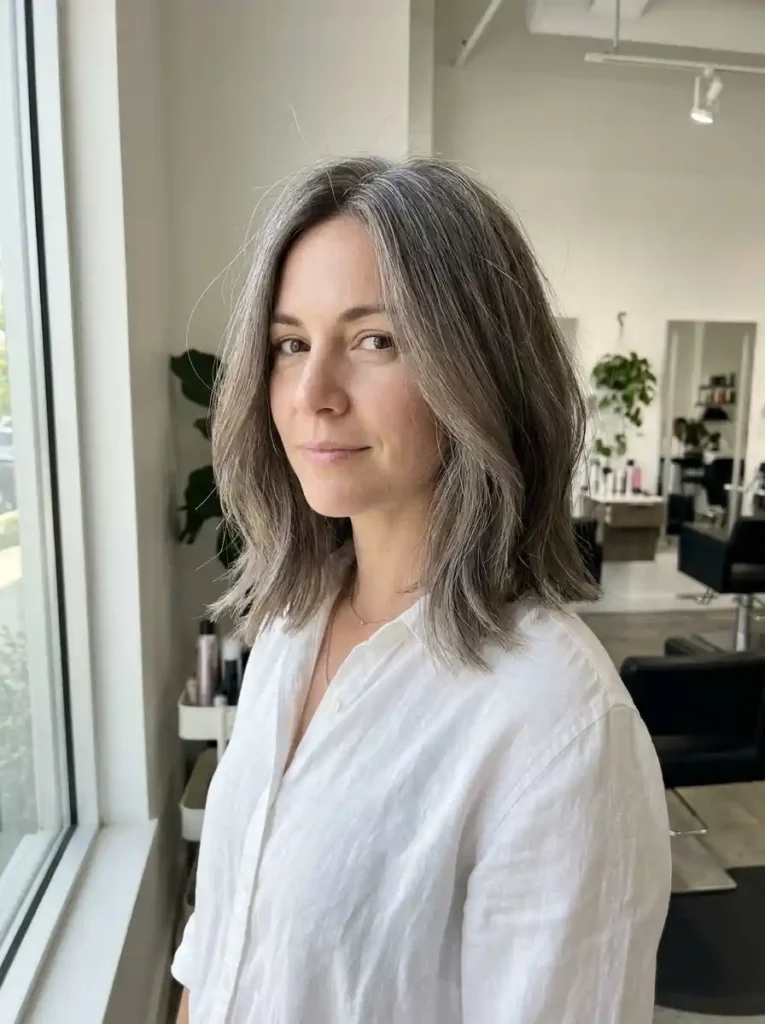
An ash-gray lob is a versatile option for anyone who wants a contemporary haircut without the dramatic upkeep of very pale silver. The length sits between a traditional bob and shoulder-length hair, giving you enough room for loose waves, a smooth blowout, or a simple tucked-behind-the-ear style. Its muted gray-brown tones can feel especially natural on brunettes who want a cooler finish. Ask your stylist to adjust the ash level so the color complements your complexion instead of making your features appear washed out.
The lob also offers flexibility during a transition to gray because the length can be shortened gradually as old color grows out. If you prefer a blended appearance, subtle highlights can soften the contrast between your natural roots and the colored lengths. Use a lightweight conditioner to keep the ends smooth, and consider a round brush when blow-drying if you want a gentle inward bend. Since ash tones can appear flat without variation, occasional glossing or carefully placed highlights may help restore dimension between appointments.
14. Silver Face-Framing Highlights
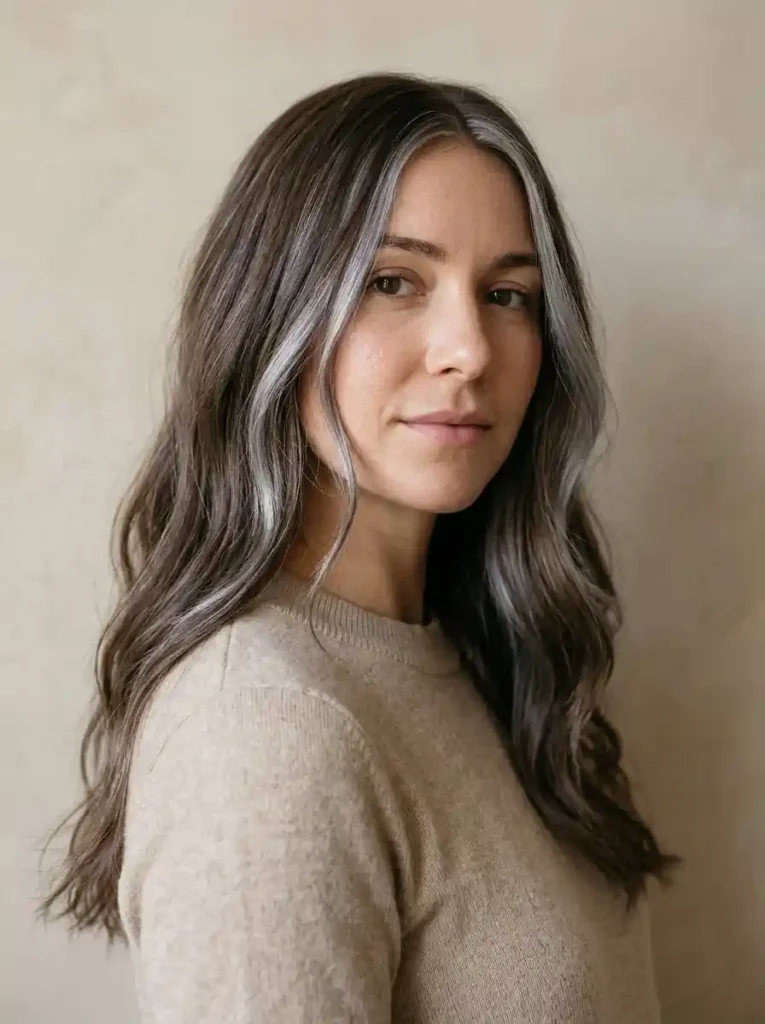
Silver face-framing highlights create a noticeable change without requiring every section of your hair to be colored. The lighter pieces draw attention to the front layers, making them particularly effective on curtain bangs, long face-framing cuts, and shoulder-length hairstyles. You can choose a delicate, blended effect or a stronger contrast against a brunette base. Ask your stylist to place the highlights according to your natural parting and haircut so they remain flattering when you wear your hair down, tied back, or tucked behind your ears.
This technique may also help soften the visual contrast of emerging gray around the temples, although the result depends on how your natural strands are distributed. If you want the highlights to blend rather than look like two bright stripes, request fine sections and a gradual transition into the surrounding color. Lighter front pieces can fade or become brassy faster than the darker hair around them, so use color-safe products and follow your stylist’s advice about toning. A small refresh around the face may be enough when the rest of the color still looks balanced.
15. Graphite Gray with Silver Highlights

Graphite gray with silver highlights is ideal if you enjoy a deep, smoky base but want enough brightness to show movement. The darker foundation creates visual depth, while thin silver strands catch the light throughout the hair. This combination works particularly well on long layers, textured shags, and medium-length cuts with natural volume. Unlike an all-over silver transformation, the look relies on contrast between shades, making it a useful reference if you prefer gray hair that feels dramatic but not uniformly pale.
To achieve a refined finish, ask for finely spaced highlights rather than thick, evenly distributed stripes. Your colorist can concentrate lighter pieces around the crown and outer layers, allowing them to appear naturally through movement. Keep in mind that the highlighted sections may need more conditioning than the darker base, especially after lightening. A gloss can refresh the graphite tone, while occasional highlight maintenance restores brightness where it has faded. Discuss the timing of these services separately so you avoid unnecessary processing across already-lightened strands.
16. Soft Gray Lavender
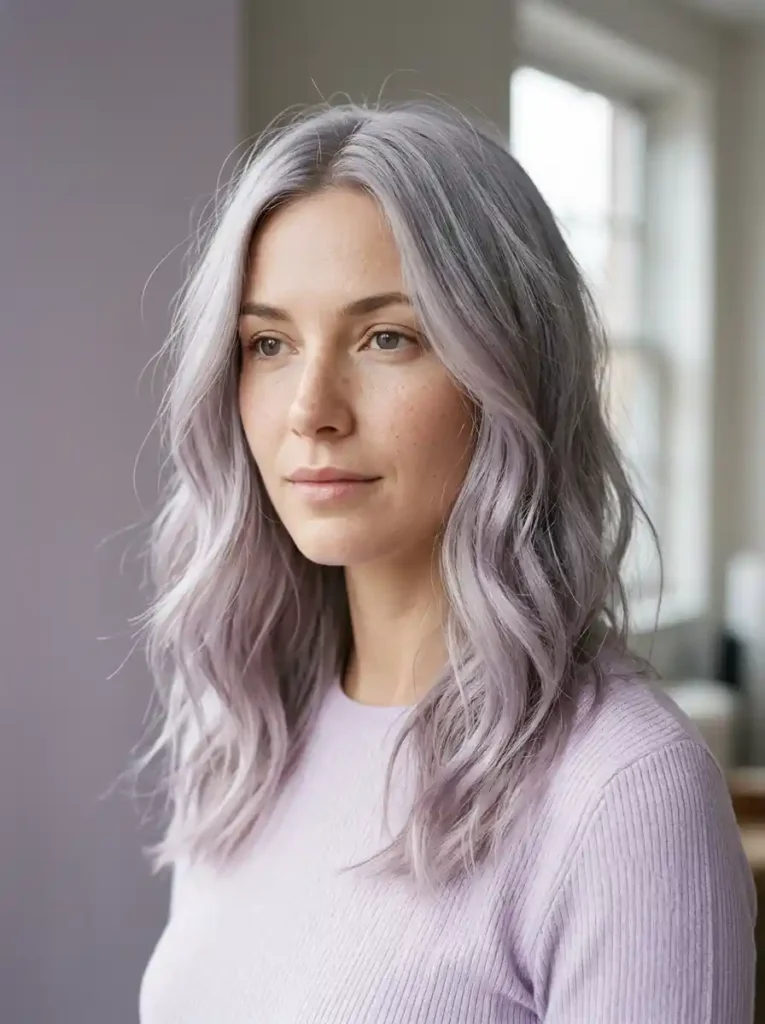
Soft gray lavender adds a delicate hint of color to a traditional gray base without becoming an intense purple hairstyle. The muted combination of silver and dusty lavender creates a gentle, contemporary finish that can look beautiful on layered bobs and loose shoulder-length waves. It is particularly appealing if you enjoy pastel shades but want something more subdued than bright fashion colors. Ask your colorist to keep the lavender undertone subtle, especially if you want the result to read primarily as gray in everyday lighting.
This shade usually looks most consistent on a sufficiently light, even base, so darker hair may require preliminary lightening. Pastel pigments can fade relatively quickly, and frequent washing may reduce the lavender effect before the underlying gray changes noticeably. Use a gentle color-safe shampoo, wash with lukewarm water when practical, and limit unnecessary heat styling. Before choosing the formula, discuss how the color is expected to fade. A well-planned result should remain attractive as the lavender softens, rather than becoming an unwanted patchwork of pale purple and yellow tones.
17. Gray Blending for Growing Out Natural Silver

Growing out natural silver does not have to mean waiting months for a stark line of regrowth to disappear. Gray blending uses strategically placed highlights, lowlights, or toning to connect emerging silver roots with previously colored lengths. The goal is not necessarily to make every strand match immediately, but to soften the contrast while preserving your natural pattern. This approach works well for people who want to reduce permanent root coloring and gradually move toward their authentic gray without sacrificing a polished appearance during the transition.
Your best strategy depends on the difference between your natural gray and your existing dye. If the lengths are very dark, your stylist may recommend several appointments instead of attempting to lighten everything at once. A shorter haircut can accelerate the transition, but it is not essential if you prefer to retain length. Ask for a maintenance plan that explains which sections will need refreshing and when you can reduce salon visits. Taking progress photographs every few months can also help you see how the blend develops over time.
18. Silver Curls with Natural Dimension

Silver curls have a distinctive beauty because their shape naturally creates highlights and shadows, making tonal variation especially noticeable. Rather than aiming for a single uniform silver, consider a combination of lighter strands around the outer curls and deeper gray near the roots. This approach preserves the texture’s visual depth and can prevent the hairstyle from appearing flat. The look suits natural curls, loose spirals, and tighter coils, provided the coloring process is tailored to the hair’s condition and curl pattern.
Curls can become drier or less defined after chemical processing, so maintaining their condition is just as important as selecting the shade. Ask your stylist to assess elasticity and porosity before lightening, particularly if your hair has already been colored. Use a moisturizing conditioner or leave-in product suited to your curl type, and avoid rough towel drying that disrupts the curl pattern. When refreshing the silver, targeted toning may be preferable to repeatedly processing the full head. A shape-preserving trim can remove fragile ends while keeping the overall silhouette balanced.
19. Gray Hair with Lowlights
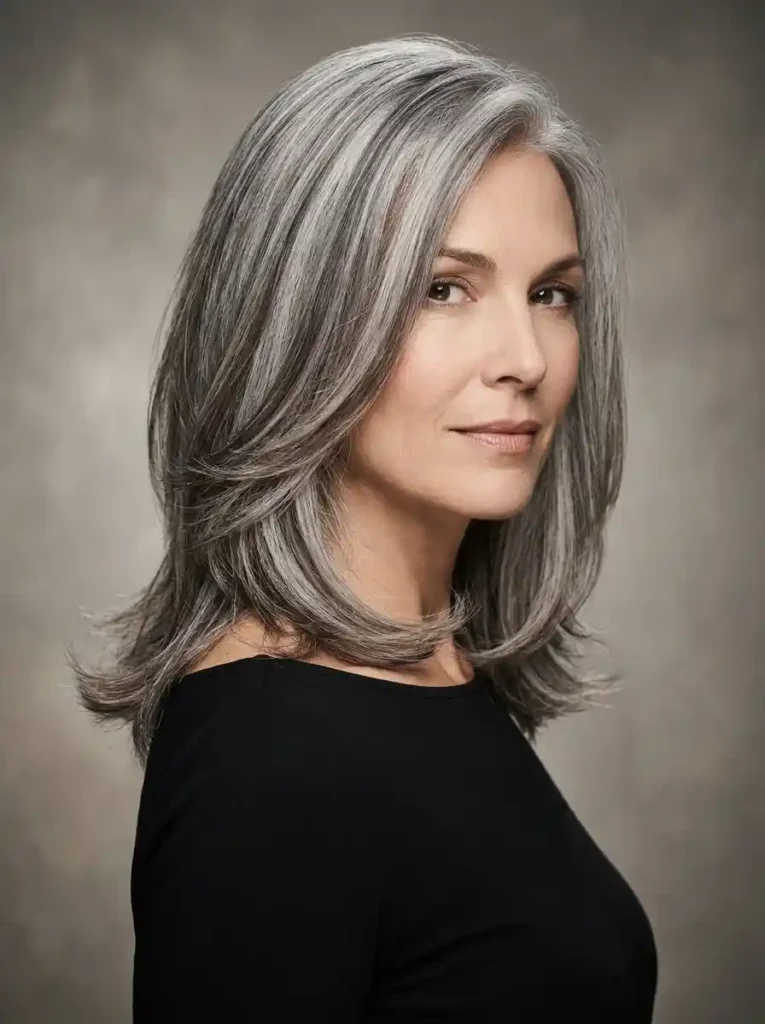
Gray hair with lowlights is an excellent choice if your silver feels too uniform or you want more depth without abandoning its lighter overall appearance. By introducing carefully selected darker gray or taupe sections, a stylist can create contrast that makes the silver pieces stand out. The technique is especially useful on longer layers and shoulder-length cuts, where the interplay of light and dark becomes visible as the hair moves. Ask for a customized placement that works with your natural growth pattern and preferred hairstyle.
Lowlights may be added with a suitable demi-permanent or permanent formula, depending on the desired depth, existing color, and condition of your hair. Your stylist should consider whether the darker sections will blend naturally with future regrowth, particularly if you are embracing your natural gray. Too many dark pieces can make the overall color appear muddy, so a restrained approach often looks more elegant. Maintain the finish with gentle cleansing, regular conditioning, and occasional professional glossing rather than automatically recoloring every section at each visit.
20. Champagne Silver Gray
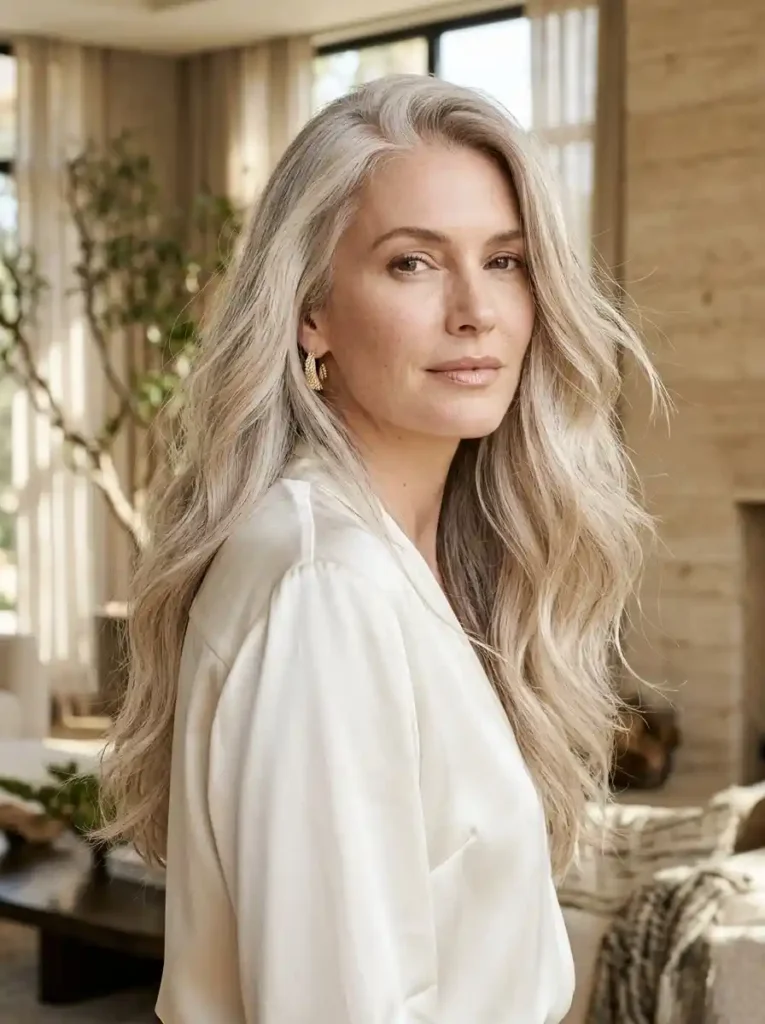
Champagne silver gray is a beautiful alternative if icy silver feels too cool but golden blonde seems too warm. Its blend of pale gray, muted beige, and restrained champagne undertones creates a softer finish with a subtle glow. The color can look especially elegant on long waves, layered lobs, and smooth shoulder-length styles. Ask your colorist to keep the beige component controlled so the result remains recognizably silver rather than shifting into conventional blonde, particularly if you prefer a cooler overall appearance.
The most flattering balance depends on your natural hair color, complexion, and how much contrast you want around your face. Bring inspiration photos taken in daylight, because warm indoor lighting can make champagne shades appear considerably more golden. If your hair is naturally dark, reaching this light tone may involve multiple appointments and careful attention to hair condition. Use a moisturizing color-safe routine and ask your stylist whether a gloss can maintain the silver-beige balance between services. The aim is a soft, reflective finish that remains attractive as it gradually fades.
Conclusion
Choosing the right gray hair color is about more than finding a beautiful shade. It means discovering a combination of tone, dimension, haircut, and maintenance that fits your lifestyle and makes you feel confident. Classic silver and pearl gray offer luminous elegance, while charcoal, graphite, and smoky balayage create deeper, more dramatic looks. If you prefer a natural transition, salt-and-pepper hair and gray blending can help you embrace silver without committing to a complete color transformation.
Before booking your appointment, save two or three inspiration photos that resemble your current hair color, length, and texture. Discuss your hair’s condition, the number of sessions required, and the upkeep you can realistically manage. Remember that lighting, undertones, and your starting shade all influence the final result.
The best gray hairstyle is not necessarily the lightest or trendiest one. It is the version that complements your features, works with your everyday routine, and feels unmistakably yours.


