
Gray blending is a beautiful way to embrace natural silver strands without committing to a single, solid hair color. Instead of covering every gray hair, this technique combines silver, white, and your existing base color to create dimension, softness, and a naturally graceful finish. Whether you prefer warm brunette tones, cool blonde highlights, or delicate silver ribbons, these 24 gray blending hair ideas offer inspiration for different lengths, textures, and personal styles, along with practical tips for maintaining your look.
1. Soft Silver Balayage on Brunette Hair
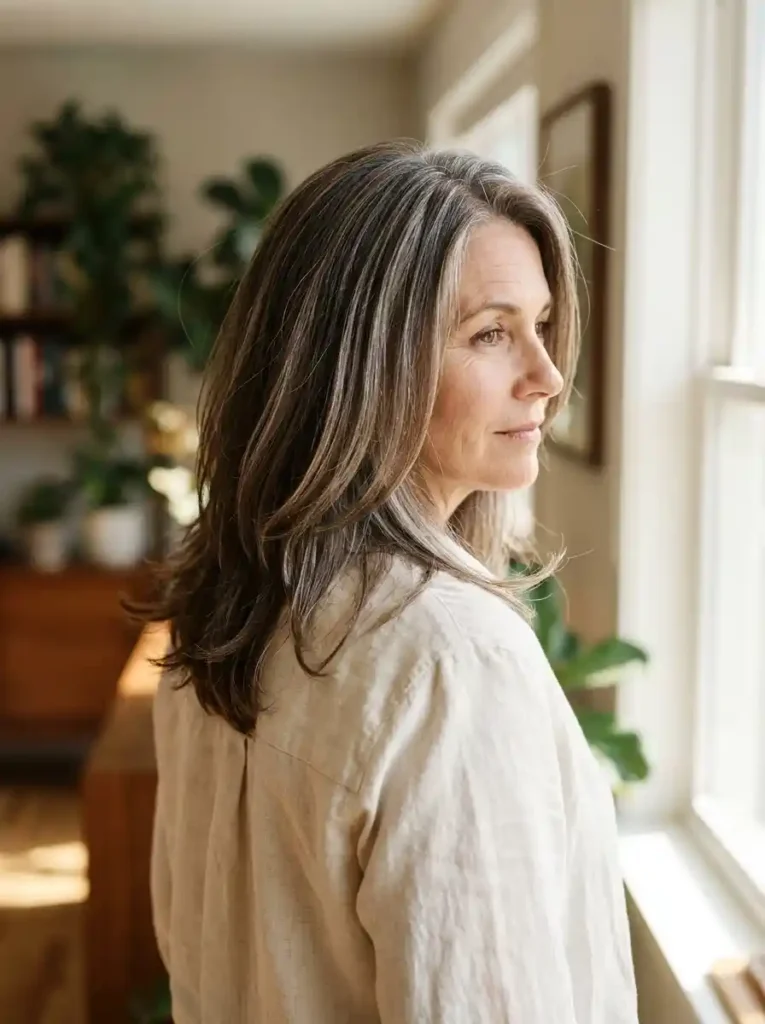
Silver balayage is an excellent choice if you want to soften the contrast between dark brown hair and emerging gray roots. Fine silver ribbons are painted through the midlengths and ends, creating movement without making the entire hairstyle look dramatically lighter. The result feels especially flattering on layered cuts because the color catches the light as the hair moves. Ask your colorist to keep the highlights delicate around the crown for a naturally blended finish rather than obvious, chunky streaks.
For maintenance, consider a root-smudging service that softens the transition between your natural brunette base and silver highlights. A color-safe shampoo and a nourishing conditioner help preserve shine, while an occasional purple shampoo can reduce unwanted yellow tones if your lightened sections become brassy. This look suits women who want a gradual transition rather than an abrupt color change. If your hair is naturally very dark, discuss the number of lightening sessions needed to achieve silver without compromising its condition.
2. Icy Gray Highlights on a Dark Base
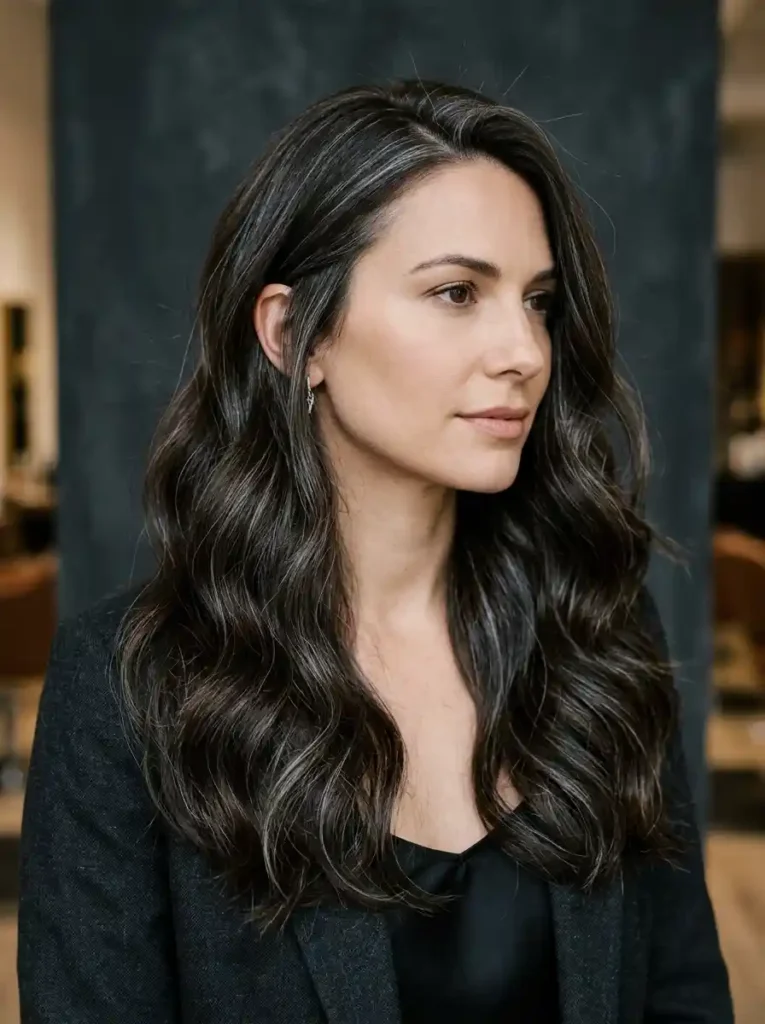
Icy-gray highlights create a striking but sophisticated look when you want to preserve the depth of dark hair. Rather than lifting large sections, your stylist can place fine silver pieces strategically where natural gray is already appearing. The contrast adds dimension, especially around the face and through the lengths. This approach works well for women with naturally deep brunette or black hair who enjoy a cooler finish but do not want to become fully silver-haired overnight.
The key is choosing an achievable shade of gray for your existing color and hair condition. Very dark hair may require several lightening appointments before icy silver becomes possible, so patience matters. Ask for blended highlights instead of sharply defined stripes, and discuss a gloss that keeps the finished color balanced. Between salon visits, limit excessive heat styling and use a heat protectant. The darker base helps the highlights stand out, making thoughtful placement more important than adding silver everywhere.
3. Salt-and-Pepper Gray Blending

Salt-and-pepper blending celebrates the natural mixture of dark and gray hair instead of trying to eliminate either color. The result has a beautiful, understated contrast that looks especially appealing on bobs, pixie cuts, and medium-length layered styles. If your grays are scattered throughout a dark base, your stylist can use subtle lowlights or highlights to make the transition appear more intentional. The aim is not perfect uniformity; it is creating a balanced pattern that works with your natural regrowth.
This option is particularly practical if you want fewer full-color appointments. Your maintenance schedule will depend on how quickly your roots grow and how much contrast you prefer, but a thoughtfully blended base can make regrowth less noticeable. A lightweight styling cream helps define the texture without weighing down shorter hair. Avoid adding too many bright silver highlights if you love a natural finish. Preserving some darker pieces gives the hairstyle depth and keeps the salt-and-pepper effect believable.
4. Silver Face-Framing Highlights
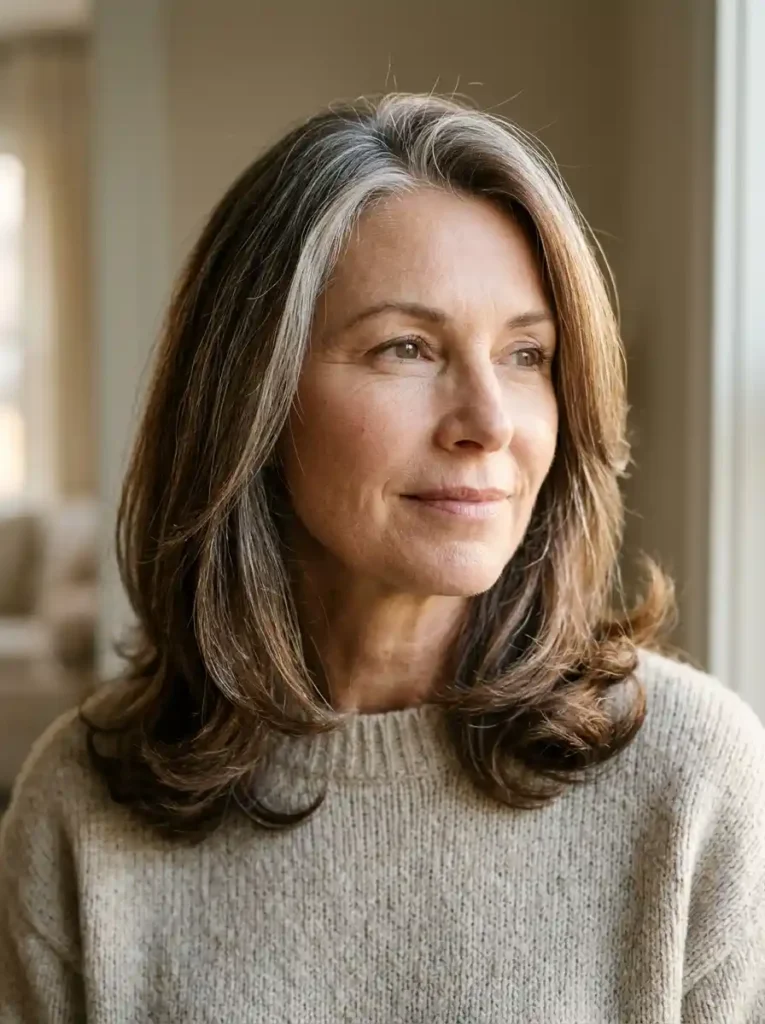
Face-framing silver highlights offer a simple way to make emerging gray hair look deliberate without changing your entire head of hair. Your stylist can brighten the strands around your temples and hairline, blending them into your natural base with a few fine highlights farther back. This creates a soft halo of light near the face. The placement is especially effective for women whose first noticeable gray strands appear around the forehead or whose parting shows more silver than the rest.
The most flattering result usually comes from avoiding a solid, overly bright stripe beside the face. Ask for fine ribbons that vary slightly in tone, with softer transitions toward the roots. This keeps the color from looking disconnected as your hair grows. Face-framing gray blending works on long hair, shoulder-length cuts, and short bobs alike. If you wear your hair tied back frequently, tell your stylist so the placement also looks seamless when your hair is pulled into a low ponytail.
5. Mushroom Brown With Subtle Gray Ribbons
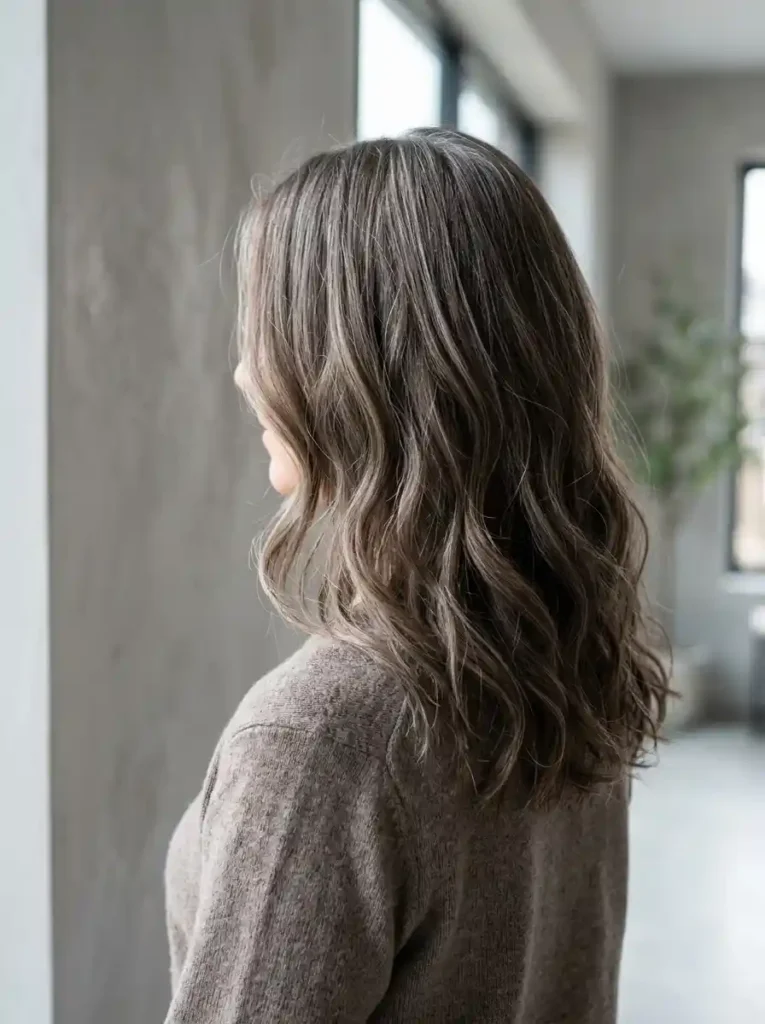
Mushroom brown combines cool brown, taupe, and muted ash tones, making it a lovely base for blending gray hair. It offers more softness than a very dark brunette shade while retaining enough depth to prevent the hairstyle from appearing flat. Fine gray ribbons can be woven through the top layers and ends, connecting natural silver roots with the rest of the color. This combination is particularly appealing if you prefer understated hair color without strong golden, copper, or honey undertones.
When discussing this look with your stylist, bring reference photos showing both the brown base and the silver details. Mushroom brown can appear differently depending on your natural color, lighting, and previous dye history. A cool-toned gloss may help maintain the intended finish, although the formula should be customized to your hair. To keep the waves defined, use a lightweight leave-in conditioner and avoid heavy oils that can flatten the layers. The final effect should feel dimensional, not uniformly gray or overly ashy.
6. Champagne Blonde Gray Blending

Champagne blonde gray blending is ideal if you want your silver strands to melt into a lighter overall color. The blonde base softens the difference between white roots and the rest of the hair, while fine silver highlights add a naturally luminous effect. Unlike an icy platinum finish, champagne blonde can retain a hint of beige warmth, creating a balanced appearance. It works beautifully on long layers, shoulder-length cuts, and softly curled styles where different tones can catch the light.
The exact balance between beige and cool silver should reflect your natural undertones and personal preference. If your hair is already blonde, your colorist may be able to introduce a few carefully placed highlights and a gloss rather than perform extensive lightening. If your hair is darker, the transition may take multiple sessions. Use a moisturizing conditioner because lightened hair can become dry, and alternate purple shampoo with regular color-safe cleansing to avoid an overly violet or dull finish.
7. Gray Blending on a Classic Bob

A classic bob provides a clean, structured shape that allows gray blending to look polished without excessive styling. When silver strands appear through a brunette base, a few fine highlights can soften the overall contrast while preserving the haircut’s definition. The length also makes regular trims manageable, helping the ends maintain a neat silhouette. This combination is especially useful if you prefer a hairstyle that looks intentional at work, during everyday errands, or for special occasions without needing elaborate styling.
Ask your stylist to coordinate the highlight placement with the bob’s shape. A few lighter pieces near the part and upper layers can create movement, while darker strands underneath maintain depth. If you prefer a softer appearance, slightly textured ends can prevent the cut from looking too severe. A small amount of smoothing cream is usually sufficient for a polished finish. Remember that short, precise haircuts often need regular trims, even when the color itself is designed to grow out gracefully.
8. Long Layers With Natural Silver Blending

Long layers are a beautiful choice when you want gray blending to look fluid rather than sharply segmented. Different lengths allow silver strands to weave through the hairstyle, creating movement as the hair falls over your shoulders. A stylist can use fine highlights around the crown and selected midlength sections to connect natural gray roots with lighter ends. This approach is especially appealing if you enjoy wearing your hair down and want the color to remain interesting from several viewing angles.
Long hair does require attention to moisture and end care, particularly if you add highlights to darker lengths. Use a nourishing conditioner, detangle gently from the ends upward, and reduce unnecessary heat exposure. Ask for layers that suit your natural density instead of removing too much weight, which can make fine hair appear thinner. If your silver is concentrated near the temples, a few carefully placed highlights farther back can help balance the look without committing to an all-over lightening service.
9. Smoky Silver With Dark Roots
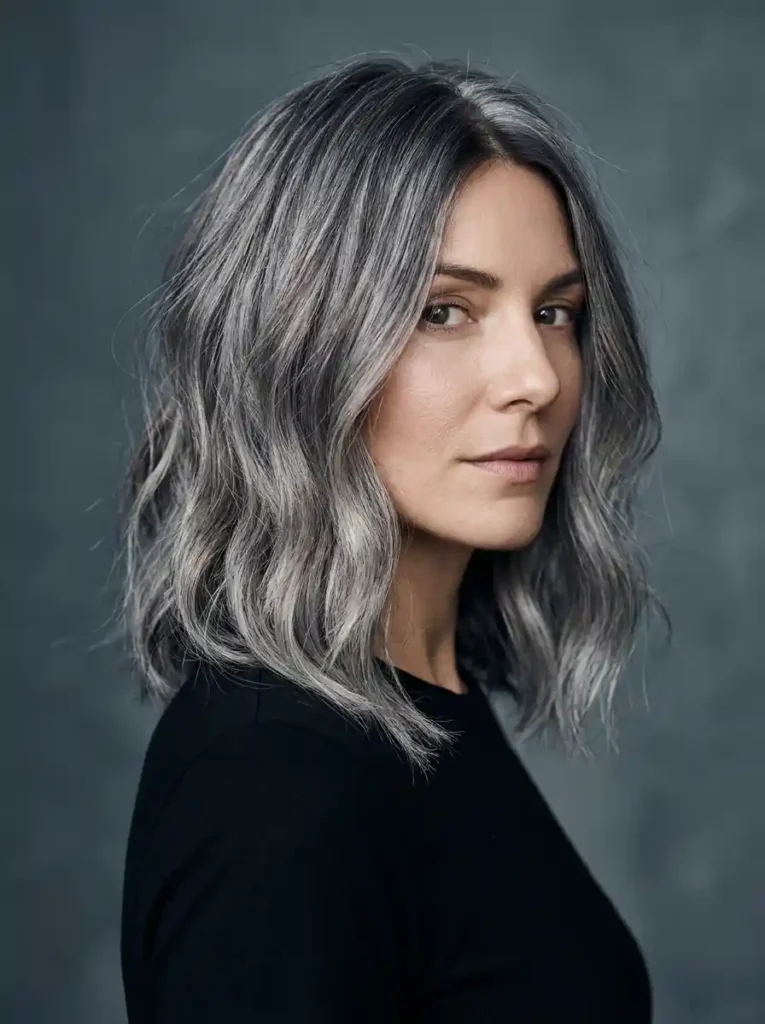
Smoky silver is a sophisticated option for anyone who loves cool hair color but finds bright platinum too stark. The combination of charcoal roots, graphite midtones, and softer silver ends creates depth while allowing emerging gray to blend into the overall palette. It works especially well on medium-length waves because the different shades become visible as the hair moves. If your natural roots are dark, retaining some of that depth can also make the transition feel more connected to your original color.
To achieve this look, ask your stylist about a smoky toner or gloss and a root blend tailored to your existing shade. Silver pigments can fade or shift over time, so occasional toning may be needed to maintain the desired result. Avoid repeatedly lightening the same sections simply to chase a brighter silver. Instead, focus on keeping the hair healthy and adjusting the tone when necessary. A textured cut and lightweight styling products help the darker roots and lighter lengths look cohesive rather than disconnected.
10. Beige Blonde With Soft Gray Strands

Beige blonde offers a gentler alternative to very cool silver blending. Its neutral undertones sit comfortably between golden blonde and ash, allowing natural gray strands to become part of the overall color rather than stand out sharply. This is a useful option if your existing hair has some warmth or if you prefer a softer, more understated finish. Fine highlights through the upper layers can help distribute lighter tones without sacrificing the natural depth that makes the hairstyle believable.
When choosing beige blonde, communicate whether you prefer a slightly warm, neutral, or cool result. A shade that is too golden may make white strands appear more noticeable, while an excessively ashy formula can leave the hair looking dull. Your colorist can adjust the balance with carefully selected highlights and a customized gloss. At home, prioritize hydration and gentle cleansing. Beige-blonde gray blending is particularly versatile because it works with straight styles, loose waves, and softly curled ends.
11. Silver Pixie With Textured Layers
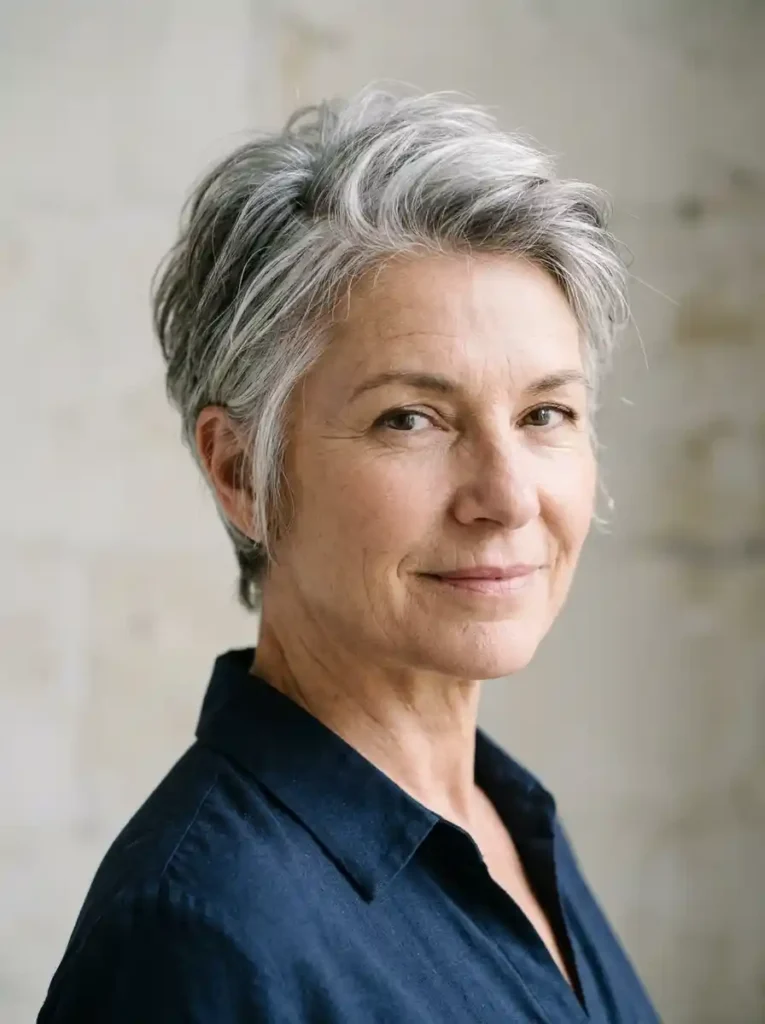
A textured pixie can make gray blending look modern while keeping everyday styling relatively simple. Short layers create natural movement, and subtle charcoal lowlights can prevent predominantly silver hair from appearing like a single flat shade. If you are transitioning from dyed brunette hair, your stylist may blend the existing color with silver as the shorter lengths gradually grow out. This makes the haircut itself part of the transition, rather than relying entirely on repeated color appointments.
The most important detail is getting the texture right for your hair density and natural growth pattern. Fine hair often benefits from restrained layering that preserves fullness, while thicker hair may need internal texture to prevent unwanted bulk. A pea-sized amount of lightweight styling paste can define individual pieces without making the hair greasy. Because a pixie grows out quickly in shape, regular trims help maintain its silhouette. Color maintenance can then be tailored separately to how much contrast you want at the roots.
12. Curly Gray Blending With Silver Highlights

Gray blending can look particularly beautiful on curly hair because each curl catches the light differently. Fine silver highlights create dimension without requiring every strand to be lightened, while the natural bends soften transitions between dark and gray sections. A stylist experienced with curls can place lighter pieces where they will remain visible in your usual styling pattern. This is important because color that looks balanced on stretched hair may appear quite different when curls shrink and spring into their natural shape.
Protecting the curl pattern should be part of the color conversation. Lightening can make some curls feel drier or less elastic, so your stylist should assess the hair’s condition before choosing a formula or service. Use a moisturizing cleanser, a rich conditioner, and a leave-in product suited to your curl type. Diffuse on a low heat setting or allow the hair to air-dry when practical. Rather than chasing perfectly uniform silver, let the natural curl pattern contribute to the hairstyle’s soft, dimensional appearance.
13. Gray Blending With a Feathered Shag
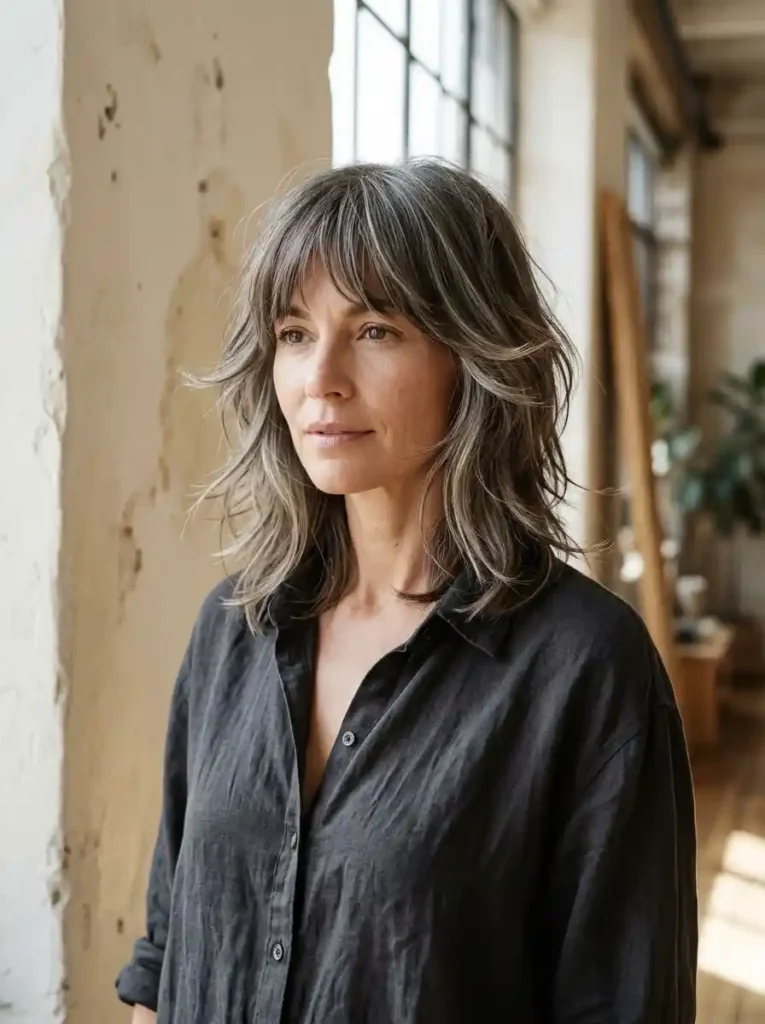
A feathered shag is a strong match for gray blending if you prefer a relaxed hairstyle with movement and personality. The layers help distribute silver highlights throughout the hair, while wispy fringe can connect naturally graying temples with the rest of the color. Instead of making every gray strand brighter, your stylist can work with the existing mix of dark and light pieces. The result feels lived-in and textured, particularly when the ends are styled with a slight bend rather than perfectly uniform curls.
For the best finish, choose a shag shape that complements your natural texture and how much time you want to spend styling. A light texturizing spray can emphasize the layers, but applying too much product may leave the hair stiff or tangled. If your hair is fine, ask for restrained layering to avoid losing fullness around the ends. Silver highlights should be placed thoughtfully around the fringe and crown, where they can add dimension without overwhelming the haircut’s natural movement.
14. Pearl Gray Blending on Blonde Hair

Pearl gray blending creates a soft, light-reflective appearance by combining pale silver, white, and neutral blonde tones. It is particularly attractive if your natural gray is already quite light or your existing hair color is blonde. Rather than using a single flat silver shade, the stylist can preserve subtle tonal differences so the hair looks dimensional. A gently curved bob or shoulder-length cut provides enough surface area for the pearl tones to show without requiring elaborate styling.
The desired effect depends on achieving a balanced tone rather than making every strand as pale as possible. Ask your colorist whether a gloss and selective highlights can provide the finish you want while protecting the hair’s condition. Very light colors may require more frequent toning, especially if your hair develops yellow undertones. A gentle cleansing routine and heat protection help preserve shine. If your natural roots are darker, keeping a softly blended shadow at the base can make regrowth less noticeable and preserve depth.
15. Gray Blending on a Shoulder-Length Lob
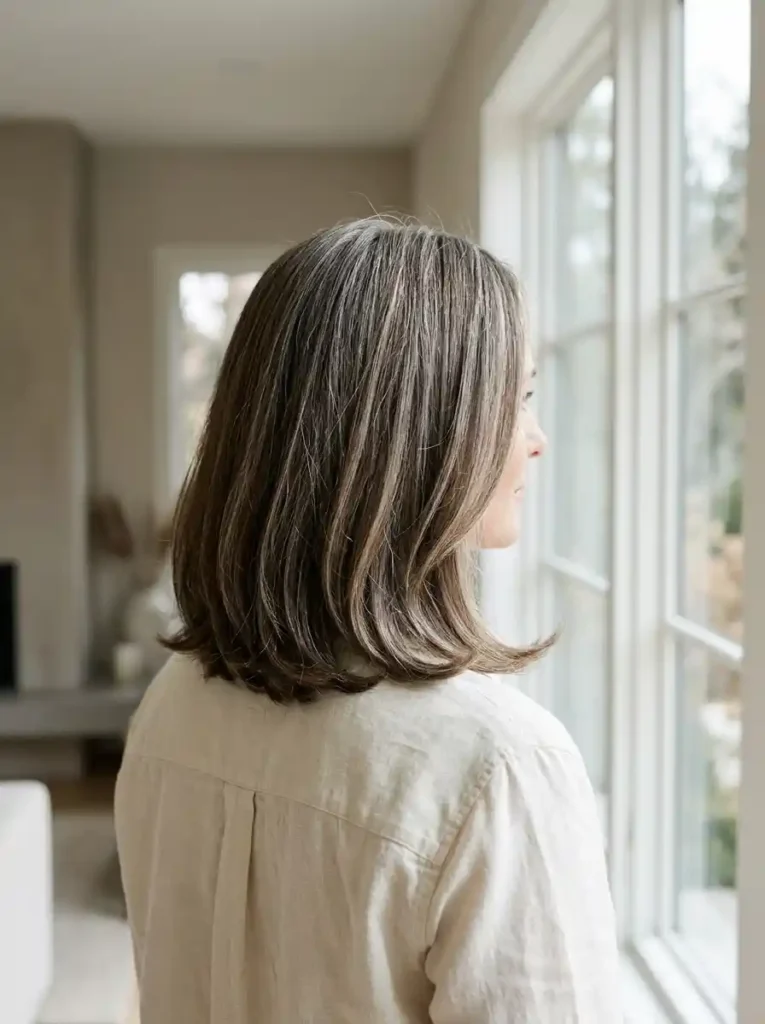
A long bob, or lob, is a practical middle ground if you want enough length to tie your hair back while maintaining a polished shape. Its clean outline gives gray blending a defined foundation, and subtle highlights can soften the contrast between emerging silver roots and darker lengths. This style works well for straight hair, gentle waves, and slightly textured finishes. Because the cut sits around the shoulders, you can see how the color moves without dealing with the maintenance demands of very long hair.
For a natural result, ask your stylist to concentrate the lighter pieces around the part, temples, and selected upper layers. A few darker lowlights can help maintain dimension if your base is becoming increasingly silver. Keep the ends trimmed enough to prevent the lob from losing its shape, and choose a smoothing product that suits your texture. If you frequently wear your hair tied back, make sure the color placement looks balanced when the front pieces are pulled away from your face.
16. Warm Brunette With Silver Thread Highlights
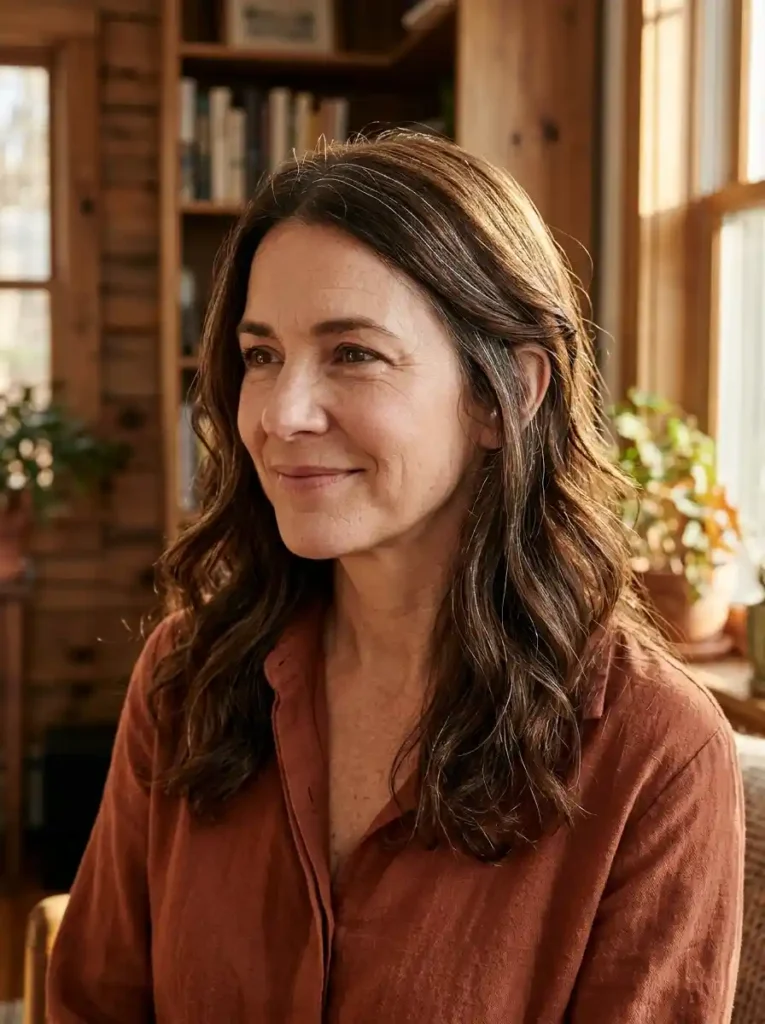
You do not have to eliminate warmth from brunette hair to blend gray successfully. A warm brown base paired with very fine silver thread highlights can create a balanced mix of cool and warm tones. This is a good choice if your natural color has chestnut or chocolate undertones and you want to preserve that richness. The silver pieces provide contrast, while the surrounding brown keeps the hairstyle from looking too pale or dramatically changed.
Placement matters more than the number of highlights. Ask for delicate sections that follow your natural gray pattern instead of evenly spaced, obvious streaks. A neutral gloss may help the brown and silver tones sit together comfortably, depending on your starting color. If you use hot tools, apply a heat protectant to help maintain shine and reduce unnecessary damage. This combination is particularly flattering on soft waves, where individual silver strands can appear and disappear naturally rather than forming a solid band of color.
17. Natural White Roots With Blended Silver Lengths
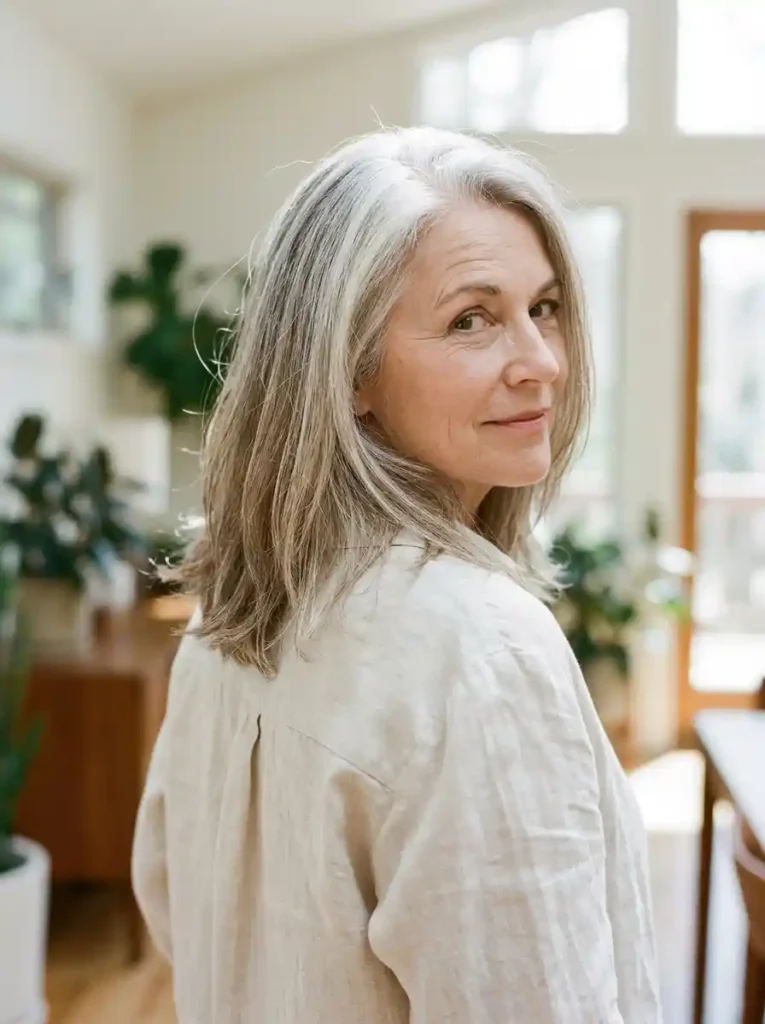
If your roots are turning white while the lengths still contain brown dye, you may not need to cover everything again. A gradual blending service can soften the boundary between the white regrowth and the darker, previously colored hair. Fine highlights, carefully selected lowlights, or a suitable gloss can help connect these sections. The result is especially useful for women who want to stop permanent root coverage but prefer a gradual transition instead of growing out a distinct line.
Start by discussing your hair’s color history with a stylist, especially if the lengths contain years of permanent dye. White roots and previously colored ends may respond differently to the same formula, so a customized approach is essential. You can also consider a shorter haircut to remove some of the darker lengths more quickly. If you keep your hair long, regular conditioning and patient color adjustments can help the transition look intentional while your natural white and silver hair gradually becomes more prominent.
18. Dimensional Gray Blending for Fine Hair

Fine hair often benefits from a restrained gray-blending approach because too many bright highlights can make the overall color appear flat. A combination of delicate silver pieces and a few deeper strands creates visual separation without requiring dramatic contrast. The effect can make a simple shoulder-length cut feel more dimensional, particularly when the top layers are styled with a little lift. Your stylist should consider both your natural gray pattern and the density of your hair before deciding how much color to add.
Keep the haircut and color working together. Overly aggressive thinning or excessive layering can reduce the appearance of fullness, while heavy styling products may weigh down the roots. A lightweight volumizing mousse or root-lifting spray can help create movement without making the hair stiff. For maintenance, ask whether subtle partial highlights are enough instead of repeating a full-head service. The goal is to enhance your existing texture and silver strands, not to create so many contrasting sections that the hairstyle loses its natural softness.
19. Gray Blending on a Sleek Long Bob With a Side Part

A deep side part changes how gray blending appears because it reveals different sections of the hairline and crown. Fine silver pieces sweeping from the part toward the front can create a graceful, directional effect while keeping the darker base intact. This look is especially suitable for women who prefer smooth styling and a more defined silhouette. The contrast between a precise bob and softly blended silver strands creates interest without relying on a heavily layered cut or dramatic color transformation.
Ask your stylist to evaluate where your natural grays emerge before choosing the highlight pattern. If the silver is concentrated at one temple, the placement can be adjusted to balance both sides without forcing the color into perfect symmetry. A heat protectant and a moderate-temperature styling tool can help maintain a smooth finish. Since a side part may expose the roots more clearly, a subtle root blend can make regrowth look softer between appointments. The finished style should remain wearable when you change your part slightly.
20. Soft Gray Blending With Curtain Bangs
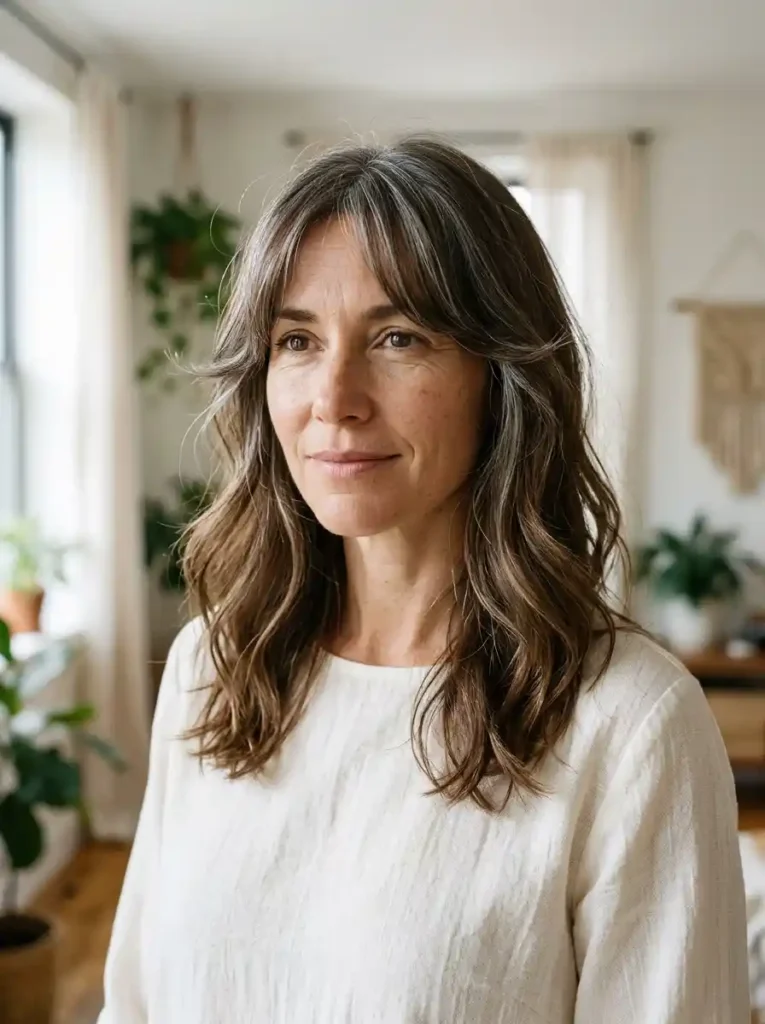
Curtain bangs create a soft frame around the face and can work beautifully with naturally graying temples. When silver strands are blended into the front sections, they become part of the hairstyle’s shape rather than a separate feature to conceal. The sweeping fringe connects the lighter temple area with the rest of the hair, creating a relaxed transition. This combination suits shoulder-length cuts and longer layers, especially if you like a style that feels casual but still looks thoughtfully shaped.
The fringe needs to be customized to your hair texture, forehead, and preferred styling routine. If your hair naturally separates or curls near the hairline, your stylist should work with that pattern rather than forcing the bangs into an unnatural shape. A round brush or a quick blow-dry can help the front pieces fall away from your face. Keep the silver highlights delicate near the roots, where a solid light band may look too pronounced as the hair grows.
21. Ash Blonde and Charcoal Gray Blend
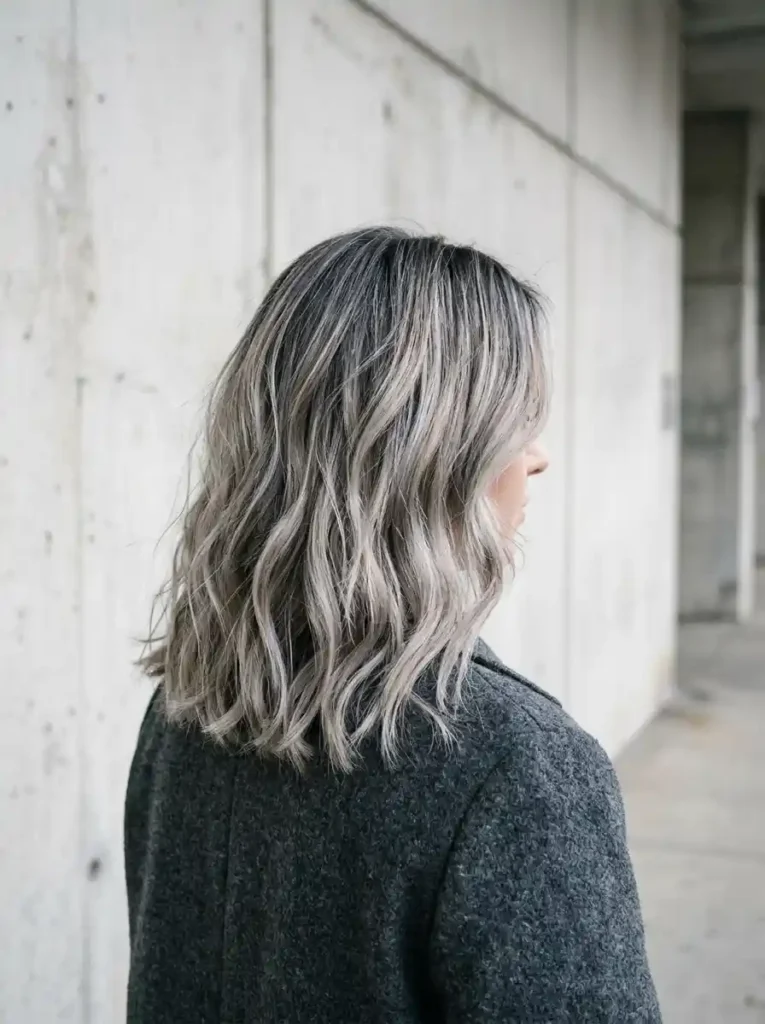
Ash blonde and charcoal gray create a more defined, cool-toned blend than beige blonde or mushroom brown. The darker pieces add depth, while ash-blonde sections soften the overall appearance of silver roots. This combination can be particularly attractive if your natural hair is dark blonde or light brown and you prefer a contemporary, understated color palette. The mix of light and dark strands makes the hairstyle appear dimensional without requiring a single uniform shade from roots to ends.
The main consideration is keeping the ash tones balanced. If the formula is too cool for your underlying color, the result may appear dull or overly gray; if it is too warm, the charcoal sections can feel disconnected. Ask your colorist to assess your existing color and choose a toner that works with it. Maintenance may include occasional glossing, but repeated lightening is not always necessary. A soft, layered cut helps the different tones blend naturally as the hair moves and new roots appear.
22. Gray Blending on a Short Tapered Cut

A short tapered cut gives gray blending a neat, confident appearance while making the haircut itself the main feature. The shorter sides can showcase natural silver around the temples, while a little extra length at the crown allows charcoal and silver strands to create texture. This is an appealing option if you want to move away from frequent full-head coloring or simply prefer a shorter, easier-to-style haircut. The result can look polished without requiring a complicated color pattern.
Discuss your hair’s natural growth direction and texture before choosing the exact taper. A stylist can preserve softness around the hairline and use subtle lowlights to keep the crown dimensional. Styling generally requires only a small amount of lightweight cream or paste, applied sparingly to the ends. Because short hair reveals the shape of the cut quickly as it grows, regular trims may be more important than frequent color appointments. Allowing your natural silver to remain visible can also simplify your long-term maintenance routine.
23. Blended Gray With Soft Beach Waves

Soft beach waves give gray blending a relaxed, dimensional finish. The bends in the hair allow silver strands, brunette sections, and muted blonde highlights to reflect light differently, making the overall color feel less uniform. You do not need perfectly styled waves to achieve this effect; a natural texture can work just as well. The look is particularly appealing if you prefer longer hair and want a graceful transition that feels casual rather than meticulously salon-finished.
To style it, apply a lightweight heat protectant before using a curling wand, or encourage your natural wave pattern with a suitable styling cream. Alternate the direction of loose curls for movement, then gently separate them with your fingers once the hair has cooled. Avoid repeatedly applying high heat to already lightened sections. For the color itself, keep the silver ribbons fine and scattered so the waves remain dimensional. A moisturizing mask used periodically can help keep the ends looking smooth and healthy.
24. Natural Gray Blending With Minimal Color

Sometimes the most beautiful gray blend is the one that uses very little artificial color. If your silver strands are already distributed throughout your hair, a carefully shaped haircut and a small amount of strategic highlighting may be all you need. This approach preserves the character of your natural color while making the transition feel intentional. It is especially suitable if you are tired of frequent root coverage or want to reduce the number of chemical services in your routine.
Begin by identifying which areas actually bother you rather than assuming your entire head needs coloring. A stylist may recommend a few subtle highlights, a gentle gloss, or simply a haircut that works with your existing gray pattern. There is no need to lighten every dark section if you prefer a gradual transition. Use gentle cleansing, regular conditioning, and occasional trims to keep the hair looking cared for. Minimal-color blending is flexible, personal, and easy to adapt as more silver strands appear over time.
Conclusion
The best gray blending technique depends on your natural hair color, where your silver strands appear, and how much maintenance you want. Brunettes may prefer fine silver ribbons or salt-and-pepper blending, while blondes can explore pearl gray, champagne, or beige-toned combinations. Short cuts highlight texture, whereas longer layers allow multiple shades to flow together.
Before your appointment, save two or three reference photos and explain whether you want a subtle transition, brighter silver pieces, or a mostly natural result. Ask your stylist about your hair’s condition, the number of sessions needed, and how often you may need toning or touch-ups.
Remember that gray blending does not have to mean removing every dark strand or achieving a perfectly uniform silver shade. Often, the most beautiful result preserves your natural variation. Choose a look that complements your everyday styling habits and makes you feel comfortable as your hair changes. Your silver strands can become part of your personal style, not something you need to hide.