
A great haircut can change the way you feel about your entire look, and a stacked bob is one of those timeless styles that manages to feel both polished and modern. With its shorter, graduated layers at the back and beautifully shaped silhouette, this haircut creates dimension, movement, and a flattering finish without requiring an elaborate styling routine. Whether you prefer a sleek, sophisticated appearance or a relaxed, tousled texture, there is a stacked bob that can complement your personal style.
The beauty of stacked bob haircuts lies in their versatility. You can choose a chin-length cut that frames your face, a longer version with soft layers, or a bold, angled shape that makes a statement. Different variations also work beautifully with straight, wavy, and naturally textured hair, allowing you to find a look that suits your hair type and everyday routine.
In this collection, you’ll discover 20 stylish stacked bob haircut ideas, complete with distinctive silhouettes, practical styling advice, and inspiration to help you communicate your preferences to your hairstylist. If you’re ready for a fresh change, these modern bob styles offer plenty of ways to find your next signature haircut.
1. Classic Stacked Bob with a Rounded Shape

The classic stacked bob is an excellent starting point if you want a haircut that looks elegant without feeling overly complicated. Its signature feature is the graduated layering at the back, which creates a rounded crown and a clean, curved outline around the sides. The result is a balanced silhouette that suits many face shapes, particularly when your stylist adjusts the length around your chin and cheeks to complement your natural proportions.
For everyday styling, use a round brush while blow-drying to lift the roots and guide the ends inward. A lightweight smoothing cream can help control flyaways while preserving natural movement. Ask your stylist to avoid excessively short layers if you prefer a softer finish rather than a sharply sculpted shape. Regular trims every six to eight weeks can help maintain the rounded outline, especially if your hair grows quickly around the nape.
2. Angled Stacked Bob for a Modern Edge
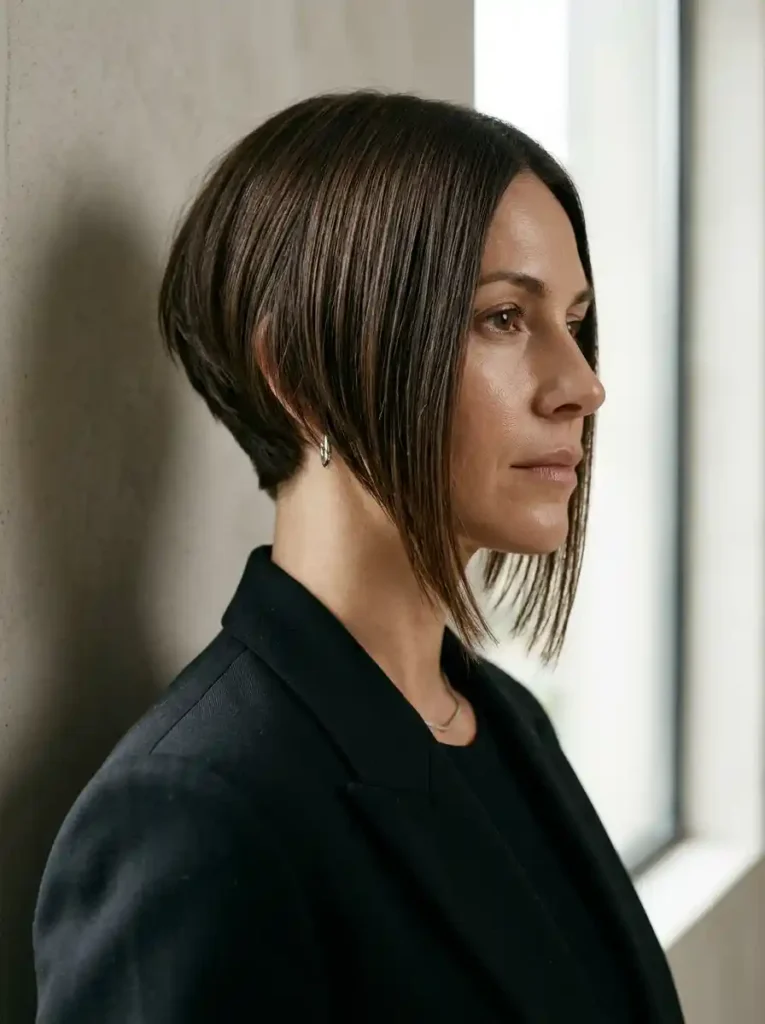
An angled stacked bob offers a more dramatic interpretation of the traditional cut. The hair gradually becomes longer toward the front, creating a diagonal line that draws attention to the jawline and gives the style a contemporary finish. This shape is particularly appealing if you like defined outlines and want a haircut that feels intentional even with minimal accessories. The angle can be subtle for everyday wear or pronounced for a stronger, fashion-forward appearance.
Straight hair makes the geometric shape especially visible, although a gentle bend through the longer pieces can soften the overall effect. When booking your appointment, discuss how far the front sections should extend and whether you want the back closely tapered or moderately layered. At home, a flat iron can refine the edges, but avoid pressing the roots completely flat. A little lift at the crown preserves the dimensional effect that makes this stacked haircut distinctive.
3. Short Stacked Bob with a Voluminous Crown
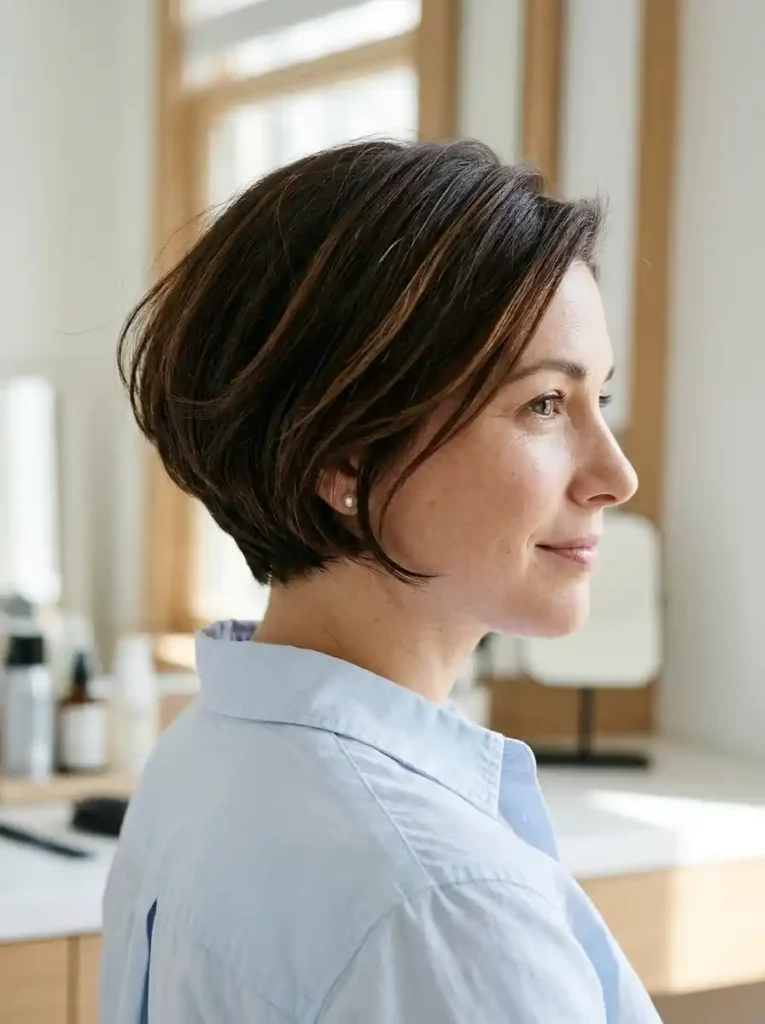
If your hair tends to fall flat at the back, a short stacked bob with a fuller crown may be worth considering. The closely graduated nape creates a compact foundation, while carefully distributed layers allow the upper sections to appear more lifted. This combination gives the haircut a rounded, energetic profile without relying entirely on styling products. It can be especially useful for fine or medium-density hair when the layers are tailored to preserve fullness rather than remove too much weight.
To recreate the shape at home, apply a small amount of volumizing mousse to damp roots and blow-dry with a medium round brush. Direct the airflow upward at the crown, then let the hair cool before gently arranging the top layers. Avoid heavy oils or rich creams near the roots because they can reduce lift. Bring reference photos to your stylist, particularly if you want volume without a helmet-like finish, and discuss how much height works with your head shape.
4. Soft Stacked Bob with Wispy Layers

Not every stacked bob needs a sharply defined edge. Wispy layers create a lighter, more relaxed version of the cut, allowing the ends to move naturally rather than forming a perfectly solid line. This variation works well if you prefer a softer hairstyle that transitions easily from casual daytime outfits to more polished occasions. The graduated back still provides structure, but feathered sections around the sides keep the overall silhouette from appearing too rigid.
Ask your stylist to use subtle texturizing techniques rather than aggressively thinning the ends, especially if your hair is already fine. For styling, work a pea-sized amount of lightweight cream through the mid-lengths and ends, then blow-dry with your fingers or a brush. A few loose bends created with a curling iron can enhance the texture without making the hairstyle look overly styled. The key is preserving enough density for the stacked shape while allowing the surface layers to move.
5. Stacked Bob with Side-Swept Bangs
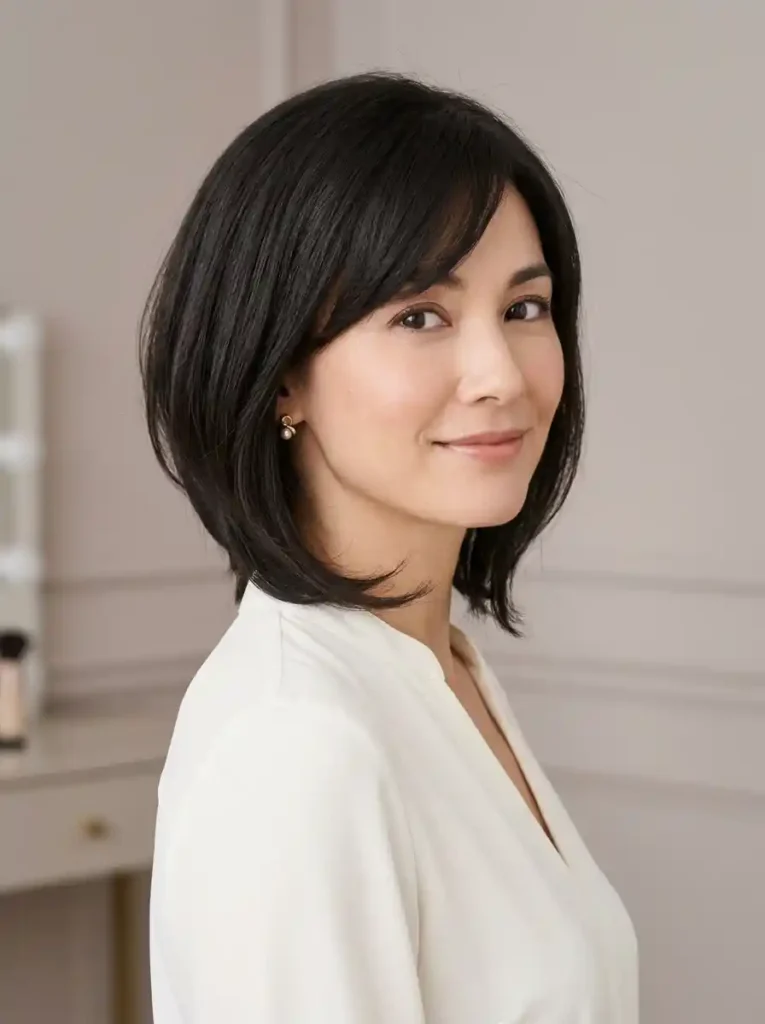
.Side-swept bangs add movement across the forehead while making a stacked bob feel softer and more personalized. The diagonal fringe draws the eye toward the cheekbones and can help balance a broad forehead or angular facial features. Because the bangs blend into the longer front sections, the haircut usually feels more connected than a blunt fringe paired with a sharply structured bob. It is a useful option if you want a noticeable update without committing to heavy, straight-across bangs.
Styling the fringe takes only a little extra attention. While your hair is damp, direct the front section across your forehead with a small round brush, alternating the airflow to prevent the roots from settling into a rigid part. Finish with a light mist of flexible-hold spray if needed. Tell your stylist where you naturally part your hair and how much forehead coverage you prefer. A fringe that is cut to work with your natural growth pattern will generally be easier to maintain.
6. Inverted Stacked Bob with a Dramatic Back
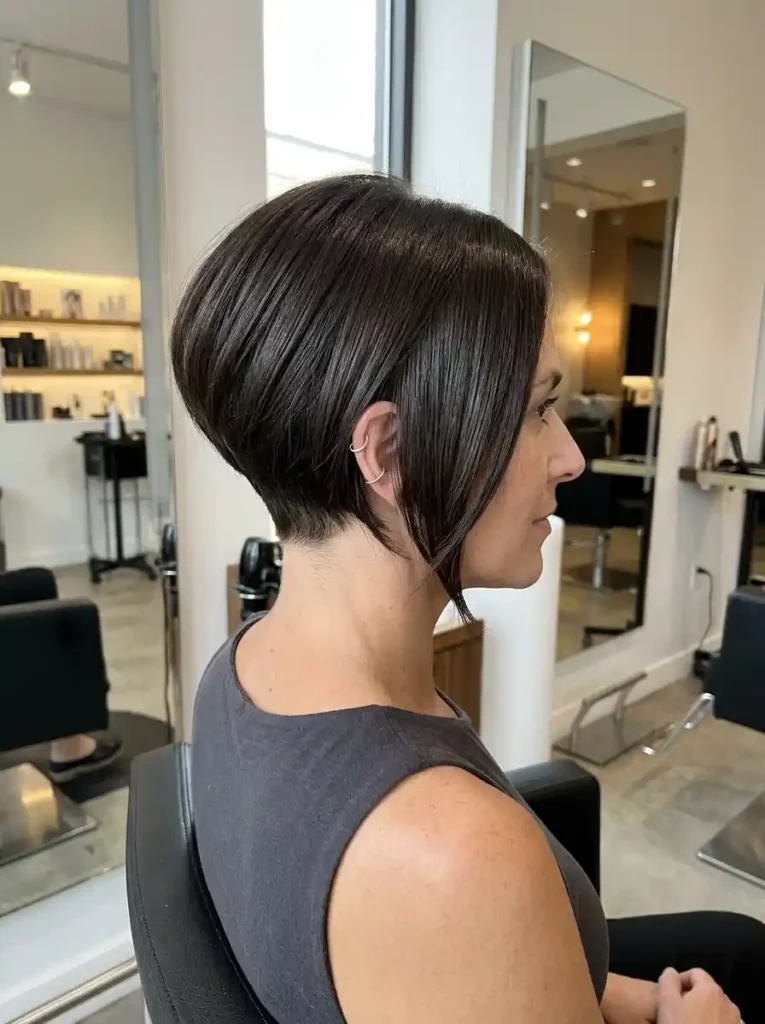
An inverted stacked bob is ideal if you enjoy a haircut with a strong silhouette. The back is cut shorter and built up through graduated layers, while the front remains noticeably longer. This creates a curved, forward-moving shape that looks structured from the side and back. Although the terms inverted and angled are sometimes used interchangeably, an inverted version typically emphasizes the stacked graduation at the nape as much as the diagonal front line.
Because this cut depends on its shape, your stylist should consider your hair’s natural density and growth direction before removing length at the back. Thick hair may need internal weight reduction, while finer hair often benefits from retaining fullness through the crown. For a polished finish, blow-dry in sections and smooth the longer pieces with a brush. Schedule maintenance before the back becomes noticeably bulky or the front loses its deliberate angle.
7. Textured Stacked Bob for Effortless Movement

A textured stacked bob offers a less formal alternative to a smooth, sculpted cut. The graduated back supplies shape, while carefully placed surface layers create movement and prevent the hair from appearing too uniform. This version is especially appealing if you like hairstyles that look relaxed rather than freshly pressed. It can work on straight or slightly wavy hair, provided your stylist adjusts the amount of texture to suit your natural thickness.
To style it, scrunch a small amount of texturizing cream or lightweight mousse into damp hair, then blow-dry with a diffuser or use your fingers to encourage separation. If your hair is naturally straight, add a few loose bends with a curling wand, alternating their direction for a more organic finish. Avoid applying too much texturizing powder throughout the entire head, as excessive product can make the crown feel stiff. The goal is movement with a defined overall silhouette.
8. Stacked Bob with Subtle Blonde Highlights

Subtle blonde highlights can make a stacked bob look more dimensional without changing the haircut itself. Fine ribbons of lighter color catch the light around the crown and longer front pieces, helping individual layers appear more distinct. A beige, honey, or neutral blonde can complement different brunette bases, depending on your natural coloring and the level of contrast you prefer. The effect is especially attractive on softly graduated cuts where light can reveal the movement between sections.
Ask your colorist to place the highlights strategically rather than distributing them uniformly from roots to ends. A few brighter pieces near the face can create a gentle framing effect, while softer highlights through the back add depth. If your hair is already dry or chemically processed, discuss a conservative lightening plan and suitable conditioning treatments. Color-safe shampoo, regular conditioning, and heat protection will help maintain shine, while occasional toning may be needed depending on the blonde shade.
9. Sleek Black Stacked Bob
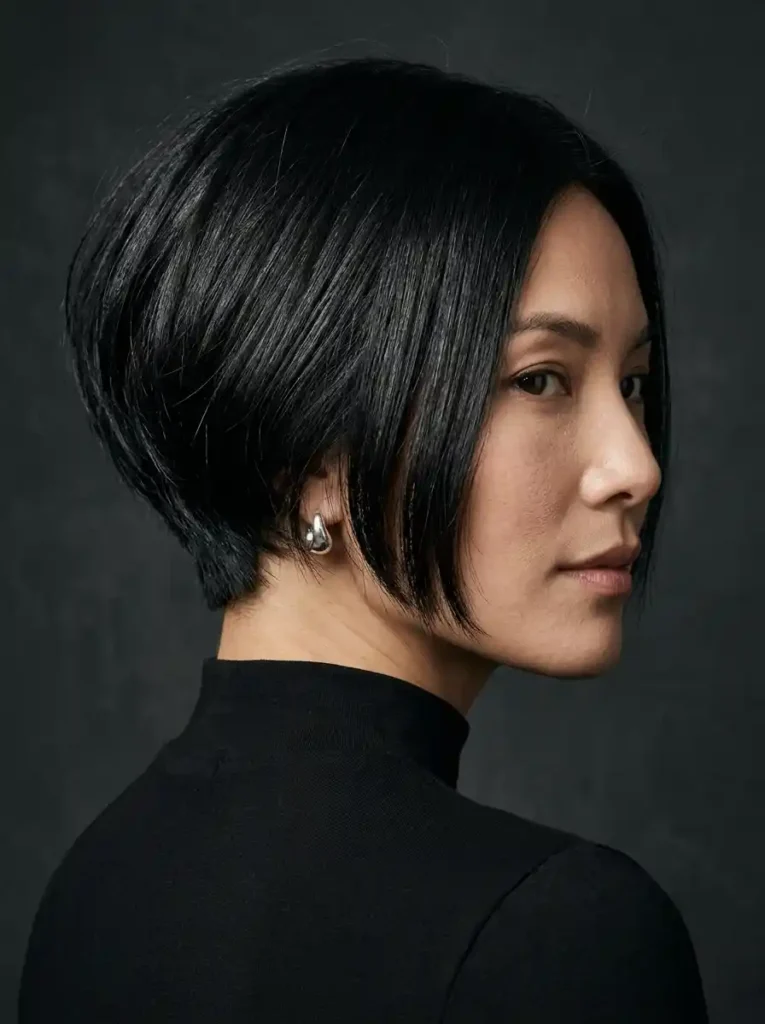
Black hair gives a stacked bob a particularly striking outline because the darker color emphasizes the transition between the shorter back layers and the longer sides. The result can feel minimalist, sophisticated, and versatile enough for professional settings or evening occasions. A smooth finish highlights the precision of the cut, while a softly curved front keeps the look from becoming too severe. This style works best when the hair’s natural texture and density are considered during the initial shaping.
For a glossy finish, apply a heat protectant before blow-drying and use a flat iron only where extra smoothness is needed. Finish with a small amount of lightweight serum through the ends rather than coating the roots. If your hair is naturally curly or coily, achieving this look may require additional heat or stretching techniques, so discuss hair health and realistic maintenance with your stylist. A well-shaped cut should still look attractive when you choose to wear your natural texture.
10. Wavy Stacked Bob with Soft Texture

A wavy stacked bob combines the structure of graduated layers with the softness of natural bends. The waves add visual movement through the sides, while the shorter back helps maintain a defined shape instead of allowing the haircut to look like an ordinary, one-length bob. This variation is a lovely choice if your hair already has a natural wave and you want a style that feels polished without requiring perfectly straight strands every morning.
Start with a curl-enhancing mousse or lightweight leave-in product, then dry the hair using a diffuser on a gentle setting. Encourage the wave pattern with your fingers rather than brushing through it once dry, which can create unwanted frizz. If your waves are uneven, use a curling wand on just a few pieces instead of curling every section. Ask your stylist to check how your hair springs upward when dry so the shortest layers do not become unexpectedly bulky.
11. Long Stacked Bob with Collarbone-Grazing Front Pieces
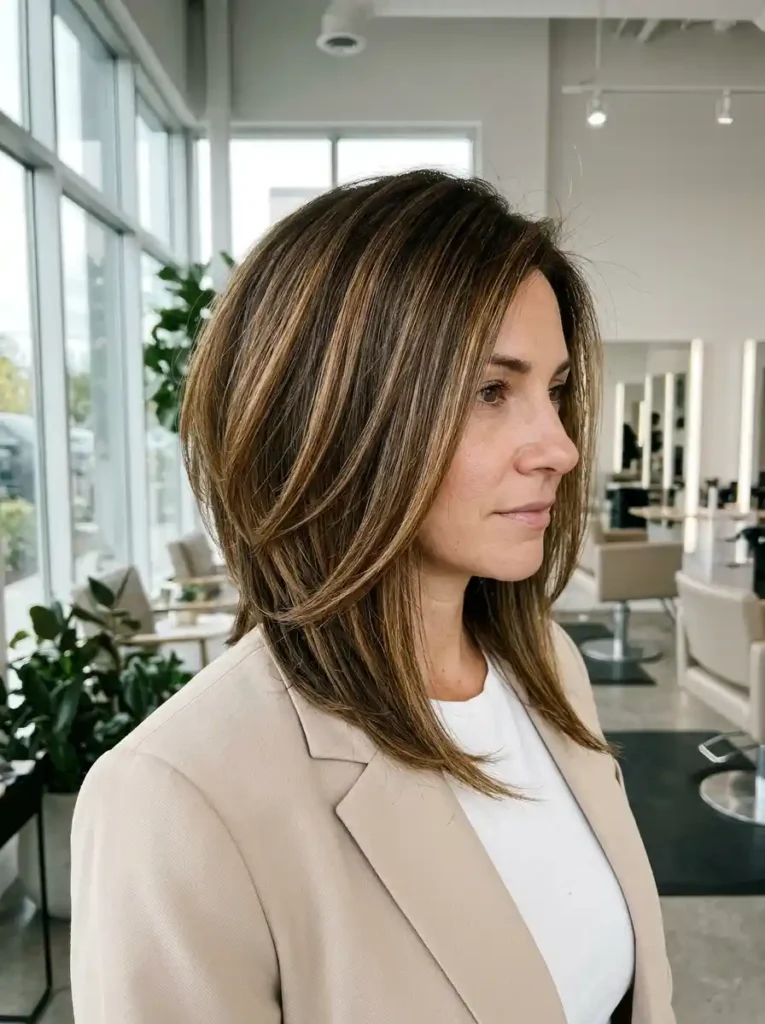
A long stacked bob is a practical middle ground if you want the benefits of graduation without committing to a very short haircut. The back remains shorter and layered, but the front sections extend toward the shoulders or collarbone, depending on your proportions. This creates a lengthened outline that feels modern and offers more styling flexibility than a compact bob. You can tuck the front behind your ears, wear it smooth, or add loose waves for a softer finish.
This cut is worth discussing if you are growing out a shorter style or prefer some length around your face. Ask your stylist to show you where the longest pieces will sit when your hair is dry, since natural texture can affect the final result. For styling, use a round brush at the crown and a larger brush through the front sections to create a flowing finish. Regular shaping keeps the back from losing its lift while the longer pieces continue to grow.
12. Stacked Bob with Curtain Bangs

Curtain bangs bring a relaxed, face-framing element to a stacked bob. Instead of creating a solid line across the forehead, the fringe opens near the center and sweeps toward the sides, blending into the longer sections around the cheeks. This gives the haircut a softer outline and can make a structured back feel less formal. Curtain bangs are particularly appealing if you enjoy a fringe but want the flexibility to part it differently or let it grow out gradually.
The main styling consideration is directing the bangs away from the face while the roots are still damp. Use a small round brush or a blow-dryer with a nozzle, guiding each side outward to encourage the curtain shape. A lightweight styling lotion can help control stubborn pieces without flattening them. Ask your stylist to cut the fringe according to your natural part and hairline, and avoid making it too short initially. Small adjustments are easier than trying to restore missing length.
13. Stacked Bob for Fine Hair
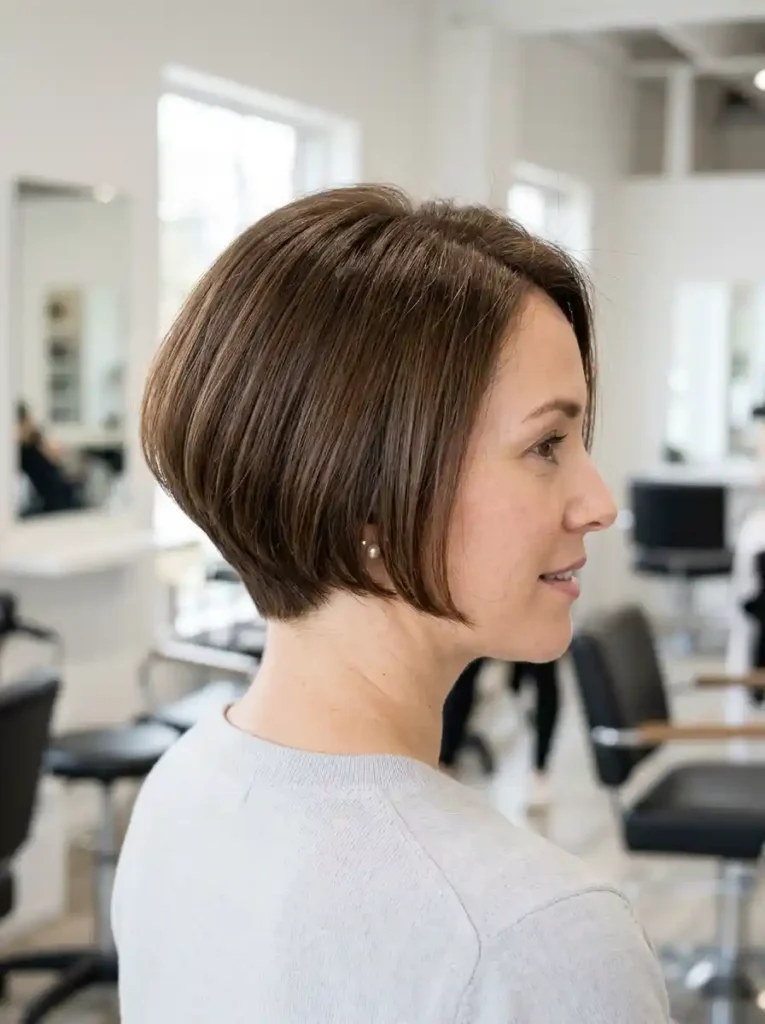
For fine hair, the most effective stacked bob usually relies on strategic shaping rather than extensive thinning. Shorter graduated layers at the back can create lift, while a relatively solid perimeter helps the ends appear fuller. The aim is to build a balanced silhouette without removing so much hair that the sides become wispy. A compact bob can also make daily styling more manageable, particularly if your hair struggles to hold volume in longer styles.
Tell your stylist that fullness is a priority and ask whether internal texturizing is genuinely necessary for your hair. At home, apply volumizing mousse sparingly at the roots and use a medium round brush to lift the crown. Heavy conditioners, oils, and styling creams can weigh down fine strands, so concentrate richer products on the ends when needed. If you want additional dimension, subtle color placement may help the layers stand out, but a good cut should provide the foundation.
14. Stacked Bob for Thick Hair

Thick hair can make a stacked bob look beautifully full, but the right internal shaping matters. Without careful weight management, the back may become too bulky or the sides may flare outward rather than following the intended outline. A skilled stylist can use graduated layers and selective internal removal to reduce excess weight while preserving a substantial perimeter. The result should feel balanced from every angle, with enough structure to support the crown and enough movement to keep the sides manageable.
Styling depends on whether your hair is naturally straight, wavy, or curly. For a smooth finish, work in small sections and use a brush that can guide the hair around the head’s shape. A lightweight smoothing lotion may help control puffiness without leaving a greasy coating. Avoid asking for extreme thinning simply to make the haircut feel lighter, because removing too much internal density can create uneven ends. Discuss how you want the hair to behave when air-dried as well as when professionally styled.
15. Asymmetrical Stacked Bob
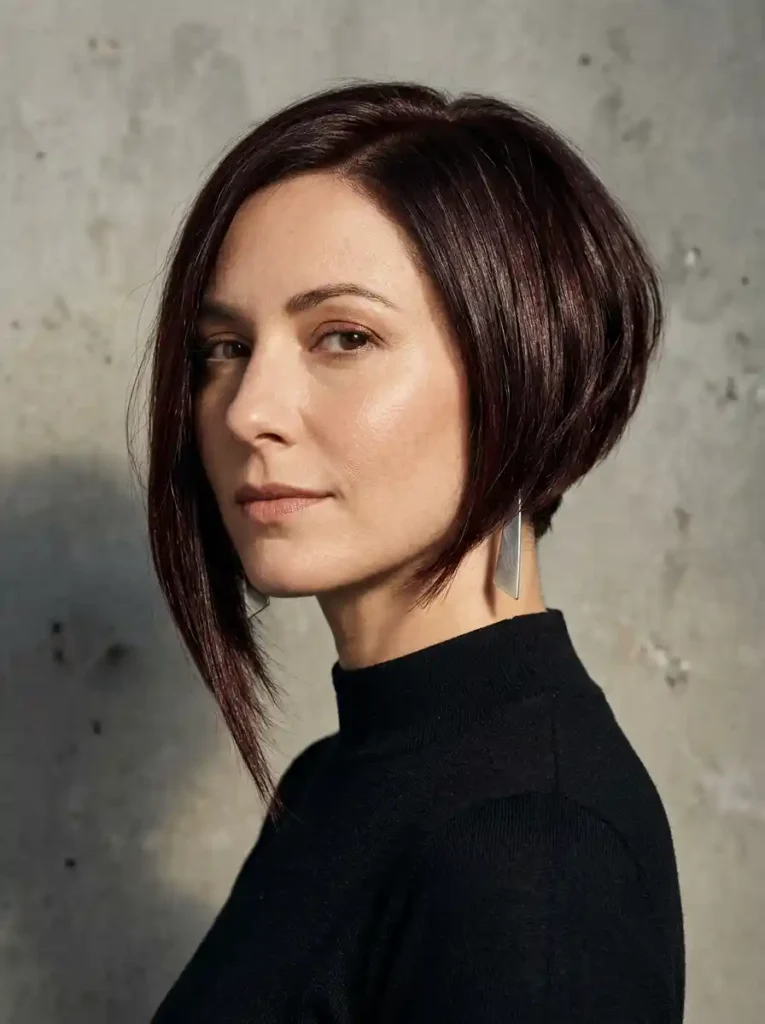
An asymmetrical stacked bob offers a distinctive option if you like classic shapes with an unexpected detail. One side is deliberately longer than the other, creating an uneven outline that feels artistic without requiring dramatic color or elaborate styling. The graduated back provides structure, while the difference between the front sections becomes the main visual feature. You can choose a subtle variation that is noticeable mainly from the side or a stronger contrast for a more expressive haircut.
Before choosing this style, consider how often you wear your hair tucked behind your ears or pulled back. These habits can change the way the asymmetry appears throughout the day. Ask your stylist to demonstrate the shape from the front, side, and back before deciding on the final length difference. A smooth blowout makes the lines more visible, while a few loose bends soften the contrast. Regular trims are important because uneven lengths can become less intentional as the hair grows.
16. Stacked Bob with a Deep Side Part
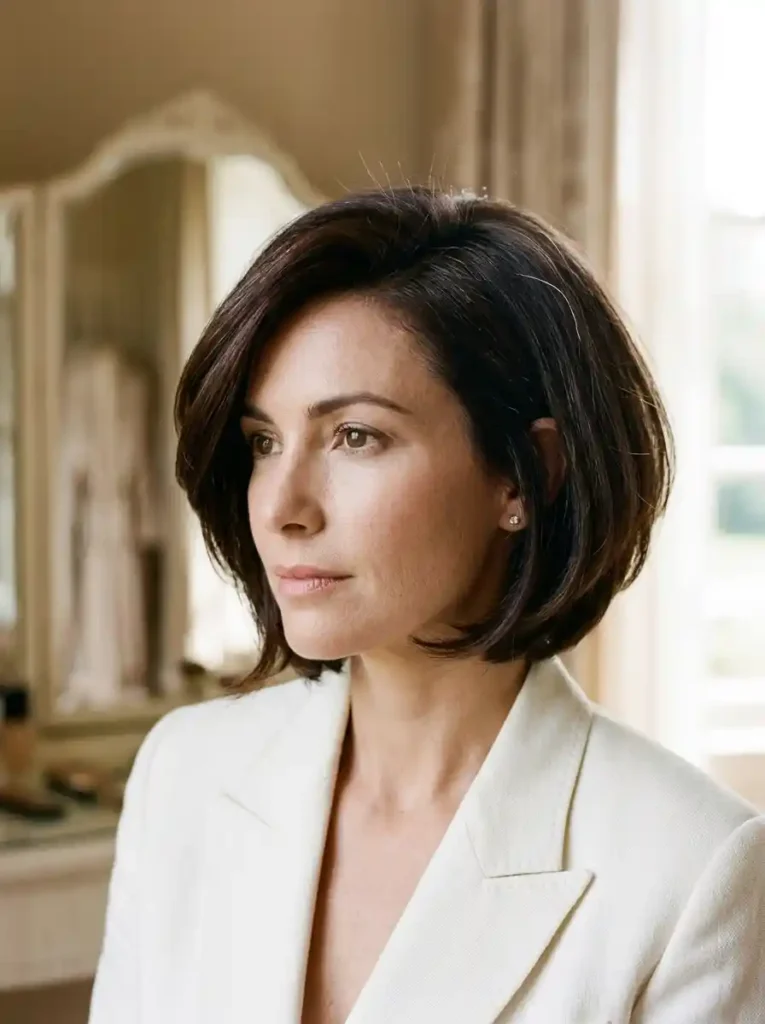
A deep side part can transform the appearance of a stacked bob without changing its underlying cut. Sweeping the hair across the forehead creates a stronger diagonal line, while the fuller side adds visual movement around the face. This approach is useful if you want a hairstyle that feels more dramatic for an event or prefer an off-center part to a symmetrical shape. It also provides an easy way to refresh a familiar bob between salon visits.
For lasting volume, create the part while your hair is damp and blow-dry the roots in the direction you want them to sit. If your hair naturally separates in the opposite direction, a little patience and root styling may be necessary to encourage the change. Finish with flexible-hold spray rather than a stiff lacquer so the front remains movable. Ask your stylist to ensure the cut looks balanced with both your preferred side part and your natural parting, giving you more flexibility on busy mornings.
17. Tousled Stacked Bob with Beachy Waves
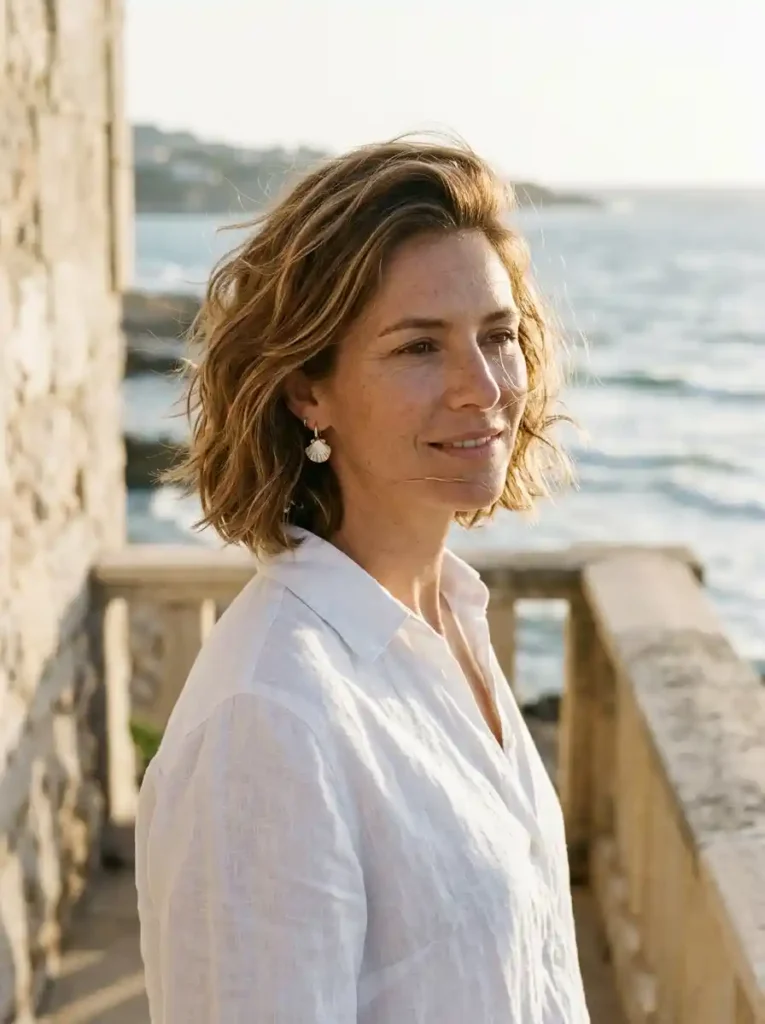
A tousled stacked bob is a good match for anyone who prefers movement over precision. Beachy waves soften the graduated back and create a relaxed contrast with the haircut’s underlying structure. The style can be particularly appealing during warmer months, when you may want a shape that works with a little natural texture rather than requiring a perfectly smooth blowout. It also pairs easily with casual clothing, from linen shirts to simple T-shirts and lightweight dresses.
To create the effect, apply a lightweight wave-enhancing product to damp hair and scrunch gently before air-drying or using a diffuser. For straighter hair, wrap a few sections around a curling wand, leaving the ends slightly straighter for a more casual finish. Avoid creating identical curls throughout the head, since varied bends look more natural. If you spend time outdoors, remember that wind and humidity will change the texture, so choose flexible styling products that allow the hair to move.
18. Stacked Bob with Copper Hair Color

Copper hair color gives a stacked bob a warm, expressive finish while allowing the haircut’s graduation to remain the main feature. Depending on your preference, you can choose soft auburn, rich cinnamon, or a brighter copper tone. Warmer highlights can reveal the shape of the crown and the movement of the longer front pieces, especially in natural daylight. The right shade depends on your starting color, skin undertones, and how much maintenance you are comfortable with.
Before coloring, ask your stylist to assess whether your desired copper shade requires lightening and how that process might affect your hair’s condition. Copper tones can fade with frequent washing, so use color-safe products and wash with lukewarm rather than very hot water. Heat protection is also important if you regularly blow-dry or straighten your hair. If you prefer a lower-maintenance option, consider a deeper auburn base with subtle copper dimension instead of an all-over vivid shade.
19. Layered Stacked Bob with Face-Framing Pieces

Face-framing pieces can make a stacked bob feel more customized because they draw attention to the areas around your cheeks, jaw, and eyes. Instead of keeping every section at the same visible length, your stylist shapes the front to follow your features while the graduated back provides volume and structure. The layers may be subtle for a professional appearance or more pronounced if you enjoy a softer, flowing outline. This is also a useful option when transitioning from a shorter bob.
The best placement depends on where you want the hair to fall. Sections beginning near the cheekbones can emphasize that area, while longer pieces around the jaw create a more elongated frame. Bring photos that show the front view as well as the side profile, since face-framing details can be difficult to explain verbally. At home, use a round brush to curve the pieces away from or toward your face according to your preference. Small styling adjustments can change the mood without changing the cut.
20. Modern Stacked Bob with a Soft Undercut
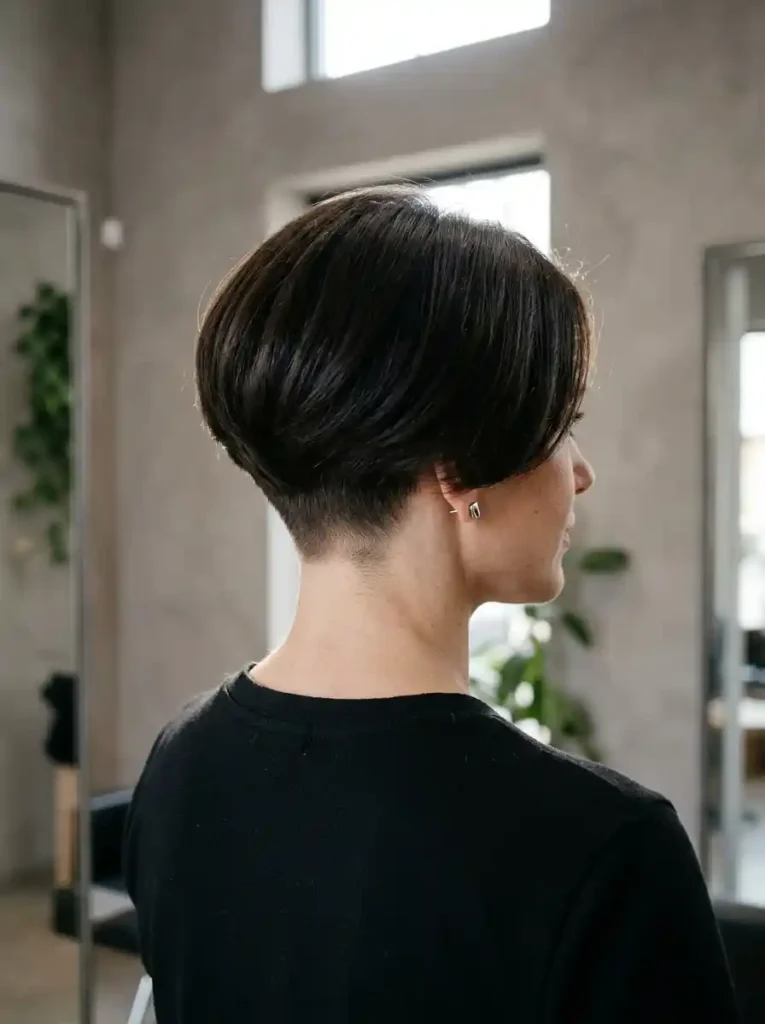
A stacked bob with a soft undercut is an option for people who enjoy a cleaner nape and a more tailored shape. The lower section is clipped or tapered shorter beneath the longer layers, reducing bulk where thick hair tends to accumulate. When the upper layers fall naturally, the undercut can remain discreet, so the haircut still looks polished rather than overtly edgy. It is especially useful if your hair grows densely at the neckline or frequently becomes heavy at the back.
The main consideration is maintenance. A short undercut becomes visible as it grows, so you may need more frequent appointments than with a conventional stacked bob. Ask your stylist how high the undercut will extend and whether it will be noticeable when your hair is tucked behind your ears or tied back. If you are uncertain, start with a small, low undercut rather than removing too much hair. This gives you an opportunity to assess the comfort and styling benefits before committing to a more dramatic version.
Conclusion
Choosing the right stacked bob comes down to more than finding a haircut that looks beautiful in a photograph. Think about your natural hair texture, how much time you spend styling it, the amount of volume you prefer, and whether you enjoy clean, geometric lines or softer, more relaxed layers. A classic rounded bob may suit someone who values timeless polish, while an angled, asymmetrical, or textured version can offer a more distinctive personal style.
Before your salon appointment, save two or three reference images that show the front, side, and back of your preferred cut. Discuss your hair’s density, growth pattern, maintenance needs, and the amount of length you want to retain around your face. Remember that the most flattering result is one adapted to your features rather than copied exactly from someone else.
With the right combination of graduation, length, and styling, a stacked bob can feel fresh, practical, and genuinely personal. Use these 20 ideas as inspiration for finding a haircut you’ll enjoy wearing every day.


