
Flat hair can feel boring, especially when you want a fresh change without losing too much length. Short layers can add movement, shape, and personality while keeping a haircut easy to wear. These short layers haircut ideas range from soft and polished to choppy and playful. You will find options for straight, wavy, thick, and fine hair, plus ideas for bangs, color, and different styling preferences. Use your favorite look as inspiration for your next salon appointment.
1. Soft Layered Bob

A soft layered bob gives short hair movement without making the shape look overly choppy. The ends sit around the chin, while subtle layers create gentle separation throughout the cut. This version suits people who prefer polished hairstyles with a relaxed finish. It can work especially well on straight or lightly wavy hair. Face-framing pieces soften the outline around the cheeks and jaw. The result feels feminine, modern, and easy to adapt for everyday outfits or dressier occasions.
For styling, use a lightweight smoothing cream before blow-drying with a round brush. Direct the ends slightly inward for a classic finish. You can also leave the hair air-dried for a softer appearance. Stylist Tip: Keep the shortest layers blended into the bob rather than heavily disconnected. This helps preserve fullness at the ends. Regular trims can also keep the chin-length shape clean and prevent the layered outline from becoming uneven as the haircut grows.
2. Choppy French Bob
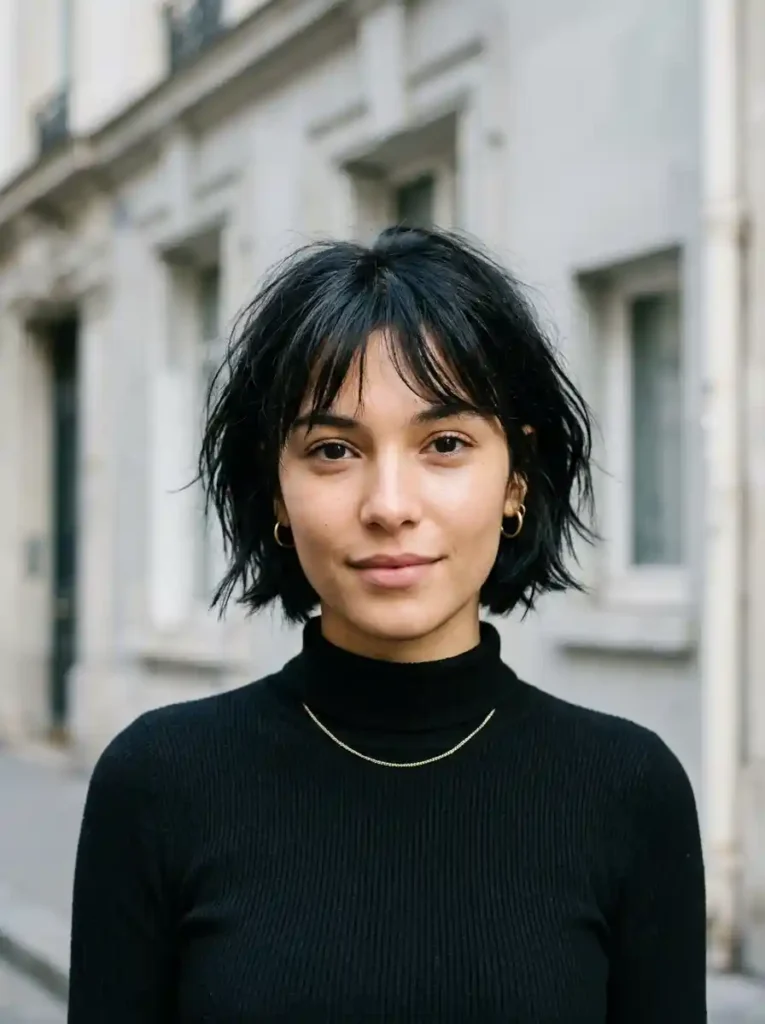
A choppy French bob brings a playful edge to short layered hair. Its jaw-skimming length creates a compact silhouette, while uneven layers add texture through the ends. A light fringe can make the style feel even more distinctive without looking heavy. This haircut suits people who enjoy effortless, slightly undone styling. It often looks especially interesting on naturally straight or gently wavy hair. The irregular ends give the cut personality while keeping the overall shape compact and wearable.
Apply a small amount of texturizing cream to damp hair, then let it dry naturally or diffuse gently. Avoid brushing the finished style too much because separation helps preserve its character. Common Mistake: Asking for extremely short layers without considering hair density can create unwanted bulk. Ask your stylist to remove weight selectively instead. A slightly imperfect finish is part of this haircut’s appeal, so it does not need to look perfectly arranged every morning.
3. Layered Pixie with Long Top
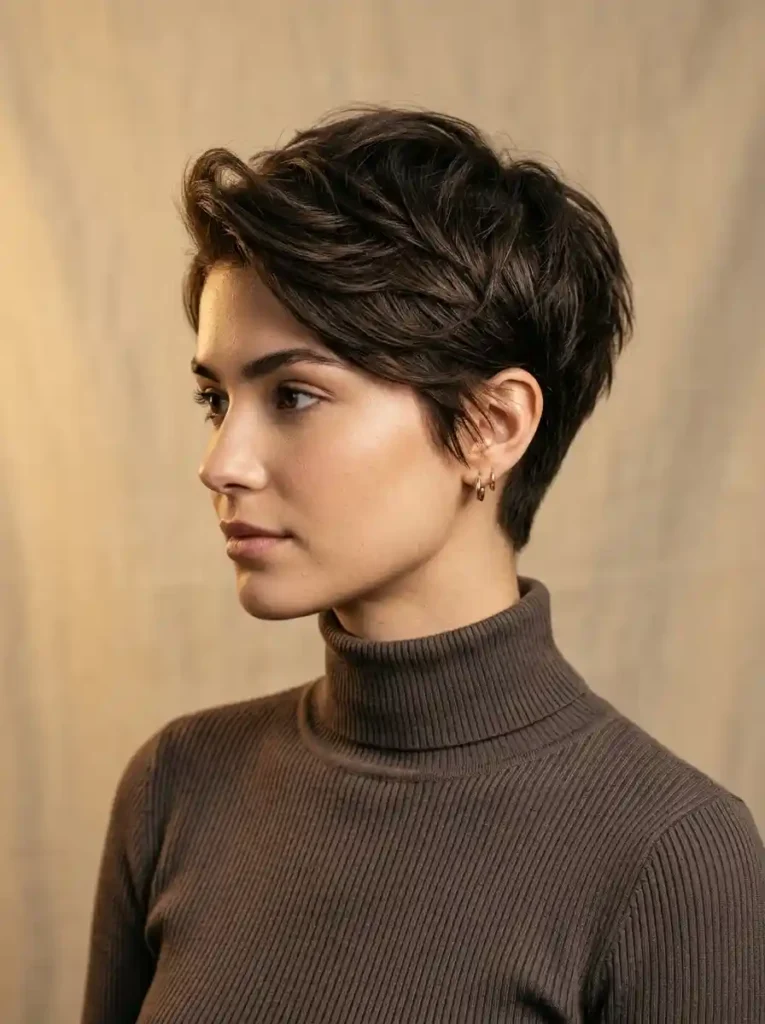
A layered pixie with a longer top creates a bold shape while keeping styling options open. The sides remain neat, while longer layers across the crown provide texture and direction. This makes the haircut suitable for someone who wants short hair without a completely uniform silhouette. The style can look sleek, piecey, lifted, or slightly messy. It particularly suits people who enjoy expressive cuts and do not mind showing more of their natural face and neckline.
Use a pea-sized styling paste to define individual sections after drying. Push the crown forward for a casual finish, or lift it upward for extra height. Pro Tip: Fine hair often benefits from keeping some length through the top rather than removing too much weight. Ask your stylist to taper the sides gradually. This creates contrast while maintaining enough hair on top for movement. Frequent trims are useful because pixie shapes change noticeably as they grow.
4. Wavy Layered Lob

A wavy layered lob is ideal when you want movement without committing to very short hair. The length usually reaches the collarbone, giving the layers room to form natural bends. Soft shaping around the face adds dimension while keeping the overall silhouette balanced. This haircut works beautifully with loose waves and can also suit straight hair that is curled occasionally. It offers a relaxed appearance that feels polished enough for work and casual enough for weekends.
Enhance natural waves with lightweight mousse applied to damp hair. Scrunch gently, then diffuse on low heat or allow the hair to air-dry. Avoid heavy creams that may flatten the shorter sections. Stylist Tip: Ask for layers that follow your natural wave pattern instead of cutting every section at the same angle. This helps prevent awkward shelves. If your hair expands when dry, show your stylist its natural texture before deciding how short the layers should be.
5. Short Shag with Wispy Bangs
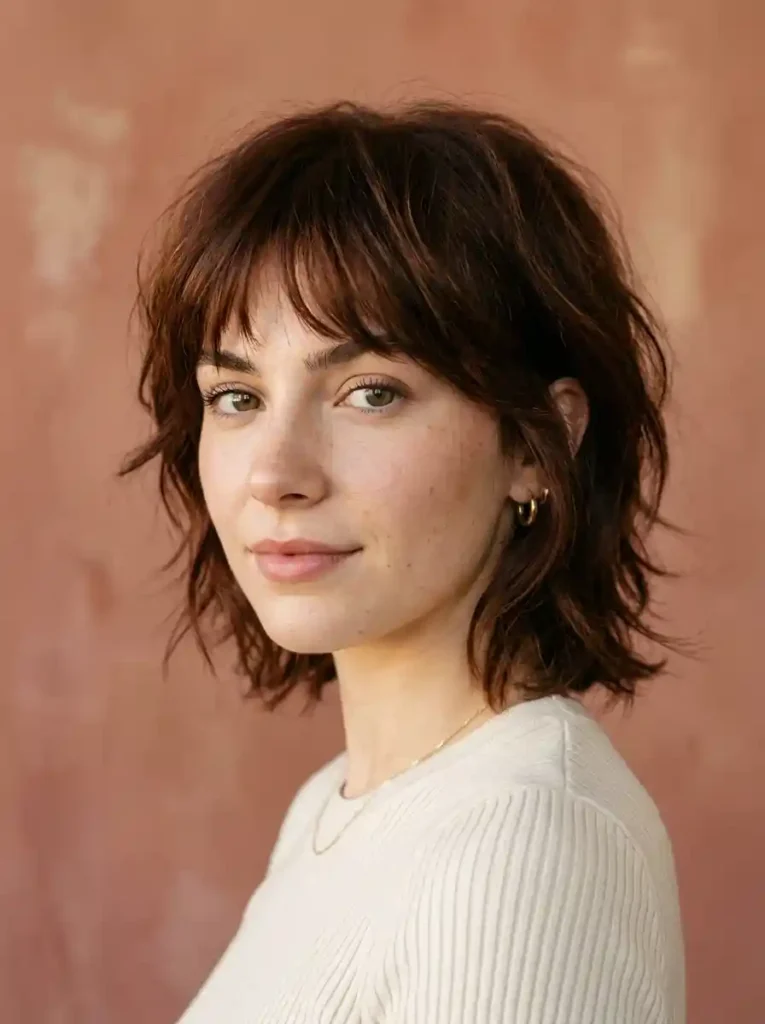
A short shag with wispy bangs offers a relaxed alternative to neatly blended layers. Multiple feathered sections create movement around the crown, sides, and ends. The wispy fringe keeps the forehead area light and prevents the haircut from feeling too heavy. This look appeals to people who enjoy undone texture and a slightly rebellious mood. It can work particularly well with naturally wavy or thick hair because the layers help distribute visual weight.
Style the haircut with sea salt spray or lightweight texture mist, focusing on the mid-lengths and ends. Twist a few pieces with your fingers while drying for extra definition. Common Mistake: Over-layering very fine hair can make the ends appear thinner. Ask for strategic layering instead of maximum texture. Your stylist can preserve stronger perimeter sections while adding movement higher up. That balance keeps the shaggy effect visible without sacrificing the appearance of fullness.
6. Face-Framing Layered Crop
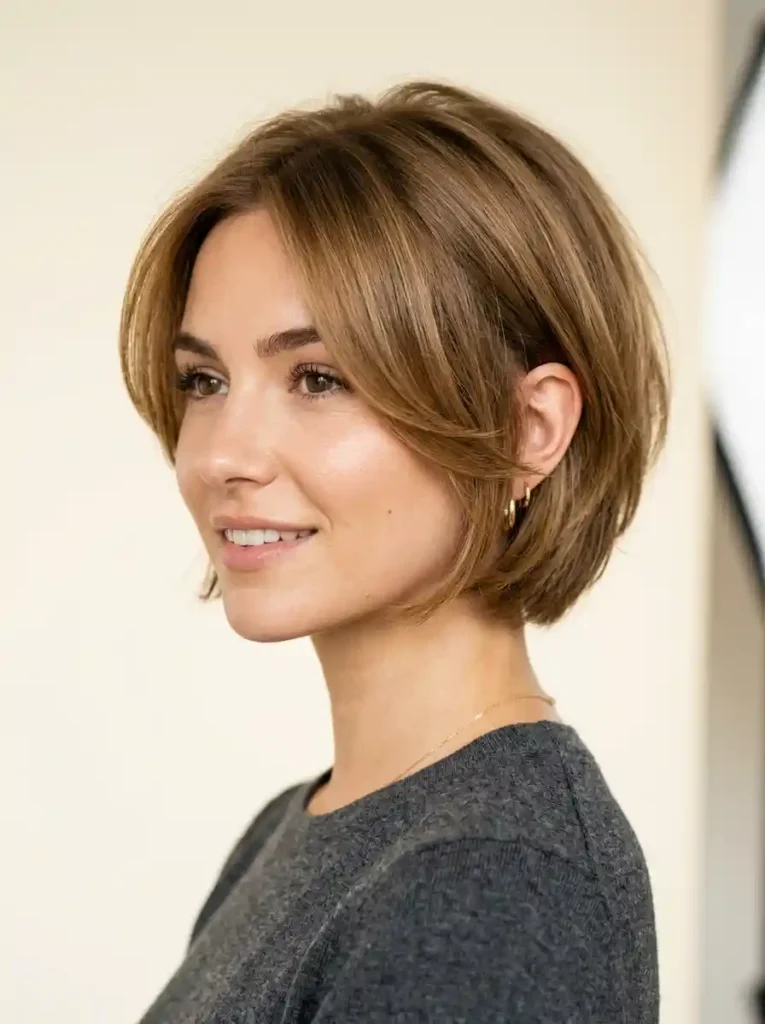
A face-framing layered crop keeps the haircut short while placing most of its visual detail around the front. Layers begin near the cheekbone or lower temple and blend toward the jaw. This creates a clear frame around the face without requiring bangs. The style is useful for people who want dimension but prefer an open forehead. It can suit straight, slightly wavy, or softly textured hair depending on how the layers are customized.
Ask your stylist to position the first face-framing layer according to your preferred feature emphasis. Shorter pieces create more definition, while longer pieces offer a softer effect. Use a round brush to shape the front away from the face. Pro Tip: Hair naturally falls differently on each side, so symmetrical-looking layers may require subtle adjustments. Bring a few saved references to your appointment, especially if you want a particular framing point around your cheekbones or jawline.
7. Curly Layered Bob
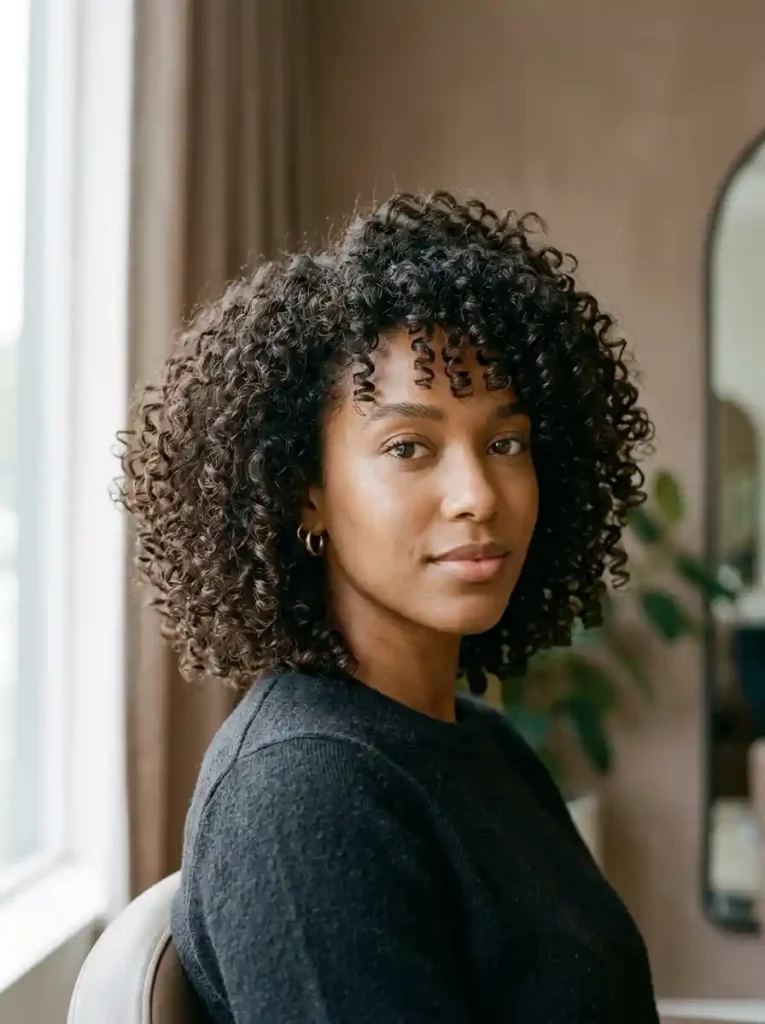
A curly layered bob gives natural curls room to form a rounded, lively shape. The layers prevent the haircut from becoming a single heavy block, especially when curls have different lengths and spring patterns. This option works well for people who want a short style that celebrates natural texture. The finished silhouette can look full without appearing overly structured. Curl definition also gives the haircut visual depth, even when the color remains one solid shade.
Use a curl cream followed by a lightweight gel if your hair needs stronger definition. Apply products while the hair is soaking wet, then scrunch upward. Stylist Tip: Curly hair should be evaluated in its natural pattern before major shortening. Curl shrinkage can make a haircut appear much shorter after drying. Ask your stylist whether dry or curl-by-curl cutting is appropriate for your texture. Avoid comparing the finished length directly with straight-hair references.
8. Feathered Short Layers
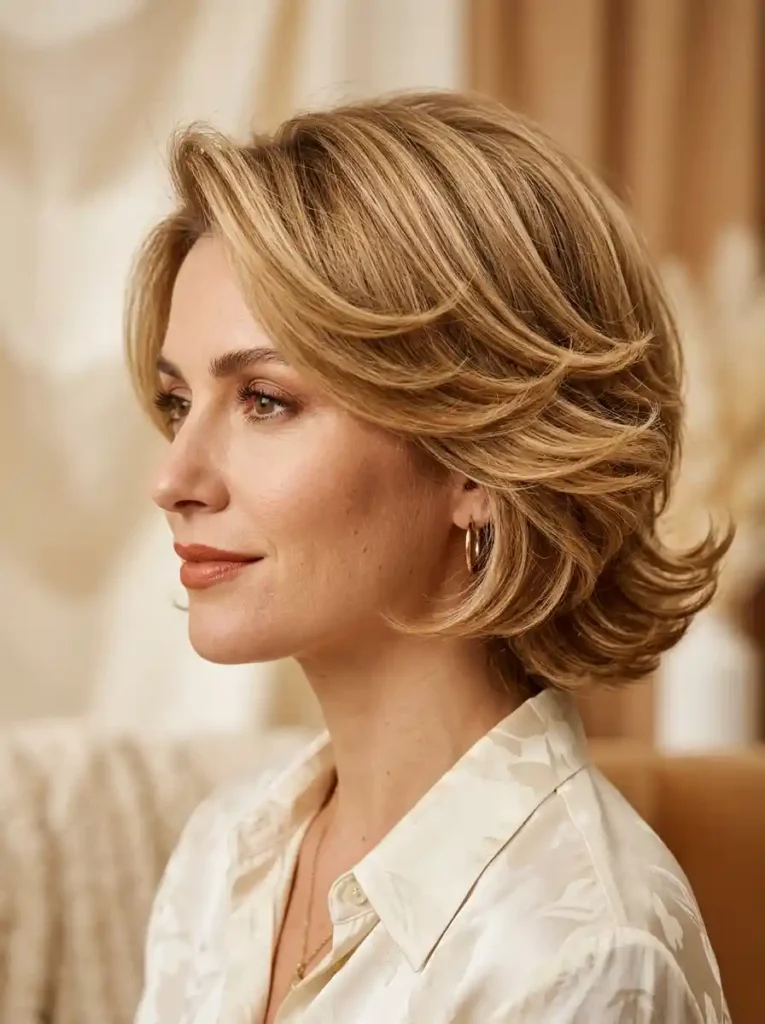
Feathered short layers create a soft, flowing silhouette rather than a sharply textured finish. The layers sweep away from the face and create movement through the sides. This makes the haircut a good choice for someone who likes retro-inspired shapes with a contemporary feel. It works especially well on medium-density hair that holds a blowout. Honey, caramel, or warm brown shades can emphasize the feathered movement, although the haircut also looks elegant in darker colors.
A round brush is the easiest tool for recreating the outward movement. Lift each section slightly while drying, then direct the ends away from the face. Pro Tip: Too much styling product can make feathered layers stiff and reduce their movement. Choose a light volumizing mousse instead. If your hair is very straight, a small amount of bend from a large barrel iron can refresh the shape. Keep the heat moderate to protect the layered ends.
9. Short Layers with Curtain Bangs
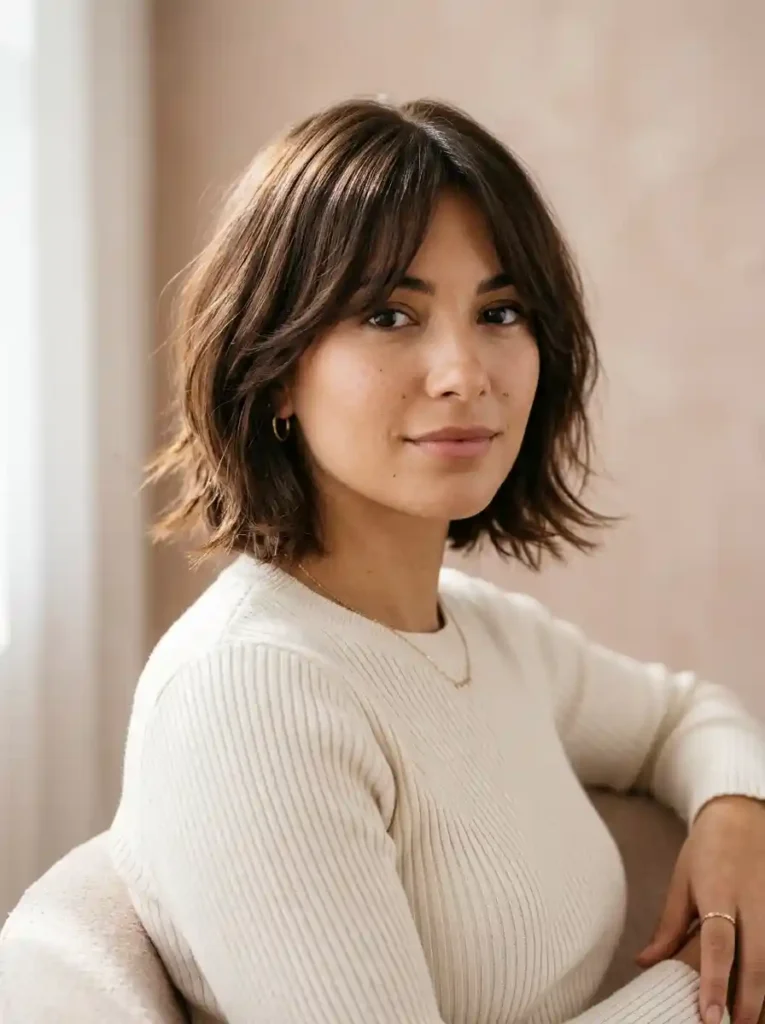
Short layers with curtain bangs combine movement around the face with a flexible fringe. The bangs part softly near the center and blend into shorter side layers. This creates a continuous shape instead of a heavy line across the forehead. The haircut suits people who want bangs but prefer an option that can grow out gracefully. It can look polished when blow-dried or relaxed when left naturally textured. Medium-length hair often provides enough room for smooth blending.
Blow-dry the curtain bangs away from the face using a small round brush. Once dry, separate them gently with your fingers. Common Mistake: Cutting curtain bangs too short can make styling more demanding. Ask for a longer starting length if you are trying them for the first time. Your stylist can remove small amounts later. Face-framing layers should also connect smoothly with the fringe so the haircut looks intentional from both the front and side.
10. Blunt Bob with Hidden Layers
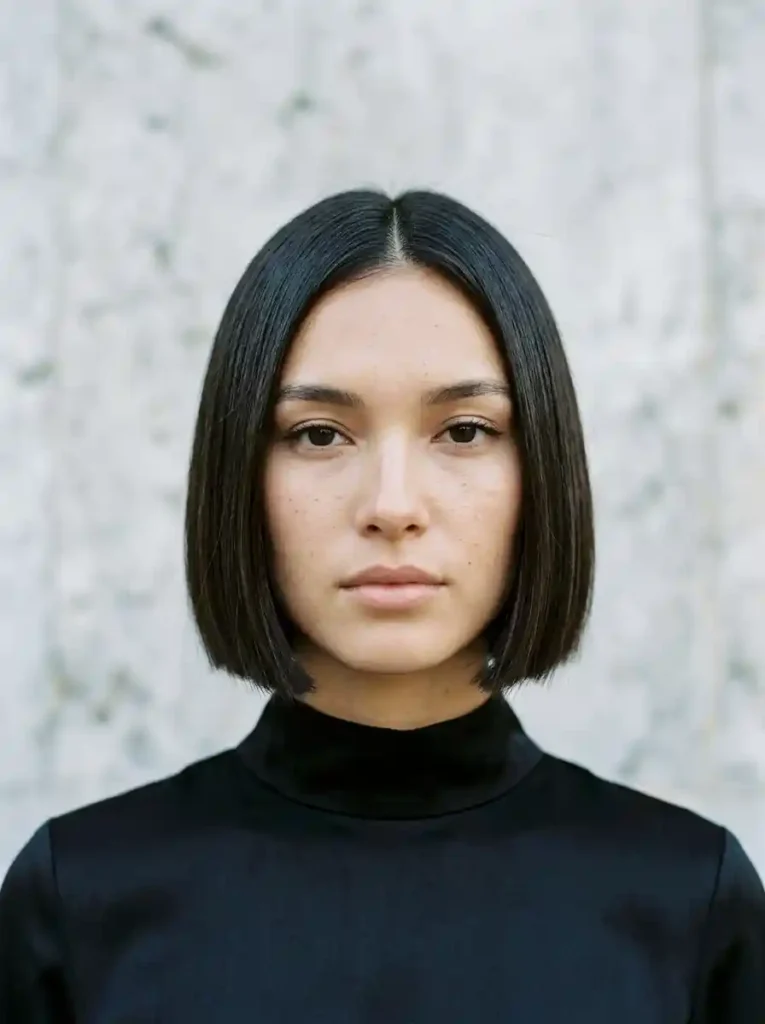
A blunt bob with hidden layers offers movement without visibly changing the clean perimeter. The outer edge remains strong and polished, while subtle internal layers reduce heaviness underneath. This is a useful option for people who like structured hair but dislike overly flat shapes. The haircut looks particularly striking on straight hair. Dark brunette, black, and glossy espresso colors can emphasize its graphic outline and make the overall look feel sophisticated.
For a sleek finish, apply heat protectant and blow-dry with a paddle brush. A flat iron can refine the ends when needed. Stylist Tip: Internal layering should be subtle when the goal is a strong perimeter. Too much removal can weaken the crisp bottom edge. Tell your stylist that you want movement underneath while keeping the visible outline blunt. This distinction helps prevent a haircut that looks thinner than intended.
11. Tousled Layered Bob
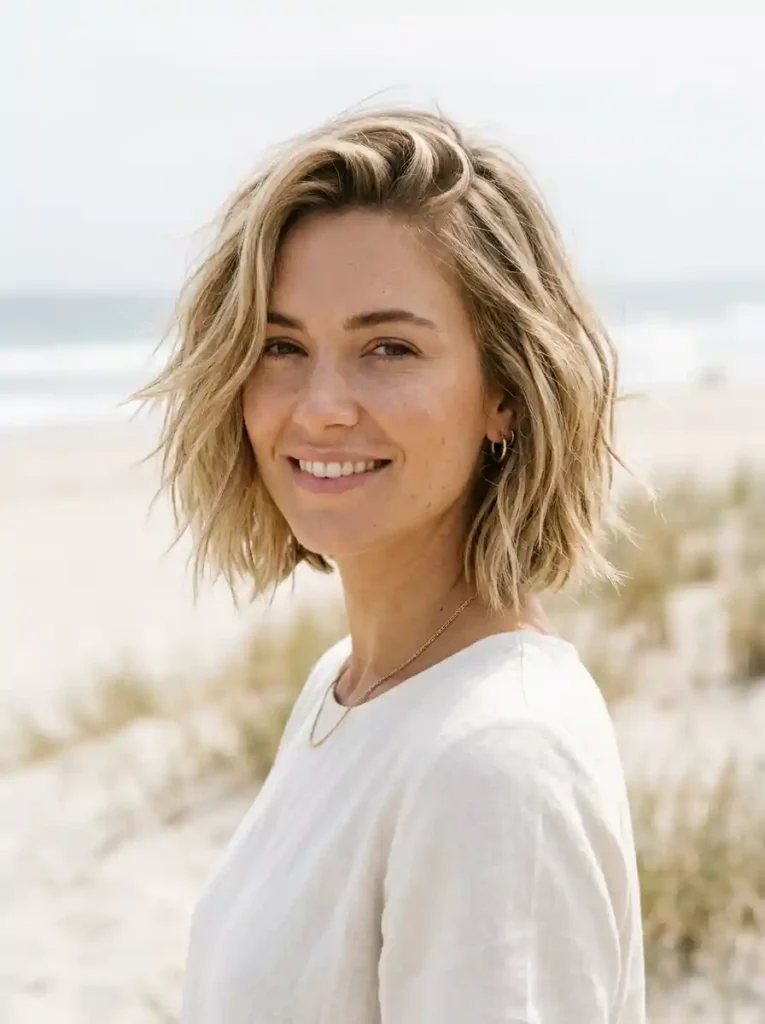
A tousled layered bob is designed to look relaxed rather than perfectly arranged. Shorter pieces break up the shape and help loose bends appear more dimensional. A slightly uneven finish adds character without requiring dramatic chopping. This haircut appeals to people who prefer casual beauty and quick styling. It can be especially attractive on naturally wavy hair, although straight hair can achieve a similar effect with loose bends and texture spray.
After washing, scrunch a lightweight mousse through damp hair and twist random sections. Let them dry naturally for a softer finish. Pro Tip: Concentrate texture products on the ends rather than the roots when your hair becomes oily easily. This keeps the crown fresh while preserving movement below. If your hair is very thick, ask your stylist for internal weight removal. That technique can make the tousled shape easier to manage without creating excessive surface frizz.
12. Layered Bixie Cut
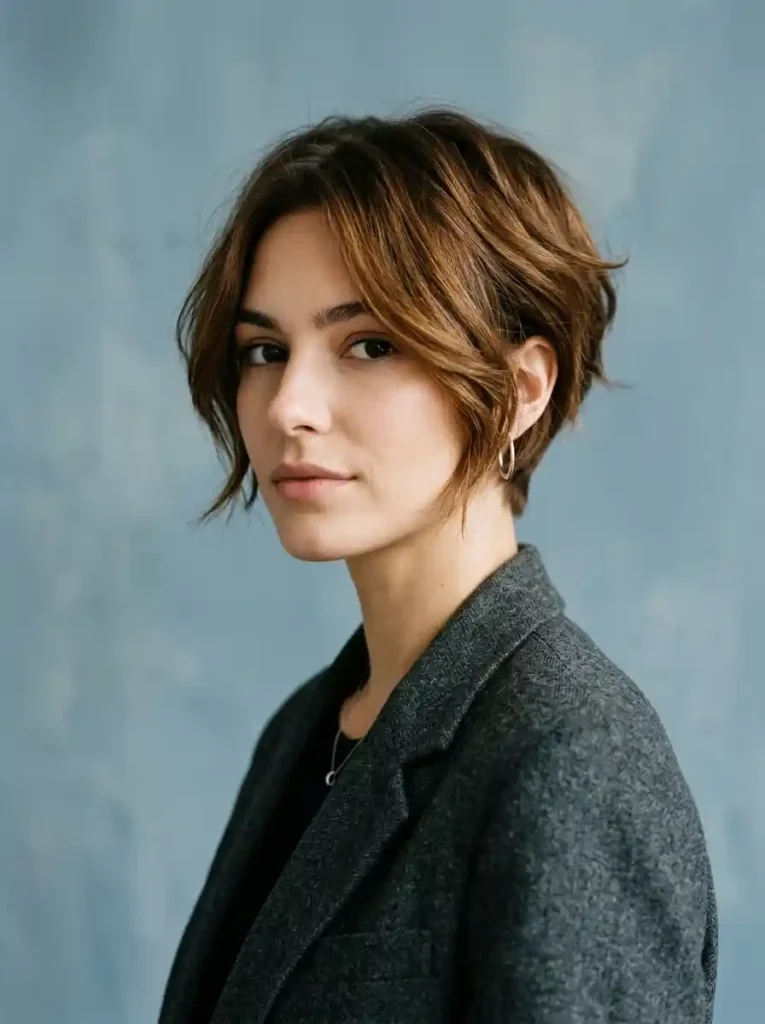
The layered bixie combines the compactness of a pixie with the softer length of a bob. The back stays short, while the front and sides retain enough length to frame the face. Layers create a flexible shape that can look polished or tousled. This haircut suits people who want a noticeable change but feel unsure about going fully pixie-short. It also gives more styling freedom around the front than many traditional cropped haircuts.
Use a small amount of styling cream to separate the longer front sections. Tuck them behind the ear for a cleaner appearance or sweep them forward for softness. Stylist Tip: Bring side-view references when requesting a bixie because the profile shape matters greatly. Ask how the nape will be tapered and where the front layers will finish. Those details determine whether the cut feels more like a bob or more like a pixie.
13. Layered Bob with Side-Swept Bangs
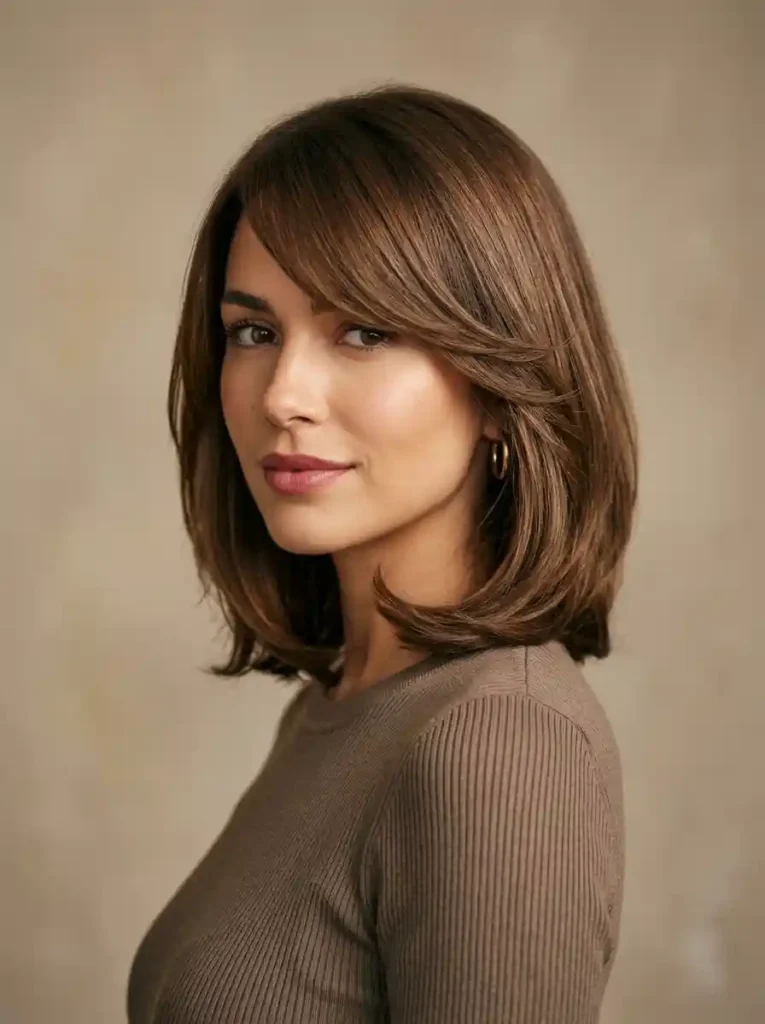
Side-swept bangs give a short layered haircut a softer, more classic appearance. The fringe moves diagonally across the forehead and blends into the front layers. This makes the hairstyle useful for people who want facial framing without a strong center part. The bob itself can remain relatively structured, while the layers add gentle movement around the sides. The result works well for professional settings and can be dressed up easily.
Use a round brush to direct the fringe sideways while drying. Finish with a flexible hairspray if the bangs tend to fall forward. Common Mistake: Using too much product at the roots can make side bangs look flat and greasy. Keep styling products light and concentrated near the ends. If your hair has a strong natural part, ask your stylist to account for it before cutting the fringe so the bangs sit naturally.
14. Textured Micro Bob
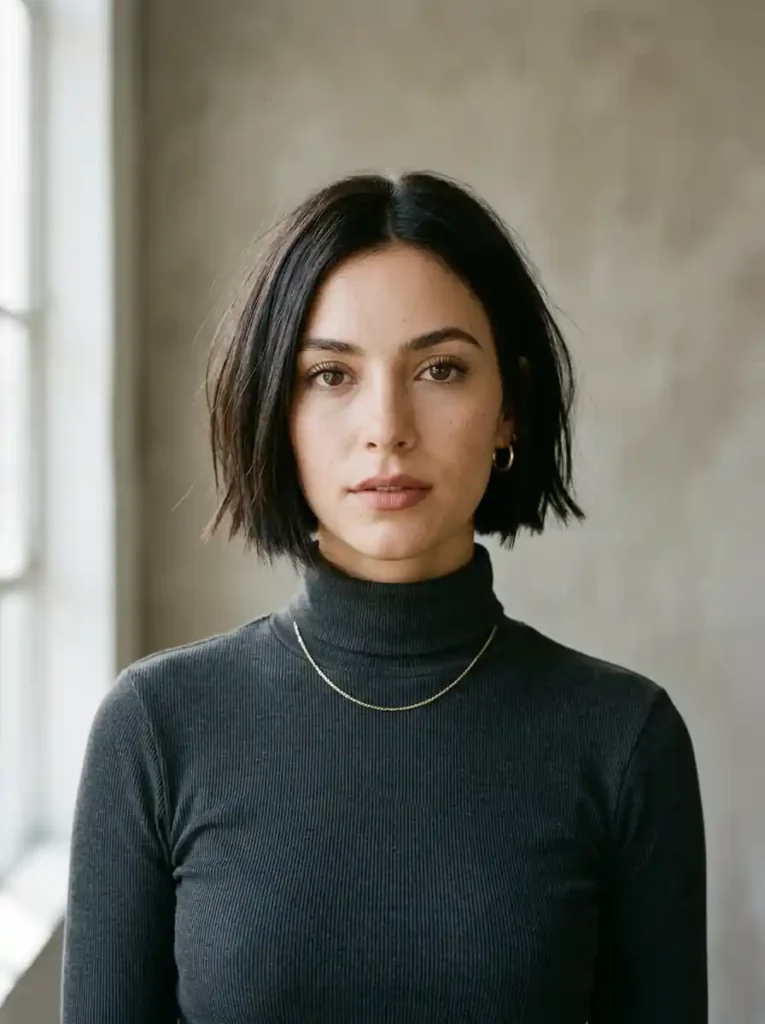
A textured micro bob sits higher than a traditional bob and creates a crisp, fashion-forward silhouette. Subtle layers prevent the short shape from appearing too solid. The ends can remain slightly separated for a modern finish. This style suits people who enjoy shorter hair and appreciate a defined haircut. Straight or lightly wavy textures usually make the shape easy to see. A clean neckline also adds visual sharpness from the side and back.
Keep styling simple with a lightweight cream or dry texture spray. Finger-comb the ends instead of brushing them into a perfectly smooth shape. Pro Tip: The shorter the bob, the more important the neckline becomes. Ask your stylist to check the back from several angles before finishing. If your hair grows quickly, expect the shape to change sooner than a longer layered style. Regular maintenance helps preserve the distinctive micro-bob outline.
15. Layered Short Hair with Baby Bangs
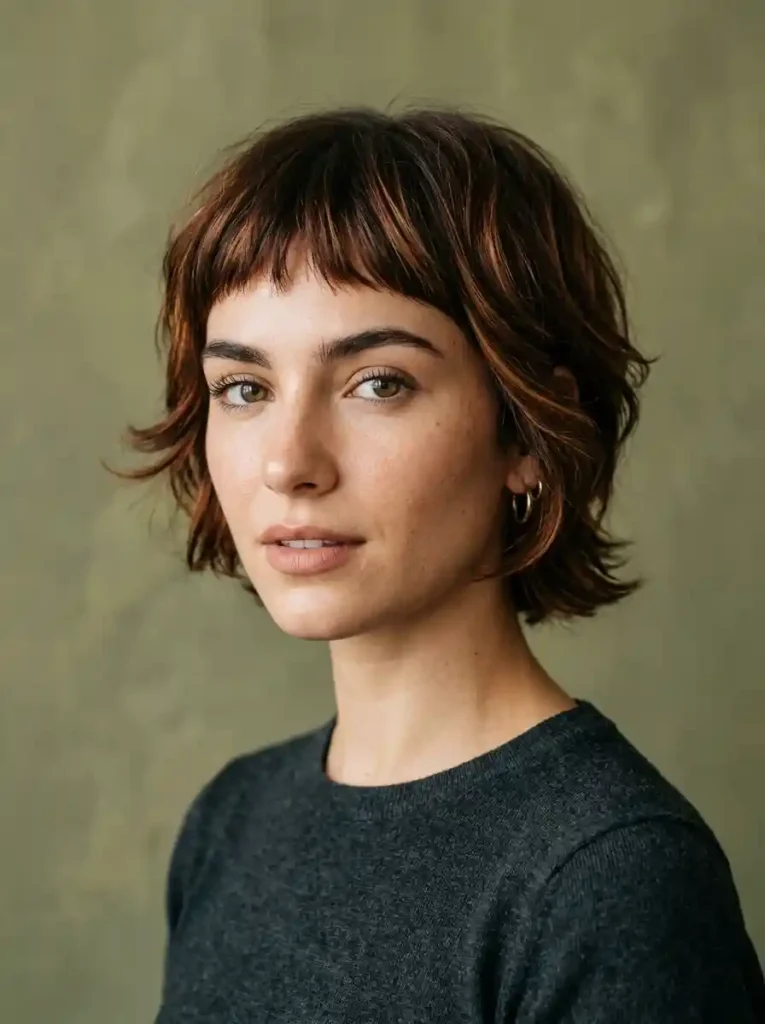
Baby bangs create a bold focal point when paired with short layers. The fringe sits well above the eyebrows, leaving the forehead visible and giving the haircut a distinctive shape. Softer layers through the sides prevent the look from becoming too geometric. This option suits adventurous readers who enjoy noticeable details and stronger fashion influence. It can work with straight hair particularly well, while naturally wavy textures may create a softer interpretation.
Baby bangs require more frequent shaping than longer fringe styles. Use a small round brush or fine comb while drying to control their direction. Stylist Tip: Start slightly longer if you are uncertain about the length because baby bangs can be shortened later. Your stylist should also consider your natural growth pattern at the hairline. Cowlicks may affect how the fringe sits. A tiny amount of flexible styling paste can control stray hairs without creating stiffness.
16. Soft Layered Pixie Bob
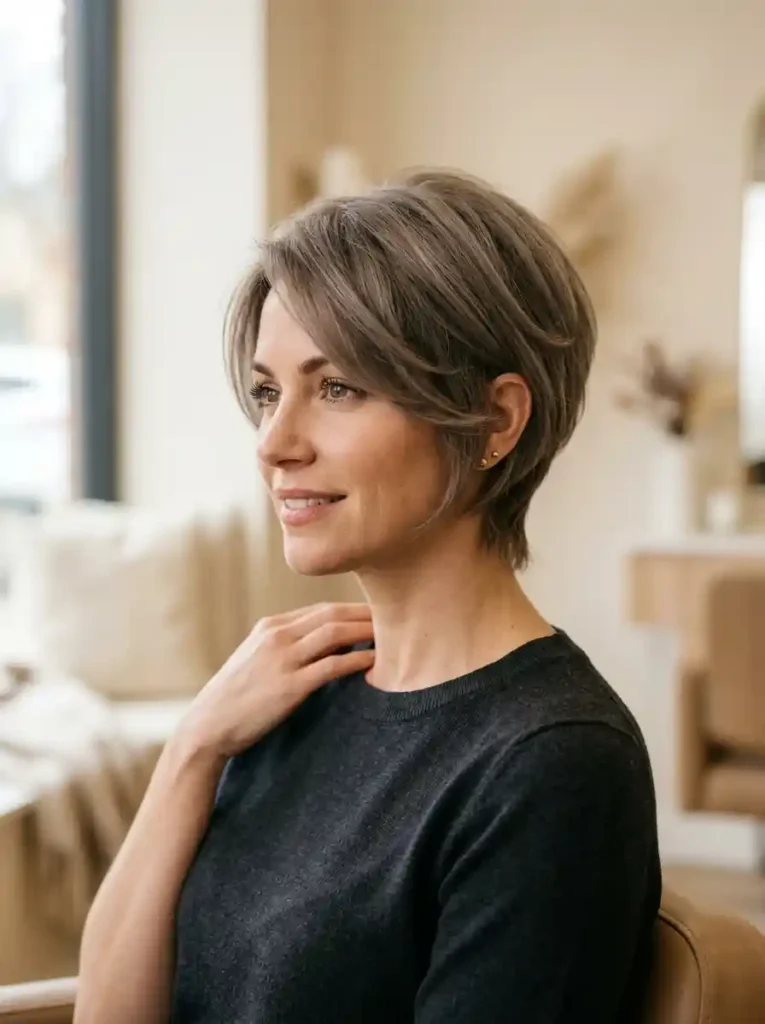
A soft layered pixie bob provides short-hair convenience without an extremely cropped finish. The sides and crown contain gentle layers, while the nape remains slightly longer for softness. Face-framing pieces can reach the cheekbones or jaw depending on the desired shape. This haircut works for people who want manageable short hair but still enjoy movement around the face. Its blended structure makes it suitable for both polished and casually textured styling.
For a smooth look, use a small round brush around the front and crown. For texture, apply a tiny amount of cream and separate the ends with your fingers. Pro Tip: Medium-density hair often gives this shape enough body without requiring heavy product. If your hair is very thick, ask for internal weight reduction. If it is fine, avoid excessive thinning. The goal is controlled movement while preserving enough density to support the silhouette.
17. Layered Short Cut with Money Pieces
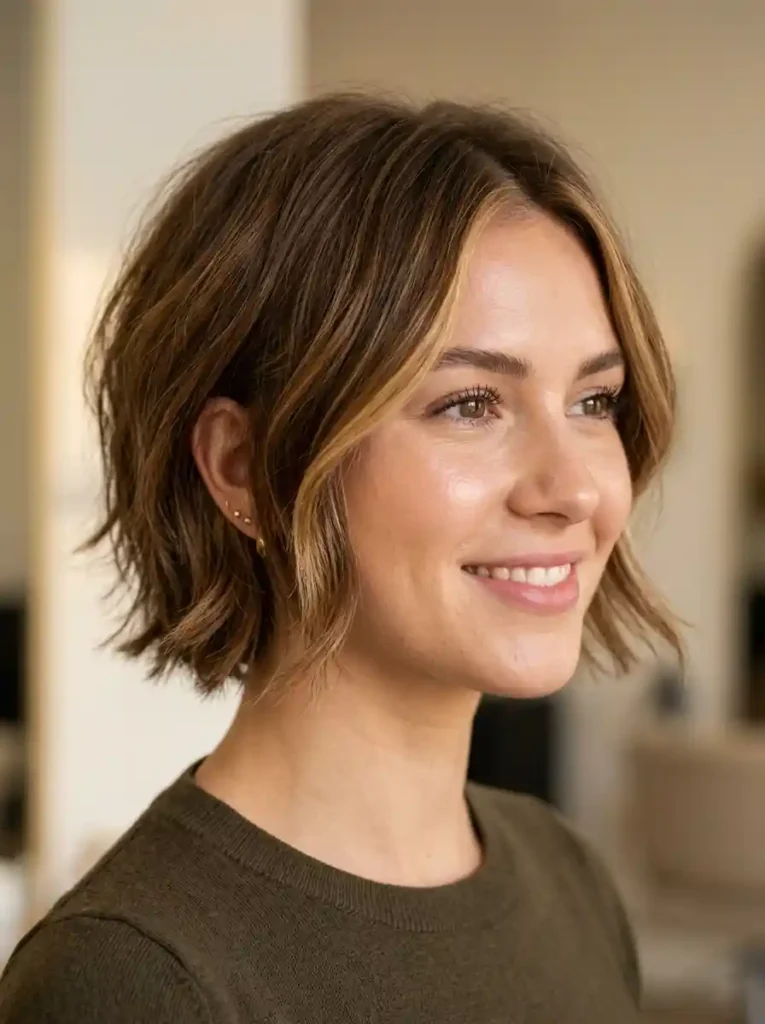
Adding lighter face-framing pieces can make a short layered haircut look more dimensional. The base remains natural-looking while brighter strands appear near the front. These highlights emphasize movement created by the layers without requiring an all-over color change. This idea suits people who want a visual refresh rather than a completely different haircut. Warm beige, honey, caramel, or soft copper accents can be customized to complement the existing base color.
Tell your colorist whether you want subtle brightness or a stronger contrast before choosing the placement. Stylist Tip: Face-framing highlights should follow the haircut’s natural movement. If the front layers are short, very wide highlights can overwhelm them. Fine, strategically placed sections often create a more blended effect. Use color-safe products and protect the hair from excessive heat, especially when lightened sections are already dry or fragile.
18. Layered Bob for Fine Hair
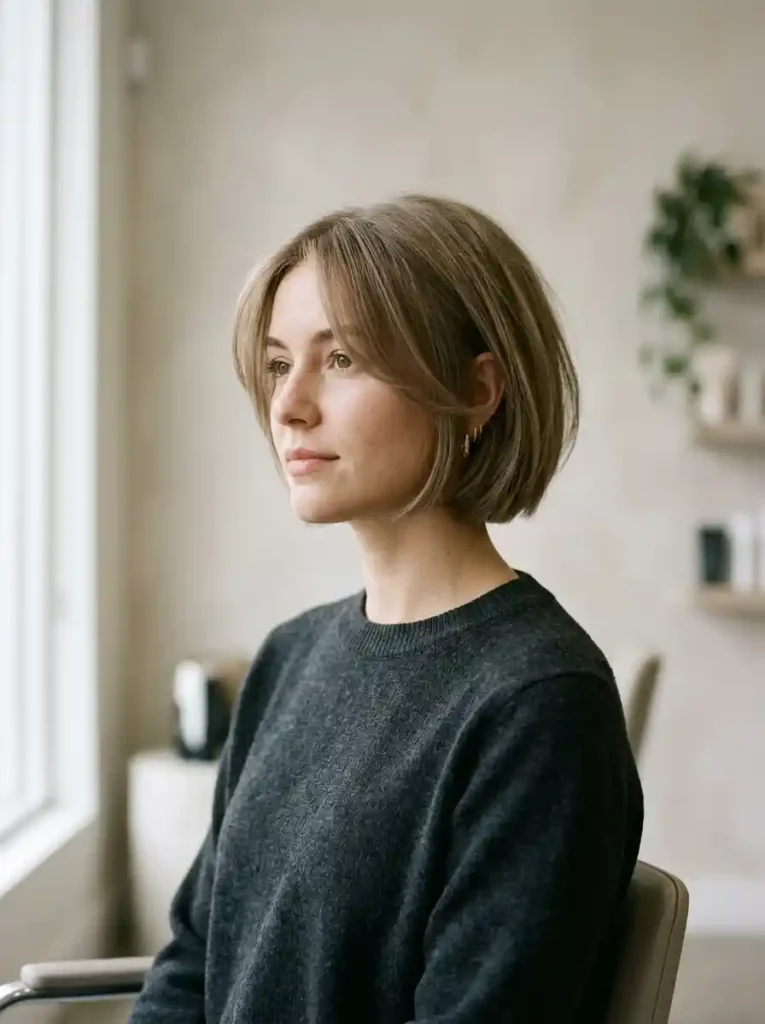
Fine hair can benefit from carefully placed layers that create movement without removing too much density. This bob keeps a stronger perimeter, while subtle layers around the crown and front add dimension. The result can appear fuller because the ends retain a clear shape. This is a practical choice for people who dislike heavily thinned hair. Straight and slightly wavy textures can both work, depending on how much natural volume the hair provides.
Avoid aggressive thinning shears if your main concern is maintaining fullness. Ask for targeted layers instead. Common Mistake: Adding many short layers to fine hair can make the ends appear sparse. A stronger baseline usually gives better visual support. For styling, blow-dry the roots upward with a lightweight volumizing product. Keep conditioners focused on the lower lengths. This combination helps preserve body while preventing the haircut from becoming weighed down.
19. Thick Hair Layered Crop
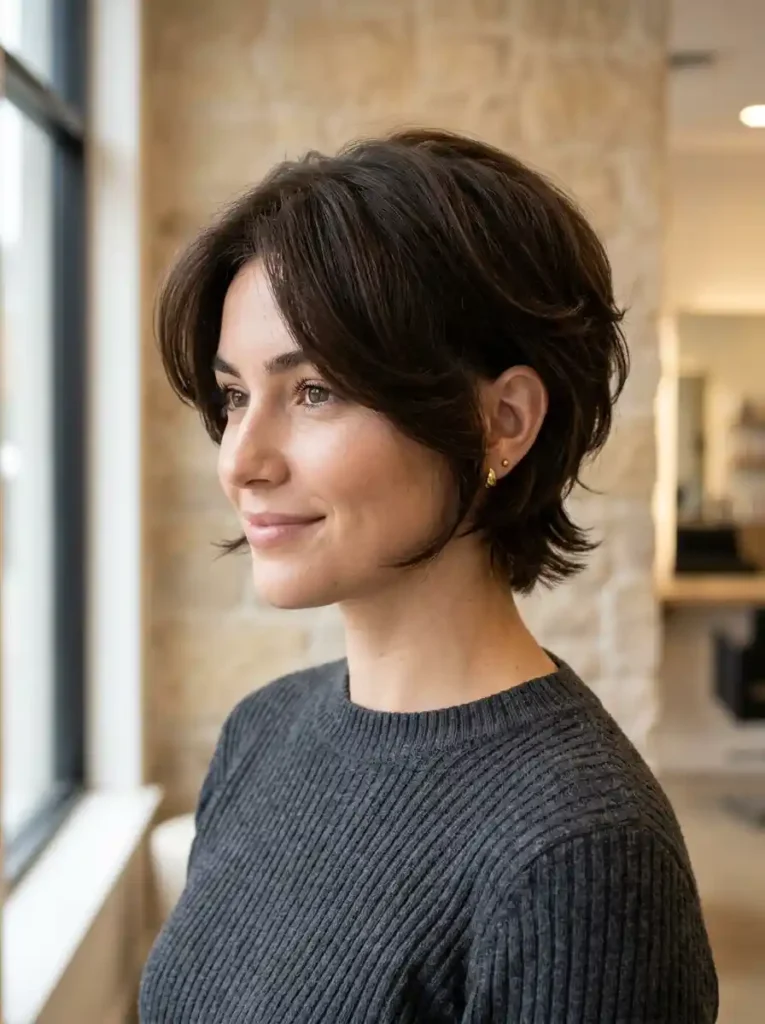
Thick hair can carry stronger layers while still maintaining a substantial shape. A layered crop removes selected weight through the interior and creates movement around the crown and sides. The ends remain textured rather than overly blunt, helping the haircut feel lighter. This option suits people who find short hair becomes bulky or difficult to control. It can look sleek when styled smoothly or more relaxed when natural texture is encouraged.
Ask your stylist where your hair tends to become widest before deciding on the layer placement. Pro Tip: Removing weight is not the same as removing length. Strategic internal cutting can reduce bulk while preserving the overall silhouette. Use a smoothing cream when blow-drying, especially around the sides. If your hair has natural waves, a diffuser can help shape the layers without creating excessive expansion or frizz.
20. Short Layered Cut with Wispy Face Pieces
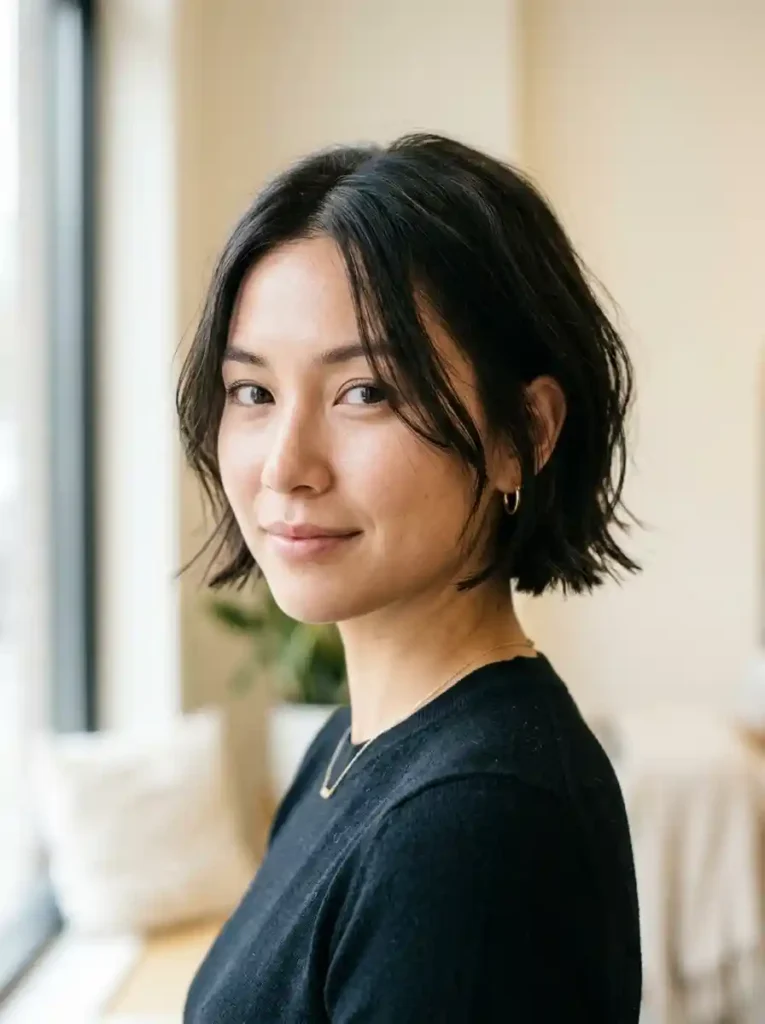
Wispy face pieces give a short layered cut a delicate, lightweight finish. Instead of strong geometric framing, the front contains fine strands that blend gradually into the rest of the haircut. This makes the style appealing to people who want softness without committing to traditional bangs. The look works particularly well with a center part and loose natural movement. It can also be adapted for straight hair by creating subtle bends around the front.
Style the face pieces with a small round brush or your fingers, directing them slightly away from the cheeks. Keep the finish flexible rather than stiff. Stylist Tip: Ask your stylist to vary the lengths around the face instead of cutting one obvious line. This creates a more natural transition. If you wear glasses, mention them during the consultation. The frame position can affect where face-framing layers sit and how easily they tuck behind the ears.
21. Airy Layered Short Cut
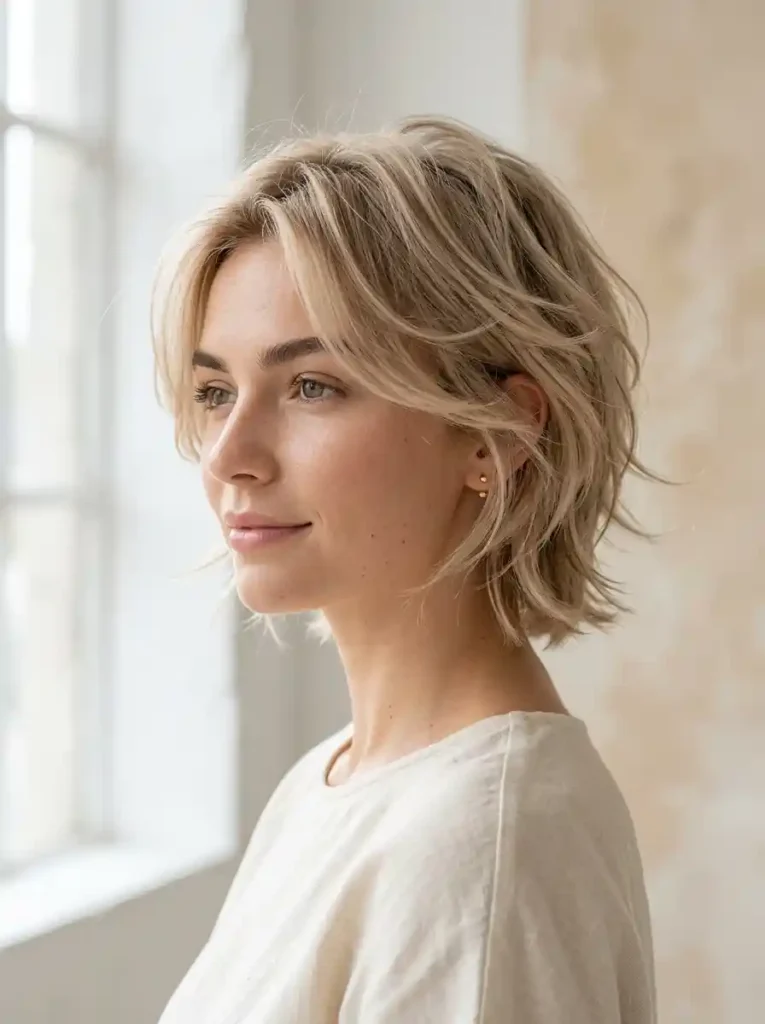
An airy layered short cut focuses on lightness and movement rather than dramatic texture. The layers are soft and spread naturally through the shape, creating a floating effect around the crown and ends. This style suits people who prefer understated hairstyles that still have visible dimension. It can be particularly attractive on medium-density hair with a natural bend. Soft blonde, beige, light brown, and dimensional brunette colors can highlight the separation between layers.
Use a lightweight mousse at the roots and a flexible cream through the ends. Blow-dry with your fingers for a natural finish instead of creating a highly polished shape. Pro Tip: Airy layers work best when the haircut has enough length to move. Cutting them too short can make the silhouette look choppy rather than soft. Ask your stylist for blended transitions and explain how much daily styling time you are willing to spend.
Frequently Asked Questions
Are short layered haircuts good for fine hair?
Yes. Fine hair can suit short layers when the layering is controlled. Keeping a stronger perimeter can help preserve the appearance of density.
Can short layers work with naturally wavy hair?
Yes. Wavy hair often benefits from layers because they give the natural pattern room to move. Layer placement should account for shrinkage and wave direction.
How often should a short layered haircut be trimmed?
Many short styles benefit from regular trims to maintain their shape. Very short cuts usually need more frequent shaping than longer layered bobs.
Are curtain bangs suitable for short layered hair?
Yes. Curtain bangs can blend naturally into short layers and provide flexible face framing. A slightly longer starting length is easier to adjust.
Can thick hair have short layers?
Yes. Thick hair can handle stronger layering, but weight should be removed strategically. Internal layering can reduce bulk without making the ends look overly thin.
What should I show my stylist?
Bring several reference photos showing the front, side, and back whenever possible. Also explain your natural texture, preferred length, styling routine, and maintenance tolerance.
Conclusion
The right layered haircut can make short hair feel lighter, more dynamic, and easier to personalize. Your best choice depends on hair density, natural texture, face-framing preferences, and how much styling you enjoy. Soft bobs offer polish, shags bring texture, and pixie-inspired shapes create a bolder change. These short layers haircut ideas can also be customized with bangs, highlights, or different finishing techniques. Save your favorite look before your next salon visit, and discuss the details with your stylist.


