
A short haircut can feel exciting until you start wondering which shape will actually suit your routine. The right bob can look polished without demanding hours of styling every morning. It can also highlight natural texture, create movement, or give fine hair a fuller appearance. This guide brings together 20 cute short bob hairstyles with different lengths, textures, colors, and styling approaches. Each idea includes practical details you can discuss with your stylist before making the chop.
1. Classic Chin-Length Bob
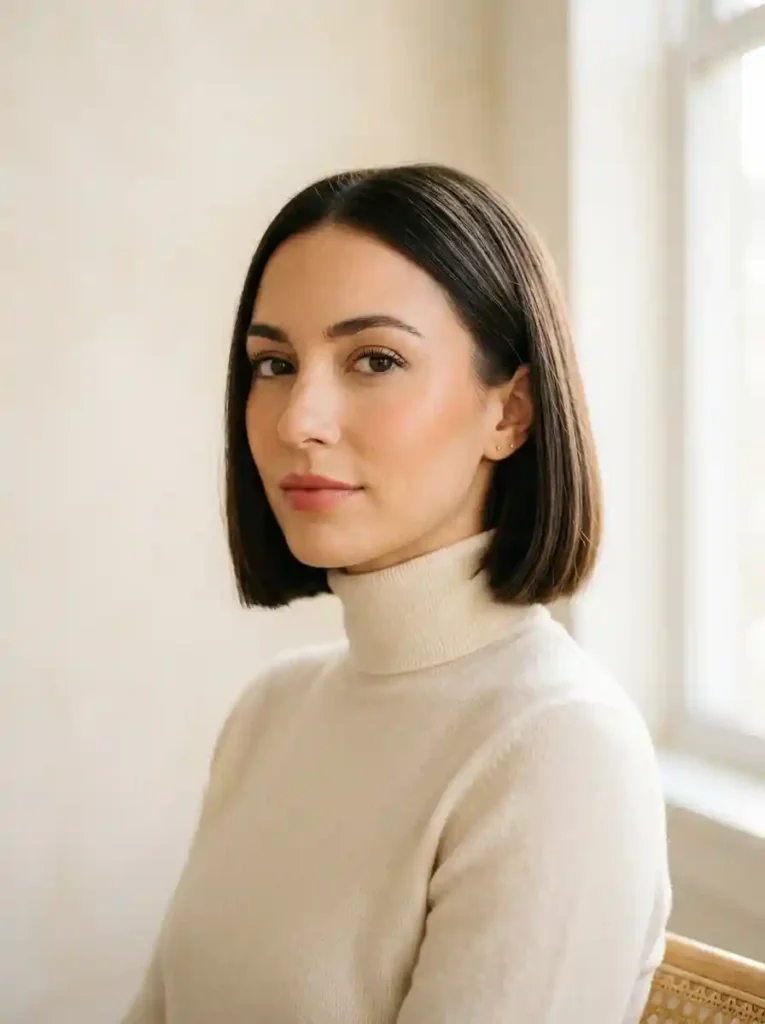
A classic chin-length bob keeps the shape simple and timeless. The ends sit around the chin, creating a clean visual line. Straight or gently smoothed hair shows the haircut’s structure particularly well. This version suits readers who want polished hair without an overly complicated design. A rich brunette, soft black, or warm chestnut shade can emphasize the neat silhouette. The result feels elegant enough for work while remaining relaxed enough for everyday outfits and casual occasions.
Ask your stylist to keep the perimeter strong if you want maximum definition. Fine hair can benefit from this approach because fewer layers preserve visual weight. Use a lightweight smoothing cream before blow-drying to reduce flyaways. A flat iron can sharpen the ends, but it is not essential. Pro Tip: Ask for the bob to be cut on dry hair when your stylist needs to see your natural texture before refining the final shape.
2. French Bob With Soft Bangs
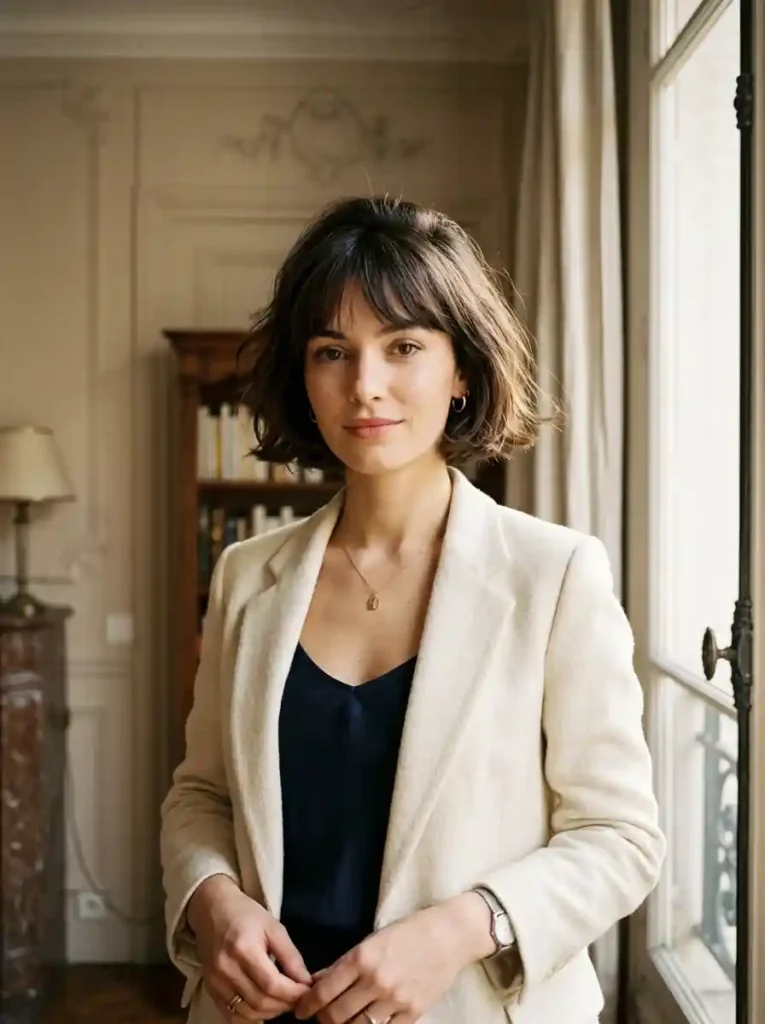
The French bob has a compact shape with a distinctly effortless character. Its shorter length often falls between the cheekbones and jawline. Soft bangs add a relaxed frame around the eyes without making the haircut feel severe. Slightly tousled texture gives this version its signature charm. It works especially well for people who enjoy fashion-forward cuts with a vintage influence. A dark brunette shade can make the shape look especially defined and sophisticated.
Styling should remain intentionally imperfect rather than overly smooth. Apply a small amount of texturizing cream to damp hair, then let it air-dry or use a diffuser. A tiny round brush can shape the bangs without creating excessive volume. Stylist Tip: If your hair is very thick, ask for subtle internal weight removal rather than heavily layered ends. This preserves the recognizable French bob silhouette while making daily styling easier.
3. Blunt Bob With Center Part
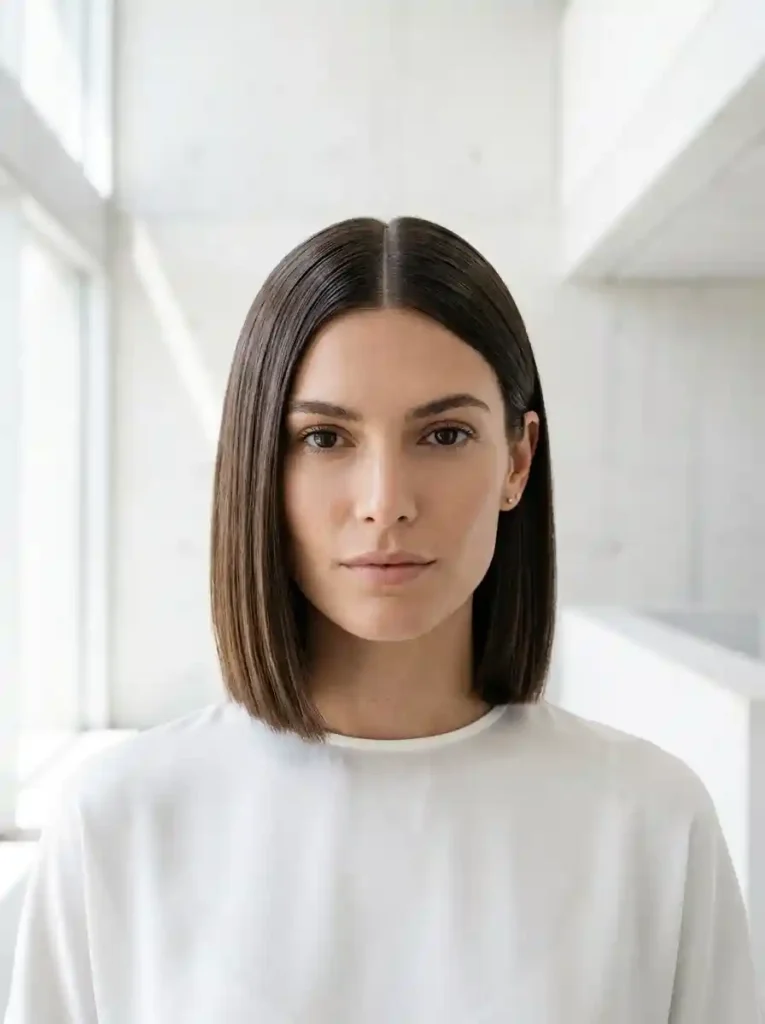
A center-parted blunt bob creates a strong, balanced appearance. The straight perimeter gives the haircut a crisp finish from every angle. This design works particularly well on naturally straight hair because the clean line remains visible throughout the day. It can also suit slightly wavy hair when blow-dried smooth. The center part adds symmetry, while the compact length keeps the overall look fresh. Choose a single-color brunette or black shade for an especially graphic result.
Maintenance focuses on preserving the clean outline. Use a heat protectant before smoothing the hair with a brush or flat iron. A small amount of lightweight serum can add polish without making the roots flat. Schedule trims when the ends begin losing their intended shape. Common Mistake: Avoid adding many visible layers if you want a truly blunt finish. Too much layering can interrupt the strong perimeter that gives this bob its distinctive appearance.
4. Wavy Bob With Face-Framing Pieces
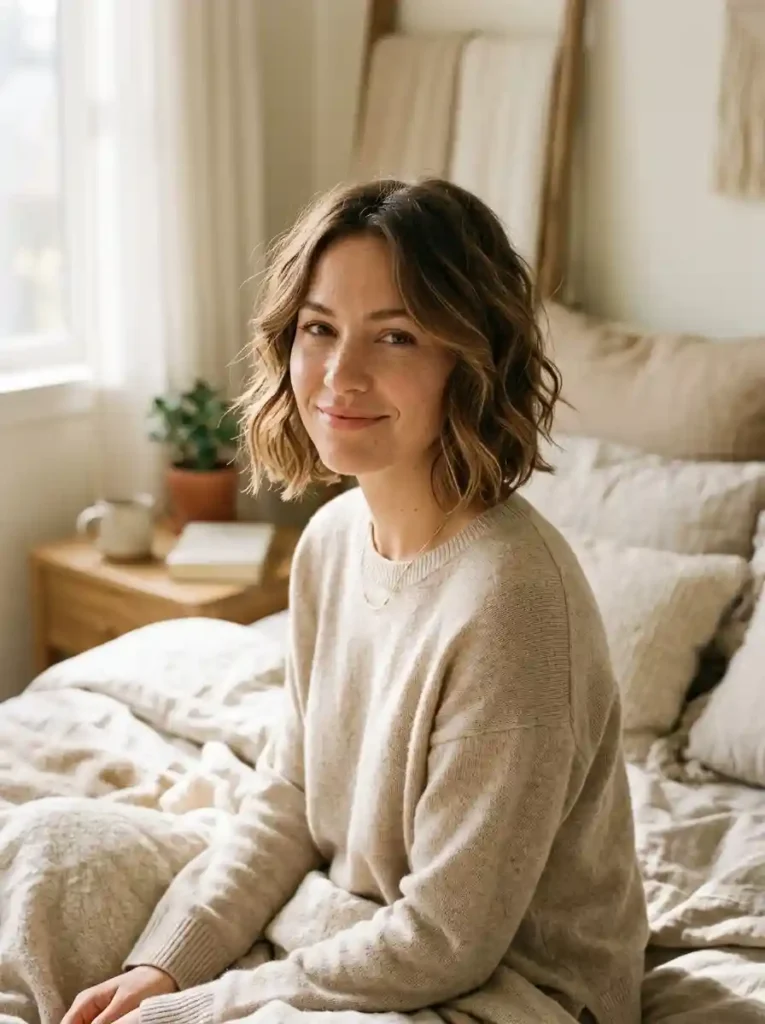
A wavy bob adds movement without requiring a heavily layered haircut. The length usually rests around the jaw, while shorter front pieces softly follow the face. Natural waves make the silhouette feel relaxed and approachable. This option can work beautifully for medium-density hair that already has some bend. Warm brown or softly highlighted color can emphasize the movement without overwhelming the shape. It is a useful choice for anyone who prefers hair that looks styled but not overly controlled.
Enhance natural waves with a lightweight curl cream and gentle scrunching. Avoid brushing the hair after it dries because that can separate the wave pattern. If your hair is straight, a large-barrel curling iron can create similar bends. Pro Tip: Ask your stylist to preserve enough length around the front if you regularly wear glasses or tuck hair behind your ears. This keeps the face-framing pieces practical instead of constantly falling forward.
5. Curly Jaw-Length Bob
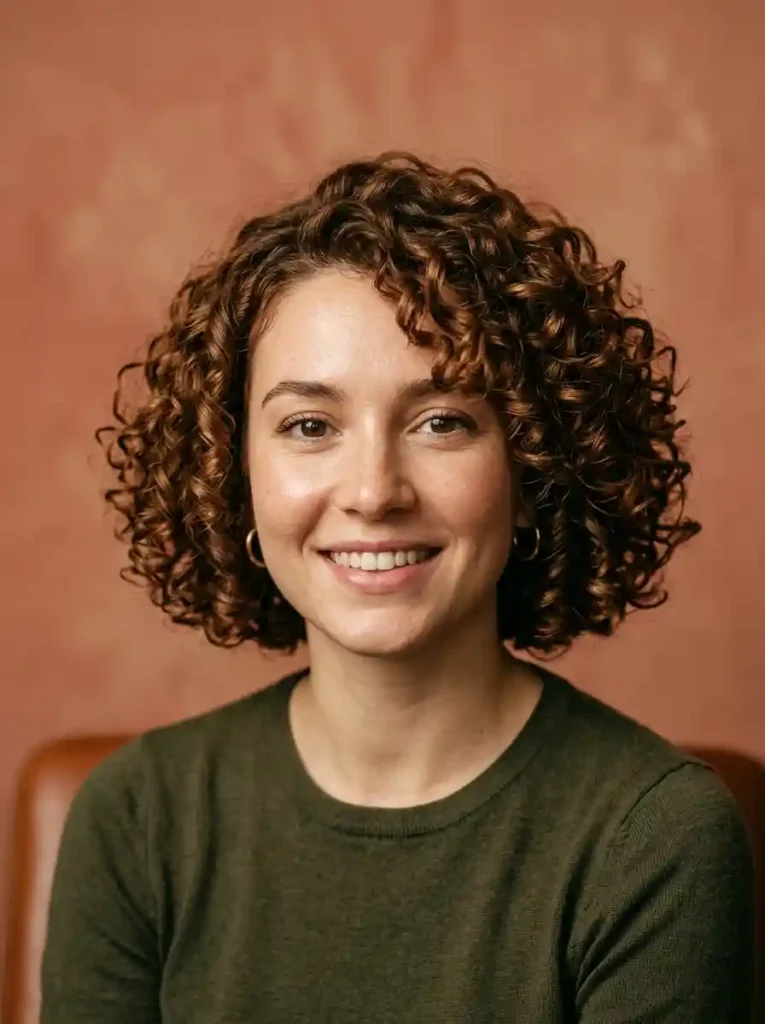
A curly bob looks lively because its shape follows the natural movement of the hair. The jaw-length perimeter creates a compact silhouette without flattening the curls. Rounded shaping can help distribute volume through the sides and crown. This cut suits people who want to celebrate natural curls rather than constantly straighten them. Medium auburn, chocolate brown, or natural black can enhance curl definition. The final appearance depends strongly on curl pattern, density, and how the haircut is shaped.
Curly hair often needs dry cutting or curl-aware shaping so the stylist can understand shrinkage. Use a moisturizing leave-in product followed by a curl gel for definition. Diffuse on low heat if faster drying is needed. Stylist Tip: Do not choose the final length based only on wet hair. Curls can contract considerably as they dry, so discuss your preferred dry length before cutting. A slightly longer starting point can provide flexibility for future adjustments.
6. Soft Layered Bob
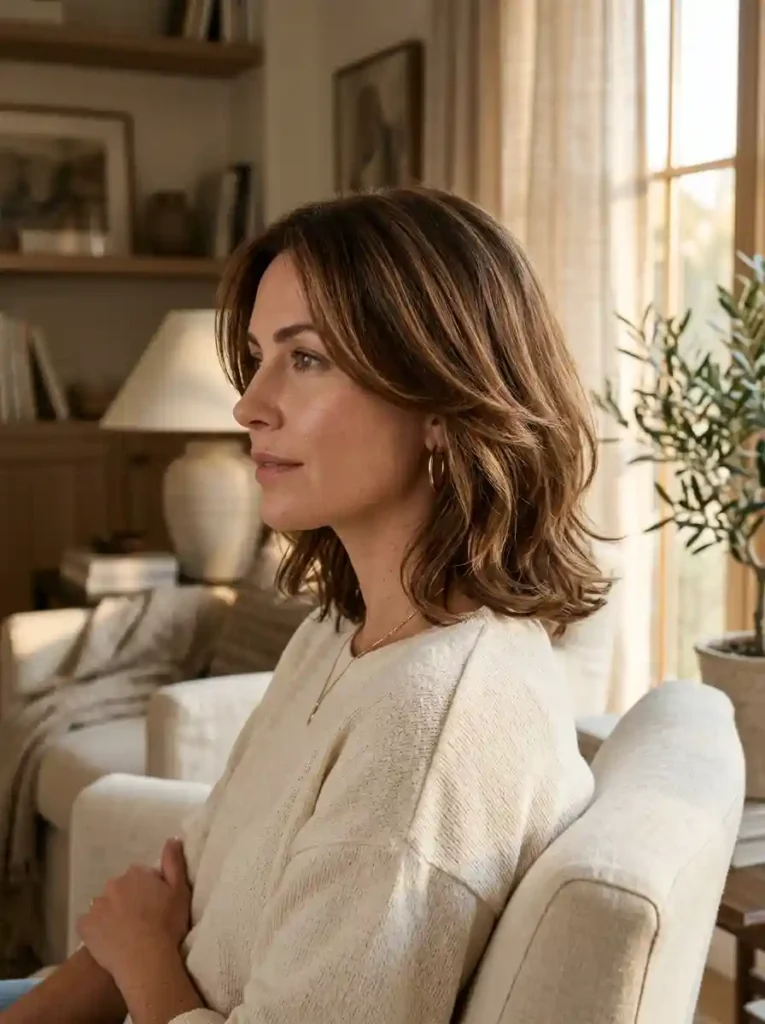
A soft layered bob offers more movement than a traditional blunt cut. Its length can sit between the jaw and shoulders, depending on the desired shape. Gentle layers prevent the ends from appearing heavy while keeping enough length for versatility. This style works well for medium-density hair that needs movement without dramatic changes. A chestnut or caramel-toned color can make the layers easier to see. The overall result feels feminine, relaxed, and polished without appearing overly structured.
Use a round brush to lift the roots and softly turn the ends. A lightweight mousse can provide body without creating stiffness. Avoid heavy oils near the roots because they can reduce the airy effect. Pro Tip: Ask for long, blended layers rather than short choppy pieces if you want easy maintenance. The right layer placement should support your natural movement and reduce the need for daily reshaping.
7. Bob With Wispy Bangs
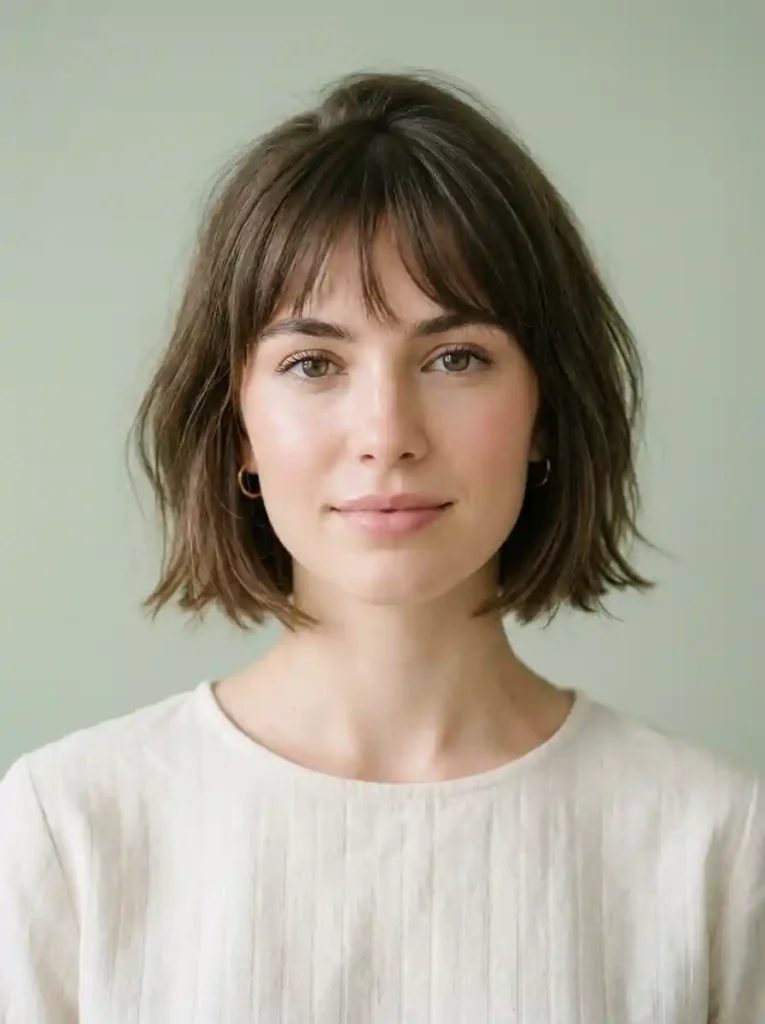
Wispy bangs give a short bob a softer and lighter personality. The delicate fringe allows some forehead to remain visible, which keeps the look from feeling too heavy. The bob itself can sit around the jaw or upper neck. Fine to medium hair often works nicely with this combination because the light fringe does not require excessive density. A cool brown or muted black shade can complement the understated appearance while keeping the haircut visually modern.
Wispy bangs usually need more frequent shaping than the bob itself. Use a small brush while blow-drying them from side to side to prevent a strong part. A tiny amount of styling cream can control flyaways. Common Mistake: Cutting bangs too thick can remove the airy quality that makes this version distinctive. Ask for a light fringe with tapered edges if you want movement and easier grow-out between appointments.
8. Textured Bob With Piecey Ends

A textured bob creates a casual appearance through separated ends and subtle movement. Unlike a blunt bob, this version does not rely on one perfectly solid perimeter. The piecey finish gives straight or slightly wavy hair more visible dimension. It suits people who enjoy relaxed styling and a less formal silhouette. Medium brown hair with understated highlights can make the separated sections more noticeable. The cut feels especially appropriate for casual wardrobes and low-effort everyday beauty routines.
Work a small amount of texturizing paste through dry ends to emphasize individual pieces. Start with very little product because too much can make short hair look greasy. Air-drying can preserve natural movement, while a diffuser adds gentle volume. Expert Insight: Texture should be concentrated toward the ends rather than spread heavily through the entire haircut. Controlled texture keeps the bob looking intentional instead of excessively messy or thin.
9. Inverted Bob With Stacked Back
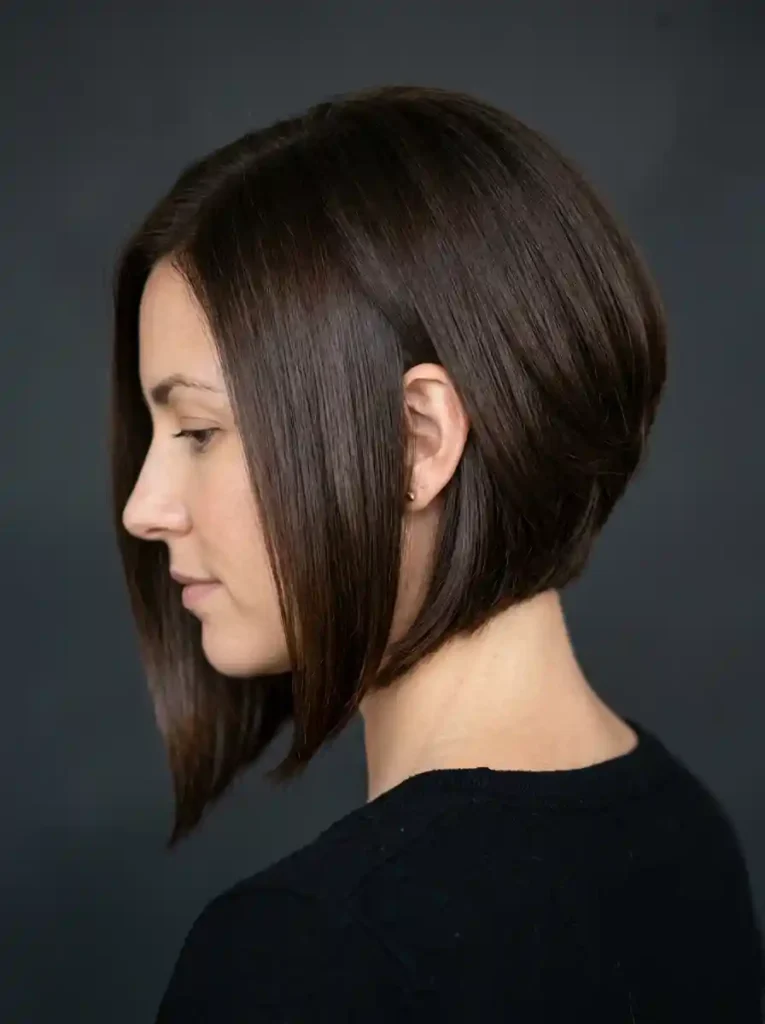
An inverted bob creates a noticeable change in length from the back toward the front. The nape is shorter, while the front sections remain longer around the jaw. Stacked layers at the back can create a rounded shape and add visual fullness. This design works well for people who want a structured haircut with a contemporary edge. Smooth styling makes the graduation easy to see, especially with dark brunette or black hair.
This cut requires thoughtful shaping because the stacked section determines the overall silhouette. Blow-dry the back upward and slightly under to emphasize its rounded structure. Keep the front smoother for contrast. Stylist Tip: Bring a side-view reference when requesting an inverted bob. The difference between subtle graduation and dramatic stacking can be significant. Showing your preferred angle helps your stylist understand exactly how much contrast you want between the nape and front.
10. Shaggy Bob With Curtain Bangs
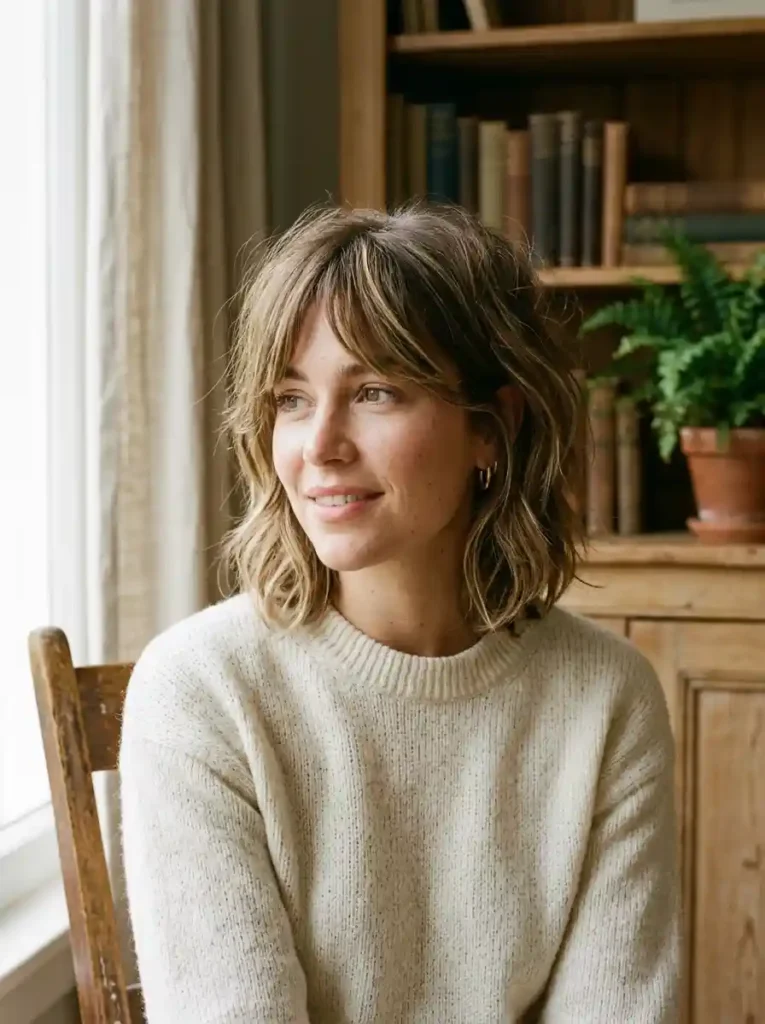
A shaggy bob combines shorter length with deliberately relaxed layers. Curtain bangs open around the center and blend into face-framing sections. This creates movement around the forehead and cheek area without requiring a solid fringe. The style suits naturally wavy hair particularly well, although straight hair can be textured during styling. Soft dark blonde or light brown color can highlight the layers. It is a strong choice for anyone who wants a playful haircut with noticeable movement.
Apply mousse to damp roots and lengths before scrunching the hair. Let it dry naturally when possible to preserve a soft, uneven texture. Curtain bangs can be shaped with a medium round brush for extra lift. Pro Tip: Keep the shortest layers controlled if your hair is thick. Excessive layering can create unwanted bulk around the sides. Strategic shaping gives the shaggy effect while keeping the silhouette balanced.
11. Sleek Ear-Length Bob
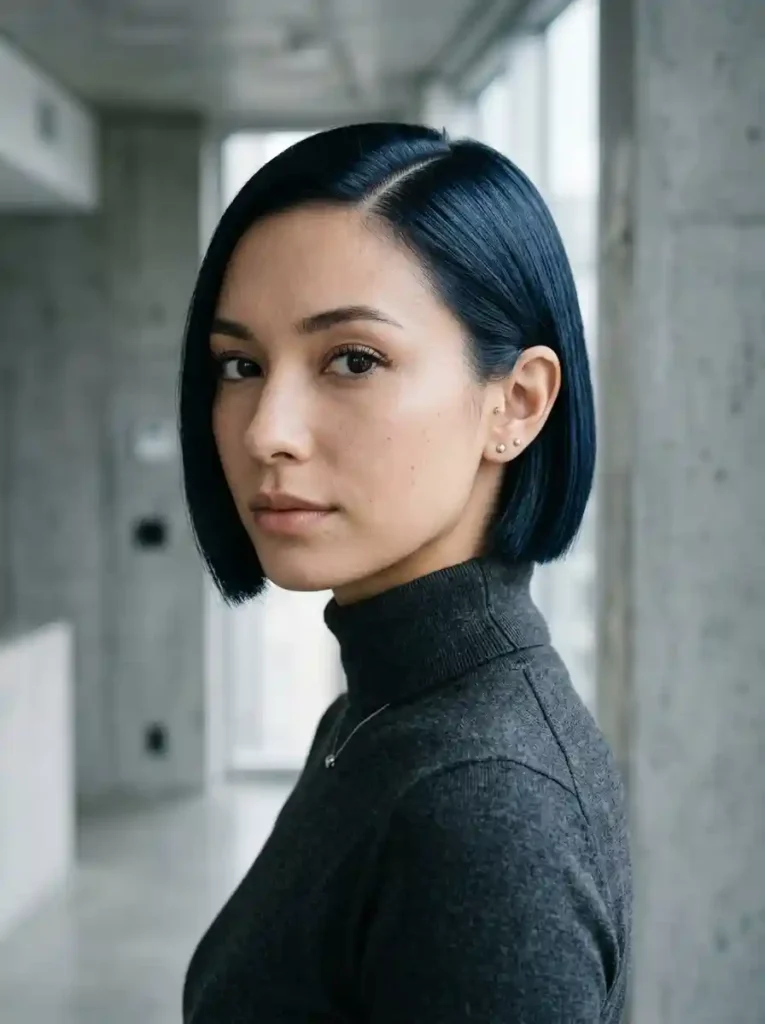
An ear-length bob makes a stronger statement than longer chin-length versions. The compact cut exposes more of the neck and creates a clean frame around the face. Sleek styling emphasizes the precision of the perimeter. This version can suit people who enjoy minimalist haircuts and are comfortable with a shorter commitment. Deep brunette or blue-black color can make the shape look particularly graphic. The style feels modern, polished, and distinctly intentional.
Use a smoothing balm before blow-drying to keep short sections controlled. A narrow flat iron can refine stubborn bends around the ears and nape. Because the cut is compact, uneven growth becomes noticeable quickly. Maintenance Tip: Discuss your preferred grow-out shape before cutting. A well-designed ear-length bob can transition into a chin-length bob gracefully, which makes future appointments more flexible.
12. Rounded Bob With Full Ends
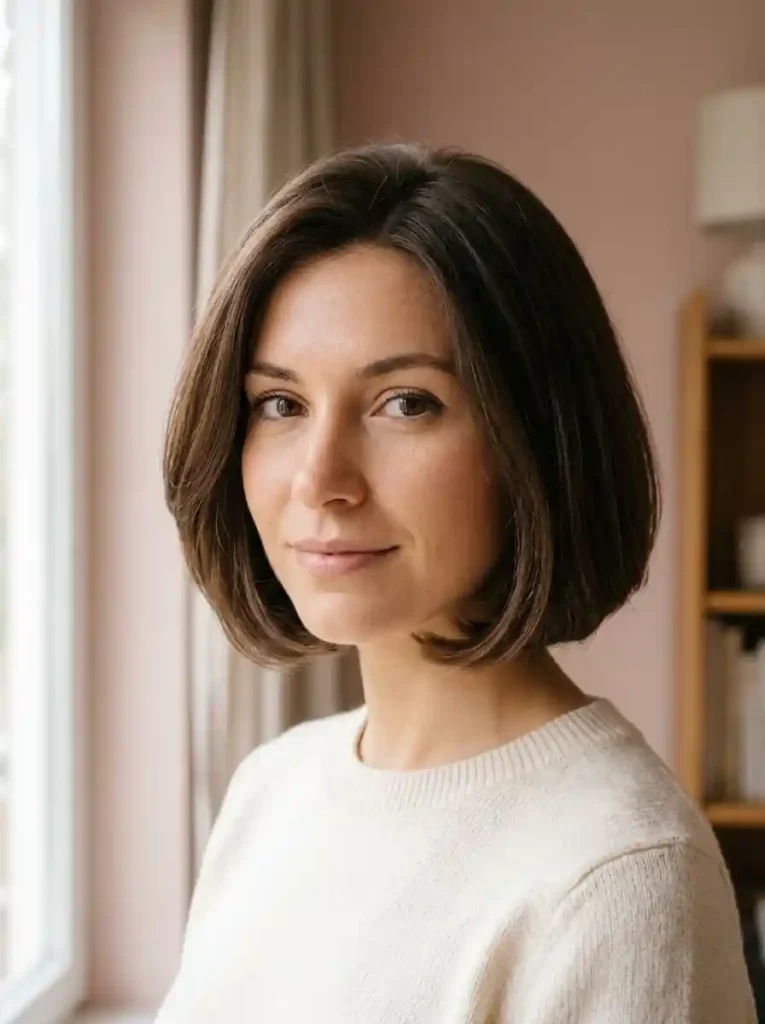
A rounded bob creates a soft silhouette through curved ends and balanced volume. The shape follows the jaw while gently turning inward near the perimeter. Full ends keep the haircut from looking overly thin or fragmented. This makes it useful for people who prefer a smooth, substantial appearance. Straight and mildly wavy hair can both support the design. Warm espresso or chocolate shades complement the rounded shape and give the finish a rich visual depth.
Blow-dry the hair with a medium round brush, directing the ends inward as you work. Avoid excessive root teasing because the shape already provides structure. A lightweight finishing spray can maintain the curve without stiffness. Expert Insight: The widest point of the bob should be considered carefully. Placing too much volume directly beside the cheeks may change the balance of the haircut, so discuss where you want the fullness to sit.
13. Side-Parted Bob With Deep Sweep
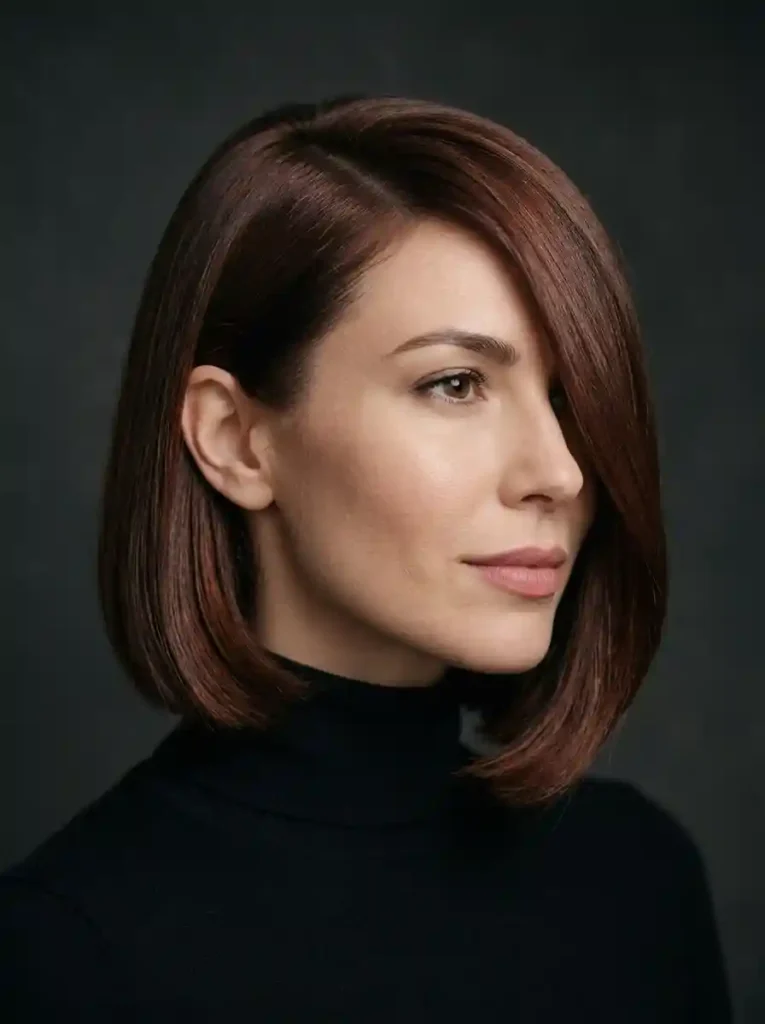
A deep side part changes the character of a short bob without requiring a different haircut. The sweeping front section creates asymmetry and gives the style a more dramatic appearance. Smooth texture helps the diagonal line remain visible. Rich mahogany, dark brown, or black hair can enhance the polished effect. This option suits people who enjoy switching between understated and more striking looks. It also provides a useful alternative for anyone who does not enjoy center parts.
Create the part while the hair is damp so it dries in the desired direction. Use a paddle brush for smoothness and a small amount of styling cream through the longer front section. Hair clips can hold the sweep while it cools after blow-drying. Stylist Tip: Keep enough length in the front to create the diagonal movement. Cutting that section too short can make the side sweep difficult to maintain.
14. Short Bob With Micro Bangs
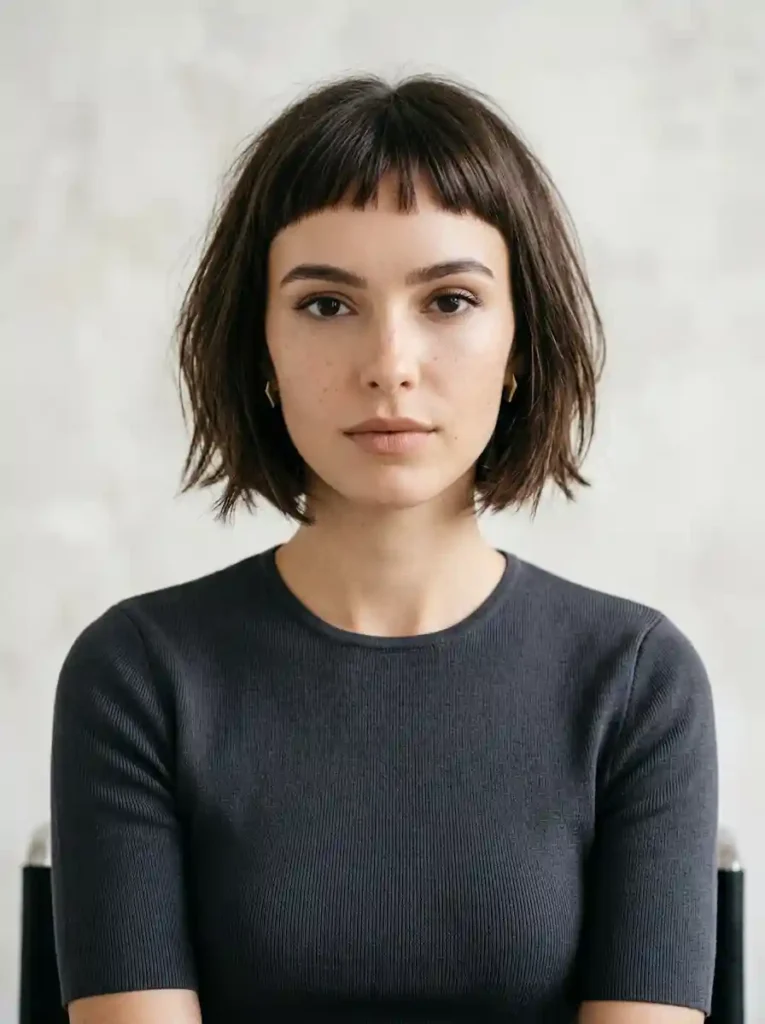
Micro bangs give a short bob a bold and artistic identity. The fringe sits noticeably above the eyebrows, exposing more of the forehead than traditional bangs. Keeping the bob itself relatively simple prevents the look from becoming visually crowded. Straight hair makes the geometric relationship between fringe and perimeter especially clear. This option appeals to readers who enjoy distinctive styling and do not mind more frequent bang maintenance.
Micro bangs usually need regular trimming because small amounts of growth change their appearance quickly. Blow-dry them downward with a small brush, then leave the ends natural or lightly smooth them. Common Mistake: Cutting micro bangs without considering natural growth patterns can create unwanted gaps or unevenness. Ask your stylist to assess your hairline and cowlicks first. This small step can make the fringe much easier to control.
15. Tousled Bob With Natural Texture
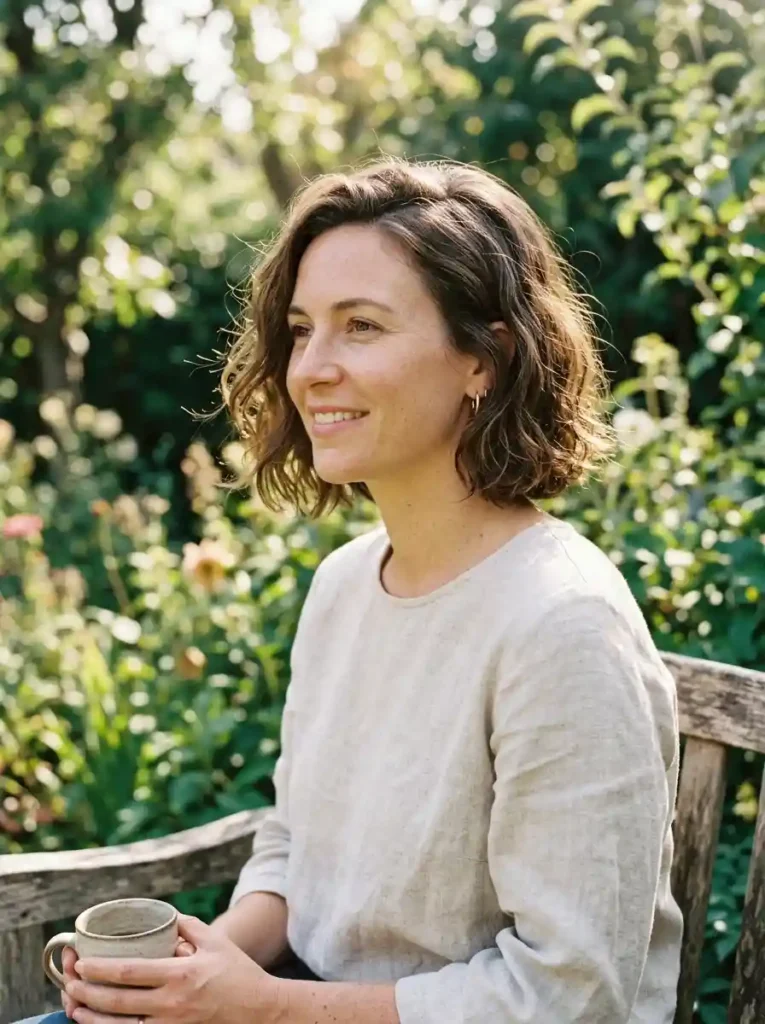
A naturally tousled bob celebrates movement instead of trying to eliminate every imperfect strand. The shape sits around the jaw and upper neck, while natural waves create an airy outline. This approach can be especially appealing for people who prefer low-effort styling. Medium brown shades with natural variation make the texture feel even more dimensional. The result looks relaxed without appearing unfinished, making it suitable for casual days, travel, and simple everyday routines.
Start with damp hair and apply a lightweight leave-in conditioner. Add a small amount of curl cream if your hair needs help forming waves. Scrunch gently, then allow the hair to dry without repeatedly touching it. Pro Tip: Do not over-layer naturally fine wavy hair. Removing too much weight can increase frizz and reduce the shape. A strong perimeter with selective internal shaping often provides better control.
16. Bob With Subtle Balayage
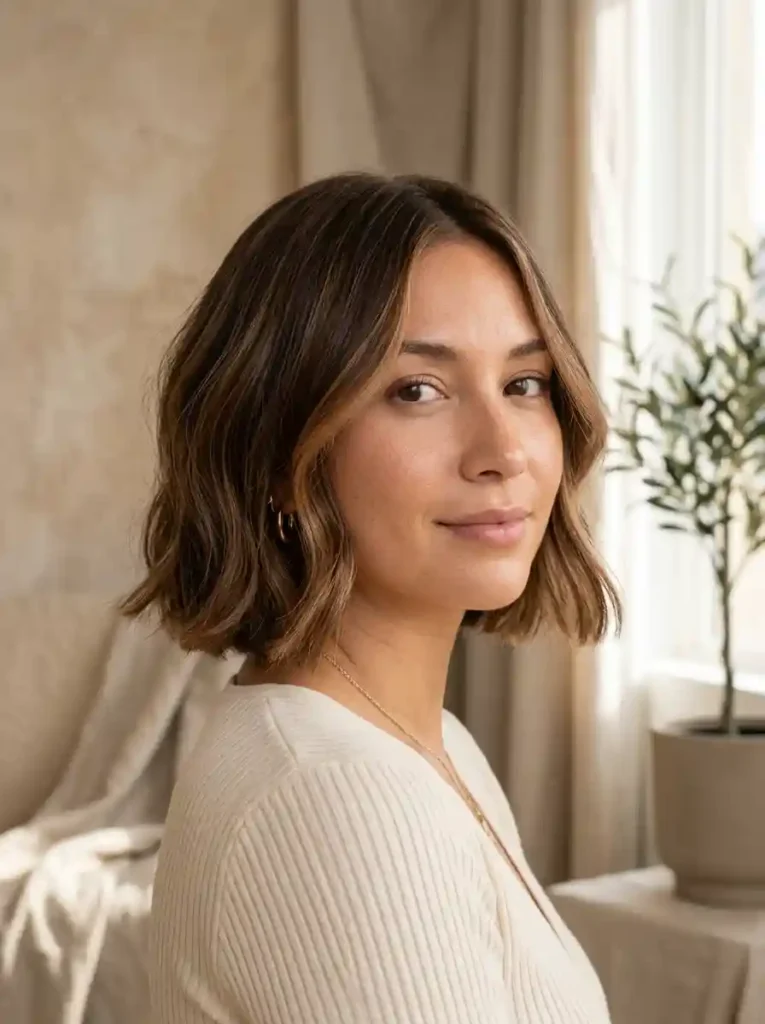
Subtle balayage can give a simple bob extra visual dimension. The haircut remains relatively clean, while lighter pieces create gentle contrast through the front and ends. This approach works well for readers who want noticeable color without an all-over transformation. Caramel, honey, or beige tones can be adapted to different brunette bases. The result is particularly attractive when the bob has slight movement because the lighter pieces become visible as the hair shifts.
Color placement matters more on shorter hair because there is less length for transitions. Ask your colorist to keep the lightest pieces controlled around the face and ends. Use a color-safe shampoo and avoid excessive heat when possible. Expert Insight: A few strategically placed lighter sections can create more dimension than many small highlights. On a short bob, intentional placement usually looks cleaner and more sophisticated.
17. Rounded Curly Bob With Side Volume
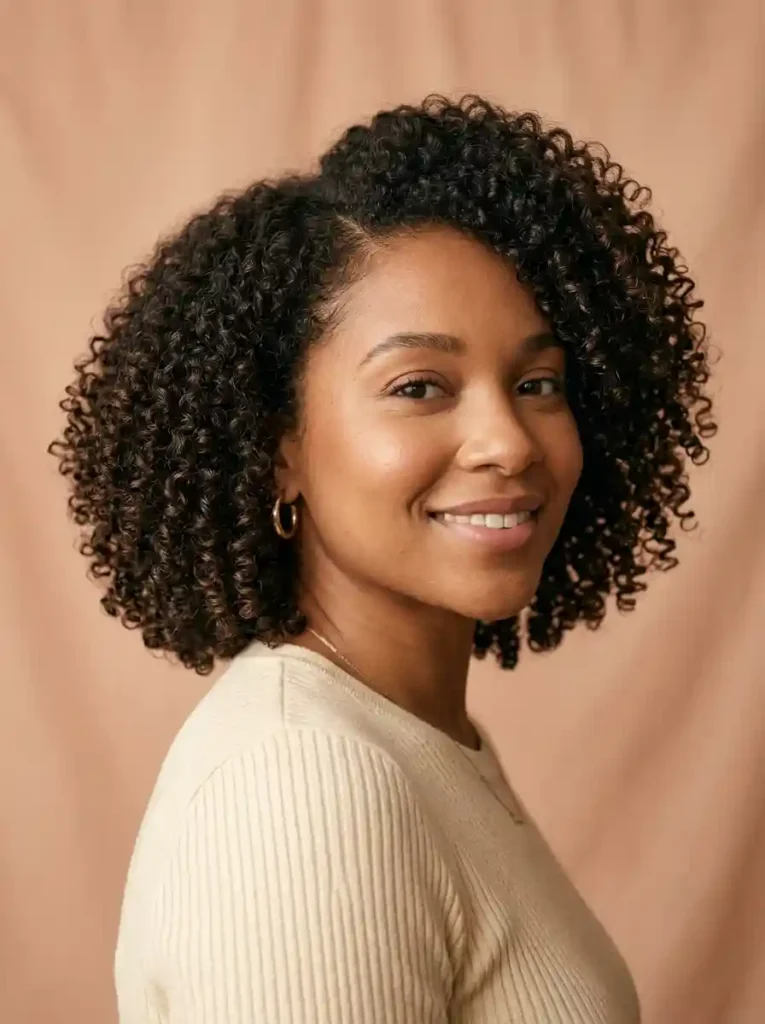
A rounded curly bob gives natural curls a clear, intentional silhouette. The sides carry gentle volume, while the perimeter keeps the haircut compact. A side part can shift the volume slightly and create an asymmetrical finish without changing the actual cut. This style can work well for medium to dense curls when shaped carefully. Natural dark brown, black, or deep auburn hair lets the curl pattern become the main visual feature.
Moisture and definition are important for maintaining the rounded shape. Apply leave-in conditioner first, followed by a curl-defining gel. Diffuse with the head positioned according to the volume you want. Stylist Tip: Curly bobs should be shaped with shrinkage in mind. Ask your stylist how much the curls contract when dry, then agree on the desired finished length rather than relying on wet measurements alone.
18. Bob With Long Curtain Fringe
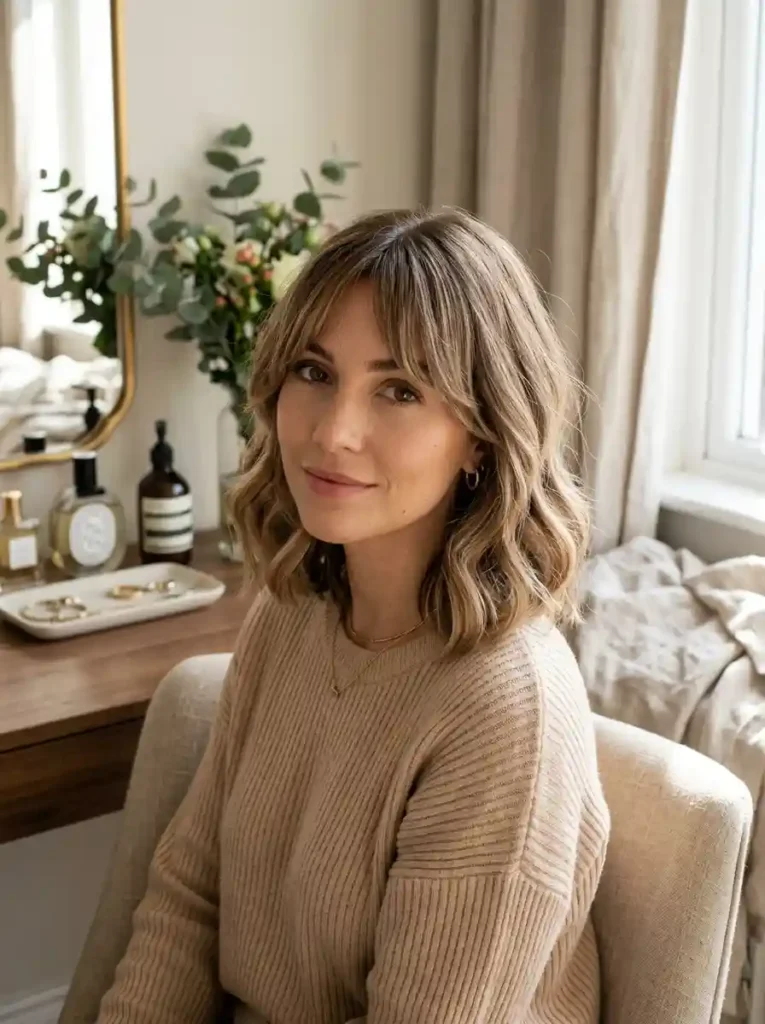
A longer curtain fringe offers face framing without the commitment of short bangs. The fringe begins near the center and gradually blends into the bob’s front sections. Loose waves help the transition look seamless and soft. This version works well for readers who want a bob but still enjoy movement around the face. Dark blonde, beige brown, and light brunette shades can complement the relaxed shape without making the style feel too dramatic.
Style the fringe with a medium round brush, directing each side away from the center. Finish with light hairspray only if the pieces lose their shape quickly. The longer fringe can also be tucked behind the ears when needed. Pro Tip: Ask for a gradual transition from fringe into the bob. A harsh stopping point can make the front look disconnected instead of naturally blended.
19. Asymmetrical Bob With One Longer Side
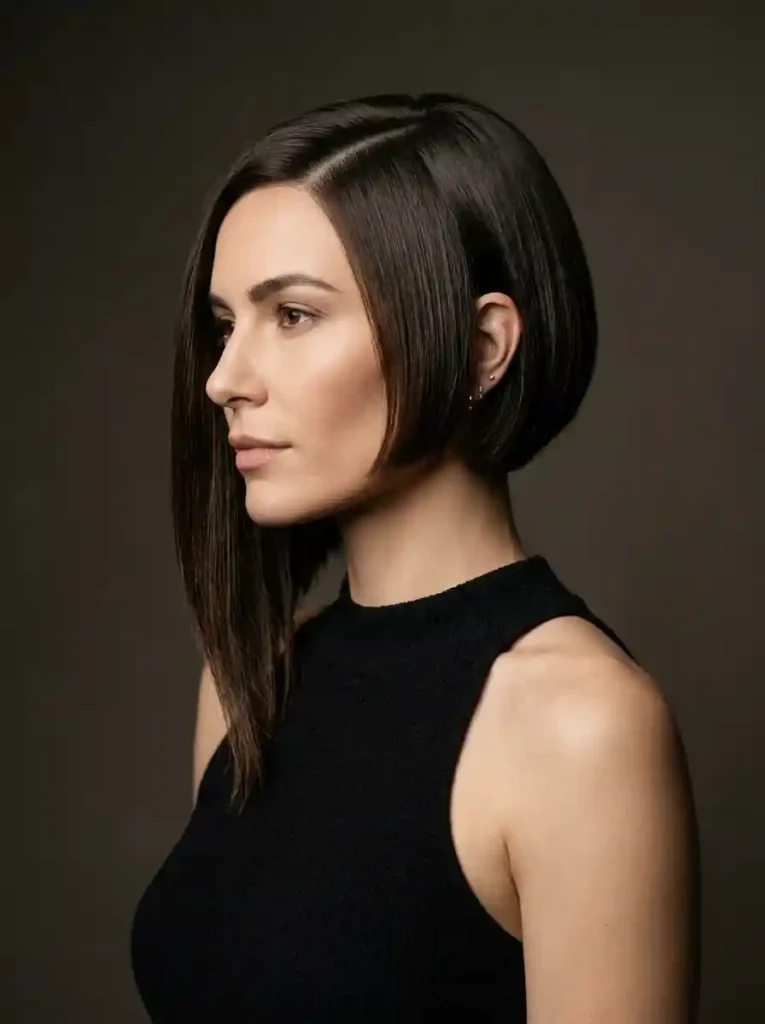
An asymmetrical bob creates contrast through intentionally different side lengths. One side can remain near the cheek or jaw, while the opposite section extends toward the neck or collarbone. This gives a classic bob a stronger fashion element. Straight hair makes the length difference particularly visible. A deep brunette or black shade can emphasize the graphic shape. This choice suits people who want a recognizable haircut with more personality than a symmetrical design.
The asymmetry needs precise sectioning and regular maintenance to remain clear. Smooth the longer side with a flat brush, then tuck the shorter side behind the ear if desired. Avoid excessive layering because it can weaken the visual contrast. Stylist Tip: Decide how dramatic you want the difference before cutting. A small length variation feels subtle, while a larger difference creates a much stronger editorial effect.
20. Soft Bob With Flipped Ends
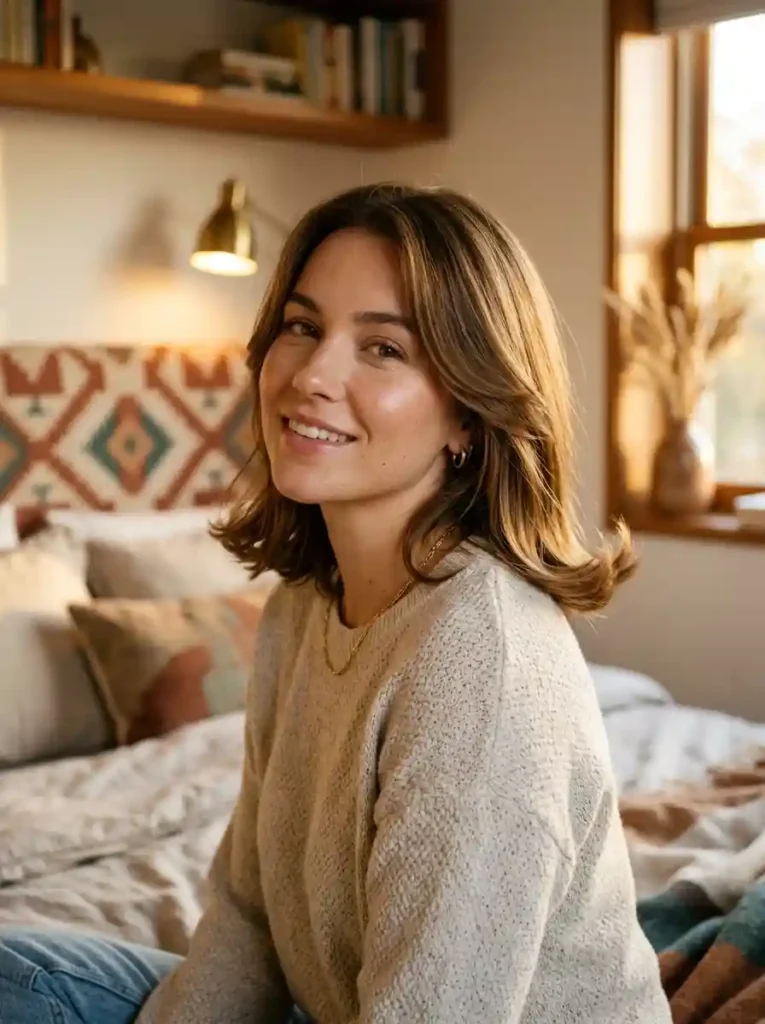
Flipped ends give a short bob a playful retro influence without making the haircut look costume-like. The bob can sit around the jaw or upper neck, while the ends turn gently outward. Smooth hair makes the shape easy to see, although slight waves can create a softer version. Warm brown, honey, or copper shades pair nicely with the nostalgic styling. This is a fun choice for readers who want something polished with a little extra personality.
Use a round brush to direct the ends outward while blow-drying. A medium flat iron can also create the flip, but keep the bend soft rather than sharply creased. Finish with flexible hairspray so the ends retain movement. Expert Insight: The direction of the flip can change the entire mood. Keep both sides consistent for a polished finish, or vary them slightly for a more relaxed, modern interpretation.
Frequently Asked Questions
What short bob is easiest to maintain?
A simple blunt bob with minimal layers is usually easier to maintain. Its shape is straightforward and requires fewer styling adjustments.
Is a short bob good for fine hair?
A blunt or softly rounded bob can work well for fine hair. Keeping the ends fuller may help the haircut appear denser.
Can a bob work with naturally curly hair?
Yes. Curly hair can look excellent in a bob when the cut accounts for curl pattern and shrinkage. Curl-aware shaping is especially important.
How often should a short bob be trimmed?
Many short bobs benefit from regular trims to preserve their intended shape. The ideal timing depends on how quickly your hair grows and how precise the cut is.
Can I style a short bob without heat?
Yes. Many bobs can air-dry successfully with curl cream, mousse, or lightweight styling products. Natural texture often adds useful movement.
Which bob works well for a low-maintenance routine?
A slightly longer bob with soft layers or natural texture can be easier to manage. It provides more flexibility during grow-out and air-drying.
Conclusion
The best short bob is not always the most dramatic one. Your hair texture, density, daily routine, and preferred styling effort should guide the decision. Blunt shapes offer structure, layers add movement, curls bring natural character, and bangs can completely change the mood. These 20 cute short bob hairstyles provide plenty of inspiration without forcing you into one formula. Save your favorite look before your next salon visit, and bring a clear reference to help your stylist customize the shape.


