
Sometimes your hair feels too long for easy styling, yet too short for dramatic changes. Medium length hair solves that frustrating middle ground with plenty of room for creativity. These 25 chic medium length hairstyles offer fresh ways to change your look without sacrificing versatility. You will find polished cuts, relaxed textures, flattering fringe, and easy styling ideas. Each option includes practical details to help you explain your favorite look clearly at your next salon visit.
1. Soft Collarbone Layers
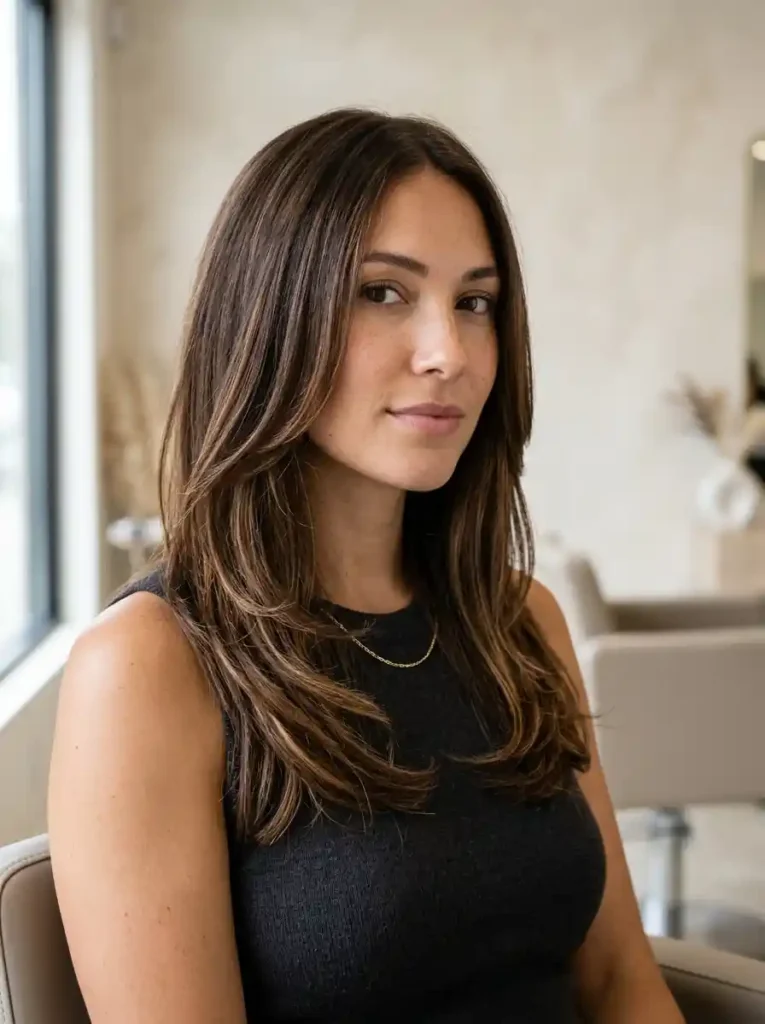
This collarbone cut creates movement without making the haircut feel heavily layered. Long layers soften the silhouette while preserving useful length. The ends sit around the collarbone, giving the style a balanced, feminine shape. It suits straight, slightly wavy, and medium-density hair especially well. The subtle layering also helps prevent longer hair from appearing flat. Choose this option if you want noticeable movement while keeping enough length for ponytails, clips, and simple everyday hairstyles.
Ask your stylist to keep the shortest layers below your cheekbones. That placement creates movement without creating a disconnected appearance. Blow-dry the roots upward, then direct the ends slightly inward or outward with a round brush. A lightweight styling cream can control flyaways without flattening the layers. Stylist Tip: Ask for invisible or softly blended layers if you want movement that remains polished rather than obviously choppy.
2. Sleek Blunt Lob
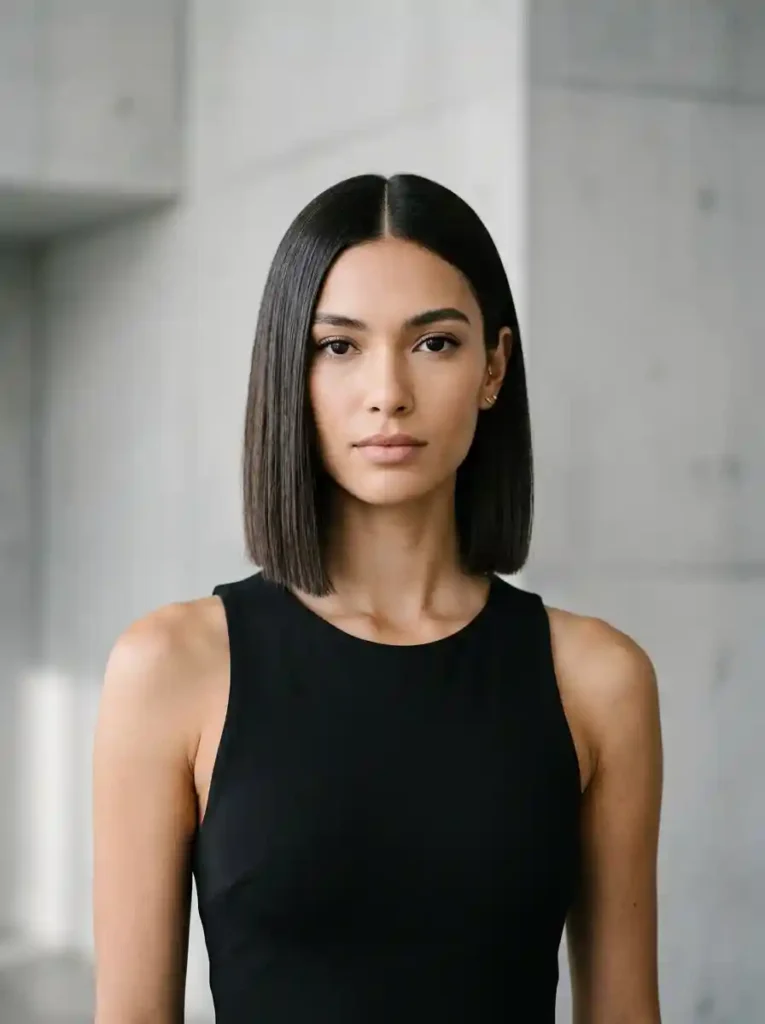
A blunt lob offers a clean shape with a distinctly modern finish. The ends form one strong line, which can make fine or medium-density hair appear visually fuller. Straight hair showcases the precise perimeter particularly well, while slightly wavy hair creates a softer interpretation. The length usually falls near the shoulders or slightly above them. This style suits readers who prefer polished hairstyles and want a cut that looks intentional even with minimal decoration.
Keep the ends trimmed regularly so the blunt shape stays crisp. Use a smoothing product before blow-drying, then finish with a flat iron if your hair needs extra polish. Avoid heavy oils near the roots because they can reduce the sleek effect. Pro Tip: Fine hair often benefits from a blunt perimeter because removing fewer ends preserves visual density. A center part gives this cut its cleanest, most graphic appearance.
3. Airy Curtain Bangs
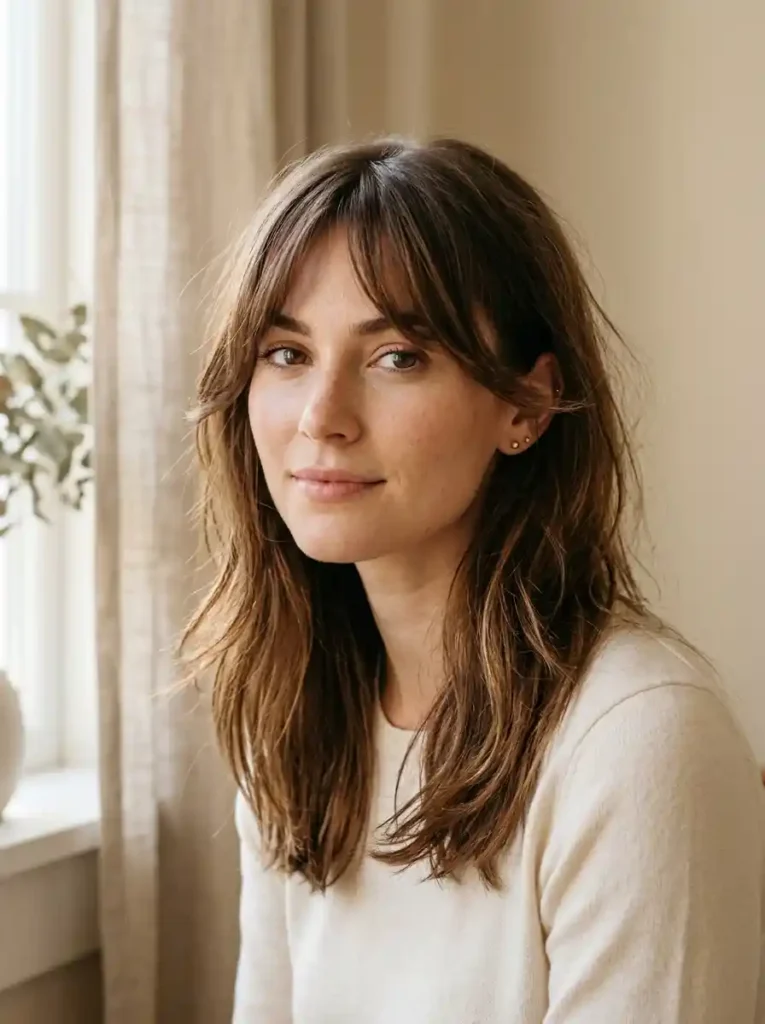
Curtain bangs bring softness to medium length hair without requiring a full fringe. They open near the center and gradually blend into the surrounding layers. This creates a gentle frame around the forehead and sides of the face. The style works beautifully with straight, wavy, or lightly textured hair. It also offers flexibility because the bangs can be swept aside when desired. Choose this look if you want a noticeable update without dramatically reducing your overall hair length.
Style the fringe with a small round brush while directing each side away from your face. Let the roots cool before releasing them so the shape holds naturally. Use a lightweight spray rather than a stiff product. Common Mistake: Cutting curtain bangs too short can make them harder to blend. Ask your stylist to leave enough length for a soft transition into your face-framing layers and to account for your natural hair movement.
4. Textured Shoulder Shag
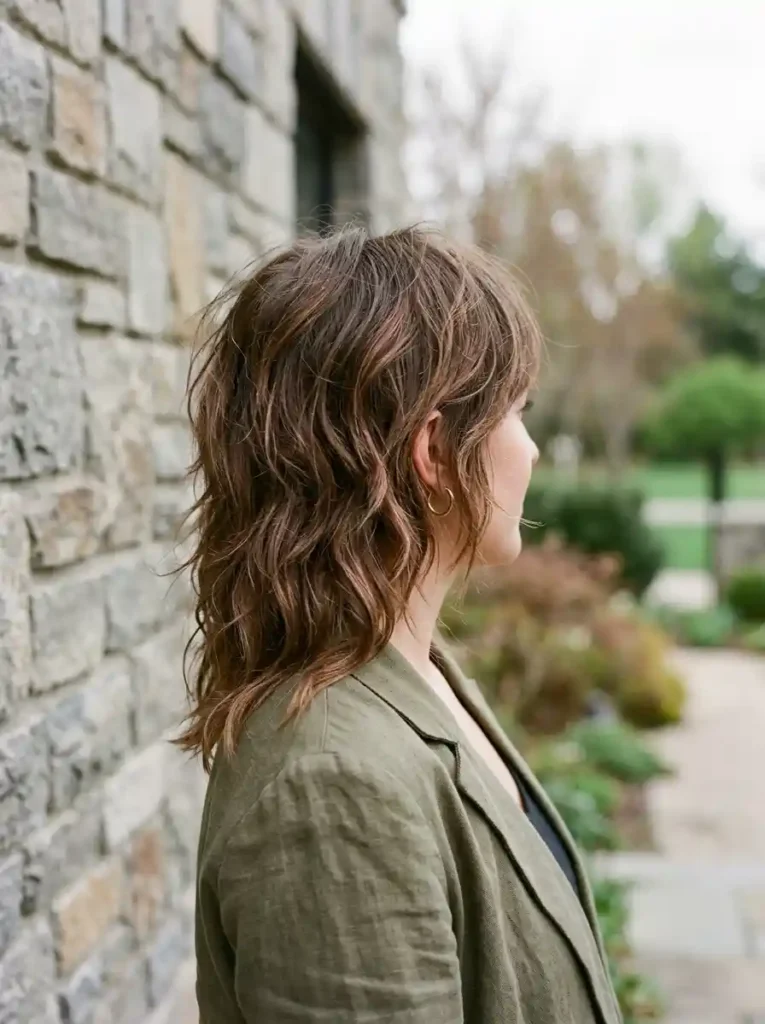
A shoulder-length shag adds personality through visible texture and varied layers. The crown carries gentle lift, while the ends become lighter and more separated. This creates an intentionally relaxed shape rather than a perfectly smooth silhouette. Naturally wavy hair can make the texture especially effortless, although straight hair can support the style with simple styling products. It is a strong choice for anyone who wants a medium haircut with movement, individuality, and a slightly rebellious finish.
Ask for controlled layering rather than excessive thinning if your hair already has a fine texture. Apply mousse to damp hair, then scrunch sections while air-drying or use a diffuser. Once dry, separate a few ends with a lightweight texture cream. Stylist Tip: Shag layers should follow your natural density. Removing too much weight can make thick hair feel manageable, but it may make fine hair appear sparse at the ends.
5. Soft Wavy Lob
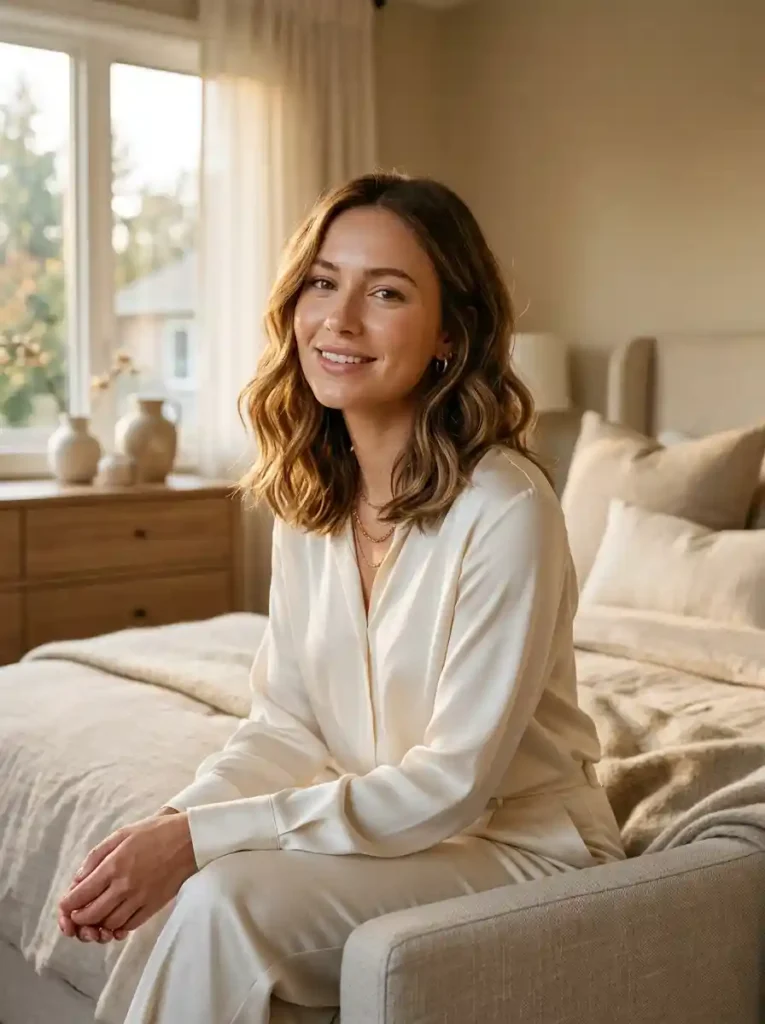
Loose waves give a medium length lob a relaxed and romantic personality. The waves begin around the mid-lengths rather than sitting heavily at the roots. This keeps the shape airy and wearable. Warm brunette tones can emphasize the bends by creating subtle dimension across the surface. The style works especially well for naturally wavy hair, but straight hair can recreate the effect with heat styling. It suits casual days, dinners, events, and polished everyday outfits.
Apply a heat protectant before using a curling wand or iron. Alternate the direction of each wave so the finished texture does not look overly uniform. Leave the final inch slightly straighter for a modern result. Pro Tip: Let curls cool completely before loosening them. This helps waves last longer without requiring excessive hairspray. For naturally wavy hair, scrunching mousse into damp sections may create enough texture without using heat.
6. Face-Framing Feathered Cut
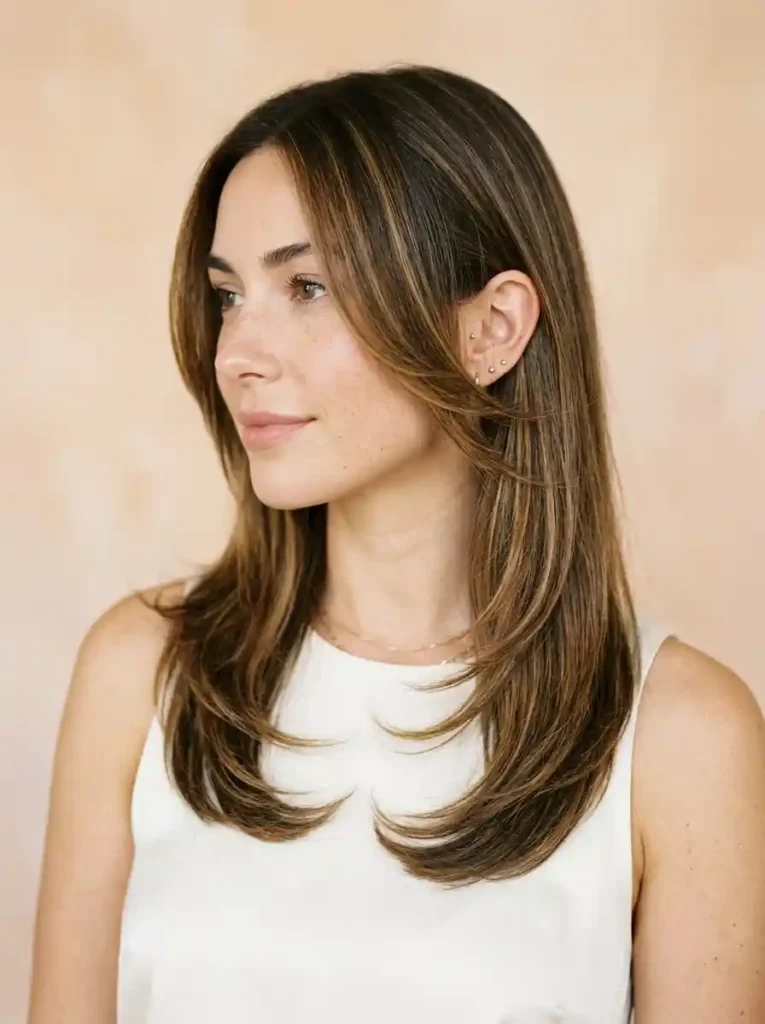
Feathered face-framing layers add movement around the front while keeping the back relatively simple. The shortest pieces can begin near the jaw or cheek area, depending on the desired effect. Longer sections then flow toward the shoulders, creating a gradual shape. This cut works across several textures and can be adjusted for different densities. It is particularly appealing when you want your haircut to have visible detail from the front without committing to heavy layering throughout.
Discuss exactly where you want the face-framing pieces to begin. Your natural part and hair density can affect how those pieces fall. Use a round brush to direct the front sections away from the face for a soft feathered finish. Stylist Tip: Bring a reference image showing the desired starting point, because “face framing” can mean very different lengths. Keep the transition gradual if you prefer a refined rather than dramatic result.
7. Italian-Inspired Full Lob
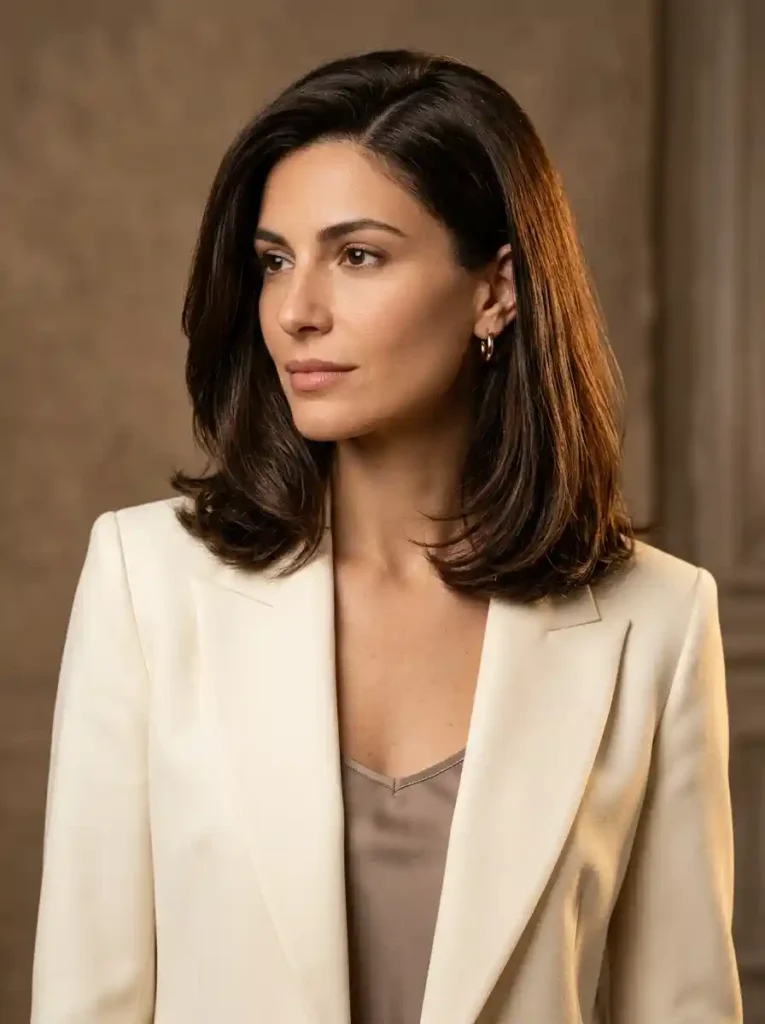
This fuller lob focuses on body, shape, and luxurious movement rather than wispy ends. The hair reaches the collarbone and maintains substantial weight through the perimeter. Subtle internal layering creates volume without making the haircut look thin. A deep side part can add extra height and drama. This medium length hairstyle suits people who enjoy a polished, glamorous appearance and want their hair to feel substantial rather than heavily feathered.
Use a volumizing mousse at the roots before blow-drying. A large round brush can build smooth fullness while keeping the ends controlled. Avoid over-layering if density is your main priority. Common Mistake: Removing too much weight from the lower sections can defeat this haircut’s signature fullness. Ask your stylist to preserve density through the perimeter and use internal shaping only where movement is needed.
8. Wispy Bangs With Soft Ends
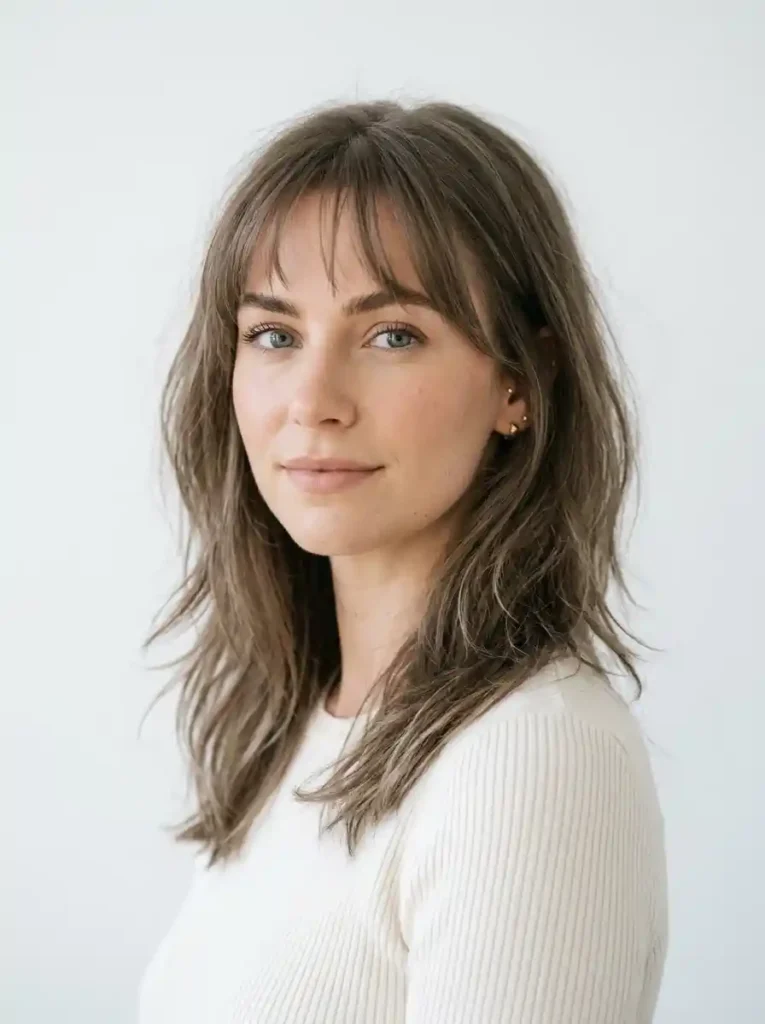
Wispy bangs create a lighter alternative to a dense straight fringe. The individual sections remain separated, allowing some forehead to show through. Paired with medium-length hair, they create a delicate and youthful-looking frame without dominating the haircut. Soft ends complement the fringe by keeping the overall shape light. This option may suit people who enjoy fringe but want an easier transition when growing it longer.
Wispy bangs need regular shaping because small length changes can alter their appearance quickly. Dry them immediately after washing so the roots do not settle in an unwanted direction. Use a small brush and minimal product. Pro Tip: If you are nervous about committing to bangs, ask for a slightly longer, sparse version first. It can be swept aside more easily while you decide whether a fuller fringe suits your routine.
9. Rounded Medium Bob
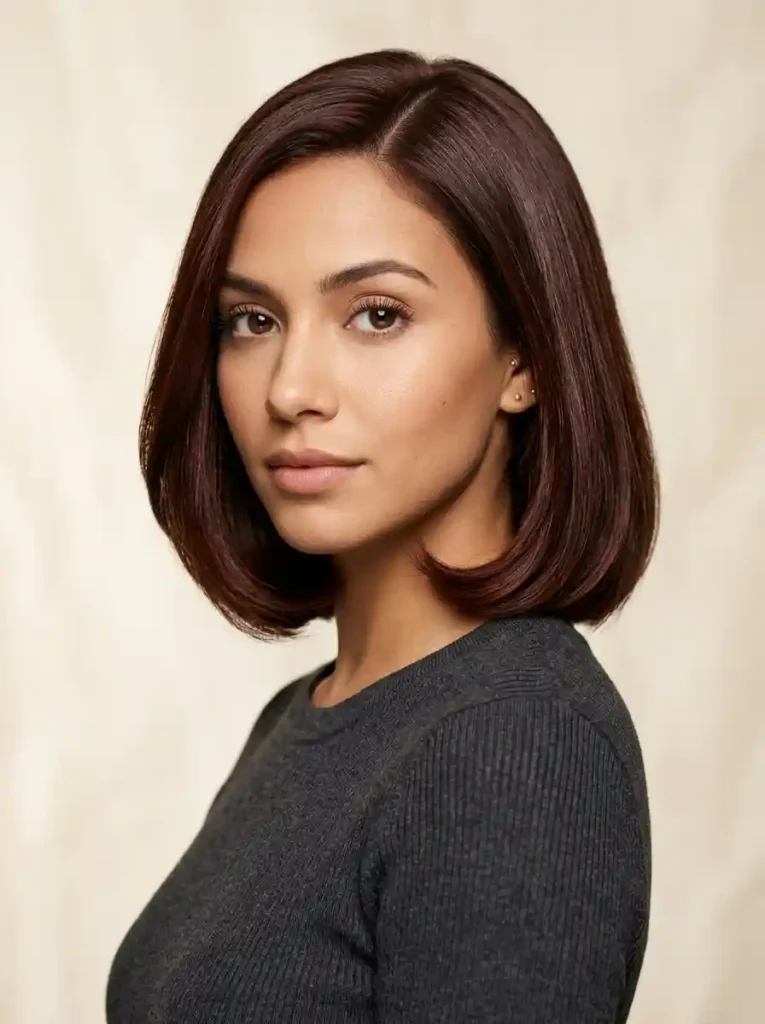
A rounded medium bob creates a softly structured silhouette without looking severe. The shape curves gently toward the face and usually carries slightly more fullness through the back. This gives the haircut a tidy appearance while preserving enough length for simple styling. Straight and slightly wavy textures can both support the shape. Choose it when you want a classic haircut with visible structure, manageable length, and a polished finish that works beyond formal occasions.
Ask your stylist how much graduation is needed for your natural density. Too much graduation can create an overly stacked appearance, while too little may not support the rounded silhouette. Blow-dry with a medium round brush, following the curve of the haircut. Stylist Tip: The shape should follow your natural hairline and density. A customized perimeter usually looks more natural than copying the exact angle from another person’s haircut.
10. Curly Collarbone Layers
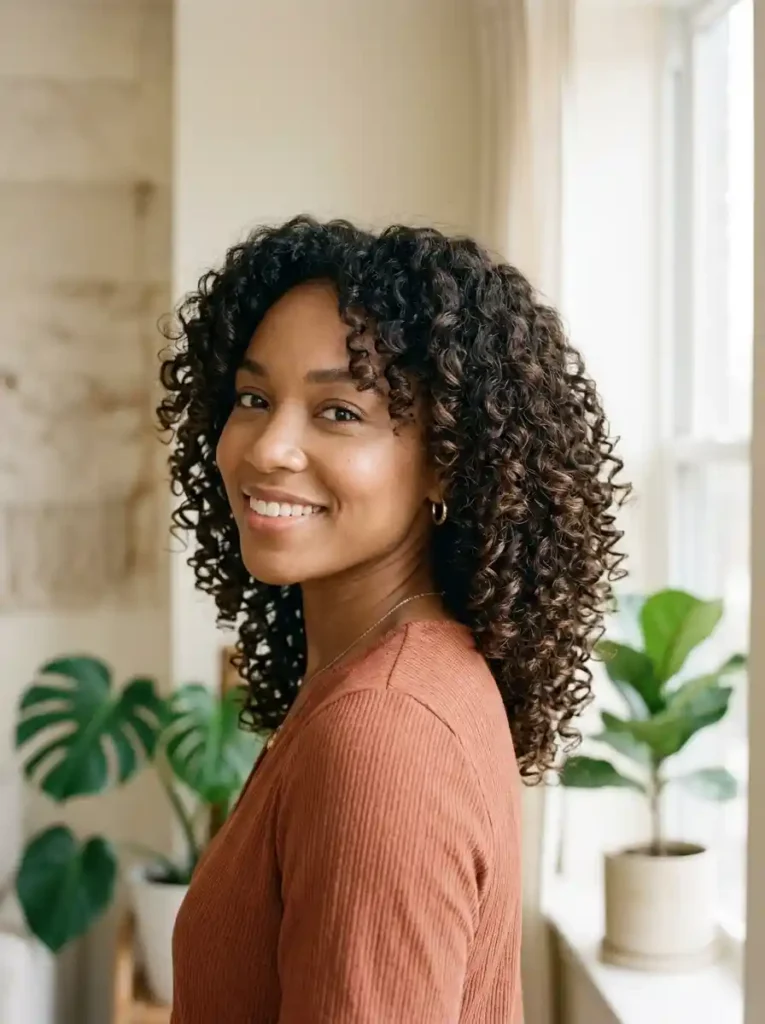
Curly hair gains shape when its layers respect the natural curl pattern. A collarbone-length cut gives curls enough room to form while avoiding excessive weight at the ends. Rounded layering can create balanced volume around the head and help curls move independently. This option works for people who want definition without sacrificing medium-length versatility. The final shape should always account for shrinkage, because curly hair can appear considerably shorter once fully dry.
Ask your stylist to consider your curls in their natural state before deciding the final length. Apply leave-in conditioner and curl cream to soaking-wet hair, then scrunch gently. Allow curls to dry fully before separating them. Expert Insight: Curly hair should be cut with shrinkage in mind. A length that looks perfect when stretched may become much shorter once the curls return to their natural pattern.
11. Long Layers With Side Sweep
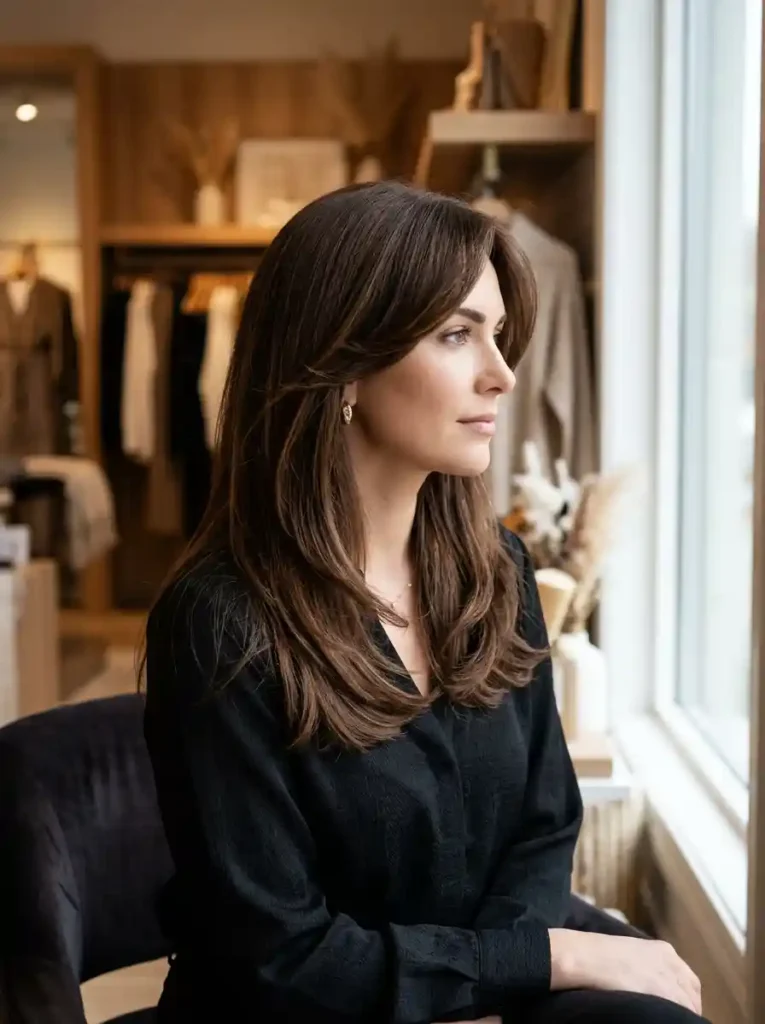
Long layers paired with a side sweep create movement without making the haircut look highly textured. The front section carries most of the visual interest, while the longer layers maintain a smooth silhouette through the back. This style feels polished enough for professional settings but can also become relaxed with loose waves. It suits medium-density hair particularly well when the goal is movement rather than dramatic volume.
Create the side sweep while the hair is damp so the part has time to settle naturally. Blow-dry the front section away from your face using a round brush. Add a small amount of flexible hairspray after styling. Common Mistake: Using too much root product can make the side sweep stiff. The front should move naturally when you turn your head, especially if you want an elegant rather than formal finish.
12. Modern French Bob
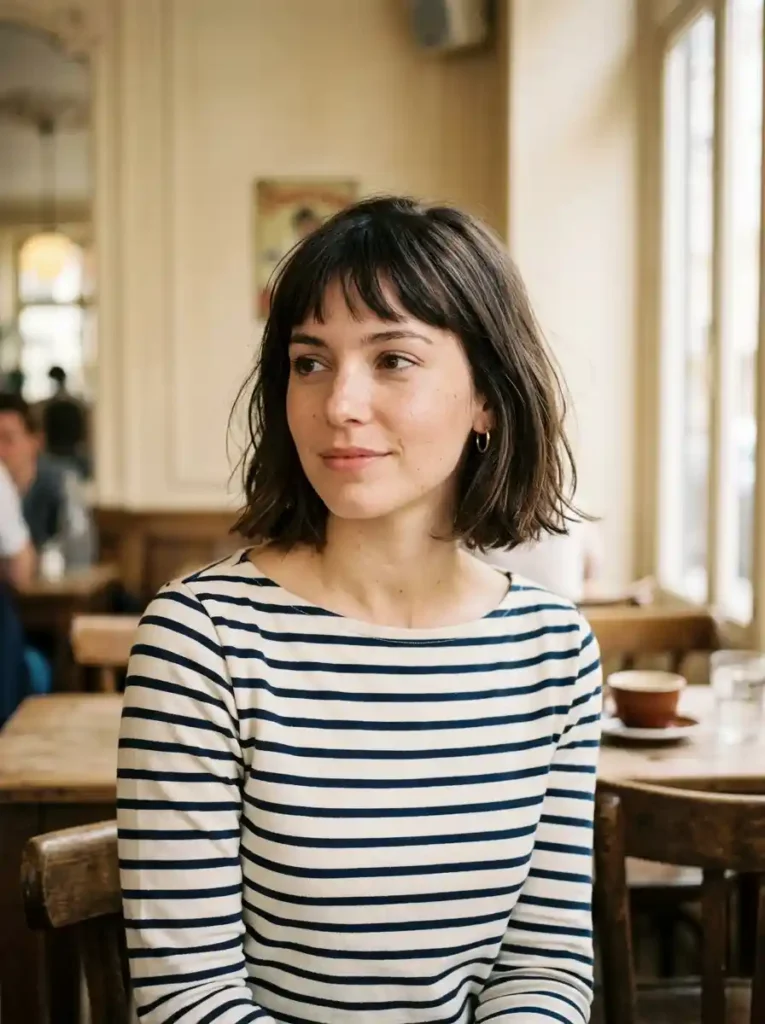
A modern French bob combines a defined shape with relaxed texture. The ends sit near the jaw or upper shoulders, while a soft fringe can add character across the forehead. Slight bends keep the cut from looking overly precise. This style works well for straight and lightly wavy hair. It appeals to anyone who wants a distinctive medium cut that feels artistic, effortless, and polished without looking overly styled.
Use a small amount of styling cream on damp hair, then let the texture develop naturally. If your hair is straight, create a few loose bends with a flat iron instead of tight curls. Stylist Tip: The fringe should reflect your natural growth pattern. If your hair has a strong cowlick, a slightly longer or softer fringe can be easier to control while preserving the overall look.
13. Choppy Ends With Subtle Layers
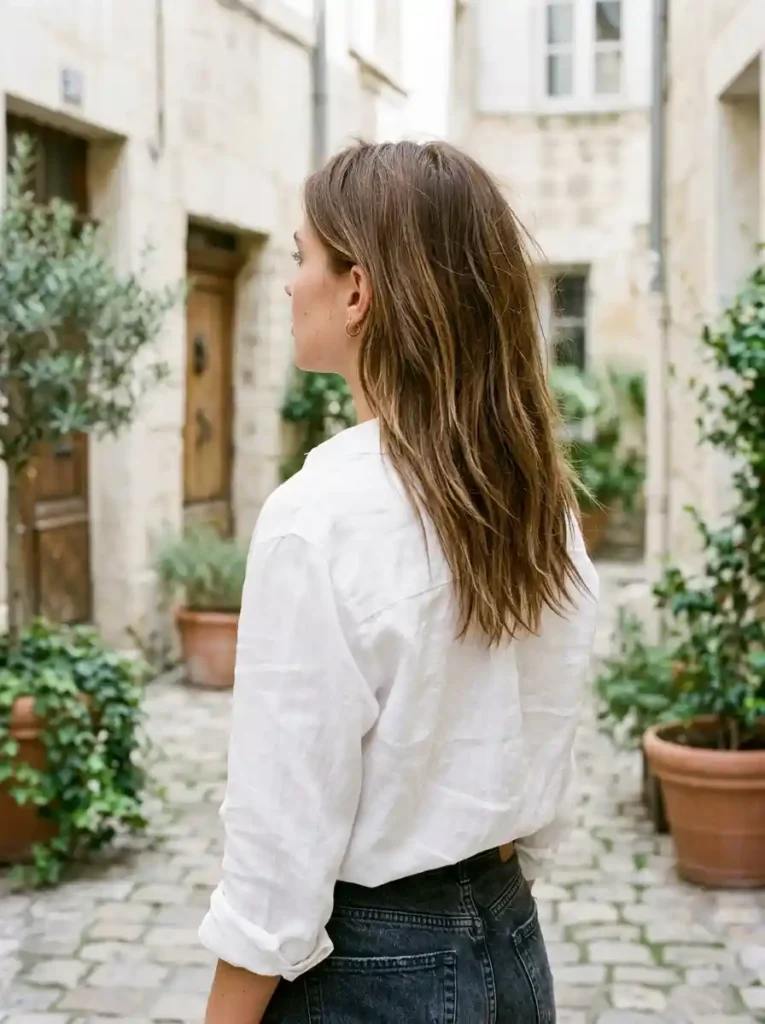
Choppy ends add texture while keeping the overall haircut medium and wearable. Instead of dramatic short layers, the cut uses small variations around the perimeter. This creates separation and prevents the ends from forming one heavy block. It works especially well for naturally textured or slightly wavy hair. Straight hair can also wear the look with a texture spray. Choose it when you want casual movement and a modern finish without committing to a full shag.
Apply texture spray to damp or dry hair, depending on the product instructions. Twist a few sections while drying to encourage natural separation. Keep the roots relatively smooth if you want the ends to remain the focus. Pro Tip: Choppy does not have to mean extremely short. Ask for controlled texture around the perimeter if you want an edgy effect while retaining enough length for easy updos.
14. Sleek Center-Parted Layers
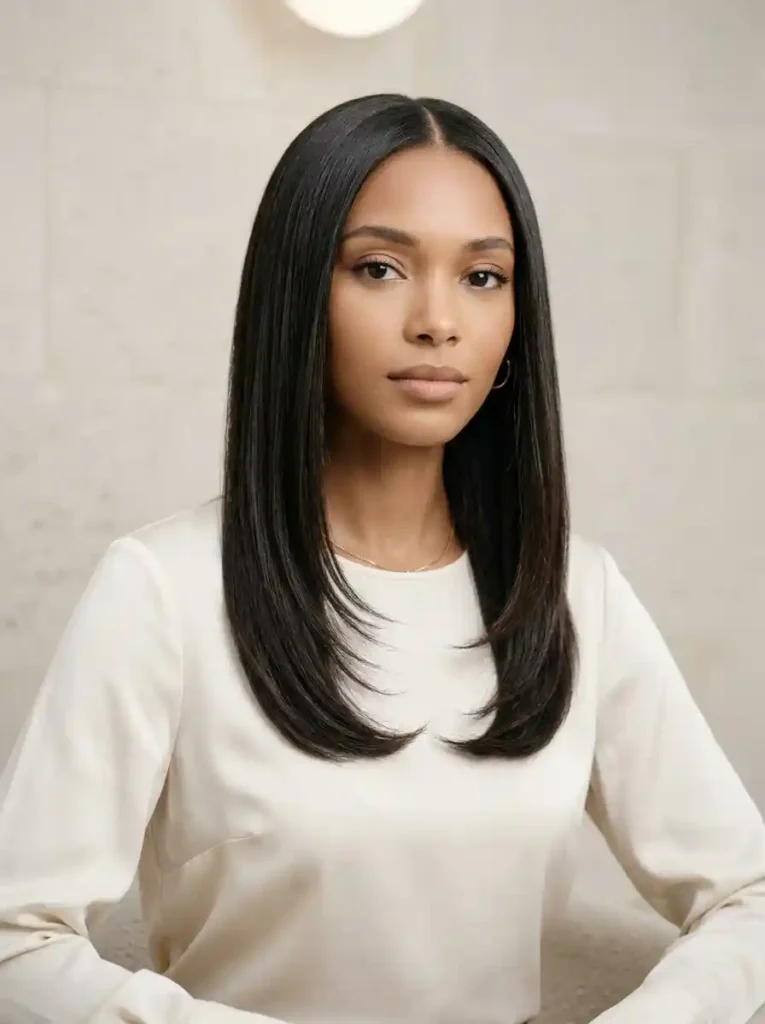
This style combines sleekness with barely visible layering. The center part creates symmetry, while long layers prevent the hair from appearing completely flat. The ends remain smooth and controlled, giving the haircut a sophisticated appearance. It is particularly effective on straight or easily straightened hair. Choose this look if you prefer clean lines, minimal texture, and a refined finish that transitions easily between work, events, and everyday outfits.
Use a smoothing serum sparingly through the mid-lengths and ends. Blow-dry downward to encourage a sleek surface, then use a flat iron only where necessary. Expert Insight: Heat styling is easier when the hair is already mostly dry and controlled. Avoid repeatedly passing over the same section because excessive heat can compromise the smooth finish you are trying to create.
15. Shoulder-Length Butterfly Layers
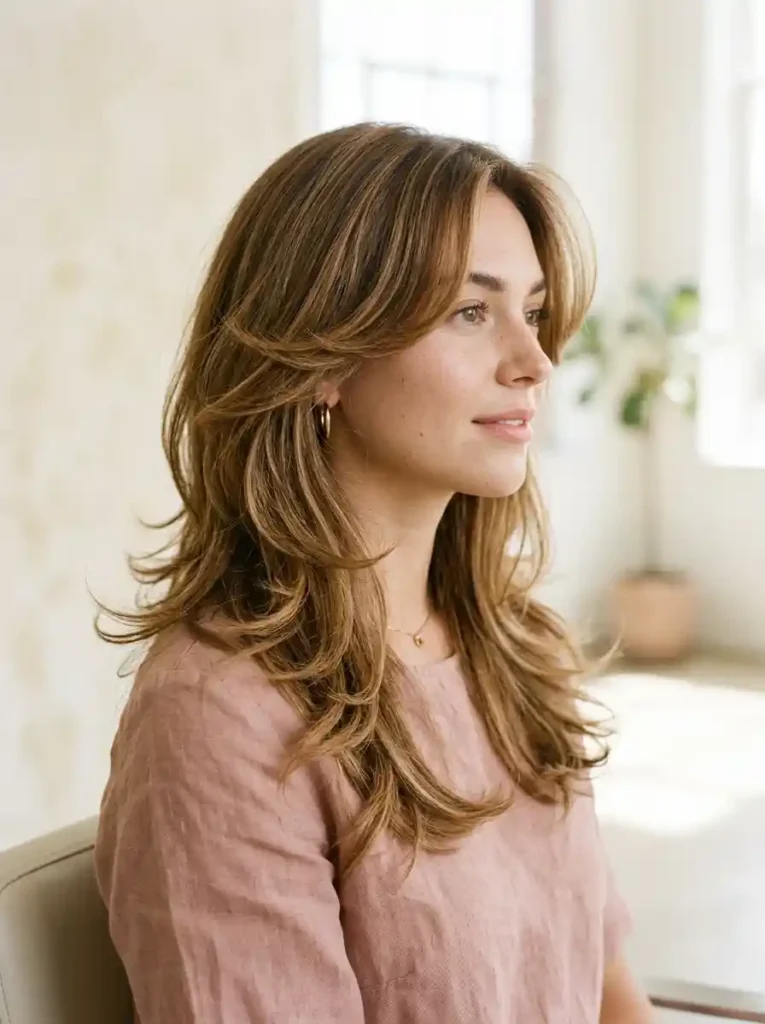
Butterfly-inspired layering brings a fuller, flowing shape to medium-length hair. The front sections curve away from the face, while longer layers maintain enough length through the back. This creates movement without making the haircut look short. It can work particularly well for medium to thick hair that needs controlled weight distribution. The style suits readers who enjoy glamorous blowouts but still want a practical haircut between shoulder and collarbone length.
Use a large round brush to direct the front layers outward and slightly backward. Finish with flexible spray so the sections stay mobile. Stylist Tip: The haircut depends on a smooth transition between short and long layers. Ask your stylist to blend the sections carefully, especially if you want the front pieces to flow rather than appear sharply separated.
16. Natural Wavy Mid-Length Cut
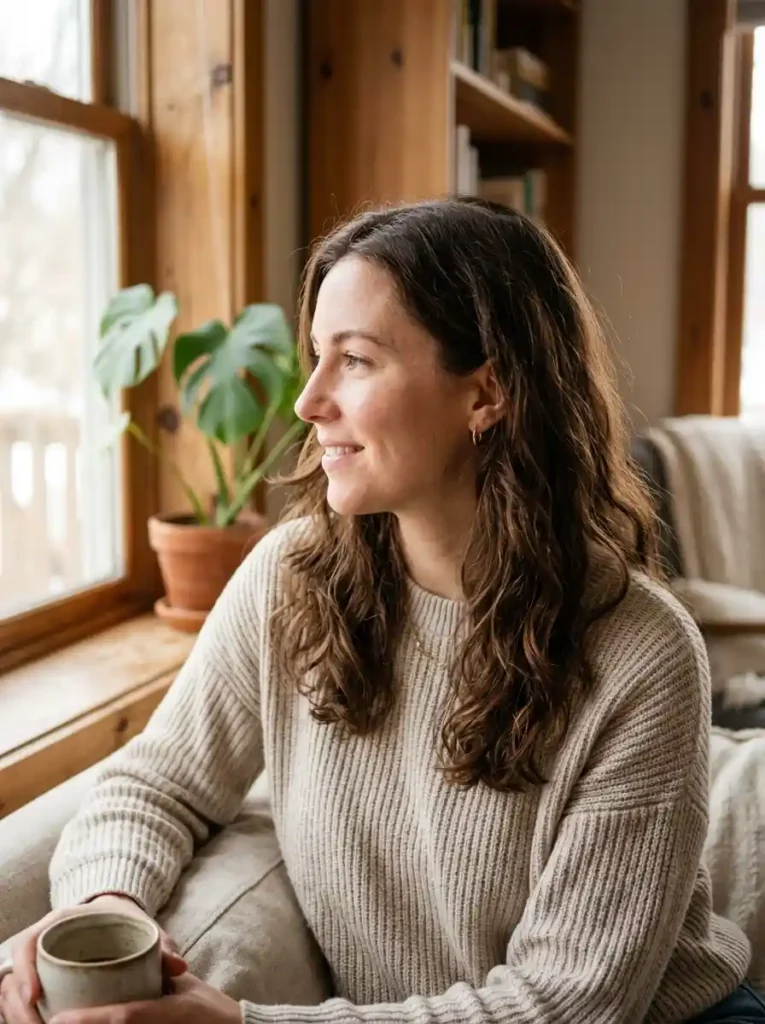
A natural wavy mid-length cut keeps the haircut simple and lets texture provide the visual interest. Minimal layering helps preserve enough weight for waves to form smoothly. The length sits comfortably below the shoulders, giving plenty of styling flexibility. This approach suits people who prefer low-fuss hair and want their natural pattern to remain the main feature. It also works well when you want a haircut that looks intentional without requiring daily heat styling.
Apply curl-friendly leave-in conditioner while the hair is wet. Scrunch gently, then allow it to air-dry or use a diffuser on low heat. Avoid brushing the hair once the waves have fully formed. Common Mistake: Excessive brushing can separate natural wave groups and create unnecessary frizz. If your hair becomes fluffy, try adding moisture before adding more styling hold.
17. Medium Cut With Micro Fringe
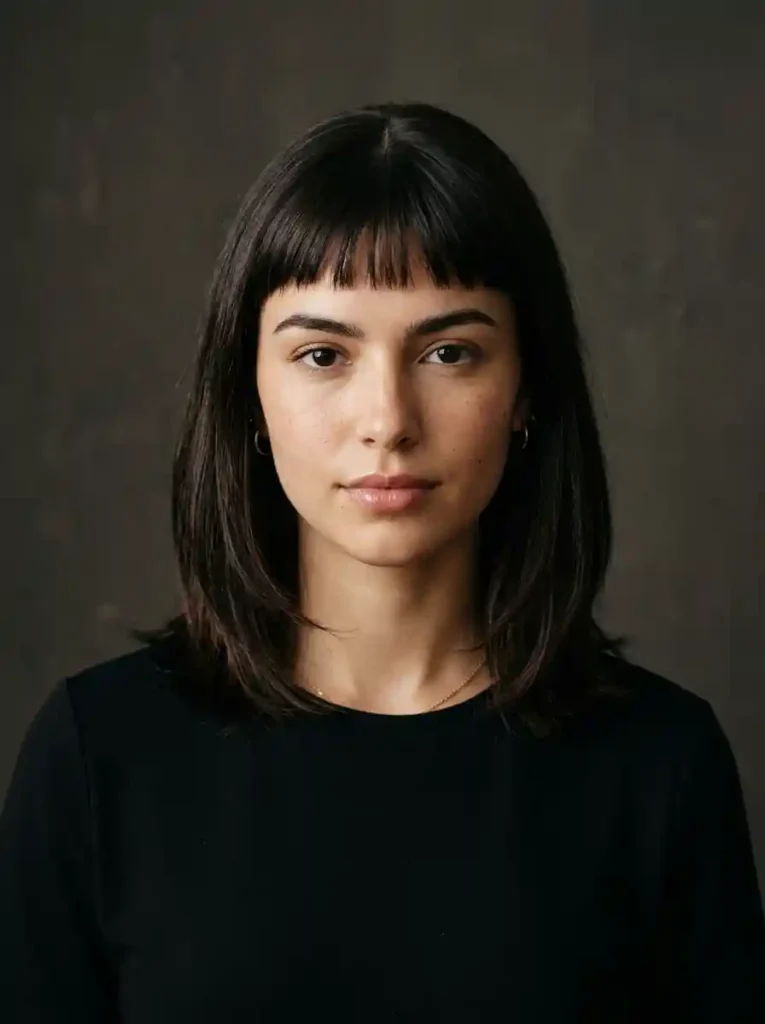
A micro fringe creates a bold focal point while the medium-length perimeter keeps the haircut versatile. The short fringe exposes more of the forehead and gives the look a strong fashion-forward identity. Soft layers through the rest of the hair prevent the style from becoming too rigid. This option suits readers who enjoy distinctive changes and do not mind regular fringe styling. It can look striking with straight, smooth hair.
Micro bangs require more frequent attention than longer fringe because small growth changes are noticeable. Blow-dry the fringe from side to side immediately after washing to prevent unwanted separation. Keep the remaining hair simple to balance the strong front detail. Pro Tip: Discuss your natural hairline before choosing this fringe. A strong growth pattern can affect how short bangs sit, so a slightly longer version may provide easier daily control.
18. Romantic Mid-Length Waves
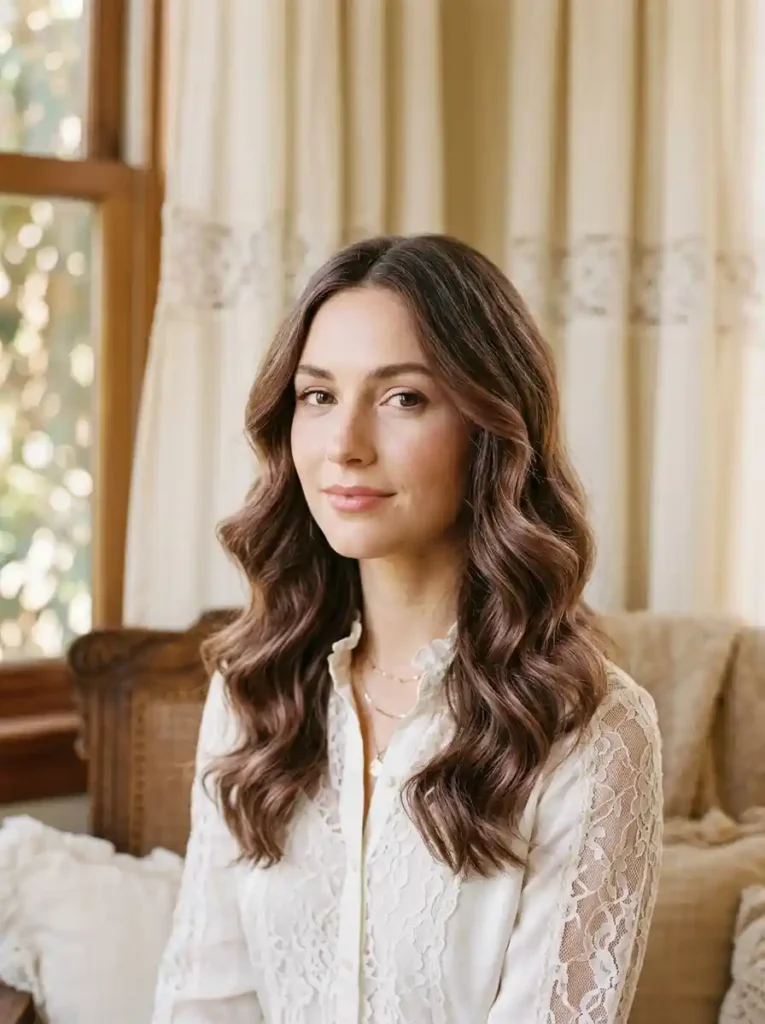
Large waves give medium-length hair a soft and elegant appearance. Unlike tighter curls, these waves create broad curves that keep the overall silhouette relaxed. Subtle highlights can emphasize the movement without making the color look overly dramatic. This style is ideal for dinners, celebrations, photographs, or anyone who enjoys a more polished finish. It can also be softened by brushing the waves gently after they cool.
Apply heat protectant before creating large curls with a wide-barrel tool. Curl away from the face at the front, then alternate directions through the remaining sections. Let everything cool before gently loosening the shape. Stylist Tip: Larger sections create softer waves, while smaller sections create more definition. Adjust the section size according to how much movement and longevity you want.
19. Layered Cut With Money-Piece Highlights
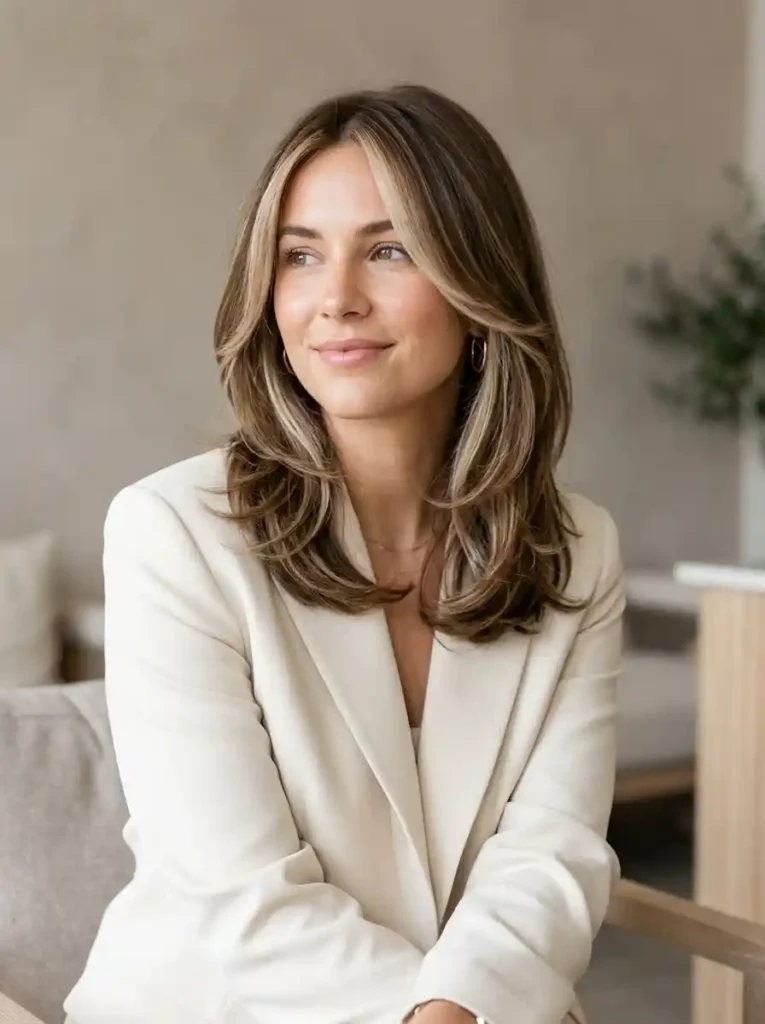
Face-framing highlights can make layered medium hair feel more dimensional. The lighter pieces sit around the front while the rest of the color remains deeper and more natural. Soft layers help the highlighted sections blend into the haircut rather than appearing like isolated streaks. This look suits people who want a visible color change without committing to an all-over transformation. It can be customized from subtle beige to warmer caramel tones.
Ask your colorist to place the lightest pieces according to your natural part and haircut. This creates a more integrated result than copying a fixed placement. Use color-safe shampoo and limit excessive heat to help maintain the tone. Expert Insight: Face-framing color should complement the haircut’s movement. When the front layers are longer, softer highlights usually create a more seamless transition.
20. Low-Maintenance Collarbone Cut

A low-maintenance collarbone cut prioritizes an easy shape over complicated layering. The ends remain substantial, while a few long layers provide enough movement for natural texture. This makes the haircut practical for busy routines and air-drying. It works across several hair types when customized to natural density and pattern. Choose this option if you want a fresh medium length without signing up for a demanding styling routine every morning.
Ask for a shape that works with your natural texture instead of fighting it. Use a lightweight leave-in product after washing, then allow the hair to dry naturally. A small amount of cream can smooth the ends afterward. Pro Tip: A haircut designed around your normal routine is often easier to maintain. Tell your stylist whether you usually air-dry, blow-dry, or use heat tools before choosing the final shape.
21. Side-Parted Voluminous Lob
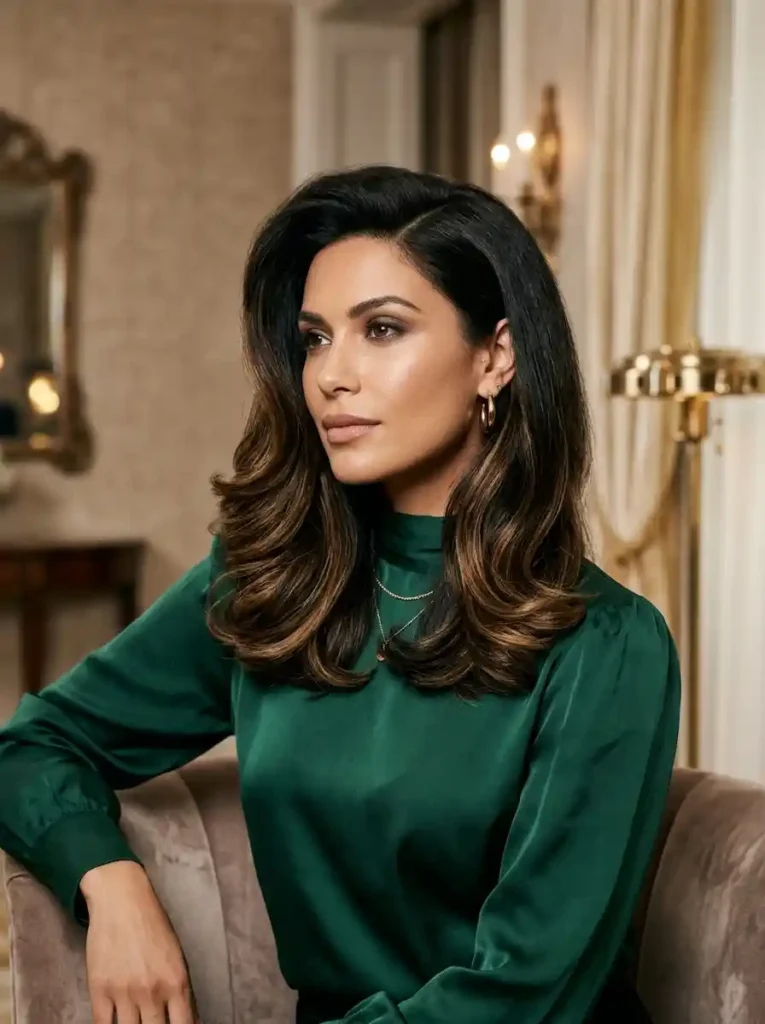
A deep side part changes the balance of a medium lob and creates a fuller-looking crown. Large bends through the lengths add movement while the ends remain substantial. This style works especially well when you want glamour without extremely long hair. It suits medium to thick hair naturally, while fine hair can use volumizing products and careful blow-drying. The result feels elegant, confident, and suitable for both special occasions and elevated everyday looks.
Start by creating the side part while your hair is damp. Use a root-lifting mousse before blow-drying, then shape large sections with a round brush. Common Mistake: Teasing the roots too aggressively can create a stiff finish. Build volume through controlled blow-drying first, then add only a small amount of texture if necessary.
22. Soft Shag With Curtain Fringe
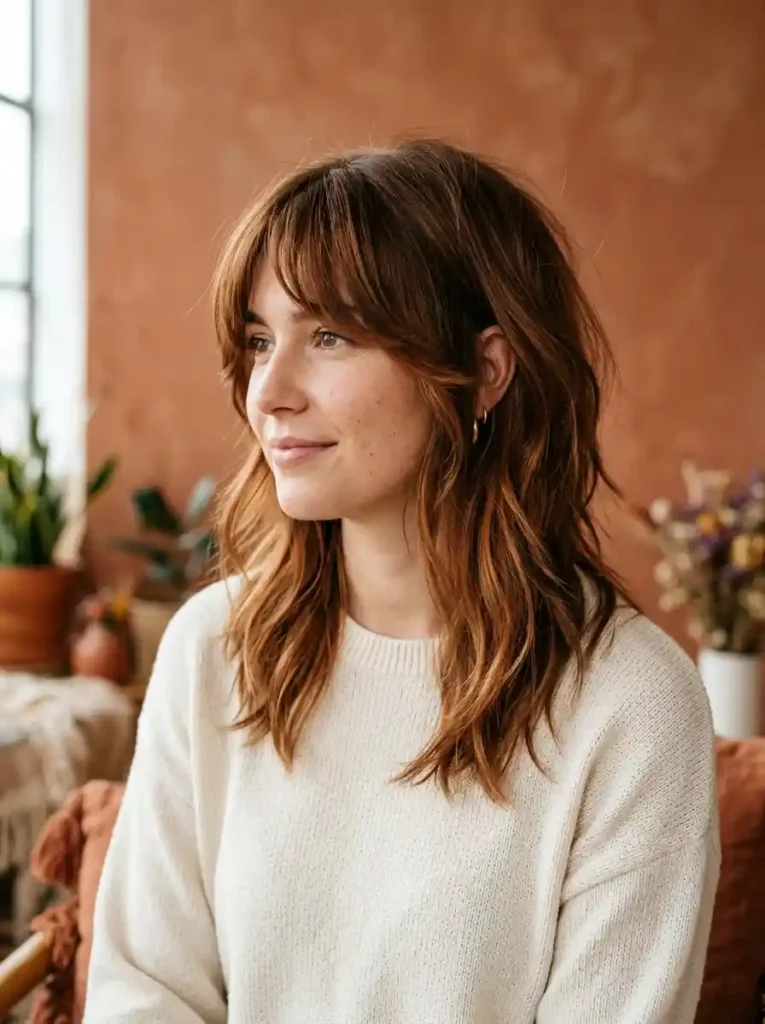
A soft shag with curtain fringe combines two movement-focused elements without becoming overly dramatic. The fringe opens around the forehead, while airy layers create lift through the crown and sides. The ends remain soft rather than sharply disconnected. Naturally wavy or textured hair can make this shape especially easy to style. It suits people who want a relaxed haircut with personality while keeping the overall length around the shoulders.
Apply mousse to damp roots and scrunch the lengths gently. Use a diffuser if your natural texture needs encouragement, then separate only a few sections once dry. Stylist Tip: Keep the curtain fringe slightly longer when choosing a softer shag. Longer fringe blends more easily into the surrounding layers and gives you more styling flexibility as it grows.
23. Polished A-Line Lob
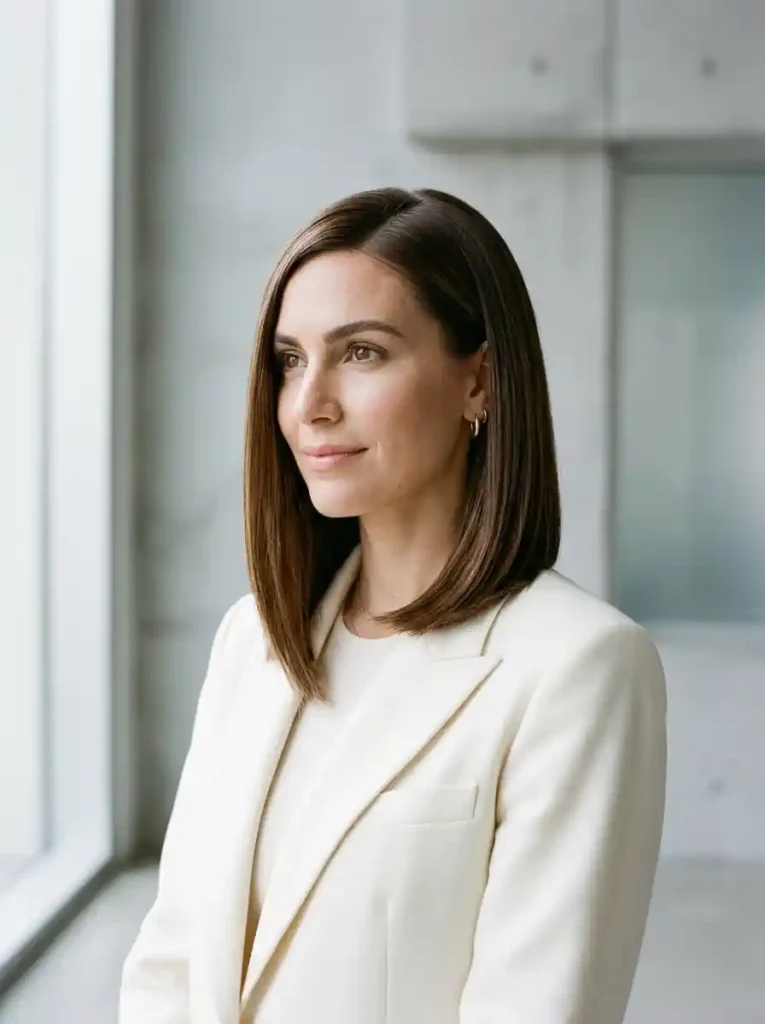
An A-line lob uses a subtle angle to create a structured, contemporary silhouette. The back sits slightly shorter while the front extends toward the collarbone. This creates movement through the perimeter without relying on many layers. Straight hair displays the angle clearly, while waves make the shape softer. It is a strong choice for anyone who likes precise haircuts and wants a medium style that feels polished and distinctive.
Ask your stylist how dramatic you want the angle to appear. A gentle slope feels versatile, while a sharper difference creates a stronger geometric effect. Blow-dry with a paddle brush for smoothness, then finish the ends with a light serum. Pro Tip: The angle should complement your natural hair density. Very thick hair may need careful weight removal underneath so the back does not appear bulky.
24. Medium Hair With Bottleneck Bangs
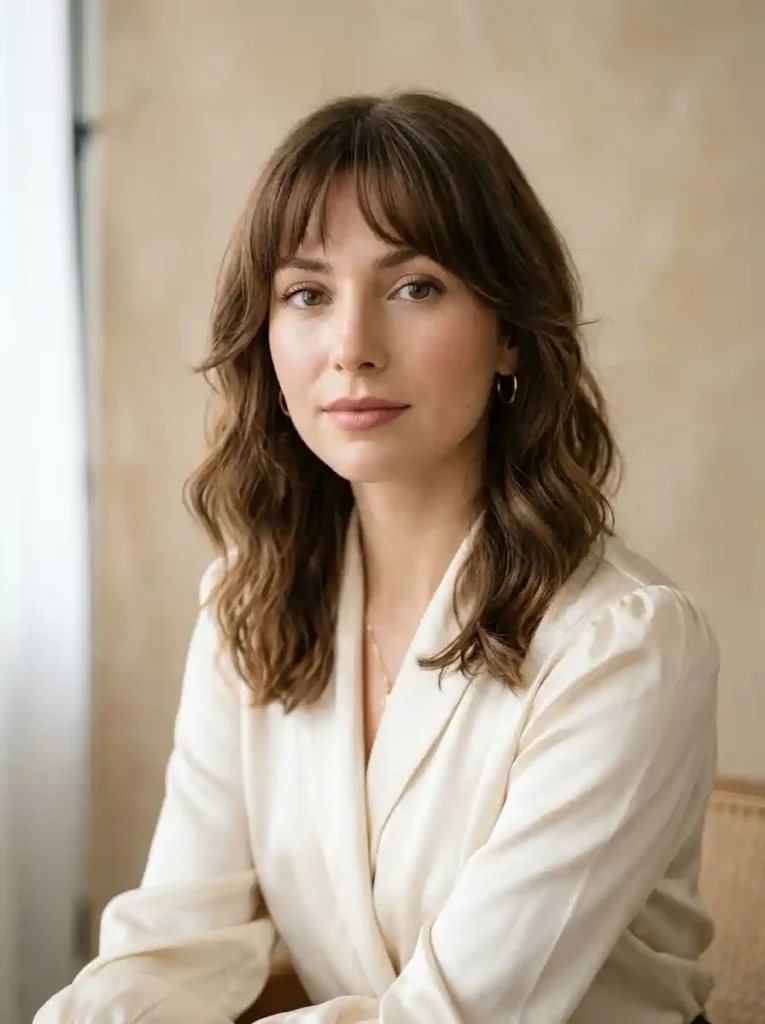
Bottleneck bangs offer a softer alternative to a traditional full fringe. The center section is shorter, while the outer portions become longer and curve toward the cheekbones. This creates a tapered shape that blends naturally into medium-length layers. It can suit straight, wavy, and lightly textured hair when customized carefully. Choose this look if you want face-framing detail but prefer a fringe that feels less uniform than classic bangs.
Style the center and outer sections separately so each part follows its intended direction. A small round brush works well for creating the outward curve. Expert Insight: Bottleneck bangs depend on a smooth length transition. Ask for the outer sections to connect gradually with your face-framing layers, especially if you want to tuck the fringe behind your ears between washes.
25. Tousled Brunette Mid-Length Cut

A tousled brunette cut creates an effortless finish through relaxed layers and imperfect texture. The length falls slightly below the collarbone, offering enough room for braids, ponytails, and loose styling. Rich brunette color gives the look depth while subtle tonal variation keeps it from appearing flat. This option works well for readers who prefer casual beauty and want their haircut to look attractive without appearing overly polished or carefully arranged.
Work a lightweight texture cream through damp lengths, then twist a few sections before air-drying. If using heat, create loose bends rather than uniform curls. Finish by loosening the ends with your fingers. Common Mistake: Applying heavy wax can make tousled hair look greasy and weighed down. Choose a lightweight product that preserves movement, especially when the haircut already contains several soft layers.
Frequently Asked Questions
What is the most versatile medium length hairstyle?
A collarbone-length layered cut is among the most versatile options. It can work with straight, wavy, and lightly curly textures. The length also supports ponytails, braids, clips, and loose styling.
Are medium length hairstyles good for fine hair?
Yes. Fine hair can benefit from blunt or lightly layered shapes that preserve density. Avoid excessive thinning, especially near the ends, because it can make the haircut look less full.
What medium haircut works well for thick hair?
Long layers, soft shags, and carefully shaped lobs can help distribute weight in thick hair. The amount of layering should match your natural density and texture.
Are curtain bangs easy to maintain?
Curtain bangs are generally more flexible than short full bangs. They still require regular trimming and quick styling, but their longer shape makes them easier to sweep aside while growing.
How often should medium length hair be trimmed?
Many people refresh their haircut every several weeks, but the ideal timing depends on the cut and hair condition. Precise bobs and bangs usually need attention sooner than longer layered styles.
Can medium length hair be styled without heat?
Yes. Waves, curls, braids, twists, and air-dried texture can create attractive results without heat. Leave-in conditioner and lightweight styling products can help natural texture form more smoothly.
Conclusion
Medium length hair gives you an unusually flexible starting point for a fresh look. You can choose clean lines, soft layers, natural waves, dramatic fringe, or relaxed texture without committing to extreme length changes. The best cut should match your natural texture, density, styling habits, and preferred level of maintenance. Bring your favorite reference to your stylist and discuss how the shape should be customized. Save your favorite medium length hairstyle before your next salon visit.


