
Mushroom brown hair is the perfect choice if you love cool, sophisticated hair colors that look effortlessly polished without feeling too dramatic. Inspired by the soft taupe, smoky beige, and earthy brown tones found in mushrooms, this versatile shade offers a beautiful balance between brunette richness and subtle ashiness. The result is a dimensional hair color that feels modern, understated, and surprisingly easy to personalize.
Whether you prefer a deep brunette base, delicate beige highlights, or a lighter mushroom brown balayage, there is a version of this trend for almost every hair length and personal style. The secret is choosing the right combination of cool and neutral tones to complement your complexion, natural hair color, and desired level of maintenance.
In this collection, you will discover 23 chic mushroom brown hair ideas, from glossy, single-tone brunettes to softly blended highlights, dimensional waves, and contemporary short cuts. Each look offers inspiration you can save to your Pinterest boards and bring to your next salon appointment. You will also find practical styling and maintenance tips to help your chosen shade stay beautiful between visits.
1. Classic Mushroom Brown Hair
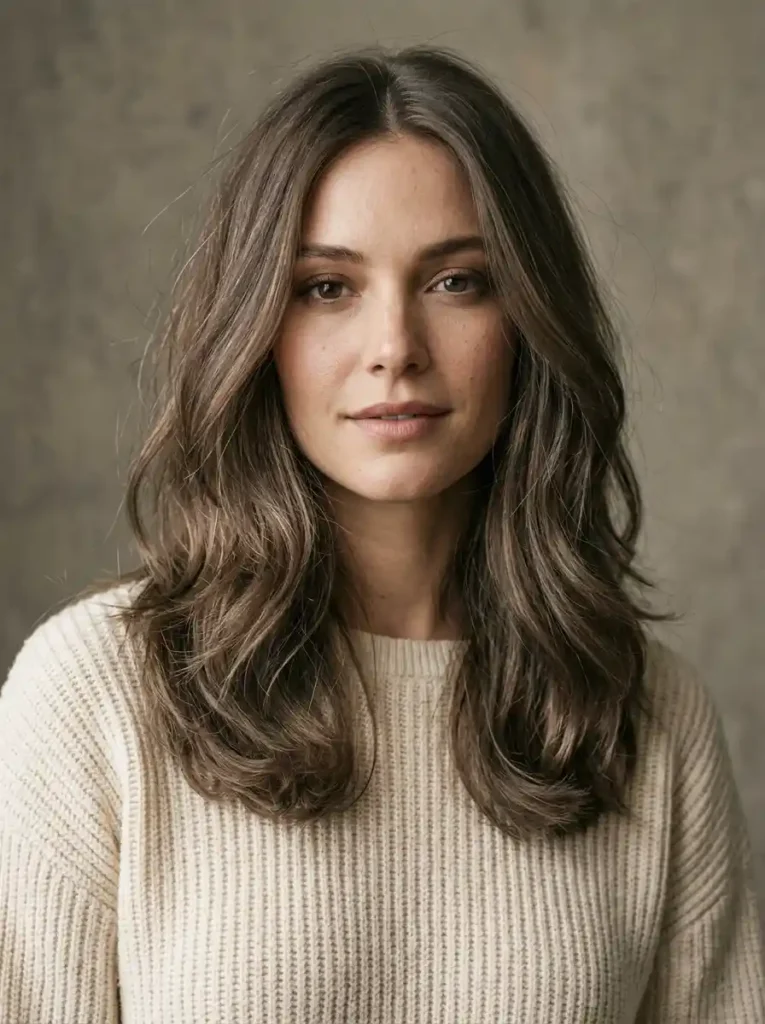
Classic mushroom brown is an excellent starting point if you want a sophisticated brunette shade without obvious highlights or dramatic color changes. Its appeal comes from the combination of muted brown and cool taupe undertones, which creates depth without looking overly warm or flat. Ask your colorist to assess your natural base before selecting the final formula. This helps achieve a balanced finish that complements your existing hair color instead of creating an unnecessarily stark transformation.
For the most polished result, wear this shade with a smooth blowout, soft layers, or a simple center part that allows the subtle color variations to catch the light. A gloss treatment can enhance shine and refresh the tone between appointments. If your hair naturally pulls orange or red, discuss how your stylist will control unwanted warmth without making the overall color look dull. This classic option works especially well for anyone who prefers understated, wearable elegance.
2. Mushroom Brown Balayage
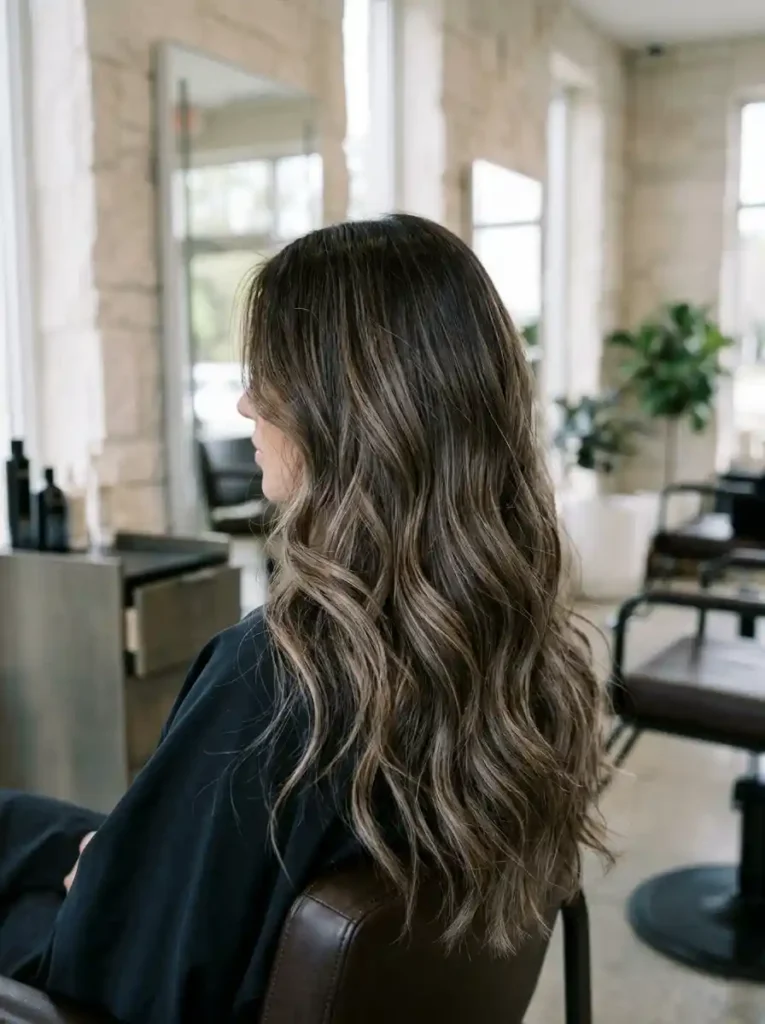
Mushroom brown balayage is ideal if you want movement and dimension without committing to an all-over color change. The hand-painted technique allows your stylist to concentrate lighter taupe and ash-brown tones through the mid-lengths and ends, leaving the roots closer to your natural shade. This creates a softer grow-out line than traditional, root-to-tip color. It is particularly appealing for brunettes who want a noticeable refresh while keeping their overall look grounded and natural.
Loose waves are a lovely way to showcase the balayage because they reveal the contrast between darker sections and lighter ribbons. You can also wear the color straight for a more understated finish. During your consultation, bring photographs showing your preferred brightness and explain whether you want the lighter pieces to begin near your face or lower down. Ask about toning requirements, too, since highlighted hair may gradually develop warmer undertones as the color fades.
3. Dark Mushroom Brown Hair
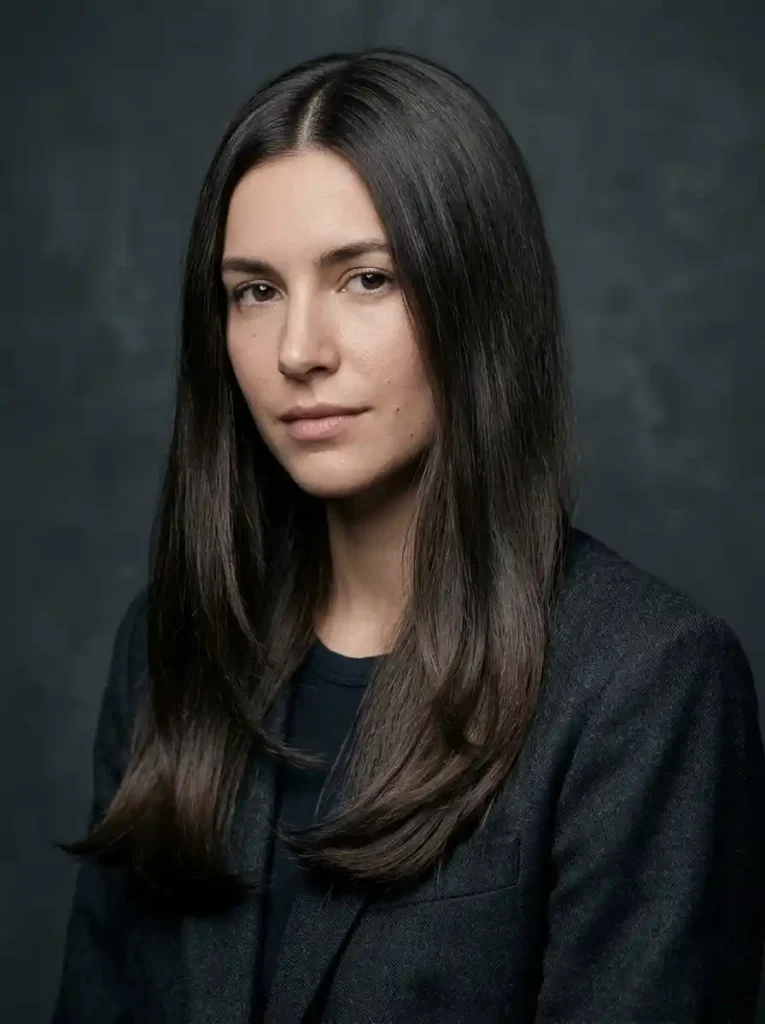
Dark mushroom brown offers the richness of brunette hair with a cooler, more contemporary finish. Rather than relying on obvious highlights, this version uses subtle smoky undertones to soften the appearance of a deep brown base. It is an appealing option if you enjoy darker hair but want something different from a conventional chocolate brunette. Depending on your starting shade, your stylist may achieve the effect with a gloss or a carefully formulated demi-permanent color.
This shade looks especially striking with sleek lengths, a clean middle part, or a softly rounded blowout. The key is preserving shine, since very dark colors can appear one-dimensional when the hair surface looks dry. Use a conditioner suited to your hair texture and limit excessive heat styling to keep the finish smooth. If you have previously colored your hair black or very dark brown, discuss your color history before attempting a lighter mushroom tone, as artificial pigment can complicate the process.
4. Mushroom Brown with Beige Highlights
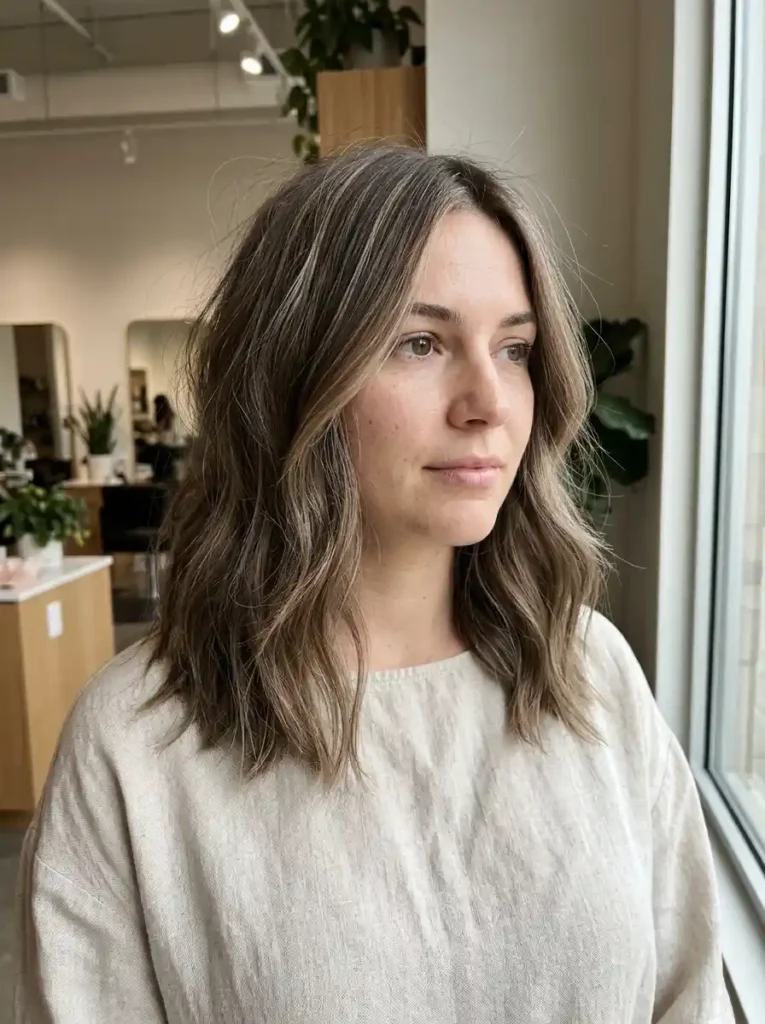
Beige highlights add a little brightness to mushroom brown without pushing the overall look into golden blonde territory. The best results use neutral or cool beige tones that blend naturally with the taupe-brown base. Fine highlights distributed throughout the hair create a delicate, sunlit effect, while slightly brighter pieces around the face can make the style feel more personalized. This combination is particularly useful when you want dimension that remains subtle in everyday lighting.
Ask your colorist to compare beige samples against your natural hair color before deciding how light the highlights should be. Too much yellow or gold can change the intended mushroom effect, especially if your base is strongly ash-toned. Soft waves help reveal the contrast, but the highlights also look attractive in a straight blowout. Since lightened sections can become dry, incorporate a nourishing conditioner and use a heat protectant whenever you style your hair with hot tools.
5. Mushroom Brown Lob
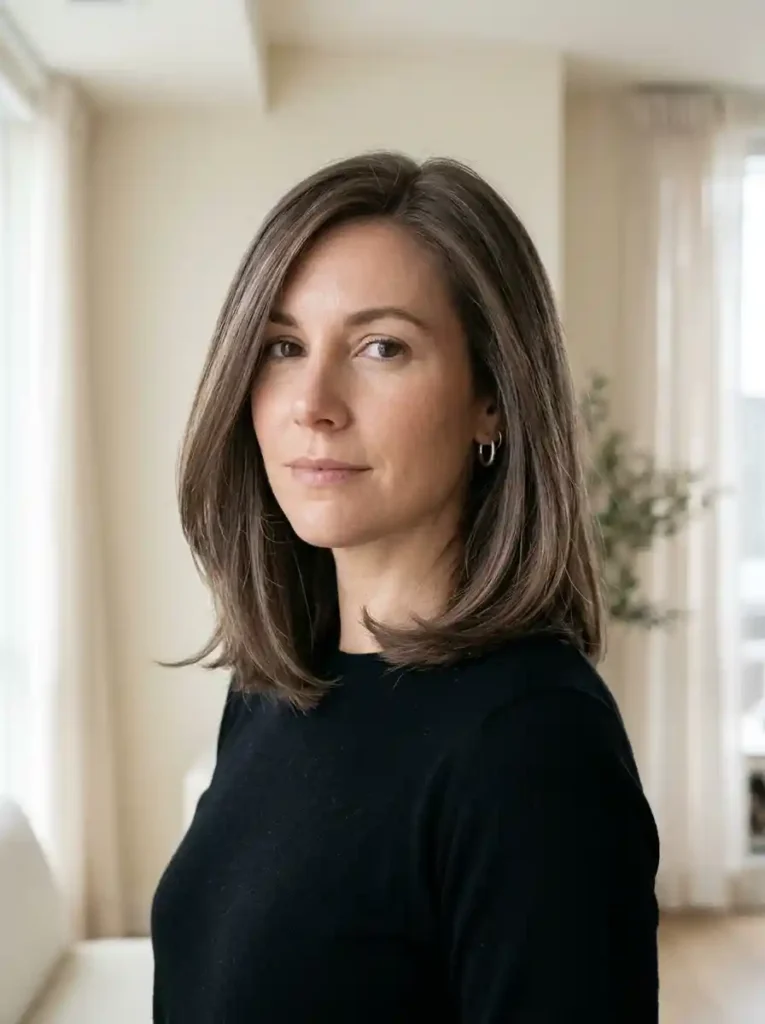
A mushroom brown lob, or long bob, combines a modern haircut with a color that emphasizes the shape without overwhelming it. The collarbone-length silhouette provides enough hair to create movement while keeping styling manageable. A softly blunt edge makes the ends appear substantial, whereas discreet internal layers help remove excess bulk. Medium mushroom brown is especially effective on this cut because its muted undertones add dimension without distracting from the clean outline.
For a polished everyday finish, use a round brush to create a slight bend at the ends and lift the roots gently. If you prefer a relaxed appearance, air-dry with a lightweight styling cream and tuck one side behind your ear. Discuss your hair’s natural density with your stylist before choosing the exact length, since thick and fine hair behave differently. A subtle gloss can maintain the cool brown finish without requiring frequent full-color appointments.
6. Mushroom Brown Hair with Curtain Bangs
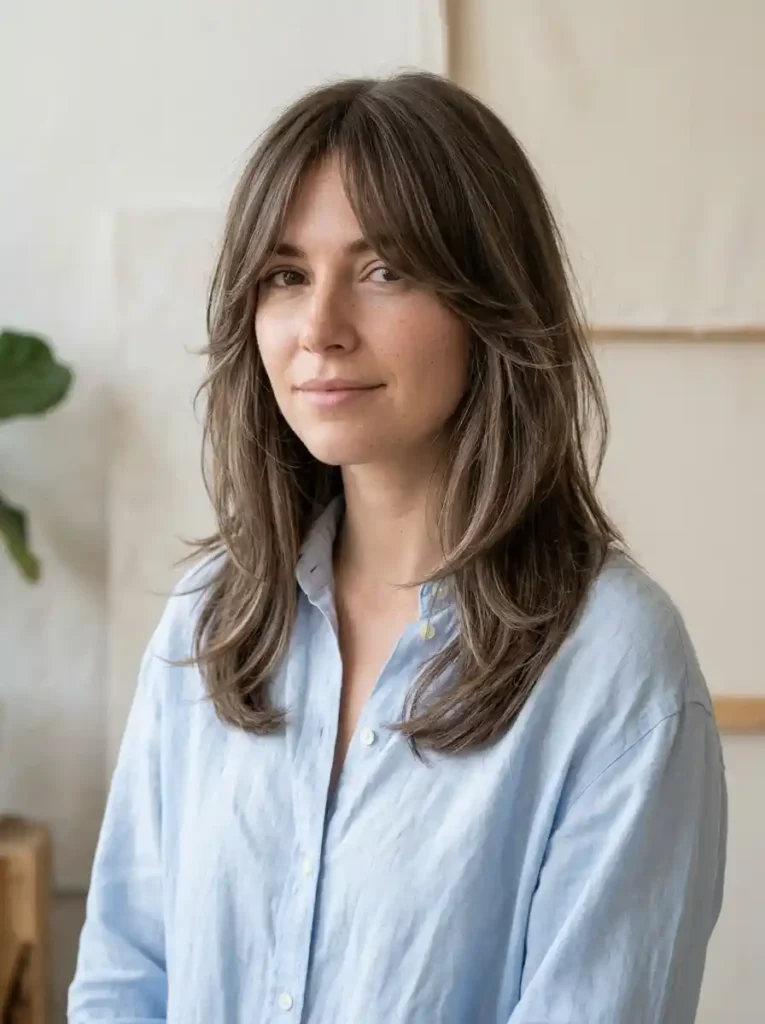
Curtain bangs give mushroom brown hair a soft, face-framing finish while keeping the overall style relaxed. The fringe opens around the center of the forehead and gradually blends into the longer layers, making it more flexible than a heavy, straight-across bang. This pairing works beautifully with medium or long hair because the movement around the face complements the muted dimension of the color. It is a good option if you want a visible change without sacrificing length.
Ask your stylist to tailor the shortest pieces to your preferred styling routine and natural hair texture. A round brush or medium-sized hot brush can direct the bangs away from your face, while a lightweight styling product helps maintain movement without making them stiff. Bangs may need trimming more often than the rest of the haircut, so consider that commitment before booking. The mushroom brown color itself can remain low-maintenance when your base closely matches your natural brunette shade.
7. Mushroom Brown Balayage on Long Waves
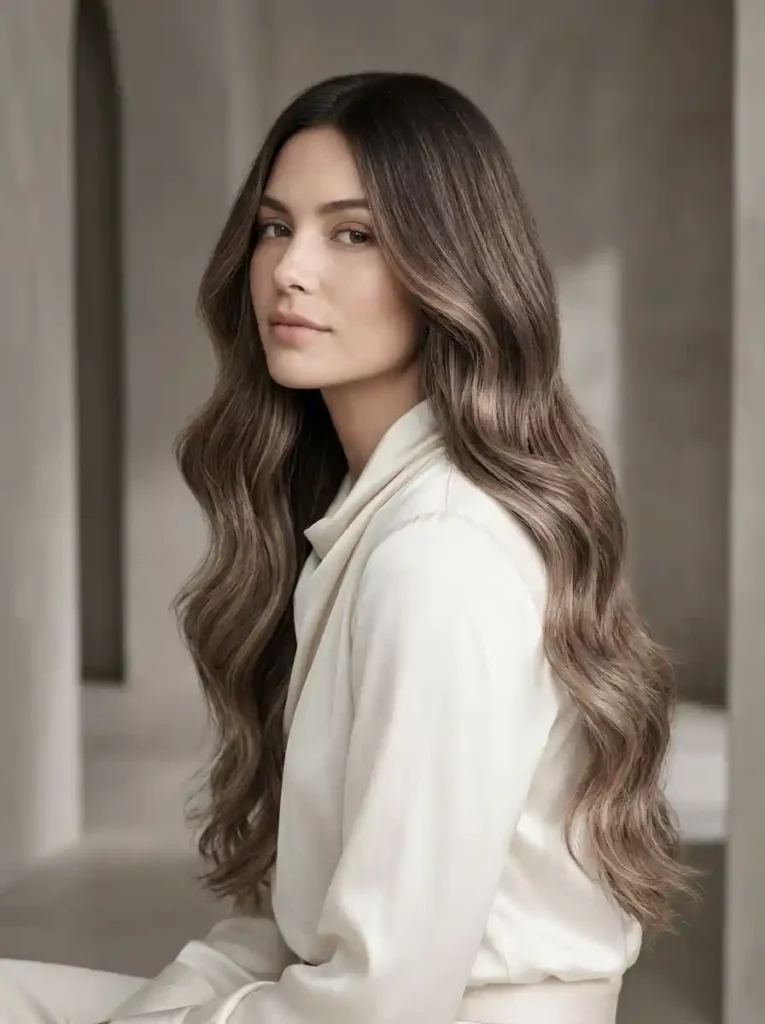
Long waves offer plenty of space for mushroom brown balayage to develop a beautiful transition from dark roots to lighter ends. The length makes it possible to blend several closely related shades instead of relying on a single contrasting highlight color. This is especially appealing if you enjoy a dimensional brunette look that changes subtly as you move. The result can appear soft indoors and more visibly textured in natural daylight, depending on the placement and brightness.
To maintain the shape, ask for long layers that support movement without removing too much weight from the ends. When styling, wrap medium-sized sections around a curling iron in alternating directions, then gently separate the waves with your fingers. Avoid brushing aggressively if your hair tangles easily or has been lightened. Long, highlighted hair also benefits from regular conditioning and occasional trims, which help keep the ends looking healthy and prevent the gradient from appearing ragged.
8. Mushroom Brown with Face-Framing Highlights
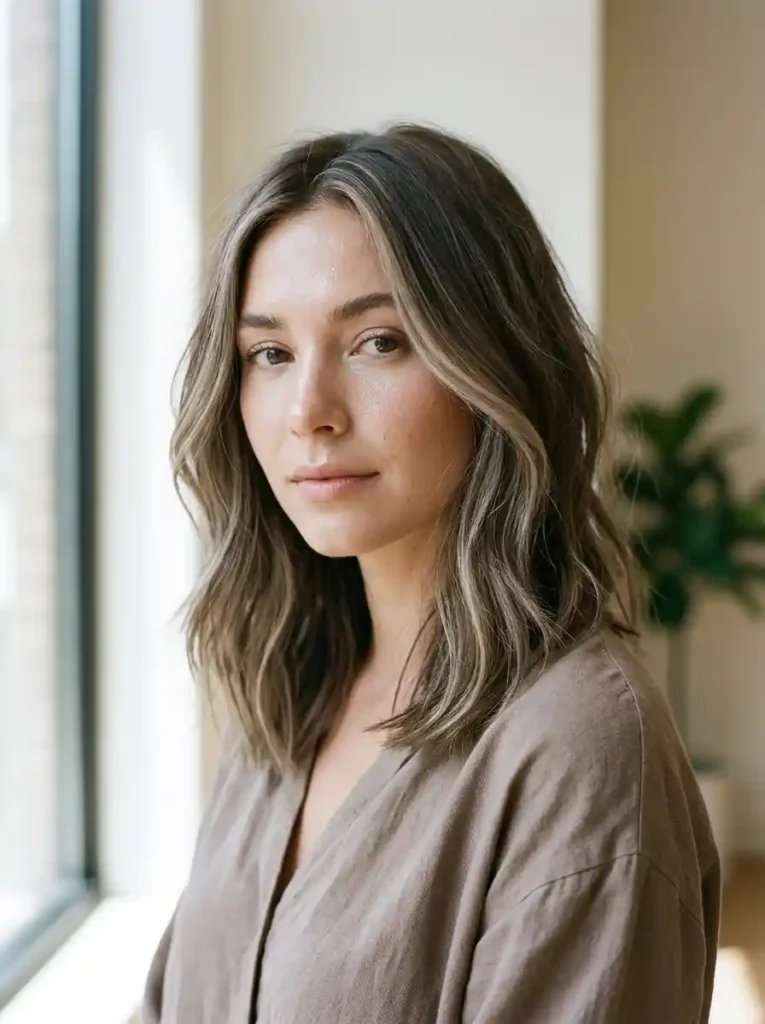
Face-framing mushroom brown highlights are a useful choice when you want your color to look brighter without highlighting your entire head. Fine, carefully placed pieces around the temples and front layers create contrast near the face, while the remaining hair stays closer to its natural brunette shade. The result feels intentional but restrained, making it suitable for people who are curious about lighter hair yet hesitant to commit to a full balayage.
Your stylist can adjust the width, brightness, and starting point of these highlights to suit your preferred level of contrast. Narrow pieces generally look softer, while wider sections create a more noticeable effect. Make sure the chosen beige tone complements the mushroom brown base rather than appearing disconnected from it. This style pairs well with a side part, curtain fringe, or simple tucked-behind-the-ear styling. Because the lighter sections are concentrated near the front, they may need occasional toning to maintain a balanced appearance.
9. Mushroom Brown Hair with Ash Undertones
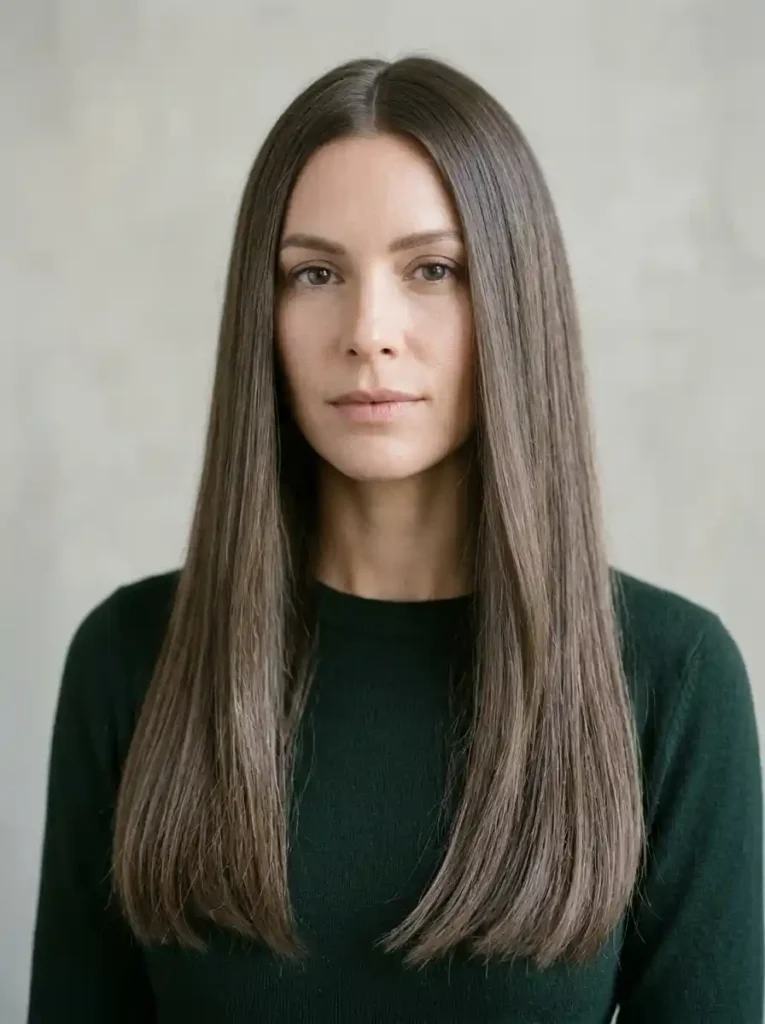
Ash-toned mushroom brown is ideal if you prefer a distinctly cool brunette finish. Its muted character helps reduce the appearance of excessive warmth, creating a smoky effect that looks sophisticated rather than overly dark. The shade is not simply gray hair or silver brown; it should retain enough brown pigment to appear natural and dimensional. Your colorist can tailor the amount of ash according to your existing base and how cool you want the final result to look.
The main consideration is avoiding over-toning, which can leave some hair looking flat or slightly muddy. A professional consultation helps determine whether your hair needs lightening before an ash-based formula will show clearly. For home care, choose color-safe products and follow your stylist’s advice about toning treatments instead of using them automatically. Sleek styling emphasizes the refined color, while loose waves soften its coolness. Either way, a little shine makes the delicate undertones easier to appreciate.
10. Mushroom Brown Ombre
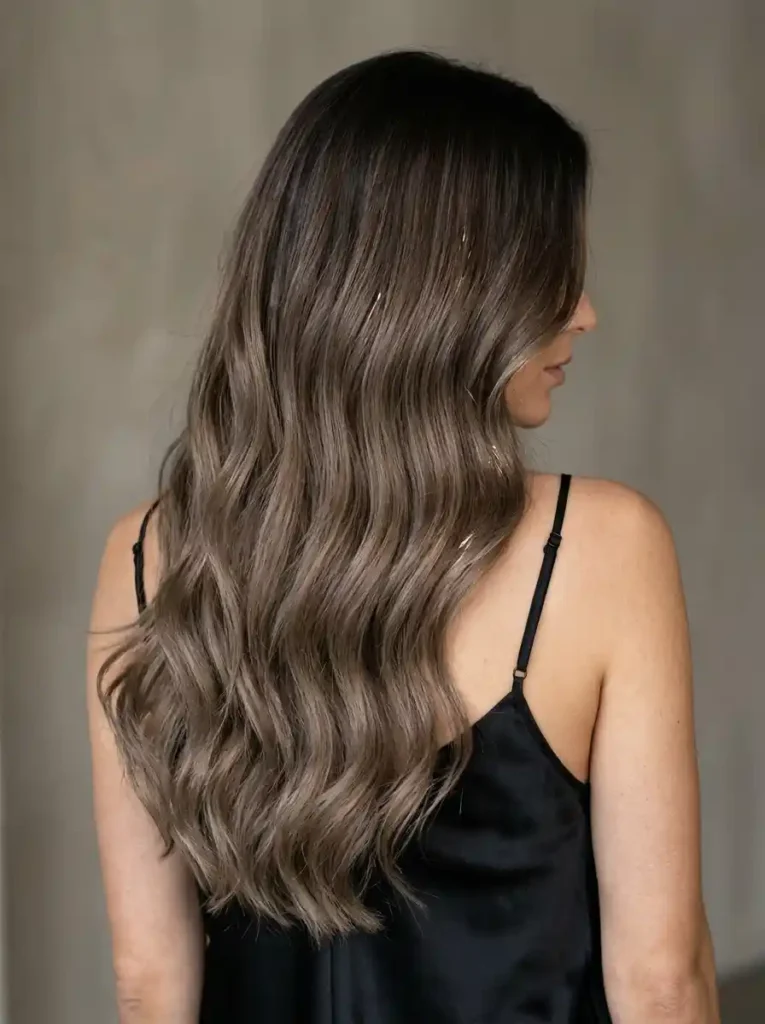
Mushroom brown ombre creates a more noticeable shift between the roots and ends than a softly scattered balayage. The color begins dark near the scalp and gradually becomes lighter toward the bottom, producing a clear gradient that suits longer hair particularly well. Because the root area remains closer to your natural shade, this technique can be practical if you want a lighter finish without frequent root-color appointments.
The secret to a sophisticated ombre is a smooth transition rather than a visible horizontal line. Ask your stylist to blend several intermediate brown and taupe tones where the darker and lighter sections meet. Long waves emphasize the gradient, although straight hair can show off the precision of a well-blended color application. Keep the ends conditioned because they may require more lightening than the roots. If you prefer a softer effect, choose a modest difference between the root and tip shades instead of an extremely pale finish.
11. Mushroom Brown on a Textured Bob
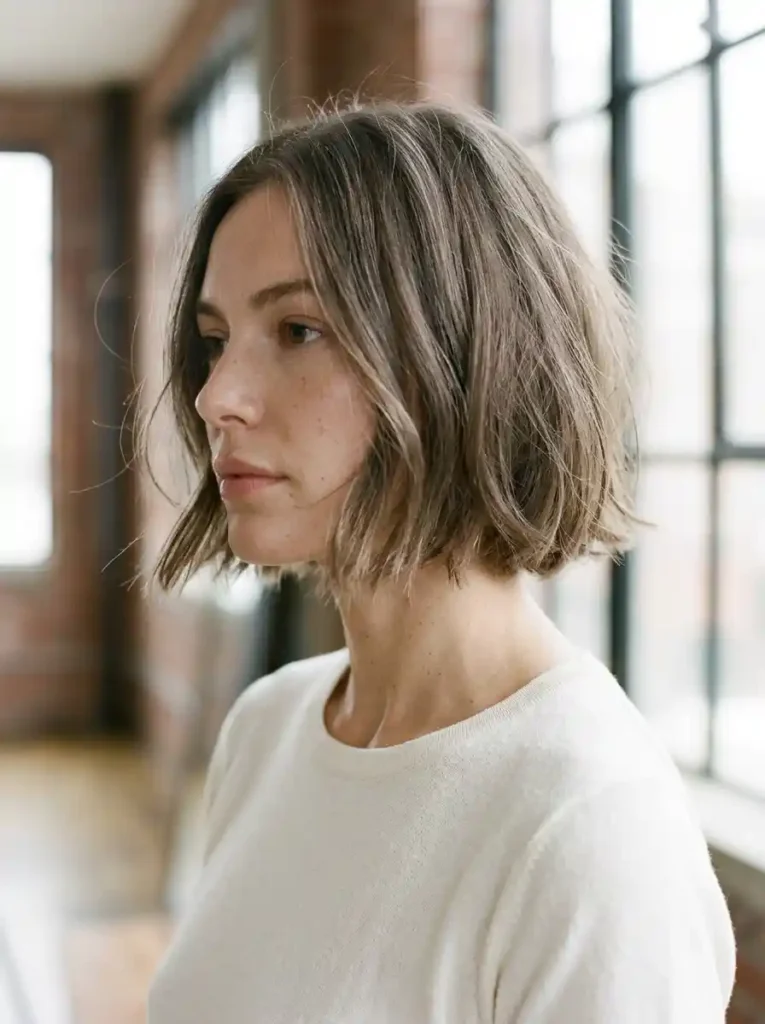
A textured bob gives mushroom brown hair a contemporary edge by emphasizing the relationship between cut and color. Shorter pieces around the jaw create movement, while the muted brunette shade keeps the hairstyle sophisticated rather than overly edgy. This combination can suit fine hair that benefits from a stronger outline, provided the cut is tailored to avoid excessive thinning. On thicker hair, carefully placed layers can prevent the shape from becoming too bulky.
Styling should highlight the haircut’s natural texture instead of forcing every strand into place. Apply a small amount of lightweight styling cream to damp hair, then blow-dry with your fingers or a diffuser attachment if your texture allows. A flat iron can create a few gentle bends, but too much heat may flatten the piecey effect. Bring reference photos showing both the haircut and the mushroom brown color, since the right silhouette and tone work together to create the finished look.
12. Mushroom Brown with Soft Caramel-Taupe Ribbons
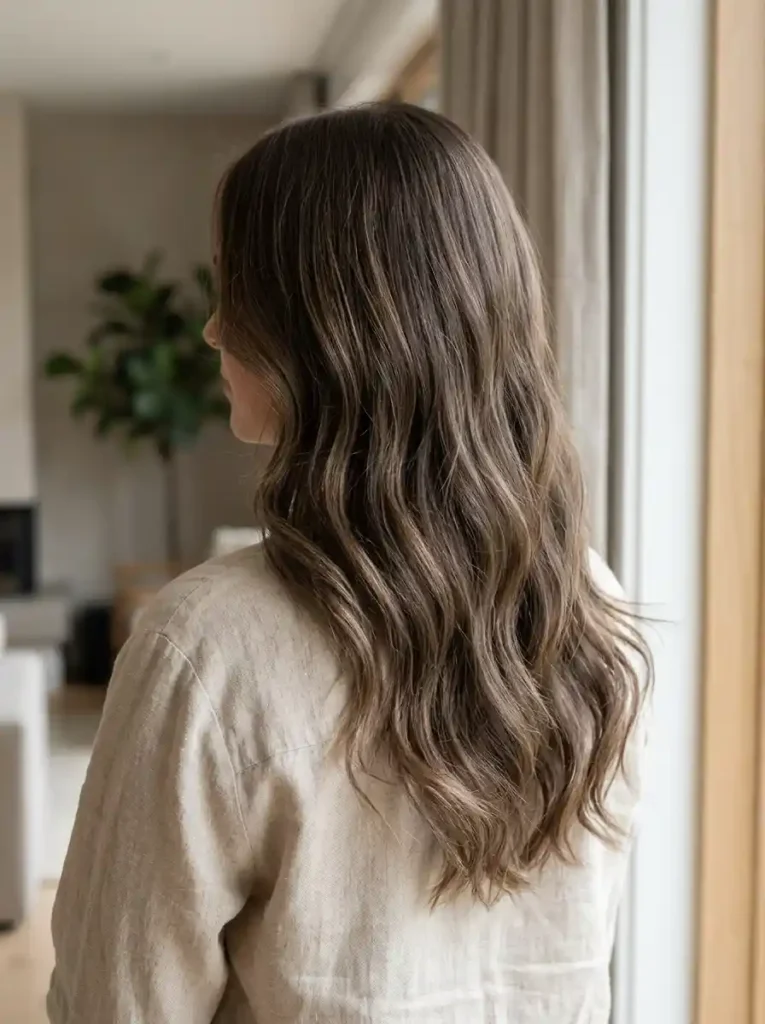
If you like mushroom brown but worry that a completely cool shade may look too subdued, consider adding soft caramel-taupe ribbons. These tones introduce gentle warmth without turning the overall color into a traditional golden brunette. The distinction is important: the ribbons should complement the smoky base rather than create a strong orange or yellow contrast. This approach offers a more nuanced color palette that can look especially attractive on medium and long hair.
Ask your stylist to keep the lighter pieces fine and blended, especially if you want an understated result. A few strategically placed ribbons can create movement without requiring extensive lightening throughout the head. The shade should also be chosen with your natural base in mind, because the same formula may appear different on dark brown and lighter brunette hair. Soft waves reveal the variation beautifully, while a smooth blowout creates a quieter, more polished interpretation of the color.
13. Mushroom Brown with Subtle Babylights
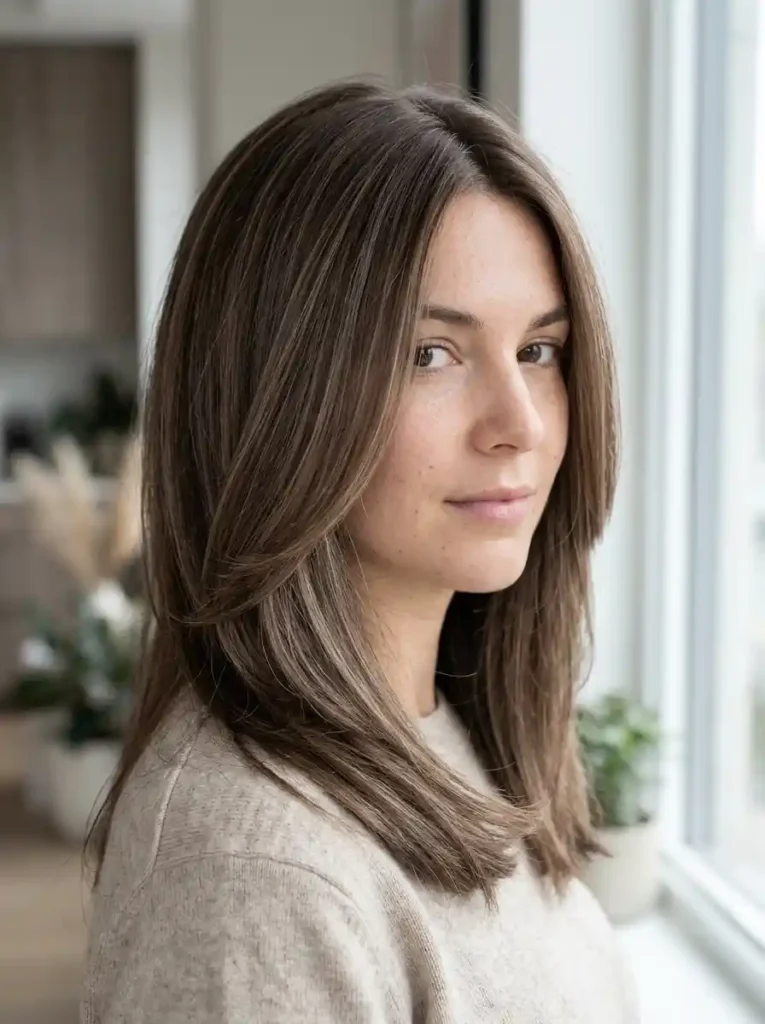
Babylights are an excellent option for anyone who wants mushroom brown hair to appear naturally dimensional rather than visibly highlighted. The technique uses very fine sections of hair, creating delicate variations that blend into the base. Instead of producing bold ribbons, the effect resembles a softly illuminated brunette shade. This can be particularly appealing for people who prefer understated color changes or want to introduce lighter tones gradually.
Because babylights involve many fine sections, the appointment may take longer than a simpler color service. Discuss the desired level of brightness before starting, since extremely subtle highlights may be difficult to distinguish on a very dark base. A neutral or cool toner can help maintain the mushroom effect as the highlights develop warmth over time. The finished color looks lovely with a simple blowout, and its delicate dimension remains visible even when you wear your hair in a low ponytail.
14. Mushroom Brown on Naturally Curly Hair
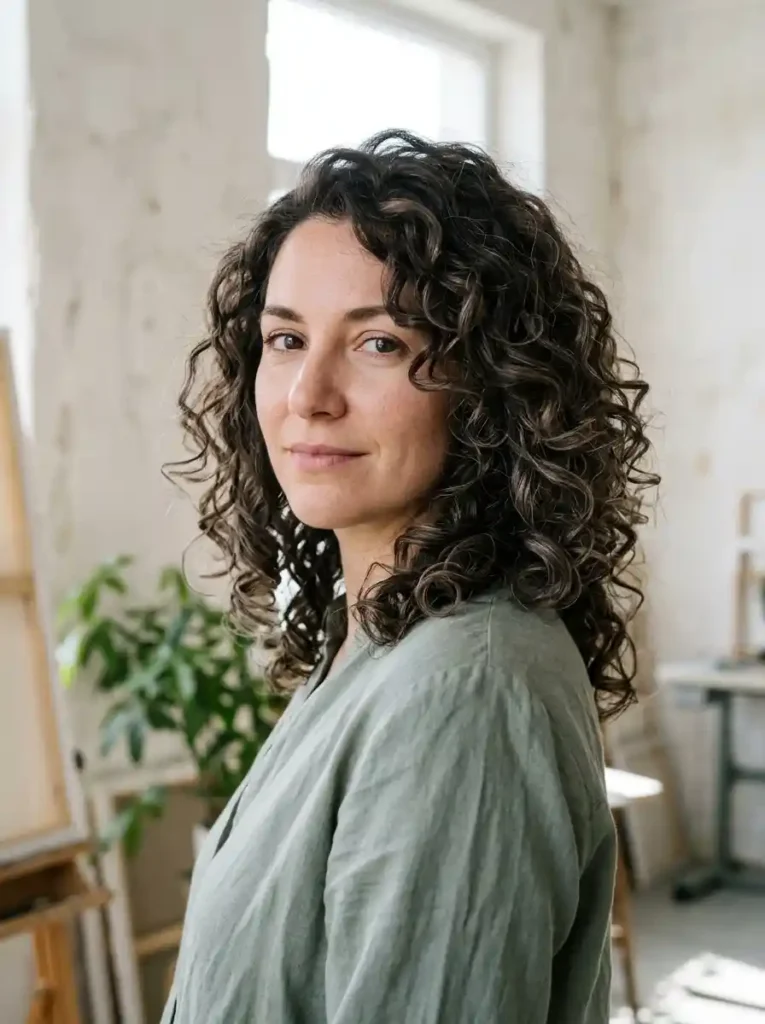
Mushroom brown can look beautiful on naturally curly hair because the curves and shadows of each curl create dimension even when the color changes are subtle. A neutral brown base with carefully placed taupe accents adds visual depth without requiring every section to be lightened. The most flattering placement depends on your curl pattern, since tighter curls and looser waves reflect light differently. A curl-aware colorist can work with the natural shape rather than treating the hair like a straight canvas.
Before coloring, discuss your usual wash routine, shrinkage, and styling preferences so the placement works when your curls are dry. Selective highlights can reduce the amount of hair exposed to lightening, which is worth considering if your curls are already dry or fragile. Use a moisturizing conditioner and a styling product suited to your curl type to support definition. Avoid judging the final color solely on wet hair, as the visible dimension often changes significantly once the curls dry and separate.
15. Mushroom Brown with Long Layers
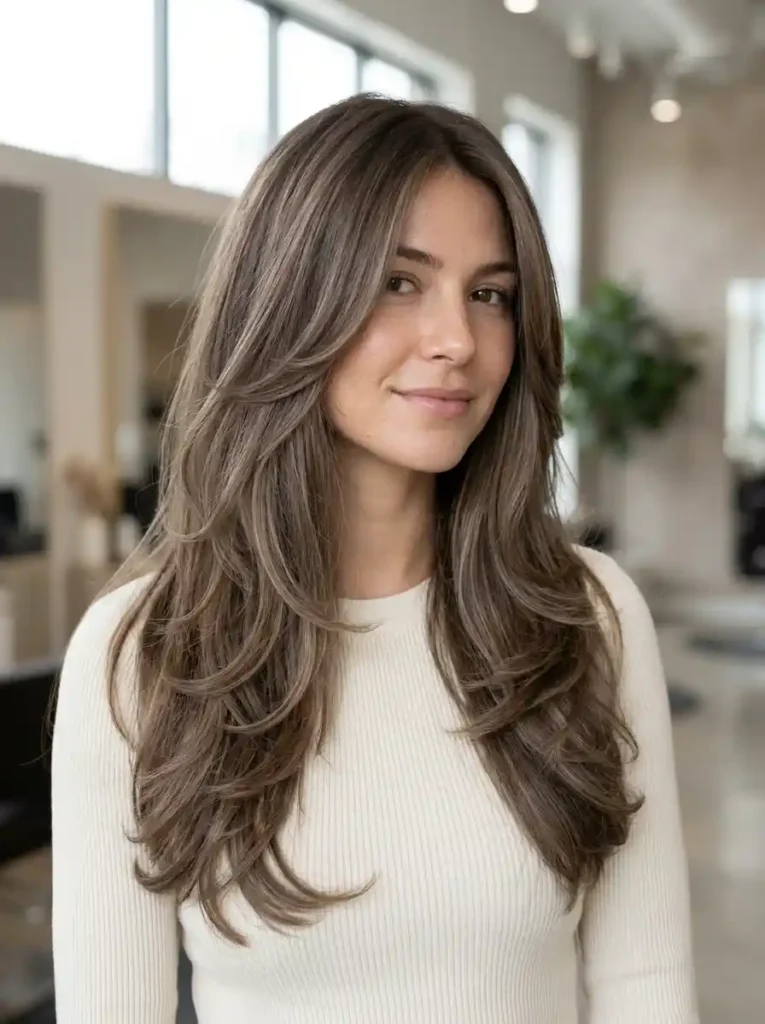
Long layers are a natural match for mushroom brown because they allow the color’s subtle variations to move rather than sit in a solid block. Face-framing pieces add softness, while longer layers create swing through the mid-lengths and ends. This haircut is flexible enough for people who want to retain their length but feel that their current style looks heavy. The mushroom brown shade adds interest without competing with the haircut’s flowing shape.
Ask your stylist to preserve enough weight at the ends if your hair is fine, since too many layers can make the lower lengths appear sparse. Thicker hair may benefit from internal shaping to reduce bulk without losing the overall length. A round-brush blowout creates a classic salon finish, while large, loose curls give the layers more separation. If you are adding highlights, placing them selectively around the layers can emphasize the movement without making the entire hairstyle look striped.
16. Mushroom Brown with a Glossy Glass-Hair Finish
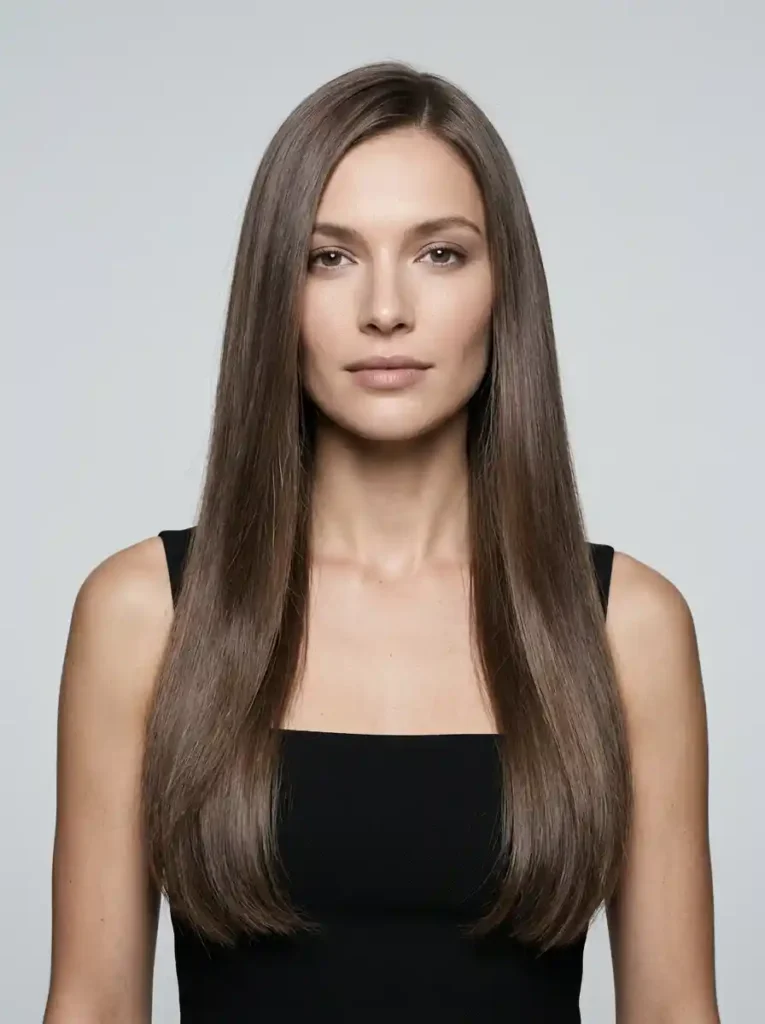
Glass hair emphasizes smoothness and reflective shine, making it a striking way to wear mushroom brown without relying on obvious highlights. The color should look balanced and dimensional beneath the glossy finish, rather than appearing like a flat, artificial coating. This style works particularly well for straight or naturally smooth hair, although other textures can achieve a similar effect with careful blow-drying and heat styling.
Start with a conditioning routine suited to your hair and use a heat protectant before straightening. Work in small sections with moderate tension, avoiding repeated passes over the same area. A lightweight finishing serum can smooth flyaways, but applying too much may make fine hair look greasy. If your hair is naturally curly or coarse, expect the style to require more effort and humidity control. A salon gloss can help refine the color, while regular conditioning supports the smooth appearance that makes glass hair distinctive.
17. Mushroom Brown with a Deep Side Part
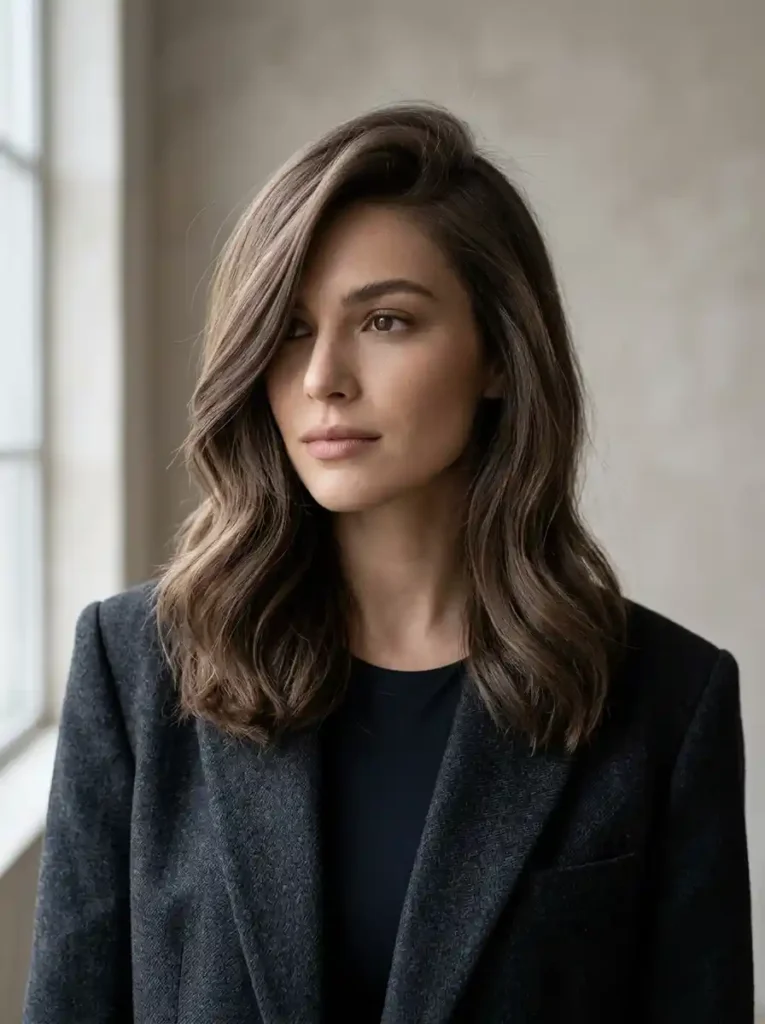
A deep side part changes the overall impression of mushroom brown hair without requiring a different cut or color service. It creates asymmetry, adds visual lift at the crown, and directs attention toward the face. The effect is especially appealing with shoulder-length hair or long layers, where the longer front section can sweep naturally across the forehead. The cool brunette shade keeps the result elegant, making it suitable for both everyday styling and more formal occasions.
To create the look, part your hair while it is damp and blow-dry the roots in the opposite direction before sweeping them into place. Large rollers can help create lift without adding excessive heat. If your hair naturally resists a side part, use a light styling product rather than a heavy gel that leaves the roots stiff. You can also move the part slightly off-center for a softer interpretation. The color itself requires no special adjustment, although gloss helps the curved sections catch the light.
18. Mushroom Brown with Smoky Beige Ends
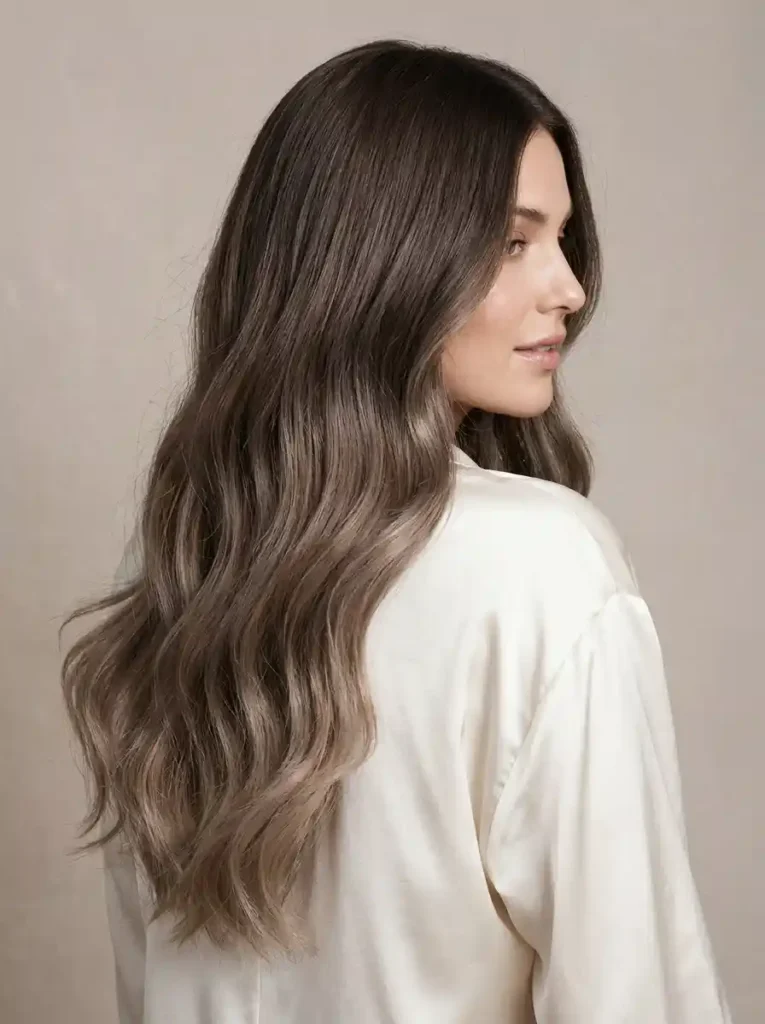
Smoky beige ends offer a lighter interpretation of mushroom brown while keeping the overall palette muted and sophisticated. Rather than creating a blonde finish, the lower lengths shift toward a soft taupe-beige that complements the deeper brunette base. This works especially well if you want the ends to stand out without making the entire hairstyle much lighter. The contrast can be subtle or more pronounced depending on your natural color and the amount of lightening required.
Ask your stylist to evaluate the condition of your ends before choosing how light to go, especially if you already have previous highlights. The lower lengths often need extra attention because they may be older, drier, or more porous than the roots. A gradual blend helps the finished color look intentional as it grows out. Use a nourishing mask when appropriate for your hair type, and arrange occasional trims to keep the lighter ends looking neat rather than thin or frayed.
19. Mushroom Brown with Wispy Bangs
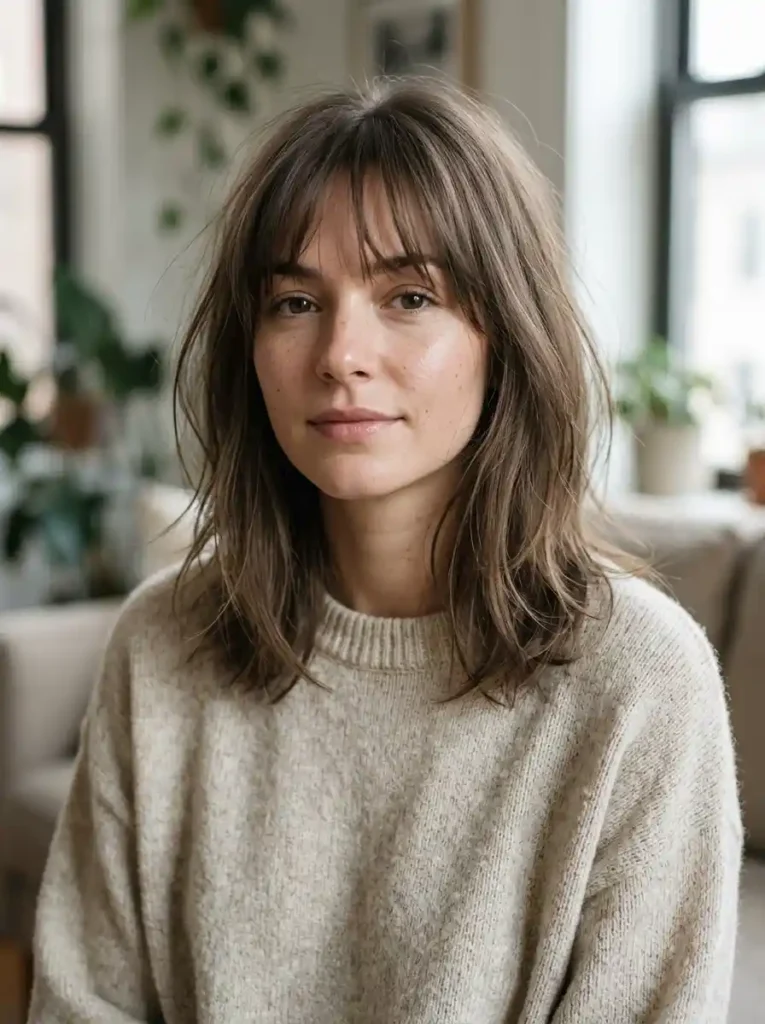
Wispy bangs offer a lighter alternative to a full fringe, giving mushroom brown hair a relaxed, slightly romantic appearance. The fine, separated pieces leave some forehead visible, so the style feels less structured than a blunt bang. Pairing them with muted brown tones creates a cohesive, soft finish that works with shoulder-length hair, long layers, and certain shorter cuts. The key is keeping the fringe airy instead of cutting it too thick.
Talk to your stylist about your natural growth pattern, particularly if you have a strong cowlick near the hairline. Wispy bangs can be easy to style, but they still benefit from a quick morning refresh with a small round brush or blow-dryer. A tiny amount of lightweight styling cream may help define the pieces without clumping them together. Because fringe can become oily more quickly than the rest of your hair, dry shampoo can be useful between washes when applied sparingly.
20. Mushroom Brown on a Pixie Cut
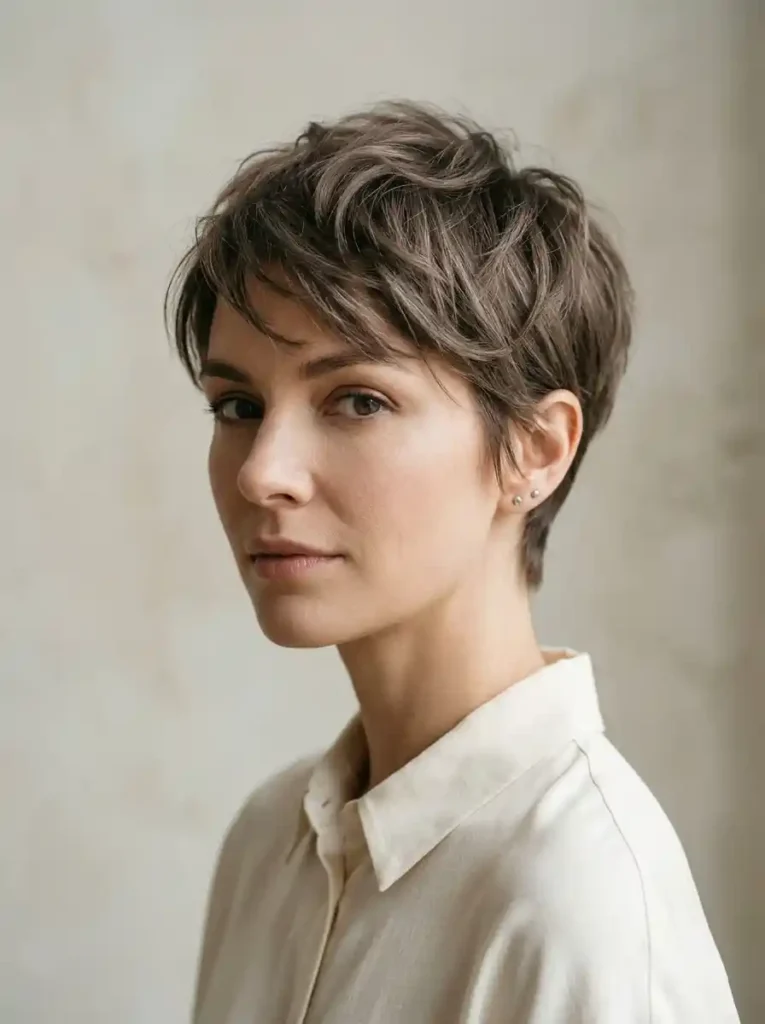
A mushroom brown pixie cut proves that this color trend is not limited to long, flowing hair. On a short haircut, the cool brunette shade creates a refined finish while the textured layers provide visual movement. Subtle tonal variation across the top can emphasize the shape without requiring bold highlights. This is a good option if you want a low-length hairstyle that still feels expressive, modern, and easy to adapt to different outfits.
The cut will usually need more frequent trims than a longer style to maintain its silhouette. Ask your stylist to consider how the crown, fringe, and sides grow out so the shape remains balanced between appointments. Styling is often simple: work a small amount of lightweight paste or cream through dry hair to separate the pieces. If your hair is naturally fine, avoid heavy products that flatten the crown. A color gloss can refresh the mushroom tone without adding unnecessary complexity to your routine.
21. Mushroom Brown with Subtle Rose-Taupe Undertones
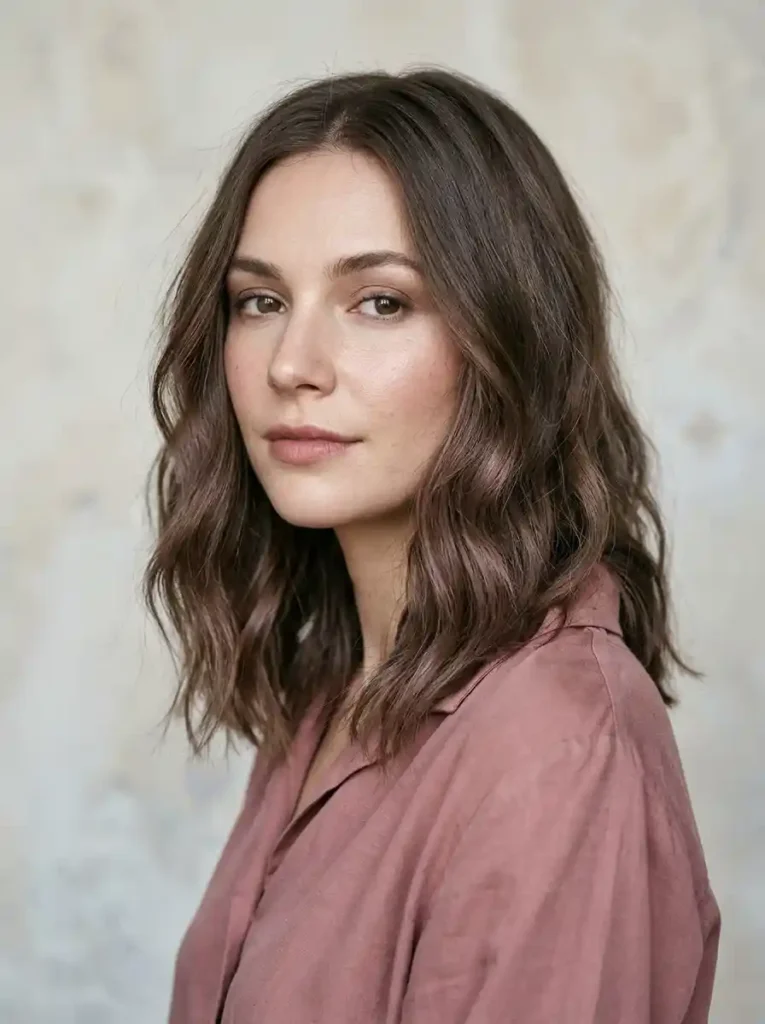
Rose-taupe mushroom brown is an interesting variation for anyone who wants a cooler brunette shade with a hint of softness. The underlying brown remains the dominant color, while a muted rosy reflection adds a distinctive twist. The effect should be subtle rather than visibly pink, making it suitable for people who want something different without moving into a vivid fashion color. The exact result depends on the starting shade and the color formula your stylist selects.
Bring inspiration photos to distinguish between a barely perceptible rose undertone and a more noticeable mauve-brown finish. Lighting can change how these nuances appear, so look at references taken in both daylight and indoor settings. A professional gloss may be useful for creating or refreshing the tonal effect, although the longevity will vary with your hair’s porosity and washing routine. Pair the shade with neutral clothing or muted pink accents if you want to echo its undertones without making the overall look feel overly coordinated.
22. Mushroom Brown with a Soft Root Melt
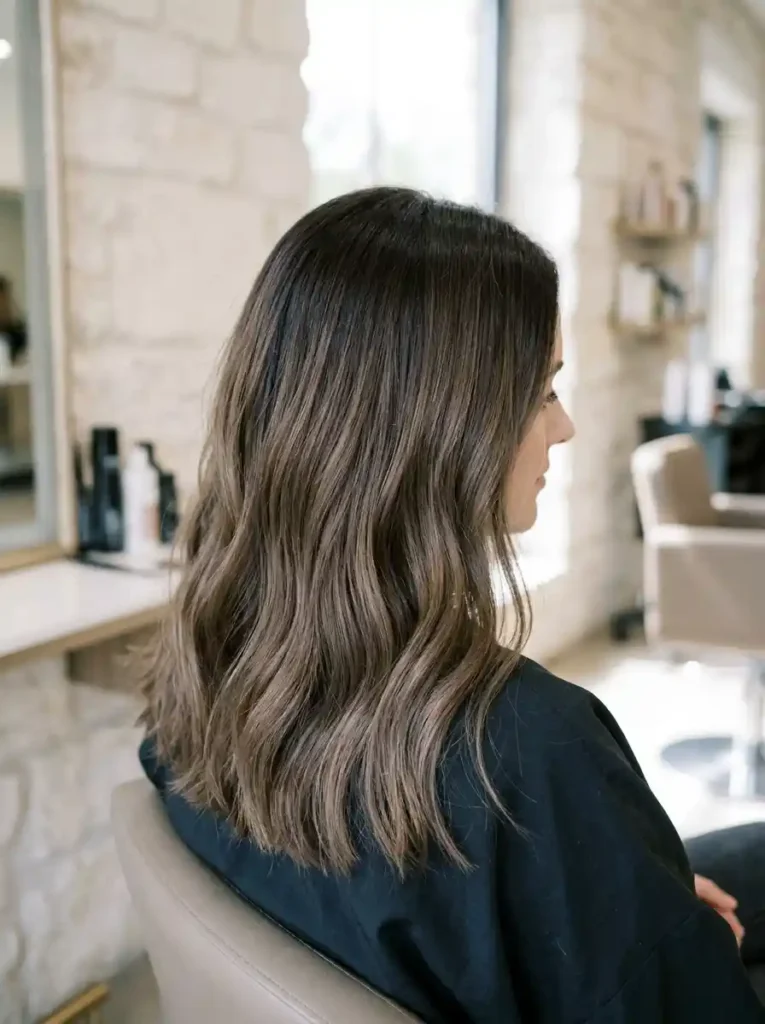
A soft root melt creates a gradual transition between a darker root area and lighter mushroom brown lengths. It is particularly useful if you have highlights or want a more dimensional brunette shade without a conspicuous line of regrowth. Because the root color blends into the rest of the hair, the overall appearance can remain polished as your natural color grows in. The technique also helps connect multiple brunette tones into one cohesive result.
Your stylist should select a root shade that works with your natural color and the existing lengths rather than simply applying the darkest possible brown. An overly deep root can create too much contrast, while an insufficiently blended transition may look like separate color bands. Loose waves reveal the gradient, but straight hair can showcase the precision of the blend. Ask about the expected maintenance schedule, since the need for refreshing depends on how much contrast you choose and how quickly your roots become noticeable.
23. Mushroom Brown with Dimensional Lowlights
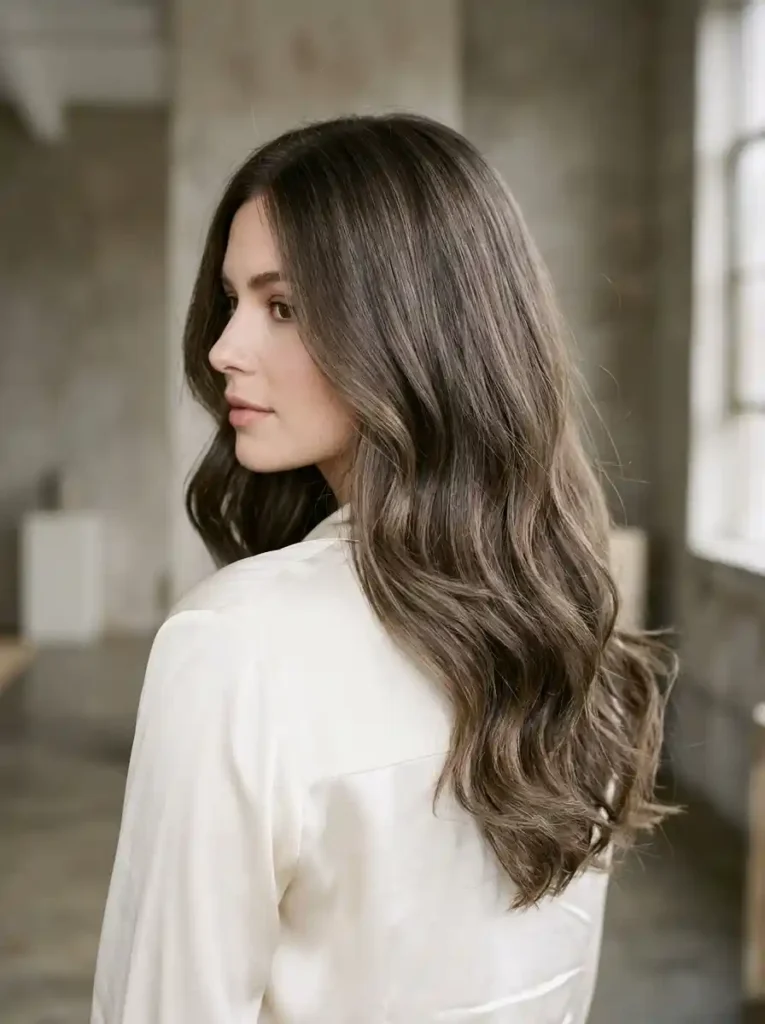
Dimensional lowlights are a smart choice if your brunette hair has become too light or uniform from previous highlighting. By adding deeper brown sections, your colorist can restore contrast and make the overall mushroom brown shade look richer. The deeper pieces work alongside existing highlights instead of covering everything with one flat color. This technique can also help a heavily highlighted brunette move toward a more natural-looking color without making the hair appear dramatically darker.
The placement of the lowlights matters more than adding as many dark sections as possible. Ask your stylist to preserve some of the lighter pieces so the finished result retains movement and softness. Closely related shades usually create a more seamless effect than a sharp contrast between very dark and very light strands. A gloss may help refine the final tone, depending on your hair’s condition and existing color. With regular conditioning and thoughtful styling, the blend can remain attractive as the different shades grow out.
Conclusion
Mushroom brown hair offers plenty of ways to refresh your look, whether you prefer a rich, dark brunette, a softly highlighted balayage, or a lighter taupe-inspired finish. The best choice depends on more than the color itself. Your natural base, hair texture, haircut, styling habits, and willingness to maintain highlights all influence which version will suit you best.
Before your salon appointment, save two or three reference photos that show the color you like in different lighting conditions. Tell your stylist whether you prefer cool ash tones, neutral beige dimension, or a deeper smoky brown, and discuss how much lightening your hair can comfortably handle. This makes it easier to create a realistic plan for your desired result.
Finally, remember that beautiful color depends on healthy-looking hair as much as the formula. Use suitable conditioning products, protect your strands from excessive heat, and schedule toning or trims when needed. With the right combination of shade, cut, and care, mushroom brown can become a versatile, sophisticated look you genuinely enjoy wearing throughout the year.


