
Bronde hair is the perfect middle ground for anyone who loves the warmth of brunette hair but craves the brightness of blonde. Blending the two shades creates a dimensional, sun-kissed finish that can look subtle and natural or bold and beautifully noticeable, depending on how the color is placed. The best part? Bronde isn’t limited to one hair color, skin tone, length, or styling preference.
Whether you’re dreaming of soft caramel ribbons, cool beige highlights, golden balayage, or a rich brunette base with delicate blonde accents, there’s a bronde look that can complement your personal style. You can even choose techniques that keep your roots natural, making regrowth less noticeable and salon appointments easier to manage.
In this guide, you’ll discover 21 gorgeous bronde hair color ideas, from effortless beach-inspired waves to polished, dimensional brunette-blonde blends. Each look offers inspiration for your next salon visit, along with practical advice on choosing flattering tones, maintaining shine, and getting the most out of your color. Save your favorite ideas to Pinterest and bring a few reference photos to your stylist so you can create a bronde look that feels uniquely yours.
1. Classic Sun-Kissed Bronde Balayage
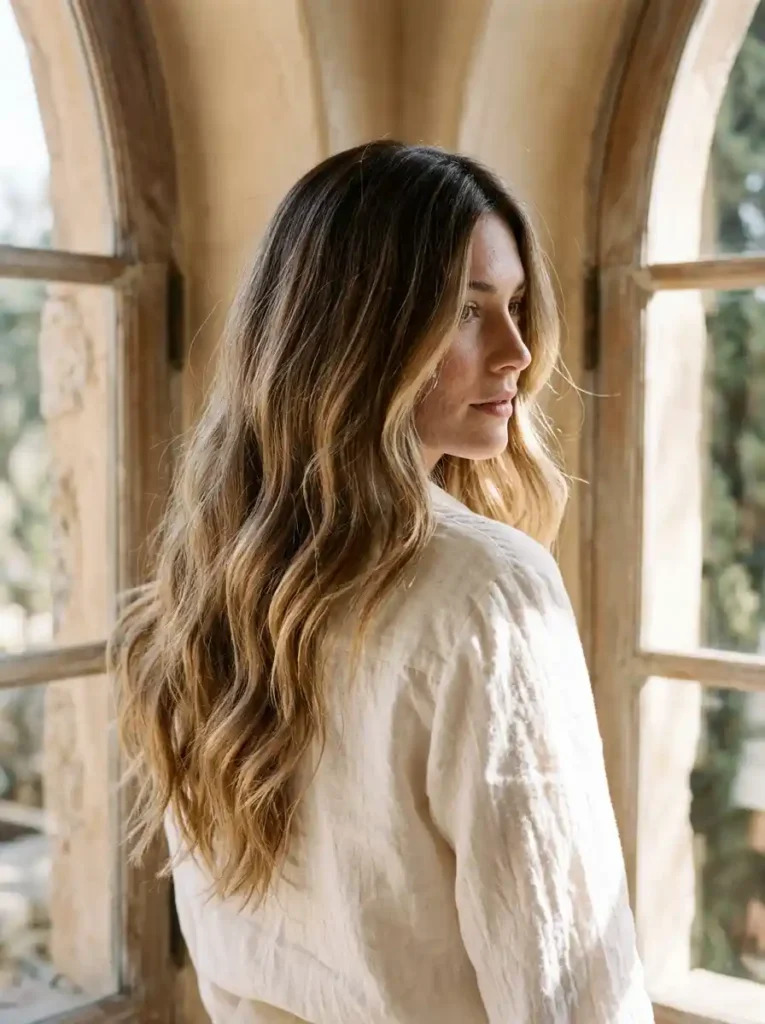
Classic sun-kissed bronde balayage is an excellent starting point if you want brighter hair without losing the richness of your natural brunette shade. The stylist paints lighter pieces through the mid-lengths and ends, concentrating brightness around the face and upper layers. Honey, caramel, and soft beige tones create a naturally blended finish that resembles hair lightened gradually by the sun. The result looks dimensional rather than uniformly blonde, making it particularly appealing for anyone who prefers understated color.
This technique works beautifully on long layers, medium-length cuts, and loose waves because movement reveals the different shades. Ask your colorist to keep your root area close to your natural color for softer regrowth and fewer maintenance appointments. A color-safe shampoo, regular conditioning treatments, and heat protection help preserve the finish. If your hair pulls orange after lightening, discuss a suitable toner rather than choosing an excessively ashy shade that could make your warm bronde appear dull.
2. Caramel Bronde for a Rich, Warm Finish
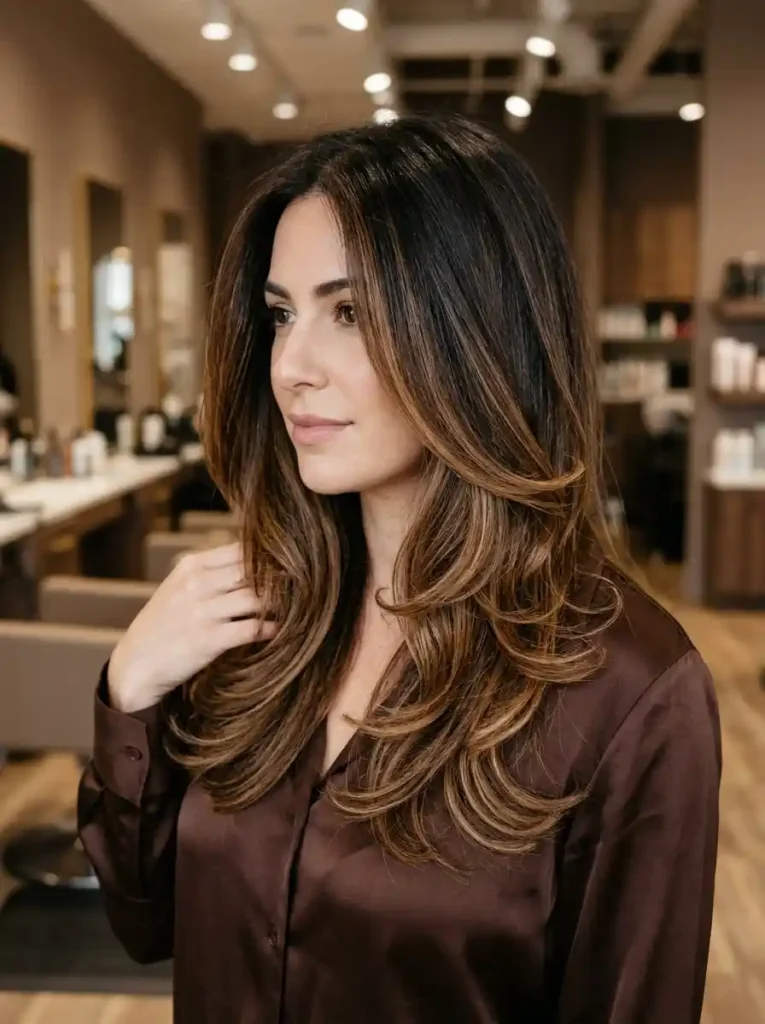
Caramel bronde brings warmth and depth to brunette hair without taking it into a noticeably blonde territory. The combination of a deep brown base and golden-caramel highlights creates a rich, glossy appearance that looks especially beautiful when the hair catches the light. Instead of scattering pale streaks throughout the head, your stylist can use caramel ribbons strategically around the crown, sides, and ends. This placement creates movement while preserving enough brunette depth to keep the overall color grounded.
Consider this shade if you prefer warm hair colors or want a softer introduction to highlights. It pairs particularly well with layered cuts, long bobs, and voluminous blowouts that reveal the contrast between darker and lighter strands. Ask for caramel tones that complement your existing base rather than choosing highlights several levels lighter without a clear plan. Gloss treatments can refresh the richness between appointments, while a nourishing conditioner helps prevent the lighter sections from looking dry or rough.
3. Cool Beige Bronde with Mushroom Undertones
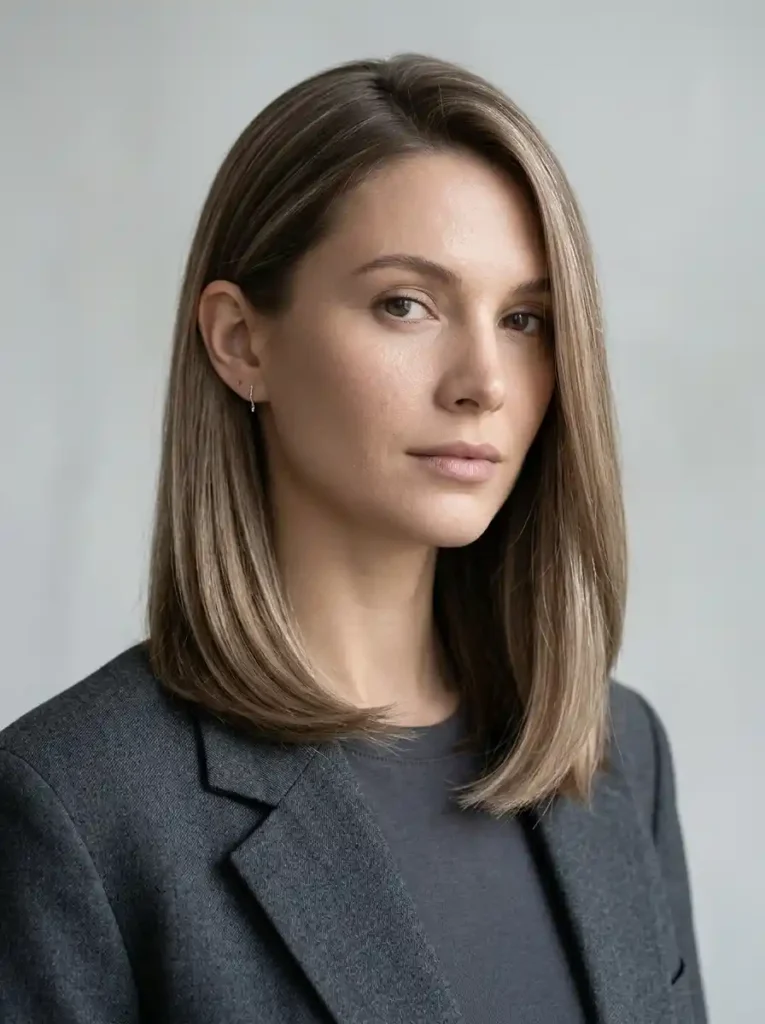
Cool beige bronde is ideal for anyone who loves a sophisticated brunette-blonde blend without strong golden or copper undertones. Mushroom-brown roots transition into muted beige highlights and soft taupe lowlights, creating a restrained palette with plenty of dimension. The effect is particularly striking on sleek hairstyles because the cooler tones form a smooth, smoky gradient. Rather than looking dramatically highlighted, the finished color appears thoughtfully blended, with different shades becoming visible as the hair moves.
This look may suit people who prefer neutral or cool color palettes in their wardrobe and makeup, although the best undertone depends on your individual coloring and preferences. Ask your stylist to assess your existing hair pigment before choosing an ash or beige toner, especially if your hair has previously been colored warm brown. Cool shades can fade or reveal warmth over time, so color-safe products and occasional salon glosses can help maintain the intended tone without unnecessary repeated bleaching.
4. Golden Bronde for a Bright, Radiant Look
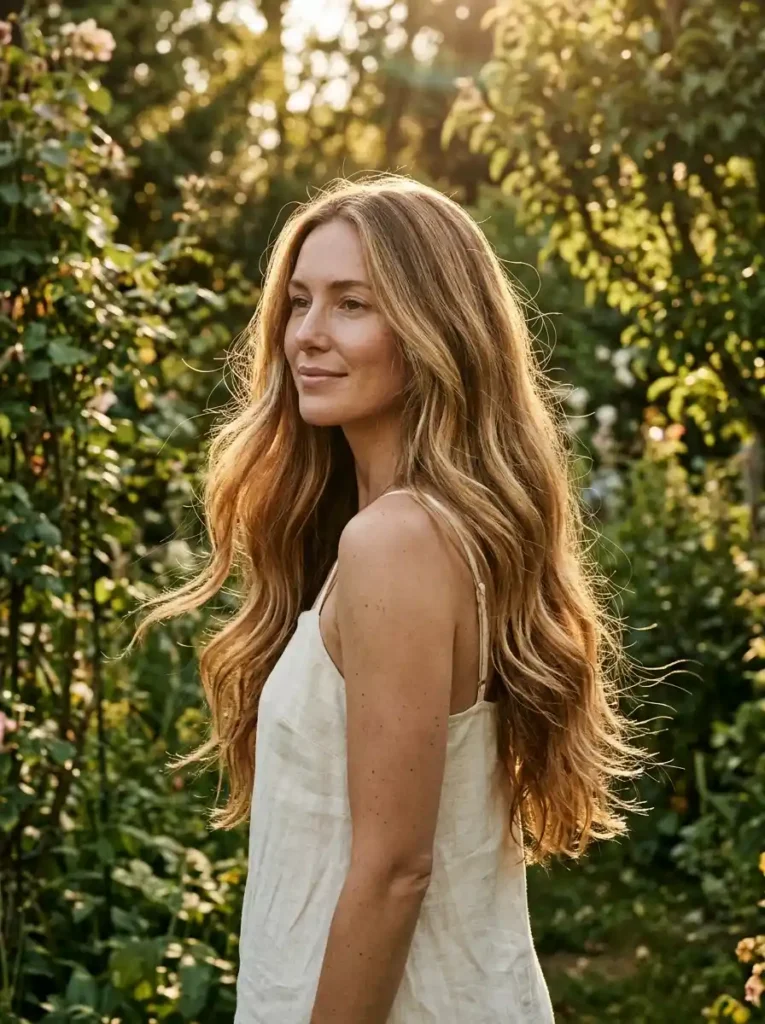
Golden bronde offers a brighter, warmer interpretation of the brunette-blonde trend. Think soft honey, golden wheat, and creamy blonde accents woven through a light-brown or medium-brown base. These shades work together to create a luminous finish without requiring the entire head to be lightened. Strategic highlights around the front and through the upper layers help the color catch natural light, while deeper pieces underneath preserve the richness that makes bronde different from an all-over blonde.
If you enjoy warm, glowing hair color, ask your stylist to balance golden highlights with enough natural depth to avoid a flat appearance. This shade can look particularly lovely in beachy waves, long layers, and softly brushed curls. Because golden tones may become brassy as the color changes, discuss how to refresh the warmth without making it too yellow. A lightweight leave-in conditioner and heat protectant are useful additions if you regularly style your hair with curling irons or blow-dryers.
5. Face-Framing Bronde Money Pieces
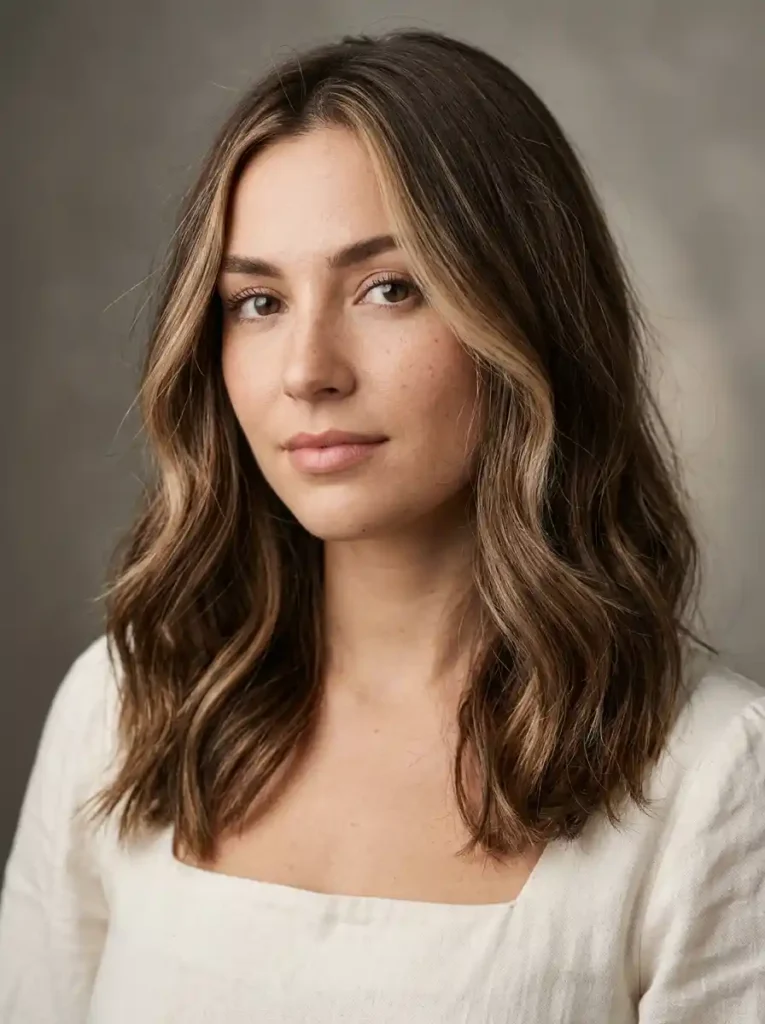
Face-framing bronde money pieces offer a noticeable refresh without requiring extensive highlights throughout your hair. Lighter sections around the temples and front hairline brighten the overall look, while the deeper brunette lengths provide contrast. You can choose soft caramel for a subtle effect, beige blonde for a neutral finish, or honey blonde for more warmth. The width and placement of these sections make a significant difference, so the final result can be delicate and blended rather than sharply striped.
This option works on many lengths, including bobs, shoulder-length cuts, and long layers. If you usually wear your hair parted down the middle, ask your stylist to balance both sides carefully; a side part may require slightly different placement. Remember that front pieces can become dry more quickly because they are frequently exposed to heat styling and sunlight. Use heat protection, condition the lighter strands consistently, and request a gentle blend at the roots if you want the look to grow out naturally.
6. Dark Bronde for Brunettes Who Want Subtle Change
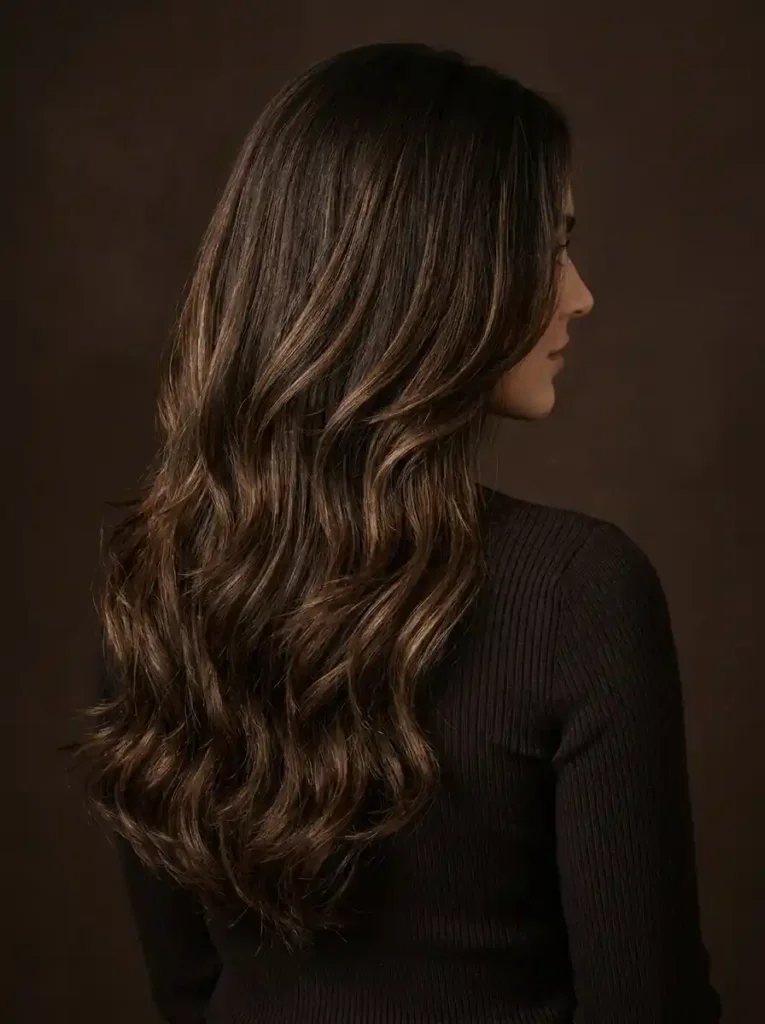
Dark bronde is a beautiful option when you want a visible improvement in dimension but aren’t ready for a light overall color. An espresso or deep-brown base is paired with a small amount of mocha, bronze, or muted caramel, allowing the highlights to emerge gradually rather than dominate. Because the contrast is restrained, the hair can appear richer and fuller-looking without losing its brunette identity. It is especially appealing for anyone who prefers an understated, polished finish.
Ask your colorist to place lighter pieces where they will be visible in your usual hairstyle, such as around the crown, through the mid-lengths, or near the ends. You may not need dramatic lightening to achieve the desired effect, depending on your starting shade. Dark bronde also makes a practical choice for people who want fewer visible regrowth lines. Maintain the depth with gentle cleansing products, and avoid layering overly dark box dye over your highlights if you hope to lighten the color later.
7. Bronde Balayage on Long, Layered Hair
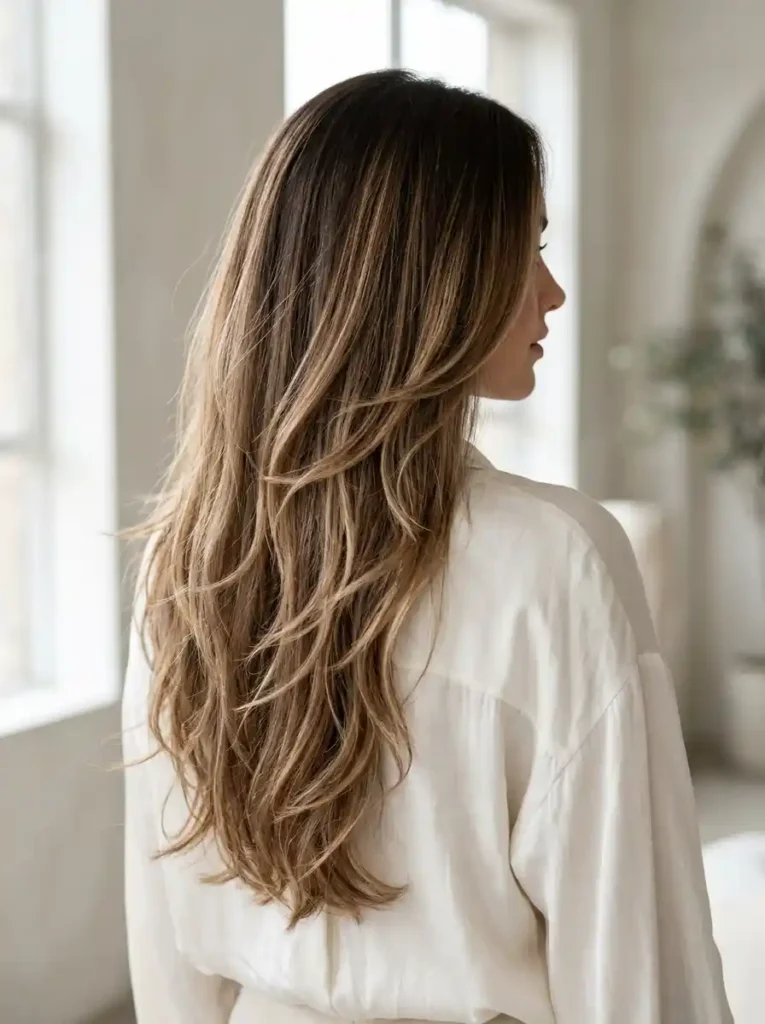
Long, layered hair gives bronde balayage plenty of space to show off its gradual transitions. A brunette base can remain darker near the scalp while lighter pieces are painted along the layers, becoming more visible toward the ends. The result adds movement to long hair without creating the rigid appearance that can come from evenly spaced highlights. Combining two or three complementary shades also helps the color look dimensional from different angles, whether the hair is worn straight or in loose waves.
Before your appointment, decide how much brightness you want around your face and at the ends. Layers that begin around the cheekbones may benefit from carefully placed highlights, while longer, softer layers can carry the lighter tones farther down. If your ends are already damaged, tell your stylist before requesting substantial lightening. Regular trims, conditioning masks, and gentle detangling help keep long bronde hair looking healthy, especially where older highlights have been processed more than once.
8. Bronde Bob with Soft, Dimensional Highlights
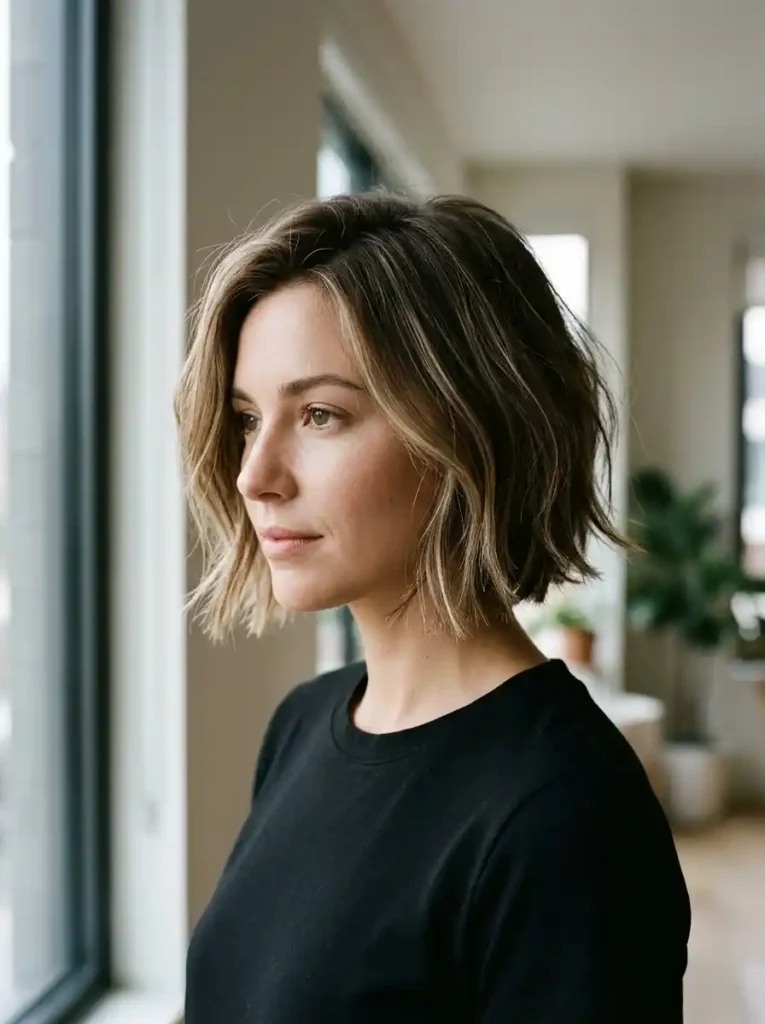
A bronde bob proves that you don’t need long hair to enjoy dimensional color. The shorter length allows highlights to accentuate the shape of the cut, especially when lighter pieces follow the movement of textured ends. A combination of medium brown, beige blonde, and a few brighter strands around the front creates definition without overwhelming the haircut. The effect can feel modern and effortless, whether your bob is blunt, softly layered, or slightly angled toward the face.
For the most flattering placement, ask your stylist to consider how your bob falls when dry and styled as you normally wear it. Fine highlights can create visual texture in a blunt cut, while broader ribbons may work better with choppy layers. Avoid concentrating too much lightness at the tips if you want to maintain the appearance of fullness. A small round brush or flat iron can enhance the shape, but a heat protectant helps preserve the lighter sections between salon visits.
9. Honey Bronde with Loose Beach Waves
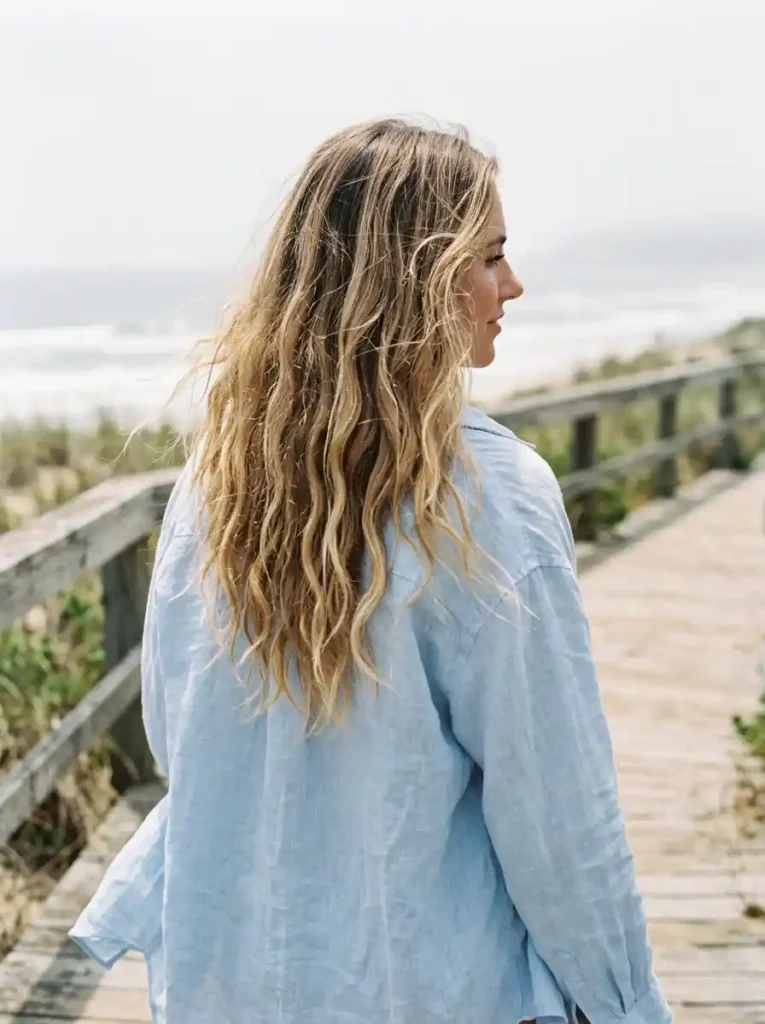
Honey bronde paired with beach waves creates a relaxed, sunlit look without needing an aggressively light color. Warm honey highlights blend into a brunette base, while slightly brighter ends emphasize the waves’ natural movement. The mix of tones prevents the hair from looking like a single flat shade, particularly when light falls across the curved sections. This combination is a lovely choice if you want a casual, vacation-inspired finish that still looks polished enough for everyday wear.
To style the waves, apply a lightweight heat protectant and use a curling wand with alternating curl directions, leaving the ends slightly straighter for a relaxed finish. A small amount of texturizing spray can add separation, but too much product may make the hair feel dry or stiff. If your natural hair is already wavy, experiment with air-drying and a lightweight styling cream. Ask for honey tones that suit your base color so the overall result stays harmonious as it grows.
10. Bronde with a Shadow Root
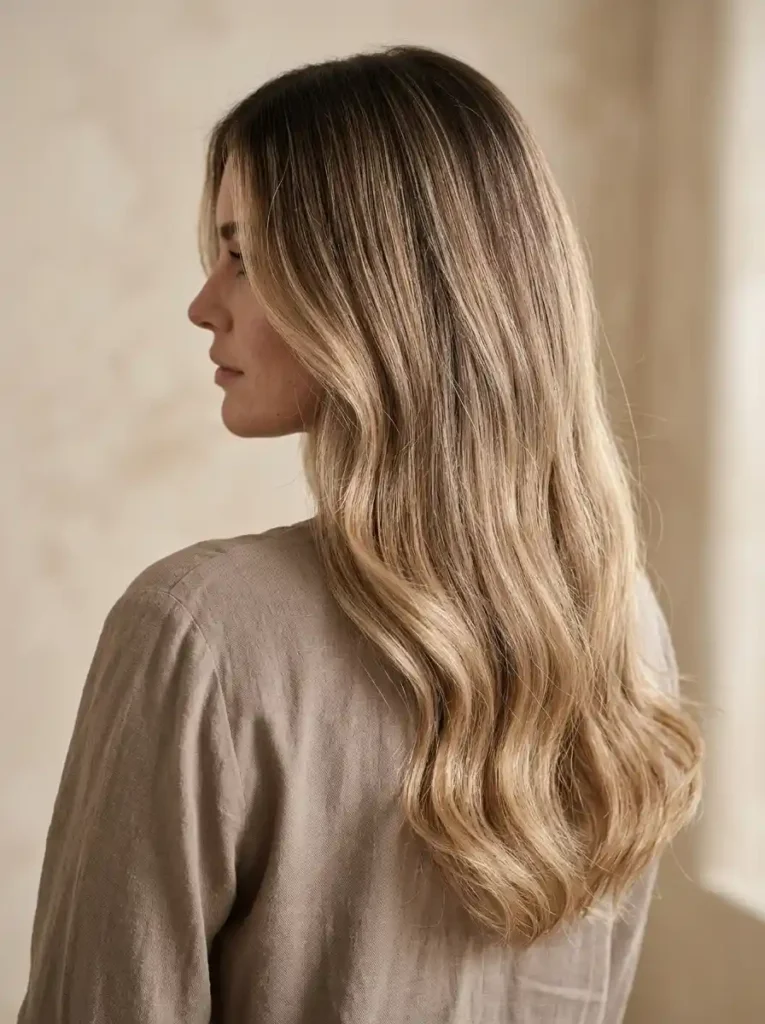
A shadow root gives bronde hair a softly graduated appearance by keeping the area near the scalp deeper than the highlighted lengths. The darker root connects the color to your natural brunette base, while beige, caramel, or honey tones add brightness farther down. This technique is especially useful if you like lighter hair but dislike the sharp line that can appear as traditional highlights grow out. When blended carefully, the transition looks intentional rather than like an overdue color appointment.
Your stylist can customize the root depth according to your natural color and how light you want the ends to appear. A subtle shadow root offers a refined result, while a stronger contrast creates a more noticeable gradient. Keep in mind that a shadow root may still need refreshing eventually, particularly if you want a very specific tonal balance. Use gentle color-care products, and ask how often a gloss or toner might be appropriate for maintaining the lighter sections without repeatedly processing the roots.
11. Rose Bronde for a Soft Rosy Finish
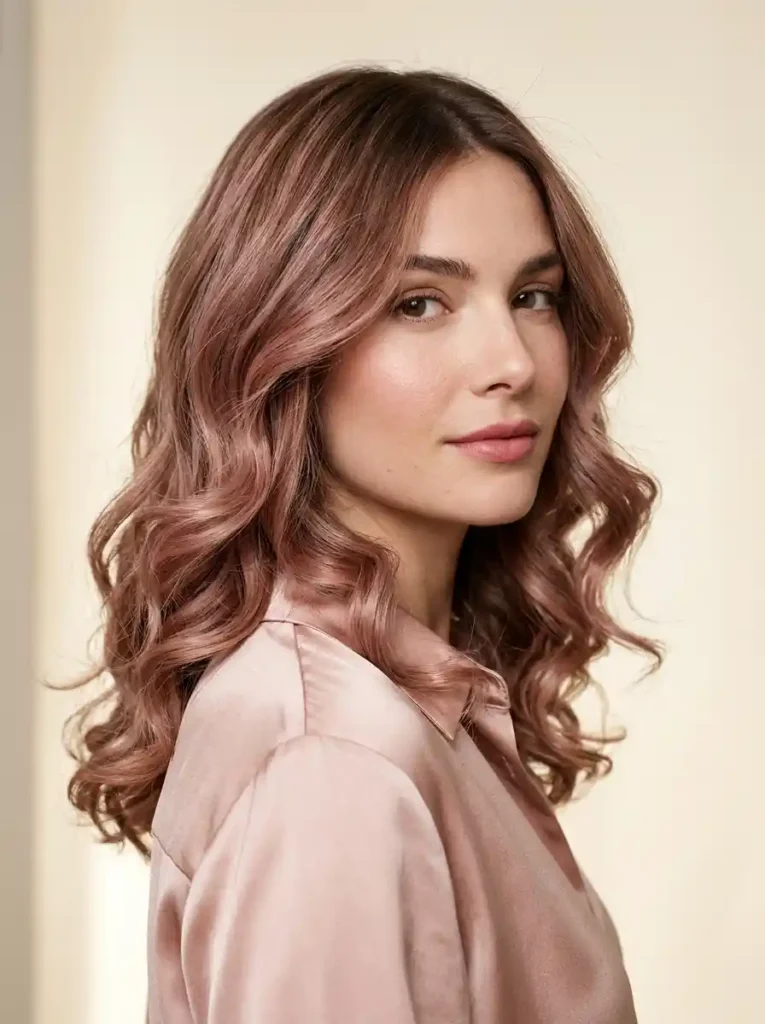
Rose bronde adds a delicate rosy cast to the familiar brunette-blonde combination. Instead of choosing a vivid pink transformation, your colorist can blend muted rose-beige tones into a light brown base with blonde highlights. The resulting shade feels soft and distinctive, especially when the rosy pieces appear through the mid-lengths and ends. It offers a creative alternative for someone who enjoys warm neutrals but wants a subtle color twist that looks different from conventional caramel or honey bronde.
The best approach depends on your starting color and the intensity of the rose you want. Ask for a wearable, muted finish and discuss whether a gloss or carefully formulated toner can achieve your preferred effect. Rosy pigments may fade faster than more traditional brunette tones, so the color may require periodic refreshing. Washing less frequently when practical, using color-safe shampoo, and limiting excessive heat can help maintain the desired appearance. Keep reference photos in different lighting to clarify how subtle or pink you want the result.
12. Bronde Highlights on Naturally Curly Hair
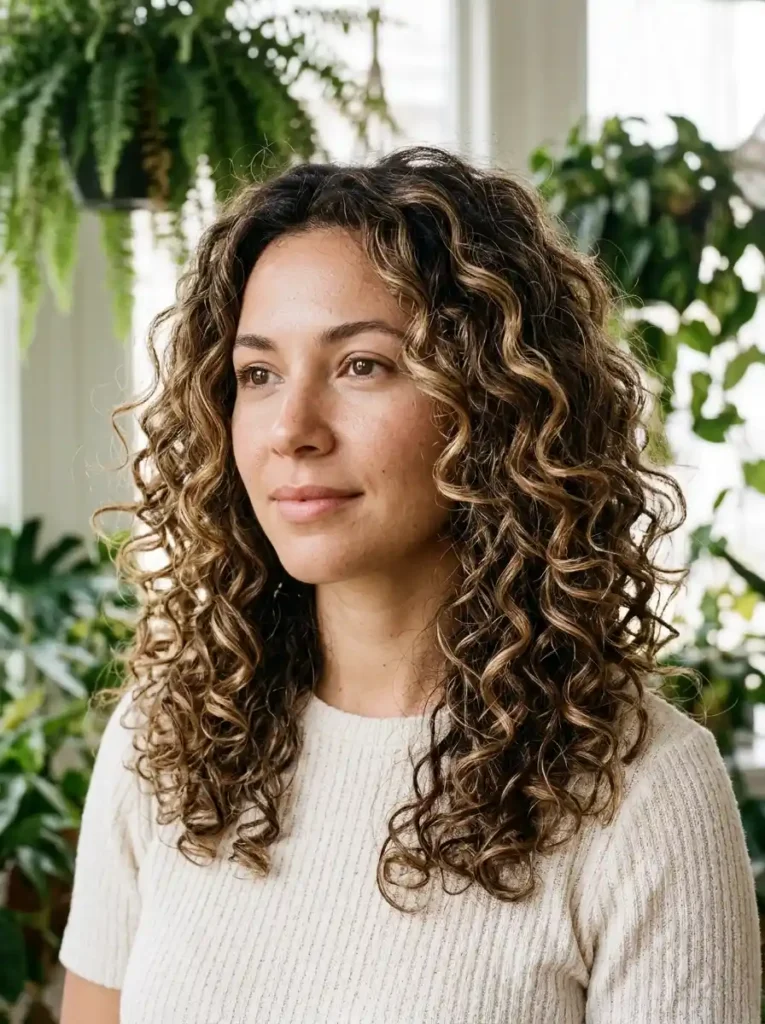
Bronde highlights can look especially dimensional on naturally curly hair because each curl reflects light differently. Rather than coloring every strand uniformly, a stylist can place caramel or honey highlights selectively across the outer layers and around the face. Darker sections underneath preserve depth, while the lighter ribbons help individual curls stand out. The goal is to complement the curl pattern instead of creating a solid block of color that hides its natural shape and movement.
Choose a stylist experienced with both textured hair and highlighting, since curl condition, shrinkage, and the way your hair sits when dry all influence placement. Lightening can make already fragile curls feel drier, so a gradual approach may be preferable to a dramatic transformation in one appointment. Use a moisturizing conditioner, a curl-friendly leave-in product, and gentle detangling techniques. When discussing your inspiration photos, prioritize examples with a similar curl pattern, because the same color placement can look very different on straight hair.
13. Champagne Bronde for an Elegant Blonde Blend
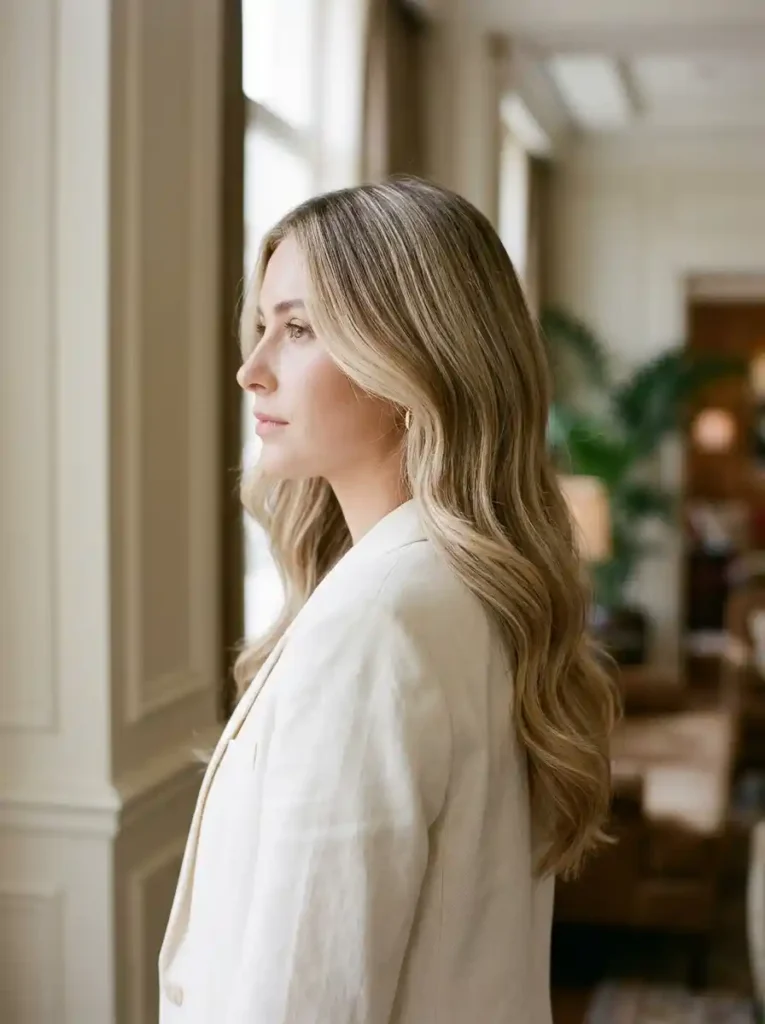
Champagne bronde sits on the lighter, more refined side of the color spectrum. Creamy champagne highlights and neutral beige ribbons brighten a light-brown or dark-blonde base, while subtle lowlights prevent the result from appearing one-dimensional. The overall effect is softer than a full platinum blonde and less golden than traditional honey bronde. If you want a polished, sophisticated color that works beautifully with smooth blowouts and gentle waves, this balanced blend is worth discussing with your stylist.
Champagne tones often require more lightening than darker caramel or mocha combinations, so your starting color and hair condition matter. Ask your stylist whether your hair can reach the desired brightness in one session or would benefit from a gradual plan. Avoid choosing a toner solely because it looks icy in a photograph; overly cool tones may not create the creamy finish you want. Regular conditioning, careful heat styling, and occasional professional toning help maintain the softness and balance of this elegant bronde variation.
14. Chocolate Bronde with Glossy Brunette Depth
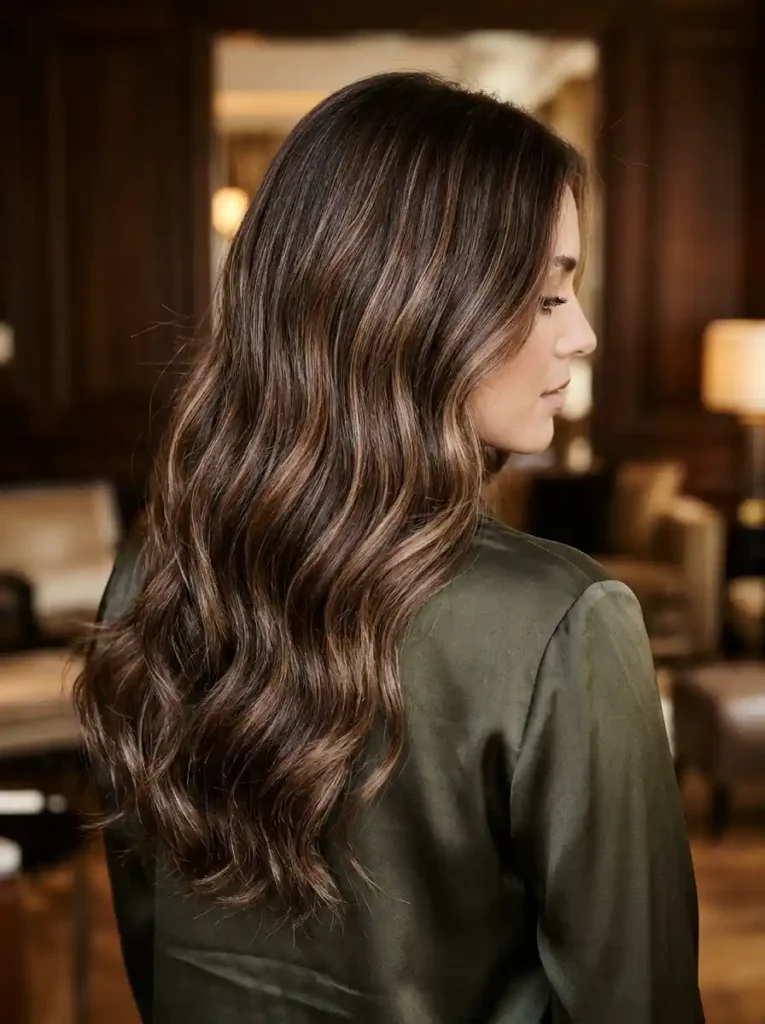
Chocolate bronde combines the richness of deep brown hair with carefully selected lighter ribbons for a luxurious, dimensional finish. Espresso, cocoa, and mocha tones create a deep foundation, while bronze or beige highlights keep the color from appearing too uniform. Unlike a heavily highlighted look, the contrast remains subtle until the hair moves or catches the light. This makes the shade particularly appealing for brunettes who love glossy, rich color but want more visual interest than a single-process brown.
Ask your colorist to preserve the chocolate depth around the roots and underneath the hair while introducing highlights where they will enhance your cut. This placement can make long waves look especially intricate without requiring a dramatic overall change. If your hair has accumulated dark permanent dye, be realistic about the lightness achievable in one appointment. A professional color assessment helps avoid unnecessary damage. To maintain the finish, use gentle cleansing products and prioritize conditioning rather than relying on heavy oils that can weigh down finer hair.
15. Bronde Lob with Textured Ends
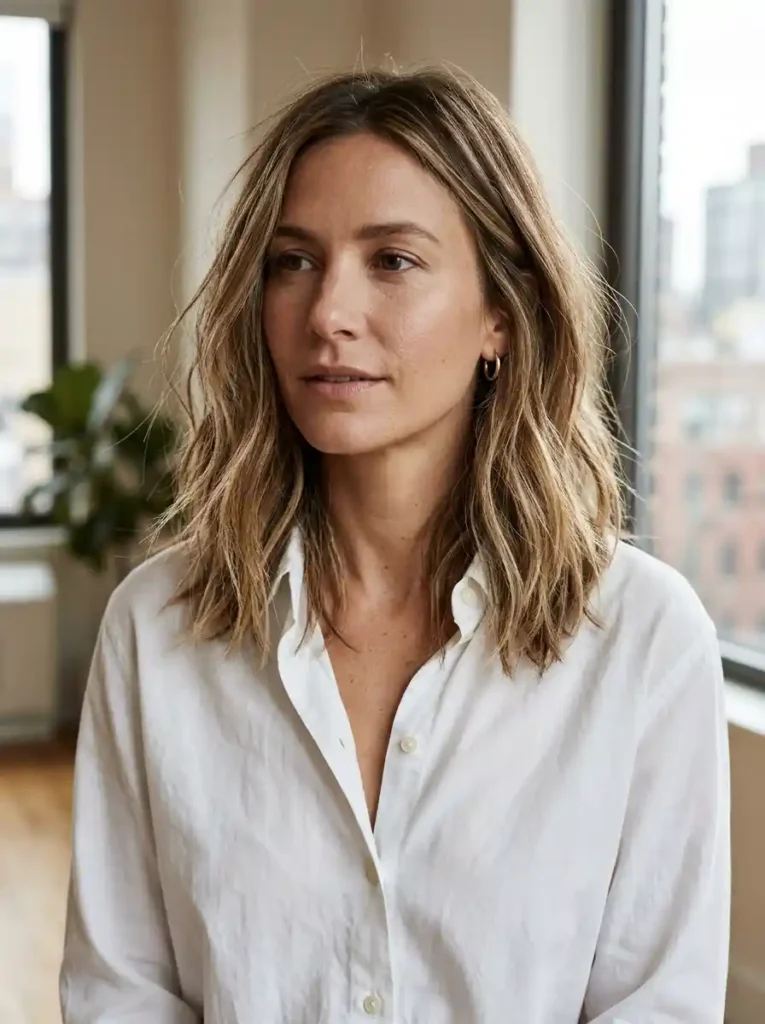
A textured lob offers a versatile canvas for bronde because its uneven ends and soft layers reveal different tones with every movement. Sandy blonde and caramel highlights can be placed through the outer layers, while a darker root keeps the color connected to the brunette base. The result is modern and relaxed without looking unfinished. Whether your lob is blunt with subtle bends or more heavily layered, strategic highlights can help define the shape and create a sense of depth.
When requesting this look, explain how much styling you typically do each morning. If you prefer an air-dried finish, your stylist can place highlights to work with your natural texture rather than relying on a perfect salon blowout. A texturizing cream may help separate the ends, while a light smoothing product can control unwanted frizz. Keep the lighter pieces healthy with regular conditioning and trims as needed. The right balance of brightness and depth should complement the haircut, not compete with its silhouette.
16. Copper Bronde for Warm, Autumn-Inspired Color
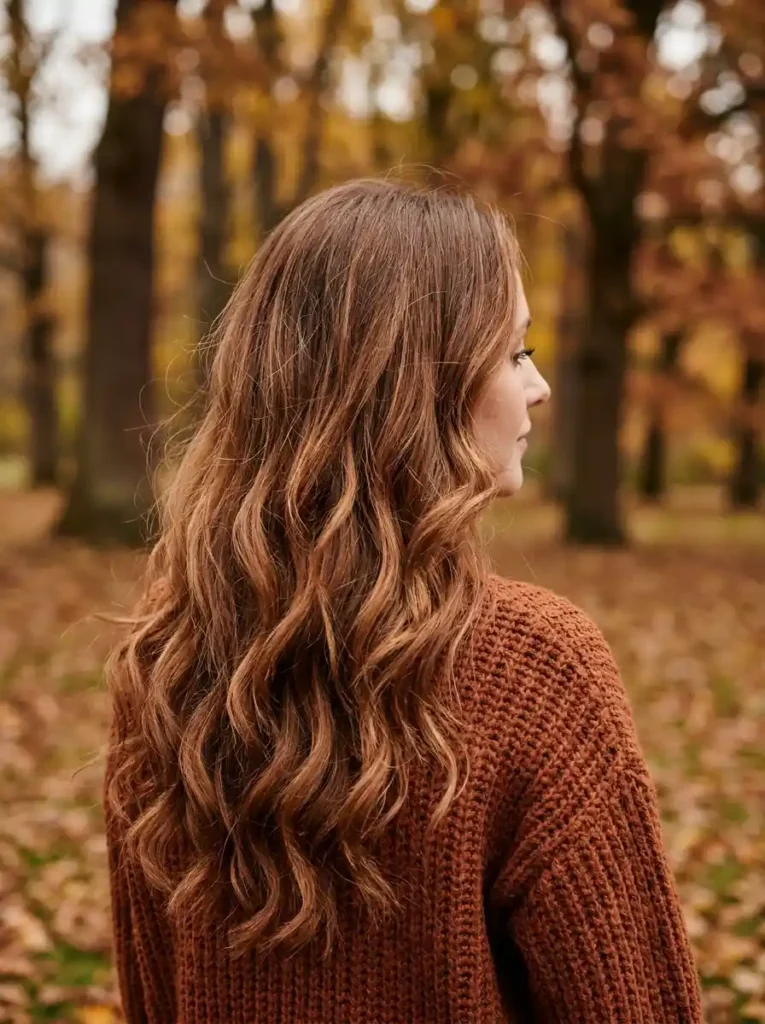
Copper bronde introduces a hint of red warmth into the brunette-blonde palette. Chestnut brown, cinnamon, muted copper, and warm blonde strands create a dimensional color that feels particularly inviting in autumn but can be worn throughout the year. The copper notes add character without requiring an all-over red transformation. When the highlights are blended rather than placed in obvious stripes, the result looks balanced, with brunette depth still visible through the roots and lower layers.
This shade is worth considering if you enjoy warm hair colors and want something more distinctive than caramel alone. Ask your stylist to show you copper options ranging from subtle chestnut warmth to more noticeable cinnamon accents. Red and copper pigments can change noticeably as they fade, so discuss how the color may evolve between appointments. A color-safe routine and less frequent washing can help preserve the finish. If your complexion or wardrobe favors cooler tones, a neutral bronde with just a few copper ribbons may be easier to personalize.
17. Bronde with Curtain Bangs
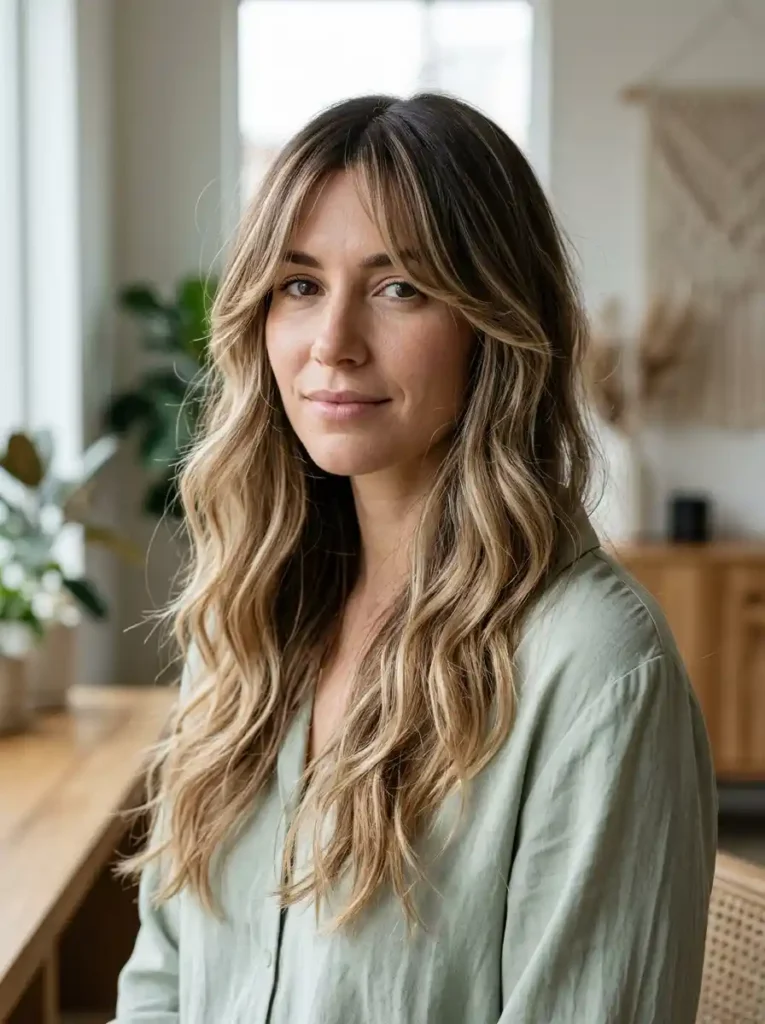
Curtain bangs and bronde highlights work together to draw attention toward the face while maintaining a soft, flowing overall style. The bangs can stay close to the brunette base, with delicate honey or beige pieces woven through the surrounding layers for a subtle brightening effect. Alternatively, a few lighter strands near the temples can make the fringe stand out more. This approach gives the haircut dimension without requiring the whole head to become significantly lighter.
The most important detail is coordinating the highlight placement with the way your bangs fall. Bring a photo of your usual parting and discuss whether you prefer a blended result or more visible face-framing brightness. Because fringe grows quickly and needs regular shaping, choose a color pattern that still looks intentional as the cut changes. Style curtain bangs with a round brush or a gentle blow-dry, using modest heat and a protectant. Avoid overloading the front sections with heavy products that can make them separate or appear greasy.
18. Soft Bronde Ombre with Lighter Ends
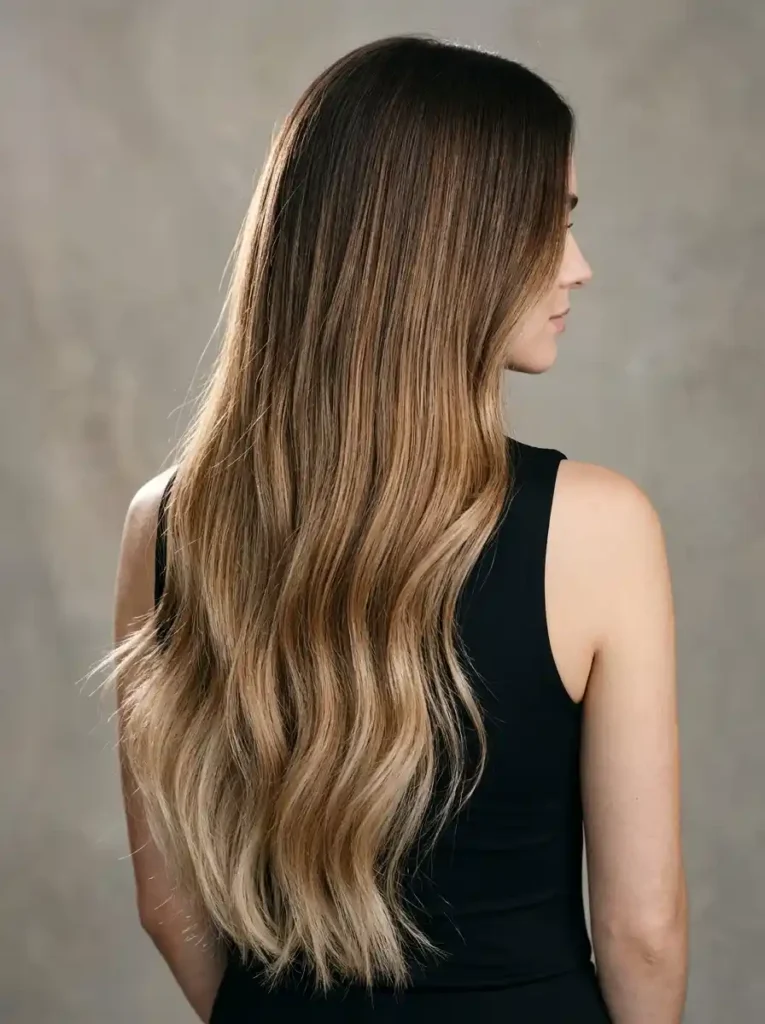
Soft bronde ombre is ideal if you love lighter ends but prefer to keep your roots and upper lengths dark. The color gradually transitions from brunette to caramel and then to beige or golden blonde, creating a flowing gradient rather than distinct highlights. This technique works especially well on long hair because there is enough length for the shades to blend gradually. It can also give straight styles an interesting color transition without relying on curls to reveal the dimension.
Ask your stylist to customize where the lighter section begins, taking your haircut and preferred contrast into account. A high-contrast ombre creates a more dramatic statement, while a gradual transition looks understated and natural. Since the ends receive the most lightening, their condition deserves particular attention. Regular trims and a moisturizing treatment can help keep them looking smooth. Remember that an ombre still requires care and may need occasional toning, even if the darker roots reduce the need for frequent root-color appointments.
19. Bronde Babylights for Delicate Dimension
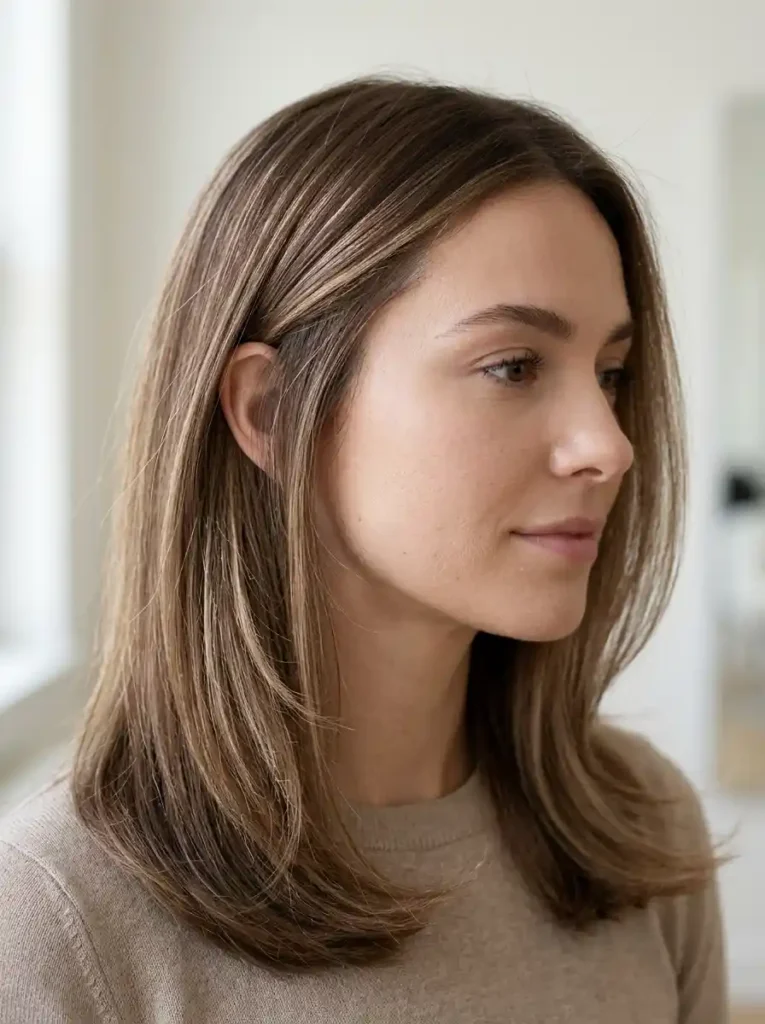
Bronde babylights are very fine highlights designed to create delicate brightness rather than obvious streaks. A stylist weaves small sections of hair and lightens them subtly, blending beige, soft honey, or champagne tones into your natural brunette color. Because the individual pieces are so fine, the finished look can resemble naturally multidimensional hair. This technique is especially appealing if you want your color to look refined and understated in everyday settings while still appearing brighter in sunlight.
Babylights can suit many hair lengths and textures, although the exact placement should reflect your hair density and desired maintenance level. They may take longer to apply than broader highlights because the sections are smaller and more numerous. Ask your stylist to concentrate the brightness where it will be most visible, rather than lightening every area equally. Gentle cleansing, conditioning, and heat protection help preserve the delicate highlights. If you want an especially subtle result, bring reference photos showing the level of contrast you find comfortable.
20. Bronde on Medium-Length Layered Hair
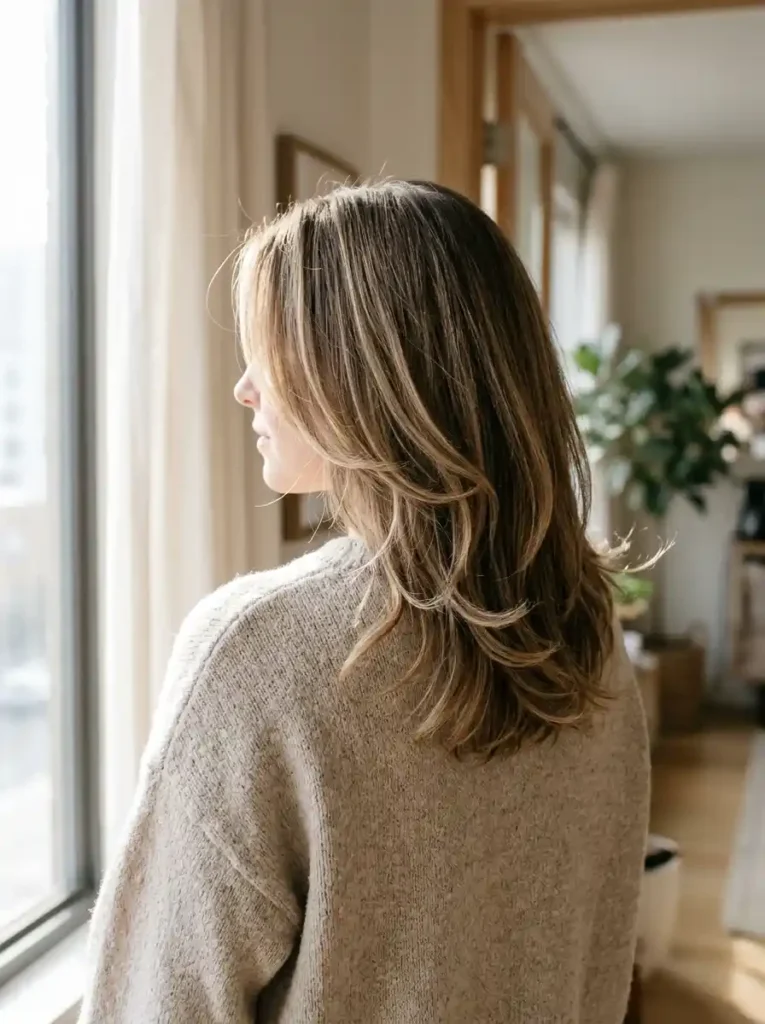
Medium-length layered hair strikes a lovely balance between the versatility of long hair and the ease of a shorter cut. Bronde highlights can be positioned through the layers to emphasize movement, while darker pieces near the roots keep the overall color grounded. A blend of medium brown, honey beige, and soft blonde creates a fresh appearance without demanding a dramatic transformation. This length also makes it easy to switch between polished blowouts, casual waves, and simple everyday styles.
Ask your stylist to tailor the highlight placement to your layers, particularly if shorter sections frame your cheeks or jawline. Lighter pieces can emphasize those areas, while deeper tones underneath maintain visual balance. If you often wear your hair tied back, mention that before the color is applied so the highlights remain attractive in ponytails and buns. A lightweight leave-in conditioner can keep the ends manageable without flattening the layers. Regular trims help maintain the shape and prevent the lighter ends from looking worn.
21. Natural-Looking Bronde for Low-Maintenance Beauty
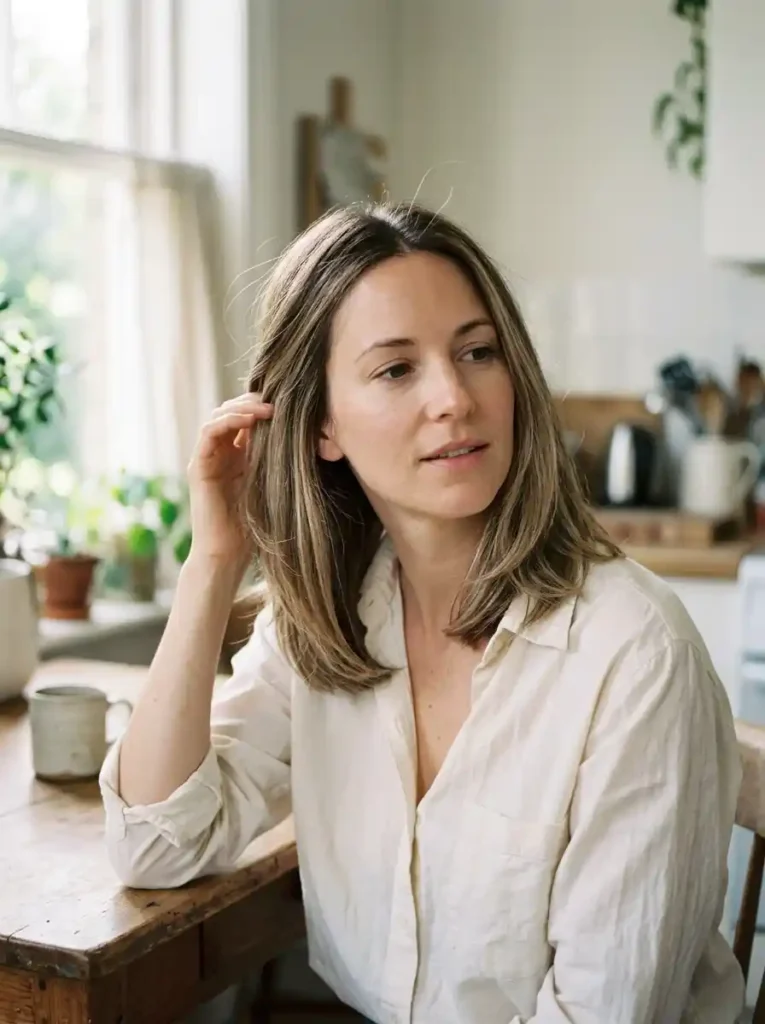
Natural-looking bronde focuses on subtle transitions, believable tones, and a color pattern that complements your original hair. Rather than choosing dramatic highlights, your stylist can add a few shades of beige, caramel, or honey to create quiet dimension. Keeping the root area close to your natural color makes the blend easier to maintain, while softly placed highlights prevent the result from looking flat. This is a particularly practical choice if you want a refreshed appearance without committing to frequent, high-maintenance salon visits.
For the most effortless result, discuss your everyday routine, natural hair color, and willingness to schedule touch-ups before deciding on a technique. Balayage, fine highlights, and a soft shadow root can all support a lower-maintenance finish when tailored appropriately. You may still need occasional glossing, especially if your lighter sections change tone over time. Choose a realistic reference photo with a similar starting color, and ask your stylist to prioritize hair condition alongside brightness. Beautiful bronde should work with your lifestyle rather than require constant correction.
Conclusion
The beauty of bronde hair lies in its versatility. Whether you prefer rich chocolate tones, warm caramel ribbons, cool beige highlights, or soft champagne brightness, there’s a combination that can reflect your personal style without requiring a complete color transformation. From textured bobs to long balayage layers, the right placement can enhance your haircut and create dimension that looks beautiful in different lighting.
Before booking your appointment, consider your natural hair color, current hair condition, preferred undertones, and how much maintenance fits your routine. Save two or three Pinterest photos that capture the color you love, and show your stylist examples with a similar starting shade and hair length. Ask which techniques can achieve your desired look while keeping your hair healthy.
Most importantly, remember that the prettiest bronde isn’t necessarily the lightest or trendiest shade. It’s the one that feels natural to you, complements your features, and fits comfortably into your everyday life.


